



Synthetic Fibers Market Size, Key Companies, Company Market Share, Production Capacity, Raw Material Pricing, Export & Import Analysis, Manufacturing Cost, Competitive Positioning, and Demand Forecast
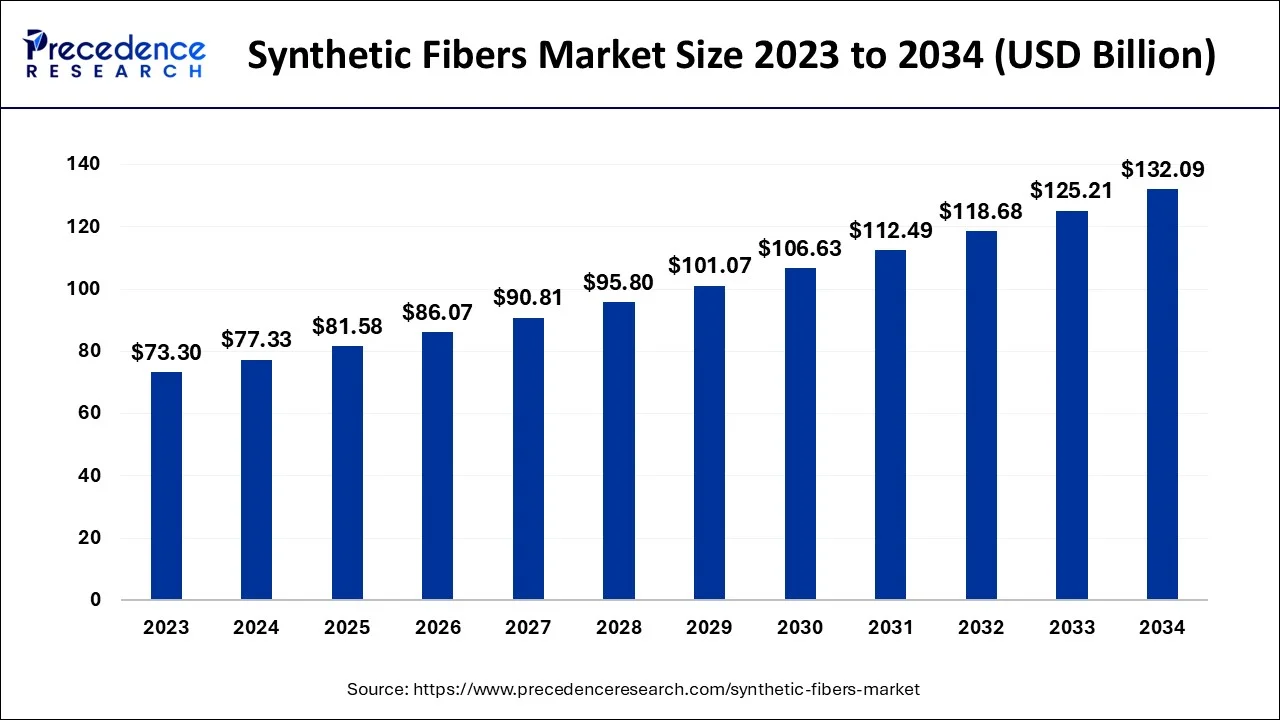
The global synthetic fibers market is valued at USD 86.07 billion in 2026 and is projected to reach approximately USD 138.74 billion by 2035, expanding at a CAGR of 5.45% during the forecast period. The synthetic fibers market growth is driven by rising demand for durable, lightweight, and cost-effective materials, expanding textile and apparel production, rapid urbanization, increasing automotive and home furnishing applications, technological advancements in fiber manufacturing, and growing adoption of recycled and high-performance synthetic fibers.
Source: https://www.precedenceresearch.com/synthetic-fibers-market
 Get a Sample
 Table Of Content


What is the Synthetic Fibers Market Size?
The global synthetic fibers market size is calculated at USD 81.58 billion in 2025 and is predicted to increase from USD 86.07 billion in 2026 to approximately USD 138.74 billion by 2035, expanding at a CAGR of 5.45% from 2026 to 2035. The synthetic fibers market is driven by rising demand for durable, lightweight, and cost-effective materials across industries.
Synthetic Fibers Market Key Takeaways
- By Region, Asia Pacific accounted for the largest revenue share of the synthetic fibers market in 2025.
- By Region, North America is expected to grow at the fastest CAGR in the market during the forecast period.
- By product, the polyester segment held a dominant market position in 2025.
- By product, the nylon segment is expected to grow at the fastest CAGR market between 2026 and 2035.
- By application, the clothing segment accounted for a considerable revenue market in 2025.
- By application, the home furnishings segment is expected to grow at the highest CAGR market during the study period.
Advancing the Synthetic Fibers Market Through Material Innovation
The synthetic fibers market can be segmented into polyester, nylon, acrylic, polyolefins, and others based on raw materials used and applications in different industry segments including textiles, automotive, construction, healthcare, and industrial. There is positive, steady growth in the market; this is because the demand for high-performance and affordable materials is continuously increasing. The market is expected to expand further owing to rapid urbanization, the growing textile industry, and the rise in the production of automobiles. Technological developments in fibre processing and recycling are improving the quality of the products and sustainability.
Key AI Integration in the Synthetic Fibers Market
AI is reshaping the synthetic fibre production landscape by streamlining processes and enhancing quality, particularly in the field of automation and quality control. AI predictive maintenance with modernized equipment helps manage machines with fewer breakdowns and for better performance. The computer vision system has a higher recognition accuracy for product defects than the manual method of inspection. AI can play a role in energy optimization, lowering manufacturing expenses, and decreasing the environmental impact.
Synthetic Fibers Market Growth Factors
Synthetic fibers are man-made fibers manufactured using petrochemicals. It is known for its superior chemical and physical properties like elasticity, durability, and strength. The low cost, and water and stain-resistant properties of synthetic fibers are the major factors behind their rising demand across the globe. The rising applications of synthetic fibers in the textile, industrial, indoor, outdoor, and commercial sector has propelled the growth of the global synthetic fibers market. The various common and special synthetic fibers include acrylic, polyester, nylon, carbon fiber, spandex, and rayon. Surging demand for the durable, cost-effective, and easy-to-wash fabrics among global consumers is significantly driving the growth of the global synthetic fibers market. The growing demand for synthetic fibers in home furnishing, automotive, clothing, and filtration is expected to boost the growth of the synthetic fibers market during the forecast period.
The constantly changing fashion trends, rise in e-commerce, and growing demand for home furnishing products in developed markets like North America and Europe are expected to be the major growth drivers of the synthetic fibers market. Rising technological advancements in production methods have led to the development of superior mechanical, chemical, and physical characteristics of synthetic fiber that are not only used in textiles but also extensively used in electronics, food packaging, water purification, air filters, aerospace, and healthcare sectors. This is a major driver of the global synthetic fibers market. Rapid industrialization, rapid urbanization, increasing disposable income of consumers, and changing consumer behavior for textiles is positively impacting the growth of the synthetic fibers market across the globe.
However, environmental concerns like the non-integrability of synthetic fibers may hamper the growth of the market in the forthcoming future. The rising focus on achieving sustainability, especially in developed economies is boosting the demand for natural and organic alternatives to synthetic fibers. Therefore, the rising concerns regarding environmental health may decrease the demand for synthetic fibers in the forthcoming years.
High Growth Commercial Opportunities
- Growth Opportunities in Textiles, Automotive, Healthcare, and Industrial: Synthetic fibers have a vast market potential that is slowly growing. The use of light, strong materials is opening new paths and ways for manufacturers to explore for commercial activity.
- Emerging Technology Opportunities: New market opportunities for the innovation of recycled fibers, bio-based materials, and smart fiber technologies are being discovered. The benefit of AI is to enhance existing efficient production methods and advanced processing techniques.
- Geographic Expansion Opportunities: The share of emerging industrials from Asia Pacific, Latin America, and MEA regions is showing promising growth potential due to Industrialization & growth of textile manufacturing. Expansion strategies of companies include local manufacturing, partnerships, and distribution channels.
- White Space Analysis: Opportunities include specialty applications, high-performance materials, and sustainable fibers. There's a market opportunity to create innovations and differentiation in offering environmentally friendly products.
Future Outlook and Strategic Recommendations
- Long-Term Industry Outlook: With the growing demand for sustainable, cost-effective, and high-performance materials, the synthetic fibers market is anticipated to witness steady growth in the coming years. Future development of the market will be further supported by recycling and by developments in the bio-based fiber market.
- Emerging Business Models: Business models for a circular economy, sustainable production models, and especially technology-oriented production will be seen as becoming more significant. Resource efficiency and specific fibres are becoming a more important business priority.
- Strategic Recommendations for Stakeholders: It is manufacturers' hub of sustainable innovation, advanced technology, and strategic partnerships that must be in the focus to gain market competitiveness. Further boost will come from expansion into emerging markets and development of application-specific products.
Market Scope
| Report Coverage | Details |
| Market Size in 2025 | USD 81.58 Billion |
| Market Size in 2026 | USD 86.07 Billion |
| Market Size by 2035 | USD 138.74 Billion |
| Growth Rate from 2026 to 2035 | CAGR of 5.45% |
| Largest Market | Asia Pacific |
| Fastest Growing Market | North America |
| Base Year | 2025 |
| Forecast Period | 2026 to 2035 |
| Segments Covered |
By Product, By Application |
| Regions Covered |
North America, Europe, Asia-Pacific,Latin America, Middle East & Africa |
Market Dynamics
Driver
Rising Demand for Durable and Lightweight Materials Across End-Use Industries
An increase in the size of a city and the increment per capita income brought about an increase in demand for clothing and household furnishings. In addition, there will be a need for light and strong synthetic fibres in automotive applications. Application growth in the construction, healthcare, and industrial markets helps drive market growth. A synthetic fibre has the characteristic of being almost indestructible and highly chemical and stain-resistant, and many of them find use in a wide range of applications.
Restraint
Environmental Concerns and Stringent Regulations on Synthetic Fiber Waste
Restricted growth of the synthetic fibers market is due to environmental issues like plastic waste. Many synthetic fibers are derived from petroleum products and are also not easily biodegradable. More restrictions on plastic pollution will boost the cost to manufacturers. Besides the direct impact on oil prices, fluctuating crude oil prices also have an impact on raw material costs and profitability. Competition is increased by the changing customer demand for sustainable and natural fibres.
Opportunity
Growing Adoption of Recycled and Bio-Based Synthetic Fibers
Higher sustainability targets stimulate product manufacturers to find sustainable alternatives. Technologies are now available that are making recycling more efficient and fiber performance better. High-performance fibers are being used in several automotive, medical, and sports applications, which are expanding in demand. Emerging economies present good growth prospects in relation to the development of their industrialization and infrastructure.
Segment Insights
Product Insights
The polyolefins segment is expected to grow steadily, due to rising requirements for lightweight, long-lasting, and economical materials. It has outstanding chemical resistance, and this enables it to be used throughout a wide range of industries. The growth of the segment is fuelled by the continued rise in usage in automotive components. The area of packaging and building is further expanded, leading to increased consumption. Manufacturers continue to invent upgraded ways of improving the performance of the polyolefin fibers.
The acrylics segment is projected to witness stable growth during the forecast period as there is an increase in the demand for warm, lightweight, and wool-like fiber. Acrylic is commonly used in clothing and bed/lounge fabrics. Its superior colors, durability to heat, and weather resistance contribute to the product's longevity. The rising demand for affordable textile products in the consumer market supports the need. There is continuous product development adding improved quality and functionality of fibres
Depending on the product, the polyester product was the dominating segment in the global synthetic fibers market that accounted for a market share of around 49% in 2025. The major attraction for the consumers of polyester is the abrasion and chemical resistance properties of the polyester. This feature has significantly contributed to the growth of the polyester segment in the global synthetic fibers market. Polyester is extensively used in cloth manufacturing owing to its wrinkle-free, shape retention, high perspiration, and easy wash properties. The significantly growing global textile industry is expected to boost the growth of the polyester segment during the forecast period. The surging demand for polyester in home furnishing and industrial applications is expected to spur the growth of the segment. The use of polyester in industries in the form of ropes and yarns has exponentially favored market growth.
On the other hand, the nylon product segment is anticipated to be the most opportunistic segment during the forecast period. The significantly rising applications of nylon material in the home furnishing and automotive industry is augmenting the demand for nylon products across the globe. The demand for various home furnishings products such as bed linen, carpets, blankets, and upholstery is rising owing to the rising number of homes and a growing number of nuclear families across the globe. The rising global population across the globe is expected to boost the growth of the segment during the forecast period.
Application Insights
Based on the application, the clothing segment garnered a market share of around 48% and dominated the global synthetic fibers market in 2025. The continuously changing fashion and clothing trends across the globe and surging demand for cost-effective, convenient, and protective clothing have significantly contributed to the growth of the clothing segment. The huge presence of numerous clothing brands and the need to serve the different needs of consumers is boosting the growth of the clothing segment. Furthermore, the surging penetration of e-commerce platforms across the globe and rising consumer awareness regarding various clothing brands due to the rising access to the internet has boosted the demand for clothes thereby driving the growth of the clothing segment.
Home furnishing is expected to be the fastest-growing segment during the forecast period. The rising real-estate and housing sectors are significantly driving the growth of the home furnishing sector. The rising number of houses, the growing population, and the rising number of nuclear families are boosting the demand for the home furnishing products like cushions, mats, bed covers, and soon.
The automotive segment is expected to grow steadily, as lighter materials help to improve the fuel efficiency of cars. Made-up fibers have the benefit of increasing the durability and comfort for vehicle passengers. Increased production of electric vehicles adds more demand. Performance fibers are finding a growing application within the interior and safety applications. People continue to enjoy new automotive applications with technology continuing to grow.
The filtration segment is projected to witness stable growth during the forecast period due to efficiently filtering air & water continuously. Good chemical resistance and strength of synthetic fibres make the fibre suitable for the filtration material. As with any growth in industrialization, so too do advanced filtration requirements increase. As the environment and its laws become stricter, it makes it more affordable to use higher-performing filters. Continuous product innovation improves filter performance and life.
Regional Insights
What is the Asia Pacific Synthetic Fibers Market Size?
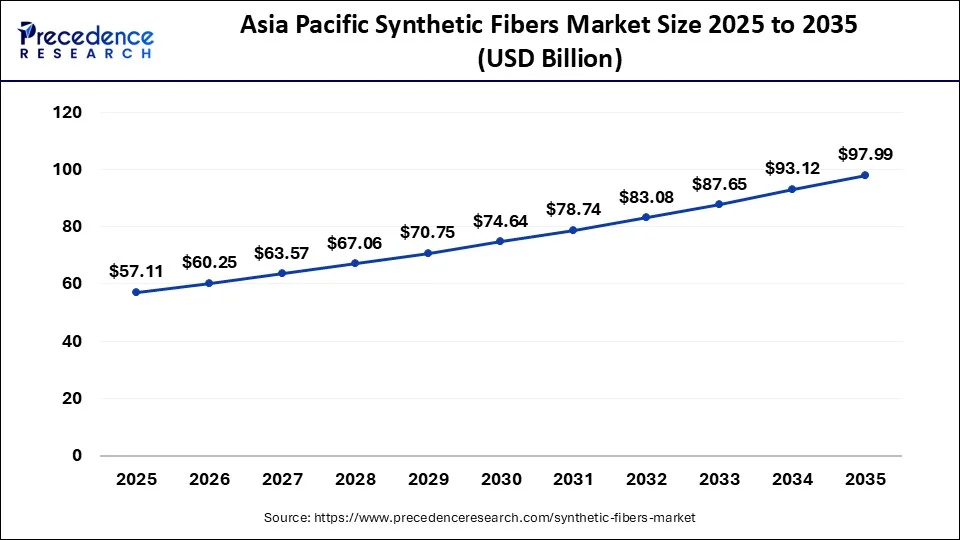
The Asia Pacific synthetic fibers market size is estimated at USD 60.25 billion in 2026 and is expected to be worth around USD 97.99 billion by 2035, rising at a CAGR of 5.55% from 2026 to 2035.
How did Asia Pacific mark a dominating position in the Synthetic Fibers Market?
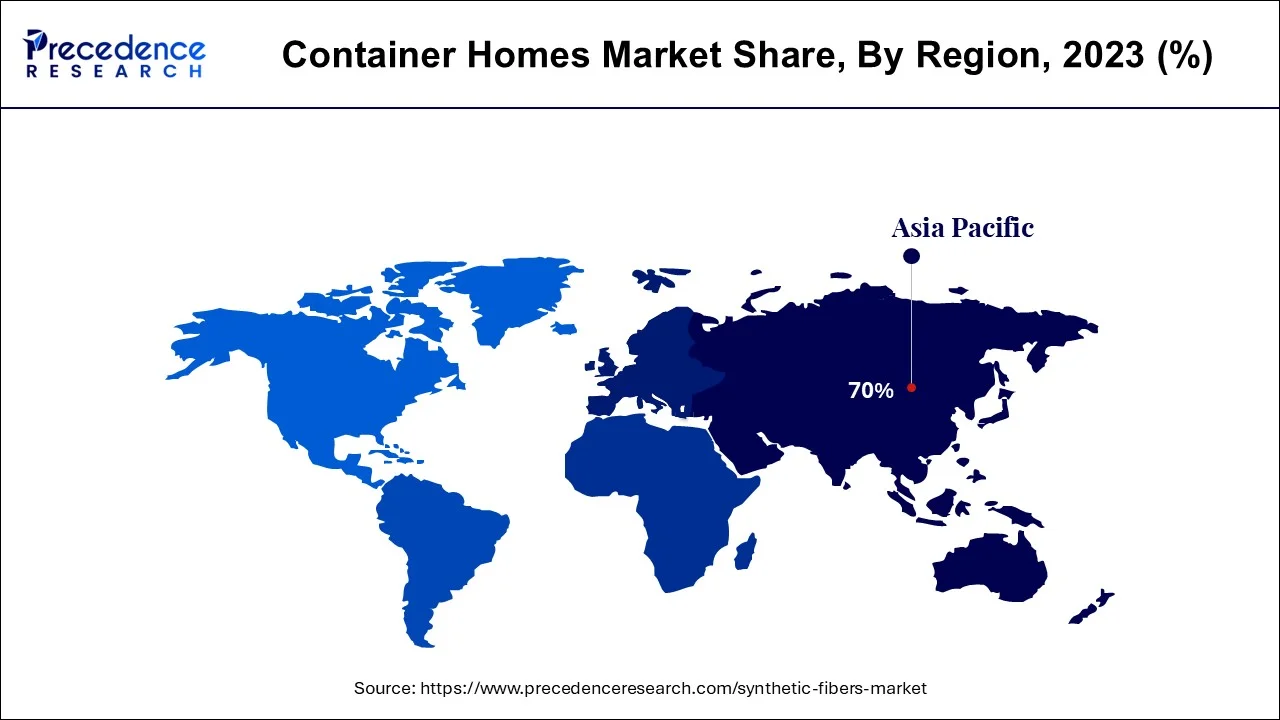
Asia Pacific captured a market share of around 70% and dominated the global synthetic fibers market in 2025. Asia Pacific is the leading producer of acrylics, polyester, and nylon, and these are extensively produced in the nations such as India, China, Japan, South Korea, and Taiwan. Asia Pacific is one of the largest consumers of textile clothing and the major markets are China and India. Rapid industrialization and rapid urbanization are expected to foster the demand for various products made from synthetic fibers and hence the Asia Pacific is expected to be the fastest-growing market throughout the forecast period.
China Synthetic Fibers Market Analysis
China is a major contributor to the market, as it is the largest producer and consumer of synthetic fibers globally, supported by extensive production capacities for polyester, nylon, and acrylic. The country benefits from vertically integrated supply chains spanning raw materials, fiber production, spinning, weaving, and garment manufacturing. Strong domestic demand, export-oriented textile manufacturing, and continuous investments in high-performance and recycled synthetic fibers further strengthen China's position in the market.
What Potentiates the Synthetic Fibers Market in Europe?
The synthetic fibers market in Europe is potentiated by growing demand from the textile, automotive, and construction industries, where lightweight, durable, and versatile materials are highly valued. Increasing consumer preference for performance textiles, such as activewear and technical fabrics, drives innovation and adoption of synthetic fibers. Additionally, advancements in sustainable and recycled synthetic fibers, along with stringent environmental regulations encouraging eco-friendly alternatives, further boost market growth in the region.
Surging demand for clothing and rise in technological advancement in textile production and growing investments in the expansion of cloth manufacturing facilities in Central and South America are expected to boost the growth of the synthetic fibers market during the forecast period.
Germany Synthetic Fibers Market Trends
The automotive innovations, sustainability and circular economy, technical textile demand, and energy transition are driving the growth of the synthetic fibers industry in Germany. Technological advancements in fiber engineering, including functional finishes and performance enhancements, are expanding applications in sportswear, protective clothing, and automotive interiors.
What Drives the Market in South America?
South America's synthetic fibers market is developing steadily, supported by growing apparel manufacturing, urbanization, and infrastructure development. Rising demand for affordable textiles, home furnishings, and industrial fabrics contributes to market expansion. The region also benefits from increasing foreign investments in textile manufacturing and the gradual modernization of production facilities.
Brazil Synthetic Fibers Market Trends
Brazil leads the South American synthetic fibers market due to its large textile and apparel industry and strong domestic consumption. The country's market is driven by polyester and nylon fibers used in clothing, home textiles, and industrial applications. Government support for local manufacturing, rising middle-class demand, and increasing use of synthetic fibers in automotive textiles support market growth.
How is the Opportunistic Rise of North America in the Synthetic Fibers Market?
North America is experiencing an opportunistic rise in the market, driven by demand from the automotive, aerospace, healthcare, and industrial textiles sectors. The region emphasizes high-performance fibers, sustainability initiatives, and the use of recycled synthetic materials. Growing use of synthetic fibers in nonwoven applications, filtration media, and protective clothing, along with innovation in bio-based polymers, supports steady market growth across the region.
U.S. Synthetic Fibers Market Analysis
The U.S. leads the market in North America, driven by strong demand from the technical textiles, defense, medical, and automotive sectors. Domestic manufacturers focus on specialty fibers, advanced composites, and sustainable fiber technologies. Increasing investments in recycling infrastructure, the reshoring of textile production, and the growing demand for high-durability and lightweight materials continue to shape market development in the country.
Opportunities in the Synthetic Fibers Market in Latin America
Latin America is expected to grow at a significant rate in the market, owing to the increased demand for synthetic fibers from the automotive, apparel, and construction sectors, and supply chain localization. India is also strengthening its relations with Latin American countries to expand its trade partnerships beyond Europe, the U.S., and South Asia.
Brazil Synthetic Fibers Market Trends
Brazil's market growing steadily, driven by strong demand from the textile, apparel, automotive, and industrial sectors for versatile and durable materials. Polyester, nylon, and polypropylene dominate the market due to their cost-effectiveness, performance, and adaptability across various applications.
Expansive Reach of the Synthetic Fibers Market in the MEA
The Middle East and Africa are expected to grow at a lucrative rate in the market due to the expansion of technical textiles, strong local manufacturing, government support, and green initiatives. Indian investors also find opportunities for the textile manufacturing business in Africa.
Saudi Arabia Synthetic Fibers Market Analysis
Saudi Arabia has strengthened its investment footprint in African startups with a $250 million fund to find scalable opportunities, where African startups prove their resilience and potential. Saudi Arabia advances with expanding apparel and home textile markets, growth of the automotive sector, and mega-projects for infrastructure.
Synthetic Fibers Market - Value Chain Analysis
- Polymer Synthesis & Fiber Processing: Synthetic fibers are created through processes such as polymerization of petrochemical feedstocks, melt spinning or solution spinning, fiber drawing, texturizing, heat setting, and finishing to produce fibers like polyester, nylon, acrylic, and polypropylene.
Key Players: Reliance Industries Limited, Indorama Ventures, Toray Industries Inc., Hyosung Corporation. - Quality Testing & Certification: Synthetic fibers require certifications for tensile strength, durability, chemical safety, environmental compliance, and textile performance standards. Key certifications include ISO textile standards, OEKO-TEX Standard 100, REACH compliance, and ASTM fiber testing protocols.
Key Players: OEKO-TEX Association, ISO (International Organization for Standardization), ASTM International, SGS. - Distribution to End-Use Industries: Synthetic fibers are provided to clothing manufacturers, home textile makers, automotive fabric suppliers, industrial fabric producers, and technical textile companies.
Key Players: Alpek Polyester, Far Eastern New Century, Teijin Limited.
Competitive Landscape
The major companies include Bombay Dyeing, Toyobo Co., Ltd., E. I. du Pont de Nemours and Company, Toray Chemical Korea, Inc., and Reliance Industries Ltd. The companies are investing in their innovation drive and capabilities to make more innovative products, while continuing to focus on sustainable fibers. New and sophisticated technologies in manufacturing include investments that help ensure quality and efficiency in manufacturing fibers for different end-use industries.
Partnerships, acquisition strategies, and research collaborations for overseas coverage. In recent years, recycled or biofibre synthetic fibres have become popular, and organizations opt for green solutions. Rising competition and technological innovations are expected to significantly influence the growth trend of key players in the industry.
Synthetic Fibers Market Companies
- Bombay Dyeing
- Toyobo Co., Ltd.
- E. I. du Pont de Nemours and Company
- Toray Chemical Korea, Inc.
- Reliance Industries Ltd.
- Indorama Corp.
- Teijin Ltd.
- Lenzing AG
- China Petroleum Corp. (Sinopec Corp.)
- Mitsubishi Chemical Holdings Corp.
Collaboration Landscape
- In January 2025, Ambercycle joined Benma to push towards developing and commercializing circular polyester fibres. The partnership will aim to increase the supply of sustainable fibres via state-of-the-art fibre recycling technology. (Source: https://www.ambercycle.com)
- In January 2025, Circ created Fibre Club, a sector initiative with industry partners, to encourage the uptake of recycled fibre solutions. The solution is achieved through collaboration among the textile value chain and through circularity rewards. (Source: https://www.textileworld.com)
Recent Developments
- In September 2025, Reliance Industries Ltd. introduced R|Elan™ GreenGold, which is a fiber launched by considering sustainability parameters that will unite traceable systems, responsible sourcing, and chemistry-backed proof to ensure reliability at every stage. This initiative will also strengthen confidence in recycled textiles and boost innovation, sustainability, and circular design.
(Source: https://www.textileworld.com) - In November 2025, Teijin Aramid launched a high-performance para-aramid named Twaron Next, which is designed by strongly focusing on sustainability. Twaron Next is engineered for use in protective clothing and automotive components like hoses and tires, multiple industrial composites, and offshore energy solutions.
(Source: https://www.compositesworld.com) - In April 2019, Raymond Group, introduced its Ecovera, an eco-friendly range of fabrics manufactured by using one of the latest technologies of the Reliance Industries Limited.
- In November 2019, Technical Absorbents displayed its washable fabrics at the Premier Event for Absorbent Hygiene & Personal Care Markets in Texas.
- The market is moderately fragmented with the presence of several domestic and global market players. These market players are constantly engaged in various developmental activities like partnerships, mergers, acquisitions, and new product launches to gain a competitive edge over others and gain market share. The rising investments by these market players in research and development are expected to open up new opportunities in the foreseeable future.
Segments Covered in the Report
By Product
- Nylon
- Polyester
- Polyolefins
- Acrylics
- Others
By Application
- Automotive
- Clothing
- Home Furnishing
- Filtration
- Others
By Geography
- North America
- Europe
- Asia-Pacific
- Latin America
- Middle East & Africa (MEA)
For inquiries regarding discounts, bulk purchases, or customization requests, please contact us at sales@precedenceresearch.com
Frequently Asked Questions
Tags





Ask For Sample
No cookie-cutter, only authentic analysis – take the 1st step to become a Precedence Research client
 Get a Sample




 sales@precedenceresearch.com
 Schedule a Meeting
