


Custom Procedure Kits Market Size, Key Companies, Company Market Share, Patient Volume, Treatment Adoption Rates, Pricing Analysis, Regulatory Landscape, Competitive Positioning, and Demand Forecast
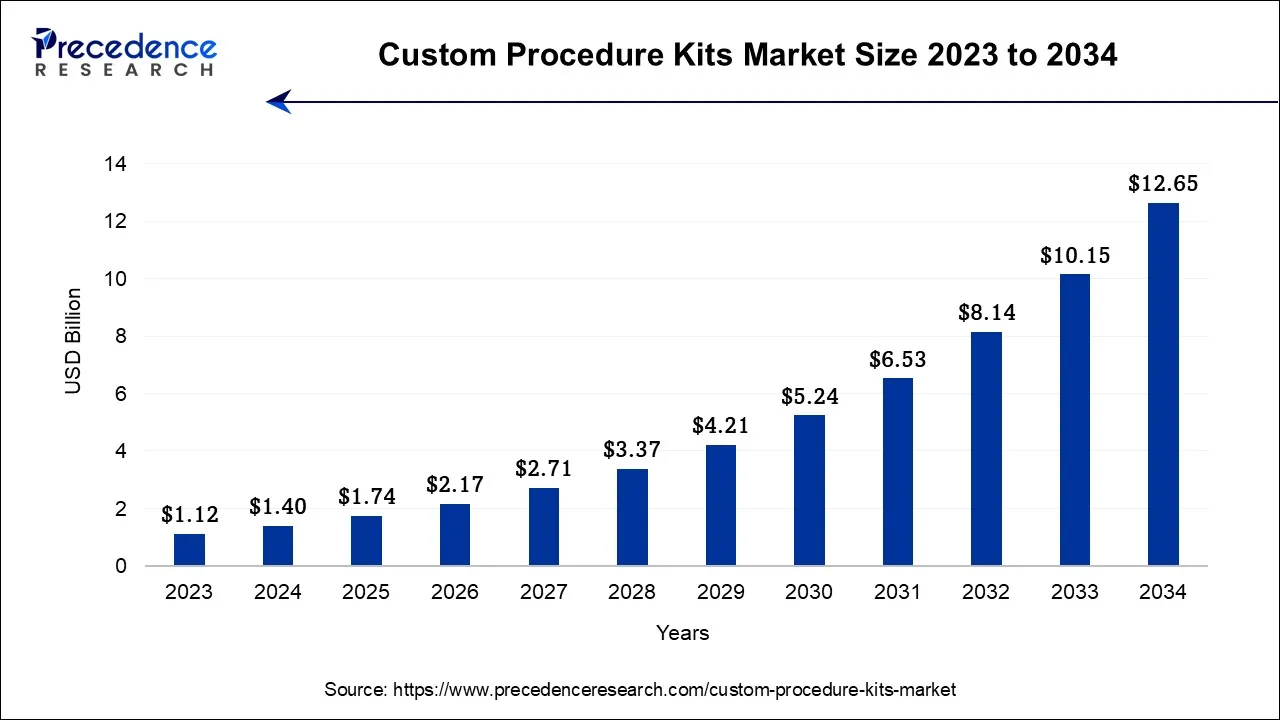
ICT industry specialist Shivani Zoting estimates the custom procedure kits market at USD 2.71 billion in 2026, with continued technology adoption expected to take the market to USD 14.82 billion by 2035 at a CAGR of 23.89%. Leading custom procedure kits market providers such as Owens & Minor, Inc., Cardinal Health, Inc., Smith & Nephew plc, are expanding their capabilities across segments including by product, by procedure, by end user.
Source: https://www.precedenceresearch.com/custom-procedure-kits-market
 Get a Sample
 Table Of Content


What is the Custom Procedure Kits Market Size?
The global custom procedure kits market size is calculated at USD 1.74 billion in 2025 and is predicted to increase from USD 2.71 billion in 2026 to approximately USD 14.82 billion by 2035, expanding at a CAGR of 23.89% from 2026 to 2035. The custom procedure kits market growth driven by increasing demand for personalized surgical solutions, hospital efficiency, infection control, cost optimization, and streamlined clinical workflows.
Custom Procedure Kits Market Key Takeaways
- North America has held the highest revenue share 46% in 2025.
- Asia-Pacific region is estimated to expand at the fastest CAGR between 2026 and 2035.
- By Product, the disposables segment contributed more than 59% of revenue share in 2025.
- By Product, the reusable segment is anticipated to expand at a remarkable CAGR of 12.8% during the projected period.
- By Procedure, the orthopedic segment generated more than 23% of revenue share in 2025.
- By Procedure, the cardiac surgery segment is anticipated to grow at the fastest rate over the projected period.
- By End-user, the hospitals segment captured the highest market share of 51.8% in 2025.
- By End-user, the ambulatory surgical centers segment is projected to expand at the fastest rate over the projected period.
What are Custom Procedure Kits?
The custom procedure kits market refers to a specialized segment within the medical industry that offers customized sets of medical instruments, supplies, and accessories tailored to specific medical procedures or surgeries. These kits streamline healthcare processes by ensuring all necessary items are readily available, enhancing efficiency, and minimizing the risk of error.
The market's nature is dynamic, driven by the increasing demand for personalized medical solutions, cost-effective healthcare delivery, and the continuous advancement of medical technologies, reflecting the industry's commitment to optimizing patient care and operational efficiency.
How is AI contributing to the Custom Procedure Kits Industry?
The implementation of artificial intelligence in the custom procedure kits has provided personalized design, better manufacturing efficiency, optimized supply chains, and support of clinical outcomes. AI has its influence in patient-specific customization, design optimization, predictive logistics, quality monitoring, and clinical decision support. It also helps the processes of documentation, gives guidance in real time, which leads to more accurate surgeries, and supports wound healing monitoring and operational efficiency across the workflow of kit development, deployment, and patient care.
Custom Procedure Kits Market Growth Factors
The custom procedure kits market is a specialized sector within the healthcare industry that provides tailored sets of medical instruments and supplies for specific medical procedures or surgeries. These kits are designed to streamline healthcare processes, ensuring the availability of essential items while reducing the risk of errors. As the healthcare landscape evolves, the demand for customized medical solutions is on the rise, making this market increasingly vital for healthcare facilities seeking operational efficiency and improved patient care. Several trends and growth drivers are shaping the custom procedure kits market.
Firstly, there's a growing focus on cost-effective healthcare delivery, prompting healthcare providers to seek efficient solutions like custom procedure kits. Additionally, advancements in medical technology are enabling the development of more specialized kits, further driving market growth. Moreover, the rising trend of outpatient surgeries and the need for infection control measures are boosting the adoption of custom kits.
The custom procedure kits market does face some challenges, including the need for stringent quality control and regulatory compliance. Ensuring that each kit meets rigorous quality standards can be complex, requiring close collaboration with regulatory bodies.
Another challenge is the customization process itself, which demands precise coordination between healthcare providers and kit manufacturers to tailor each kit to the specific needs of different procedures. In this evolving landscape, there are significant business opportunities within the market. Companies that can provide cost-effective, high-quality custom kits while staying compliant with regulatory requirements are poised for growth.
Expansion into emerging markets and diversification of product offerings are other avenues for business development. As the healthcare industry continues to prioritize efficiency and patient safety, custom procedure kits play a pivotal role in delivering on these objectives, making this market ripe with opportunities for innovation and growth.
Market Outlook
- Industry Growth Overview: The market growth is propelled by the increase in surgical operations and the demand for healthcare solutions that are efficient, standardized, and cost-conscious.
- Sustainability Trends: Hospitals are more and more using reusable as well as eco-friendly kits for procedures, with the aim of cutting down on waste and being more sustainable in their operating rooms.
- Global Expansion: While North America is the forerunner in adoption, the Asia Pacific region is catching up quickly, thanks to the increasing healthcare investments and the construction of new medical infrastructure.
- Major Investors: Major players include Medline Industries, Teleflex Incorporated, Owens & Minor, Medtronic, and Cardinal Health.
Market Scope
| Report Coverage | Details |
| Growth Rate from 2026 to 2035 | CAGR of 23.89% |
| Market Size in 2026 | USD 2.71 Billion |
| Market Size by 2035 | USD 12.82 Billion |
| Largest Market | North America |
| Base Year | 2025 |
| Forecast Period | 2026 to 2035 |
| Segments Covered | By Product, By Procedure, and By End User |
| Regions Covered | North America, Europe, Asia-Pacific, Latin America, and Middle East & Africa |
Market Dynamics
Driver
Advanced medical technology and outpatient surgery trend
The surge in market demand for custom procedure kits is attributed to advanced medical technology. Innovations in medical devices and surgical instruments enable the creation of highly specialized and efficient custom kits. Healthcare providers seek these kits to ensure they have access to the latest, state-of-the-art tools, promoting superior patient outcomes and safety. This increased reliance on advanced technology within custom kits has become a pivotal driver in meeting the evolving needs of modern healthcare and surgical practices. Moreover, The outpatient surgery Trend has significantly boosted demand for the custom procedure kits market.
As more surgical procedures shift from traditional inpatient settings to outpatient facilities and clinics, there's a growing need for efficient, compact, and procedure-specific custom kits. These kits streamline the surgical process, ensuring that all necessary supplies are readily available, contributing to shorter turnaround times, cost savings, and improved patient throughput. As outpatient surgeries become more prevalent, the demand for custom procedure kits continues to surge, making them an essential component of modern healthcare settings.
Restraints
Initial Investment and Surgical Complexity
Developing and implementing a customized kit system often necessitates a significant upfront investment in technology, personnel training, and infrastructure within healthcare facilities. For some providers, this initial financial commitment may appear daunting, particularly if they are accustomed to existing procurement methods. However, it's essential to recognize that the long-term benefits, including cost savings and improved efficiency, typically outweigh these initial investment concerns, making custom kits a valuable addition to modern healthcare practices.
Moreover, surgical complexity restrains the demand for the custom procedure kits market as highly intricate and specialized procedures may not lend themselves well to standardization within custom kits. These complex surgeries often require a wide range of unique instruments and supplies, making it challenging to create one-size-fits-all kits. Consequently, healthcare facilities may opt for traditional procurement methods, hindering the broader adoption of custom kits. Customization limitations in addressing intricate surgical needs can limit market demand, particularly in specialized medical fields.
Opportunities
Technological advancements and diversification of offerings
Technological advancements are propelling demand for the Custom Procedure Kits Market by enhancing kit efficiency and traceability. Integration of technologies like RFID tracking and data analytics streamlines inventory management, reducing errors and costs. Custom kits can now be equipped with smart components, offering real-time data on item usage and expiration dates. This level of customization and sophistication aligns with the growing need for precision in healthcare, making technologically advanced custom procedure kits an attractive choice for healthcare providers seeking improved patient outcomes and operational efficiency.
Moreover, Diversification of offerings in the custom procedure kits market can significantly boost market demand by catering to a broader range of medical needs. By expanding beyond surgical kits to include specialized diagnostic kits, emergency response kits, or kits for non-surgical medical procedures, manufacturers can tap into new market segments. This diversification addresses evolving healthcare demands and allows healthcare providers to source a wide array of customized solutions from a single supplier, simplifying procurement and increasing the appeal of custom kits across various healthcare specialties.
Segments Insights
Product Insights
According to the product, the Disposables has held 59% revenue share in 2023. Disposables in the custom procedure kits industry refer to single-use medical products and supplies included in customized kits. These items are designed for one-time use during medical procedures to maintain sterility and reduce infection risks. Recent trends in disposable custom procedure kits include an increased focus on sustainability. Manufacturers are exploring eco-friendly materials and recyclable options to address environmental concerns. Additionally, there is a growing emphasis on incorporating disposable components that are user-friendly and ergonomically designed, enhancing ease of use for healthcare professionals while maintaining stringent infection control measures.
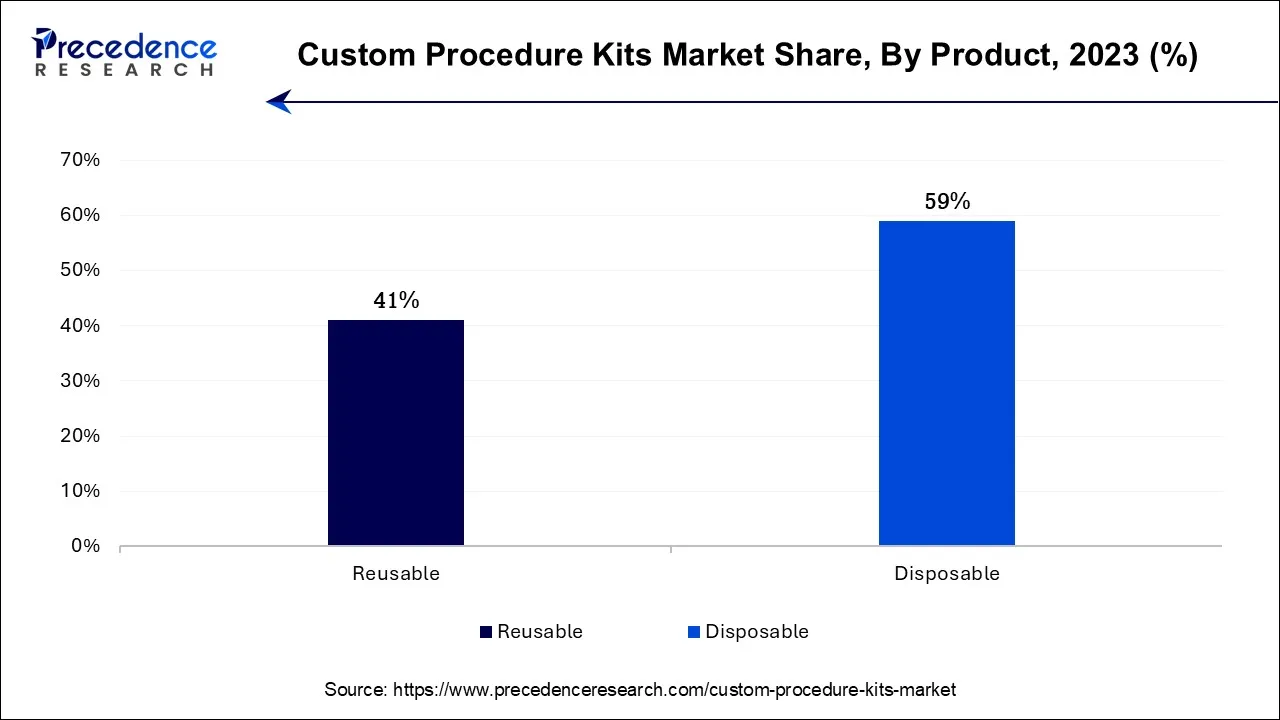
The reusable segment is anticipated to expand at a significantly CAGR of 12.8% during the projected period In the custom procedure kits industry, "reusable" refers to kits designed with components that can be cleaned, sterilized, and safely used in multiple medical procedures. These kits are eco-friendly and cost-effective, making them an attractive choice for healthcare facilities aiming to reduce waste and optimize resources. Trends in reusable custom procedure kits include the integration of innovative materials that enhance durability, advancements in sterilization techniques, and the development of user-friendly, modular designs. These trends reflect the growing emphasis on sustainability and cost-efficiency in modern healthcare practices.
Procedure Insights
Based on the Procedure, orthopedic is anticipated to hold the largest market share of 23% in 2023. Orthopedic procedures involve the diagnosis and treatment of musculoskeletal conditions and injuries, including surgeries on bones, joints, muscles, ligaments, and tendons. In the custom procedure kits market, there's a growing trend towards specialized orthopedic kits. These customized kits contain instruments and supplies tailored to specific orthopedic procedures, such as joint replacements or spinal surgeries. This trend reflects the increasing demand for precision and efficiency in orthopedic surgeries, driving the market's expansion as healthcare facilities seek custom solutions to optimize patient outcomes and operational workflows.
On the other hand, the Cardiac surgery segment is projected to grow at the fastest rate over the projected period. Cardiac surgery involves surgical procedures performed on the heart and blood vessels to treat various cardiovascular conditions. Custom procedure kits tailored for cardiac surgeries include specialized instruments, implants, and supplies required during procedures like coronary artery bypass grafting and heart valve repair or replacement. Recent trends in the custom procedure kits market for cardiac surgery encompass the incorporation of advanced materials and technologies, such as minimally invasive surgical tools and 3D-printed implants. These kits are designed to enhance precision, reduce surgical time, and improve patient outcomes in the ever-evolving field of cardiac surgery.
End-user Insights
In 2023, the Hospitals segment had the highest market share of 51.8% on the basis of the end user. Hospitals, as key end users in the custom procedure kits industry, refer to healthcare institutions where patients receive comprehensive medical care. These facilities require custom procedure kits to streamline surgical and medical procedures, ensuring efficient patient care, reduced costs, and improved infection control. Hospitals often seek customizable solutions that cater to various departments, such as surgery, emergency, and intensive care units.
Recent trends include an increased focus on infection control measures within hospitals, driving the demand for custom kits designed for sterile and aseptic procedures. Additionally, as healthcare facilities strive to optimize resource utilization, there is a growing trend toward adopting standardized custom kits across hospital networks, enhancing operational efficiency while maintaining high-quality patient care. Moreover, technological advancements and the integration of data-driven customization are shaping the future of custom procedure kits in hospitals, aligning them with evolving healthcare needs.
The Ambulatory surgical centers are anticipated to expand at the fastest rate over the projected period. Ambulatory Surgical Centers (ASCs) are healthcare facilities that provide same-day surgical procedures to patients who do not require hospitalization. These centers offer a cost-effective and convenient alternative to traditional hospital-based surgery, focusing on outpatient care and rapid patient recovery. In the custom procedure kits market, there is a growing trend of tailoring kits to the unique needs of ASCs. These kits are designed to optimize efficiency and resource utilization in outpatient settings, ensuring that ASCs have access to specialized instruments and supplies for various procedures. This trend reflects the increasing importance of ASCs in modern healthcare delivery, driving customization and innovation in custom procedure kits to meet the specific demands of these facilities.
Regional Insights
U.S. Custom Procedure Kits Market Size and Growth 2026 to 2035
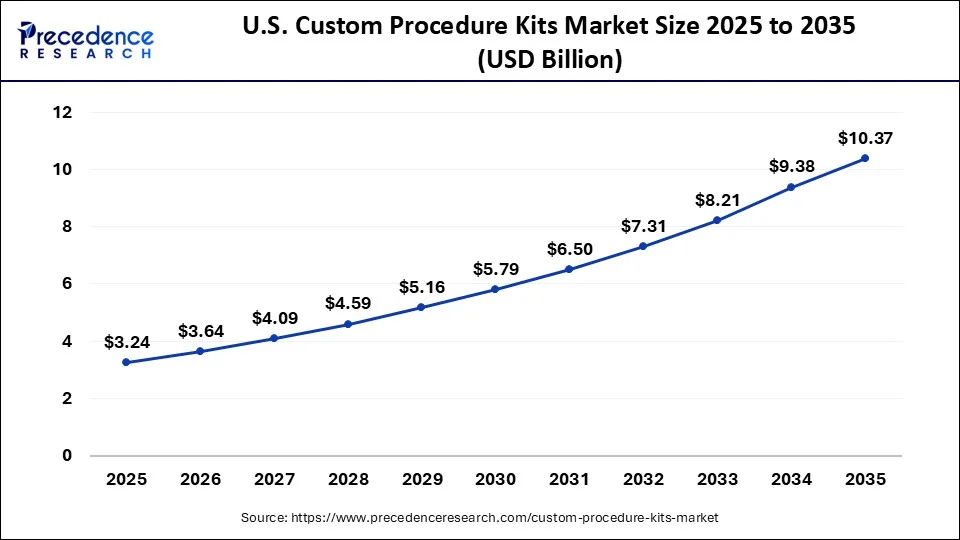
The U.S. custom procedure kits market size is accounted for USD 3.24 billion in 2025 and is projected to be worth around USD 10.37 billion by 2035, poised to grow at a CAGR of 12.34% from 2026 to 2035.
North America has held the largest revenue share 46% in 2025. In North America, the custom procedure kits market is experiencing several notable trends. Increased adoption of outpatient surgical procedures and the growing emphasis on cost-effective healthcare delivery are driving the demand for customized kits. Advanced healthcare infrastructure and a strong focus on infection control measures further stimulate market growth. Additionally, partnerships between kit manufacturers and healthcare facilities are fostering innovation and customization. The market in North America continues to evolve as healthcare providers seek efficient, patient-centric solutions, making it a dynamic and crucial segment within the healthcare industry.
North America: U.S. Custom Procedure Kits Market Trends
This market has a major impact from high surgical volumes and the shift to value-based care, which in turn creates a technology integration opportunity that will improve the efficiency of procurement, inventory control, and quality standardization across the health plants. The market is driven by an increasing emphasis on operational efficiency, infection control, and the shift toward ambulatory surgical centers.
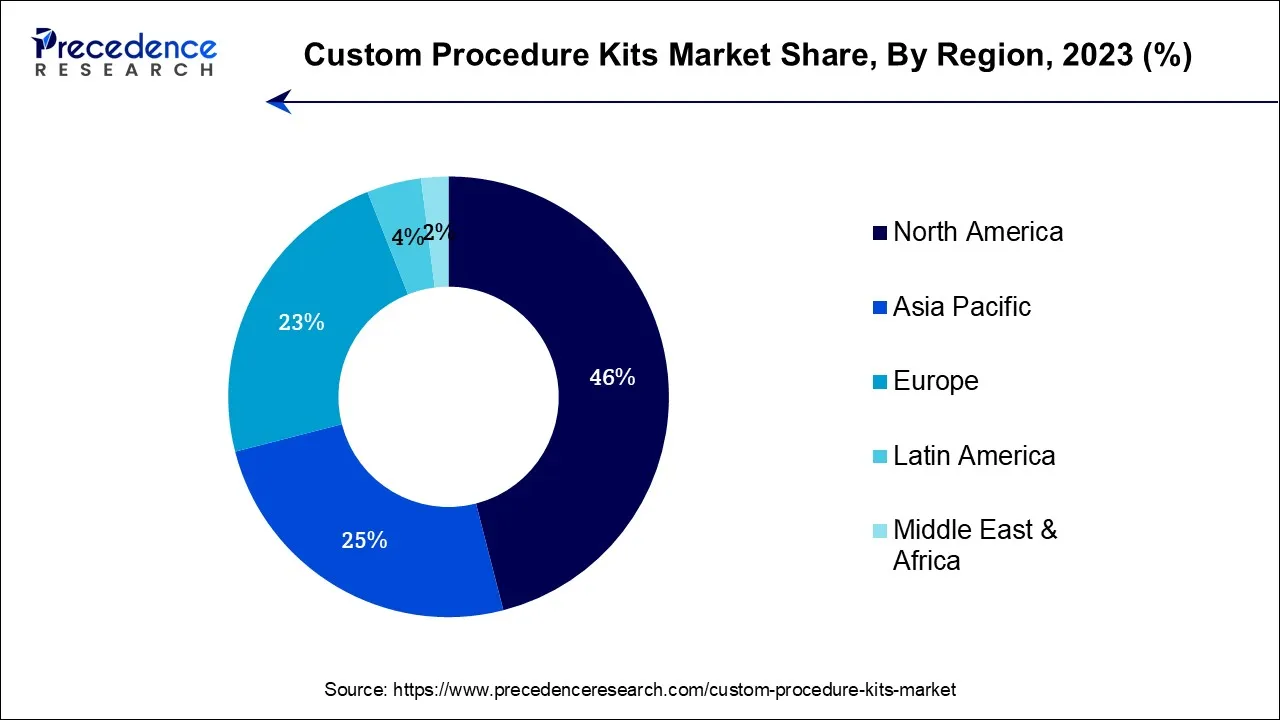
Asia-Pacific is estimated to observe the fastest expansion. In the Asia-Pacific region, the custom procedure kits industry is witnessing notable trends. As healthcare infrastructure expands and access to medical services improves, the demand for customized procedure kits is on the rise. Countries like India and China are experiencing a surge in outpatient surgeries and specialized medical procedures, creating opportunities for custom kit providers. Moreover, the adoption of advanced healthcare technologies and the growing awareness of infection control measures are influencing the market's growth in the Asia-Pacific, making it a region of significant potential for custom procedure kits.
Asia Pacific: China/India Custom Procedure Kits Market Trends
Sales in these two countries are primarily driven by the construction of new hospitals and other healthcare-related buildings, the setting up of medical device factories, the influx of medical tourists, and the demand for affordable, high-quality procedure kits that can reach wider populations of patients. An expanding middle class and growing medical tourism are increasing the demand for standardized and high-quality surgical kits.
What Are the Driving Factors of The Custom Procedure Kits Market in Europe?
Europe continues to be a major market for the adoption of medical devices and equipment, which is mainly due to the fact that there are unified clinical practices, an aging population, and a preference for disposable kits that are in line with sterilization requirements, as well as having a consistent workflow for the procedures.
Germany Custom Procedure Kits Market Trends
Germany is the frontrunner in the region when it comes to the adoption of new medical technologies, largely due to its strong healthcare system and the increasing popularity of eco-friendly and reusable kits among healthcare professionals who are concerned about the environment and want to save on costs in the long run.
Custom Procedure Kits Market-Value Chain Analysis
- R&D: Uses research activities' efficiency and profitability as criteria to find the target with the highest potential and also to decide where to invest more or less.
Key players: Medline Industries, Cardinal Health, Mölnlycke Health Care - Clinical Trials and Regulatory Approvals: Conducts trial planning, execution, data collection, and regulatory compliance at a faster pace, hence making quicker access to the market.
Key players: PPD (Thermo Fisher Scientific), IQVIA, LabCorp Drug Development - Formulation and Final Dosage Preparation: Analyzes manufacturing efficiency, quality control, and cost during the transformation into final products to get it at the lowest level possible.
Key Players: B. Braun Melsungen, Baxter International - Packaging and Serialization: Evaluates the packaging processes, ensuring the integrity, traceability, compliance with regulations, and prevention of counterfeit products throughout the supply chains.
Key Players: PCI Pharma Services, Sharp Services, Steris plc - Distribution to Hospitals, Pharmacies of Custom Procedure Kits: Recognizes the need for timely, cost-effective delivery of products and thus assesses logistics, inventory management, storage, and transportation processes.
Key players: McKesson Corporation, Owens & Minor
Competitive Landscape
The market for custom procedure kits is characterized as semi-consolidated because of the involvement of various established manufacturers of medical supplies and the particularized assemblers of the kits and local suppliers. In this regard, competition has a number of elements crucial for success, such as quality of the products, customization, accuracy of the supplies, cost, and other elements, including compliance with certain procedural procedures.
Key competitors in the market, such as Cardinal Health, Medline Industries, Owens & Minor, and McKesson take advantages from their advanced distribution networks, wide product range, and already established relations with hospitals. Instead, local and small manufacturers try to compete by means of offering special configurations, fast production, specific kits and easy flexibility of the production process.
Competition in the market is also determined by the activity of the companies that invest in the expansion of their facilities and establishment of partnerships with suppliers.
Company Profiles
BD (Becton, Dickinson and Company)
- HQ: Franklin Lakes, New Jersey, USA
- Founded: 1897
- Ownership: Public
Company Overview:
- BD is a prominent medical technology firm that designs and produces medical instruments, diagnostic solutions, medicine-delivery systems, and surgical and infection-prevention products. BD's product line consists of syringes and needles, devices for accessing blood vessels, infusion supplies, collection systems for specimens, surgical tools, and prevention technologies. BD provides services to hospitals, laboratories, pharmaceutical corporations, and other medical professionals globally. Being in touch with hospitals and laboratories assists BD greatly with its success in providing its medical supplies and procedural goods, in addition to along with its approach towards medicine delivery.
Key Strengths:
- Diverse portfolio of medical devices, medical consumables, and devices for managing medicine.
- Strong relationships with hospitals, laboratories, and medical institutions.
- Extensive global manufacturing, distribution, and regulatory network.
Key Vulnerability:
- Large number of products results in complicated manufacturing and supply structure.
- Company is subject to strict medical-device requirements and regulations involving quality.
- Any technological firms manufacturing specialized devices will probably compete with BD.
Owens & Minor, Inc.
- HQ: Richmond, Virginia, USA
- Founded: 1882
- Ownership: Public
Company Overview:
- Owens & Minor is a healthcare solutions provider involved in various activities related to medical products, logistics, distribution, and patient services. A part of its healthcare services, Owens & Minor does deliver medical supplies and equipment, protective devices, wound care products, and other types of consumables used in healthcare. The company markets its products to hospitals and healthcare facilities through its distribution network, which makes its contribution to the healthcare supply chain important. The vertically integrated business model allows Owens & Minor to operate successfully as both a supplier and provider of healthcare services as well as compete against other medical supply companies.
Key Strengths:
- Integrated capabilities of manufacturing and distribution of medical supplies.
- Strong partnership with hospitals and healthcare facilities.
- Wide product range including medical and surgical supplies and other consumables.
Key Vulnerability:
- The distribution business is subject to pricing and cost pressure.
- The logistics system is complicated and therefore needs a lot of working capital.
- It operates in a segment where it competes with large healthcare distributing companies and smaller healthcare producers.
3M
- HQ: Saint Paul, Minnesota, USA
- Founded: 1902
- Ownership: Public
Company Overview:
- 3M is a diversified manufacturing and technology company whose long history includes a healthcare division that produces medical tapes, dressings, skin-care products, infection prevention products, dental products, and surgical products. The strengths of its healthcare division are the company's abilities in adhesive technology, material science, filtration technology, and surface technology; in light of the company's emergence as Solventum when its healthcare division was spun off in 2024, 3M is no longer the owner of the healthcare portfolio it used to operate as 3M Health Care. Consequently, when conducting market analysis, 3M has to be treated as either a historical or adjacent competitor whereas Solventum should be interpreted as the independent healthcare business derived from 3M operations.
Key Strengths:
- Strong background in medical adhesives, material science, and infection prevention.
- Sustainability of brands and technologies passed on to Solventum.
- Extensive background in intellectual property and R&D department.
Key Vulnerability:
- The healthcare division has been spun off from 3M through the Solventum spin-off.
- The current version of 3M has less exposure to medical supply segment than before the spin-off.
- The historical positioning of 3M in the healthcare market is now represented mainly by the independent company.
Mölnlycke Health Care
- HQ: Gothenburg, Sweden
- Founded: 1849
- Ownership: Privately held; owned by Investor AB
Overview of Company:
- Mölnlycke Health Care is an international company providing services and products in the medical area and specializes in wound-care solutions. Its products include advanced wound-care dressing, surgical solutions, products for use in the operating room, gloves, and more. The company has managed to attain its niche specialization in the field of wound-care treatment and offers the best products on the market represented by Mepilex and Biogel brands. Besides, it has a very narrow product portfolio as opposed to the larger medical-technology companies, but it uses its specialization in clinical studies, new technologies, and niche medical solutions instead of a broad approach used by its competitors.
Key Strengths:
- Strong specialization and focus on wound-care treatment and surgery solutions.
- Clinically established brands and recognition among medical professionals.
- Highly specialized research labs and product upgrades.
Key Vulnerability:
- Portfolio is narrower in comparison with medical-technology companies.
- Opportunity to be influenced by hospital procurement plans and payment systems in the medical area.
- Strong competitors in the field of medical devices and surgical products.
Cardinal Health, Inc.
- HQ: Dublin, Ohio, USA
- Founded: 1971
- Ownership: Public
Company Overview:
- Cardinal Health is a leading company in the field of healthcare services and products for pharmaceutical distribution, medical products, specialty solutions, and supply chain services. Its medical product division has a wide portfolio of surgical and medical supplies such as gloves, gowns, masks, syringes, needles, and wound-care products which are used at hospitals and ambulatory facilities. Cardinal Health merges product sourcing and manufacturing with distribution of good healthcare services making it a unique organization due to its own characteristics. The company has huge advantages of being a big corporation especially for larger hospital systems giving it the privilege of getting good deals with manufacturers.
Key Strengths:
- Strong developed supply chain infrastructure and distribution system.
- Wide array of medical and surgical products on offer.
- Strong partnerships with hospitals and healthcare service companies.
Key Vulnerability:
- Significant logistics costs and supply chain disruptions.
- Pricing pressures for medical products department from providers and competitors.
- Multi-branch authority might result in some operational complexities.
Custom Procedure Kits Market Companies
- Medline Industries, Inc.: They sell complete sets of medical equipment for surgeries and also produce and distribute tailored procedure kits for a variety of healthcare settings.
- Teleflex Incorporated: They provide sterile medical kits along with specialty devices that are meant for the critical care, surgical, and procedural application areas.
- Boston Scientific Corporation: They produce and sell surgical devices that are part of the custom procedure kits, which are used for the treatment of coronary, urological, and certain surgical conditions.
Other Major Key Players
- BD (Becton, Dickinson and Company)
- Owens & Minor, Inc.
- 3M
- Mölnlycke Health Care
- Cardinal Health, Inc.
- B. Braun Melsungen AG
- Halyard Health, Inc.
- Smith & Nephew plc
- Thermo Fisher Scientific Inc.
- Terumo Corporation
- Mölnlycke Health Care AB
- Johnson & Johnson Services, Inc.
Recent Developments
- In October 2025, the CBIC introduced an automated approval process for IFSC registration to simplify customs operations and enhance trade facilitation. This allows electronic transactions through an 11-character alphanumeric code identifying bank branches in India. (Source: maritimegateway.com)
- In November 2024, SYNDEO Medical announces European Medical Device Regulation approval for its flagship products. The approved products are SYNDEOPack Interventional Procedure Packs™ and Xssential Rapid Delivery Procedure Packs. (Source: globenewswire.com)
Segments Covered in the Report
By Product
- Disposable
- Reusable
By Procedure
- Colorectal
- Thoracic
- Orthopedic
- Ophthalmology
- Neurosurgery
- Cardiac Surgery
- Gynecology
- Others
By End User
- Hospitals
- Ambulatory Surgical Centers
- Clinics
- Others
By Geography
- North America
- Europe
- Asia-Pacific
- Latin America
- Middle East and Africa
For inquiries regarding discounts, bulk purchases, or customization requests, please contact us at sales@precedenceresearch.com
Frequently Asked Questions





Ask For Sample
No cookie-cutter, only authentic analysis – take the 1st step to become a Precedence Research client
 Get a Sample
.webp)



 sales@precedenceresearch.com
 Schedule a Meeting