



eHealth Market Size, Key Companies, Company Product Portfolio, Hospital Procurement Trends, Manufacturing Capacity, Sales Performance, Regulatory Approvals, Company Market Share, and Forecast
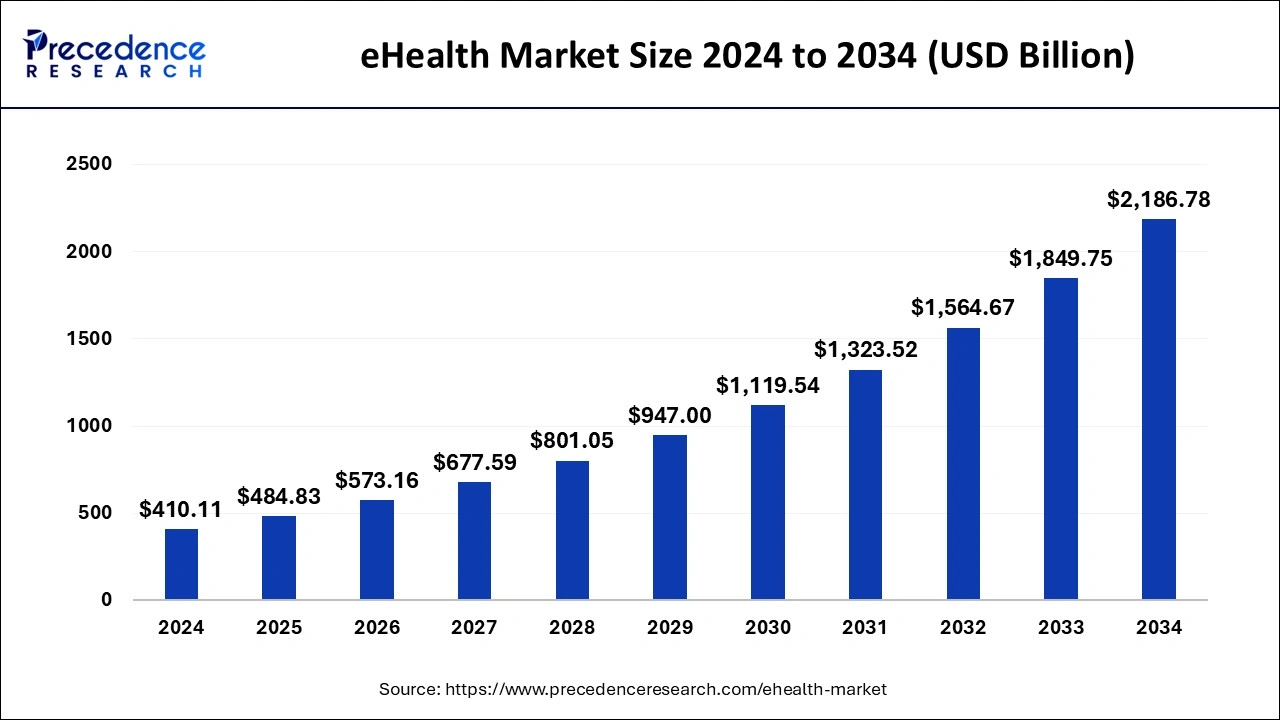
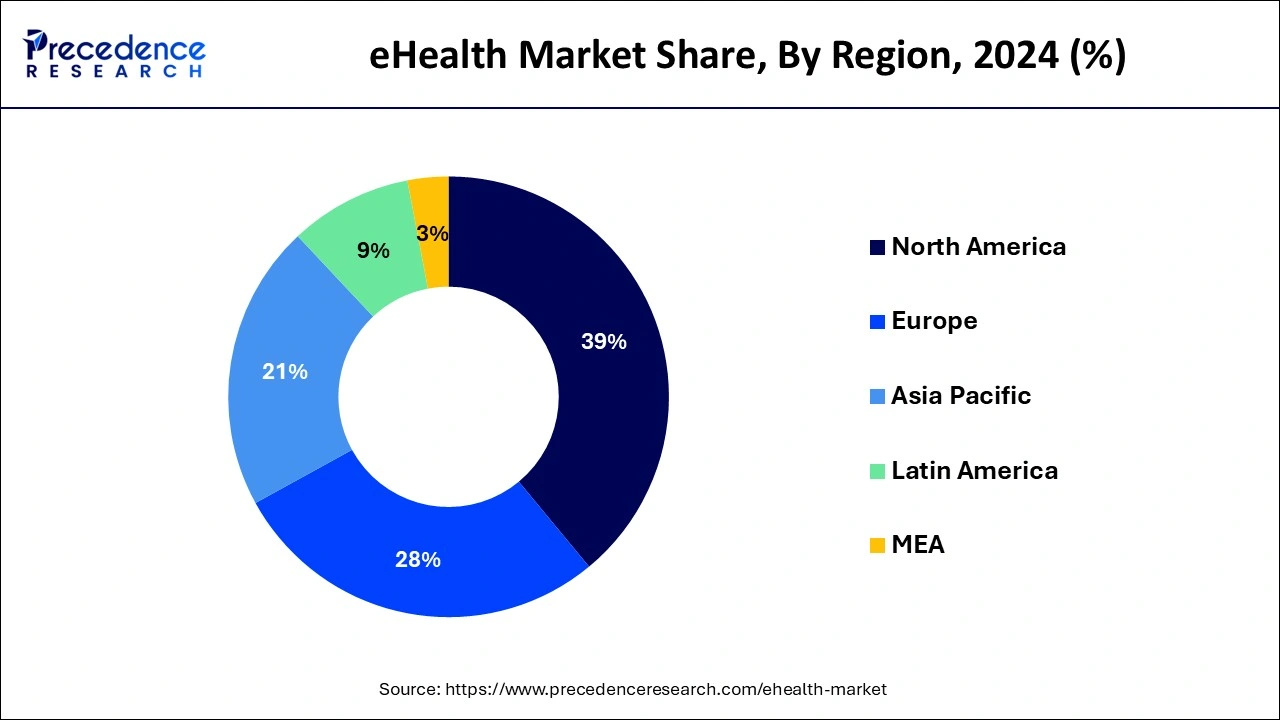
The global eHealth market was valued at USD 573.16 billion in 2026 and is projected to reach USD 2,489.18 billion by 2035, expanding at a 17.70% CAGR from 2026 to 2035. The market is driven by rising digital healthcare adoption, telemedicine, remote patient monitoring, smartphone penetration, and growing demand for accessible healthcare services. North America dominated with a 39% market share in 2025, while Asia Pacific is expected to be the fastest-growing region. Electronic health records led the product segment, while monitoring accounted for more than 60% of the service market. AI is further transforming eHealth through personalized care, diagnostic support, virtual assistants, clinical decision-making, and real-time patient monitoring.
Source: https://www.precedenceresearch.com/ehealth-market
 Get a Sample
 Table Of Content


What is the eHealth Market Size?
The global eHealth market market size is calculated at USD 484.83 billion in 2025 and is predicted to increase from USD 573.16 billion in 2026 to approximately USD 2,489.18 billion by 2035, expanding at a CAGR of 17.70% from 2026 to 2035. The acceptance of virtual care and systematic tech allocation to the medical information system is a fuel for the market. The dominance of wearable devices is a profitable source of income for healthcare device manufacturers and mobile applications that promote connectivity and confidentiality (if needed).
eHealth Market Key Takeaways
- North America dominated the global market with the largest market share of 39% in 2025.
- Asia Pacific is projected to expand at the notable CAGR during the forecast period.
- By product, the electronic health record (HER) segment has held the largest market share in 2025.
- By product, the mHealth segment is estimated to be the fastest-growing segment during the forecast period.
- By services, the monitoring segment captured the biggest market share in 2025.
- By end use, the healthcare providers segment contributed the highest market share in 2025.
- By end use, the insurers segment is expected to grow at a significant CAGR from 2026 to 2035.
Market Overview
The eHealth market is blooming with the technical, device and system backing that encourages digital thought to gain half of the healthcare value in patient health confidence. The market highlights the high performance of the communication and information technologies that involve interactive devices like mobile, internet, and computers. The remote medical model demands strong connectivity to have accurate updates on the individuals' health. The awareness of medical history is a value-added point for doctors during virtual diagnosis.
The fundamental content of this electronic solution is in favor of the advance informative system that guides doctors and hospital management in patient records, rare health conditions, and effective therapies. The listing of the precision medical records leads to improvement in the therapy and medication space. The reach of 5G delivers speed in the market mission, whereas the telemedicine programs are enhancing modern drug accessibility.
What is the Role of AI in the eHealth Sector?
AI has an important role in the evolution of the eHealth market by introducing advanced technologies which can improve patient care, and personalized medication, and enhance operational efficacy, treatment plans, and diagnostics. The growing trend for virtual assistance, decision support methods, and artificial intelligence-powered chatbots can provide enhanced support for medical advice. It can track the real-time condition of the patient and help medical professionals to share reports with patients. The implementation of artificial intelligence and rapid advances in natural language processing are providing diagnostic support and assisting pre-checkup information gathering from patients.
eHealth Market Growth Factors
- The surging adoption of innovative, digital, and patient-centric care technologies is significantly driving the growth of the global eHealth market. The global eHealth market is primarily driven by the rising demand for digital healthcare products and services amongst hospitals and patients around the globe.
- The various eHealth platforms are gaining rapid traction among the global population owing to the easy and 24/7 availability of health professionals, which has significantly boosted the demand for services like consultations and education.
- The surging investments in the development of telecommunications and IT infrastructure coupled with the surging adoption of smartphones and the rising number of internet users across the globe are fostering the growth of the eHealth market. Majority of the internet users had access to the internet using their smartphones.
- Consultants and other health professionals are adopting eHealth platforms for offering consultations and other services, which has also enhanced the reach of medical services in rural areas. E-health platforms like health, telehealth, and telemedicine are becoming an important distribution channel for physicians.
- The increased demand for eHealth platforms among consumers as well as health professionals is driving the global eHealth market growth.
- The surging prevalence of various non-communicable diseases such as cancer, cardiovascular diseases, diabetes, neurological diseases, and respiratory diseases is propelling the adoption of eHealth platforms among consumers.
- The rapidly growing geriatric population across the globe is fueling the market growth significantly. According to the United Nations, the global geriatric population is expected to reach 2 billion by 2050.
- The increasing number of healthcare units across the globe is boosting the adoption of eHealth. E-health platforms help in recording patients' medical health and also supply crucial insights to the doctors during the treatment of the patients. This enhances the patient care services in the healthcare units.
- Old age people need frequent diagnosis and monitoring as they are more prone to various diseases. The eHealth platforms facilitate remote monitoring and help to serve the monitoring needs of a geriatric patient. The surging penetration of the numerous eHealth platforms across the globe is augmenting the market growth.
Market Outlook
- Start-up Ecosystem: Divided by varied opportunities in the eHealth sector and united by one motive of introducing new growth demand to the same, the start-ups are promoting telemedicine, digital diagnostics, and AI-inspired extension to e-pharmacy, preventive care, personalized, and teleconsultation. The tech integration is a boon to the start-ups to flourish more ideas in the eHealth field.
- Industry Growth Overview: The industry growth is highly influenced by the rising demand for Remote Patient Monitoring (RPM), the unification of generative AI, and the connectivity area. Covering the time travel of the data sharing and data formation, the industry growth is experiencing massive new concepts and scopes in the eHealth industry.
Market Scope
| Report Coverage | Details |
| Market Size in 2025 | USD 484.23 Billion |
| Market Size in 2026 | USD 573.16 Billion |
| Market Size by 2035 | USD 2,489.18 Billion |
| Growth Rate from 2026 to 2035 |
CAGR of 17.70% |
| Largest Market | North America |
| Fastest Growing Market | Asia Pacific |
| Base Year | 2025 |
| Forecast Period | 2026 to 2035 |
| Segments Covered | Product, Service, End User, Deployment, Geography |
Market Tactics
Driver
Confident Devices
The massive supply and demand volume of wearable devices featuring the potential of the smartwatch, bracelet and ring innovations has become a part of the lifestyle of many individuals. The health-conscious and constantly ill population are the main customers of the medical devices. The proven acknowledgement by the healthcare system via interconnected applications doubles the confidence of individuals in these devices, aligning with the market mission and vision.
Restraint
Cyber Attack Risk
The vast patient data management runs on software models and staff skills. A patient data leak incident may stress the individuals via ransom calls, threats, or misguidance regarding health issues. This might trigger the patient and their respective families.
Opportunity
Digital Platforms
Virtual medical care is bolstering its platforms, and so the expansion of mobile applications and AI tools is at the peak of the market business. Adhering to the medical protocol, the platforms are moved by the home care model. The propelling automated triage dashboard is a commendable unification in favor of clinical data operation.
Segment Insights
Product Insights
The electronic health record (HER) segment dominated the global ehealth market, accounting for a market share of more than 25% in 2025. The surging need for the reduction of paperwork in the hospitals and maintaining an easily accessible and transferable health record of the patients has boosted the growth of the HER across the developed countries. Furthermore, the rising government initiatives to digitalize the operations in the hospitals and increase the operational efficiency has fostered the growth of the HER segment. For instance, My Health Record is a digital health record platform for the Australian citizens.
On the other hand, mhealth is expected to gain rapid traction during the forecast period. This is attributed to the rapidly growing mhealth startups in the various developed and developing countries and the rising adoption of the mhealth platforms among the consumers. The surging adoption of smartphones and improved access to the internet is expected to fuel the growth of the mhealth segment.
Service Insights
Based on the services, the monitoring segment accounted for a market share of more than 60% in 2025. The surging health awareness and growing adoption of self-monitoring devices has fueled the growth of this segment. The ehealth allows the patients to analyze health conditions and automatically transfer the vital health information to the database. Thus the surging adoption of the monitoring devices is driving the growth of this segment across the globe.
The diagnostic segment is expected to grow during the forecast period. The virtual solution and remote monitoring precision are a value-added contribution to advanced diagnostics. The virtual protocol is a mapping to the doctor's to continue with accurate clinical formality without any misguidance. The perfect sync between the patient and the doctors highlights the connectivity boon and perfect AI intervention for detecting the condition before it worsens.
End Use Insights
Based on the end use, the healthcare providers segment dominated the global ehealth market in 2025. This is attributed to the rapid surge of the ehealth and other digital technologies in the hospitals and clinics across the globe. The rising government initiatives to digitalize the healthcare sector to enhance the operational efficiency of the healthcare units have boosted the growth of the segment.
On the other hand, the insurer is estimated to be the most opportunistic segment during the forecast period. The rising adoption of the ehealth among the insurers to keep the track of the health conditions of their customers and preparing insurance policies is driving the growth of this segment.
Deployment Insights
The cloud-based segment dominated the market in 2025 and is expected to expand in the coming years. The cloud-based solution stimulates the services business and introduces the best-in-class engine to market development. The suitable interaction with the other technologies is a double profit to the connectivity as well. The growing concern for data security promotes the segmental market for a secure healthcare future.
Regional Insights
Why Does North America Dominate the Global eHealth Market?
North America dominated the global eHealth market in 2025, in terms of revenue and is expected to retain its dominance throughout the forecast period. The increased burden of various chronic diseases and the presence of huge geriatric population in US has significantly driven the market growth.
What is the U.S. eHealth Market Size?
The U.S. eHealth market size was exhibited at USD 132.36 billion in 2025 and is projected to be worth around USD 695.91 billion by 2035, growing at a CAGR of 18.45% from 2026 to 2035.
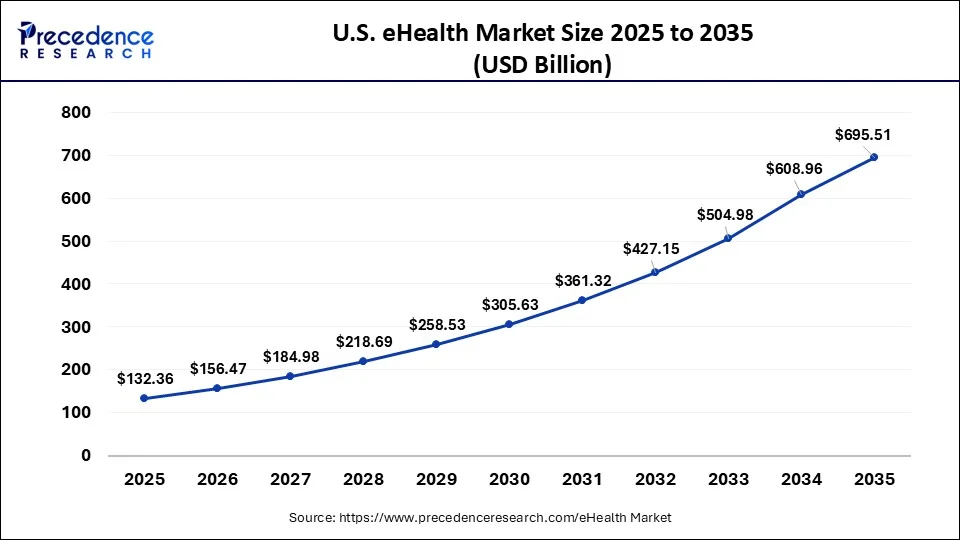
Moreover, the high disposable income, higher adoption of the digital technologies, and increased healthcare expenditure has supported the North America ehealth market. The presence of numerous number of platforms is positively contributing to the market growth. According to NCBI, over 40,000 health apps were available for download on Apple iTunes store in 2013 in US. Thus, rapid growth of the ehealth apps has exponentially driven the growth of the ehealth market.
Canada eHealth Market Trends
Canada's market is growing steadily as healthcare providers increasingly adopt digital health solutions to improve patient care, streamline operations, and enhance data management. Key drivers include government initiatives to promote electronic health records (EHRs), telemedicine, and digital health platforms, particularly in response to the growing demand for remote care and chronic disease management.
Why Is Asia Pacific the Fastest-Growing eHealth Market?
Asia Pacific is expected to be the fastest-growing market during the forecast period. The rising government expenditure on the development of sophisticated and digital healthcare infrastructure is fueling the demand for the ehealth platforms. Furthermore, the surging prevalence of various diseases and the rapidly growing geriatric population is expected to drive the market growth in the region. According to the United Nations, about 80% of the global geriatric population will be living in the low and middle income countries by 2050. Furthermore, the rising technological advancements and surging penetration of the smartphones and internet is expected to positively impact the market growth in Asia Pacific.
India eHealth Market Trends
India's market is expanding rapidly as healthcare providers and government agencies adopt digital solutions to enhance patient care, improve operational efficiency, and increase access to healthcare in remote areas. Key drivers include government initiatives such as the National Digital Health Mission, rising smartphone penetration, and growing awareness of telemedicine and mobile health applications.
Europe's Promising Advancements in the eHealth Industry
Europe's valuable advancement in the integrated diversified digital health has come into fruition after the legal entry of the European Health Data Space (EHDS). This regulation encouraged the population to set limit over the access and share their respective health data with their healthcare providers.
This safe access led one of the France patient have treatment in Italy via this digitised system. Alongside the trustworthy framework, this regulatory act helped reconstruct the policy-making, innovation, and research space. Tech and AI Advancement, followed by a legal body, builds trust among the patient cohort and saves the healthcare professionals time and money.
What are the Prominent Contributions of Latin America in eHealth?
Latin America's important contribution to date is Brazil's high investment rate and Argentina's position in Electronic Health Records (EHR). Brazil invested around $4 billion specifically for AI training and infrastructure. Brazil's groundbreaking tele-cardiology and its popular eHealth platform (SUS) accelerated the demand for eHealth.
Mexico's use of eHealth for remote consultations and chronic disease management made immense profit through its promising platforms. Peru's NAPO project also served telemedicine and broadband to the Amazon's underprivileged community. These valuable contributions are complementary to eHealth; thus, the use of Mobile Health (mHealth) stimulated the promotional value of the eHealth sector at its core.
Tech-support Or Challenges in MEA's eHealth Sector
The major technological advancements and government investments are the backbone to MEAs eHealth sector. Despite many challenges, the regional innovators, champion providers, and key players are building a new empire for this sector. The new start-ups are a huge support to eHealth as the growing digitised world needs a relevant kind of mindset and environment to fuel precision and security for the patients' data and health, too.
eHealth Market Companies
- Allscripts Healthcare Solutions, Inc.
- Koninklijke Philips N.V.
- Siemens Healthineers
- International Business Machines Corporation
- General Electric Company
- InTouch Health
- Athenahealth, Inc.
- Cisco Systems, Inc.
- UnitedHealth Group
- Medtronic plc.
Recent Developments
- In April 2024, eHealth, Inc. announced the launch of the ePerks Rewards Program. The company enrolled over 200,000 existing eHealth Medicare customers and is planning to cover more, providing them ePerks. Fran Soistman, eHealth CEO said, “We're always looking for new ways to do more for our customers; that's why I'm so excited about our ePerks rewards program," said eHealth CEO Fran Soistman. "This is just the beginning. We look forward to expanding the program in the months to come, enrolling new members, and adding special offers. It's another way of making eHealth an indispensable partner in the health and wellbeing of our customers.” In addition, Medicare/Medicaid dual-eligible ePerks members may also enjoy special access to a dedicated customer service team for assistance with selecting a medical care provider, addressing billing questions, and accessing existing plan services that may include meal delivery, transportation, and financial assistance.
- In June 2024, eHealth Ventures announced the launch of a fast-track pre-Seed investment program for health tech companies. "The fast-track program we launched is our response to the difficulties faced by young Israeli entrepreneurs in raising capital during these tough times,” said Talor Sax, Managing Partner at eHealth Ventures and CEO of the incubator.
Segments Covered in the Report
By Product
- ePrescribing
- EHR
- Telemedicine
- mHealth
- Health Management
- Clinical Decision Support
- Information System
- Radiology Information Systems
- Laboratory Information Systems
- Cardiovascular Information Systems
- Telehealth
- Health Information Exchange Solutions
- Chronic Care Management Apps
- Medical Apps
By Service
- Diagnostic
- Monitoring
- Healthcare Strengthening
- Treatment
- Database Management
By End Use
- Healthcare Providers
- Hospitals
- Ambulatory Care Centers
- Home Healthcare Agencies, Nursing Homes, and Assisted Living Centers
- Insurers
- Healthcare Consumers
- Government
By Deployment
- On-premise
- Cloud-based
By Geography
- North America
- U.S.
- Canada
- Europe
- U.K.
- Germany
- France
- Asia-Pacific
- China
- India
- Japan
- South Korea
- Malaysia
- Philippines
- Latin America
- Brazil
- Rest of Latin America
- Middle East & Africa (MEA)
- GCC
- North Africa
- South Africa
- Rest of the Middle East & Africa
For inquiries regarding discounts, bulk purchases, or customization requests, please contact us at sales@precedenceresearch.com
Frequently Asked Questions
Tags





Ask For Sample
No cookie-cutter, only authentic analysis – take the 1st step to become a Precedence Research client
 Get a Sample
.webp)



 sales@precedenceresearch.com
 Schedule a Meeting
