



Flame Retardant Market Size, Key Companies, Company Production Capacity, Manufacturing Efficiency, Capacity Utilization, Raw Material Consumption, Cost Structure, Export Trends, Company Expansion Strategies, and Competitive Landscape
Flame Retardant Market (By Product: Halogenated, Non-halogenated; By Application: Unsaturated Polyester Resins, Epoxy Resins, PVC, Rubber, Polyolefins, Others; By End-use: Construction, Transportation, Electrical & Electronics, Others) - Global Industry Analysis, Size, Trends, Leading Companies, Regional Outlook, and Forecast 2025 to 2034
Source: https://www.precedenceresearch.com/flame-retardant-market
 Get a Sample
 Table Of Content


What is Flame Retardant Market Size?
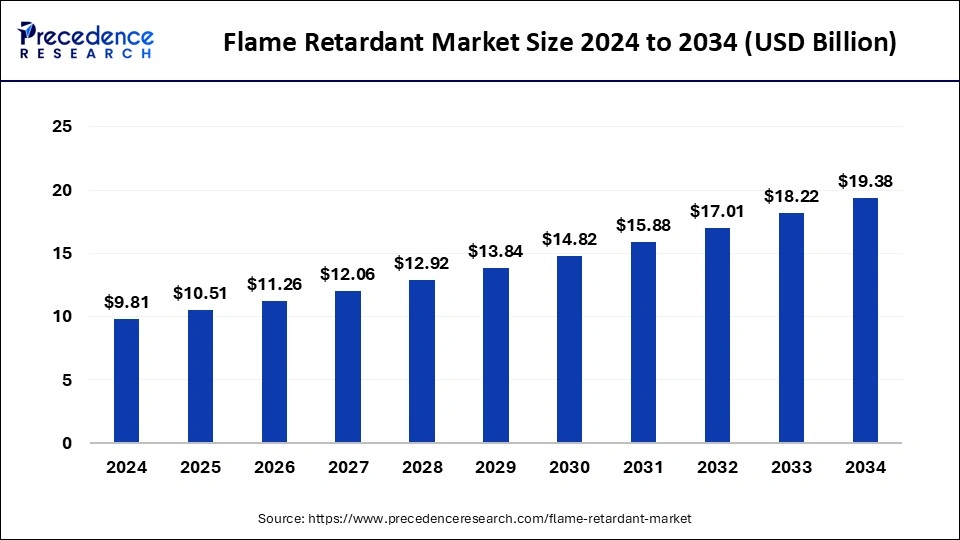
The global flame retardant market size is calculated at USD 10.51 billion in 2025 and is predicted to increase from USD 11.26 billion in 2026 to approximately USD 19.38 billion by 2034, expanding at a CAGR of 7.05% from 2025 to 2034.
Market Highlights
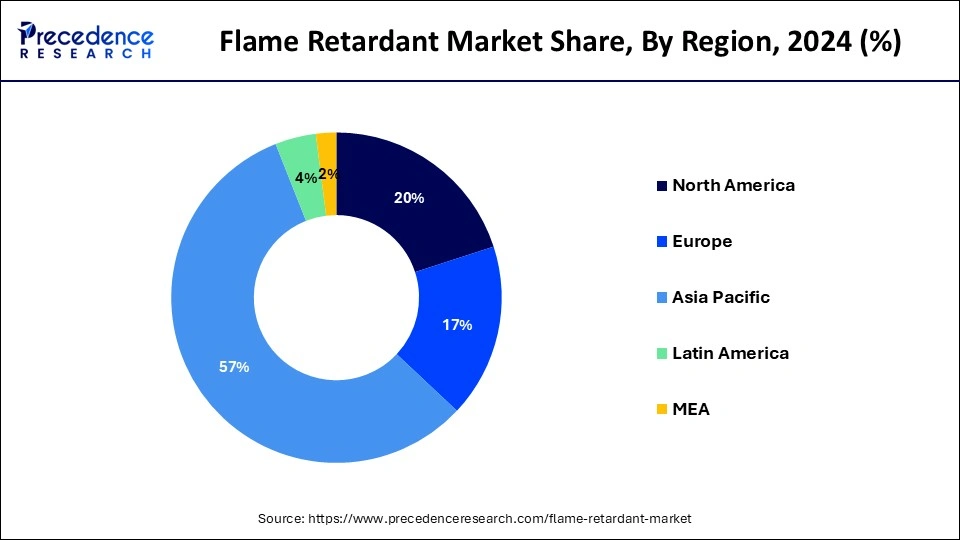
- Asia Pacific dominated the flame retardant market with the largest revenue share of 57% in 2024.
- North America is anticipated to grow at a significant CAGR in the market during the forecast period.
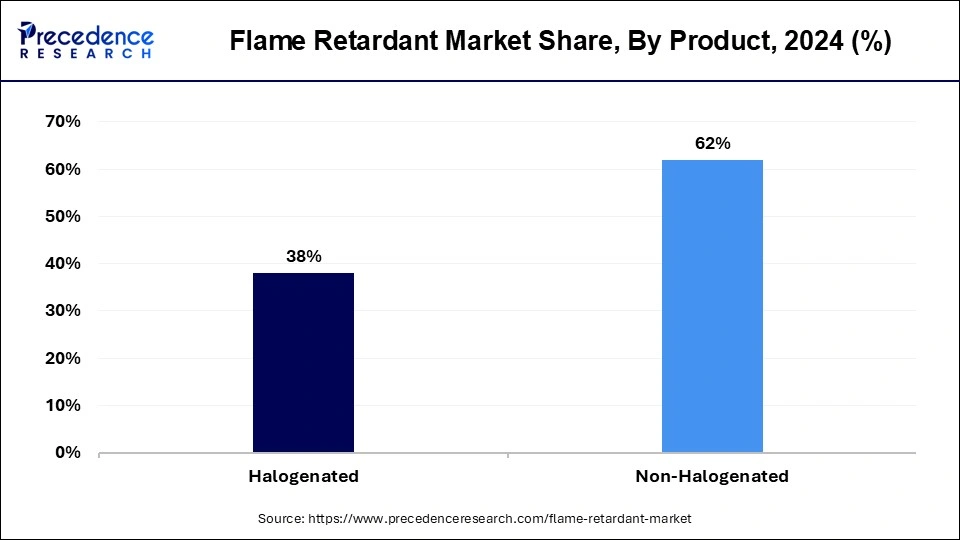
- By product, the non-halogenated segment accounted for the largest revenue share of 62% in 2024.
- By product, the halogenated segment is expected to witness considerable growth in the global market over the forecast period.
- By application, the epoxy resins segment held the largest share of the market in 2024.
- By application, the polyolefins segment is expected to grow rapidly in the market during the forecast period.
- By end use, the electrical & electronics segment has held the major revenue share of 40% in 2024.
- By end use, the construction segment is expected to grow at a notable CAGR of 9.22% during the forecast period.
Market Size and Forecast
- Market Size in 2025: USD 10.51 Billion
- Market Size in 2026: USD 11.26 Billion
- Forecasted Market Size by 2034: USD 19.38 Billion
- CAGR (2025-2034): 7.05%
- Largest Market in 2024: Asia Pacific
- Fastest Growing Market: North America
Market Overview
Flame retardants are the chemical compounds that are added to the materials, such as plastics, textiles, and surface coatings, to prevent from starting or slowing the spread of fire. Flame retardants are widely used in electronic & electrical components, wires & cables, construction, appliances, and others. The flame retardant market has witnessed the increasing use of flame retardant chemicals added to a wide range of products, such as electronics, furniture foam, and building insulation, to meet stringent flammability standards. The usage of flame retardant improves the fire safety of combustible materials and products.
Technological Advancement
The advancements, like the use of nanocomposites and graphene-based products, are making flame retardant materials more flame resistant while also being flexible enough and strong. There is also growing research in bio-based flame retardants based on renewable resources for applications in construction, the automotive industry, and electronics. These innovations' goals are not limited to the prevention of ignition but also to minimizing the taking or relighting, smoke, and toxic gases during combustion.
Flame Retardant Market Growth Factors
- The rapid expansion of urbanization and infrastructure development is estimated to accelerate the flame retardant market's revenue during the forecast period.
- The increasing popularity of eco-friendly flame retardants and extensive R&D into non-halogenated flame retardants are projected to offer significant opportunities for the flame retardant market expansion.
- The rising construction of residential, commercial, and industrial buildings increases the demand for flame retardants to eliminate the risk of fire and ensure safety, contributing to the market's growth.
- The automakers are incorporating flame-retardant materials into vehicle interiors and electrical systems to improve driver and passenger safety and reduce the risk of fire.
- The rapid surge in the adoption of fire retardants in consumer electronics, such as tablets, smartphones, laptops, headsets, and other gadget devices, is expected to fuel the growth of the flame retardant market during the forecast period.
- The rising public awareness of safety in both developed and developing economies has significantly increased the popularity of flame retardants across various end-use sectors.
- The robust growth of the textile industry is expected to propel the expansion of the flame retardant market during the forecast period. Flame retardants are added to fabrics in the textile industry such as nylon fabrics, polyester fabrics, and polypropylene fabrics, making them flame-resistant. Curtains, sofas, firefighting clothes, carpets, car seats, and others. These are some examples of processed flame retardants.
Key Factors Influencing Future Market Trends
- Stricter environmental regulations: Many governments across the globe continue to put in place complex, restrictive measures on the usage of toxic and halogenated flame retardants because of issues of toxicity.
- Demand for sustainable solutions: A rise in concern over the effects on the environment has led to high demand for flame retardants that are biodegradable, bio-based, and of low toxicity. This has posed a sustainability trend that influences innovation and purchasing behavior that will define the future products likely to be seen in various industries such as construction, textiles, and electronics.
- Technological innovation: Recent emerging technologies in nanotechnology, polymer science, and material engineering are paving the way to the design of high-efficiency, lightweight weight and multipurpose flame retardants. The trends in the future will be more oriented towards smart flame retardants, self-sustainable systems, and systems based on hybrid materials that will improve the safety while, at the same time, have positive impacts on the environment.
Flame Retardant Market Outlook
- Industry Growth Overview: Between 2025 and 2030, this market is expected to grow significantly due to the rising cases of fire incidents coupled with increase in number of residential constructions in different parts of the world.
- Major Investors: Several market players and strategic investors are actively entering this industry, drawn by collaborations, R&D and investments. Numerous flame retardant brands such as Eastman Chemical Company, Hangzhou Lingrui Chemical Co. Ltd., Hongbaoli Group Co. Ltd., Huntsman International Llc, Lanxess and some others have started investing rapidly for developing high-quality flame retardant solutions for the end-users across the globe.
- Startup Ecosystem: Numerous startup companies are engaged in developing flame-retardants for the end-users. The top startup brands dealing in flame retardants comprises of Zenova, Fireguardia, iThermAI and some others.
Market Scope
| Report Coverage | Details |
| Market Size by 2025 | USD 10.51 Billion |
| Market Size in 2026 | USD 11.26 Billion |
| Market Size in 2034 | USD 19.38 Billion |
| Market Growth Rate from 2025 to 2034 | CAGR of 7.05% |
| Largest Market | Asia Pacific |
| Base Year | 2024 |
| Forecast Period | 2025 to 2034 |
| Segments Covered | Product, Application, End-use, and Regions |
| Regions Covered | North America, Europe, Asia-Pacific, Latin America, and Middle East & Africa |
Market Dynamics
Drivers
Increasing demand from various end-use industries
The growing demand for fire retardants from various end-use industries is expected to fuel the growth of the flame retardant market during the forecast period. Manufacturers and automakers are required to follow certain strict fire safety regulations in end-use sectors. The market is experiencing increasing usage of fire-resistant products in several end-use industries, including building & construction, electrical & electronics, transportation, textile, oil & gas, and others. These industries are extensively using flame retardant to enhance safety and meet fire regulations.
Flame retardants aid in protecting numerous equipment and materials, such as circuit boards, wires, furniture foam, car seats, transportation interiors, infant mattresses, paint & coatings, television cases, building insulation, fabric blinds, and others, from the ignition and spread of fire. Therefore, the demand for flame retardants is accelerating as more industries seek to reduce and eliminate fire-related risks, and is anticipated to boost the growth of the market during the forecast period.
- In February 2022, Bulwark, the world's largest flame-resistant (FR) apparel brand, in partnership with DuPont Personal Protection, a global innovation leader of technology-based materials and solutions, announced a new series of flame-resistant gloves for workers in the oil & gas industry.
- In October 2023, Solvay announced the launch of a new SolvaLite grade for superior flame retardancy in battery enclosures. The new grade meets the automotive sector's demand for material solutions to protect electric batteries from fire hazards.
Restraint
Rising environmental and health concerns
The rise in the environmental and health issues associated with the use of traditional flame retardants is anticipated to restrain the flame retardant market's expansion during the forecast period. Fame-retardant chemicals, including brominated and chlorinated, have harmful effects on the environment and humans. The manufacturing of flame retardants includes numerous harmful chemicals that may cause several health disorders, such as respiratory problems, fatigue, conjunctival irritation, dizziness, skin diseases, and others.
Additionally, several renowned regulatory bodies around the world, such as the United States Environmental Protection Agency (U.S. EPA) and the European Union Legislation, have laid down several norms and regulations to restrict the use of harmful compounds in the manufacturing of flame retardants such as Hexabromocyclododecane (HBCD). Thus hindering the market's expansion.
Opportunities
Increasing focus on fire safety regulations
The rising focus on fire safety regulations is projected to offer a lucrative opportunity for the growth of the flame retardant market during the forecast period. Several governing authorities and regulatory bodies around the world are implementing stringent fire safety regulations to minimize the risk of fires and promote public safety. Such stringent regulations are expected to escalate the sales of flame retardants in oil & gas, chemical manufacturing, construction, textiles, electric & electronics sectors, and the automotive industry.
Moreover, technical improvements coupled with R&D activities have significantly increased the demand for various electrical & electronic devices. The rising popularity of electrical& electronic devices and increasing customer inclination towards compact gadgets has increased the usage of flame-retardants for fire protection solutions. Thus bolstering the growth of the market.
- The International Code Council and the National Fire Protection Association (NFPA) have developed several fire safety laws.
- The EU's Green Deal Industrial Plan, published on February 1, 2023, aims to enhance and protect European industrial competitiveness and manufacturing capacity throughout its transition to climate neutrality to deliver prosperity.
Segment Insights
Product Insights
The non-halogenated segment accounted for the dominating share of the flame retardant market in the year 2024 and is projected to continue its dominance over the forecast period owing to several environmental initiatives to reduce the usage of halogenated compounds. They are also widely used for applications that require high levels of flame protection, such as aerospace, military, wire and cable, building and construction, automotive, and others.
Ammonium polyphosphate is rapidly gaining popularity among non-halogenated phosphorus-based flame retardants. Phosphate esters are highly effective in urethane foams and engineered resin systems. Non-halogen flame retardants are considered nontoxic and do not produce harmful gases during combustion. They are regarded as greener additives and can function independently without a synergist to provide the necessary performance. Such factors drive the growth of the segment.
- In April 2024, Finolex announced the launch of sustainable and flame-retardant wires. The halogen-free and flame-retardant industrial cables under FinoGreen are designed to mitigate safety risks in electrical installations and avert accidents, particularly fires. Finolex Cables has launched a range of eco-safe wires under the FinoGreen brand. It would account for around 5% of the company's wires business.
The halogenated segment is expected to witness considerable growth in the global flame retardant market over the forecast period. Halogenated flame retardants include chlorine, bromine, fluorine, and iodine compounds. Brominated flame retardants are the most popular. Halogenated flame retardants are often combined with synergists to reduce the loading rate. Halogenated flame retardants are used in multiple products, including mattresses, carpets, building and construction materials, furniture, electronic devices, and transportation products. Some occupations, such as construction, firefighting, manufacturing, and other industries, are more exposed to halogenated flame retardants than the general public. The continuous exposure of halogenated flame retardants can occur through ingestion, inhalation, and dermal routes.
Application Insights
The epoxy resins segment held the largest share of the flame retardant market in 2024 and is expected to sustain the position throughout the forecast period. The segment is expected to sustain the position throughout the forecast period owing to the increasing flame-resistant epoxy resins extensively used in building & construction, aerospace, rail, coatings, composites, adhesives, civil engineering, and marine applications. Epoxy resins are formulated, making them adaptable for different industries and products. They are highly effective for longer periods and ensure fire safety throughout the lifespan of the product.
The polyolefins segment is expected to grow rapidly in the flame retardant market during the forecast period. Polyolefins help to reduce the spread of fire and also prevent the polymer from dripping. Mattresses, carpets, roofing and siding, construction, components in trains and planes, transportation interiors, and others that require flame retardants in polyolefin fabrics. Thus fueling the expansion of the segment.
End-use Insights
The electrical & electronics segment accounted for the largest share of the flame retardant market during the forecast period. The growth of the region is mainly driven by the rapid growth of the electrical and electronics industry. The use of flame retardant in E&E products reduces the risk of fire-causing short circuits. Flame retardants offer reliable safety from switches to micro-assemblies, casings, printed circuits, and several other E&E components.
In addition, the rising adoption of televisions, smartphones, tablets, laptops, gaming systems, and others. These electronic devices are embedded in everyday life, and they cannot be used safely without flame retardants. Flame retardants play an important role in reducing the risk of a fire starting or spreading, leaving more time for people to escape and respond. Electrical & electronics manufacturers prioritize the usage of flame retardants to meet the safety rules and protect against the risk of fire.
- In April 2024, Trinseo announced the launch of new PFAS-free flame retardant products. Trinseo is now making two grades of Emerge-brand polycarbonate resin and one grade of Emerge-brand PC/ABS blend with those performance characteristics. These new products maintain those critical performance attributes while addressing the growing demand and regulatory pressures to reduce the use of PFAS, especially in the consumer electronics and electrical industries.
- In October 2022, LANXESS announced the launch of a new phosphorus flame retardant. LANXESS has developed a non-halogen flame retardant that is offered under the brand name Emerald Innovation NH 500. The phosphorus-based additive is designed primarily for use in glass fiber-reinforced plastics used to manufacture products for the electrical and electronics (E&E) industry.
- In February 2024, Evonik announced the launch of its INFINAM FR 4100L 3D printing resin for the manufacture of touch, ductile, and flame-retardant parts. Designed for use with digital light processing (DLP) 3D printing technology, INFINAM FR 4100L is both flame retardant and mechanically durable when cured.
The construction segment is expected to grow at a notable rate in the market over the forecast period. Flame retardants have been widely used in building and construction materials such as insulation materials, electrical wiring, coatings, roofing, insulation, and others. Fire retardants are used in building & construction projects to meet fire safety standards and codes. Flame retardants reduce the chances that an ignition source will initiate and spread fire.
Fire retardants are designed to prevent or slow down the spread of fire, providing additional time for building occupants to escape and emergency personnel to respond. Builders, developers, house owners, and construction professionals emphasize the use of flame-retardant materials in the design and construction of buildings to ensure the safety of occupants and reduce fire risks. Such factors are boosting the considerable growth of the segment.
- According to the data provided by the IBEF report, under the Interim Budget 2024-25, capital investment outlay for infrastructure has been increased by 11.1% to Rs.11.11 lakh crore (USD 133.86 billion), which would be 3.4 % of GDP. FDI in construction development (townships, housing, built-up infrastructure, and construction development projects) and construction (infrastructure) activity sectors stood at USD 26.54 billion and USD 33.52 billion, respectively, between April 2000 and December 2023.
- In June 2022, Axalta announced the launch of Plascoat PPA571 FR (Flame-Retardant), a new anti-corrosion coating solution designed to protect buildings and save lives in the event of fires.
Regional Insights
Asia Pacific Flame Retardant Market Size and Growth 2025 to 2034
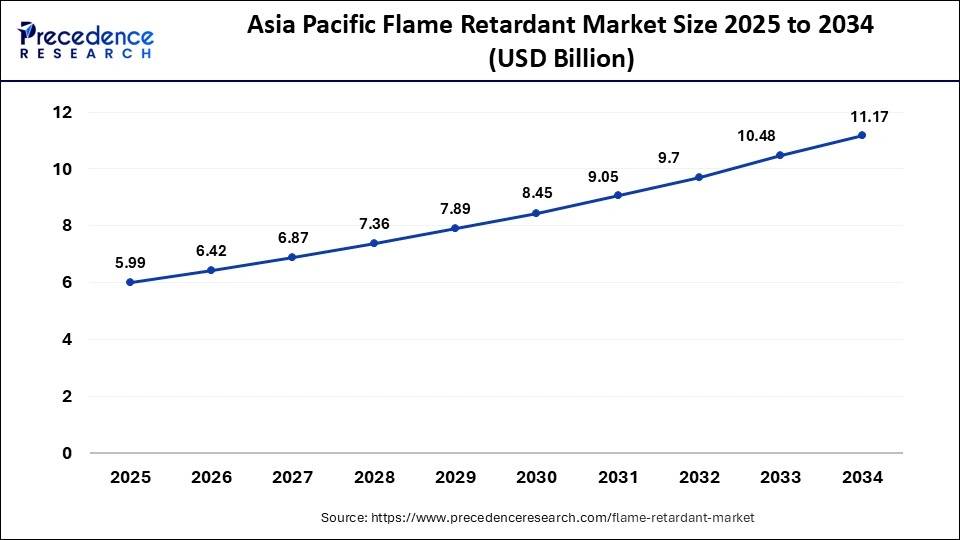
The Asia Pacific flame retardant market size is exhibited at USD 5.99 billion in 2025 and is projected to be worth around USD 11.17 billion by 2034, growing at a CAGR of 7.17% from 2025 to 2034.
Asia Pacific dominated the flame retardant market in 2024. The growth of the region is attributed to rapid industrialization & urbanization, a large population base of population, a rise in infrastructural development projects, easy availability of raw materials, including chemicals required for flame retardant production, and rising demand for consumer electronics and appliances.
In Asia Pacific, developing countries such as China, Japan, and India are the major contributors to the flame retardant market owing to the rising construction of residential and commercial buildings, growing public awareness of safety standards, and rising demand for flame retardant chemicals across various industries across construction, electrical & electronics, automotive, textile, and aerospace to meet safety guidelines. Furthermore, a stringent government framework for fire safety coupled with increasing cases of fire accidents in the Asia Pacific region is escalating the demand for flame retardants during the forecast period. Thus, this is expected to propel the market growth in the region during the forecast period.
- The National Building Code of India covers the detailed guidelines for the construction, maintenance, and fire safety of the structures. The National Building Code of India is published by the Bureau of Indian Standards.
- According to the India Cellular and Electronics Association (ICEA), Mobile phone manufacturing in value terms jumped 21-fold to Rs 4.1 lakh crore in India in the last ten years as government policy measures like the Production Linked Incentive (PLI) boosted local production. India now produces 97 % of its total mobile phone demand locally, and 30% of the total production in the financial year 2024 is meant for export. Mobile phone production surged from Rs 18,900 crore in 2014-15 to an estimated Rs 4,10,000 crore in FY'24, registering an increase of 2000%.
- In October 2023, Clariant marks another milestone in its China Strategy with the official opening of its new state-of-the-art production facility for halogen-free flame retardants in Daya Bay, Huizhou. CHF 60 million investment in a new high-performance halogen-free flame retardant facility completed on time in the first stage of an overall CHF 100 million investment.
Europe Flame Retardant Market Outlook:
Europe held a significant share of the market. The rising sales of halogenated flame retardants in various countries such as Germany, France, Italy, UK and some others has boosted the market expansion. Additionally, numerous government initiatives aimed at enhancing industrial safety coupled with presence of several market players is expected to drive the growth of the flame retardant market in this region.
North America is anticipated to grow at a significant CAGR in the flame retardant market during the forecast period. The United States dominates the North American market, followed by Canada. The region's robust growth is driven by the rapid infrastructural development, rising investments in EVs, and increasing demand for electrical components for multiple applications, including wiring, power cables, connectors, and others used in construction & building, electronic devices, and automotive. Moreover, the rising government initiatives for fire safety are expected to accelerate the demand for flame retardants in numerous sectors.
Latin America Flame Retardant Market Trends:
Latin America held a considerable share of the industry. The increasing cases of forest fire in several countries including Brazil, Argentina, Venezuela and some others bas driven the market growth. Also, rapid investment by market players for opening up new production centers is expected to accelerate the growth of the flame retardant market in this region.
Middle East and Africa Flame Retardant Market Trends:
The Middle East & Africa held a notable share of the market. The growing demand for high-quality flame-retardant solutions in the oil & gas industry across Middle East has driven the market expansion. Also, joint ventures among construction companies and market players to deploy advanced flame-retardant systems in construction sites to enhance safety is expected to boost the growth of the flame retardant market in this region.
Value-Chain Analysis
- Raw Material Procurement : The raw materials for flame retardants include inorganic and organic compounds such as phosphorus, halogens, bromine, chlorine, nitrogen, silicon, and various minerals such as aluminum hydroxide and antimony oxide.
Key Companies: Tata Chemicals, Archean Chemical Industries, Solaris ChemTech Industries and others. - Production Methodology: Production methodologies for flame retardants vary by type, involving processes such as chemical synthesis for phosphorus-based compounds, mixing and heating for aqueous solutions, and impregnation or coating for materials like textiles and wood.
Key Companies: THOR, DSM, FRX Innovations and others. - Distribution Channel : The distribution channel for flame retardants is a direct business-to-business (B2B) model, where chemical manufacturers sell to companies that then incorporate the flame retardants into their products or processes. This process is followed by a B2B or B2C distribution to consumers through various online platforms and retail outlets.
Key Companies: Alibaba, Amazon, Walmart and others.
Key Players in Flame Retardant Market & Their Offerings
- Albemarle Corporation: Albemarle Corporation is a global specialty chemicals company headquartered in Charlotte, NC, that produces essential ingredients for industries such as energy, electronics, and transportation. The company has leading positions in lithium, bromine, and refining catalysts and focuses on creating solutions for mobility, energy, connectivity, and health.
- BASF SE: BASF SE is a German multinational chemical company headquartered in Ludwigshafen, Germany, and is the largest chemical producer in the world. The company's activities include the production, marketing, and sale of chemicals, plastics, performance products, and crop protection products. It operates through six segments: Chemicals, Materials, Industrial Solutions, Surface Technologies, Nutrition & Care, and Agricultural Solutions. BASF focuses on sustainability and serves a wide range of industries, including agriculture, automotive, construction, and electronics.
- DOW: Dow Inc. is a global material science company headquartered in Midland, Michigan, that produces a wide range of chemicals, plastics, and performance materials. Its products are used in sectors like packaging, infrastructure, and consumer care.
- Eastman Chemical Company: Eastman Chemical Company is a global specialty materials company founded in 1920 and headquartered in Kingsport, Tennessee. It produces a wide array of products, including advanced materials, functional products, and specialty additives across numerous sectors such as transportation, building and construction, and consumables
- Hangzhou Lingrui Chemical Co. Ltd.: Hangzhou Lingrui Chemical Co., Ltd. is a technical company established in 2010 that specializes in the custom synthesis, manufacturing, and sales of chemicals, with a focus on pharmaceutical intermediates. Located in the Hangzhou Qinglan science park, the company serves various industries and markets across North America, South America, Europe, and Asia, among others.
- Hongbaoli Group Co. Ltd.: Hongbaoli Group Co. Ltd. is a Chinese company specializing in the research, development, production, and sales of new chemical materials such as polyurethanes and isopropanolamines. Its products are used in a wide range of applications, including refrigeration, construction insulation, industrial cleaning, and as intermediates for other products such as pharmaceuticals and pesticides.
- Huntsman International LLC: Huntsman International LLC is a global manufacturer and marketer of differentiated and specialty chemicals, with products used in industries such as aerospace, automotive, construction, and consumer goods. Headquartered in The Woodlands, Texas, the company produces a wide range of chemical products, including polyurethanes, performance products, and epoxy-based formulations.
- Lanxess: LANXESS is a global specialty chemicals company based in Cologne, Germany, that develops, manufactures, and markets chemical intermediates, additives, and consumer protection products. The company's core business is organized into three segments such as advanced industrial intermediates, specialty additives, and consumer protection.
- Muby Chemicals: Muby Chemicals, established in 1976, is a Mumbai-based manufacturer of specialty chemicals, pharmaceutical excipients, mineral salts, and other chemicals for industries including pharmaceuticals, nutraceuticals, and food and beverage.
- Sasol: Sasol is a global integrated chemicals and energy company headquartered in Sandton, South Africa, that produces a wide range of products including liquid fuels, chemicals, and electricity. This company was founded in 1950 and known for its sophisticated technologies, which include processes for converting coal and gas into liquid fuels and chemicals.
Recent Developments
- In November 2025, Zentek launched a new graphite gel-based fire-retardant product. This range of flame retardant is designed for the users of the U.S. region.
- In October 2025, Ahlstrom launched a new range of flame-retardant paper. This flame retardant paper is based on Flame-Gard technology designed to enhance safety in the industrial sector.
- In May 2025, Alfa Chemistry launched a new cutting-edge flame retardant product. This flame retardant product is designed for several sectors including electronics, construction, and transportation.
Segments Covered in the Report
By Product
- Halogenated
- Brominated
- Chlorinated Phosphates
- Antimony Trioxide
- Others
- Non-halogenated
- Aluminum Hydroxide
- Magnesium Dihydroxide
- Phosphorus Based
By Application
- Unsaturated Polyester Resins
- Epoxy Resins
- PVC
- Rubber
- Polyolefins
- Others (Engineering Thermoplastics And PET)
By End-use
- Construction
- Transportation
- Electrical & Electronics
- Others
By Region
- North America
- Asia Pacific
- Europe
- Latin America
- Middle East & Africa
For inquiries regarding discounts, bulk purchases, or customization requests, please contact us at sales@precedenceresearch.com
Frequently Asked Questions





Ask For Sample
No cookie-cutter, only authentic analysis – take the 1st step to become a Precedence Research client
 Get a Sample




 sales@precedenceresearch.com
 Schedule a Meeting
