



Home Diagnostics Market Size, Key Companies, Company Market Share, Hospital Procurement Trends, Manufacturing Capacity, Sales Performance, Regulatory Approvals, Patient Outcomes, Competitive Landscape, and Forecast
The global home diagnostics market is projected to grow from USD 7.28 billion in 2026 to USD 11.54 billion by 2035, expanding at a CAGR of 5.26% from 2026 to 2035. Market growth is driven by the rising prevalence of chronic diseases, increasing health consciousness, growing demand for convenient self-testing, technological advancements in diagnostic devices, and the expanding availability of home diagnostic kits through retail and online channels. North America led the market in 2025, while Asia Pacific is expected to be the fastest-growing region during the forecast period. Glucose monitoring devices held the largest share by test type, cassettes led by form, and retail pharmacies accounted for the largest distribution channel share.
Source: https://www.precedenceresearch.com/home-diagnostics-market
 Get a Sample
 Table Of Content


What is the Home Diagnostics Market Size?
The global home diagnostics market size is calculated at USD 6.91 billion in 2025 and is predicted to increase from USD 7.28 billion in 2026 to approximately USD 11.54 billion by 2035, expanding at a CAGR of 5.26% from 2026 to 2035. The connectivity advantages and advanced convenience of patient-centric home care devices and services are confirming confidence in the market. The compact solutions and the accessibility of modern technologies are accelerating market dominance in the healthcare sector.
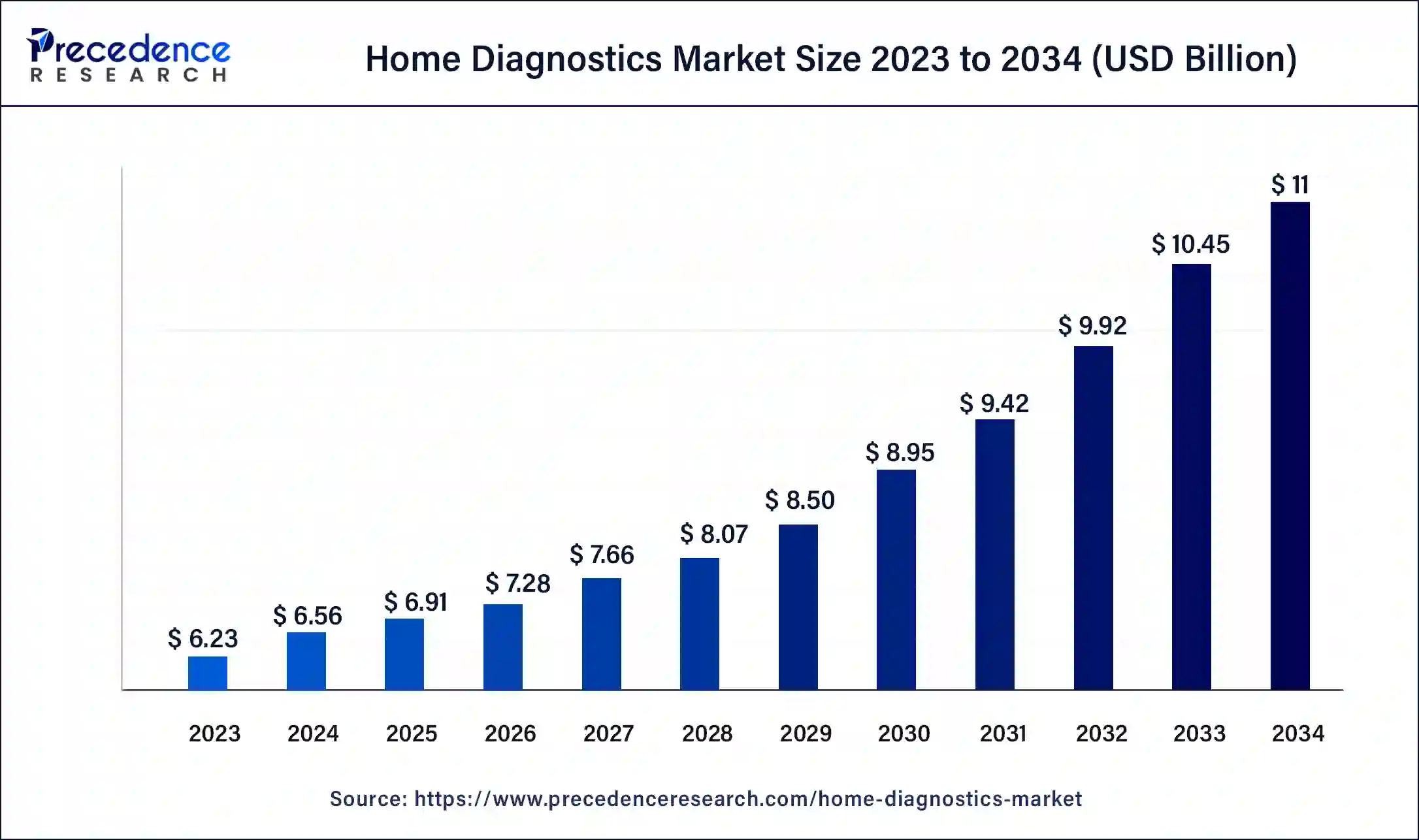
Home Diagnostics Market Key Takeaways
- North America led the global market with the highest market share in 2025.
- By test type, the glucose monitoring devices segment has held the largest market share in 2025.
- By form, the cassettes segment captured the biggest revenue share in 2025.
- By distribution channel, the retail pharmacies segment registered the maximum market share in 2025.
Market Overview
Home diagnostics is a combination of health tests and screening that can be performed within the home setting. The promotion of advanced devices and self-test kits is a close eye on patient care that helps the patient to address the condition and professionals to go ahead with medical decisions. This forms a layer of patient care that first starts from self-awareness. The sample collection services at the comfort of the home are a smart laboratory business strategy, offering an indoor solution for the busy, serious, or geriatric population that demands this convenience on an urgent basis. The routine tracking products and precision pathway that are attached to the instructions signal sincere usage of the devices. The supply and demand for at-home kits are at the peak of the home care trend, making them reliable and pocket-friendly compared to clinical visits.
How is AI contributing to the Home Diagnostics Market?
AI simplifies the process for home diagnostics by applying machine learning and natural language processing, and at the same time, it supports the users in doing the tests precisely at their respective homes. The tests are analyzed, abnormalities are detected, and a guide is provided for the diagnosis steps, reducing the clinician's role. AI connects the users to the professionals remotely, personalizes the monitoring, and greatly improves the early detection. Better accessibility leads to the adoption of preventive care and makes the home-based diagnostic procedure patients' favorite because of the convenience it offers.
Home Diagnostics Market Growth Factors
The technological advancements in the field of diagnostics have encouraged the development of several advanced devices and equipment that enables people to monitor their health conditions on regular basis. The conveniences associated with using the diagnostic devices at home by eliminating medical assistance have fueled the demand for various diagnostic equipment among the global population. Further, the rising prevalence of cancer, diabetes, and other incidences like growing uses of pregnancy test kits among women, where regular diagnosis is needed, is fueling the adoption of self-testing kits among the global population. According to the World Health Organization, around 1.5 million deaths were directly linked to the diabetes in 2019 and around 2.2 million deaths were linked to high blood glucose in 2012. According to the International Diabetes Federation, around 700 million people will have diabetes around the globe, by 2045. As per the data published by the US National Cancer Institute, the number of cancer survivors is expected to reach over 22 million by 2030 in US. The cancer survivors need to be monitored frequently. Moreover, the rising adoption of pregnancy test kits owing to the increased awareness regarding family planning among the population has fostered the growth of the global home diagnostics market.
The rising awareness amongst the population regarding the availability of various home diagnostic kits across the globe owing to the aggressive marketing and promotional activities of the top market players has significant contributions in the market growth. Furthermore, rising health consciousness, rising disposable income, easy availability of diagnostic kits, and rising consumer expenditure on the healthcare are the major factors behind the burgeoning demand for the home diagnostic kits across the globe.
India Home Diagnostics Market Trends
There is considerable growth potential owing to the increasing digital healthcare adoption along with the rising lifestyle disease burden. The expansion of online pharmacies provides wider access to home testing, while government projects are facilitating access to diagnostic solutions for low-income populations.
Home Diagnostics Market Outlook
- Industry Growth Overview: Very fast due to consumers´ changing preferences for testing at home and self-care management.
- Sustainability Trends: Eco-friendliness, emphasizing the use of recyclable materials for tests and easy-to-dispose devices, has a positive impact on the earth.
- Global Expansion: The whole world begins to use such technologies faster as people get more aware of them and have digital access.
- Major Investors: Siemens Healthineers, together with Sequoia Capital, is backing innovation and boosting the development of home diagnostics.
- Startup Ecosystem: Startups are bringing AI-powered kits to the market that grant better access, more personal health understanding, and more efficient remote monitoring.
Market Scope
| Report Coverage | Details |
| Market Size in 2025 | USD 6.91 Billion |
| Market Size in 2026 | USD 7.28 Billion |
| Market Size by 2035 | USD 11.54 Billion |
| Growth Rate from 2026 to 2035 | CAGR of 5.26% |
| Largest Market | North America |
| Fastest Growing Market | Asia Pacific |
| Base Year | 2025 |
| Forecast Period | 2026 to 2035 |
| Segments Covered | Test Type, Form, Distribution Channel, Region |
| Regions Covered | North America, Asia Pacific, Europe, Latin America, Middle East and Africa |
Home Diagnostics Market Segment Insights
Test Type Insights
What Factors Drove Glucose Monitoring Devices to Dominate the Market in 2025?
Based on the test type, the glucose monitoring devices segment accounted largest revenue share in 2025. This can be attributed to the rising prevalence of diabetes among the global population. The rise in the blood glucose levels need to be monitored significantly in order to efficiently manage diabetes. According to the WHO, diabetes is a major cause of stroke, kidney failure, and blindness. Moreover, growing geriatric population is also considered to be an important driver, as the old age people are more prone to diabetes and other chronic diseases. According to the WHO, the proportion of the global population over 60 years is expected to increase from 12% to 22%, between 2015 and 2050. Furthermore, the increased awareness regarding the home diagnostics and increased adoption of the glucose monitoring has developed this segment as a leading home diagnostics market segment across the globe.
On the other hand, the infection testing kits segment is estimated to be the most opportunistic segment during the forecast period. This is mainly owing to the rising prevalence of infectious diseases among the population. The recent outbreak of the COVID-19 pandemic in 2020, boosted the demand for the infection testing kits demand due to the increased need for the detection of infections among the people.
Form Insights
What Factors Led to the Dominance of the Cassettes Segment in 2025?
Based on the form, the cassettes segment accounted for around 30% of the market share in 2025 The increased adoption of the cassettes is attributable to various factors such as low cost, easy availability, increased awareness among the population regarding cassettes, and ease of use. The extensive usage of cassettes among the population is expected to sustain the position of this segment throughout the forecast period.
Digital monitoring is expected to expand during the forecast period due to the growing demand for advance diagnostic for real-time medical decisions. The speedy POC tests and patient care monitoring smartly design the best-in-class patient management. The adaptable connectivity and compatible digital tools are a boon to the segmental market growth. The close virtual care of the patient population can be recorded via the wearables home system integration, mainly of the bedridden patients. These devices cover all age healthcare needs to meet the right decision and medication process. The digital factor has been serving great clinical decisions.
Distribution Channel Insights
What Factors Enabled Retail Pharmacies to Lead the Market in 2025?
Based on the distribution channel, the retail pharmacies segment dominated the market in 2025, in terms of revenue. This is attributed to the wide spread presence of small and medium sized retail pharmacy stores across the globe. The increased penetration of such stores across the developed and developing regions and easy availability of self-diagnostic products in these stores has made this a leading distribution channel.
On the other hand, the retail pharmacies segment is expected to be the fastest-growing segment during the forecast period. The rapid surge in the adoption of smartphones across the globe and rising number of internet users are the major factors that are expected to fuel the market growth. According to the ITU, approximately 4 billion people had access to internet across the globe by the end of 2019. This number is expected to rise rapidly. Hence, the online pharmacies segment is expected to grow rapidly in future.
Home Diagnostics Market Regional Insights
How is North America leading in the Home Diagnostics Market?
Based on the region, North America dominated the global home diagnostics market in 2025, in terms of revenue and is estimated to sustain its dominance during the forecast period. U.S. is the major market that accounted for around 90% of the market share in North America in 2023. This is due to the increased per capita expenditure on healthcare. It was estimated that per capita healthcare expenditure in US in 2018 was around US$ 10,264. Moreover, the increased disposable income of the consumers, increased awareness regarding the home diagnostics, rising incidences of chronic diseases and growing geriatric population are the major factors that contributed towards the growth of the home diagnostics market in North America.
A dominant market that is backed by an advanced healthcare infrastructure and high awareness. Besides, the continued monitoring solutions required by chronic illness management are driving the demand for the integration of home testing with digital health platforms and a supportive regulatory environment.
United States Home Diagnostics Market Trends
The region's largest contributor with significant investment in R&D and the use of advanced technologies. The market profits from the wide distribution networks, the consumer's readiness for convenience, and the innovative home test solutions that provide private health management experiences.
What are the driving factors of the Home Diagnostics Market in Europe?
The main focus of the market is chronic disease management and elderly care. The new opportunities are the rise in preventive care awareness, the adoption of decentralised healthcare, and the preference for home-based diagnostic testing that enhances the decision-making convenience of care across the region.
Germany Home Diagnostics Market Trends
The leading player in Europe, with high healthcare standards and a preference for personalized services. The growing need for home diagnostics is making even more people self-monitoring and independent health managers, as poorer people are getting support to obtain their own diagnostic tools.
How is Asia-Pacific performing in the Home Diagnostics Market?
This is the fastest-growing market due to healthcare modernization and a large population. Infrastructure development, testing through telemedicine, and the ability to afford diagnostic solutions for home use are the main areas of opportunity. The rural areas gap is a strong factor for the growth of at-home test penetration.
Asia Pacific is estimated to be the most opportunistic market during the forecast period. The huge population, rising healthcare expenditure, rising prevalence of various diseases, rising awareness regarding self-testing kits, rising penetration of retail pharmacy chain in the region, and rapidly developing healthcare infrastructure in the region are the major drivers of the Asia Pacific home diagnostics market.
Latin America's Innovation in the Market
Latin America market is considered to be a significantly growing area, due to the integrative innovations fuelled by the tools and systems' outstanding performance. The comprehensive AI test kits connected to smartphones and cartridge-related automation systems are supporting the innovative portfolio efforts of the regional healthcare leaders. The improvements in accessibility tactics and digital diagnostic advantages are complementary to the new and existing tech and mechanical innovations.
Brazil Market Trends
Brazil's community's heavy spending on screening and STI kits is an ongoing source of income for the medical devices industry. The encouragement of these kits and devices is backed by the regulatory body that provides a green signal to the home care products. This boosts the commercial strategy with more confidence for consumer-centric diagnostic devices.
MEA's Development in the Market
MEA market is expected to grow at a notable CAGR in the foreseeable future. Medical development has long supported home diagnostics for emergency cases, but modernization and accessibility have allowed individuals and providers both to have this virtual privilege and continue with advanced diagnostics in all cases. The transitional phases of the mechanism and technologies allow speedy development of the infrastructure to meet the home care end-to-end needs with more precision and advocacy for the clinical procedure.
Home Diagnostics Market Value Chain Analysis
- R&D: Investigating and inventing new diagnostic tests by means of scientific research and development at an early stage.
Key Players: Pfizer, Novartis, Roche, Merck & Co., Johnson & Johnson - Clinical Trials & Regulatory Approvals: Performing trials on humans and getting the necessary regulatory approvals.
Key Players: IQVIA, Parexel, Syneos Health, ICON, Charles River Laboratories - Formulation & Final Dosage Preparation: Transforming the raw materials into diagnostic products that are stable and can be used safely by patients.
Key Players: Catalent, Lonza, Thermo Fisher Scientific (Patheon), Piramal Pharma Solutions - Packaging & Serialization: Putting products into containers for sale and assigning serial numbers for monitoring and preventing counterfeiting.
Key Players: West Pharmaceutical Services, AptarGroup, Gerresheimer, SCHOTT, Nipro - Distribution: Delivering the approved products to hospitals, pharmacies, or direct-to-consumer diagnostics.
Key Players: McKesson, Cardinal Health, AmerisourceBergen
Home Diagnostics Market Companies
- Abbott Laboratories: Markets diagnostics that can be done at home, like glucose monitors and quick self-test kits, which help people to control their health and detect diseases.
- BTNX, Inc.: Distributes a number of different self-test kits for home use by consumers that enable testing for fertility, pregnancy, infections, and substance use.
- Becton Dickinson & Company: Sells mainly laboratory tools and specimen collection products for healthcare institutions, not designed for direct home diagnostics.
Other Major Key Players
- ACON Laboratories, Inc.
- ARKRAY Inc.
- Roche Holding AG
- Assure Tech
- SA Scientific
- Zeotis Inc.
- Bionime Corporation
- Quidel Corporation
Key Companies Share Insights
The market is moderately fragmented with the presence of several local companies. These market players are striving to gain higher market share by adopting strategies, such as investments, partnerships, and acquisitions & mergers. Companies are also spending on the development of improved products. Moreover, they are also focusing on maintaining competitive pricing.
Segments Covered in the Report
By Test Type
- Glucose Monitoring Devices
- Pregnancy Test
- Ovulation Predictor Test Kits
- HIV Test Kits
- Cholesterol Detection Kits
- Infection Testing Kits
- Drug of Abuse Test Kits
- Others
By Form
- Cassettes
- Midstream
- Instruments
- Strips
- Test
- Digital Monitoring
- Dip Cards
By Distribution Channel
- Retail Pharmacies
- Drug Stores
- Hypermarket & Supermarkets
- Online Pharmacies
By Geography
- North America
- U.S.
- Canada
- Europe
- U.K.
- Germany
- France
- Asia Pacific
- China
- India
- Japan
- South Korea
- Rest of the World
For inquiries regarding discounts, bulk purchases, or customization requests, please contact us at sales@precedenceresearch.com
Frequently Asked Questions
Tags





Ask For Sample
No cookie-cutter, only authentic analysis – take the 1st step to become a Precedence Research client
 Get a Sample
.webp)



 sales@precedenceresearch.com
 Schedule a Meeting
