



Home Infusion Therapy Market Size, Key Companies, Company Market Share, Patient Volume, Treatment Adoption Rates, Pricing Analysis, Regulatory Landscape, Competitive Positioning, and Demand Forecast
Home Infusion Therapy Market (By Product: Infusion Pumps, Intravenous Sets, IV Cannulas, Needleless Connectors; By Application: Anti-infective, Endocrinology, Hydration Therapy, Chemotherapy, Enteral Nutrition, Parenteral Nutrition, Specialty Pharmaceuticals, Others; By Route of Administration: Intramuscular, Subcutaneously, Epidural; By End User: Patients, Nurse, Hospitals, Others) - Global Industry Analysis, Size, Trends, Leading Companies, Regional Outlook, and Forecast 2026 to 2035
Source: https://www.precedenceresearch.com/home-infusion-therapy-market
 Get a Sample
 Table Of Content


What is the Home Infusion Therapy Market Size?
The global home infusion therapy market size was estimated at USD 45.23 billion in 2026 and is anticipated to reach around USD 90.65 billion by 2035, expanding at a CAGR of 8.04% from 2026 to 2035. The increasing consumer demand for behavioral care and some forms of acute care, and stringent regulatory requirements raised the importance of home infusion therapy.
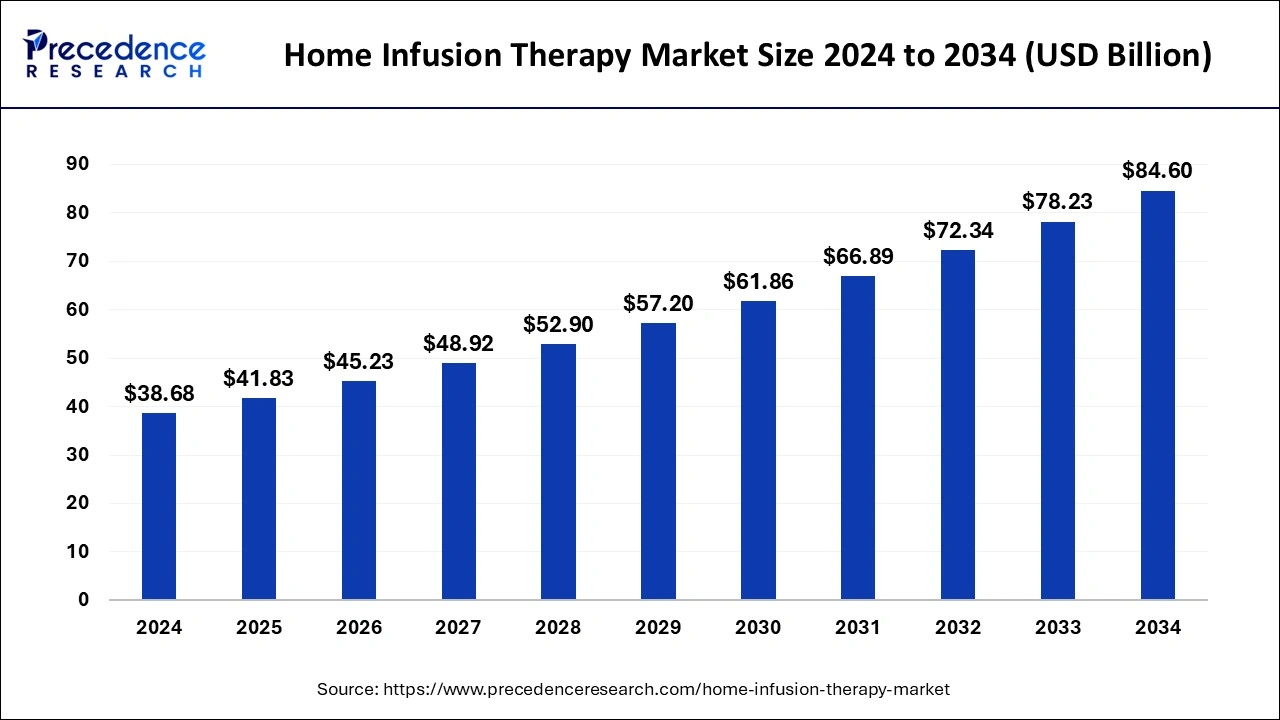
Home Infusion Therapy Market Key Takeaways
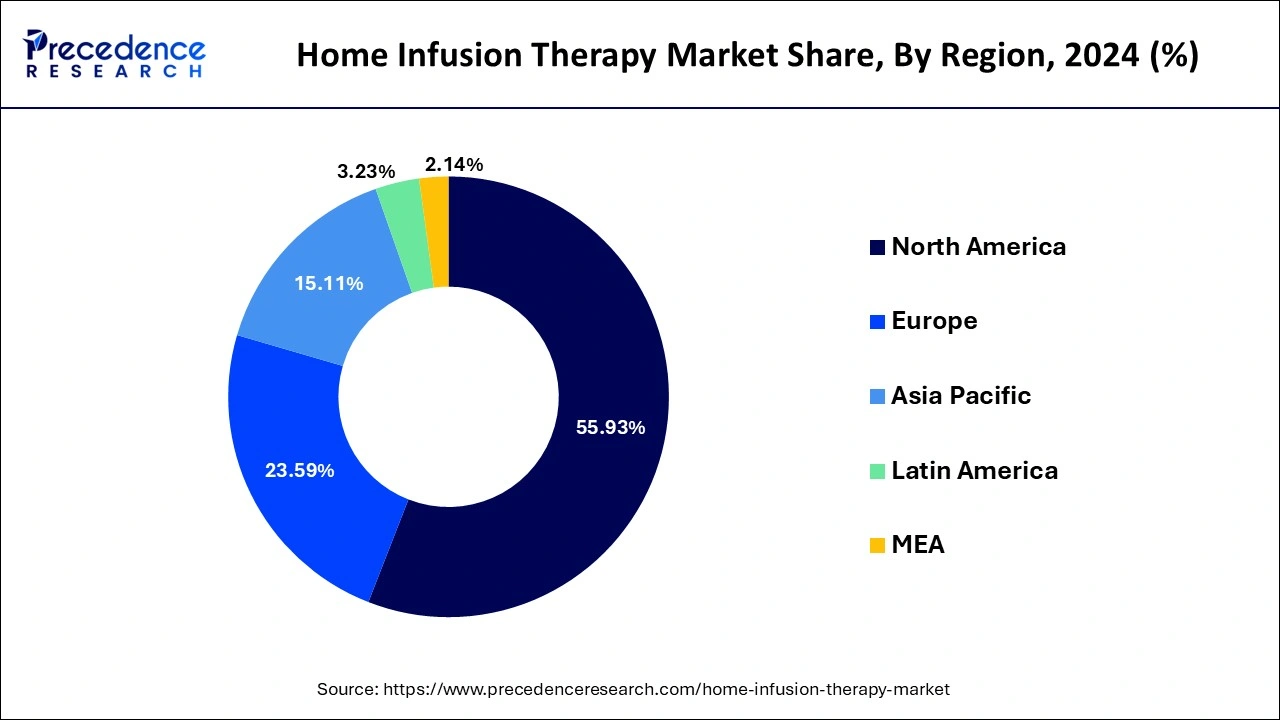
- North America dominated the global home infusion therapy market with the largest market share of 55.93% in 2025.
- Asia pacific is projected to expand at the fastest CAGR during the forecast period.
- By products, the infusion pumps segment contributed the highest market share in 2025.
- By application, the Anti-infective segment captured the biggest market share in 2025.
Market Overview
What is Home Infusion Therapy?
Home infusion is considered a safe and effective alternative to inpatient care for several types of disease states and therapies, both acute and chronic. Several treatments provided at home or in an infusion suite are ideal for inpatient care. The pharmacists, other professionals, and nurses with special training in offering infusion medications always support people who need infusion therapy. Prescription drug therapies, including antifungal, antibiotic, antiviral, hydration, chemotherapy, parenteral nutrition, and pain management, are administered through infusion.
What is the Significance of AI in the Home Infusion Therapy Market
AI-driven innovations such as smart infusion pumps with predictive analytics for maintenance, real-time monitoring, and remote management through telehealth are revolutionizing traditional infusion practices. AI-powered smart pumps are expected to take over tasks like reducing human error, automated dose adjustments, and enabling consistent drug delivery. AI contributes to streamlining day-of operations in infusion centers by improving drug premixing, patient assignment, and other logistics. Telehealth platforms that utilize AI allow healthcare professionals to consult with patients, remotely monitor infusion therapy, and adjust treatment protocols without in-person visits.
Home Infusion Therapy Market Growth Factors
Home Infusion therapy has turned into a well-known aggravation ease therapy technique, particularly for sicknesses where oral drug is least compelling. In instances of gastrointestinal sicknesses, diabetes and disease related torment home infusion therapy is normal. In addition, home infusion therapy is similarly compelling in treating problems like cystic fibrosis and persistent drying out. Home infusion therapy cuts on regular emergency clinic visits and further develops medication adherence.
Home infusion therapy alludes to the cycle wherein patients get therapy at home through the organization of medications or biologicals through catheters and needles. Getting therapy at home rather than emergency clinics or medical care offices is a smart and more helpful choice for patients, further driving the requirement for home infusion therapy.
As per The International Agency for Research on Cancer (IARC), gauges on the worldwide malignant growth trouble have ascended to 19.3 million cases and 10 million disease passings in 2020, and that implies 1 out of 5 individuals creates disease during their lifetime, and 1 of every 8 men and 1 out of 11 ladies kick the bucket from the sickness. As per The International Diabetes Federation (IDF), roughly 463 million grown-ups (20-79 years) were living with diabetes in 2019, which is assessed to ascend to 700 million by 2045. Furthermore, diabetes caused 4.2 million passings overall in 2019.
Legislatures in non-industrial nations are making huge speculations to modernize medical services foundation, which is probably going to build admittance to medical care. This is supposed to expand the interest for home infusion therapy administrations. Ascend in predominance of persistent illnesses in non-industrial nations presents worthwhile open doors in the home infusion therapy market.
Home Infusion therapy direct medication intravenously and at times through other non-oral courses like subcutaneously and an epidural. The advantages of home infusion therapy administration patient can seek intravenous therapy from the solace of their home and it's advantageous for patients. These assistance market gives nursing and drug specialist who will screen the heath all day, every day. The experience of the medical attendant to regulate complex intravenous therapies and the drug specialist with a decent admittance to the most recent examination and conventions work with the doctor to furnish the most ideal that anyone could hope to find care alongside home infusion therapy administrations. The home infusion therapy has demonstrated protected, viable and less exorbitant when contrasted with the patient therapy in the medical clinic. Dietician work alongside the attendant and the doctor to meet the current and future need of the patient in view of various factors like weight, sensitivities, stomach related capability.
The market has offers types of assistance to portions like enemy of infective, endocrinology, hydration therapy, chemotherapy, enteral sustenance, parenteral nourishment, and specialty drugs. The counter infective portion overwhelmed the market for home infusion therapy in 2019. This is credited to the impressive number of methods performed for the organization of antifungal and anti-toxin drugs. It additionally lessens openness to patients with other clinic gained diseases
Change in way of life will help the development of home infusion therapy market. Furthermore, expansion in diabetic populace and decrease in therapy cost will likewise set off the development of this market. Many convoluted ailments and sicknesses can be treated with these home infusion therapies which will decrease the medical clinic stay, and subsequently diminish the expense of therapy too. Home mixture therapies are more secure since the organization of the medications is seen by doctors. This will likewise increase the development of this market. Repayment approaches of different public and confidential firms will likewise help the development of this market.
Different innovative progressions and send off of novel items will enhance the business development. Presentation of complex advancements in home consideration settings will give new therapy choices decreased dangers of diseases. Besides, improvement of shrewd home infusion pumps can forestall dosing blunders and increments patient security. Previously mentioned variables will drive the market development across the figure time span.
Developing commonness of clinic obtained contaminations is one of the main considerations that will emphatically impact the development of home infusion therapy market. As per European Center for Disease Prevention and Control (ECDC), 4.5 million individuals experienced nosocomial contamination in 2017. Home infusion therapy significantly diminishes the openness of patients to irresistible organic entities diminishing the spread of nosocomial sicknesses by the patients. Also, the expense adequacy of home infusion therapy contrasted with hospitalization will additionally support the business development.
Home Infusion Therapy Market Trends
- Connected Devices and Infusion Analytics: Greater visibility is enabled by connected infusion systems into performance and outcomes. With the help of infusion analytics, organizations can identify workflow inefficiencies, monitor utilization in real-time, and track outcomes across care settings. These innovations support more data-driven, informed decision-making.
- Precision Drug Delivery for Specialty Therapies: With the growth and expansion of specialty infusion, precision drug delivery is of key importance. Advancements in this area support safer administration of high-risk medications, accurate dosing for complex therapies, and greater consistency in care. These factors are critical because specialty infusion centers take on more complex cases.
- Smart Infusion Pumps and Interoperability: Modern infusion technology is defined by smart pumps. These smart pump devices are equipped with interoperability with electronic health records and dose error reduction systems. These innovations enable automated documentation, real-time clinical decision support, improved medication safety, and more consistent and controlled care delivery.
Home Infusion Therapy Market Outlook
- Industry Growth Overview: The home infusion therapy market is undergoing a revolution due to associated benefits such as convenience, comfort, personalized care, improved patient outcomes, cost-effectiveness, reduced exposure to infectious environments, and improved quality of life. The common types of home infusion therapies include IV antibiotic therapy, pain management, immunoglobulin therapy, chemotherapy, cardiac therapies, hydration therapy, and nutritional support. Research suggests that every year, over 1.2 million infusion courses are administered at home through ports, peripherally inserted central catheters, or central catheters.
- Sustainability Trends: Home infusion is considered a safe, clinically effective, patient-preferred, and cost-saving alternative. With the momentous growth of the healthcare payment system, the home infusion care delivery model provides a promising approach that can lower costs and improve care. Patients who prefer home infusion have reported significantly better physical and mental well-being. They have also reported less disruption of personal and family responsibilities.
- Startup Ecosystem: HealthTech startups are transforming home healthcare from telemedicine platforms to AI-powered diagnostics. There is a rapid rise in HealthTech startups, and they are reshaping how patients access care. The agile companies adopt novel and advanced technologies to resolve long-term medical challenges.
- Global Expansion: The home infusion therapy market is expanding globally due to better health outcomes, lower treatment costs, greater convenience, and higher safety standards. It allows patients to heal from a comfortable and relaxed space they want. This therapy can be administered with the help of sterile equipment and sanitary practices.
Market Scope
| Report Coverage | Details |
| Market Size in 2026 | USD 45.23 Billion |
| Market Size by 2035 | USD 90.65 Billion |
| Growth Rate from 2026 to 2035 | CAGR of 8.04% |
| Largest Market | North America |
| Base Year | 2025 |
| Forecast Period | 2026 to 2035 |
| Segments Covered | Product, Application, Route of Administration, End User, Geography |
| Regions Covered | North America, Europe, Asia-Pacific, Latin America, and Middle East & Africa |
Market Dynamics
Driver
How does the Home Infusion Therapy Market Evolve Rapidly?
This field is growing rapidly in healthcare, which allows patients to receive postacute care at home at a lower cost. A more seamless treatment with improved patient outcomes can be delivered by understanding various drug delivery systems. The various therapies, such as intravenous (IV) administration of several antimicrobials, patient-controlled analgesia, total parenteral nutrition, home hydration, inotropes, immunomodulating agents, and immunoglobulins, are versatile in providing patients with improved health outcomes.
Restraint
What are the Challenges Facing Home Infusion Providers in Patient Care?
The primary challenge is communication, through which patients, except clinicians, are taught to administer a medication through technical means. It is difficult to teach technical skills to patients. It becomes complicated when caregivers or patients are not able to speak English as their primary language.
Opportunity
How will Technological Innovations Bring Favorable Opportunities in the Market?
The home infusion therapy market revolves around the integration of telehealth solutions and remote monitoring, which allows real-time tracking of patient progress. These novel advancements encourage enhanced care quality and timely interventions. This shift encourages more people to adopt telehealth solutions in home infusion services to further improve home-based treatments.
Segments Insights
Products Insights
The infusion pumps segment contributed the highest market share in 2025. As these pumps are generally liked for the conveyance of supplements and drugs. The accessibility of different items, for example, enteral, needle, multichannel, and peristaltic pumps further add to the section development. The rising interest for needles and wandering pumps attributable to the rising inclination for home medical services is additionally expected to add to the fragment development.
These days, smart pumps are broadly utilized as these pumps contain progressed elements, for example, scanner tag innovation, which helps in the confirmation of a patient's character and forestalls drug organization blunders. Needleless connectors are expected to enlist the most noteworthy CAGR over the gauge period. These connectors offer better security, empower smooth medical procedures, and help stick to great clinical practice (GCP), which adds to the development of the section.
The intravenous sets segment is expected to grow at the fastest CAGR in the market during the forecast period due to the availability of different types of IV sets such as filtered IV sets, vented IV sets, non-vented IV sets, and gravity tubing. They are available based on the specific therapeutic need. These sets are designed to reduce the risk of infection for the patient, optimize infusion delivery, and to keep access sites clean and protected.
Application Insights
The Anti-infective segment captured the biggest market share in 2025. This is credited to the significant number of strategies performed for the organization of antifungal and anti-toxin drugs. It additionally diminishes openness to patients with other emergency clinic procured contaminations.
Chemotherapy is assessed to be the quickest developing fragment over the estimate period. With the developing frequencies of malignant growth, the interest for pressure pumps is supposed to increment before long. Pumps utilized for chemotherapy at home are conservative, nonstop tension pumps that don't need a battery and can consequently be utilized for a more extended timeframe. With the assistance of these pumps, chemotherapy medications can be managed at the proper mixture speed and in the perfect sums.
Route of Administration Insights
What made Subcutaneously the Dominant Segment in the Home Infusion Therapy Market in 2025?
The subcutaneously segment dominated the market in 2025. The segment is estimated to grow at the fastest rate in the market during the predicted timeframe due to advantages of subcutaneous injections such as being easy to administer, slower absorption, decreased pain, and cost-effective. This method makes it suitable for drugs that require slow release and gradual absorption of the medication into the bloodstream. It is less invasive than intravenous or intramuscular injections and can be performed by patients at home.
End User Insights
How did the Patients Segment Dominate the Home Infusion Therapy Market in 2025?
The patients segment dominated the market in 2025, owing to the key benefits of total care infusions for patients such as enhanced comfort, familiarity, improved health outcomes, reduced risk of hospital-acquired infections, personalized and one-on-one care, cost-effectiveness, flexibility, and convenience. A structured and well-coordinated process is required for patients transitioning from hospital care to home-based therapy.
The nurse segment is anticipated to grow at the fastest rate in the market during the upcoming period due to the potential of home infusion nursing care as a comprehensive approach that minimizes the need for hospital visits, administers medications directly in the patient's home, and provides a personalized healthcare experience. Nurses monitor for any adverse reactions, assess vital signs, and ensure the safety and effectiveness of treatments.
Regional Insights
What is the U.S. Home Infusion Therapy Market Size?
The U.S. home infusion therapy market size was evaluated at USD 22.77 billion in 2026 and is predicted to be worth around USD 45.99 billion by 2035, rising at a CAGR of 8.12% from 2026 to 2035.
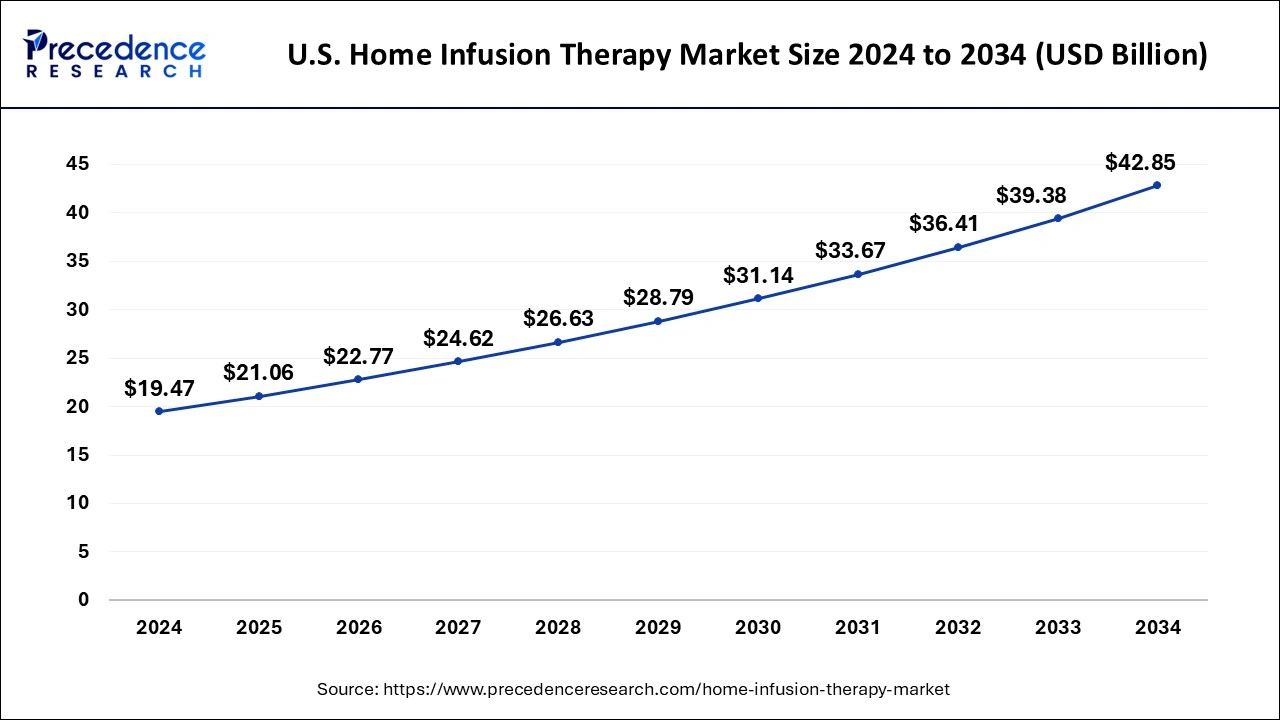
North America Dominated the Global Home Infusion Therapy Market
North America dominated the global home infusion therapy market with the largest market share of 55.93% in 2025. and this pattern is supposed to go on all through the estimate period. This can be ascribed to the rising R&D in the locale and the rising reception of new innovation in home infusion pumps. The rising requirement for long haul therapy for patients with specific circumstances is driving the provincial market. Advancement of substitute medical care settings and home mixture administrations and moving inclination from intense consideration to home consideration settings because of the minimal expense and upgraded patient versatility would support the development of this market before long.
U.S. Market Trends
The U.S. showed strong growth driven by rising chronic diseases such as diabetes, cancer, and gastrointestinal disorders. Increasing preference for cost-effective home-based care and reduced hospital stays supported adoption. Advanced healthcare infrastructure, favorable reimbursement policies, and expanding availability of infusion therapies further accelerated market expansion.
Asia pacific Home Infusion Therapy Market Trends
Asia pacific is projected to expand at the fastest CAGR during the forecast period. This is credited to rising patient mindfulness with respect to the advantages of home infusion therapy over in-medical clinic strategies and the developing predominance of diabetes in the locale. The developing geriatric populace and the ascent in ongoing illnesses in the locale are supposed to additional fuel the market development. As per the Times of India, around 75 million individuals beyond 60 years old years' experience the ill effects of some constant sickness in India, which could build the reception of home consideration administrations in the country.
India Home Infusion Therapy Market Trends
India witnessed growing demand due to increasing chronic disease burden and rising awareness of home healthcare services. Expansion of telehealth, e-pharmacies, and digital health platforms supported adoption. Demand for affordable treatment options, improving healthcare access, and a focus on preventive care further contributed to market growth.
How is Europe Advancing in the Home Infusion Therapy Market?
Europe is considered to be a significantly growing area, due to favorable government support, rapidly expanding healthcare infrastructure, and the growing geriatric population. People are becoming aware of remote monitoring, enabling healthcare professionals to assess patients' conditions at home. The increasing number of trained medical professionals also contributes to market growth.
Germany Home Infusion Therapy Market Trends
Germany experienced steady growth driven by advanced healthcare infrastructure and a strong emphasis on patient safety. Increasing adoption of personalized medicine and biologics supported demand for home-based infusion. The rising elderly population and collaboration between hospitals and home care providers further strengthened market expansion.
What Drives Growth in the Latin America Home Infusion Therapy Market?
Latin America is expected to grow at a notable CAGR in the foreseeable future, due to improving healthcare infrastructure and rising awareness of home-based treatments. The availability of favorable reimbursement policies and increasing investments in the healthcare sector propel the market.
Brazil Home Infusion Therapy Market Trends
Brazil showed consistent growth supported by improving healthcare infrastructure and rising chronic disease burden. Increasing demand for chemotherapy and anti-infective therapies boosted adoption. Expanding healthcare access and investments in modern treatment solutions further contributed to market development.
How is the Middle East and Africa Expanding in the Home Infusion Therapy Market?
The Middle East & Africa region is expected to grow at a considerable CAGR in the upcoming period. The increasing incidence of chronic diseases, awareness about efficient treatment methods, and government efforts to improve healthcare delivery systems have increased the demand for the healthcare industry. In addition to these factors, the expansion of the private healthcare sector, investment in technology, and decreased hospitalization are driving market growth.
Supply Chain Analysis
R&D
- This stage focuses on making complex clinical treatments stable, safe, and simple enough for patients or healthcare providers.
- Key Players: Becton, Dickinson and Company (BD), Option Care Health, Inc., Fresenius Kabi AG, CVS Health, Baxter International Inc., ICU Medical, Inc., B. Braun Melsungen AG, and Medtronic.
Distribution to Hospitals, Pharmacies
- This stage revolves around direct coordination between home infusion pharmacy and commercial and government health plans.
- Key Players: McKesson Corporation, Cencora, Cardinal Health, Baxter International, Fresenius Kabi, B. Braun Melsungen AG, ICU Medical, Option Care Health, Optum Infusion Pharmacy, and Coram.
Patient Support and Services
- This stage manages patients who receive specialized intravenous or subcutaneous medications in their homes and educates them about self-care.
- Key Players: Option Care Health, Coram, Optum Infusion Pharmacy, CarepathRx, Baxter International, B. Braun Medical, ICU Medical, Becton, Dickinson and Company, and Fresenius Kabi.
Competitive Landscape
The home infusion therapy market is driven by technological advancements like smart and portable pumps, remote patient monitoring, and ready-to-use kits. Moreover, escalating healthcare costs, reduced treatment expenses, bed shortages, and a focus on infection prevention also drive industrial growth globally. The top home infusion service providers are Option Care Health, Coram, Optum Infusion Pharmacy, KabaFusion, and Soleo Health. The top equipment and device manufacturers are Baxter International Inc., Becton, Dickinson and Company (BD), ICU Medical, Inc., B. Braun Melsungen AG, Fresenius Kabi AG, Terumo Corporation, and Smiths Medical. The medical technology and hardware manufacturers provide large-volume infusion pumps, IV solutions, clinical nutrition, ambulatory infusion systems, vascular access devices, and many more products and services. On the other hand, clinical home infusion service providers offer anti-infective therapy, chemotherapy, oncology support, digital health tools, and more. The key R&D focus areas are telehealth and smart systems, portability and ergonomics, medication safety, interoperability, and ambulatory medication management.
Top Companies in the Home Infusion Therapy Market and Their Offerings
- CVS/Coram: Immunoglobulins, autoimmune therapies, enteral nutrition, Alpha-1 antitrypsin therapy, ambulatory infusion suites, in-home infusion care, end-to-end onboarding, 24/7 clinical support, and eco-friendly medical packaging.
- Option Care Health: Anti-infective infusion, nutrition therapy, home care services, ambulatory infusion suites, infusion equipment and supplies, pharmacy operations and compounding, etc.
- BriovaRx/Diplomat (UnitedHealth Optum): In-home nursing support, infusion suites, anti-infective therapy, targeted therapy for rare diseases, immune globulin therapy, etc.
- PharMerica: Chronic management products, intravenous access kits, 24/7 clinical support, ambulatory infusion suites, etc.
- Fresenius Kabi: Infusion pumps, parenteral nutrition, subcutaneous biosimilars, therapeutic IV drugs, enteral nutrition, etc.
Home Infusion Therapy Market Companies
- CVS/Coram
- Option Care Health
- BriovaRx/Diplomat (UnitedHealth Optum)
- PharMerica
- Fresenius Kabi
- ICU Medical, Inc.
- B. Braun Melsungen AG
- Baxter
- BD
- Caesarea Medical Electronics
- Smith's Medical
- Terumo Corporation
- JMS Co. Ltd.
- Others
Recent Developments
- In April 2026, Soleo Health launched SoleoRare™, a dedicated rare disease specialty pharmacy focused on complex patient needs. The initiative integrated specialized clinical, patient support, and commercial teams to deliver clinician-led, patient-centered care for rare and ultra-rare disease populations. (Source: https://www.globenewswire.com )
- In May 2025, Horizon Health Network, in collaboration with Roche Canada, the New Brunswick Extra-Mural Program, and ResearchNB, launched Canada's first at-home under-the-skin cancer immunotherapy in New Brunswick. The program is expected to reduce pressure on infusion clinics, increase treatment capacity, and potentially lower the overall costs per patient.(Source: https://www.ctvnews.ca )
Segments Covered in the Report
By Product
- Infusion Pumps
- Elastomeric
- Electromechanical
- Gravity
- Others
- Intravenous Sets
- IV Cannulas
- Needleless Connectors
By Application
- Anti-infective
- Endocrinology
- Diabetes
- Others
- Hydration Therapy
- Athletes
- Others
- Chemotherapy
- Enteral Nutrition
- Parenteral Nutrition
- Specialty Pharmaceuticals
- Others
By Route of Administration
- Intramuscular
- Subcutaneously
- Epidural
By End User
- Patients
- Nurse
- Hospitals
- Others
By Geography
- North America
- U.S.
- Canada
- Europe
- U.K.
- Germany
- France
- Asia-Pacific
- China
- India
- Japan
- South Korea
- Malaysia
- Philippines
- Latin America
- Brazil
- Rest of Latin America
- Middle East & Africa (MEA)
- GCC
- North Africa
- South Africa
- Rest of the Middle East & Africa
For inquiries regarding discounts, bulk purchases, or customization requests, please contact us at sales@precedenceresearch.com
Frequently Asked Questions





Ask For Sample
No cookie-cutter, only authentic analysis – take the 1st step to become a Precedence Research client
 Get a Sample
.webp)



 sales@precedenceresearch.com
 Schedule a Meeting
