



India Skin Care Products Market Size, Share and Trends 2026 to 2035
India Skin Care Products Market (By Type: Facial Care, Body Care, and Lip Care; By Packaging: Tubes, Bottles, Jars, and Others; By Products: Face Creams & Moisturizers, Cleansers & Face Wash, Sunscreen, Body Creams & Moisturizers, Shaving Lotions & Creams, Face Masks, and Others; By Distribution Channel: Supermarkets & Hypermarkets, Pharmacy & Drugstore, Convenience Stores, Online, and Others; By End-User: Female, Male, and Unisex; By Category: Premium Skincare Products and Mass Skincare Products; By Ingredient: Chemical and Natural) Industry Size, Share, Growth, Trends 2025-2035
Source: https://www.precedenceresearch.com/india-skin-care-products-market
 Get a Sample
 Table Of Content


The India skin care products market size was estimated at USD 5.81 billion in 2025 and is projected to be worth around USD 10.6 billion by 2035, growing at a CAGR of 6.2% from 2026 to 2035. The market in India is growing due to higher disposable incomes, better digital access through e-commerce, a trend towards natural and Ayurvedic products, and a young population's understanding of active ingredients like niacinamide and hyaluronic acid.
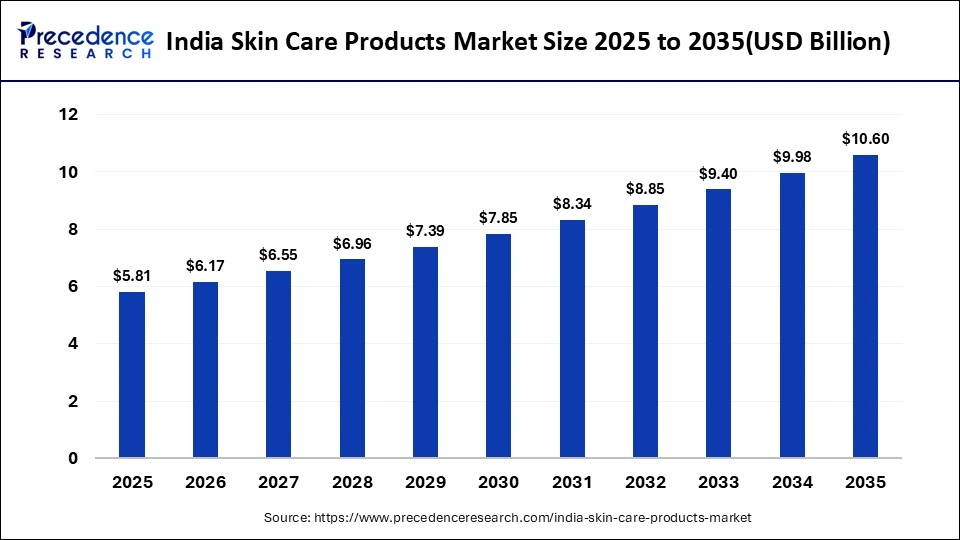
India Skin Care Products Market Statical Scope
| Reports Attributes | Statistics |
| Market Size in 2025 | USD 5.81 Billion |
| Market Size in 2026 | USD 6.17 Billion |
| Market Size by 2035 | USD 10.6 Billion |
| CAGR 2026 to 2035 | 6.2% |
| Base Year | 2025 |
| Forecast Period | 2026 to 2035 |
The Indian skincare market is significant as it is a fast-growing sector fueled by increasing disposable incomes, urban growth, and a focus on personal wellness. It presents great opportunities for digital-first brands and changes consumer behavior from basic care to targeted, scientifically supported treatments. Higher household incomes allow consumers to invest more in premium and specialized personal care products. Social media and beauty influencers promote awareness of multi-step routines, boosting the demand for active ingredients such as serums and sunscreens.
Consumers are leaning towards organic, toxin-free, and Ayurvedic products that reflect traditional values while ensuring modern safety. There is a rising demand in tier-2 and tier-3 cities as internet access and e-commerce logistics enhance the availability of various brands. Brands are moving away from outdated whitening messages to focus on skin health, hydration, and products specifically designed for hot and humid conditions.
India Skin Care Products Market, By Type, 2025 (%)
| Segments | Shares (%) |
| Facial Care | 55.00% |
| Body Care | 35.00% |
| Lip Care | 10.00% |
- Facial Care - The facial care segment, with a share of 55% in 2025, leads the Indian skincare market, due to its focus on visible personal grooming, addressing skin issues caused by urban pollution, and catering to a consumer culture that is heavily influenced by social media.
- Body Care - The body care segment, with a share of 35% in 2025, is essential in India's skincare market. Increased health awareness after the pandemic, higher disposable incomes, and a trend towards ingredient-focused routines have transformed basic hygiene into a form of self-care, allowing brands to move beyond traditional face-centric products.
India Skin Care Products Market, By Products, 2025 (%)
| Segments | Shares (%) |
| Face Creams & Moisturizers | 25.00% |
| Cleansers & Face Wash | 18.00% |
| Sunscreen | 15.00% |
| Body Creams & Moisturizers | 14.00% |
| Shaving Lotions & Creams | 7.00% |
| Face Masks | 9.00% |
| Others | 12.00% |
- Face Creams & Moisturizers - Face creams and moisturizers, with a share of 25% in 2025, dominate the Indian skincare market. They promote daily usage across all ages and genders, and they quickly adapt to changes in weather, local skin requirements, and current ingredient trends.
- Cleansers & Face Wash - Cleansers and face washes, with a share of 18% in 2025, are crucial entry points in the Indian skincare market. They are driven by daily habits and urban pollution and humidity, along with a growing interest in functional ingredients like niacinamide and salicylic acid.
- Sunscreen - The sunscreen segment, with a share of 15% in 2025, is rapidly growing in India's skincare market. It is evolving from a product used occasionally at the beach to a daily essential for health. High UV index levels throughout the year, strong digital marketing from dermatologists, and a significant increase in active-ingredient skincare routines are driving this growth.
India Laboratory Informatics Market, By Product, 2025 (%)
| Segments | Shares (%) |
| Supermarkets & Hypermarkets | 25.00% |
| Pharmacy & Drugstore | 20.00% |
| Convenience Stores | 12.00% |
| Online | 30.00% |
| Others | 13.00% |
- Supermarkets & Hypermarkets - Supermarkets and hypermarkets, with a share of 25% in 2025, are vital in the Indian skincare market, offering a convenient shopping experience, high visibility for both mass and international brands, and the benefits of physical retail, which makes up for industry sales.
- Pharmacy & Drugstore - The pharmacy and drugstore sector, with a share of 20% in 2025, plays a crucial role in India's skin care market, serving as the main access point for clinical, dermatologist-recommended, and therapeutic (dermocosmetic) products. Consumers are increasingly relying on local and chain pharmacies for specialized treatments for acne, pigmentation, and barrier repair instead of generic cosmetic counters.
India Skin Care Products Market, By End-User, 2025 (%)
| Segments | Shares (%) |
| Female | 64.00% |
| Male | 22.00% |
| Unisex | 14.00% |
- Female - The female demographic, with a share of 64% in 2025, is the leading revenue source in the Indian skin care products market, driven by traditional grooming practices, increasing disposable incomes, and a swift transition towards multi-step, ingredient-focused daily routines.
- Male - The male demographic, with a share of 22% in 2025, is essential to the Indian skincare market as it represents a largely untapped, high-growth segment. Men are moving from basic shaving products to targeted daily skincare solutions like oil-control face washes, sunscreens, and moisturizers, driven by digital media, urbanization, and evolving lifestyle standards.
India Laboratory Informatics Market, By Product, 2025 (%)
| Segments | Shares (%) |
| Premium Skincare Products | 31.00% |
| Mass Skincare Products | 69.00% |
- Premium Skincare Products - The premium skincare segment, with a share of 31% in 2025, is vital in the Indian beauty market. Increasing disposable incomes, knowledgeable millennial and Gen Z consumers, and a trend towards science-based, ingredient-focused routines (such as niacinamide and hyaluronic acid) are transforming luxury and high-performance skincare into a significant source of profit and innovation.
- Mass Skincare Products - The mass skincare products segment, with a share of 69% in 2025, is dominant in India's skincare market as it drives high-volume consumption, enhances accessibility in Tier 2, 3, and rural areas, and meets the budget-conscious needs of a young, digital-savvy demographic entering the daily grooming space.
Competitive Landscape
The Indian skincare market is highly competitive, featuring traditional multinational companies, established Ayurvedic brands, and nimble digital-first direct-to-consumer (D2C) startups. The growth is fueled by a trend towards scientifically supported clinical ingredients (such as niacinamide and hyaluronic acid) and premium natural products.
- Hindustan Unilever Limited (HUL) maintains its market leadership with established brands like Pond's and Lakmé, which provide daily moisturizers, cold creams, and face washes.
- Beiersdorf India (Nivea) and L'Oréal India (Garnier) lead in household body lotions, creams, and daily sun care products.
- Himalaya Wellness Company is recognized for its affordable herbal and neem-based face washes and cleansers.
- Honasa Consumer Limited (Mamaearth & The Derma Co) has gained popularity for its toxin-free, natural, and science-plus-nature product lines aimed at millennial and Gen-Z consumers.
- Minimalist and Foxtale concentrate on transparent, efficacy-focused chemical exfoliants, serums, and treatments for acne and pigmentation.
- Dot & Key and Plum are known for their vegan, fruit-infused, and visually appealing active skincare lines.
- Dr. Sheth's is tailored specifically for Indian skin issues like hyperpigmentation and damage from urban pollution.
- Forest Essentials and Kama Ayurveda are luxury Ayurvedic brands that use pure botanical oils, 24k gold infusions, and traditional skin elixirs.
Segments Covered in the Report
By Type
- Facial Care
- Body Care
- Lip Care
By Packaging
- Tubes
- Bottles
- Jars
- Others
By Products
- Face Creams & Moisturizers
- Cleansers & Face Wash
- Sunscreen
- Body Creams & Moisturizers
- Shaving Lotions & Creams
- Face Masks
- Others
By Distribution Channel
- Supermarkets & Hypermarkets
- Pharmacy & Drugstore
- Convenience Stores
- Online
- Others
By End-User
- Female
- Male
- Unisex
By Category
- Premium Skincare Products
- Mass Skincare Products
By Ingredient
- Chemical
- Natural
For inquiries regarding discounts, bulk purchases, or customization requests, please contact us at sales@precedenceresearch.com
Frequently Asked Questions





Ask For Sample
No cookie-cutter, only authentic analysis – take the 1st step to become a Precedence Research client
 Get a Sample




 sales@precedenceresearch.com
 Schedule a Meeting



