



Inductor Market Size, Key Companies, Company Market Share, Chip Production Volume, Wafer Capacity, Technology Adoption, Pricing Trends, Competitive Positioning, and Demand Analysis
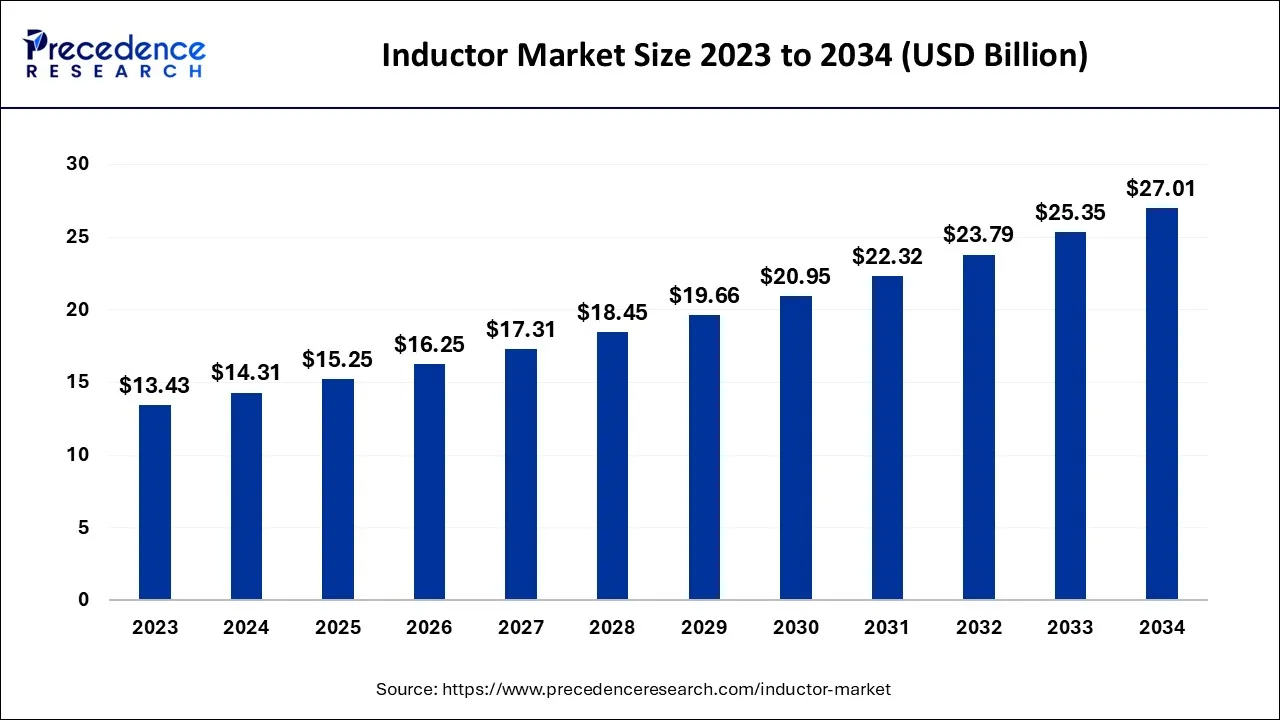
The global inductor market stood at USD 16.25 billion in 2026 and is forecast to expand to nearly USD 28.60 billion by 2035, advancing at a CAGR of 6.49% over the forecast period. The inductor market growth is driven by the rapid development of consumer electronics, rising adoption of electric vehicles, expansion of 5G and wireless communication, and increasing demand for renewable energy and power-management systems. Growing use of smart devices, AI, IoT, data centers, and automotive electronics is further increasing demand for compact, high-performance inductors.
Source: https://www.precedenceresearch.com/inductor-market
 Get a Sample
 Table Of Content


What is the Inductor Market Size?
The global inductor market size is calculated at USD 15.25 billion in 2025 and is predicted to increase from USD 16.25 billion in 2026 to approximately USD 28.60 billion by 2035, expanding at a CAGR of 6.49% from 2026 to 2035. The inductor market is driven by rising demand for electronics, EVs, and renewable energy systems.
Inductor Market Key Takeaways
- By Region, Asia Pacific accounted for the largest share of inductor market revenue in 2025.
- By Region, North America is expected to grow at the fastest CAGR in the market during the forecast period.
- By type, the multi-layered segment held a dominant position in the market in 2025.
- By type, the film type segment is expected to grow at the fastest CAGR market between 2026 and 2035.
- By inductance, the variable inductors segment accounted for a considerable revenue market in 2025.
- By inductance, the fixed inductors segment is expected to grow at the highest CAGR market during the study period.
- By core type, the iron core segment led the global market with a in 2025.
- By core type, the ferromagnetic or ferrite core segment is expected to expand rapidly in the market with a CAGR in the coming years.
- By application, the power applications segment dominated the global market, accounting for the market in 2025.
- By application, the general circuits segment is expected to witness the fastest growth in the market with a CAGR over the forecast period.
- By end user, the automotive segment dominated the global market in 2025.
- By end user, the transmission and distribution segment is expected to gain the highest market share with a CAGR between 2026 and 2035.
Strategic Overview of the Global Inductor Industry
Regional revenue generation consists of significant infrastructure, economic growth and financial development. Additionally, export and import, domestic production, and consumption patterns have aided market participants in identifying and seizing opportunities. The quantitative and qualitative parameters included in the report, with in-depth analysis, also highlight the market's motivating and inhibiting factors.
The increase in developments and innovations in consumer electronic products are significant factors anticipated to propel the expansion of the inductor market during the forecast period. Further expected growth drivers for the inductor market include the popularity of smart homes and smart city homes, which call for energy-efficient electronic and electrical systems. Additionally, it is predicted that advancements in telecommunication and chip integration will temper market growth for inductors. On the other hand, it is further anticipated that variations in the price of raw materials, particularly copper, will impede the expansion of the inductor market during the timeline period.
Additionally, as the demand for wireless and connected devices rises, there may be more chances for the inductor market to expand in the years to come. The future expansion of the inductor market, however, may be further hampered by the increased complexity brought on by inductors' miniaturization.
Artificial Intelligence: The Next Growth Catalyst in Inductor
Artificial Intelligence is fundamentally impacting the inductor industry by enabling predictive analytics, optimizing manufacturing processes, and enhancing product design through advanced simulation. AI-driven simulation tools help engineers explore vast design spaces and quickly identify optimal solutions that balance electrical performance, thermal stability, and size constraints, drastically reducing time-to-market and prototyping costs.
In manufacturing, AI and automation are crucial for smart factories, enhancing quality control, enabling predictive maintenance to minimize downtime, and optimizing supply chain logistics to meet fluctuating demands.
Market Outlook
- Market Growth Overview: The inductor market is expected to grow significantly between 2026 and 2035, driven by automotive electrification, 5G infrastructure and telecommunication, and a boom in demand for data centers and AI servers, for cloud computing and big data analytics, necessitating high-performance power inductors for power supply units and regulators.
- Sustainability Trends: Sustainability trends involve the use of recycled and eco-friendly materials, regulatory compliance, and green manufacturing practices.
- Major Investors: Major investors in the market include TKD Corporation, Murata Manufacturing Co., Ltd., Vishay Intertechnology, Inc., Taiyo Yuden Co., Ltd., and Chilisin Electronics Corp.
- Startup Economy: The startup economy is focused on innovative materials, advanced manufacturing processes, and specialized design software that addresses the complex needs of emerging technologies like electric vehicles, artificial intelligence, and 5G infrastructure.
Inductor Market Trends
- Renewable Energy Integration: Applications for renewable energy integration such as inverters, energy storage, the grid, power management, etc., are growing in solar energy and wind energy installations.
- High-Frequency Applications: With the advent of 5G wireless communication and high-frequency computing applications, the demand for high-frequency inductors is growing, and they need to be more efficient, reliable, and have superior signal quality.
- Adoption of Electric Vehicles: Inductors are seeing growth in automotive power converter applications, charging systems, battery management systems, and advanced automotive electronics applications with the continued production of EVs.
Market Scope
| Report Coverage | Details |
| Market Size in 2025 | USD 15.25 Billion |
| Market Size in 2026 | USD 16.25 Billion |
| Market Size by 2035 | USD 28.60 Billion |
| Growth Rate from 2026 to 2035 | CAGR of 6.49% |
| Largest Market | Asia-Pacific |
| Base Year | 2025 |
| Forecast Period | 2026 to 2035 |
| Segments Covered | By Type, By Inductance, By Core Type, By Application, and By End User |
| Regions Covered | North America, Europe, Asia-Pacific, Latin America and Middle East & Africa |
Market Dynamics
Driver
Consumer electronic products are developing and innovating more frequently.
Consumer electronics is a dynamic industry and is changing quickly, with increasing levels of market competitors in the market and game-changing technological advancements. The features and quality of buyer electronic device products are improving thanks to these technological advancements and innovations. Additionally, they are anticipated to increase the overall volume of inductors used in the consumer electronics sector.
Due to their small size, power inductors, high current capacity, and favourable DC characteristics are used more frequently in consumer electronics. The consumer electronics industry uses other inductor types, including air-core inductors, RF inductors, and multi-layered inductors. The adoption of inductors has been accelerated by manufacturers' increased focus on new technologies and the popularity of key emerging technologies like the Internet of Things (loT) and artificial intelligence (AI). The expansion of the inductor market has also been fueled by the incorporation of network technologies like GSM, LTE, 3G, 4G, and 5G in numerous electronic products.
Restraint
Raw materials' fluctuating costs, particularly those of copper
Due to characteristics like high electrical connectivity and significant power losses, inductors are typically constructed from iron, copper, and ferrite. Copper has excellent mechanical and thermal properties, which is why copper coils are used. The production of inductors frequently uses this as a raw material.
The copper line thickness must be kept to a minimum, and the metal pattern density must be as consistent as possible when producing inductors. Any hiccups in a region's mining operations can significantly impact copper prices worldwide. Landslides and other natural disasters are relatively common in mining regions, as are frequent mine worker strikes. Weather, season, political unrest, and transportation problems can reduce regional supplies and raise copper prices.
Opportunity
Increasing use of electric vehicles
The production of electric vehicles has increased significantly in recent years and is anticipated to do so even more in the years to come. The rate of electronic vehicle development has also increased considerably. Since more people are driving electric cars, advanced driver assistance systems and connected vehicles will become more common, expanding the usage of electronic components.
Many significant automakers and recently emerging automakers have increased the volume of electric vehicle production in response to increasingly stringent environmental regulations, which are anticipated to increase the requirement for passive components. These electric cars run on Al and loT and are outfitted with cutting-edge technology. In the upcoming years, it is anticipated that demand for inductors will rise as electric vehicles become more widely used.
Challenges
Growing complexity as a result of inductors' miniaturisation
The products' dimensions are shrinking steadily, and their corresponding functions are improving. The shape of mobile devices that offer sophisticated, complex processes is continuously decreasing. Reduced shape and thickness are required for these devices, including smartwatches, wristband-style wearables, and loT devices like sensor network devices. These devices also need highly efficient power supply circuits for longer operating times.
Wearables like smartwatches are becoming smaller and thinner, which has resulted in a rise in the usage of multi-core processors and faster processors for better performance. This makes it possible for all components, including inductors, to become smaller. Therefore, it is also necessary to reduce the size of multi-layered chip inductors while maintaining high Q ratings. However, keeping tolerances dimensional and long-term reliability gets more complicated as feature sizes decrease.
PDAs, Wireless handsets, and other portable electronic devices are continuously getting smaller and more complicated to use. As a result, they present design difficulties because the originally rated current and DC resistance must remain unchanged when an inductor's size is reduced.
However, it becomes more challenging to maintain long-term reliability and dimensional tolerances as feature sizes decrease.
Segment Insights
Type Insights
Which Multilayered Segment Dominated the Inductor Market?
The multi-layered segment held a dominant position in the market in 2025, with the demand for compact and efficient electronic components increasing. Multilayered inductors have high reliability and stable electrical performance in space-limited applications. Their compact size enables them to be used in mobile phones, transportation electronics, and communication equipment. The miniaturized electronic systems' growing adoption also encouraged the segment demand.
The film type segment is expected to witness strong growth during the forecast period because of the rising demand for high-performance and lightweight electronic parts. Films are good as inductors for their low energy loss and stable electrical properties. They are well-suited to high-frequency applications, paving the way for their integration into modern electronic systems. Rising demand for automotive electronics is generating new ways for film-based parts to be used.
The molded segment is projected to grow at a notable pace. Molded inductors have excellent vibration resistance, anti-moisture, and anti-environmental stress properties. They are suitable for automotive and industrial applications due to these properties. Constant demand for durable electronic components is driving their use and implementation. They offer the benefit of consistent operation under challenging conditions, which enhances their potential prospects in the market.
The wire wound segment is expected to witness steady growth during the forecast period. Inductors are popular components in industrial electronics, automotive, and power supplies and are referred to as wire-wound inductors when wound on a cylindrical wooden core. Their highly effective magnetic properties allow them to be appropriate for energy management use. New and growing demand for energy-efficient electronic systems is driving the growth in the segment.
Inductance Insights
Why Did the Variable Inductors Segment Dominate the Inductor Market?
The variable inductors segment dominated the market in 2025. The useful in tuning, filtering, and frequency control circuits. The variable properties can be changed over time to adapt the electric property of a system. Demand for all items in communication and electronic equipment increased.
The fixed inductors segment is expected to grow significantly during the forecast period as these are widely used in electronic circuits. Fixed inductors have a wide variety of applications, such as noise suppression, energy storage, and filtering. Their simple design helps to ensure reliability and cost-effective operation. These components are enjoying rising demand due to consumer electronics production.
Inductors will increasingly be used in automotive electronics, and demand for passive electronic components will rise quickly. On the other hand, this market will experience slow growth due to factors like inconsistent raw material price changes. Variable inductors' advantages of lightweight and compact size have increased their popularity inside TVs and radios, which has ultimately opened up a potential application for them and will create new market opportunities.
The Fixed Inductor is a passive electronic component for magnetic field-based energy storage. The turns are fixed in position for one another due to the way the coils are wound in the fixed inductor.
To separate different frequency signals, fixed inductors are used in electronic filters. They are also combined with capacitors to create tuned circuits that tune TV receivers and radios. These parts are widely used in many sectors, including the power, military & defence sector, automotive, consumer electronics, and Radio Frequency & telecommunication.
Core Type Insights
How the Iron Core Segment Dominated the Inductor Market?
The iron core segment dominated the market in 2025, as it owns strong magnetic permeability and strong energy storage capacity among iron-based cores. Iron core inductors are commonly available for power applications that require a high inductance value. Their capacity to cope with large current supports in industrial and electrical applications. The rise in investment in power infrastructure also helped drive the adoption of the segment.
The ferromagnetic or ferrite core segment is expected to grow steadily during the forecast period as there remains high demand for improved magnetic components. High-frequency applications are suitable for ferrite material. They have many applications, such as electronic circuits, power supplies, and communication systems. As the complexities of communications rise, communication towers are creating a growing demand.
The air core segment is projected to grow at a healthy pace due to its minimum core losses and superior performance characteristics at high frequency. Air core inductors are normally used in radio frequency and communication circuits. They don't change saturation, which is utilized in certain high-frequency systems. Increasing demand for wireless communication technologies is supporting segment opportunities.
Application Insights
Which Power Applications Segment Led the Inductor Market?
The power applications segment dominated the market in 2025, with the increasing demand for high-efficiency power conversion and energy management components driving the growth. Inductors are fundamental components in applications like energy-storing systems, voltage regulators, power supplies, and energy converters. With the growing popularity of EVs, there has been more demand for power inductors.
The general circuits segment is expected to witness notable growth due to increasing need for electronic control and filtering components. Inductors are used extensively to provide noise reduction and current regulation in general circuits. The demand from rising production of consumer and industrial electronics is supporting the demand. There are new opportunities for advanced inductive components as circuits grow in complexity.
The high-frequency applications segment is expected to grow steadily, with the growth of wireless communication and advanced electronic systems; the high-frequency applications market also will experience steady growth. Inductors can be highly useful in the applications of RF filtering, Impedance matching, and signal processing. The growth of 5G infrastructure is driving up demand for high-frequency components.
The rise of hybrid and battery-powered technologies in the automotive sector can be used to justify the demand for power inductors because these advancements would necessitate more ECUs. The power inductors' excellent packaging and saturation properties are ideal for supplying the growing demand for powertrain technology. Computers, Mobile phones, and telecommunications equipment can all use the newly released power inductors from the Lmax series. The market for power inductors will increase due to their numerous applications across numerous industry sectors.
End User Insights
Which Factors Contributed to the Automotive Segment Growth in the Inductor Market?
The automotive segment dominated the market in 2025. The demand for inductors in auto power systems rose sharply with the rise in the number of electric car. Inductors can be found in charging systems, battery-management systems, infotainment electronics, and electric converters in today's vehicles. The rising list of electric- and hybrid-powered cars once again expands the range of components.
The transmission and distribution segment is expected to witness notable growth as investment in electrical transmission and distribution facilities increases. Inductors have numerous applications in power-quality management, filtering, and in applications related to grid control. With the adoption of renewable energy integration, the market is seeing new needs for grid stabilization technologies.
The military and defense segment is expected to grow steadily, due to the demand for advanced electronic and communication systems. Radars, Communications Devices, Navigation Devices, and Power Management Devices all employ the use of inductors. The demand for components is being supported by increases in defense electronics spending. As unmanned systems come to the fore, new opportunities are emerging, too.
The consumer electronics segment is projected to witness stable growth during the forecast period as there is strong demand for smartphones, laptops, wearables, and connected devices. The electronic components that require these components are becoming more and more complicated. The miniaturisation trend is increasing the demand for mini-compact, efficient inductors.
Regional Insights
Asia Pacific Inductor Market Size and Growth 2026 to 2035
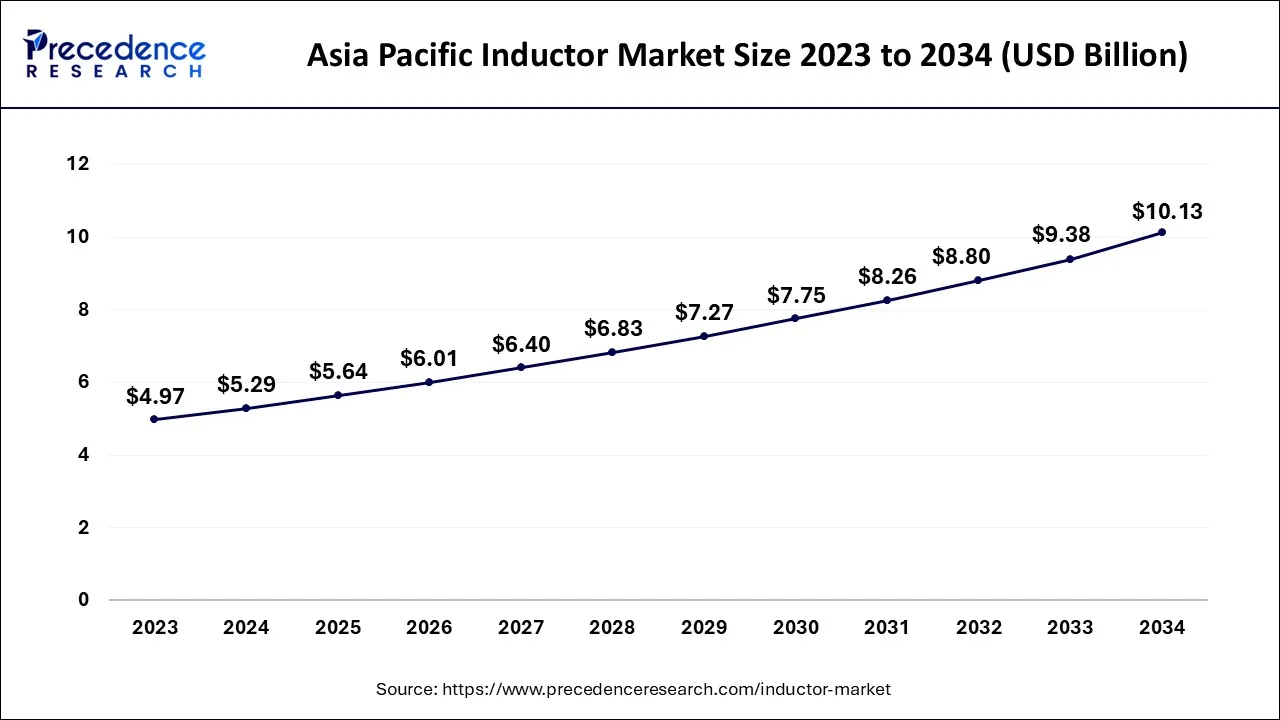
The Asia Pacific inductor market size is exhibited at USD 5.64 billion in 2025 and is projected to be worth around USD 10.77 billion by 2035, growing at a CAGR of 6.68% from 2026 to 2035.
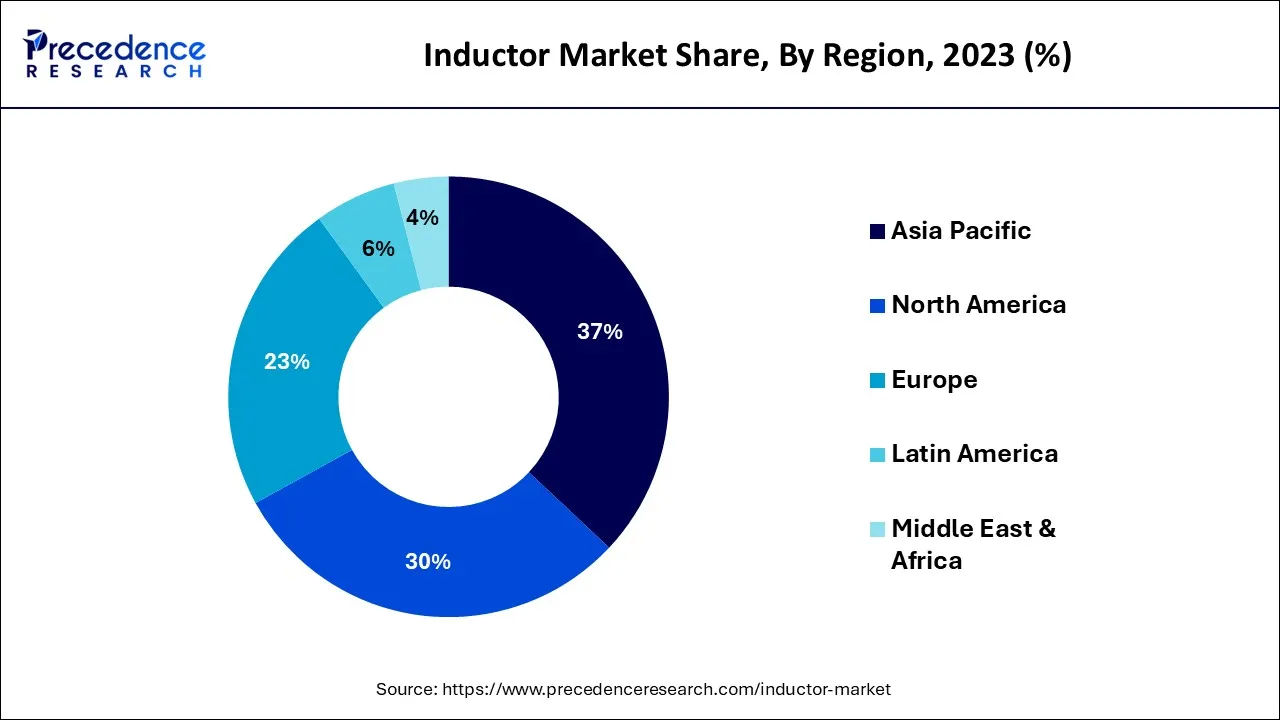
Asia-Pacific accounted for a sizeable portion of the global market, roughly 37% in the regional analysis of the worldwide inductor market. Furthermore, it is anticipated that the Asian market will likely maintain its dominance for a predetermined amount of time. This area is renowned for housing a sizable concentration of consumer electronics producers.
China Inductor Market Trend
China's market is experiencing robust growth driven by massive domestic demand from the rapidly expanding EV and 5G infrastructure sectors. The market thrives on continuous technological innovation focused on miniaturization and high-performance components suitable for consumer electronics and automotive applications.
Additionally, these inductors are crucial in producing consumer devices and automobiles. Due to increased investment in the consumer automotive and electronics industries by nations like China, South Korea, India, and Japan, the inductor market in this region has seen a significant increase in demand for its products.
The North American inductor market, which accounts for roughly 28.93% of global sales, is the second-largest after the Asia-Pacific region. The rapid expansion of industrial automation, the rising adoption of smartphones and tablets & tablets, and the existence of an already well-established ICT industry are the main factors propelling the increase in the target market in this region.
U.S. Inductor Market Trend
In the U.S. market, there is high demand from the automotive electrification, 5G infrastructure, and AI data center sectors. This expansion is supported by continuous technological innovation focusing on component miniaturization and high performance. Government initiatives like the CHIPS Act are encouraging domestic production and nearshoring to mitigate supply chain volatility.
How did Europe gain a notable share in the Inductor Market?
Europe's strong automotive and industrial automation sectors which demand high-reliability and high-performance components for electrification and efficient power management. The region benefits from strong R&D capabilities in materials science, stringent environmental regulations, such as RoHS and WEEE, which further drive innovation towards sustainable and compliance, giving Europe a competitive edge in advanced inductor technology.
Germany Inductor Market Trends
Germany's market is driven by the automotive and industrial automation sectors, with a significant push for high-reliability components to support EV electrification and industrial modernization. The market prioritizes advanced, high-performance, and energy-efficient inductors, a result of strong domestic R&D and stringent quality standards.
Key Trends in the Inductor Market in Latin America
Latin America is expected to witness significant growth in the market, with the growing base of electronics and automotive manufacturing expected to drive the expansion. Higher investments in industry automation technologies are also opening new doors for the presence of inductive components. Regional demand is growing, driven by electric and electronic technologies. New power management components are also growing with the amount of renewable energy development.
Brazil Market Trends
Brazil inductor market is anticipated to grow significantly due to rising automotive production and industrial development. As more money flows into renewable energy, the number of power-electronic components needed is surging. The use of high-frequency inductors is being facilitated by increasing telecommunications infrastructure. The region also has a growing demand base for the adoption of consumer electronics.
Growth of the Middle East and Africa in the Inductor Market
The Middle East and Africa region is expected to witness significant growth in the market, with infrastructure modernization and digital transformation projected. There is a growth trend for power management components in renewable energy investments. Telecommunications networks are contributing to high-frequency electronic applications. The increasing extent of industrial automation is also accelerating the use of inductors in control systems.
Saudi Arabia Market Trends
Saudi Arabia market is anticipated to grow significantly due to the rise in investments in smart infrastructure, renewable energy, and industrial expansion. Power inductors are seeing opportunities emerging due to the growth and development of Renewable Energy projects. More telecommunications services and data-center infrastructure are also helping the market grow.
Value Chain Analysis of the Inductor Market
Raw Material Sourcing & Processing (Inbound Logistics): This initial stage involves sourcing and processing fundamental raw materials such as copper wire, ferrite core materials, ceramic substrates, and other conductive and insulating materials.
Component Manufacturing & Production (Operations): This stage focuses on the core manufacturing processes, including winding wire onto cores, multilayer molding, thin-film deposition, and assembling the final inductor component using automated production lines and surface-mount technology (SMT).
- Key Players: TDK Corporation, Murata Manufacturing Co., Ltd., Taiyo Yuden Co., Ltd., Vishay Intertechnology, Inc., and Würth Elektronik GmbH.
Distribution & Sales (Outbound Logistics/Marketing & Sales): This stage involves marketing the inductors to original equipment manufacturers (OEMs) and managing the efficient logistics to ensure timely delivery to global production lines.
- Key Players: Arrow Electronics, Inc., Avnet, Inc., Future Electronics, TDK, and Vishay.
OEM Integration & Application (Service): Original equipment manufacturers integrate the inductors into their end products, such as smartphones, automotive systems, industrial equipment, and medical devices.
- Key Players: Apple, Samsung, Tesla, Bosch, and Siemens
Post-Sale Support & Life Cycle Management (Service): The final stage involves providing technical support, addressing quality issues, managing compliance with regulations (like RoHS), and handling end-of-life recycling and waste management.
Competitive Landscape
Key players in the inductor market include Murata Manufacturing Co., Ltd, TDK Corporation, SANYO Electric Co., Ltd, Vishay Intertechnology, Inc and Chilisin Electronics Corp. Product innovation, miniaturization, high frequencies, energy efficiency, and advanced manufacturing technologies are the main aspects that businesses are targeting to beef up their market positions.
The market has been expanding in the automotive, consumer electronics, telecommunications, renewable energy, and electronics manufacturing sectors by establishing new factories, collaborations, and introducing new products worldwide. To meet the needs of EVs, 5G networks, and power-management systems, businesses are preparing high-performance, reliable, and compact inductors to compete.
Top Companies in the Inductor Market and Their Offerings
- Murata Manufacturing Co., Ltd.: A global leader in ceramic-based passive electronic components, Murata contributes by manufacturing miniaturized, high-frequency multilayer ceramic inductors crucial for smartphones, 5G devices, and automotive electronics.
- TDK Corporation: TDK is a dominant force in the market, offering a vast portfolio of products, including power inductors for automotive applications (via the acquired EPCOS brand), RF inductors for communication devices, and various ferrite components.
- SANYO Electric Co., Ltd.: While its component business has largely been absorbed by other entities (like Panasonic), Sanyo historically contributed to the market with various electronic components.
- Vishay Intertechnology, Inc.: Vishay contributes a broad range of inductor products, including wire-wound, power, and high-current inductors, catering to industrial, automotive, and medical applications.
- Chilisin Electronics Corp.: A major Taiwanese manufacturer, Chilisin specializes in magnetic components, contributing a wide variety of inductors, including high-current power chokes and chip inductors for consumer electronics, automotive, and networking applications.
- Houston Transformer Company, Ltd.: This company specializes in the design and manufacture of custom transformers and inductors, serving niche markets that require specialized, made-to-order components.
- Taiyo Yuden Co., Ltd.: Taiyo Yuden is a key player in high-frequency multilayer chip inductors, contributing essential components for smartphones, WiFi modules, and other high-frequency communication devices.
- TT Electronics: TT Electronics designs and manufactures a wide range of inductors and magnetic components for the defense, aerospace, medical, and industrial markets. Their contribution lies in providing highly reliable, customized solutions that meet rigorous safety and performance standards in specialized, mission-critical applications.
- Delta Electronics, Inc.: Delta is a major provider of power and thermal management solutions, contributing inductors that are part of their integrated power supply units for data centers, industrial systems, and automotive applications.
- ABC Taiwan Electronics Corporation: ABC Taiwan is a significant supplier of magnetic components, offering a variety of inductors for consumer electronics, networking, and industrial applications.
- Panasonic Corporation: Panasonic contributes to inductor with a strong focus on automotive applications and consumer electronics, offering power inductors, chip inductors, and specialized components.
- Coilcraft, Inc.: Coilcraft is a global leader in high-performance surface-mount and custom inductors, known for offering one of the industry's largest off-the-shelf component selections. Their contribution is centered on providing a wide range of precise, reliable components with rapid prototyping services for diverse customer needs.
- TOKIN Corporation (a Kemet Company, part of Yageo): TOKIN, now part of KEMET and the broader Yageo corporation, offers a range of magnetic components and inductors for IT, communication, and automotive applications.
- Pulse Electronics Corporation: Pulse Electronics, part of the OSE family, contributes a broad portfolio of magnetic components, including power inductors, current sense transformers, and RF components for networking, power management, and automotive applications. They specialize in high-volume, reliable components for complex electronic systems.
- Texas Instruments Incorporated: While primarily a semiconductor company, Texas Instruments contributes to inductor by designing power management integrated circuits (ICs) that are optimized to work with specific inductors.
- Shenzhen Sunlord Electronics Co., Ltd.: A major Chinese manufacturer, Sunlord contributes by providing a wide array of inductors and magnetic components for a rapidly growing domestic and international market, especially in consumer electronics, automotive, and telecommunications sectors.
- Sumida Corporation: Sumida is a global manufacturer of coil and magnetic components, contributing inductors for a wide range of applications, including automotive electronics, consumer devices, and industrial equipment. They are known for providing high-quality, customized solutions and extensive global manufacturing capabilities.
- Gowanda Electronics: Gowanda specializes in the design and manufacture of high-performance inductors and magnetic components for demanding markets such as aerospace, defense, medical, and test & measurement equipment.
- Ourns, Inc.: Ourns, also known as Ourns Enterprise, is a Taiwanese manufacturer of a variety of inductors, transformers, and magnetic components. They contribute by offering cost-effective and reliable components primarily for the consumer electronics and networking sectors.
- Ice Components, Inc.: Ice Components provides a range of inductors and transformers, focusing on offering standard components and custom magnetic solutions to industrial and electronics manufacturing customers.
- KEMET (part of Yageo): KEMET, a subsidiary of Yageo, contributes to inductor \ with a broad portfolio of components, including power inductors and filters for automotive, industrial, and consumer applications.
- AVX Corporation (part of Kyocera group): AVX, part of the Kyocera group, is a leading manufacturer of electronic components, contributing high-performance inductors for medical, aerospace, automotive, and industrial applications.
Collaboration Landscape
- In July 2026, TDK joined forces with LG Innotek to collectively research and develop next-generation sensing modules for humanoid robots and Physical AI applications. The collaboration combines LG Innotek's optical technologies with TDK's sensor capabilities. (Source: https://www.tdk-electronics.tdk.com)
Recent Developments
- In January 2025, Murata introduced the world's smallest 006003-inch size (0.16 mm x 0.08 mm) chip inductor, reducing the volume by 75% to support high-density mounting in mobile devices. Murata is making a consistent effort to reduce of chip sizes by integration of its proprietary core technologies. (Source: murata.com)
- In December 2025, TDK Corporation launched several new products for the automotive sector, including the CLT32 series for ADAS and EV power management, offering high current capability and a compact design. In December, the mass production of the product began. (Source: tdk.com)
- February 2022- With the addition of two new automotive-grade high current shielded inductors series, Bourns Inc. increased the mechanical resistance for challenging vibration application environments. Shielded inductors of the Model SRP1038WA and SRP1265WA series feature a wider side terminal lead frame that can withstand peak vibrations. The two series offered a small package, an extensive operating temperature range of -55 to + 165 °C, a high saturation current, a low buzz noise, a low DC, a low DC resistance, resistance, and excellent temperature stability. These inductors are perfect for power management and EMI filtering in a variety of consumer, automotive, industrial, and telecom electronics applications.
- August 2021- A brand-new line of chip inductors with a high Q value and a small size was unveiled by Bourns Inc. In comparison to multilayer or film technology, the CWF1610 and CWF2414 chip inductors' wire wound construction improved their performance characteristics for DC power line applications and RF signal processing.
- June 2020- In order to meet the high demand for inductor for notebooks and 5G smartphones, Chilisin Electronics Corp (VAGEO Corporation) increased capacity. With regard to small-size moulding chokes, the company has increased capacity to 600 million units, and also for large-size ones, to 300 million units. Additionally, the business intends to increase its monthly production of LTCC (Low Temperature Co-Fired Ceramic) components by half, to 200 million units.
Segments Covered in the Report
By Type
- Multilayered
- Film Type
- Molded
- Wire Wound
By Inductance
- Variable Inductors
- Fixed Inductors
By Core Type
- Iron Core
- Ferromagnetic Or Ferrite Core
- Air Core
By Application
- Power Applications
- General Circuits
- High-Frequency Applications
By End User
- Transmission And Distribution
- Automotive
- Military And Defense
- Consumer Electronics
- Industrial
- RF And Telecommunication
By Geography
- North America
- Europe
- Asia-Pacific
- Latin America
- The Middle East and Africa
For inquiries regarding discounts, bulk purchases, or customization requests, please contact us at sales@precedenceresearch.com
Frequently Asked Questions
Tags





Ask For Sample
No cookie-cutter, only authentic analysis – take the 1st step to become a Precedence Research client
 Get a Sample




 sales@precedenceresearch.com
 Schedule a Meeting
