






 Request Consultation
Air travel demand is rising strongly, pushing airlines to adopt AI, improve cost efficiency, and expand capacity. According to International Air Transport Association, airlines may reach $41 billion profit in 2026, with Asia Pacific and Europe leading growth despite cost, supply chain, and regulatory challenges.
The demand for air travel is expected to grow even more in 2026 with several factors, such as airlines' companies' attentive work shift toward their cost structures, AI usage, and consolidation. Companies are focusing on fundamental cost transformation. Several airline companies have already stepped up with individual AI initiatives for enhancing their efficiency and revenue.
Major Highlights
- Increased air travel demands range in 2025 and their potential growth for 2026.
- This demand is creating significant challenges for the airline industry to overcome.
- The potential opportunities are helping to establish structural formulas for more revenue growth.
- Asia Pacific and Europe are set to lead the air travel industry, where North America’s demand remains steady.
- Airports are increasing runway availability for better air travel supplies.
- IATA prediction for airlines to generate a 3.9% net margin and a $41 billion profit in 2026.
Rising Revenues and Costs of Air Travel
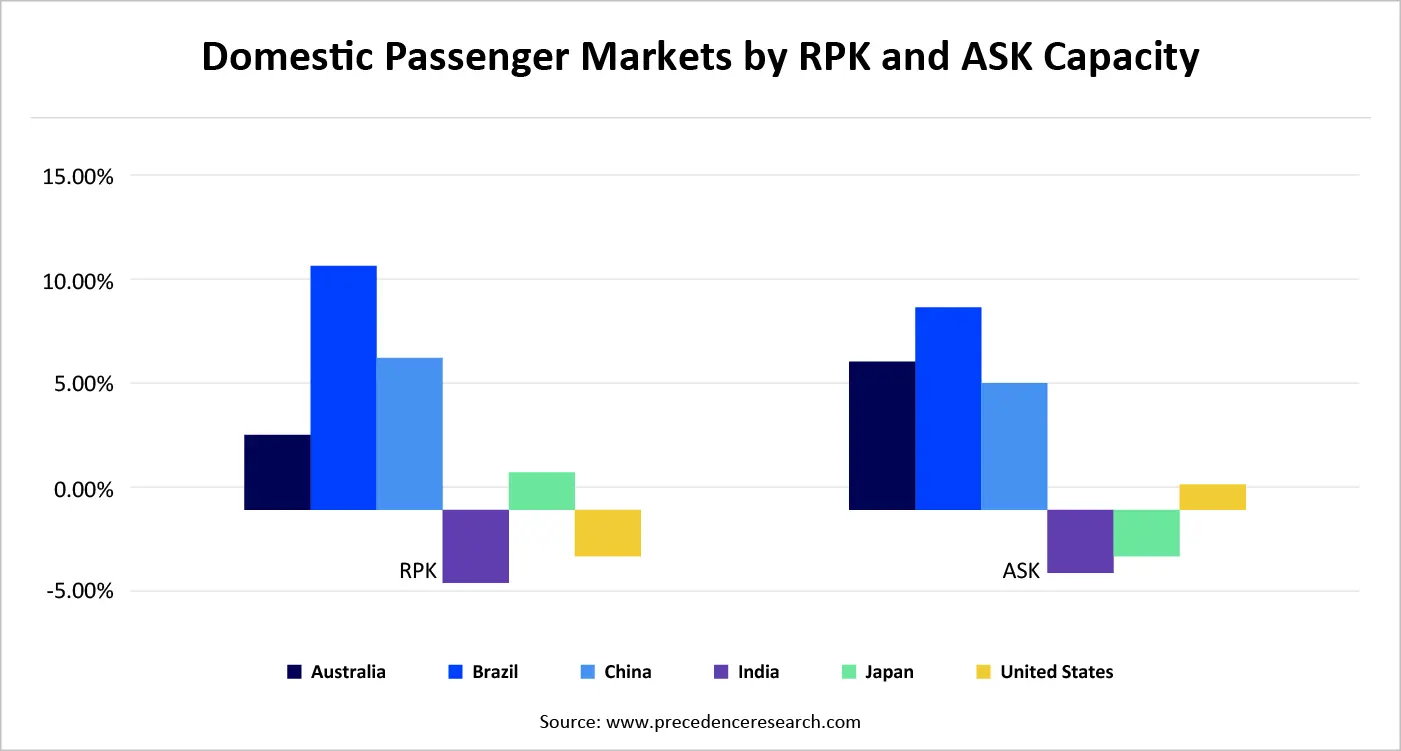
The demand for air travel has led to a rise in revenues and costs. Despite several challenges, the aviation industry has witnessed rapid growth in air passenger demand in 2025. According to the International Air Transport Association (IATA), the air passenger demands worldwide increased by 5.3% over 2024, the metric used is revenue passenger kilometers (RPKs0. And the capacity increased by slightly less 5.2%, which metric uses available seat kilometers (ASKs).
- The increased premium demand and disciplined capacity management led the global air travel to increase by 6% in 2025 and are projected to rise by 5.8% in 2026.
The Increased Air Travel Demand: Putting Companies' Focus on Key Challenges
- Decarbonization: The need to offer supportive fiscal policy bodies for rapidly accelerating growth is emerging, especially in regions whose growth is highly dependent on aviation. In 2026, sustainable aviation fuel (SAF) is likely to cover less than 1% of total fuel consumption.
- Supply Chain: A 2025-year market for an extreme supply chain crisis, a persistent decline of more than 17,000 aircraft throttled growth. The year 2026 is likely to rebound from this challenge.
- Regulatory Challenges: More attention toward air travel has led to a push for certain regulatory changes, especially regarding emissions and sustainability. The shift toward the adoption of greener technologies is emerging in the airline industry.
- Economic Pressure on Margin: The next profit margin saw steady growth of around 3.9%, despite increased revenue share. The labor cost is increasing, creating an unclear prediction of taking over on fuel expenses.
- Geopolitical Instability: In 2025, the global airline industry saw spectacular disruption due to several geopolitical conflicts and trade protectionism. The upcoming or highly potent new tariffs are likely to continue creating instability at the geopolitical level in 2026.
Emerging Trends for 2026 due to the increased Air Travel Demand
- Modern Retailing
- Coolcation Growth
- Integration of Agentic AI
- Regional Growth
1. Modern Retailing
The increased air travel demands are shifting the airline industry toward modern retailing, by increasing adoption of cutting-edge technologies like ‘Order’ management, accelerated NDC, AI-driven pricing, improved ancillary revenue, and increasing demands for premium products and services.
2.Coolcation Growth
As the summer season is coming, the preference for cooler climates is taking place, creating significant opportunities for seasonal demand patterns. This pattern is expected to boost revenue in 2026.
3.Integration of Agentic AI
The shift from experimental AI to agentic AI, and an autonomous system to manage all operations proactively, is real. This technology enables hyper-personalized customer services, making air travel more convenient and attractive.
4. Regional Growth
Regional growth leaders like Asia Pacific and Europe, especially countries including India, China, and Germany, are projected to lead the traffic rise in 2026. India is leading the global industry with a projected 12% of year on year growth this year.
How Regions are Responding to Increased Air Travel Demands?
To support the increased air travel demands and gain significant profit out of it, regions are focusing on expanding infrastructure growth, increasing route capacity, and adopting digital automation. Asia Pacific has established more than 600 novel routes since 2015. Middle Eastern countries are also seeking high growth. Regions are creating and applying several new strategies, such as the development of secondary airports, the use of AI for operational efficiency, the implementation of public-private collaborations, and increasing regional connectivity via several government initiatives.
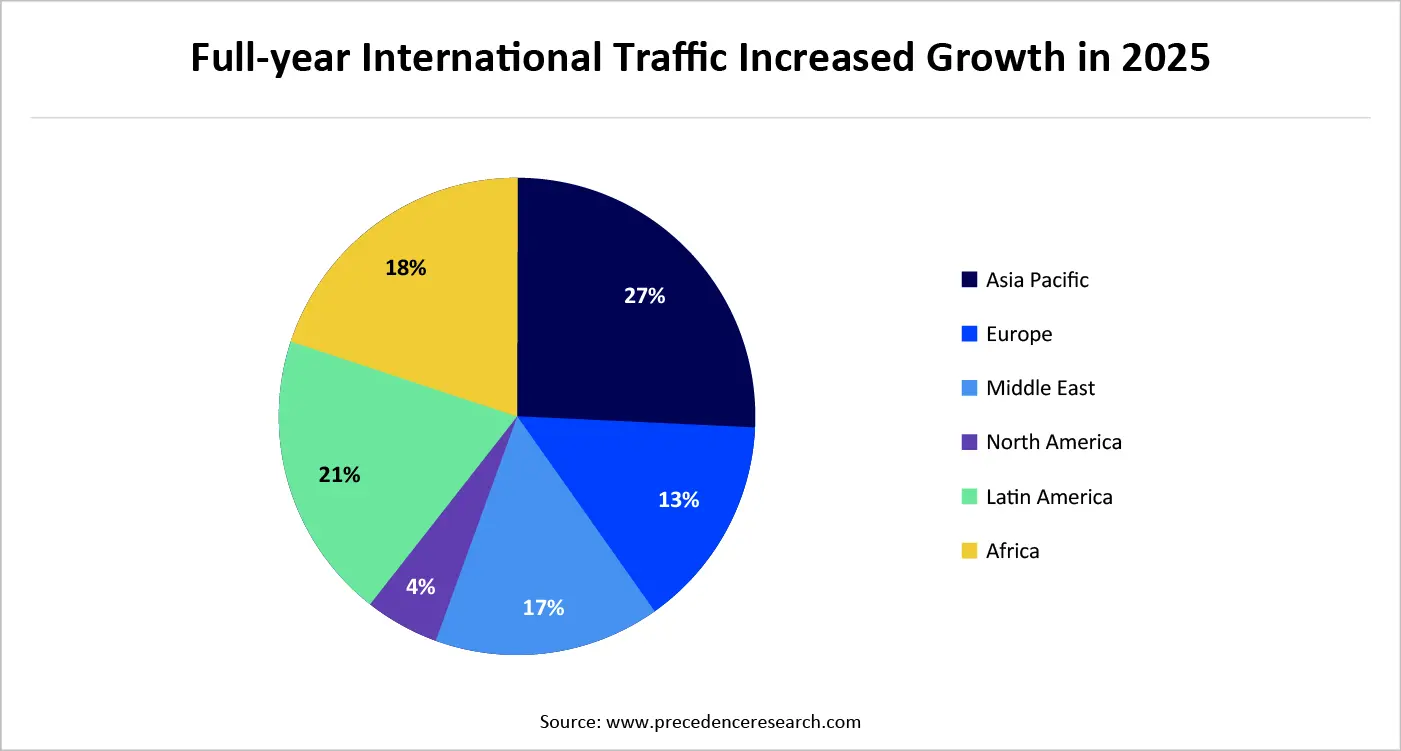
Asia Pacific and Europe remain the most profitable regions. In the Asia Pacific, India witnessed an outstanding growth, with traffic of up to 9% year on year growth due to countries rapidly growth middle class population and investments in domestic airport infrastructure. Japan and Thailand grew by around 15% and 11% growth, respectively, due to increased tourism in those two countries.
North America and China were leading the air travel demands one year ago. However, the trade tension and slow economic growth brought just 1% and 5% of growth to North America and China in 2025, respectively.
European air travel demands are expected to increase by 6.2% in 2026, primarily due to increased demand for premium airline services and capacity discipline. Europe has made air travel initiatives like the EU’s directive encouraging fuel supplies at EU airports to use at least 2% sustainable aviation fuel, which started in 2025, and is expected to grow at 70% by 2050 across the region. The European airline industry is still witnessing pressure on labor costs.
What Advancements Can Air Travel Demand Give to Airports?
Several technological advancements are likely to be witnessed in airports for enhanced system capacity in 2026, including
- Dynamic Airspace Management
- Traffic Flow Management Systems
- Satellite Navigation (GNSS)
Airport Capacity: The Runway Hurdle
The increased demand for air travel has brought groundbreaking profits to the airline industry worldwide. To maintain steady growth and even enhance air travel numbers in 2026, airports are focusing on major changes, such as infrastructure upgrading, route network shifts, capacity discipline, and AI integration for ground handling and maintenance for downtime reduction up to 35%.
The revenue per RPK and ASK is projected to increase with significant GDP and elasticity percentage in specific countries and regions. The possibility of trade wars and some conflicts globally can lead to persistent labor cost challenges and capacity cuts, especially for LCCs in North American countries.
In December 2025, the financial outlook for the global airline industry in 2026 was released by the International Air Transport Association (IATA). Airlines are projected to gain a combination of total net profit of $41 billion in 2026, up from $39.5 billion in 2025, with return on invested capital (ROIC) of 6.8%.
| Revenue Type | 2026F (USD $) | Comparison with 2025 Growth |
| Operating Profit | $72.8 billion | Up from $67.0 billion |
| Total Industry Revenues | $1.053 trillion | Up from 4.5% |
| Passenger Numbers | $5.2 billion | Up on 4.4% |
| Cargo Volume | $71.6 million tonnes | Up on 2.4% |
Conclusion:
Modern retailing strategies and integration of cutting-edge technologies are bringing potential growth in the airline industry for better operational efficiency and revenue diversification. With upgraded infrastructure, cost management strategies, and a growing middle-class population, the Asia Pacific and Europe are positioned to solidify their industrial expansion in 2026.
Airline industry leaders, who have started the adoption and use of modern AI technologies, will witness the strategic growth in aircraft use with successful use cases in operations and maintenance. This shift is likely to bring key benefits for travellers across the globe, including better connectivity, technological enhancements, greater system resilience, and innovation-led passenger services.
About the Authors

Aditi Shivarkar
Aditi, Vice President at Precedence Research, brings over 15 years of expertise at the intersection of technology, innovation, and strategic market intelligence. A visionary leader, she excels in transforming complex data into actionable insights that empower businesses to thrive in dynamic markets. Her leadership combines analytical precision with forward-thinking strategy, driving measurable growth, competitive advantage, and lasting impact across industries.



Aman Singh
Aman Singh with over 13 years of progressive expertise at the intersection of technology, innovation, and strategic market intelligence, Aman Singh stands as a leading authority in global research and consulting. Renowned for his ability to decode complex technological transformations, he provides forward-looking insights that drive strategic decision-making. At Precedence Research, Aman leads a global team of analysts, fostering a culture of research excellence, analytical precision, and visionary thinking.

Piyush Pawar
Piyush Pawar brings over a decade of experience as Senior Manager, Sales & Business Growth, acting as the essential liaison between clients and our research authors. He translates sophisticated insights into practical strategies, ensuring client objectives are met with precision. Piyush’s expertise in market dynamics, relationship management, and strategic execution enables organizations to leverage intelligence effectively, achieving operational excellence, innovation, and sustained growth.