






 Request Consultation
Introduction to Giant Chiroptical Responses in Chiral Organic Thin Films
Chiral organic π-conjugated materials are growing in significance for advanced optoelectronics because they allow the direct detection and emission of circularly polarized light without bulky external filters. Their chiroptical properties are crucial for next-generation technologies by offering compact device integration, chirality-induced spin selectivity, and improved photonic data capacity. Chirality and light interact via circular dichroism and spin-orbit coupling, which let chiral materials absorb or emit left- and right-handed circularly polarized light differently. This selective control allows advanced technologies through specific physical mechanisms.
Producing strong, stable, along with reproducible chiroptical responses in organic thin films remains difficult, as molecular packing in the solid state usually randomizes chiral expression, causes linear artifacts, and misaligns transition dipole moments. Further, subtle shifts during spin-coating or drop-casting alter supramolecular packing, thus causing poor batch-to-batch reproducibility.
Research led by Lorenzo Di Bari, Gianluigi Albano, and colleagues details how thin films of the chiral IDT-TPO dye spontaneously develop a giant chiroptical response during room-temperature ageing without demanding complex post-deposition treatments. The central significance of such studies lies in demonstrating spontaneous supramolecular chirality amplification, where simple non-covalent self-assembly translates a flat, chiroptical-silent state into a massive optical response without tedious synthetic steps or processing.
Why Chiral Organic π-Conjugated Materials Are Important for Next-Generation Optoelectronics
The relationship between molecular chirality and π-conjugation defines advanced optoelectronic performance by merging electron delocalization with structural asymmetry. π-conjugated frameworks govern charge transport alongside light absorption, while chirality introduces selective chiroptical responses and even spin-dependent behavior. Combining the unique properties of chiral organic materials into a single molecular system provides major advantages for advanced devices, driven by molecular tunability, solution processability, and mechanical flexibility. These features allow direct control over light-matter interactions and even charge transport in next-generation optoelectronics.
Researchers seek strong chiroptical effects in practical thin films as solid-state geometries are essential for integration into real-world solid-state optoelectronic devices. In contrast, dilute solutions only reflect isolated molecular traits and also cannot support functional hardware. Solid-state confinement forces specific π-stacking and structural geometries that can yield giant circular dichroism and also circularly polarized luminescence unattainable in random-motion liquid states.
The Relationship Between Molecular Chirality and Optical Activity
Chiral molecules interact differently with left- and right-handed circularly polarized light because their nonsuperimposable 3D structures offer a distinct handedness that matches or mismatches the electric and magnetic field vectors of the light waves. Moreover, circular dichroism (CD) and electronic circular dichroism (ECD) measure this differential absorption across specific wavelengths. Thus, the magnitude of the resulting chiroptical response is governed not just by an isolated chiral center, but heavily by the cooperative spatial organization along with supramolecular geometry of molecules within an assembly.
Why π-Conjugated Organic Structures Are Attractive for Optoelectronic Devices
Extended π-conjugation supports electronic delocalization, charge transport, strong optical absorption, and tunable energy levels by overlapping π-orbitals along a backbone, which lowers the HOMO-LUMO gap and forms delocalized π-bands. These traits enable efficient light emission for OLEDs, signal transduction for sensors, light-to-current conversion for photodetectors, and flexible energy alignment in organic electronics. High luminescence efficiency and tunable energy gaps enable precise control over red, green, and blue light emission. Solution processability and mechanical flexibility fund low-cost manufacturing of thin-film transistors and solar cells.
The Importance of Strong Chiroptical Responses in Thin Films
Thin films are important for practical optoelectronic devices because they provide nanoscale thickness, high surface-to-volume ratios, and compatibility with scalable fabrication. Strong chiroptical responses in these films improve circular polarization selectivity, allowing direct light-matter coupling that removes bulky external polarizers. Chiral active layers exhibit differential absorption or emission of left- and right-handed circularly polarized light (CPL) via electronic circular dichroism or circularly polarized luminescence.
Optoelectronics Market Size and Forecast 2025 to 2035
The global optoelectronics market size was estimated at USD 9.31 billion in 2025 and is anticipated to reach around USD 29.60 billion by 2035, expanding at a CAGR of 12.26% between 2026 to 2035.
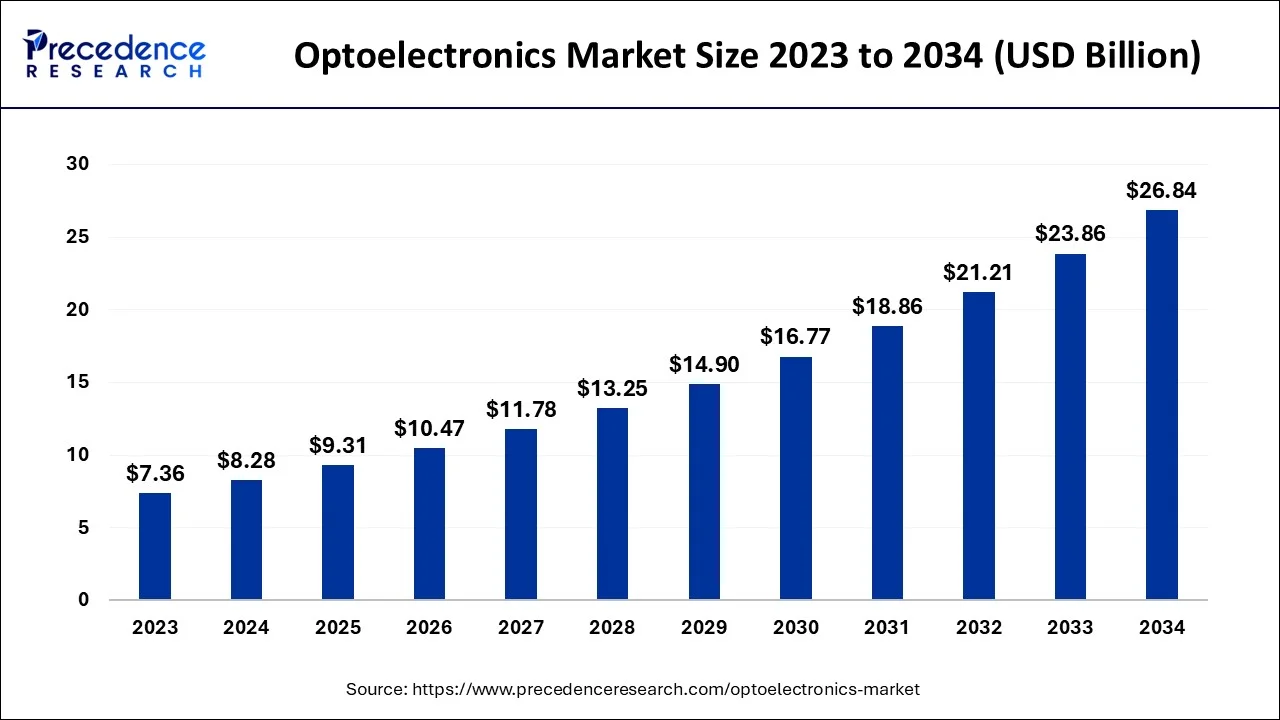
Get a Free Sample Report with Key Market Trends: https://www.precedenceresearch.com/sample/3065
The Challenge of Achieving Stable and Intense Chiroptical Activity in Thin Films
Combined experimental and microstructural analyses, such as circular dichroism, electron microscopy, and X-ray scattering, combined with molecular dynamics or density-functional simulations, prove that non-covalent forces, such as hydrogen bonding and solvophobic interactions, energetically favor a single chiral twist direction, thus driving uniform right-handed helical packing across the entire film. It confirms consistent layer-to-layer spacing and also long-range packing registries matching the predicted helical dimensions.
The Difference Between Chiral Molecules and Chiral Supramolecular Structures
Molecular chirality alone does not yield a giant macroscopic optical response, as individual molecules are vastly smaller than the wavelength of light, thus leading to weak light-matter asymmetry and random orientational averaging in isotropic phases. To produce a giant response, molecules must undergo hierarchical self-assembly into ordered and cooperative superstructures that bridge nanometer dimensions to macroscopic scales.
Film Processing Can Alter Molecular Organization
Processing parameters such as drop-casting, spin-coating, and solvent evaporation dictate how molecules organize; meanwhile, drying and ageing lock in or rearrange this structure. Together, they control molecular packing, causing the same molecule to form different morphologies that change its optical properties. Moreover, high vapor pressure and fast evaporation rates limit molecular mobility, thus leading to phase separation or disordered chains. Slow evaporation lets molecules find low-energy, densely packed configurations.
The Trade-Off Between Strong Optical Response and Device-Compatible Film Thickness
Thicker films raise optical density and light absorption, but they harm performance by lengthening charge transport paths, rising electrical resistance, trapping generated light internally, and raising recombination rates. Thus, finding an optimal film thickness balances high light absorption against low electrical losses to maximize overall device efficiency.
Molecular Design of the Chiral IDT-TPO Dye
The molecular architecture of the chiral IDT-TPO dye merges a rigid, planar central core with terminal π-conjugated chromophores along with stereogenic side chains to achieve giant chiroptical responses in thin films. Chirality is introduced into achiral or symmetric π-conjugated core systems by thus, chemically grafting enantiopure (S)-3,7-dimethyl-1-octyl side chains derived from natural citronellol. Moreover, this covalent functionalization transfers a permanent three-dimensional stereochemical bias from the biological pool to synthetic molecules.
The Role of the Rigid and Planar Indacenodithiophene Core
The indacenodithiophene (IDT) core led to molecular rigidity, planarity, π-conjugation, and optical absorption by using a fused pentacyclic ring structure that locks aromatic units into a flat geometry, which lowers energy gaps and improves charge transport. Rigid frameworks promote ordered packing and maintain electronic communication by decreasing torsional disorder and maximizing orbital overlap.
The Function of the Thiophenylpropynone Units as π-Conjugated Chromophores
TPO, such as phosphine oxide-based, thiophene-, or phenylene-derived lateral units, extend conjugated architectures by offering additional pathways for π-electron delocalization, narrowing the HOMO–LUMO gap, red-shifting optical absorption bands, and even directing intermolecular packing through tailored non-covalent interactions. Combining distinct donor and acceptor components creates multiple electronic transition pathways, thus broadening the overall solar or UV-Vis absorption envelope.
Introducing Chirality Through Enantiopure Natural-Derived Side Chains
The enantiopure (S)-3,7-dimethyl-1-octyl chains derived from citronellol act as non-covalent chiral inducers, thus transferring molecular asymmetry from a single stereogenic center to large supramolecular frameworks via steric hindrance and dispersion forces. These branched alkyl pendants govern chiral environments, bias intermolecular stacking, along with dictate the handedness of helical aggregates.
Efficient Five-Step Synthesis of IDT-TPO From a Commercially Available Starting Material
Synthetic accessibility is vital for a dye's development, ensuring cost-effective and scalable production. The target molecule was successfully synthesized through an efficient five-step linear route utilizing commercially available indacenodithiophene as the starting material. A streamlined and relatively simple synthetic pathway is vital for advanced optoelectronic materials, driving future material development, structural modification, scale-up, and systematic research by bridging the gap between peak laboratory performance and practical commercial viability. Thus, advanced optoelectronic materials must not only demonstrate exceptional performance but also provide reasonable opportunities for reproducible synthesis and chemical optimization.
The Importance of Synthetic Efficiency in Advanced Functional Materials
Shorter synthetic routes decrease development complexity, improve reproducibility, and facilitate structural analogues by reducing reaction steps, reducing cumulative yield losses, and saving time.
Chemical Design Flexibility for Future IDT-TPO Derivatives
The IDT (indacenodithiophene) framework serves as a rigid, planar, along with electron-rich building block that, when paired with co-monomers such as TPO (thiophene-phosphine oxide or related electron-deficient units), functions as a versatile platform for structural modification. By tuning its side chains, conjugated units, and even substituents, researchers can precisely control material properties.
IDT-TPO Is Chiroptically Silent in Solution but Develops Giant Activity in Thin Films
The giant chiroptical response in IDT-TPO is propelled by collective solid-state organization and dynamic supramolecular rearrangement rather than isolated molecular properties. Spin-coating traps molecules in a metastable, disordered state, thus leaving free volume and mobility for post-deposition changes.
The Initial ECD-Silent State of Freshly Deposited Films
Freshly prepared films display little or no electronic circular dichroism (ECD) because their molecules are randomly arranged. Furthermore, a strong macroscopic ECD signal requires molecules to self-assemble into ordered, cooperative supramolecular structures with long-range chiral alignment. And then without this organized stacking, individual molecular chiral moments cancel out on a large scale.
Spontaneous Chiroptical Evolution During Room-Temperature Ageing
Deposited films develop a strong dichroic response during room-temperature ageing via spontaneous structural relaxation, local molecular reorientation, and even gradual supramolecular ordering. This room-temperature evolution is significant because it offers a low-cost, energy-efficient path to high optical anisotropy without high-temperature damage or complex fabrication steps.
The Importance of Structural Evolution After Film Deposition
Molecular systems frequently undergo post-deposition reorganization, where molecular mobility, side-chain interactions, along with π-stacking act cooperatively. They are propelled by non-covalent intermolecular forces; these dynamic processes allow initially disordered or kinetically trapped films to relax into thermodynamically stable, thus ordered crystalline or supramolecular architectures.
Giant Electronic Circular Dichroism Response Reaches 18,000 mdeg in Aged Films.
The extraordinary magnitude of the chiroptical response reaching an ellipticity of 18,000 mdeg after 24 hours of ageing is propelled by time-dependent supramolecular self-assembly into large three-dimensional chiral domains. Moreover, freshly prepared drop-cast films are often structurally disordered and even circular dichroism (ECD) silent, but aging drives gradual molecular reorganization. The reported chiroptical response in thin films of neat chiral small organic molecule assemblies, like IDT-TPO dyes, is highly significant because it transitions from an initially silent state to a giant dichroic ellipticity and even high dissymmetry factors via spontaneous room-temperature aging.
Understanding Electronic Circular Dichroism in the IDT-TPO System
Electronic circular dichroism (ECD) measurements reveal chiral organization by detecting the differential absorption of left- and right-handed circularly polarized light, while a strong ECD signal proves the existence of an ordered chiral molecular arrangement that interacts asymmetrically with this radiation. Moreover, supramolecular organization amplifies weak molecular dissymmetry factors into strong, cooperative ECD signals.
Why an Ellipticity of 18,000 mdeg Is a Remarkable Result
Generating exceptionally high ellipticity in thin organic films is a major milestone as organic molecules typically display very weak chiroptical activity. Reaching giant electronic circular dichroism (ECD) values, like 18,000 mdeg, proves that a neat chiral molecular assembly can intrinsically overcome traditional dipole mismatch restricts without needing engineered photonic architectures. High signals usually need heavy reliance on elaborate multilayer optics, photonic crystals, or inorganic hybrids.
The 24-Hour Ageing Window Demonstrates Rapid Structural Evolution
A strong material response develops rapidly during room-temperature ageing through cooperative non-covalent interactions which overcome local kinetic barriers. This accessible timescale is crucial because it exposes hidden kinetic pathways, allowing predictable, room-temperature manufacturing without extreme thermal inputs. Moreover, short ageing reveals hidden metastable states before the system reaches final thermodynamic equilibrium
High Dissymmetry Factors Reveal Strong Chiral Light–Matter Interaction
The dissymmetry factor is a key measure of efficiency for chiroptical materials, quantifying left- versus right-handed circular light interaction. Moreover, high g-values indicate exceptional circular polarization selectivity important for advanced optoelectronic devices. High g-factors allow compact, high-efficiency circular polarization filters, sensors, and even displays without thick auxiliary optics.
High dissymmetry factors mean a material interacts very differently with left-handed along with right-handed circularly polarized light. This strong polarization preference is crucial for advanced optoelectronic technologies because it enables devices to selectively absorb, emit, or detect a specific hand of light without needing bulky external filters.
What the Dissymmetry Factor Reveals About Chiroptical Performance
Circular dichroism (CD) is the differential absorption of left- and also right-circularly polarized light, while overall absorption represents their average total uptake. The dissymmetry factor divides CD by total absorption, offering a concentration- and thickness-independent ratio that isolates intrinsic chiral selectivity. Moreover, CD only occurs at wavelengths where standard absorption is active, thus meaning the CD profile scales proportionally with the local population of absorbing chromophores.
Why g-Factors Above 0.1 Are Significant for Organic Thin Films
Strong dissymmetry values are difficult to achieve in organic materials because weak electronic coupling between local chiral centers, along with transition dipoles, restricts molecular-scale chiroptical limits, while random packing in thin films causes structural cancellation. Conversely, the IDT-TPO study shows a giant chiroptical response via spontaneous supramolecular self-assembly into ordered 3D right-handed helical architectures. Moreover, amorphous or random isotropic solid-state aggregation in neat films scrambles transition dipole moments, washing out macroscopic circular dichroism.
The Relationship Between Molecular Packing and Dissymmetry Enhancement
Molecular orientation, excitonic interactions, helical organization, and supramolecular order cooperate to produce enhanced chiroptical responses by working transition dipole moments, breaking spatial symmetry, and even amplifying weak molecular chiral signals into collective, macroscopic light-matter interactions. Structured helical domains remove destructive interference between electric and magnetic transition components, thus yielding exceptionally large circular dichroism and circularly polarized luminescence (CPL).
The Flattening of the Main UV-Vis Absorption Band Provides Evidence of Structural Reorganization
The characteristic flattening of the principal UV-Vis absorption band during a giant enhanced circular dichroism (ECD) response stems from extensive exciton coupling and also ground-state structural reorganization in tightly packed chiral aggregates. Connecting the optical evolution of thin films to their structural evolution is important because changes in physical arrangement directly alter light-matter interactions, meaning that macroscopic chiroptical signals, such as circular dichroism, arise alongside broad shifts in baseline absorption, scattering, and even electronic band structures.
As molecules pack closely during film growth or annealing, electronic wavefunctions overlap, causing shifts in absorption peaks and even band gaps that accompany the appearance of chiral asymmetry.
Connecting UV-Vis Absorption Changes With Molecular Aggregation
Changes in absorption spectra reflect ordered aggregate formation and even electronic interactions via J- and H-aggregate band shifts, hypochromic or hyperchromic effects, and new charge-transfer transitions. Decreased absorption intensity is due to strong electronic coupling and also dipole-dipole interactions in the stacked ground state.
Optical Spectral Evolution as a Window Into Film Structure
Monitoring Ultraviolet-Visible and Electronic Circular Dichroism signals over time tracks structural evolution by measuring real-time shifts in electronic transitions and even chiral asymmetry, providing continuous kinetic insights without altering or destroying the sample matrix. Moreover, it measures differential absorption of left- and right-circularly polarized light, acting as a sensitive probe for chiral conformation, folding, and even supramolecular organization, and captures intermediate states and reaction rates sequentially in the same vessel without needing separate, thus, sacrificed batches for each time point.
Spatially Resolved Chiroptical Techniques Reveal the Formation of Homochiral 3D Helical Architectures.
Researchers determine the origin of giant chiroptical responses by pairing spatially resolved chiroptical measurements with quantum-chemical modeling. They utilize circularly polarized microscopy to map local domains, synchrotron radiation Mueller matrix polarimetry imaging to decode complex optical anisotropies, and even TD-DFT calculations to link supramolecular 3D geometries to electronic transitions. Complementary methods allow researchers to separate intrinsic molecular features from film-level or artifact-based optical signals by cross-correlating techniques with different physical sensitivities, like combining spectroscopic ellipsometry for bulk anisotropy with atomic force microscopy for surface topography and non-optical scattering probes for structural crystallinity.
Circularly Polarized Microscopy Maps Chiroptical Behavior Across the Film
Circularly Polarized Microscopy (CPM) offers spatial chiroptical information by capturing pixel-resolved differential images utilizing left- and right-circularly polarized light. It distinguishes localized signals from broadly distributed ones via microscopic mapping, localizing domain uniformity, and isolating aggregate boundaries down to the micron scale. It reveals sharp, distinct chiroptical hot spots or isolated chiral domains, thus proving that optical activity stems from specific aggregates or defect sites rather than the entire layer.
Synchrotron Radiation Mueller Matrix Polarimetry Imaging Provides Advanced Structural Insight
Synchrotron radiation Mueller matrix polarimetric imaging (SR-MMPi) at the Diamond Light Source B23 beamline is important because it offers high-resolution, artifact-free chiroptical characterization of solid-state and anisotropic thin films by decoupling overlapping optical phenomena. Moreover, it uses a 50-micron spatial resolution to isolate true circular dichroism (CD) from extrinsic signals caused by linear effects.
TD-DFT Calculations Help Connect Molecular Structure With Optical Response
Time-dependent density functional theory models electronic excitation energies, transition dipole moments, along with rotatory strengths to directly map theoretical UV-Vis, electronic circular dichroism, and even optical rotation data to experimental data. It connects microscopic molecular structures or aggregate interactions to macroscopic optical spectra. Moreover, it computes both electric and magnetic transition dipole moments to generate electronic circular dichroism (ECD) and even optical rotatory dispersion (ORD) curves.
Three-Dimensional Chiral Organization Is the Dominant Origin of the Giant ECD Response
The distinction between 2D non-reciprocal and 3D intrinsic circular dichroism is important because true 3D organization offers robust, angle-independent optical responses free from linear artifacts, enabling reliable chiroptical performance in stable thin-film devices. The giant chiroptical or optical response in functional thin films is directly propelled by the consistent creation of unified, right-handed or left-handed three-dimensional helical architectures rather than just flat 2D molecular alignment. Moreover, this spatial arrangement amplifies light-matter interactions, producing exceptionally high dissymmetry factors.
Distinguishing Intrinsic Circular Dichroism From Non-Reciprocal Circular Dichroism
Intrinsic circular dichroism (CD) and apparent or non-reciprocal optical effects in anisotropic media differ fundamentally in their symmetry rules, physical origin, and directional behavior. Intrinsic CD is a true isotropic chiroptical property; thus, non-reciprocal and anisotropic effects stem from macroscopic linear birefringence and linear dichroism.
Understanding the LDLB Effect and Its Difference From the IDT-TPO Mechanism
The linear dichroism-linear birefringence (LDLB) effect in previous systems typically dominated apparent chiroptical signals through macroscopic structural anisotropy rather than true molecular chirality. In contrast, the chiral indaceno-dithiophene bis-thiophenylpropynone (IDT-TPO) system achieves chiroptical amplification predominantly via intrinsic 3D chiral supramolecular structures and electronic transition coupling.
Evidence for Homochiral Three-Dimensional Supramolecular Structures
Combined experimental and microstructural analyses, like circular dichroism, electron microscopy, and X-ray scattering, combined with molecular dynamics or density-functional simulations, prove that non-covalent forces, such as hydrogen bonding and solvophobic interactions, energetically favor a single chiral twist direction, thus driving uniform right-handed helical packing across the entire film.
Right-Handed Helical Supramolecular Architectures Drive Chiroptical Amplification
The structural organization responsible for giant optical responses depends on hierarchical helical supramolecular assemblies, like ordered nanohelices, liquid-crystalline chiral nanotubes, and π-conjugated helical columns, propelled by cooperative noncovalent forces like π-stacking, hydrogen bonding, and electrostatic interactions. Individual chiral molecules transfer and amplify their point asymmetry into macro-scale supramolecular chirality via directional packing and exciton coupling, which drastically boosts chiroptical signals like circular dichroism and dissymmetry factors. Hierarchical self-assembly is crucial for advanced chiroptical materials because it enables multi-scale structural control, chirality amplification, and enhanced optical performance. It bridges molecular asymmetry with macroscopic superstructures to yield superior light-matter interactions.
From Molecular Chirality to Supramolecular Helicity
Molecular chirality dictates the handedness and directional twist of larger supramolecular assemblies via a hierarchical transmission of stereochemical information. This transfer occurs when point or local stereocenters in molecular side chains bias non-covalent interactions, like hydrogen bonding and π-stacking, and steric constraints, forcing adjacent backbones or core units to pack with a uniform, macroscopic helical twist.
Cooperative Interactions Amplify Weak Molecular Chirality
Intermolecular forces such as π-stacking, van der Waals forces, and side-chain interactions cooperate through supramolecular self-assembly to work transition dipole moments, enforce structural rigidity, and suppress thermal noise. This collective synergy transforms weak single-molecule traits into a coherent, highly amplified macroscopic optical response. Moreover, Van der Waals and side-chain interactions lock the soft organic backbone into place, decreasing internal flexing and thermal fluctuations that normally scatter light or quench excitons.
Homochiral Organization Prevents Optical Cancellation
A uniform handedness throughout a film is vital because randomly distributed opposite-handed domains cancel each other out, which drastically decreases or destroys the overall electronic circular dichroism (ECD) response. Achieving a uniform structure ensures that all microscopic areas work together, thus maximizing the net chiroptical performance required for advanced optical and electronic devices.
Film Thickness Produces a Non-Monotonic Effect on Chiroptical Performance
The strongest electronic circular dichroism (ECD) response thus occurs in the 400 nm film rather than the thickest one because of a non-monotonic thickness dependence, where optimal internal 3D helical ordering and even uniform supramolecular chirality are disrupted or scatter light excessively when the film becomes too thick.
Why Thicker Films Do Not Necessarily Produce Stronger Chiroptical Responses
Excessive sample or film thickness alters chiroptical measurements by inducing severe optical attenuation, shifting aggregation pathways, distorting molecular packing, and causing artifacts in the detection of circularly polarized light (CPL) because of high absorbance and scattering. Photons undergo excessive random scattering events, causing severe depolarization and even loss of the original polarization signature.
The Approximately 400 nm Film Demonstrates an Important Performance Optimum.
Achieving the strongest electric circular dichroism (ECD) or chiroptical response in a thin film avoids high charge recombination, long carrier transit times, along with high electrical resistance seen in thick layers. Moreover, strong chiroptical or optical signals in minimal thickness maximize light-matter interaction without the penalty of internal absorption losses.
Thickness Optimization Should Become a Core Design Parameter
Future material development should consider film thickness as an active variable, as surface-to-volume dominance changes behavior, spatial confinement alters physical properties, and thickness actively tunes functional responses like glass transition, stress, and conductivity.
Drop-Cast and Spin-Coated Films Reveal the Importance of Deposition Method
Drop-cast and spin-coated films differ because drop-casting depends on slow solvent evaporation driven by capillary forces, while spin-coating utilizes high centrifugal forces and rapid solvent evaporation. These contrasting physical forces create distinct conditions for fluid flow, drying times, and final solid structures.
Drop-casting and spin-coating are two distinct solution-processing methods that yield very different film morphologies: drop-casting causes random solute aggregation leading to uncontrolled thickness along with optical density variations, whereas spin-coating uses centrifugal force to eject excess liquid for precise thickness control. Drop-casting promotes slow self-assembly and large-domain formation, usually enhancing supramolecular chiroptical signals, such as circular dichroism, due to extensive chiral packing.
Drop-Casting Enables Strong Ageing-Induced Chiroptical Evolution
A strong electronic circular dichroism response in aged drop-cast films of chiral π-conjugated dyes arises from the time-dependent, slow self-assembly of molecules into uniform, three-dimensional chiral architectures, like helical stacks. Slower solvent evaporation extends molecular mobility, facilitating long-range supramolecular reorganization and even high structural order. Slower evaporation rates prevent rapid vitrification, giving molecules sufficient time to correct packing defects and also shift from disordered states to low-energy chiral configurations.
Spin-Coating Enables Controlled Thickness-Dependent Studies
Spin-coated films are useful for studying chiroptical response because they offer precise thickness control via spin speed, high structural uniformity across the substrate, and even reproducible batch-to-batch fabrication. These features isolate true thickness-dependent optical changes from surface defects or scattering artifacts.
Film Processing Must Be Considered Alongside Molecular Design
The final properties of chiral organic thin films depend on both chemical structures along with processing conditions, as the chemical structure dictates molecular-level handedness and non-covalent bonding potential, while processing conditions control supramolecular assembly, packing order, and macroscopic film morphology.
Spontaneous Room-Temperature Ageing Offers a Simple Route to High-Performance Chiroptical Films
Achieving a giant chiroptical response through spontaneous room-temperature ageing enables low-cost manufacturing, energy efficiency, and even compatibility with flexible substrates. This contrasts with complex post-deposition methods that need high energy, precise alignment, or multi-step processing.
Spontaneous structural evolution simplifies chiroptical thin film fabrication by enabling materials to self-assemble into chiral nanostructures without complex lithography, though future research must solve vital hurdles involving ageing reproducibility, long-term stability, and manufacturing timescales.
Eliminating Complex Post-Deposition Treatments Simplifies Material Processing
Skipping specialized post-processing reduces manufacturing complexity and then boosts scalability by eliminating multi-step operations, cutting production time, and even lowering equipment costs. This approach streamlines workflows, decreases error rates, and allows factories to scale output faster.
Ageing-Induced Self-Assembly Demonstrates Dynamic Material Behavior
Post-deposition evolution involves defect migration, thermodynamic relaxation, and phase changes such as crystallization or stress redistribution. Harnessing these non-equilibrium processes allows self-assembly and adaptive structural transitions, enabling materials to autonomously tune their optoelectronic properties, like shifting band gaps or reconfiguring conductive pathways in response to environmental stimuli.
Long-Term Stability Will Be Important for Future Device Applications
A chiroptical state remains stable at a stationary condition as the system reaches a local free-energy minimum with a high kinetic energy barrier against interconversion, while environmental factors such as temperature, humidity, solvent polarity, and light exposure can alter or degrade this stability. Moreover, intermolecular hydrogen bonding, pi-stacking, or rigid backbone constraints freeze the handedness of the 3D organization in place.
Applications in Circularly Polarized OLEDs and Advanced Light-Emitting Devices
The strong chiroptical response of materials such as IDT-TPO offers significant potential for circularly polarized organic light-emitting diodes (CP-OLEDs) by allowing the direct generation of polarized light, boosting energy efficiency, and even eliminating bulky external optical filters. Precise polarization control enhances outdoor readability and glare reduction, and allows advanced 3D displays, optical data storage, and spintronics. Novel approaches, such as combining chiral assemblies with thermally activated delayed fluorescence (TADF), aid in decoupling the historical compromise between high quantum efficiency and strong circular polarization.
The Role of Chiral Materials in Circularly Polarized Emission
Chiral active layers interact with circularly polarized light via differential absorption and emission. They contribute to controlled polarization OLEDs (CP-OLEDs) by removing the 50% energy loss of traditional polarizers, transferring molecular handedness to excitons, and allowing electrical switching of light handedness. Electron spins filter via the chiral potential, aligning charge carrier spin states with the handedness of light. Uniform helices, like triazatruxene derivatives, transfer angular momentum to conduction or valence bands for strong CPL.
Material Integration Challenges for CP-OLED Devices
Balancing chiroptical performance with charge dynamics and device stability demands resolving inherent trade-offs between carrier mobility, molecular steric twist, and non-radiative quenching pathways. Highly dissymmetric circularly polarized luminescence (g-factor) usually relies on rigid, sterically hindered chiral architectures that restrict intermolecular packing, impede charge injection, alongside cause carrier imbalances. Asymmetric energy barriers at heterointerfaces cause severe imbalances between hole and electron currents. Thus, an offset recombination zone forces excitons to accumulate near electrode or transport interfaces, triggering rapid exciton quenching and also device degradation.
Potential Applications in Circularly Polarized Organic Photodetectors
Strong chiroptical absorption allows organic photodetectors to directly differentiate left- and right-handed circularly polarized light by converting optical helicity into differential electrical signals without bulky external filters. Thus, this compact, filter-free mechanism transforms polarization-sensitive optoelectronics across communications, sensing, security, imaging, and photonics. Further, modern designs leverage chiral-induced spin selectivity (CISS) or asymmetric trap-filling states to amplify the photocurrent response between different polarization states.
Selective Detection of Circularly Polarized Light
A big difference in absorption between left- and right-handed circularly polarized light allows polarization-sensitive photodetection by creating unequal numbers of charge carriers and producing distinct, and helicity-dependent photocurrents in chiral active materials. Under an internal built-in electric field or external bias, these separated carriers drift toward the electrodes, thus yielding a higher output current for the preferentially absorbed handedness.
Opportunities for Thin-Film Polarization-Sensitive Organic Electronics
Organic materials provide three main potential advantages: solution processability, mechanical flexibility, along with tunable molecular design. These traits make them very useful for making new types of flexible electronics, low-cost solar cells, alongside light screens. Carbon chains bind together flexibly. This enables the final electronic parts to bend, twist, or stretch without breaking, which is great for wearable health sensors and bendable displays.
Chiral Organic Materials Could Support Future Spintronic Technologies Through the CISS Effect
The Chirality-Induced Spin Selectivity (CISS) effect is a quantum phenomenon where chiral structures filter electron spin during transport, preferentially transmitting electrons with a specific spin orientation without demanding an external magnetic field. Chiral organic materials are heavily investigated because they function at room temperature, eliminate bulky magnets, and provide flexible, low-cost integration for next-generation electronics. Combining strong molecular chirality, ordered supramolecular structures, along with π-conjugated systems creates opportunities for controlling electron spin via the Chirality-Induced Spin Selectivity (CISS) effect, directional charge transport, and helical magnetic coupling.
Understanding Chirality-Induced Spin Selectivity
Electron transport through chiral structures exhibits spin-dependent behavior via the Chiral-Induced Spin Selectivity (CISS) effect, where a helical or asymmetric molecular geometry locks an electron’s linear velocity to its spin orientation, thus acting as a natural spin filter at room temperature. Traditional spintronics demands bulky ferromagnetic magnets to inject or polarize spins; chiral structures achieve high spin polarization utilizing molecular geometry alone.
Why Three-Dimensional Homochiral Structures May Be Important for Spin Control
Extended and ordered chiral architectures, such as 2D/3D chiral metal-organic frameworks, covalent assemblies, and even ordered thin films, improve spin-selective transport. They reduce disorder, align collective dipole moments, and enable precise control over helical symmetry and cooperative coupling, thus making structure-function mapping far clearer than in random single-molecule setups.
The Study Demonstrates the Importance of Hierarchical Molecular Self-Assembly
Properties of organic functional materials emerge via hierarchical cross-scale translation, where local stereochemical information at the molecular level transfers through noncovalent forces into mesoscale electronic structures, ultimately dictating macroscopic chiroptical, electronic, and photonic behavior. Moreover, local asymmetric bias directs noncovalent interactions to favor a single thermodynamic handedness during assembly. Further, individual molecules self-assemble into ordered 3D macroscopic helical or chiral fibrillar networks, multiplying the rotational strength far beyond single-molecule limits.
Close-packed chromophores enable off-resonance and resonant transition dipole-dipole interactions between neighboring units, thus drastically altering extinction coefficients for circular polarization.
Molecular Design Provides the Foundation for Supramolecular Organization
The specific choice of a conjugated core, lateral chromophores, along with chiral side chains drives self-assembly by balancing rigid electronic stacking, directional steric steering, and even chiral symmetry breaking. Together, these three molecular components dictate the packing geometry, thermodynamic stability, and handedness of supramolecular nanostructures.
Supramolecular Order Determines Macroscopic Optical Performance
The arrangement of molecules into ordered helices transforms molecular-scale chirality into a measurable macroscopic optical response through supramolecular chirality transfer, excitonic dipole coupling, and even chiral amplification. This hierarchical organization forces individual transition dipoles to interact over long ranges, producing giant circular dichroism and even optical rotation signals. Transition dipoles of adjacent molecules interact electrostatically in a spiral geometry, splitting energy levels along with creating differential absorption for left- and right-circularly polarized light.
Processing and Ageing Act as Additional Design Variables
Deposition conditions along with time-dependent molecular reorganization dictate a thin film's final structural, optical, and electrical properties by thus, controlling nucleation density, crystallinity, and morphological stability. Key variables such as substrate temperature, deposition rate, and post-growth aging determine how molecules pack and relax into their lowest-energy states. Moreover, longer processing duration increases total film thickness and grain agglomeration, which shifts the optical band gap and decreases electrical resistivity up to an optimal threshold.
Research Challenges That Must Be Addressed Before Commercial Optoelectronic Integration
The exceptional electrochemical device response is scientifically promising, but practical applications demand further research into scalability, long-term stability, device integration, reproducibility, processing control, and environmental performance. While strong materials discovery marks an important first step, commercial deployment needs optimization across the entire technology ecosystem.
Improving Reproducibility of Ageing-Induced Self-Assembly
Ensuring identical chiroptical evolution across different batches, substrates, along with manufacturing environments demands strict control over reaction kinetics, precise surface-ligand interactions, and standardized environmental parameters to prevent phase segregation or structural defects. Moreover, high-refractive-index or chemically varying surfaces alter plasmon hybridization and symmetry-breaking boundary conditions, demanding specialized buffer layers or universal template matching.
Controlling Film Morphology and Thickness at Scale
Industrial manufacturing demands strict control over film characteristics, specifically film uniformity, optical density, thickness, and molecular organization, to ensure functional reliability, high production yields, along with precise performance in advanced electronics, optics, and barrier coatings. Small deviations can cause total product failure. Moreover, precise optical density dictates how much light is absorbed, reflected, or blocked, which is crucial for touch screens, solar cells, and camera filters. Consistent parameters guarantee that products perform identically from run to run, thus maximizing usable output and reducing costly waste or material loss.
Evaluating Long-Term Environmental and Thermal Stability
Environmental and physical factors alter the chiroptical state, like circular dichroism or optical rotation, by changing molecular conformations, breaking supramolecular chiral assemblies, and inducing chemical degradation.
Integrating Chiroptical Materials With Functional Device Architectures
Future research must evaluate charge transport, electrical stability, energy-level alignment, and compatibility with electrodes and even adjacent layers to build better electronic devices. These tests show how well electricity moves, how parts fit together, and also how long the device will last.
Future Research Directions for Giant Chiroptical Organic Thin Films
Experimental findings in chiral self-assembly along with soft-matter film growth directly inform next-generation material design by allowing precise control over molecular packing, handedness, structural stability, and dimensional scaling. Moreover, incorporating enantiopure dopants, specific amino acid auxiliaries, or altering solvent polarity switches preference between left- and right-handed helices, and even refining bar coating, spray deposition, or interfacial self-assembly parameters dictates microstructural uniformity and also vertical dimension.
Spontaneous structural transformations in molecular and supramolecular systems are driven by non-covalent forces, such as hydrophobic interactions, hydrogen bonding, and π-stacking, that shift thermodynamic and kinetic equilibria. Controlling or triggering these transitions on demand involves manipulating external stimuli such as thermal activation, light, pH changes, or mechanical stress.
Designing New Chiral π-Conjugated Dyes With Tunable Helicity
Researchers control the helical pitch, handedness, optical absorption, and electronic properties of conjugated systems via targeted structural modifications of the conjugated core, side chains, and stereochemical centers. Adjusting steric hindrance, tether lengths, and even chiral induction systematically dictates orbital overlap, backbone twisting, and chiroptical responses. Utilizing stereodefinite elements and matching configurations constrains local dihedral angles, thus preventing random coil formation and stabilizing single-handed helical tubular architectures.
Developing External Stimuli to Control Chiroptical Switching
External stimuli control transitions between weak and strong chiroptical states by inducing reversible changes in supramolecular assembly, molecular conformation, or helical pitch. These dynamic changes alter circular dichroism (CD) or circularly polarized luminescence (CPL) intensities.
Combining Chiroptical Activity With Charge Transport
Designing materials with strong optical activity and efficient electronic transport is crucial to minimize energy loss, improve processing speed, and enable ultra-compact integrated optoelectronic systems. This dual capability ensures seamless conversion, routing, and even manipulation of both photons and charge carriers on a single platform. Efficient transport channels sweep away carriers quickly, preventing unwanted energy loss through non-radiative recombination, and remove the need for bulky external optics by merging light emission, detection, and also modulation within standard microelectronic footprints.
Conclusion: IDT-TPO Demonstrates a New Path Toward Giant Chiroptical Thin-Film Performance
The IDT-TPO dye represents a major advancement in chiral organic materials for optoelectronic applications, demonstrating that giant chiroptical responses can be achieved spontaneously via simple ageing. Major findings show it is silent in solution, develops strong electronic circular dichroism (ECD) upon ageing, reaches ~18,000 mdeg ellipticity in drop-cast films, exhibits dissymmetry factors up to 0.3, and then forms right-handed 3D helical supramolecular structures. The chiroptical response in recent thin-film systems is fundamentally driven by intrinsic circular dichroism rather than extrinsic non-reciprocal artifacts. This genuine chiral response, thus, combined with an unexpected, highly robust signal in a thin film, bypasses traditional device thickness limitations.
Combining molecular chirality, π-conjugated architecture, along with supramolecular self-assembly breaks symmetry across multiple length scales to amplify weak single-molecule chiroptical signals into giant responses, changing the efficiency of circularly polarized (CP) optoelectronics and spin-based photonic technologies.
About the Authors

Aditi Shivarkar
Aditi, Vice President at Precedence Research, brings over 15 years of expertise at the intersection of technology, innovation, and strategic market intelligence. A visionary leader, she excels in transforming complex data into actionable insights that empower businesses to thrive in dynamic markets. Her leadership combines analytical precision with forward-thinking strategy, driving measurable growth, competitive advantage, and lasting impact across industries.



Aman Singh
Aman Singh with over 13 years of progressive expertise at the intersection of technology, innovation, and strategic market intelligence, Aman Singh stands as a leading authority in global research and consulting. Renowned for his ability to decode complex technological transformations, he provides forward-looking insights that drive strategic decision-making. At Precedence Research, Aman leads a global team of analysts, fostering a culture of research excellence, analytical precision, and visionary thinking.

Piyush Pawar
Piyush Pawar brings over a decade of experience as Senior Manager, Sales & Business Growth, acting as the essential liaison between clients and our research authors. He translates sophisticated insights into practical strategies, ensuring client objectives are met with precision. Piyush’s expertise in market dynamics, relationship management, and strategic execution enables organizations to leverage intelligence effectively, achieving operational excellence, innovation, and sustained growth.