






 Request Consultation
Human centric lighting is transforming indoor environments by aligning artificial light with natural biological rhythms. This blog highlights its benefits, applications, and impact on health and productivity. Learn how HCL is shaping the future of smart and sustainable lighting solutions.
In the modern and fast-paced world, people spend nearly 80-90% of their time indoors, whether at home or in the office. Although these spaces are an inescapable part of our routine, they actively influence our physical health. For centuries, human beings evolved under the natural light-dark cycle of the sun, which regulates circadian rhythm, the internal biological clock that dictates sleep, hormone production, and alertness. Constant exposure to artificial lighting disrupts the internal clock, leading to health risks such as sleep disorders, fatigue, and decreased productivity.
Human Centric Lighting (HCL) has emerged as an innovative approach to bridge this gap, using sophisticated technology to mimic natural daylight indoors. Humans require the right light color and intensity at the correct time of day. Good lighting will directly influence comfort and health, thus enhancing productivity.
HCL: Lighting That Adapts to Your Day
Human Centric Lighting (HCL), also sometimes known as circadian lighting, refers to a lighting system that is specifically designed to support the biological, emotional, and psychological needs of humans for optimum health and well-being. Human Centric Lighting (HCL) uses tunable LED fixtures to mimic natural daylight cycles. Tunable LED lights feature numerous correlated color temperatures (CCTs). HCL strongly focuses on enhancing mood, improving comfort, and boosting the productivity of the occupant.
Human-centric lighting (HCL) is transforming workplaces by simulating the natural changes in daylight, positively affecting visual perception, biological rhythms, and emotional well-being. Unlike traditional lighting, HCL adapts its intensity, color, and distribution throughout the day to match human needs, creating a more comfortable, productive, and health-supportive environment.
The core of HCL lies in four distinct types of light designed to enhance health, mood, and performance. These lighting types work together to support visual clarity, regulate circadian rhythms, and influence emotional states, making HCL a revolutionary approach to modern workplace and residential lighting design.
- Circadian Lighting: This lighting changes color and intensity throughout the day, adapting to crucial human rhythms.
- Activating Lighting: Features a high blue component or cold white, this light is specifically designed to increase concentration, alertness, and performance.
- Relaxing Lighting: This type of light has a relaxing effect, due to its white and warm tones. This light promotes relaxation and comfort.
- Emotional Lighting: This light can adapt to human emotional needs through adjustable intensity and chromatic tonality, creating a positive atmosphere.
What is the Human Centric Lighting Market Size in 2026?
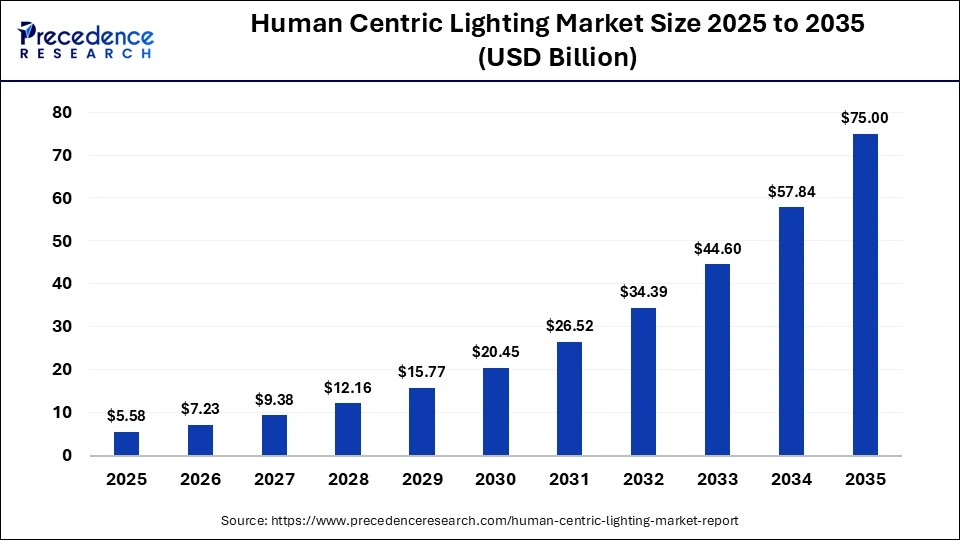
The global human centric lighting market was valued at USD 5.58 billion in 2025 and is projected to grow from USD 7.23 billion in 2026 to approximately USD 75.00 billion by 2035, registering a CAGR of 29.68% during the forecast period from 2026 to 2035. This strong growth is driven by increasing demand for advanced lighting solutions and rapid infrastructure development worldwide.
Get a Free Sample Report with Key Market Trends: https://www.precedenceresearch.com/sample/8227
How HCL Boosts Health, Mood, and Performance?
HCL boosts health, mood, and performance by mimicking the natural progression of daylight, which helps regulate circadian rhythms and improve sleep quality. By adjusting color temperature and intensity throughout the day, HCL reduces eye strain, enhances alertness, and supports emotional well-being. In workplaces and learning environments, this tailored lighting improves focus, productivity, and overall cognitive performance, creating spaces that align with both human biology and comfort.
HCL can tailor lighting to the biological needs of occupants. It involves the dynamic adjustment of light by altering its color temperature, intensity, and timing to meet the 24-hour cycle. While traditional lighting remains static, HCL systems shift from cool, high-intensity light in the morning to warm, low-intensity light in the evening.
HCL design assists in aligning with the natural circadian rhythms of the human body, enhancing alertness during the day and providing relaxation in the evening. The primary goal is to mimic the dynamic range of natural light and create a lighting-driven environment that promotes better health, comfort, and performance.
Key Benefits of Human Centric Lighting
Implementing Human Centric Lighting (HCL) offers several benefits for individuals and organizations. Several studies show that HCL holds potential to positively impact health, enhance well-being, and boost productivity.
- Improved Health and Well-being : Human Centric Lighting (HCL) assists in maintaining a stable circadian rhythm, which boosts immune function, improves sleep quality, and promotes psychological health.
- Enhanced Productivity and Concentration : In offices and schools, a proper and advanced lighting system dramatically impacts the occupants' performance. HCL, with its high-intensity morning light, can increase concentration, reduce fatigue, and enhance alertness. According to the various published reports, proper HCL can increase employee concentration, resulting in a significant increase in work performance.
- Smart Integration and System Optimization: Human Centric Lighting (HCL) systems can seamlessly integrate with IoT-based lighting controls, which allows for automated adjustments, remote management, and data-driven optimization for high operational efficiency.
- Energy Efficiency and Sustainability: When combined with smart lighting systems, HCL can automatically adjust based on natural daylight availability, reducing energy consumption and operational costs.
- Visual Comfort and Safety: Human Centric Lighting (HCL) is not only about the biological effects, but it also provides superior visual acuity, reduces glare, and creates a visually appealing and comfortable environment.
- Reduced Absenteeism : Human Centric Lighting (HCL) reduces absenteeism in workplaces and schools by supporting natural circadian rhythms, improving health, and enhancing mental alertness. Proper and dynamic lighting cuts down on eye strain, headaches, and drowsiness, common causes of workday interruptions and absenteeism.
Applications of Human Centric Lighting
HCL is versatile and can be implemented in different spaces. Many places and scenarios adopt human-centric lighting, such as education institutions, corporate offices, industries, and health care facilities. Let's explore how people in each one could benefit from HCL technology.
- Corporate Offices: Corporate office spaces are one of the ideal applications for human-centric lighting. In an office environment, HCL focuses on improving concentration, reducing fatigue, and boosting productivity. In the morning, one can experience a high color temperature of 5000K to improve alertness, slightly lower the color temperature to 4000K in the afternoon, and switch to warm light 3000K in the evening to support relaxation. This lighting system creates a more comfortable and healthier work environment by simulating the natural progression of daylight throughout the day.
- Educational Institutions: Light plays a vital role in students’ academic performance. Educational institutions widely adopt advanced human-centric lighting. The dynamic color temperature lighting significantly increases the learning efficiency and offers protection to the students' eyesight. For instance, a surge in brightness when giving an exam or reading, and a decrease in intensity when resting, helps in creating more comfortable learning places. HCL enhances attention, reduces fatigue, and improves memory in students.
- Healthcare Facilities: Healthcare facilities widely use human-centric lighting to reduce patient delirium, promote patients' recovery, and regulate the schedules of medical staff. Bright light during the day promotes activity, while warm light at night helps to improve sleep. The operating room often uses high color rendering LEDs for accurate vision. More and more elderly individuals are continuing to use computers and mobile phones, which makes their eyes of the elderly become less sensitive to light and prone to eye fatigue. HCL helps to reduce VDT eye fatigue in older people by adjusting the light source.
- Homes: Human-centric lighting (HCL) is gradually becoming a crucial aspect in modern living spaces to enhance morning wake-up and evening relaxation. In the bedroom, smart dimmable lights can brighten in the morning to mimic a sunrise. At night, this lighting system helps to regulate sleep patterns by shifting to a warm glow with low brightness. By mimicking natural daylight cycles, this approach results in enhanced productivity, improved sleep quality, and reduced energy consumption in modern buildings. HCL can be easily customized to suit different home environments. The switch to reduced illumination levels helps create a relaxed and cozy atmosphere while watching movies.
- Factories/24/7 Operations: In industrial environments, human-centric lighting (HCL) can increase worker alertness, minimize errors, and reduce accidents. Dynamic lighting is mainly suitable for shift work. The use of high-colored temperature lighting during night shifts keeps the workers awake. It can adjust factory lighting according to the functional requirements of different areas.
The Next Generation of Lighting: Biologically Right
The future of lighting is not just about being energy-efficient but also about being biologically correct. With the rapidly evolving technological landscape, these sophisticated lighting solutions are increasingly becoming more sustainable, personalized, and intelligent, incorporating materials that are environmentally friendly. The rising integration of Human Centric Lighting (HCL), combined with sustainable and flicker-free LED technology, is redefining the role of lighting in architecture and design. This approach prioritizes occupant health, emotional well-being, and environmental responsibility.
Expert Opinion
According to our industry experts, human-centric lighting (HCL) is rapidly emerging as a strategic investment for businesses seeking to enhance employee productivity, well-being, and overall operational efficiency. By simulating natural light cycles and adapting intensity and color temperature throughout the day, HCL positively impacts circadian rhythms, reduces fatigue, and improves focus. For commercial real estate and office spaces, implementing HCL not only supports employee satisfaction but also strengthens a company’s brand as a forward-thinking and wellness-oriented organization.
Furthermore, HCL systems integrated with IoT and smart building platforms offer actionable insights through data analytics, enabling organizations to optimize energy consumption and reduce operational costs while maintaining a comfortable and adaptive environment. As businesses increasingly prioritize human experience in the workplace, HCL represents both a competitive advantage and a long-term cost-saving strategy, making it a key consideration in modern commercial infrastructure planning.
Final Thoughts
In a world where humans spend most of their lives indoors, HCL ensures that a better environment works for them, not against them, making it the premier choice for modern lighting design. Human Centric Lighting (HCL) is a crucial evolution that is transforming spaces like schools, corporate offices, factories, and health care facilities. By harmonizing artificial light with our natural biological rhythms, HCL directly influences and improves health, enhances mood, and boosts employee performance. Human Centric Lighting offers a scientifically proven way to align technology with human needs, making every hour of the day more productive and enjoyable.
About the Authors

Aditi Shivarkar
Aditi, Vice President at Precedence Research, brings over 15 years of expertise at the intersection of technology, innovation, and strategic market intelligence. A visionary leader, she excels in transforming complex data into actionable insights that empower businesses to thrive in dynamic markets. Her leadership combines analytical precision with forward-thinking strategy, driving measurable growth, competitive advantage, and lasting impact across industries.



Aman Singh
Aman Singh with over 13 years of progressive expertise at the intersection of technology, innovation, and strategic market intelligence, Aman Singh stands as a leading authority in global research and consulting. Renowned for his ability to decode complex technological transformations, he provides forward-looking insights that drive strategic decision-making. At Precedence Research, Aman leads a global team of analysts, fostering a culture of research excellence, analytical precision, and visionary thinking.

Piyush Pawar
Piyush Pawar brings over a decade of experience as Senior Manager, Sales & Business Growth, acting as the essential liaison between clients and our research authors. He translates sophisticated insights into practical strategies, ensuring client objectives are met with precision. Piyush’s expertise in market dynamics, relationship management, and strategic execution enables organizations to leverage intelligence effectively, achieving operational excellence, innovation, and sustained growth.