






 Request Consultation
Eight Years, Five Diseases
How a diabetes injection became a cardiometabolic platform
In eight years, semaglutide's growth from a diabetes drug to a multi-disease treatment stems from its foundational action as a GLP-1 receptor agonist. By mimicking the natural hormone that targets widespread receptors in the brain, heart, pancreas, kidneys, and liver, large-scale clinical trials have continuously uncovered profound systemic, anti-inflammatory, and even metabolic benefits far beyond simple blood sugar control. Moreover, it showed a 20% reduction in major adverse cardiovascular events like heart attacks, strokes, and cardiovascular death in overweight or obese patients who had pre-existing heart disease but no diabetes.
| Year | Product | Approval / Milestone |
| 2017 | Ozempic | Approved for Type 2 diabetes |
| 2019 | Rybelsus | Approved; first oral GLP-1 |
| 2021 | Wegovy | Approved for chronic weight management |
| 2022 | Wegovy | Approved for adolescents 12+ |
| 2024 | Wegovy | Approved for cardiovascular risk reduction |
| 2025 | Ozempic / Wegovy | Ozempic approved for CKD; Wegovy approved for MASH/liver disease |
| 2025-26 | Oral Wegovy | Oral Wegovy tablet approved, 25 mg |
Key Insight: Semaglutide transitioned from a single-disease diabetes drug to a broad cardiometabolic platform because vast clinical trials proved it actively protects the heart, blood vessels, and kidneys across diverse patient groups, regardless of whether they have diabetes or baseline obesity.
Source: U.S. FDA drug approval and label-update records; Novo Nordisk regulatory announcements.
The Efficacy Bar
Nearly 15% average weight loss reset the ceiling for obesity treatment
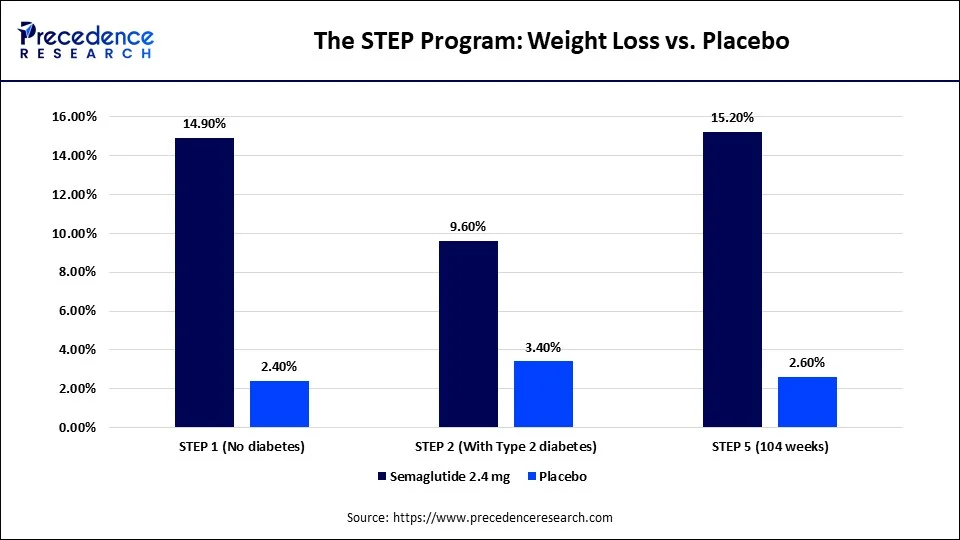
Across the pivotal clinical trials, once-weekly subcutaneous semaglutide (2.4 mg) resulted in a mean weight loss of 9.6% to 15.2% from STEP 2 to STEP 5 compared to 2.4% to 3.4% for placebo. Efficacy was consistently lower in patients with type 2 diabetes because of metabolic attenuation.
Key Insight: STEP 1 trial extension confirms that stopping semaglutide leads patients to regain nearly two-thirds of their lost weight within one year. This happens because obesity is a chronic, relapsing metabolic disease. When the drug is removed, physiological homeostatic set-points and even hunger signals aggressively rebound to pre-treatment levels.
Source: Wilding JPH et al., New England Journal of Medicine, Feb 2021 (STEP 1); STEP 2 and STEP 5 trial publications.
The Cardiovascular Pivot
A 20% reduction in heart attack, stroke, and cardiovascular death - without diabetes
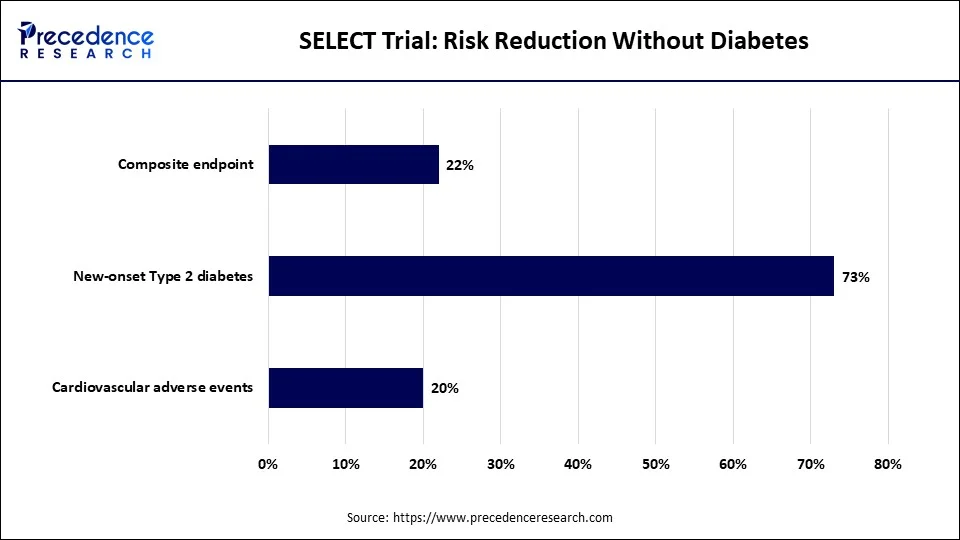
The SELECT Trial demonstrated that once-weekly subcutaneous semaglutide 2.4 mg significantly decreases major adverse cardiovascular events, new-onset diabetes, and even renal decline in non-diabetic adults with preexisting cardiovascular disease alongside overweight or obesity.
A 20% relative risk reduction in the main composite endpoint of cardiovascular death, nonfatal myocardial infarction, or nonfatal stroke. A striking 73% reduction in the incidence of new-onset type 2 diabetes. Moreover, a 22% reduction in the risk of primary composite renal events such as doubling of serum creatinine, persistent macroalbuminuria, end-stage kidney disease, or renal death. Participants achieved a mean body weight reduction of about 9.4%.
Key Insights: SELECT Trial converted semaglutide (Wegovy) into a cardiovascular therapy by proving in a massive 17,604-patient study that the drug lowered the major adverse cardiovascular events by 20% in overweight adults with heart disease but no diabetes. This hard clinical proof prompted an official FDA label growth, giving insurers the required clinical justification to cover it for heart health.
Source: Lincoff AM, Brown-Frandsen K, et al., NEJM, 2023; Colhoun HM et al., Nature Medicine, 2024 (kidney sub-analysis).
One Molecule, Five Disease Categories
The August 2025 MASH approval opened an entirely new specialty market
| Sequence | Disease Category |
| 1 | Type 2 Diabetes 2017 |
| 2 | Chronic Weight Management 2021 |
| 3 | Cardiovascular Risk Reduction 2024 |
| 4 | Chronic Kidney Disease 2025 |
| 5 | MASH / Liver Fibrosis 2025 |
In August 2025, the U.S. Food and Drug Administration approved Wegovy (semaglutide 2.4 mg) for the treatment of metabolic dysfunction-associated steatohepatitis (MASH) with moderate-to-advanced liver fibrosis, making it the first GLP-1 receptor agonist cleared for a liver disease. With this approval, semaglutide has become a drug of choice for multiple disorders, including type 2 diabetes mellitus, chronic weight management, cardiovascular risk reduction, chronic kidney disease, and MASH/liver fibrosis. Instead of treating isolated organ damage, a single mechanism treats fat-based inflammation, high blood pressure, and metabolic stress across all four areas.
Key Insight: Semaglutide consolidates separate specialist fields, such as nephrology (CKD), hepatology (MASH), cardiology (CV disease), and endocrinology (obesity/diabetes), by treating the shared root cause: Cardiovascular-Kidney-Metabolic (CKM) syndrome.
Source: FDA accelerated approval announcement, August 2025 (ESSENCE trial).
The Financial Engine
Ozempic alone generated DKK 127 billion in 2025
Novo Nordisk's Semaglutide Franchise - FY2025
| Product | 2025 Net Sales |
| Ozempic (Injectable, Diabetes) | DKK 127,089M |
| Wegovy (Injectable, Obesity) | DKK 79,106M |
| Rybelsus (Oral, Diabetes) | DKK 22,093M |
Novo Nordisk's semaglutide franchise, comprising Ozempic, Wegovy, and Rybelsus, surpassed DKK 127 billion, DKK 79 billion, and DKK 22 billion, respectively, in total revenue for 2025. While flagship injectable Ozempic drove double-digit gains into its eighth year on the market, the oral option Rybelsus saw a slight decline as the firm pivoted its promotional focus toward advanced oral and injectable formulations.
KEY INSIGHT: In high-demand pharmaceutical categories such as GLP-1 receptor agonists or specialized monoclonal antibodies, individual product revenues routinely exceed $10 billion to $20 billion annually. This scale surpasses the total corporate sales of many mid-cap pharma firms, making physical manufacturing capacity and sterile fill-finish infrastructure the primary binding constraints rather than clinical proof.
Source: Novo Nordisk Annual Report 2025 (Financial Performance section); Novo Nordisk Form 20-F, SEC filing.
The Demand Backdrop
40.3% of U.S. adults have obesity - the eligible population dwarfs current prescribing
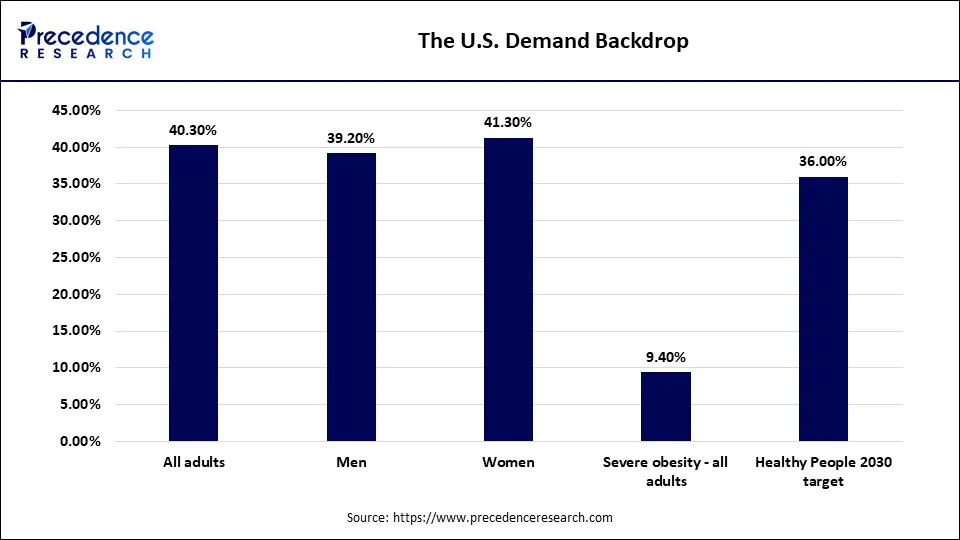
The prevalence of obesity among all American adults held steady near 40.3% from August 2021 to August 2023, as recorded in the CDC National Center for Health Statistics report, while severe obesity affects nearly 9.4% of adults. Of these, around 39.2% were men and 41.3% were women, indicating that American women are more prone to obesity risk. State-level severity metrics show minor fluctuations, but high population-wide baseline numbers underscore persistent public health and economic strains. Hence, the U.S. government aims to reduce the risk of obesity among adults to 36% through its “Healthy People 2030” initiative.
Key Insight: Current U.S. GLP-1 adoption reaches approximately 11% of adults taking them for weight loss, up from 3% in 2024. While impressive, this represents only a portion of the over 100 million clinically eligible Americans, thus keeping the market in an expansive, growth-heavy phase driven by new oral pills and broader indications.
Source: CDC/National Center for Health Statistics, NCHS Data Brief No. 508 (Sept 2024); CDC Adult Obesity Facts.
The Head-to-Head Reality Check
Tirzepatide beat semaglutide in the first direct trial comparison.
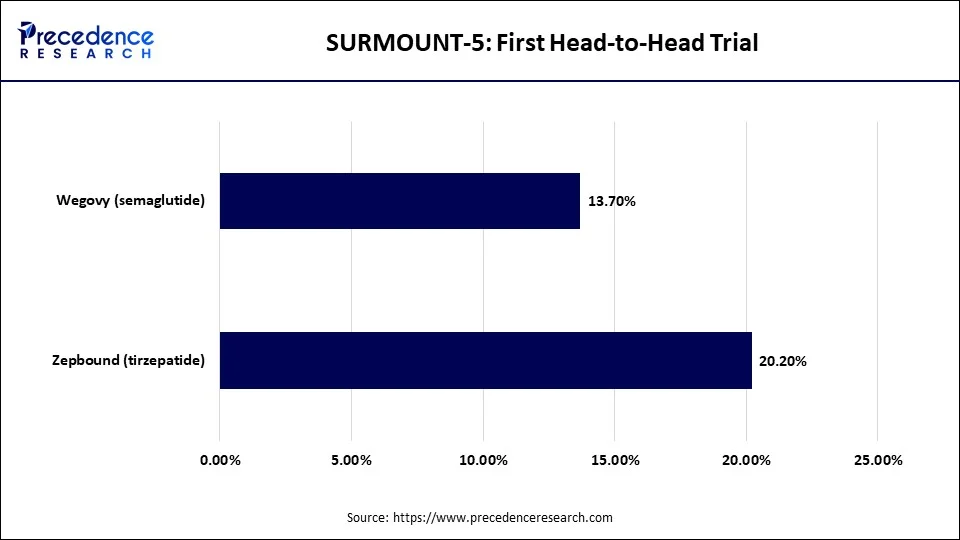
The SURMOUNT-5 trial compared Zepbound (tirzepatide) directly against Wegovy (semaglutide) in 751 adults with obesity or overweight over 72 weeks. It showed that tirzepatide achieved a 20.2% mean body weight reduction compared to 13.7% for semaglutide, establishing clear superiority in weight and waist reduction with similar gastrointestinal safety profiles.
Key Insights: Semaglutide's competitive edge is changing from "best-in-class efficacy" to "best-established outcomes evidence". Its advantage now rests on its larger long-term cardiovascular, kidney, and liver data set.
Source: Eli Lilly and Company investor releases (Dec 2025, May 2025); SURMOUNT-5 full results, New England Journal of Medicine.
The Pill Revolution
December 2025: the first oral GLP-1 tablet approved for chronic weight management
Injectable vs. Oral Semaglutide
| Attribute | Injectable (Wegovy) | Oral (Wegovy tablet) |
| Dosing frequency | Once weekly | Once daily |
| Bioavailability | High (subcutaneous) | ~1% - needs SNAC enhancer |
| Max weight-management dose | 2.4 mg | 25 mg |
| Administration rule | None | Fasting + 30-minute food/water hold |
Oral semaglutide demands a higher daily dosage, like 25mg or 50mg, compared to weekly injections because its oral bioavailability is less than 1%. The pill depends on an absorption enhancer called SNAC, which demands a precise fasting window to work without interference. Subcutaneous injections bypass the digestive system entirely, yielding roughly 89% systemic exposure. Moreover, oral absorption hovers around 0.8% to 1%, meaning only a tiny fraction of the swallowed pill enters the bloodstream.
Key Insights: Traditional oral GLP-1 pills, like oral semaglutide, need strict morning fasting, precise water caps, and a 30-minute wait before eating or taking other drugs. Eli Lilly’s orforglipron is a small-molecule pill that avoids these hurdles, enabling flexible daily dosing anytime without food or water limits.
Source: Drugs.com Rybelsus FDA approval history; Pharmacy Times, "From Rybelsus to the Ozempic Pill" (2026); FDA supplemental approval records.
The Manufacturing Arms Race
Tens of billions of dollars chasing enough vials and syringes.
Novo Nordisk's Manufacturing Arms Race
| Year | Manufacturing Capital Investment |
| 2021 (Kalundborg announcement) | $2.4B |
| 2023 | $3.9B |
| 2024 (Including Catalent acquisition) | $18.0B |
| 2025 (Planned) | $9.0B |
Novo Nordisk drastically scaled up its capital deployment to ease severe supply constraints for blockbuster GLP-1 medications such as Ozempic and Wegovy. Driven by unprecedented global demand, spending surged from modest baseline investments to massive multi-billion-dollar infrastructure commitments across the United States and Europe. Novo Nordisk's capacity investment climbed from roughly $2.4 billion in 2021 to approximately $18 billion in 2024, including the Catalent site acquisitions, with a further $9 billion planned for 2025, including a single $4.1 billion North Carolina plant.
Key Insight: Major manufacturers such as Eli Lilly and Novo Nordisk are investing tens of billions of dollars in multi-year mega-factories, secure supply chains, and next-generation combination drugs. This massive capital commitment proves they view GLP-1 treatments as permanent, foundational medicine for chronic disease rather than a passing lifestyle trend.
Source: Novo Nordisk press releases (Dec 2021, June 2024); Pharma Manufacturing (2025 capex reporting); Fierce Pharma.
The Shortage-to-Resolution Timeline
FDA declared the shortage "resolved" in February 2025 - compounders are still fighting it
Shortage-to-Resolution Timeline
| Date | Event |
| Mar-22 | Wegovy added to FDA shortage list |
| Aug-22 | Ozempic added to FDA shortage list |
| Oct-24 | Tirzepatide shortage declared resolved |
| Feb-25 | Semaglutide shortage declared resolved |
| Apr-25 | 503A compounding pharmacies must stop |
| May-25 | 503B outsourcing facilities must stop |
In March 2022, the U.S. FDA included Wegovy in its shortage list, followed by Ozempic’s inclusion in the shortage list by August 2022, encouraging manufacturers to increase their local manufacturing. In October 2024, tirzapetide shortage was resolved. The FDA declared the semaglutide shortage resolved in February 2025. This ended an approximately three-year market gap and set strict wind-down enforcement windows. These timelines forced state-licensed compounders to stop producing copycat versions by April 2025, and outsourcing facilities by May 2025.
Key Insight: In its 2025 financial disclosures filed with the U.S. Securities and Exchange Commission, like Form 6-K filings for Q2/Q3 2025, Novo Nordisk explicitly cited lower-than-planned U.S. market penetration of branded GLP-1 treatments, directly blaming the persistent and widespread availability of unlawful mass-compounded semaglutide alternatives, as a main justification for slashing its full-year sales and operating profit guidance.
Source: FDA Declaratory Orders (Feb 2025); Novo Nordisk Form 6-K, SEC filing (July 2025); Pharmacy Times.
Counterfeit Ozempic: A Recurring Pattern
At least five FDA/WHO enforcement actions against falsified semaglutide since late 2023
Counterfeit Ozempic: Enforcement Pattern
| Date | Enforcement / Safety Action |
| Oct-23 | Counterfeit batches found in Brazil and UK |
| Dec-23 | FDA seized thousands of units; fake needles found |
| Jan-24 | WHO global surveillance alert issued |
| Apr-25 | FDA seized ~hundreds of units; fake serial numbers |
| Dec-25 | FDA seized further batches; fake packaging |
In October 2023, counterfeit Ozempic batches were found in Brazil and the UK. Later, in late 2023, the FDA seized thousands of units of fake Ozempic needles. In response, the WHO issued a global alert in January 2024. In 2025, sophisticated counterfeit products penetrated the regulated U.S. supply chain by exploiting complex multi-tier distribution networks, mimicking legitimate serial numbers, and tampering with packaging. This infiltration bypasses standard wholesale checks, putting consumers at risk through unverified medical devices, fake therapeutics, and substandard components.
Key Insight: Counterfeiters exploit semaglutide shortages and high prices by selling fake versions of drugs such as Ozempic or Wegovy. High demand and low supply create a huge price gap. Moreover, fake makers step in to sell cheaper, unverified copies for a high profit while risking buyer health.
Source: FDA Drug Alerts and Statements (2023–2025); WHO Global Surveillance and Monitoring System alert.
The 2025-2026 Pricing Reset
Novo Nordisk cut U.S. cash-pay prices by up to 70%, betting on volume.
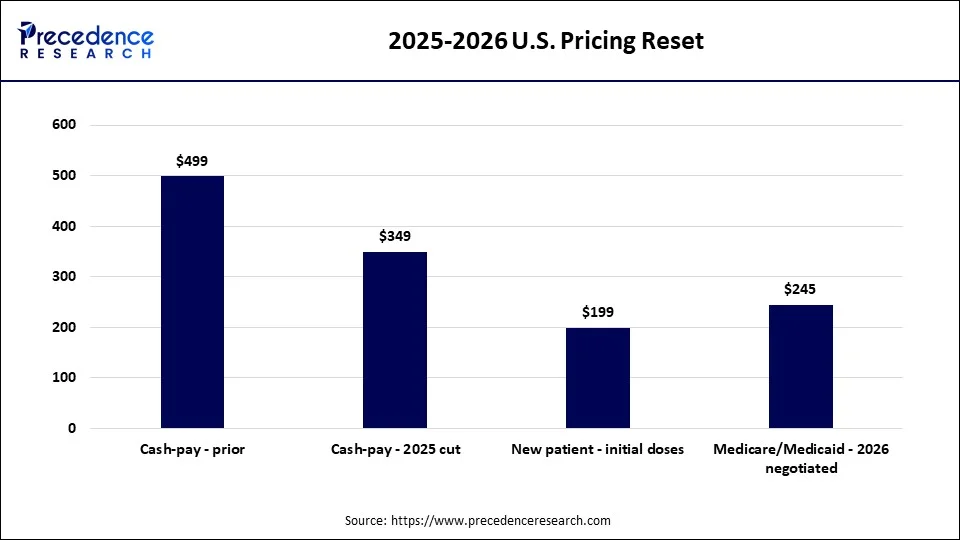
Cash-pay prices dropped from $499 to $349/month in 2025, with new patients paying as little as $199 for initial doses. The U.S. government "Most Favored Nations" agreement sets Medicare or Medicaid pricing at $245/month starting in 2026.
Key Insight: Novo Nordisk is trading per-unit margin for massive volume. By slashing prices up to 70% for U.S. government programs along with cash payers, and launching lower-cost oral pills, management unlocked massive new demographics such as Medicare seniors. They bet that high-volume scale will offset the per-unit price drops.
Source: Novo Nordisk FY2025 SEC filings; Drug Discovery & Development Trends (Nov 2025).
The Adolescent Prescribing Frontier
First-time prescriptions to eligible teens rose 49% in a single year
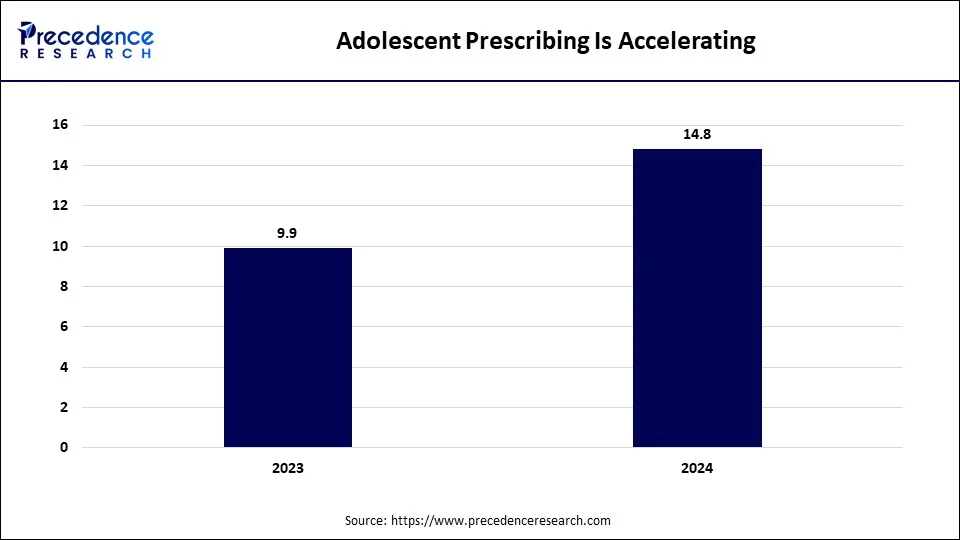
Following Wegovy's December 2022 FDA approval for pediatric weight management and even the American Academy of Pediatrics' 2023 guideline updates, first-time semaglutide prescription rates among eligible U.S. adolescents rose from 9.9 to 14.8 per 100,000 people between 2023 and 2024, thus reflecting an overall 50% increase as clinical adoption grew.
Key Insight: Despite rapid year-over-year growth in prescriptions, absolute penetration of anti-obesity medications such as GLP-1 receptor agonists remains under 1.5% among eligible adolescents. Media coverage creates a false sense of mainstream saturation, while clinical reality shows strict access barriers, conservative prescribing habits, along with deep socioeconomic disparities.
Source: Truveta Research, adolescent GLP-1 prescribing analysis; NEJM STEP TEENS trial.
The Safety Ledger
Gastrointestinal effects dominate; two newer signals are driving label updates.
The Safety Ledger: Common Adverse Events
| Adverse Event | Reported Incidence |
| Nausea | Up to 19.95% |
| Diarrhea | Up to 13% |
| Vomiting | Up to 8% |
| Nasopharyngitis | Up to 14.5% |
| Constipation | Up to 8% |
Wegovy, Ozempic, and related GLP-1 receptor agonist medications carry common side effects such as nausea and diarrhea, alongside emerging safety signals for severe intestinal blockage (ileus) and nonarteritic anterior ischemic optic neuropathy (NAION), driving ongoing federal multidistrict litigation (MDL) along with regulatory scrutiny over adequate warnings.
Key Insight: The safety conversation has changed from "does this drug have side effects" (settled - yes) to "what are the true rates of rare-but-serious risks among tens of millions of real-world users" (still being characterized).
Source: FDA Adverse Event Reporting System pharmacovigilance study; JAMA Ophthalmology (July 2024) NAION study.
The Next-Generation Pipeline Is Catching Up Fast
Investigational triple-agonists are already beating semaglutide's efficacy in early trials
| Therapy | Trial Duration | Mean Weight Loss Reported |
| Semaglutide (Wegovy) | 72 weeks | 13.70% |
| Tirzepatide (Zepbound) | 72 weeks | 20.20% |
| CagriSema (Novo, investigational) | 68 weeks | 22.70% |
| Retatrutide (Lilly, investigational) | 80 weeks | 24.20% |
Next-generation anti-obesity medications such as CagriSema by Novo Nordisk and retatrutide by Eli Lilly achieve significantly deeper weight reduction than older single-agent therapies by aiming multiple metabolic pathways simultaneously. Combines the GLP-1 receptor agonist semaglutide with the long-acting amylin analogue cagrilintide. Phase 3 trials, like REDEFINE 1, demonstrated roughly 20.4% to 22.7% mean weight loss at standard doses and outperformed semaglutide alone.
Key Insight: Semaglutide manages a distinct clinical advantage over newer, higher-efficacy weight-loss molecules because it has completed multi-year cardiovascular, kidney, and metabolic outcome trials. Newer compounds can claim superior short-term scale weight reduction, but they lack the accumulated, hard endpoint trial data, thus proving long-term organ protection.
Source: Eli Lilly TRIUMPH-1 topline results (May 2026); Novo Nordisk REDEFINE 1/2 data presented at ADA Scientific Sessions (June 2025).
Recent Developments
| Date | Development | Organization |
| Feb 2025 | Semaglutide injection shortage declared resolved | FDA |
| May 2025 | SURMOUNT-5 clinical trial data suggested that tirzepatide beats semaglutide head-to-head in clinical efficacy | Eli Lilly/NEJM |
| Aug 2025 | Wegovy became the first GLP-1 agonist that was approved for MASH | FDA |
| Nov 2025 | Most Favoured Nations” pricing agreement sets path to $245/month Medicare pricing. | Novo Nordisk/U.S. Administration |
| Dec 2025 | Oral Wegovy tablet (25mg) was approved for chronic weight management in the U.S. | FDA |
| Dec 2025 | FDA seized counterfeit Ozempic (lot PAR1229) | FDA |
| May 2026 | Retatrutide TRIUMPH-1 phase 3 results show up to approximately 28% weight loss | Eli Lilly |
Key Companies and Organizations
| Organization | HQ | Role |
| Novo Nordisk A/S | Bagsværd, Denmark | Originator and sole manufacturer of Ozempic, Wegovy, Rybelsus |
| Eli Lilly and Company | Indianapolis, U.S. | Competitor via tirzepatide (Zepbound/Mounjaro), orforglipron, and retatrutide |
| U.S. Food and Drug Administration | Silver Spring, U.S. | Major U.S. regulator involved in approvals, shortage declarations, counterfeit enforcement. |
| European Medicines Agency | Amsterdam, Netherlands | EU regulator focusing on approvals and 2025 NAION labeling recommendation |
| World Health Organization | Geneva, Switzerland | Global counterfeit-drug surveillance organization |
| CDC/National Center for Health Statistics | Atlanta, U.S |
Obesity prevalence surveillance underlying demand analysis |
Key Questions This Research Helps Answer
- Is semaglutide's expansion constrained more by manufacturing capacity, pricing, and genuine demand saturation?
- How exposed is Novo Nordisk's franchise to compounded as well as counterfeit competition - structurally or transitionally?
- What is the realistic efficacy gap between semaglutide and tirzepatide or next-gen molecules going forward?
- Which indication (obesity, CV risk, CKD, MASH) provides payers the clearest cost-effectiveness case?
- How will the 2026 Medicare Part D obesity-drug pilot reshape the addressable population?
- What guardrails should pediatric providers consider given the pace of adolescent prescribing expansion?
- How should rare-safety-signal monitoring such as NAION, thyroid, GI inform prescribing guidance at population scale?
- How defensible is semaglutide's leadership against Lilly's dual or triple-mechanism pipeline?
- What does the MASH approval suggest about semaglutide's next indication frontier?
- What lessons does the 2022–2025 shortage provide for capacity planning around future breakthrough therapies?
References
- U.S. Food and Drug Administration- approval letters, labels, Declaratory Orders. fda.gov
- Wilding JPH et al., “Once-Weekly Semaglutide in Adults with Overweight or Obesity” (STEP 1), NEJM, 2021.
- Lincoff AM, Brown-Frandsen K, et al., “Semaglutide and Cardiovascular Outcomes in Obesity” (SELECT), NEJM, 2023.
- Colhoun HM, et al., “Long-term kidney outcomes of semaglutide... SELECT trial,” Nature Medicine, 2024.
- Eli Lilly and Company- SURMOUNT-5, ATTAIN-MAINTAIN, and TRIUMPH-1 investor press releases, 2025-2026.
- Novo Nordisk A/S- Annual Report 2025; Form 20-F and Form 6-K SEC filings.
- CDC/National Center for Health Statistics- NCHS Data Brief No. 508 (Sept 2024); Adult Obesity Facts.
- FDA Drug Alerts and Statements- counterfeit Ozempic seizures, 2023–2025.
- WHO Global Surveillance and Monitoring System- falsified semaglutide alert.
- Pharmacy Times- “FDA Moves to Permanently Close the Door on Compounded GLP-1s,” 2026.
- JAMA Ophthalmology- NAION risk study associated with semaglutide, July 2024.
- FDA Adverse Event Reporting System (FAERS)- pharmacovigilance gastrointestinal signal analysis.
- Truveta Research- GLP-1 prescribing trends among adolescents with obesity.
- Drug Discovery & Development Trends- Novo Nordisk pricing and 2026 guidance analysis, Nov 2025.
About the Authors

Aditi Shivarkar
Aditi, Vice President at Precedence Research, brings over 15 years of expertise at the intersection of technology, innovation, and strategic market intelligence. A visionary leader, she excels in transforming complex data into actionable insights that empower businesses to thrive in dynamic markets. Her leadership combines analytical precision with forward-thinking strategy, driving measurable growth, competitive advantage, and lasting impact across industries.



Aman Singh
Aman Singh with over 13 years of progressive expertise at the intersection of technology, innovation, and strategic market intelligence, Aman Singh stands as a leading authority in global research and consulting. Renowned for his ability to decode complex technological transformations, he provides forward-looking insights that drive strategic decision-making. At Precedence Research, Aman leads a global team of analysts, fostering a culture of research excellence, analytical precision, and visionary thinking.

Piyush Pawar
Piyush Pawar brings over a decade of experience as Senior Manager, Sales & Business Growth, acting as the essential liaison between clients and our research authors. He translates sophisticated insights into practical strategies, ensuring client objectives are met with precision. Piyush’s expertise in market dynamics, relationship management, and strategic execution enables organizations to leverage intelligence effectively, achieving operational excellence, innovation, and sustained growth.