



Minoxidil Market Size, Companies, Share, Production Capacity, Raw Material Pricing, Export & Import Analysis, Manufacturing Cost, Competitive Positioning, and Demand Forecast
Minoxidil Market (By Application: Cosmetic Applications, Hair Loss Treatment, Hypertension Management; By Formulation Type: Foams, Gels, Topical Solutions; By Concentration: 2%, 5%, 10%; By Distribution Channel: Online Stores, Pharmacies, Supermarkets) - Global Industry Analysis, Size, Trends, Leading Companies, Regional Outlook, and Forecast 2026 to 2035
Source: https://www.precedenceresearch.com/minoxidil-market
 Get a Sample
 Table Of Content


What is the Minoxidil Market Size in 2026?
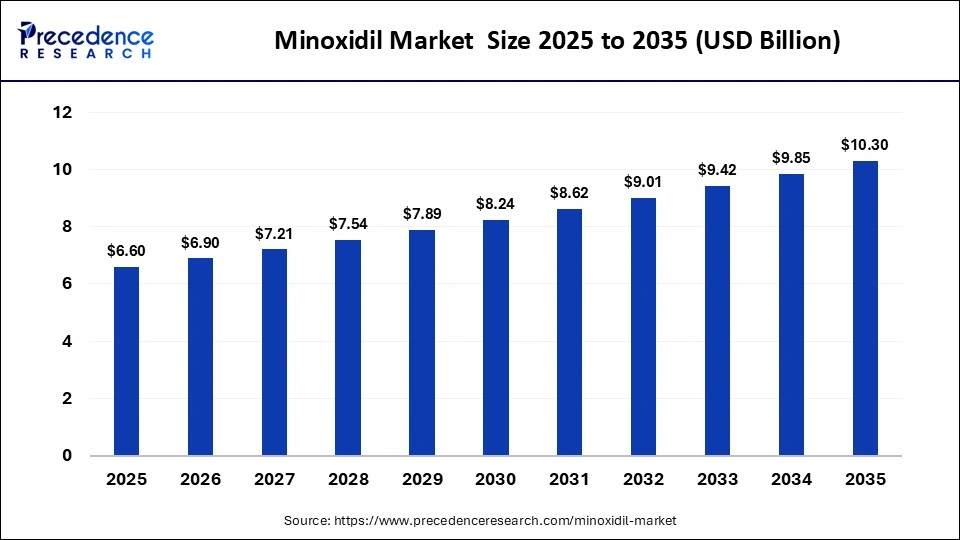
The global minoxidil market size accounted for USD 6.60 billion in 2025 and is predicted to increase from USD 6.90 billion in 2026 to approximately USD 10.30 billion by 2035, expanding at a CAGR of 4.55% from 2026 to 2035. The market growth is attributed to increasing global prevalence of androgenetic alopecia and rising adoption of clinically approved topical hair regrowth treatments.
Key Takeaways
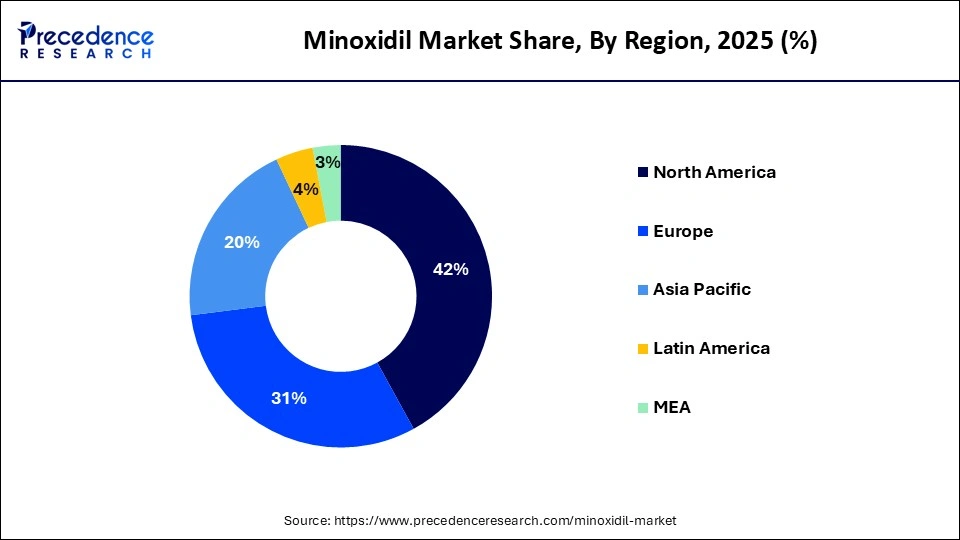
- North America dominated the global market with 42% in 2025.
- Asia-Pacific is expected to grow at the fastest CAGR between 2026 and 2035.
- By application, the hair loss treatment segment contributed to the highest minoxidil market share in 2025.
- By application, the hypertension management segment is expected to grow at a rapid CAGR between 2026 and 2035.
- By formulation type, the topical solutions segment captured the highest market share in 2025.
- By formulation type, the foams segment is poised to grow at a steady CAGR between 2026 and 2035.
- By concentration, the 5% segment held a major market share in 2025.
- By concentration, the 2% segment is expected to expand at the fastest CAGR from 2026 to 2035.
- By distribution channel, the pharmacies segment generated the biggest market share in 2025.
- By distribution channel, the online stores segment is expected to expand at the fastest CAGR between 2026 and 2035.
Which Factors Influence the Minoxidil Market?
Rising global prevalence of androgenetic alopecia and increasing treatment-seeking behavior are major drivers accelerating market growth. The most prevalent type of hair loss in the world is androgenetic alopecia. It has a very high patient population that is treated on long term basis. As reported by the American Academy of Dermatology 2025 report, the prevalence of hereditary hair loss in the U.S. is estimated to be 80 million. This high patient population still promotes long-term need for topical minoxidil treatment, further boosting the market in the coming years.
Impact of Artificial Intelligence on the Minoxidil Market
AI is reshaping clinical decision-making and product innovation across the market by improving diagnostic precision and treatment planning. Scalp imaging devices based on AI assist dermatologists in diagnosing androgenetic alopecia at an earlier stage and prescribe minoxidil treatment with a higher degree of confidence. In 2024, the National Institutes of Health reported that AI algorithms had more than 90% accuracy in tasks of classifying hair loss. Moreover, such high diagnostic accuracy contributes to the earlier initiation of treatments and further reliance on treatment hair regrowth therapies that have been clinically approved.
Minoxidil Market Trends
- Expansion of Low-Dose Oral Minoxidil Prescriptions in Dermatology Practice: Cases of poor response to topical therapy have led to an increased prescription of controlled low-dose oral minoxidil by dermatologists. There is better convenience in clinical publications, where wider acceptance by physicians is promoted in the supervised treatment setting. This trend is driving the pharmaceutical firms to grow the oral formulation development and regulatory approval plans internationally.
- Integration of Minoxidil into Combination Therapy Protocols Accelerating Treatment Effectiveness: Hair restoration clinics increasingly combine minoxidil with microneedling, platelet-rich plasma, and antiandrogen treatment approaches. Experts report increased follicular stimulation when combination therapy is used to supplement conventional topical therapy treatments. This is increasing the use of minoxidil as a base in the overall hair restoration therapies.
Minoxidil Market Growth Factors
- Expansion of Dermatology Clinic Networks: Increasing establishment of specialized hair treatment centers is driving higher prescription and recommendation rates globally.
- Growing Consumer Spending on Personal Grooming: Rising aesthetic consciousness and self-care spending are boosting demand for clinically proven hair regrowth therapies.
- Rising Adoption of Tele-Dermatology Platforms: Expanding digital consultation services are propelling early diagnosis and treatment initiation among younger populations.
Key Emerging Innovations in the Minoxidil Market
|
Innovation Focus |
Technology |
Key Benefit |
|
Advanced Delivery |
Nanotechnology/Liposomes (Nanostructured lipid carriers, transfersomes) |
Increases follicle penetration by >10x and reduces scalp irritation. |
|
Formulation |
Minoxidil + Finasteride Topical Blends (e.g., MorrF) |
Combines vasodilation with DHT blocking for superior, faster results. |
|
Administration |
Sublingual/Oral Films/Wafers (e.g., VDPHL01) |
Bypasses liver metabolism for higher efficiency and lower systemic side effects. |
Rising Dermatological Acceptance and Sustained Therapeutic Utilization Strengthening the Growth Foundation of the Minoxidil Market
- A 2024 prescribing behavior survey published in the Journal of Drugs in Dermatology reported that 92% of dermatology providers stated they were comfortable prescribing oral minoxidil, reflecting widespread prescription-based dispensing across dermatology clinics and hair restoration practices.
- A 2024 randomized clinical trial published in JAMA Dermatology demonstrated that topical minoxidil 5% twice-daily remained a standard comparative treatment, highlighting its continued widespread dispensing in routine dermatology therapy protocols worldwide.
- Global epidemiology assessments indicate that nearly 56 million people worldwide are affected by some form of hair loss, while androgenetic alopecia alone accounts for the majority of cases, reinforcing minoxidil's position as one of the most widely utilized frontline therapies.
- According to a 2025 study in the British Journal of Dermatology, 76% of dermatologists continued prescribing low-dose oral minoxidil indefinitely when well tolerated, demonstrating strong long-term clinical reliance and sustained utilization in managing chronic hair loss conditions.
- The NIH showed that male androgenetic alopecia prevalence ranges between 30% and 50% by age 50, compared with approximately 20% to 40% among women, resulting in higher prescription and OTC minoxidil utilization among male populations globally.
Market Scope
| Report Coverage | Details |
| Market Size in 2025 | USD 6.60 Billion |
| Market Size in 2026 | USD 6.90 Billion |
| Market Size by 2035 | USD 10.30 Billion |
| Market Growth Rate from 2026 to 2035 | CAGR of 4.55% |
| Dominating Region | North America |
| Fastest Growing Region | Asia Pacific |
| Base Year | 2025 |
| Forecast Period | 2026 to 2035 |
| Segments Covered | Application, Formulation Type, Concentration, Distribution Channel, and Region |
| Regions Covered | North America, Europe, Asia-Pacific, Latin America, and Middle East & Africa |
Segmental Insights
Application Insights
Why Did the Hair Loss Treatment Segment Dominate the Minoxidil Market?
The hair loss segment dominated the market in 2025, due to the widespread androgenetic alopecia prevalence globally. Topical minoxidil remains at the top of the list of treatments outlined by the American Academy of Dermatology as one of the most popular FDA-approved treatments of male and female pattern hair loss. Furthermore, the rising self-care awareness and early treatment adoption significantly strengthened retail and online pharmacy demand for minoxidil.
The hypertension management segment is expected to grow at the fastest CAGR in the market between 2026 and 2035, as oral minoxidil remains essential in resistant hypertension treatment protocols. Its strong vasodilatory effect has a direct relaxation effect on arteriolar smooth muscle and reduces the systemic vascular resistance significantly. The World Health Organization reported in 2025 that 1.28 billion adults live with hypertension worldwide.
The growing occurrence of resistant hypertension is widening the population of patients who are eligible and need sophisticated treatments. Moreover, this segment is also expected to grow steadily as clinical needs remain unmet and are still included in advanced hypertension treatment plans.
Formulation Type Insights
Which Formulation Type Segment Dominated the Minoxidil Market?
The topical solutions segment accounted for the highest revenue share of the market in 2025, due to the high prescription of liquid formulations by dermatologists as an effective way of scalp drug delivery. Physicians prefer this type of solution, as they allow precise dosage adjustment based on individual hair loss severity patterns. Furthermore, companies such as Dr. Reddy's Laboratories expanded dermatology portfolios focused on topical liquid therapies, thus boosting the segment growth.
The foams segment is expected to grow with the highest CAGR in the market during the studied years, as they enhance the comfort of a patient and minimize scalp irritation. Doctors suggest foam products because it absorbs fast and leave few traces when used on the body. Pharmaceutical firms, such as the Perrigo Company plc, increased the production capacity of the foams in 2025. Additionally, younger consumers are also choosing foam formulations more, as it fits in their daily grooming routine, further facilitating the demand for foam minoxidil.
Concentration Insights
Which Concentration Segment Led the Minoxidil Market?
The 5% segment led the market in 2025, as dermatologists suggest a higher concentration in androgenetic alopecia treatment. The American Academy of Dermatology confirmed in 2024 that 5% topical formulations deliver superior regrowth outcomes compared to lower strengths. Doctors are prescribing 5% strength at a growing rate since it enhances follicle stimulation and leads to an extended period of hair growth, thus fuelling the segment in the coming years.
The 2% segment is expected to expand rapidly in the market in the coming years, owing to the recommendation of this level by physicians to women and sensitive patients of the scalp. Dermatologists recommend 2% formulations since they minimize the side effects like scalp irritation and unwanted hair growth. Moreover, the segment is expected to expand further, as rates of female androgenetic alopecia diagnosis are constantly on the rise all over the world.
Distribution Channel Insights
How the Pharmacies Segment Dominated the Minoxidil Market?
The pharmacies segment held the largest revenue share of the market in 2025, as patients trust pharmacists for guidance on hair loss treatments. Dermatologists often refer their patients to stores with retail pharmacies to have ready access to topical treatments that have been clinically approved. Face-to-face drugstores guarantee the authenticity of products and storage of dermatology formulations under appropriate conditions.
The online pharmacies segment is expected to witness the fastest growth in the market over the forecast period, owing to the growing consumer preferences to conventionally having hair loss products delivered to their homes. Firms such as Hims and Hers Health are expected to distribute online dermatology products on a significant level in 2024-2025. Furthermore, the channel is expected to grow at a fast rate with the increasing use of digital healthcare and the availability of e-pharmacy.
Regional Insights
North America Minoxidil Market Size and Growth 2026 to 2035
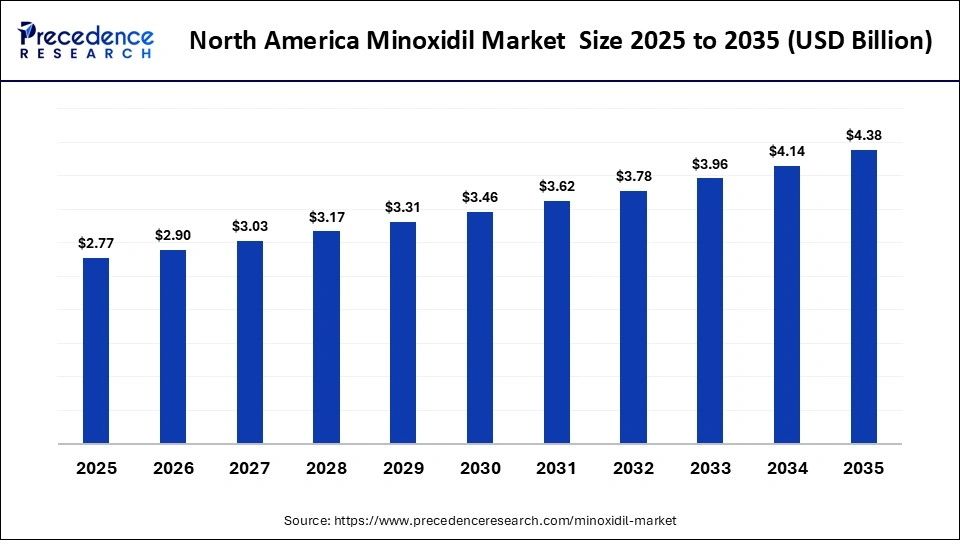
The North America minoxidil market size is estimated at USD 2.77 billion in 2025 and is projected to reach approximately USD 4.38 billion by 2035, with a 4.69% CAGR from 2026 to 2035.
Why North America Dominated the Minoxidil Market?
North America held a major revenue share of the market in 2025, as dermatology diagnosis rates remain significantly higher than in most other regions. The American Academy of Dermatology reported in 2024 that approximately 50 million men and 30 million women in the U.S. experience hereditary hair loss.
High levels of physician awareness facilitate early initiation of treatment with clinically prescribed topical hair-growth treatment. Pharmacies and dermatology clinics were distributed throughout the urban and suburban healthcare systems and made treatment access broad. Moreover, the innovation in pharmacy and high-quality regulatory approval systems also created greater access to treatment in the region and confidence in products, thus further fuelling the market in this region.
U.S. Minoxidil Market Size and Growth 2026 to 2035
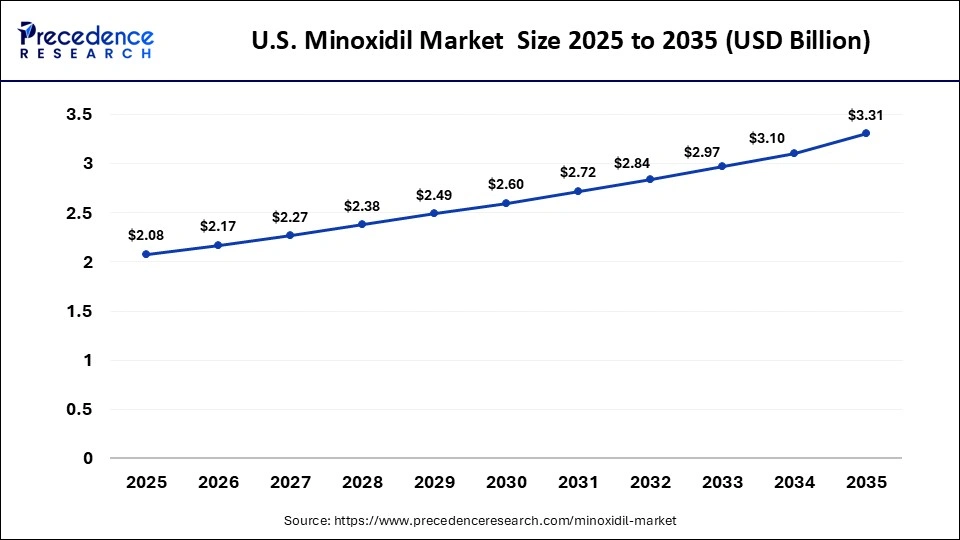
The U.S. minoxidil market size is calculated at USD 2.08 billion in 2025 and is expected to reach nearly USD 3.31 billion in 2035, accelerating at a strong CAGR of 4.76% between 2026 and 2035.
U.S. Leading Country Driving North America Minoxidil Treatment Growth
U.S. leads the market in North America, supported by high dermatology diagnosis rates. Topical minoxidil is widely recommended by dermatologists since it is one of the few FDA-approved drugs that stimulate hair growth. In 2025, the American Society for Dermatologic Surgery validated that the restoration of hair was one of the most sought-after cosmetic procedures. High consumer awareness and access to insurance are still helping to sustain the widespread adoption of minoxidil in all age groups of adults.
Why is Asia-Pacific Emerging as the Fastest-Growing Region in the Minoxidil Market?
Asia-Pacific is expected to witness the fastest growth during the predicted timeframe, owing to the large population bases which is adding to the total amount of hair loss patients. In 2025, the Indian Association of Dermatologists, Venereologists, and Leprologists presented a study on an increasing trend in the number of androgenetic alopecia consultations in major centers of dermatology in India. Moreover, the increasing number of dermatology facilities massively boosted the rate of diagnosis in developing Asian healthcare systems and further boosts the market growth in the coming years.
India Key Emerging Country Accelerating Asia-Pacific Minoxidil Adoption
India is leading the charge in the Asia-Pacific market, due to the strong domestic manufacturing and growing treatment awareness. Hair loss was proven to be one of the most frequent dermatology complaints in urban clinics, confirmed by the Hair Research Society of India. The increase in the disposable income levels stimulated the consumers to use clinically endorsed hair regrowth treatments, such as minoxidil, in this region.
How will Europe be considered the notable region in the Minoxidil Market?
Europe is recognized as a notably growing region in the global market, primarily due to a high prevalence of hair loss, advanced dermatological infrastructure, and increasing consumer acceptance of over-the-counter products. Significant rates of androgenetic alopecia have been reported in Europe in men in countries such as Spain, Italy, and France, experiencing male pattern hair loss by the age of 50. There is also a heightened emphasis on personal grooming and aesthetic appeal among European consumers, diminished the social stigma associated with hair loss treatments, making them more accessible.
Germany Market Trends
Germany plays a central role in this region, driven by a sophisticated shift toward eco-conscious, high-performance formulations that blend minoxidil with traditional herbal ingredients. Positioned as an innovation hub, the market is pioneering advanced topical foams and offering digital-first personalized consultations to satisfy consumer demand for effective, non-irritating, and sustainable hair solutions.
How will Latin America Emerge in the Minoxidil Market?
Latin America is expected to grow significantly in the global market. The growth in this region is primarily fueled by increased aesthetic consciousness, rising disposable incomes, and improved access to personal care products. As economies in Latin America develop, higher disposable incomes allow more people to invest in cosmetic products and personal care, including hair regrowth treatments. The widespread availability of minoxidil in pharmacies and online has made it easier for consumers to purchase these solutions without a prescription, particularly for beard and scalp hair restoration products.
Brazil Market Trends
Brazil is solidifying its position as Latin America's leading hub for hair loss treatments, with a rapidly expanding market driven by high cosmetic awareness and a growing demand for non-surgical solutions, such as customized, subscription-based minoxidil. This growth is supported by rising disposable incomes and the increasing presence of hair health zones in pharmacies, resulting in a significant expansion in hair grooming services.
How will the Middle East and Africa grow in the Minoxidil Market?
The Middle East and Africa region is witnessing significant growth in the global market, driven by increasing awareness of hair loss treatments, rising disposable incomes, and an expansion of healthcare infrastructure. Increased urbanization in countries like the UAE, Saudi Arabia, and South Africa has led to higher disposable incomes and a greater focus on aesthetic appearance and personal grooming. The rising availability of over-the-counter products and online distribution channels has made these solutions more accessible to a wider demographic.
The UAE Market Trends
The UAE, in particular, is experiencing a rapid surge in its dermatology sector, positioning itself as a premier global hub for advanced aesthetics. This booming market caters to a youthful demographic and high cosmetic standards, pioneering the future of hair restoration by integrating luxury, premium hair care brands with AI-driven, non-invasive treatments. Strong government support, accelerated regulatory approvals, and growth in medical tourism are further fueling this market.
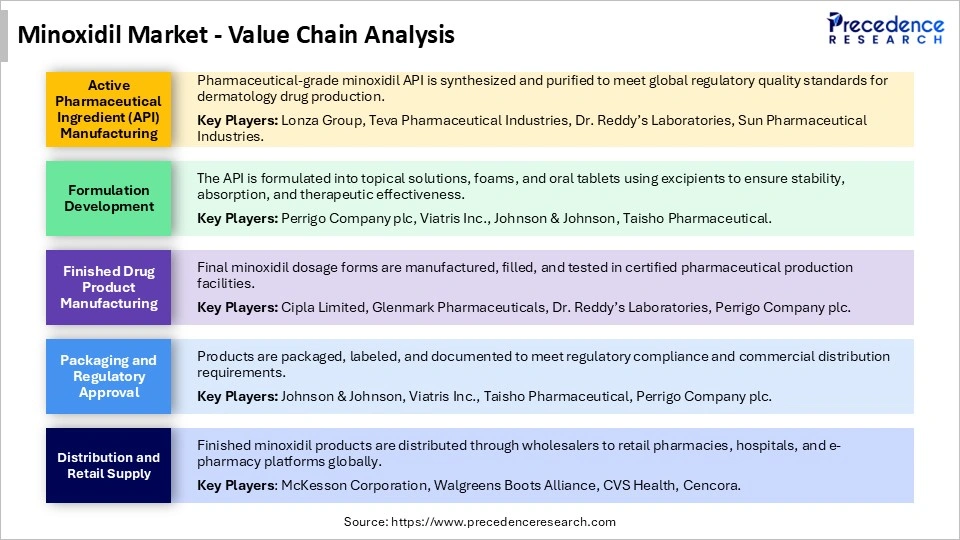
Minoxidil Market Value Chain Analysis
Minoxidil Market Companies
- Renata Limited
- Provizer Pharma
- Pharhome International Limited
- Pfizer
- Par Pharmaceuticals
- Nanz Med Science Pharma Private Limited
- Metapharmaceutical Ind. S.L
- McNeil Consumer Healthcare
- Maruti Futuristic Pharma Pvt. Ltd.
- LOY Pharma Lab, Inc.
- Kumar Organic Products Limited
- Dr. R. Pfleger Chemical Factory GmbH
- Changzhou Tianhua Pharmaceutical Co.
- Bakul Group of Companies
Recent Developments
- In October 2025, Veradermics, a late clinical-stage dermatology biopharmaceutical company, completed an oversubscribed $150 million Series C financing to support registrational development and planned NDA submission of VDPHL01, its extended-release oral minoxidil therapy. The company also released preliminary Phase 2 clinical data in 2025, demonstrating promising outcomes in male patients undergoing treatment for androgenetic alopecia.(Source: https://www.veradermics.com)
- In May 2025, Raon Pharma began nationwide distribution of Minoxyfoam Aerosol 5% in 2025, the first locally produced generic foam minoxidil in South Korea. Developed by Sinsin Pharmaceutical, the product ended an eight-year monopoly held by Johnson & Johnson's Rogaine Foam in the country.(Source: https://www.koreabiomed.com)
Segments Covered in the Report
By Application
- Cosmetic Applications
- Hair Loss Treatment
- Hypertension Management
By Formulation Type
- Foams
- Gels
- Topical Solutions
By Concentration
- 2%
- 5%
- 10%
By Distribution Channel
- Online Stores
- Pharmacies
- Supermarkets
By Region
- North America
- Europe
- Asia-Pacific
- Latin America
- Middle East & Africa
For inquiries regarding discounts, bulk purchases, or customization requests, please contact us at sales@precedenceresearch.com
Frequently Asked Questions
Tags





Ask For Sample
No cookie-cutter, only authentic analysis – take the 1st step to become a Precedence Research client
 Get a Sample




 sales@precedenceresearch.com
 Schedule a Meeting
