



Pharmacy Market Size, Key Companies, Company Production Capacity, Healthcare Infrastructure Growth, Product Utilization, Regulatory Compliance, Company Expansion Strategies, Company Investment Strategies, and Market Outlook
The global Pharmacy Market was valued at USD 1.39 trillion in 2026 and is projected to reach approximately USD 1.99 trillion by 2035, growing at a CAGR of 4.03% from 2026 to 2035. Market growth is driven by rising chronic diseases, increasing prescription drug expenditure, an aging population, digital pharmacy adoption, and expanding clinical pharmacy services. North America dominated with a 53% share in 2025, while Asia Pacific is expected to grow at a notable CAGR. Prescription medicines led by product type with an 82.9% share, while retail pharmacies dominated by type.
Source: https://www.precedenceresearch.com/pharmacy-market
 Get a Sample
 Table Of Content


What Is Driving the Growth of the Pharmacy Market?
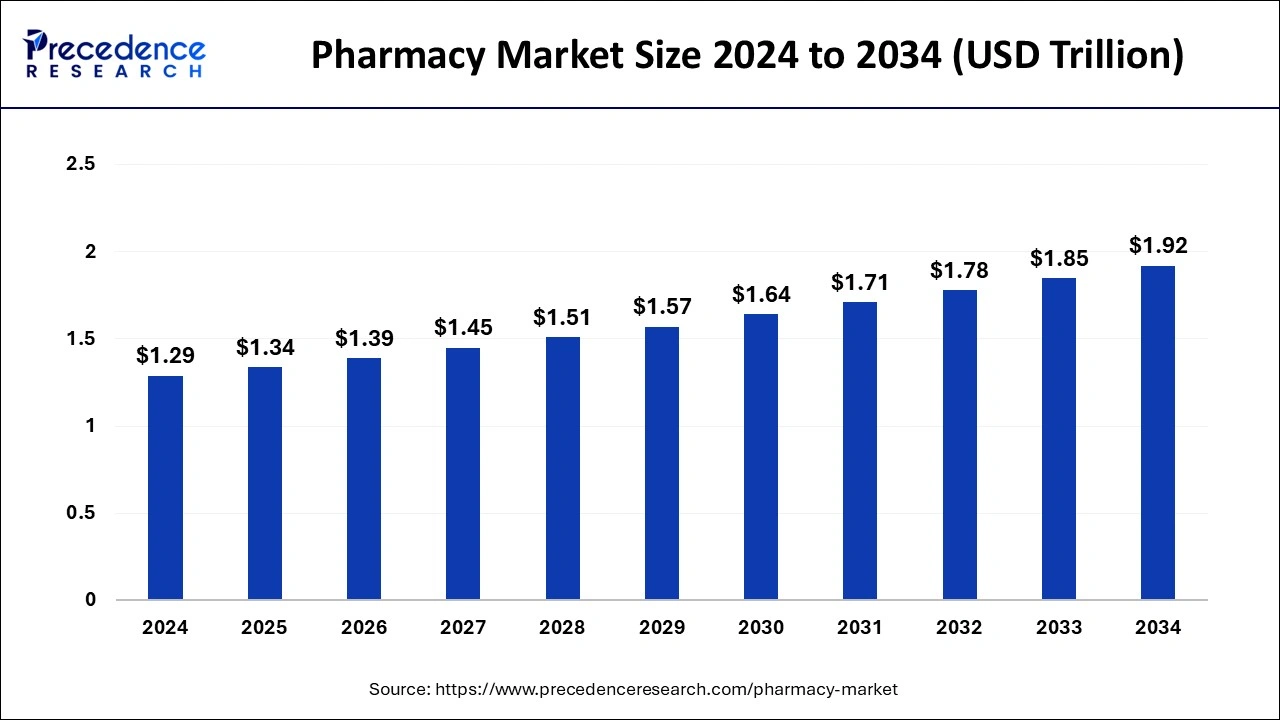
The global pharmacy market size accounted for USD 1.34 trillion in 2025 and is expected to exceed around USD 1.99 trillion by 2035, growing at a CAGR of 4.03% from 2026 to 2035. Factors such as rising incidence of chronic diseases, rising prescription drug expenditure, and a rise in the aging population fuels are expected to drive the growth of the pharmacy market during the forecast period.
Market Highlights
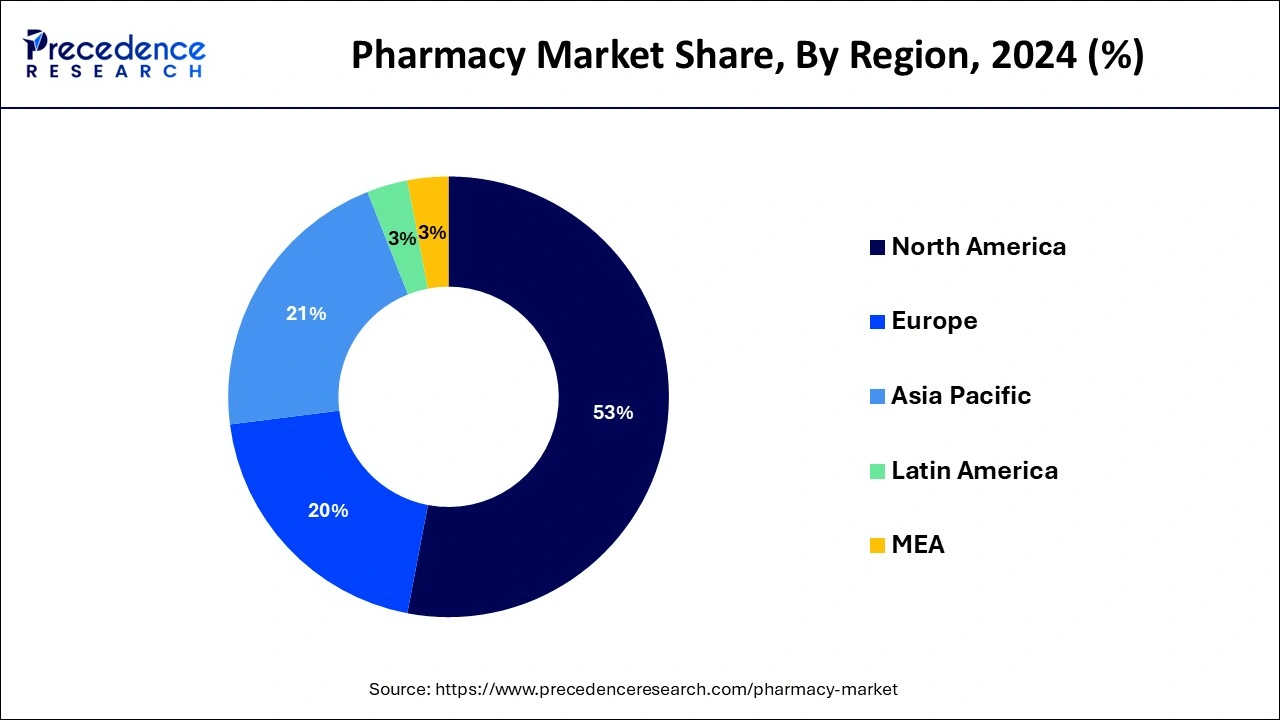
- North America dominated the pharmacy market with the largest market share of 53% in 2025.
- Asia Pacific is projected to grow at a notable CAGR during the forecast period.
- By product, the prescription segment held the biggest market share of 82% in 2025.
- By type, the retail pharmacy segment contributed the biggest market share of 56% in 2025.
Market Overview
The global pharmacy market refers to the industry involved in the retail and distribution of prescription medicines, over-the-counter (OTC) drugs, healthcare products, and pharmacy-based services through retail pharmacies, hospital pharmacies, online pharmacies, and other healthcare channels. The market plays a critical role in healthcare delivery by improving access to medications, supporting disease management, and providing patient-focused services such as vaccinations, health screenings, medication counseling, and chronic care programs.
The pharmacy market is evolving as healthcare systems increasingly prioritize accessibility, preventive care, and patient-centric healthcare models. Market growth is driven by rising prescription volumes, increasing prevalence of chronic diseases, an aging global population, and growing demand for specialty medicines. Pharmacies are expanding their role beyond traditional drug dispensing by offering clinical services, immunization programs, chronic disease monitoring, and integration with broader digital healthcare ecosystems.
Role of Artificial Intelligence in Pharmacy Industry
Artificial intelligence integration has significantly transformed the healthcare industry and also has paved the way for the pharmacy sector to be more effective and efficient. AI is shaping a better future for pharmacy. AI emerges as a groundbreaking technology in various aspects. There are several major applications of AI including drug discovery and development, R&D, precision medicine, medication management, and patient outcomes. From effectively analyzing complex datasets to making informed predictions and rapid decisions based on trends and patterns, M algorithms are transforming tasks that wholly rely on human intelligence.
Artificial intelligence (AI) is revolutionizing the practice of pharmacy is no exception by changing how pharmacists deliver care by optimizing streamlining workflow, enhancing medication management, and improving treatment outcomes. Therefore, the integration of AI is expected to transform the future of pharmacy by delivering faster, cheaper, and safer, drugs. It assists the industry in shifting towards value-centric R&D, building more resilient supply chains, and fuelling digital pharma manufacturing.
Major Market Trends
- Digital Transformation and Growth of Online Pharmacies: The increasing adoption of online pharmacy platforms, e-prescriptions, mobile health applications, and digital payment solutions is transforming the way consumers access medicines and healthcare services. Pharmacies are leveraging digital technologies to improve convenience, enable home delivery, enhance medication management, and provide personalized healthcare experiences.
- Expansion of Specialty Pharmacy and Chronic Disease Management Services: Pharmacies are expanding beyond traditional medicine dispensing by focusing on specialty medicines, disease monitoring, vaccination programs, and patient support services. The rising prevalence of chronic conditions such as diabetes, cardiovascular diseases, and cancer is increasing demand for pharmacist-led care and long-term medication management solutions.
- Integration of Artificial Intelligence and Automation in Pharmacy Operations: Pharmacies are increasingly adopting AI-driven tools, automated dispensing systems, and predictive analytics to improve inventory management, prescription accuracy, and operational efficiency. These technologies help reduce medication errors, optimize supply chains, and support faster, more personalized healthcare delivery.
- Growth of Pharmacy Retail Chains and Healthcare Ecosystems: Large pharmacy chains and healthcare networks are expanding their presence through strategic partnerships, acquisitions, and integrated healthcare service models. This trend is strengthening accessibility by combining pharmacy services with diagnostics, telehealth, wellness programs, and primary care support.
Growth Factors
- The increasing incidence of chronic conditions such as diabetes, cardiovascular diseases, and cancer is boosting the market growth by driving higher prescription volumes and long-term medication demand.
- Increasing government and private sector investments in healthcare infrastructure, insurance coverage, and primary care services are expanding patient access to medicines and pharmacy-based healthcare solutions.
- The rapid adoption of ePharmacy platforms, e-prescriptions, mobile health applications, and home delivery services is improving medicine accessibility and transforming consumer purchasing behavior.
- Growing demand for specialty drugs, personalized medicine, vaccination programs, medication therapy management, and preventive healthcare services is enabling pharmacies to expand beyond traditional drug dispensing.
- Public healthcare programs, generic medicine promotion, drug affordability policies, and digital health initiatives are contributing to market growth by improving medicine availability and encouraging wider adoption of pharmacy services.
Strategic Growth Opportunities for the Pharmacy Market
High-Growth Commercial Opportunities
These opportunities prioritize specialty and orphan drugs with high-margin therapies for rare diseases and complex conditions that demand specialized handling and clinical support. Value-based care partnerships manage chronic diseases, improve outcomes, and unlock payer incentives. Whereas direct-to-consumer wellness provides personalized vitamins, preventative supplements, and lifestyle-linked subscription models drive steady cash flow.
Emerging Technology Opportunities
These opportunities focus on AI-driven personalization by optimizing prescription refills, predicting adherence risks, and tailoring patient engagement. Furthermore, telepharmacy and virtual care with remote consultations expand access in underserved areas without heavy physical infrastructure costs. Automated dispensing and robotics reduce labor overhead and lower medication errors.
White Space Analysis
White space analysis identifies key market gaps by focusing on longevity and preventive aging dedicated in-store clinics emphasizing biological age testing, hormone optimization, and preventative longevity protocols. Pet pharmacy integration, also co-locating veterinary medications and consultations inside traditional human pharmacies, captures an underserved pet care market. Mental health support hubs provide safe and private spaces for localized support groups and remote mental health.
Market Outlook
- Industry Growth Overview: The market is expanding rapidly due to the increasing burden of diabetes, cancer, and heart conditions, which drives continuous demand for prescription drugs. This growth is further attributed to the strong shift towards digital pharmacy, consumer convenience, and preventive care, offering vaccinations and routine screenings. Adoption of advanced therapeutics optimizes inventory management, drug discovery, and automated prescription processing.
- Global Expansion: Emerging markets and developing regions see higher market penetration globally due to expanding healthcare infrastructure and increasing disposable incomes.
- Sustainability Trend: A major sustainability trend emphasizes eco-friendly packaging by reducing medical waste and recycling plastic prescription bottles. Energy-efficient supply chains adopt low-emission transport and solar-powered distribution centers.
- Startup Ecosystems: Major corporations like CVS Health and McKesson lead capital investment in supply chain automation. Venture capital firms actively invest in tech platforms improving medication adherence and tele-pharmacy. However, various companies leverage AI for real-time patient monitoring and automated pill-dispensing innovations.
Market Report Coverage and Key Metrics
| Report Coverage | Details |
| Market Size in 2025 | USD 1.34 Trillion |
| Market Size in 2026 | USD 1.39 Trillion |
| Market Size in 2035 | USD 1.99 Trillion |
| Growth Rate | CAGR of 4.03% from 2026 to 2035 |
| Base Year | 2025 |
| Largest Market | North America |
| Fastest Growing Market | Asia Pacific |
| Forecast Period | 2026 to 2035 |
| Segments Covered | Product, Pharmacy, Application, and region |
| Regions Covered | North America, Europe, Asia-Pacific, Latin America, and Middle East & Africa |
Market Dynamics
Driver
Increasing Healthcare Expenditure
Rising healthcare expenditure across developed and emerging economies is driving the pharmacy market. Governments, healthcare organizations, and private sectors are investing significantly in healthcare infrastructure, insurance coverage, and primary care services, leading to increased patient visits and prescription volumes. As access to healthcare improves, pharmacies are becoming essential points of care delivery, creating new opportunities through medicine dispensing, healthcare services, and patient support programs.
Restraint
Intensifying Competitive Landscape
The pharmacy market faces increasing competition due to the growing presence of retail pharmacy chains, independent pharmacies, hospital-affiliated pharmacies, and online pharmacy platforms competing for the same consumer base. This competitive pressure is leading to pricing challenges, promotional activities, and reduced profit margins, particularly affecting smaller pharmacies that may struggle to differentiate their services and maintain profitability. Additionally, the rapid expansion of digital pharmacy models is further reshaping traditional pharmacy operations and increasing competitive intensity.
Opportunity
Expansion of Clinical Pharmacy Services
The transition of pharmacies from traditional medicine dispensing centers toward broader healthcare service providers is creating significant growth opportunities. Services such as vaccination programs, medication therapy management, health screenings, chronic disease monitoring, and personalized patient counseling are enabling pharmacies to diversify revenue streams and strengthen customer relationships. The growing focus on preventive healthcare and patient-centric care models is expected to accelerate the adoption of clinical pharmacy services globally.
Market Segmentation Analysis
By Product Type
The Prescription Segment Held the Largest Market Share in 2025
The prescription segment dominated the pharmacy market by holding the largest share of 82.9% in 2025, owing to an increase in the prevalence of chronic illnesses, doctor's visits, and specialty medication usage. Continuing therapies for cardiovascular diseases, diabetes, cancer, and respiratory ailments also maintained a significant impact on prescription volumes in both retail and hospital pharmacies. Furthermore, this segment benefited from an aging population that requires long-term medication therapies; therefore, prescription drugs became the largest source of total pharmacy revenue.
- OECD data suggests that the use of prescription drugs accounted for over 75% of spending on pharmaceutical goods in most of the countries. This underlined their centrality to healthcare usage.
The OTC segment is expected to grow at the fastest CAGR in the market between 2026 and 2035, as consumers are turning to self-care and preventive health. People have become more aware of how to manage health, and more aware of minor illnesses, and the availability of products is improving, which makes it easier for patients to obtain medications without visiting the doctor. There is still strong demand for vitamins, dietary supplements, analgesics, cough suppressants, and cold remedies, and for wellness-oriented products. The expansion of this segment is likely driven by the introduction of digital pharmacy methods and a growing youth health appreciation.
By Type
What Made Retail Pharmacy the Leading Segment in the Market?
The retail pharmacy segment led the pharmacy market in 2025, accounting for a major revenue share. This is mainly due to its widespread geographic reach, immediate availability of medications, and well-established connections with local communities. Consumers continued to depend on nearby pharmacies for fulfilling prescriptions, seeking healthcare advice, and making regular medical purchases. The ease of walk-in access, coupled with the ability to receive medications without delays, contributed to ongoing customer loyalty.
Companies such as CVS Health, Walgreens Boots Alliance, Boots, and Well Chemist are supporting market growth through extensive distribution networks, healthcare services, and technology adoption. Furthermore, the increasing implementation of automation technologies, including robotic dispensing systems, automated inventory management, and advanced packaging solutions, is improving pharmacy efficiency and supporting segment expansion.
The ePharmacy segment is expected to grow at the fastest CAGR in the market over the coming years, as healthcare purchasing continues to shift toward digital platforms. Online pharmacies provide consumers with convenient prescription uploads, doorstep medicine delivery, automated refill reminders, price comparisons, and access to a wider range of healthcare products. The increasing penetration of smartphones, rising preference for contactless healthcare services, and growing investment in digital health platforms are accelerating online pharmacy adoption.
The COVID-19 pandemic further accelerated consumer acceptance of ePharmacy services, with platforms experiencing significant increases in online medicine purchases. For example, Boots reported strong growth in online sales during the lockdown period, highlighting the rapid shift toward digital pharmacy channels. Additionally, benefits such as improved privacy, competitive pricing, discounts, reduced purchase time, and convenient home delivery are expected to continue driving ePharmacy growth globally.
Market Regional Analysis: North America, Europe, Asia-Pacific
What is the U.S. Pharmacy Market Size?
The U.S. pharmacy market size is exhibited at USD 650 billion in 2025 and is projected to be worth around USD 986.66 billion by 2035, growing at a CAGR of 4.26% from 2026 to 2035.
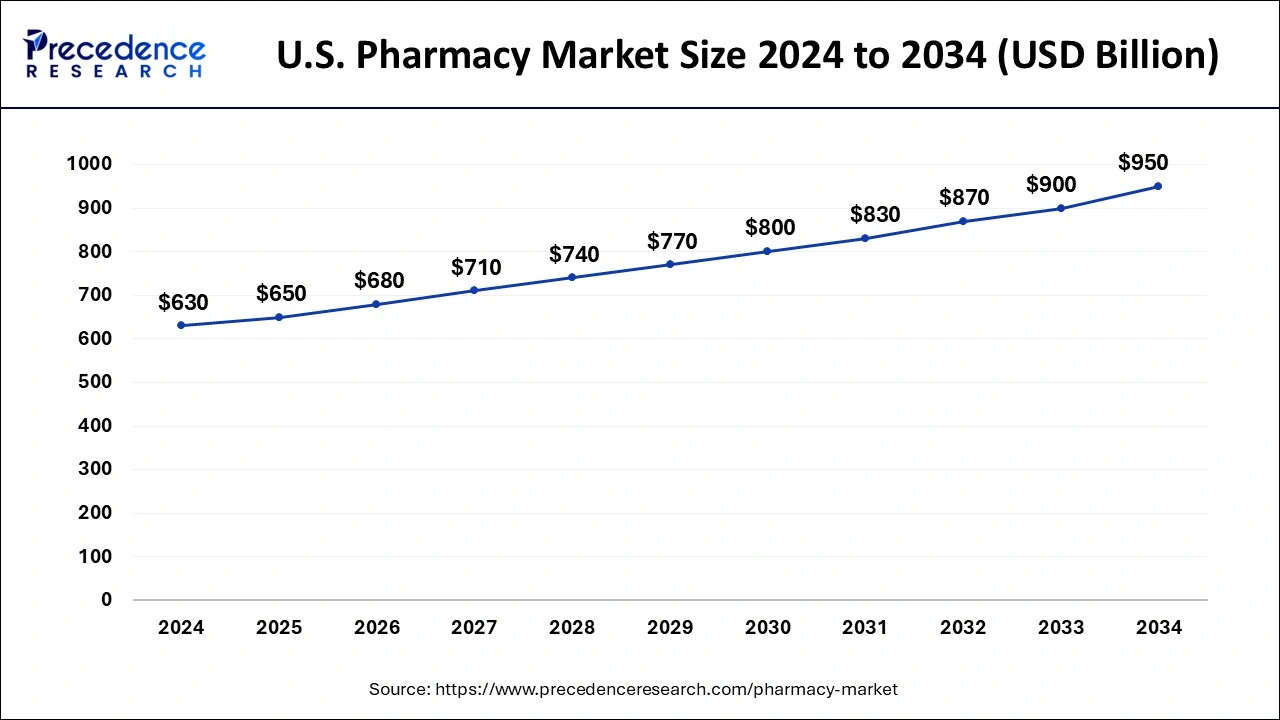
In the year 2025, North America accounted for the largest market share in the global pharmacy market. This is mainly because of the presence of large-scale international chains, such as CVS Health,Kroger, Boots Walgreens, UnitedHealth Group, Cigna, Walmart, and Rite Help Corp. These players are adopting various initiatives and software technologies to increase market share. For example, Rite Aid Corp. introduced its Wellbeing + rewards program, which offers considerable discounts and rewards to its customers. Moreover, the quickly growing aging populace is supporting market growth.
U.S. Market Trends
The U.S. is actively reinforcing its dominance through the America First initiative, local manufacturing investments, and a focus on high-return innovations to address patent cliffs. The country is solidifying its role as the primary engine for new medical entity development by combining strict, tariff-backed localization with modernized strategies in FDA regulations, manufacturing, and research and development to ensure long-term leadership in therapeutics.
Why Is Asia Pacific the Fastest-Growing Pharmacy Market?
Asia Pacific is expected to be the fastest-growing regional market throughout the forecast period. Rapid growth of the industry in developing countries such as India and China alongside with rising demand for general medications is propelling the demand for pharmacies in the region. Moreover, rapid growth plans undertaken by key pharmacies are supporting market development. For instance, in March 2021, Common Aadhar, a drug-store retail chain in India, launched its software to get generic medications promote them in the outlet.
Moreover, rapid growth plans undertaken by key pharmacies are supporting market development. For instance, in March 2021, Common Aadhar, a drug-store retail chain in India, launched its software to get generic medications promote them in the outlet. Moreover, the increasing geriatric inhabitant in Parts of Asia, such as Japan, is further augmenting the market growth.
- According to the IBEF report published in November 2025, Indian pharmaceutical companies are projected to achieve a revenue growth of 9-11% in FY25. This growth is expected to be fueled by robust performances in key markets, including the United States, Europe, and emerging regions. Indian pharmaceutical sector supplies over 50% of global demand for various vaccines, 40% of generic demand in the US, and 25% of all medicine in the UK. The domestic pharmaceutical industry includes a network of 3,000 drug companies and ~10,500 manufacturing units.
In another instance, in November 2020, Amazon.com launched an online pharmacy known as Amazon Pharmacy for selling prescription drugs in the U.S.
The increasing rate of consumers being affected by diseases, increasing elderly people, and growing variety of prescriptions are few among the major parameter driving the global pharmacy market. In respect to the Countrywide Health Services, the price of prescribed medicines in the FY 2020-21 increased by 3.46% as compared to FY 2019-20 in UK. As mentioned by the Centre for Disease Handle and Prevention, 45.7% of the consumers in U.S. used at least prescription drug for the minimum of at least one from the year 2015 to 2018, while more than 20% of the people consumed more than three prescription drugs in the same period.
How Is India Strengthening Its Position in the Global Pharmacy Market?
India is the greatest generic drugs provider worldwide. Also, Indian sector of pharmaceutical supplies 40% of generic demand in the US, more than 50% of demand for various vaccines globally, and more than 20% of all medicine in the UK. Worldwide, India ranks third in terms of the production of pharmaceutical in terms of volume and fourteenth in terms of value. Furthermore, the domestic industry of pharmaceuticalcompriseof a network of 3,000 drug producing companies and 10.5 hundred manufacturing units. In addition, India has an essential position in the pharmaceuticals sector worldwide. This country of Asia-Pacific further has a large pool of engineers and scientists with a potential to steer the market ahead to the greater heights.
What are the Driving Factors of the Pharmacy Market in Europe?
Europe is expected to grow at a significant CAGR during the forecast period. The age of the European population and the rising demand for innovative therapies and biosimilars are fueling the steady growth of the European pharmacy market. Generic substitution and personalized medicine are priorities for governments to reduce the cost of healthcare while maintaining quality.
Germany Market Trends
Germany is making significant strides in the fields of digital healthcare and modernization of healthcare services, especially in telemedicine, smart pharmacy technology, and connected healthcare devices. The biologics and biosimilars market is continuing to grow in oncology and autoimmunity, respectively.
What Are the Driving Factors of The Pharmacy Market in Latin America?
Latin America is experiencing substantial growth in the global market, primarily driven by the rising burden of chronic diseases, an expanding generics and biosimilars segment, and rapid digital transformation in health services. Due to high out-of-pocket costs, there is a significant shift towards affordable healthcare alternatives. Governments are actively working to expand public health insurance, leading to increased demand for essential medicines, and facilitating the rapid delivery of pharmaceutical products.
Brazil Market Trends
Brazil is establishing itself as a pharmaceutical powerhouse in the region, driven by a surge in local biosimilar manufacturing, enhanced API cooperation, and rapid developments related to Semaglutide drugs like Ozempic. Key local players, including Hypera Pharma and EMS, are utilizing a streamlined regulatory environment to launch competitive generics, signaling a shift towards high-volume healthcare access.
How is the Middle East and Africa Performing in The Pharmacy Market?
The Middle East and Africa are expected to grow at a significant CAGR during the forecast period, due to the development of healthcare infrastructure, the growth of the middle-class population, and the spread of chronic diseases like diabetes. Governments are pumping billions into digital health technologies, pharmaceutical AI-heavy logistics, and tougher regulations.
Saudi Arabia Market Trends
The Saudi Arabian government establishes local pharmaceutical manufacturing facilities through its pharmacy development programs, which aim to increase domestic drug production capacity. The implementation of smart healthcare systems, together with electronic health records and interconnected pharmacy services, leads to better patient care delivery.
The UAE Pharmacy Market Trends
The UAE is transforming its healthcare sector, shifting from an import-heavy market to a global hub for pharmaceutical manufacturing and innovation through Operation 300bn. With the support of advanced AI and the Emirati Genome Project, the newly established Emirates Drug Establishment is focusing on local production, breaking monopolies, and cementing the nation's role in personalized, high-tech medicine.
How are Government Initiatives Supporting the Pharmacy Market?
Government initiatives are playing a crucial role in expanding the pharmacy market by improving medicine affordability, increasing healthcare accessibility, and strengthening digital healthcare infrastructure. Public healthcare programs are supporting wider availability of essential medicines, encouraging generic drug adoption, and improving access to pharmacy services for underserved populations. These initiatives are creating new opportunities for pharmacies by increasing prescription volumes, improving medicine distribution networks, and integrating pharmacies into broader healthcare delivery systems.
In India, initiatives such as the Pradhan Mantri Bhartiya Janaushadhi Pariyojana (PMBJP) are significantly supporting affordable healthcare by expanding access to quality generic medicines through Jan Aushadhi Kendras. The program has increased consumer access to lower-cost medicines while strengthening the role of pharmacy outlets as important healthcare access points. Such initiatives are encouraging the adoption of generic medicines and supporting the expansion of pharmacy networks across the country.
Digital healthcare initiatives are also transforming pharmacy operations by improving prescription management, patient records, and healthcare coordination. The Ayushman Bharat Digital Mission (ABDM) is enabling the development of digital health records and connected healthcare services, supporting more efficient medicine management and patient care. Additionally, government-backed health coverage programs such as Ayushman Bharat Pradhan Mantri Jan Arogya Yojana (AB-PMJAY) are increasing healthcare utilization, indirectly driving demand for medicines and pharmacy services. Overall, these initiatives are accelerating pharmacy market growth by improving affordability, accessibility, and digital integration across the healthcare ecosystem.
Regulatory Guidelines for the Pharmacy Market
- U.S.: The FDA enforces stringent manufacturing controls under cGMP rules to ensure identity, strength, quality, and purity in drugs. Companies must submit deep scientific proof of safety and clinical efficacy through an NDA or Abbreviated New Drug Application (ANDA) for generic drugs before market entry.
- India: The CDSCO regulates import, manufacturing, and clinical trials across India under the historic Drugs and Cosmetics Act and Schedule M infrastructure rules. Furthermore, industry applicants must route approvals, manufacturing site submissions, and registrations digitally through the central CDSCO SUGAM portal.
- EU: The EMA manages a single scientific evaluation route where the European Commission issues one legally binding marketing authorization valid across all EU member states. Good Distribution Practice (GDP) under European rules dictates that supply chains must control proper storage, traceability, and transport safety to mitigate product contamination.
Market Competitive Landscape: Leading Companies and Strategies
The global pharmacy market is highly competitive and fragmented, with a mix of large pharmacy chains, independent pharmacies, hospital-affiliated providers, online pharmacy platforms, and healthcare technology companies competing through accessibility, service expansion, digital transformation, and customer experience enhancement. Market participants are increasingly moving beyond traditional medicine dispensing by offering clinical pharmacy services, vaccination programs, chronic disease management, telehealth integration, and personalized healthcare solutions.
Leading players such as CVS Health, Walgreens Boots Alliance, Cencora, McKesson Corporation, The Cigna Group, Rite Aid, and Apex Healthcare Berhad are strengthening their market positions through extensive pharmacy networks, healthcare service diversification, acquisitions, and technology investments. Companies are also investing in ePharmacy platforms, mobile applications, electronic prescriptions, automated refill systems, AI-driven medication management, and home delivery services to improve accessibility and customer engagement.
Supply Chain Analysis
- Research and Development: This focuses on identifying target genes, developing therapeutic vectors, and performing initial safety and efficacy testing in labs and animal models.
Key Players: Novartis, Pfizer, Sarepta Therapeutics, Charles River Laboratories, and IQVIA. - Clinical Trials and Regulatory Approval: In this human trials are conducted to prove safety and efficacy, followed by submission to bodies like the FDA or EMA.
Key Players: Sarepta Therapeutics, Pfizer, Novartis, and Bluebird Bio. - Manufacturing: This involves highly complex production of viral vectors and formulating and filling the final drug product in sterile conditions.
Key Players: Catalent, Lonza, FUJIFILM Diosynth Biotechnologies, Biogen, and Gilead Sciences. - Logistics and Patient Delivery: This focuses on specialized cryogenic logistics transport of bespoke therapies from manufacturing sites to hospitals globally, requiring high compliance and IoT-enabled temperature tracking.
Key Players: DHL Group, FedEx Logistics, Marken, and UPS Healthcare.
Pharmacy Market Companies
- CVS Health
- Boots Walgreens
- Cigna
- Walmart
- Kroger
- Rite Aid Corp.
- Lloyd Pharmacy
- Well Pharmacy
- Humana Pharmacy Solutions
- Matsumoto Kiyoshi
Recent Development
- In February 2025, to support the project of the government, that is the subsidized generic pharmacy scheme, the state Chemists and Druggists Association (TNCDA), came forward on the Tamil New Year, that is on 14th January, Pongal Day. Furthermore, it was assured that the TNCDA will provide its complete support to the government to take the scheme forward, which was developed for the people's advantage, as per the announcement made by SA Ramesh, managing director of Lifecare Pharma Pvt Ltd in Chennai. Moreover, it was disclosed that a total of 42,000 medical shops in the state are ready to sell the generic medicines with prices similar to those decided by the government, by maintaining their sales at cheaper rates. (Source: https://www.pharmabiz.com)
- In January 2025, to encourage ethical pharmacy profession in hospital pharmacies and community, new set of rules will be introduced to make ‘binding obligations' for registered pharmacists which will be based on the Pharmacy Practice Regulations (PPR) 2015 ethical conduct, by the state pharmacy council in Gujarat (GSPC), which was newly constituted. The hospital pharmacists, clinical pharmacists, community pharmacists, and drug information pharmacists will have to follow these obligations and disciplines. (Source: https://www.pharmabiz.com)
- In October 2024, The UK's world-leading life sciences sector will receive a £279 million boost to tackle significant health challenges, with an intent expressed by Lilly, the world's largest pharmaceutical company, to invest in the UK as part of a strategic partnership with the UK government, announced at the International Investment Summit on 14 October'2024.
- In October 2024, US-based Amneal Pharmaceuticals announced its plan to invest up to USD 200 million (nearly Rs 1,680 crore) in India over the next four to five years to build two new manufacturing facilities in Ahmedabad. Of two greenfield facilities planned, one will be for peptide synthesis and one for advanced sterile fill-finish manufacturing.
Segments Covered in the Report
By Product Type
- Prescription
- OTC
By Type
- Hospital Pharmacy
- Retail Pharmacy
- Chain
- Independent
- Others
- ePharmacy
- Others
By Region
- North America
- Latin America
- Europe
- Asia-pacific
- Middle and East Africa
For inquiries regarding discounts, bulk purchases, or customization requests, please contact us at sales@precedenceresearch.com
Frequently Asked Questions
Tags





Ask For Sample
No cookie-cutter, only authentic analysis – take the 1st step to become a Precedence Research client
 Get a Sample




 sales@precedenceresearch.com
 Schedule a Meeting
