



ADM Expands Biostimulant Footprint as REDSTAR Launches REDVITA 43 Across the Midwest
Published: 21 Jul 2026
Author: Towards Healthcare



Archer Daniels Midland (ADM) is increasing the profitable reach of its biological crop improvement portfolio via a novel distribution collaboration with REDSTAR, as demand continues to rise for products that enhance nutrient efficiency and support sustainable crop manufacturing.
Under the agreement, REDSTAR manufactures and markets ADM's NeoVita 43 biostimulant under the REDVITA 43 brand, allocating the product via its agricultural retail network and direct sales channels in the Midwest and Rocky Mountain area of the United States.
The collaboration reflects the increasing momentum behind biostimulants as cultivators seek technologies able to improve crop performance while increasing fertilizer effectiveness and improving soil health. As input expenses remain raised and sustainability expectations increase, biological products are attractive and an increasingly significant component of combined crop management programmes.
Although marketed under a novel brand name, REDVITA 43 retains the same formulation as ADM's NeoVita 43. The sugar-driven biostimulant is intended to stimulate valuable microbial activity in the soil, enhancing nutrient availability and supporting crops in establishing stronger early-season growth.
Consolidation soil microbial activity has become a major region of focus in modern agriculture as producers look to enhance nutrient uptake, increase fertilizer-use effectiveness, and build greater resilience under progressively variable, increasing conditions.
The organization points to wide field evaluations conducted over multiple growing seasons at the University of Illinois Urbana-Champaign, where the product demonstrated assessable agronomic advantages. Based on the trial results, corn treated with the biostimulant alongside liquid starter fertilizer showed yield gains of up to seven bushels per acre compared with those using starter fertilizer alone.
The product was developed with application flexibility to fit present farming practices. It is applied together with liquid starter fertilizers during planting to promote vigorous crop establishment or applied as a foliar application to improve herbicide performance while offering crops an instantly available energy source during significant growth stages.
The distribution contract significantly expands market access for the expertise. REDSTAR plans to supply REDVITA 43 via its established dealer and increasing network spanning 18 U.S. states, creating the product available in both bulk and tote packaging formats to accommodate various farm sizes and distribution needs.
For ADM, the partnership strengthens its approach of leveraging collaboration to accelerate the adoption of biological crop techniques without significantly increasing its own direct distribution footprint. For REDSTAR, the contract adds an established biostimulant expertise to its portfolio at a time when biological inputs are becoming a progressively significant category in the agricultural retail sector.
The wider agricultural inputs industry is witnessing increasing spending in biostimulants as growers seek complementary services alongside conventional fertilizers and crop protection. Unlike traditional inputs, biostimulants are intended to improve natural biological processes that enhance nutrient efficiency, crop development, and overall plant health rather than directly providing nutrients or controlling pests.
As accurate agriculture and regenerative farming practices continue to gain traction, products able to improve soil function and nutrient utilisation are expected to play an increasing role in supporting both farm profitability and environmental sustainability.
The ADM-REDSTAR partnership underscores this transformation, reflecting the manufacturing's wider transition towards incorporated crop nutrition strategies which combine conventional inputs with biological inventions to improve productivity while optimising resource applications.
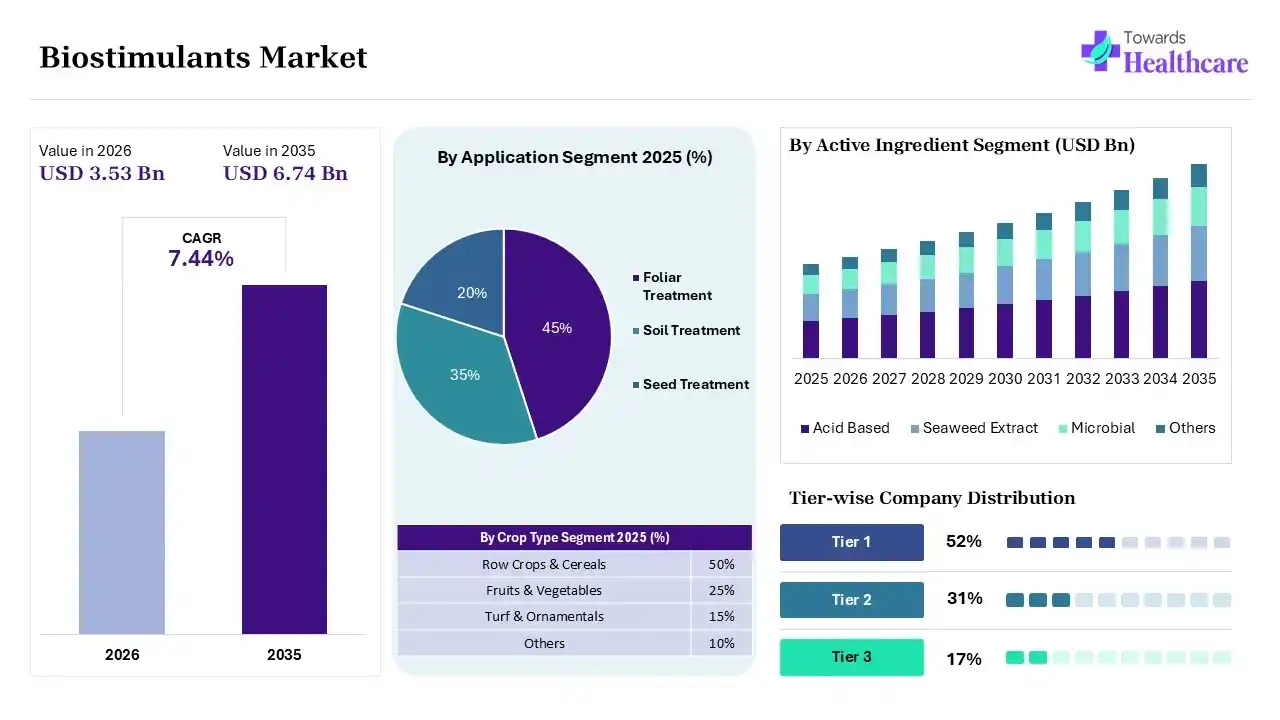
According to Towards Healthcare, the biostimulants market is projected to experience significant growth, with estimates suggesting the market size will increase from USD 3.53 billion in 2026 to approximately USD 6.74 billion by 2035, representing a compound annual growth rate (CAGR) of 7.44% from 2026 to 2035, driven by biostimulants are natural derivative substances which aid plant growth and advancement, enhancing their nutrient use effectiveness, crop yield, quality, health, and their capability to tolerate abiotic stress. These components involve everything from seaweed extracts and inorganic compounds to beneficial bacteria and fungi. They are not recognized as fertilizer, nor do they have any pest-killing characteristics. Biostimulants influence a plant’s vigor and yield but do not manage or protect against pests and various detrimental factors to plant quality, such as weeds, insects, or disease. Biostimulants support in influencing a plant’s response to stress and adverse transformations in its environment. They stimulate plant growth by increasing germination and root advancement. This allows plants to improve access to minerals and water.
About Archer Daniels Midland
Archer Daniels Midland Co (ADM) manufactures, processes, transports, stores, and merchandises agricultural products, ingredients, and commodities. The company produces food and beverage components and various products made from corn, oilseeds, wheat, and other farming commodities. ADM’s product portfolio involves natural flavors and colors, health and nutrition products, corn sweeteners, vegetable oils, flour, animal feed, and biofuels. ADM also provides solutions like farmer services, transport, and logistics. It has business operations in Europe, the Americas, the Middle East, Africa, and Asia-Pacific. ADM is headquartered in Chicago, Illinois, the US.
A recent report by Towards Healthcare highlights that the biostimulants market is growing because these biostimulants contribute to increased agricultural productivity by increasing better germination, flowering, and fruit advancement. Plants managed with biostimulants often produce higher yields with enhanced nutritional profiles, creating them more marketable and advantageous to consumers. Furthermore, enhanced root structures allow greater access to soil nutrients, leading to more advanced, disease-resistant crops. Biostimulants provide an economically viable service to improve yields while lowering input expenses. With a rising demand for sustainable and organic produce, integrating biostimulants in farming practices offers a competitive advantage.