



DuPont Unveils Tyvek with Renewable Attribution for Industrial and Consumer Goods
Published: 18 Sep 2026
Author: Vidyesh Swar



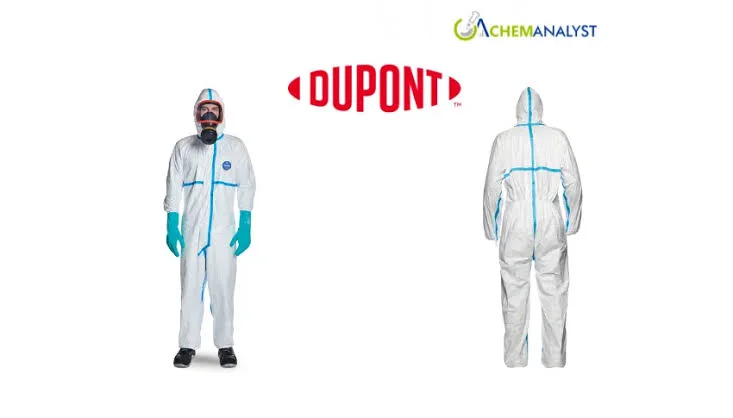
On September 15, 2026, DuPont launched renewable-attributed Tyvek® for use in consumer and industrial sectors, providing manufacturers with a safe way of incorporating renewable feedstocks into their material sourcing strategies. This enables firms to move towards lower-carbon material sourcing without having to redesign their products and make substantial modifications in their manufacturing processes. The new material is targeted to meet their sustainability goals in the areas of packaging, labelling, and industrial uses.
The product is intended to keep the well-known performance features of Tyvek® while employing a mass-balance method to assign renewable content. As companies are coming under greater pressure to tackle emissions from their supply chains, renewable-attributed materials may soon become an increasingly viable element of broader sustainability initiatives.
Impact on the Packaging Industry
The global sustainable packaging market size was calculated at USD 126.50 billion in 2025 and is predicted to reach around USD 254.95 billion by 2035, expanding at a CAGR of 7.26% from 2026 to 2035.
According to Precedence Research, packaging companies focus on plastic waste reduction and adopting sustainable materials, which could drive the use of renewable-attributed Tyvek® to help lower the carbon impact of their supply chains. This strategy works with existing applications where manufacturers can use it without major changes to their products or production lines, making the switch to renewable feedstocks easier.
This material may be especially useful for packaging that needs to be durable, lightweight, and reliable. Additionally, whether companies implementation depend on costs, customer needs, sustainability targets, certification rules, and how much renewable feedstock is available at scale.
Impact on the Renewable Energy Industry
The global renewable energy market size accounted for USD 1.74 trillion in 2025 and is predicted to increase from USD 2.04 trillion in 2026 to approximately USD 8.25 trillion by 2035, representing a CAGR of 16.84% from 2026 to 2035.
According to Precedence Research, Industrial companies use Tyvek® for protective packaging, shipping materials, covers, and energy infrastructure to achieve superior flexibility in fulfilling their own sustainability commitments. For manufacturers who already have production lines in place, failing to have to make major changes to equipment and processes could make it easier to adopt the approach of Tyvek®.
Renewable attribution offers a method of combining renewable feedstocks into the sourcing strategy without losing the functional properties. The total effect will vary according to the availability of the supply, pricing, certification requirements, and the reports of its environmental improvements. Additionally, procurement teams could obtain an extra tool with which to deal with Scope 3 emissions associated with purchased materials. For renewable energy solutions.
Impact on the Sustainable Materials Industry
The global sustainable materials market size was evaluated at USD 374.67 billion in 2025 and is predicted to increase from USD 421.17 billion in 2026 to approximately USD 1,183.54 billion by 2035, expanding at a CAGR of 12.19% from 2026 to 2035.
According to Precedence Research, companies that deal with consumers might use Tyvek®, which has been attributed to using sustainable materials such as packaging, labels, event items, and other areas where the sourcing of materials is part of their sustainability strategy. The employing a mass-balance system in which renewable raw materials are assigned through the supply chain of each finished product.
This launch allows brands to make progress towards their renewable-content goals without having to change their current product designs, useful for businesses to achieve small, step-by-step improvements throughout a large number of products. Though, it will be necessary for companies to explain their environmental claims accurately and clearly in manufacturing practices.
Expert Opinion
From an expert point of view, DuPont taking this step shows that renewable feedstock strategies are increasingly being incorporated into conventional materials instead of depending entirely on new products. A renewable-attributed choice can help to alleviate some of the practical difficulties that companies encounter when they are trying to reduce the environmental impact of existing materials.
The credibility and commercial value of the offering will be supported by transparent certification, secure feedstock sourcing, and clear communication with customers and current manufacturing methods. Experts said that companies should differentiate between renewable attribution and the actual amount of renewable content in the final products and must evaluate the full lifecycle impact before making any sustainability claims.