



AI Model Cuts Battery Testing Time by Predicting Lifespan in Early Cycles
Published: 09 Feb 2026
Author: Precedence Research



Researchers at the University of Michigan have created a machine learning system that can estimate how long a battery will last after only about 50 charge and discharge cycles. The approach could reduce the time, cost and energy required for battery testing by as much as 95 percent, offering a faster route to evaluating new battery designs.
Battery lifespan testing traditionally depends on running cells through hundreds or even thousands of cycles, a process that can take months or years. The new method accelerates this process by combining early experimental measurements with physics based modeling. By linking short term performance data with known degradation mechanisms, the system can forecast long term behavior much earlier in a battery’s life.
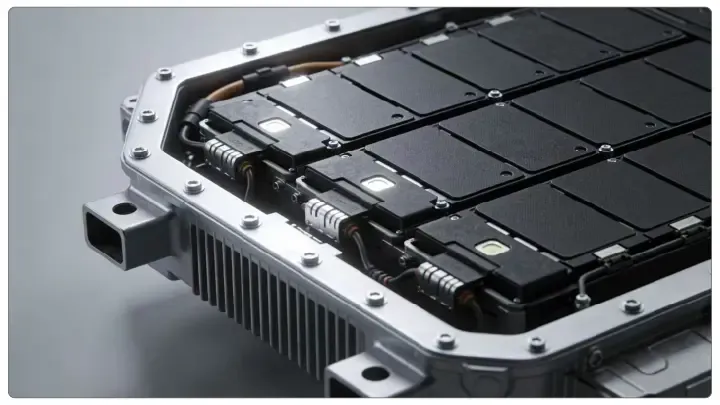
The research team, led by Assistant Professor Ziyou Song and doctoral researcher Jiawei Zhang, designed what they describe as an agentic artificial intelligence framework. The system includes multiple AI components that work together to select battery designs, interpret experimental results and refine lifespan predictions over time. As new data is introduced, the model updates itself and improves accuracy by aligning predictions with physical principles.
To test the approach under real world conditions, the researchers collaborated with Farasis Energy, which provided operational data and pouch cell battery samples. Farasis is a lithium ion battery manufacturer with major production operations in China and a growing international presence, supplying batteries to several major electric vehicle makers.
One notable outcome of the study is the model’s ability to generalize across battery formats. Even when trained using data from cylindrical cells commonly found in consumer electronics, the system successfully predicted the lifespan of large format pouch batteries used in electric vehicles.
Beyond lifespan forecasting, the research team is exploring how the framework could be adapted to assess safety thresholds, improve charging strategies and help identify promising materials for future battery technologies. The work reflects a broader trend in which artificial intelligence is becoming an integral tool in battery research, development and large scale manufacturing worldwide.