



Ainexs ENAD Chosen for Singapores National University Hospital After Global Competition
Published: 20 Aug 2026
Author: Deepa Pandey



In August 2026, the newly opened National University Centre for Digestive Health at the National University Hospital in Singapore recently adopted Korean AI as part of its plethora of AI-powered systems that support the detection, diagnosis and management of digestive conditions.
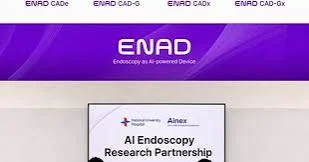
NUH recently signed an agreement with South Korean medical AI company Ainex Corporation to deploy its Endoscopy as AI-powered Device (ENAD), which is a real-time AI-assisted diagnostic software for upper and lower gastrointestinal endoscopy, across all its endoscopy units. The agreement marks Ainex's full-scale entry into Singapore, one of the world's most competitive medtech markets. Ainex will also lead its expansion with ENAD, the only Korean AI-assisted diagnostic solution to have received approval from the Ministry of Food and Drug Safety (MFDS) for both upper and lower gastrointestinal endoscopy.
As part of the agreement, NUH has formally adopted ENAD for deployment across all of its endoscopy units. In parallel, Ainex and NUH will expand their joint clinical research to further enhance ENAD's diagnostic performance. Since signing a memorandum of understanding in 2024 to evaluate and validate ENAD, Ainex and NUH have conducted joint clinical research to assess the platform's clinical performance and optimize it for Singapore's clinical environment.
Building on this collaboration, Ainex also plans to collect additional real-world data (RWD) to further improve ENAD's diagnostic performance in identifying adenomas and neoplasms, sessile serrated lesions (SSLs) and early gastric cancer (EGC). The company will also accelerate the development and validation of real-time AI algorithms designed to support the assessment of intestinal metaplasia (IM) and inflammatory bowel disease (IBD).
Impact on the Healthcare Market
According to Ainex, ENAD detects lesions in real time and automatically characterizes them to support clinical decision-making. Citing peer-reviewed studies, the company said the software increased adenoma detection rate by 16%. Computer-assisted endoscopy tools have the potential to increase detection of premalignant gastrointestinal lesions by helping clinicians identify areas that may warrant closer examination, as well as enhance gastrointestinal disease diagnosis by providing real-time gastrointestinal premalignant lesion assessment.
Platforms such as Ainex's ENAD help to integrate these detection and diagnostic capabilities for gastrointestinal endoscopy, thus supporting workflow consistency and complementing clinicians' expertise in making informed decisions. The company also states that ENAD was the first software of its kind approved in South Korea, where it is now deployed in more than 200 health settings. The software has also been approved in Thailand, Malaysia and Colombia, while Ainex is pursuing CE marking in Europe.
Impact on the Endoscopy Devices Market
The global endoscopy devices market size is calculated at USD 60.51 billion in 2025 and is predicted to increase from USD 64.80 billion in 2026 to approximately USD 118.22 billion by 2035, growing at a CAGR of 6.93% from 2026 to 2035.
According to Precedence Research, the rise in preference for minimally invasive endoscopic procedures along with an increase in the global geriatric population are the key factors boosting the demand for endoscopy devices. The market for endoscopes is also being driven by a surge in the prevalence of urological, gastrointestinal, respiratory, and gynecological disorders that require endoscopic procedures for proper treatment and diagnosis. An increase in the adoption of endoscopes as well as visualization systems in the healthcare industry, coupled with the technological advancements in the similar field, further aids the growth of the market.
Investors and corporates all over the world are targeting diagnostic accuracy, infection control, and cost-efficiency. Investment themes include single-use endoscopy platforms to address infection risk and reprocessing costs, advanced imaging modules and optics with higher resolution, fluorescence, spectral imaging, AI/ML solutions for automated polyp and lesion detection and reporting, integrated therapeutic endoscopy tools, endoscopic submucosal dissection accessories, endoscopic suturing, and disposable consumables with improved material profiles.
Impact on the AI In Endoscopy Market
The global AI in endoscopy market size was calculated at USD 2.14 billion in 2025 and is predicted to increase from USD 2.70 billion in 2026 to approximately USD 21.65 billion by 2035, expanding at a CAGR of 26.04% from 2026 to 2035.
According to Precedence Research, the market’s growth is attributed to the increasing adoption of AI-assisted endoscopy systems that enhance diagnostic accuracy and workflow efficiency in hospitals worldwide. Advancements in robotic-assisted procedures are boosting demand for AI algorithms that enhance precision and real-time guidance. Continuous improvements in image recognition and anomaly detection are driving higher adoption of AI systems in routine endoscopy. The rapid rise in gastrointestinal (GI) disorders and colorectal cancer prevalence is a key driver accelerating the adoption of AI-assisted endoscopy technologies worldwide. Health systems are emphasizing early detection to minimize morbidity and mortality. AI in endoscopy combines machine learning (ML) and deep learning technologies, in particular, computer-aided detection (CADe) and computer-aided diagnosis (CADx) systems, and endoscopic imaging.
AI systems based on clouds have also gained traction as they allow remote monitoring of endoscopic data and provide telemedicine consultation and centralized diagnostics. This tendency enables the growth of the market because hospitals do not need a lot of on-site infrastructure to implement AI tools. Small clinics and smaller markets are also gaining faster with cloud integration, which links more patients to sophisticated diagnostics.
Expert Opinion
David Lee, CEO of Ainex, said, "ENAD's official adoption by one of Singapore's leading public hospitals marks an important milestone, underscoring the platform's technological competitiveness and clinical value in a market where major global med tech companies compete."
He added, "The deployment at NUH is already drawing strong interest from Singapore's medical community. As a leading healthcare hub in Southeast Asia and a strategic base for global med tech companies, Singapore will serve as a springboard for accelerating our international expansion."