



Nyrada Xolatryp Shows Promise Against Doxorubicin-Related Heart Damage
Published: 26 Aug 2026
Author: Towards Healthcare



Preclinical Study Shows Sustained Cardioprotection
Nyrada Inc. has reported preclinical results showing that its lead drug candidate, Xolatryp®, significantly protected cardiac function against doxorubicin-induced cardiotoxicity. The findings came from a study designed to assess whether Xolatryp could reduce heart damage linked to anthracycline chemotherapy.
Doxorubicin is widely used to treat cancer, but its use can be limited by cumulative and dose-dependent cardiac injury. This can affect treatment decisions and may require dose reductions or interruptions. Nyrada is developing Xolatryp as a potential cardioprotective treatment that could be used alongside anthracycline chemotherapy.
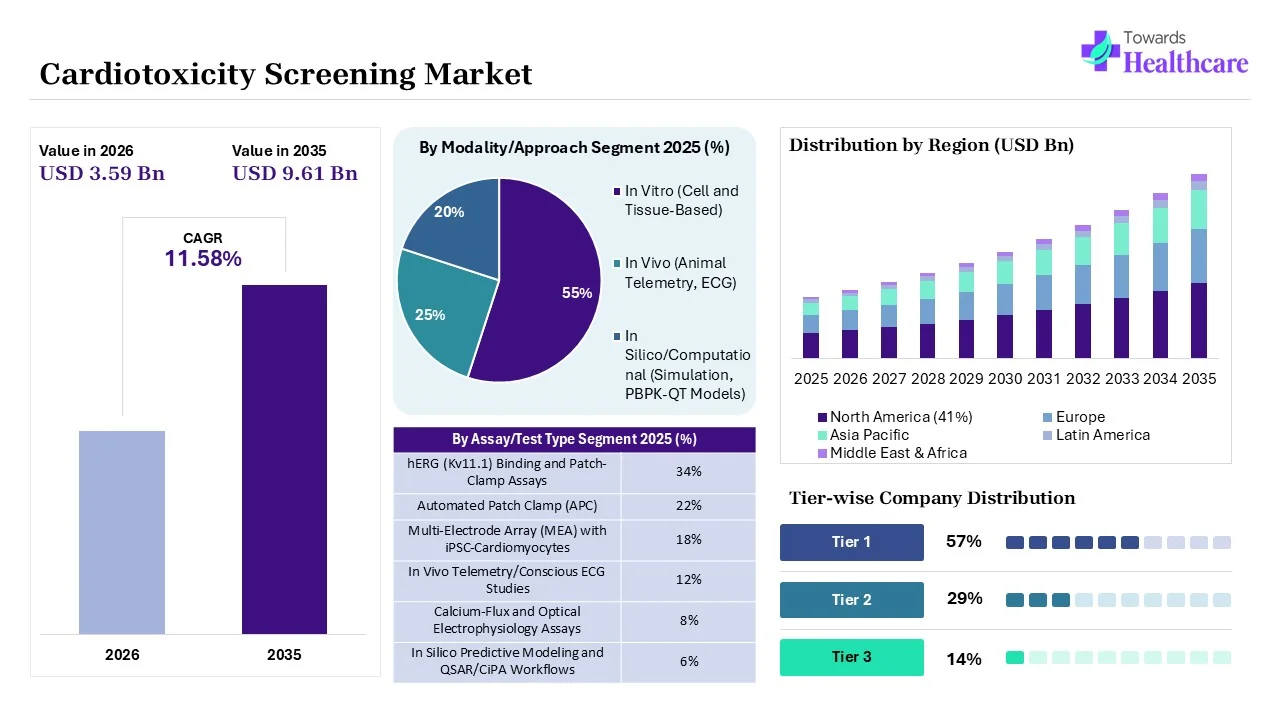
According to Towards Healthcare, the Cardiotoxicity Screening Market size was estimated at USD 3.21 billion in 2025 and is predicted to increase from USD 3.59 billion in 2026 to approximately USD 9.61 billion by 2035, expanding at a CAGR of 11.58% from 2026 to 2035. Growth is fueled by the rising incidence of cardiovascular diseases and toxic side effects from oncology drugs, with strict regulatory safety mandates pushing early-stage testing. Key trends show a massive shift toward advanced cell-based assays, such as human-induced pluripotent stem cell-derived cardiomyocytes (hiPSC-CMs), with high-throughput screening and 3D organoid models replacing traditional animal testing to deliver faster, more accurate predictive data.
Protection Across Four Measures of Heart Function
The study assessed four measures of cardiac performance: ejection fraction, fractional shortening, end-systolic volume, and left ventricular internal diameter during systole. Xolatryp significantly reduced the deterioration caused by doxorubicin across all four measures.
At Week 5, Xolatryp reduced the decline in ejection fraction by 34% compared with doxorubicin alone, with a p-value below 0.0001. The decline in fractional shortening was reduced by 30%, while the increase in end-systolic volume was reduced by 31%. The increase in chamber size was also reduced by 27%.
The protective effect was seen at Week 3 and remained present at Week 5, suggesting that the effect continued as doxorubicin-related cardiac dysfunction progressed.
Results Comparable with Dexrazoxane
Nyrada said the functional cardioprotection observed with Xolatryp was comparable to dexrazoxane, the only approved cardioprotective agent used with anthracycline chemotherapy. Mean changes numerically favoured Xolatryp across all four systolic measures.
However, the study was not designed or powered to prove that Xolatryp was superior to dexrazoxane. Therefore, the results should be viewed as early preclinical evidence rather than confirmation of clinical superiority.
Additional findings also supported the cardiac results. Blinded histopathology showed that myocardial injury in Xolatryp-treated animals was reduced from predominantly moderate focal injury to predominantly mild focal injury. Cardiac troponin I, a marker of cardiac injury, was approximately 19% lower at Week 5 compared with doxorubicin alone, although this difference did not reach statistical significance.
Potential Dual Role in Cancer Treatment
The cardioprotection findings add to earlier preclinical research involving Xolatryp and doxorubicin. In a separate liver cancer model, the combination of Xolatryp and doxorubicin reduced tumour volume by 57% at Day 14, compared with 41% for doxorubicin alone.
Based on these separate findings, Nyrada believes Xolatryp could potentially play two roles in anthracycline treatment: protecting the heart from chemotherapy-related damage while also supporting the anti-tumour effect of doxorubicin.
The company said this combination could provide a potential new approach to anthracycline therapy. However, the oncology findings remain preclinical and will need to be tested in further studies before any conclusions can be made about use in patients.
Next Steps for Xolatryp Development
Following the latest results, Nyrada plans to assess the design and feasibility of a potential Phase Ib oncology trial for Xolatryp. This would represent a new development path alongside the company’s cardiovascular programme.
Xolatryp has already completed a Phase I clinical trial assessing its safety, tolerability, and pharmacokinetics. Nyrada has also commenced the Phase IIa PROTECT-MI trial, which is evaluating Xolatryp for reducing cardiac reperfusion injury in patients with ST-elevation myocardial infarction undergoing percutaneous coronary intervention.
The company’s latest preclinical findings provide further support for investigating Xolatryp in cardioprotection and oncology. Still, Nyrada has noted that preclinical results may not translate into similar outcomes in humans. Further clinical research will therefore be needed to determine the safety, effectiveness, and potential role of Xolatryp in protecting patients receiving doxorubicin-based chemotherapy. Further studies will help determine whether these findings translate clinically.
A recent report by Towards Healthcare highlights that the cardiotoxicity screening market is witnessing growth due to emerging markets and personalized medicine. Major future opportunities lie in integrating artificial intelligence and machine learning to predict drug safety profiles earlier. Developing automated, high-throughput screening platforms and expanding point-of-care cardiac biomarker testing offer high potential. Collaborations between pharmaceutical companies and contract research organizations will unlock new avenues for advanced genomic screening tools.