



Cell Microsystems Launched Software Supporting 21 CFR Part 11 Compliance, Expanding CellRaft AIR to Regulated Workflows
Published: 20 Jul 2026
Author: Towards Healthcare



Cell Microsystems, a frontrunner in cell line advancement instrumentation, announced the launch of novel software for the CellRaft AIR System intended to support 21 CFR Part 11 obedience. The addition increases the platform from a significant service for discovery and cell line advancement into one able to support regulated cell-driven workflows.
As pharmaceutical, cell therapy, and gene editing programs advance toward healthcare and commercial milestones, advancement teams face severe demands for data integrity, documentation, and traceability. The novel software provides current and future consumers with compliance-driven workflow controls that support secure electronic records, audit trails, consumer accountability, and technology transparency through cell line advancement.
Designed particularly for CellRaft AIR workflows, the software helps traceability from single-cell identification to clone selection, supporting laboratories in generating documentation to support quality and government review while increasing CellRaft AIR's proven cell isolation workflow into regulated advancement environments.
CellRaft AIR allows investigators to track, image, and isolate single cells and monoclonal colonies via a gentle, fluidics-free workflow. Different traditional strategies like limiting dilution, FACS, or automated dispensing technology, CellRaft technology enables cells to remain in a shared-media culture environment while colony formation, lessening cellular stress, and dramatically enhancing the success rate of monoclonal cell line advancement.
The novel software extends these core abilities by offering a validation-ready framework for managing electronic records and workflow approval technology in regulated laboratories.
Key features include:
- Secure consumer authentication and role-based access controls.
- Electronic signatures for audit readiness and workflow approvals.
- Robotic audit trails with time-stamped incident logging.
- Protected electronic records with controlled information access.
- Enhanced traceability of clone selection and monoclonality documentation.
- Information retention and reporting devices for quality and government review.
“Regulated cell line development workflows require more than high cloning efficiency they demand trust in every data point and every decision,” said Scott McGinnis, President of Cell Microsystems. “Our new compliance-focused software gives customers the ability to combine the biological advantages of CellRaft AIR with the compliance infrastructure needed for therapeutic development and manufacturing workflows.”
The addition of compliance-focused software expands the role of CellRaft AIR in organizational advancement:
- Monoclonal production cell lines
- Gene-edited therapeutic cell lines
- Cell therapy and CAR-T workflows
- iPSC-derived cellular products
- Rare or difficult-to-clone cell populations
By integration of automated imaging, AI-driven isolation confirmation, and safety, traceable workflow controls in a single platform, cell microsystems enable consumers to shift more seamlessly from research and discovery in the regulated advancement environments. This release increases CellRaft AIR from a discovery and cell line advancement platform in the services capable of helping regulated cell-based workflows, supporting organizations in maintaining confidence in cell health, clonality, and data integrity as programs advance toward therapeutic and commercial applications.
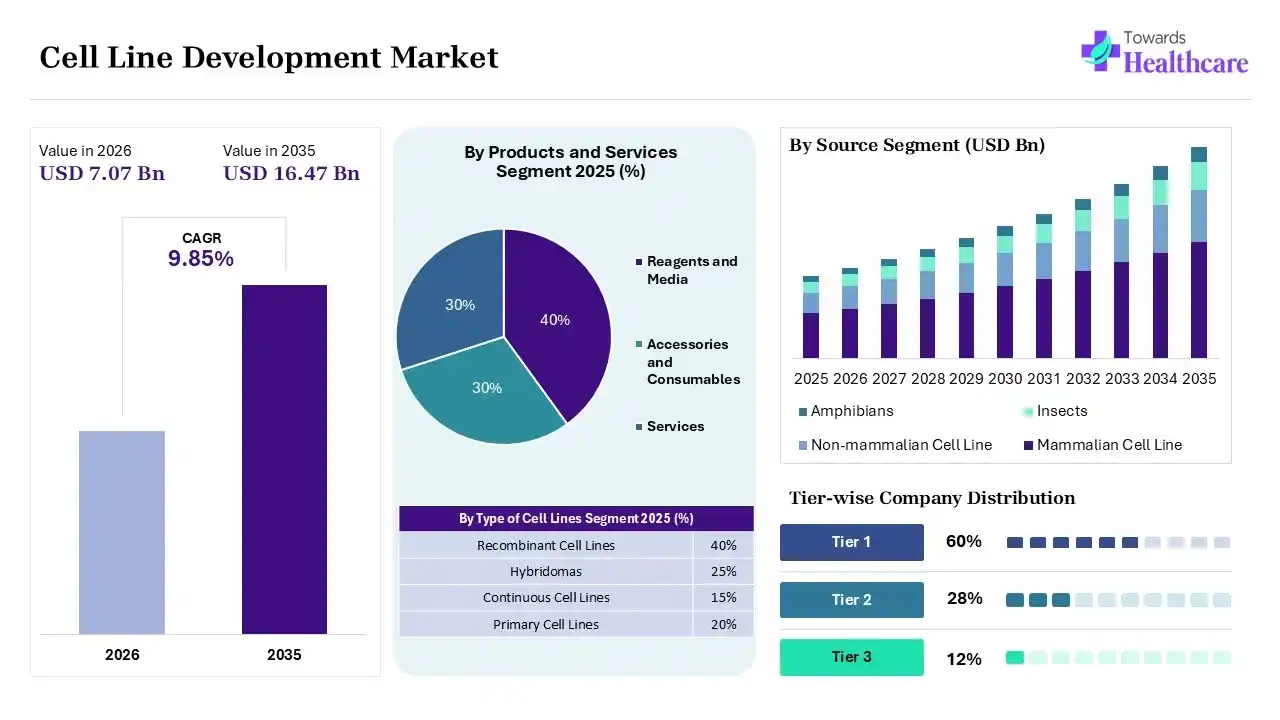
According to Towards Healthcare, the cell line development market is projected to experience significant growth, with estimates suggesting the market size will increase from USD 7.07 billion in 2026 to approximately USD 16.47 billion by 2035, representing a compound annual growth rate (CAGR) of 9.85% from 2026 to 2035, driven by the fact that cell lines are more affordable than primary cells. They last longer, are simple to transport and store, and provide unlimited passages, while primary cells expire. Cell lines are well characterised, have a longer life span than main cells, and proliferate more rapidly and simply than primary cells. They’re also homogeneous, easily manipulated, and proliferated. Cell lines are available in greater quantities than primary cells, where sample sizes are often limited, limiting research opportunities. These cell lines grow dependably in standard culture media, stored frozen and revitalized with standardised protocols, and generally exhibit adherent growth. Cell lines played a significant role in scientific discovery, involved in vaccine manufacturing, antibody generation, genetic research, metabolism study, and artificial tissue advancement.
About Cell Microsystems
Cell Microsystems’ transformative platforms for cell engineering, culture, and analysis empower research laboratories worldwide to unlock the full strength of their cells, creating what was once incredible possible. Driving development in research and discovery, Cell Microsystems’ product range involves the CellRaft AIR System, which drives the growth and confirmed isolation of healthy monoclonal colonies; the BioFlux Shear Flow Systems, which duplicate in vivo conditions using physiological shear flow; the CERO 3D Cell Culture & Bioreactor for chronic organoid growth and 3D culture growth; and a comprehensive lab solution and other ground-breaking offerings.
A recent report by Towards Healthcare highlights that the cell line development market is witnessing growth because cell line development is a significant step in drug discovery and advancement. These cells, which are typically mammalian but can also be bacterial, yeast, algae, or even plant in origin, produce therapeutic proteins and antibodies, and are significant for drug screening, studying gene function, and toxicity testing. Since the products they produce enter human bodies, their safety and quality are paramount. Recent developments are addressing industry complexity and ensuring advanced quality and productive cell lines.