



Envision Commission Galaxy Campus Setting a New Benchmark for Sustainable AI Infrastructure
Published: 10 Aug 2026
Author: Gautam Mahajan



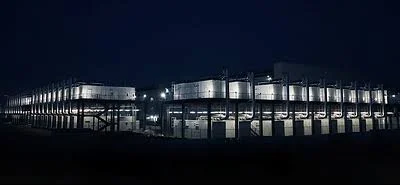
In August 2026, Envision announced the commissioning of its Galaxy Campus in Ulanqab, China. Envision unveiled a new generation of AI infrastructure that is predominantly fueled by renewable energy and built to function at gigawatt scale. The campus integrates solar, wind, battery storage, intelligent energy management, and cutting-edge AI computing capabilities into a single cohesive ecosystem. Envision hopes to address one of the most significant issues confronting artificial intelligence today, the enormous electricity demand generated by AI data centers, by combining this technology.
The Galaxy Campus was designed to maximize the usage of sustainable energy while providing dependable computing performance. The facility uses an intelligent energy management platform to continuously balance renewable power generation, energy storage, and AI workloads rather than relying primarily on conventional grid electricity. This strategy reduces carbon emissions, increases operating efficiency, and permits continuous computing even when the production of renewable energy varies during the day.
The Galaxy Campus was designed to maximize the usage of sustainable energy while providing dependable computing performance. The facility uses an intelligent energy management platform to continuously balance renewable power generation, energy storage, and AI workloads rather than relying primarily on conventional grid electricity. This strategy reduces carbon emissions, increases operating efficiency, and permits continuous computing even when the production of renewable energy varies during the day.
The initiative is a component of Envisions long-term plan to develop extensive green AI infrastructure that can sustain digital economies in the future. The need for high-performance computing is still growing quickly as AI is used by more businesses. Envision is provided through the Galaxy Campus that sustainability can be incorporated into the architecture of next-generation AI facilities instead of considering renewable energy as an afterthought. According to the company, this approach may be reproduced in areas with an abundance of renewable resources, assisting governments and tech firms in developing AI skills while advancing global climate objectives.
Impact on the AI Industry
According to Precedence Research, the demand for sophisticated AI infrastructure is rising dramatically globally due to the quick development of generative AI, machine learning, and high-performance computing. The necessity for dependable, energy-efficient computing infrastructure has emerged as one of the industry's top issues as companies create larger AI models. The commissioning of the Galaxy Campys by Envision shows how renewable energy can be directly connected with AI infrastructure, resulting in a sustainable paradigm that can enable future AI research without significantly raising carbon emissions.
It is anticipated that the initiative would motivate governments, cloud service providers, and AI firms to invest in renewable energy-powered AI campuses that include high-performance computing, battery storage, and intelligent energy management. These advancements are expected to lower long-term running costs while increasing the scalability, efficiency, and robustness of AI infrastructure. Sustainable computing ecosystems like the Galaxy Campus are anticipated to play an increasingly significant role in enabling next-generation AI applications and supporting the long-term growth of the artificial intelligence sector as global AI adoption continues to rise across industries.
Impact on the Renewable Energy Market
The global renewable energy market size accounted for USD 1.74 trillion in 2025 and is predicted to increase from USD 2.04 trillion in 2026 to approximately USD 8.25 trillion by 2035, representing a CAGR of 16.84% from 2026 to 2035.
The global renewable energy market is witnessing governments, IT firms, and business associations increasing their investments in renewable energy to fulfill growing electricity consumption and achieve decarbonization targets. Precedence Research claims that because AI facilities need massive amounts of dependable and sustainable electricity, the fast growth of hyperscale data centers and artificial intelligence is opening up new prospects for renewable energy developers. Future global energy investments are anticipated to be reshaped by the increasing convergence of digital infrastructure and sustainable energy.
Envisions Galaxy Campus serves as an example of how renewable energy might replace conventional electricity grids as the main power source for large-scale AI computation. The project presents a workable strategy for providing reliable electricity to energy-intensive AI workloads by combining wind power, solar energy, battery storage, and intelligent energy management into a unified ecosystem. Governments, utilities, and private investors should feel more confident in implementing digital infrastructure powered by renewable energy sources as a result of these achievements.
Investments in wind farms, solar power plants, battery energy storage systems, smart grid technologies, and AI-driven energy management platforms are expected to increase as a result of projects like Galaxy Campus. Renewable energy providers stand to gain from long-term power purchase agreements and strategic relationships with data center operators as more AI businesses look for sustainable ways to increase processing capacity. It is anticipated that these partnerships would boost the commercial adoption of renewable energy technology in international markets and aid in the development of low-carbon digital infrastructure.
Additionally, by facilitating intelligent energy optimization and effective use of locally produced electricity, direct integration of renewable energy with AI infrastructure is anticipated to enhance grid stability. This strategy could encourage nations to create areas rich in renewable energy as future hubs for AI and data centers while reducing reliance on traditional fossil fuel-based power generation. Projects like Envision's Galaxy Campus are expected to be crucial in accelerating the global shift to sustainable energy systems and fostering long-term growth in the renewable energy sector as demand for artificial intelligence keeps rising.
Impact on the Energy Storage Market
The global energy storage market size is calculated at USD 1.74 billion in 2025 and is predicted to increase from USD 2.17 billion in 2026 to approximately USD 14.82 billion by 2035, expanding at a CAGR of 23.89% from 2026 to 2035.
According to Precedence Research, the advanced energy storage systems are in high demand due to the increasing usage of renewable energy in power-intensive infrastructure. Battery storage can cooperate with solar and wind energy to provide a steady supply of electricity for AI computation, as demonstrated by Envision's Galaxy Campus. Adoption of such systems is anticipated to promote investments in grid balancing technologies, energy management platforms, and large-scale batteries because AI facilities need dependable power all the time.
About Envision
Envision is a multinational green technology business that specializes in creating solutions that integrate digital technologies, energy storage, intelligent energy management, and renewable energy. The company develops solutions that facilitate the shift to a low-carbon economy while enhancing the sustainability and efficiency of energy systems. Envision is shifting its focus to renewable-powered AI infrastructure through initiatives like the Galaxy Campus in Ulanqab, showcasing the integration of sophisticated computers and clean energy into a single expansive ecosystem.