



FDA Approves First-in-Class Targeted Therapy for Metastatic Pancreatic Cancer
Published: 02 Sep 2026
Author: Towards Healthcare



The U.S. Food and Drug Administration approved Rasonque, a RAS inhibitor for the common form of pancreatic tumor, delivering a novel management option to patients with well-developed pancreatic cancer months ahead of schedule.
This action demonstrates the agency’s commitment to shifting with urgency, lowering unnecessary delays, and developing novel treatments that create a meaningful difference in the lives of American patients and their families.
Rasonque, a tablet taken once daily, targets multiple forms of a protein called RAS, a significant driver of cancer growth in most patients with pancreatic adenocarcinoma, which arises from cells coating the ducts of the pancreas.
“Today’s approval provides a critical new option for patients facing an extraordinarily difficult and historically hard-to-treat cancer. It is our fundamental duty to deliver more cures and meaningful treatments to patients as quickly as possible,” said Acting FDA Commissioner Kyle Diamantas, J.D. “I am immensely proud of the dedicated FDA scientists whose fast, thorough review and relentless commitment made this groundbreaking milestone a reality.”
The approval is for the management of adults with metastatic pancreatic adenocarcinoma who have received at least one prior systemic therapy or are not candidates for multiagent therapy.
Around 90% to 95% of the 67,000 novel cases of pancreatic cancer diagnosed in the United States every year are pancreatic adenocarcinoma, based on the National Cancer Institute. Despite representing only 3.2% of all cancer diagnoses, pancreatic adenocarcinoma accounts for an excessively high share of cancer deaths, owing to its classically late identification, aggressive disease course, and historically limited management options.
In a randomized, open-label, multicenter clinical trial including 500 adults with previously managed metastatic pancreatic adenocarcinoma, Rasonque enhanced median overall survival to 13.2 months compared to 6.7 months for standard chemotherapy.
“This drug showed unprecedented results in an area of high unmet need,” said Angelo de Claro, M.D., director of the FDA’s Oncology Center of Excellence. “The approval was granted 6.5 months before the user fee deadline, demonstrating the FDA’s commitment to accelerating the approval of new cancer treatments for patients with serious and life-threatening conditions.”
The FDA granted Rasonque Breakthrough Therapy and Orphan Drug designations. Rasonque received Priority Review for this indication. The application was reviewed under the Commissioner’s National Priority Voucher pilot program, which is designed to supports speed-up the review of therapies that address national public health urgencies.
The FDA issued a “safe to proceed” letter letting the sponsor initiate an expanded access management protocol for Rasonque, allowing patient access to the investigational therapeutic prior to approval under applicable FDA regulations.
The common adverse effects of the therapeutic are rash, diarrhea, stomatitis, nausea, fatigue, vomiting, abdominal pain, edema, hemorrhage, and decreased appetite.
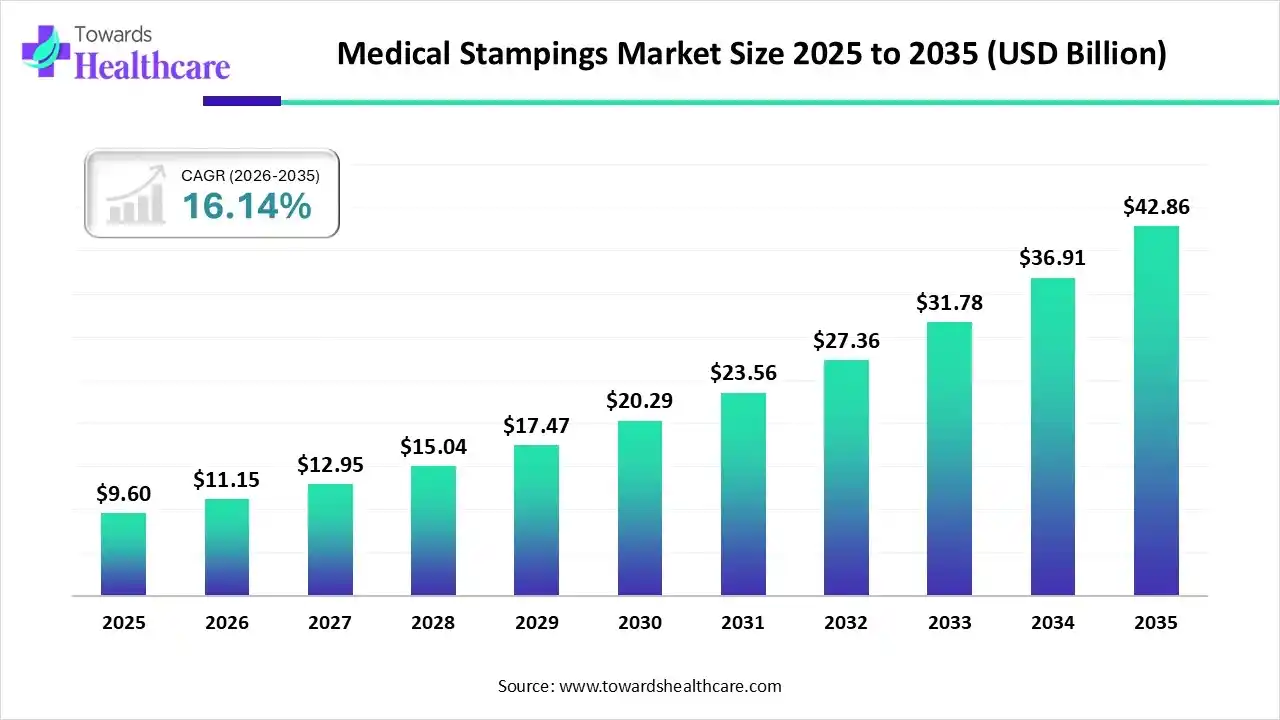
According to Towards Healthcare, the medical stampings market is projected to grow significantly, with estimates indicating the market size will increase from USD 11.15 billion in 2026 to approximately USD 42.86 billion by 2035, expanding at a CAGR of 16.14% from 2026 to 2035. The therapeutic organization needs particular metal components that are affordable and high in precision. There are some significant elements which producer consider to confirm high-quality custom metal stampings apt for healthcare tools. The healthcare industry needs particular metal components that are affordable and high in precision. There are some key elements that producers consider to confirm high-quality custom metal stampings apt for medical tools. High-precision metal stamping technology has become the preferred substitute for machining for healthcare applications. Stamping produces many common medical care instruments like forceps, retractors, cannulas, or drill bit assemblies, but the jaw housing is a compelling case study of stamping’s potential in this arena. Medical stampings are precision-engineered metal components used to produce reliable surgical tools, implantable tools, and diagnostic devices.
About FDA
The FDA, an agency within the U.S. Department of Health and Human Services, protects public health by confirming the safety, effectiveness, and security of human and veterinary therapeutics, vaccines and various biological products for human application, and healthcare tools. The agency is also responsible for the safety and security of our nation’s food supply, cosmetics, dietary supplements, radiation-emitting electronic products, and tobacco products.
A recent report by Towards Healthcare highlights that the medical stamping market is growing, as medical stamping's efficient and self-driven nature allows rapid production cycles, reducing labor expenses and enhancing overall manufacturing effectiveness. Medical stamping is a careful production process including specialized machinery to shape and cut metal sheets into particular designs or components used in healthcare tools. This solution uses custom-made dies or molds to make intricate and challenging shapes with high precision and consistency. Medical stamping confirms the components meet the needed government standards, giving manufacturers peace of mind in terms of product quality and compliance.