



FDA Grants Accelerated Approval to Zenbexus Regimen and Transforming Myeloma Care
Published: 18 Aug 2026
Author: Deepa Pandey



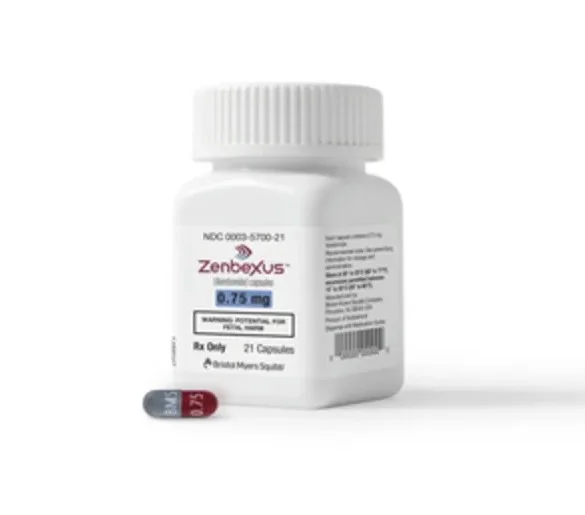
In August 2026, the FDA granted accelerated approval to Bristol-Myers Squibb's iberdomide (Zenbexus), combined with daratumumab and hyaluronidase-fihj and dexamethasone for the treatment of adults with multiple myeloma who previously received at least one prior line of therapy including a proteasome inhibitor and an immunomodulatory agent.
Efficacy, Safety Profile, and Dosing Schedule
- Efficacy was assessed in EXCALIBER-RRMM (NCT04975997), a randomized, multicenter trial involving adults with relapsed or refractory multiple myeloma (RRMM) who had received one or two prior therapies. Patients refractory to anti-CD38 monoclonal antibody therapy or bortezomib were excluded.
- A total of 939 patients were randomized to receive either iberdomide with daratumumab and hyaluronidase-fihj plus dexamethasone (IberDd) or the comparator daratumumab and hyaluronidase-fihj with bortezomib and dexamethasone (DVd).
- The primary efficacy outcome was minimal residual disease (MRD)-negative complete response (CR). The MRD-negative CR rate was 41% in the IberDd arm compared to 21% in the DVd arm (p < 0.0001).
- Iberdomide carries a boxed warning for embryo-fetal toxicity and risks of thromboembolism and other conditions and is available only through the ZENBEXUS Risk Evaluation and Mitigation Strategy (REMS).
- Iberdomide is recommended at 1 mg orally once daily for Days 1-21 of a 28-day cycle, alongside daratumumab and hyaluronidase-fihj plus dexamethasone. Treatment continues until disease progression or unacceptable toxicity.
Impact on the Healthcare Industry
This grant positively impacts the healthcare industry by doubling minimal residual disease-negative complete response rates as early as first relapse by reshaping clinical standards and regulatory endpoints.
This therapeutic class validation establishes targeted protein degradation through CELMoDs as a core pillar in oncology. It marks a regulatory transformation by leveraging MRD-negative complete response for enhanced approval in multiple myeloma. The review utilized the FDA's Project Orbis framework to streamline concurrent international evaluations. This milestone encourages competition in the blood cancer space. Expanding Bristol Myers Squibb's commercial oncology footprint by setting a new precedent for efficiencies with increasing approvals and global review in hematology.
This further addresses industry limitations and bypasses slow trial timelines to deliver faster innovation. It provides a stronger mechanism than older drugs for resistant relapses, swaps long progression waits for rapid biological markers, and controls severe safety challenges through a stringent risk evaluation framework.
Impact on the Oncology Industry
The global oncology market size was calculated at USD 250.88 billion in 2025 and is predicted to increase from USD 279.73 billion in 2026 to approximately USD 732.45 billion by 2035, expanding at a CAGR of 11.31% from 2026 to 2035.
According to Precedence Research, this grant contributes to the oncology industry by introducing a novel protein-degradation mechanism and setting a regulatory precedent by leveraging MRD-negative complete response as a main underlying principle.
This clinical milestone establishes targeted protein degradation through CELMoDs as a potent new therapeutic pillar for hematology and solid-tumor pipelines, fostering a regulatory shift by depending on deep surrogate response endpoints, like MRD-negative complete responses, for accelerated approval in relapsed and refractory myeloma. Concurrently, this advancement shifts advanced combination therapies earlier into the treatment cycle, starting at the first relapse to achieve deeper and more durable remissions for patients with advanced cancer.
This also resolves the hurdle of conventional treatment resistance in multiple myeloma through enhanced cereblon binding, resulting in higher rates of deep molecular remission. Additionally, the leveraged accelerated trial paths with surrogate MRD endpoints enhance patient access without long wait times for overall survival data.
About Bristol Myers Squibb
Bristol Myers Squibb is a major American biopharmaceutical company based in Princeton, New Jersey. It offers key products like the blood thinner Eliquis and the cancer drug Opdivo, alongside Revlimid, Pomalyst, and Orencia. The company also advances next-gen cell therapies like Breyanzi. It not only supports these offerings through global research and development but also through specialized cold-chain manufacturing and patient assistance programs to mitigate financial and logistical limitations.
Its major aim is to discover and deliver innovative medicines for serious illnesses. The company focuses heavily on oncology, hematology, immunology, and cardiovascular conditions. Additionally, it combines biotech agility with large-scale research and patient-centric access goals.