



Henrico sterilization plant surpassed the annual emissions limit in one day
Published: 01 Jul 2026
Author: Towards Healthcare



Sterilization Services of Virginia, a facility in Eastern Henrico County that leverages a chemical called ethylene oxide to sterilize medical equipment, broke its annual emissions limit in less than one day in April.
This leads to nearly $50,000 in fines from state regulators & new operating requirements. According to the state Department of Environmental Quality delivered consent order, which encompasses the legally binding document detailing Sterilization Services’ permit violations & DEQ’s enforcement actions on April 9, 2026, a faulty check valve on the facility’s roof leaked 580 pounds of EtO. Moreover, this plant has surpassed the EtO emissions permit, which enables 400 pounds emitted per year, & only 0.8 pounds per hour.
Moreover, the consent order covers steps stated by Sterilization Services & authorized by DEQ, such as an alarm system that will sound in the building if another leak occurs, novel pressure relief check valves & quarterly inspections on check valves.
Connor Eppley stated that the company, state, and local governments didn't inform the community about the leak, while they found out almost by accident.
However, Ethylene oxide, known as EtO, is a highly employed industrial chemical in the United States, & EtO has no color or odor. This has a key role in sterilising medical products that can’t withstand the high heat of steam sterilization, coupled with widespread application to sterilize spices & to produce antifreeze.
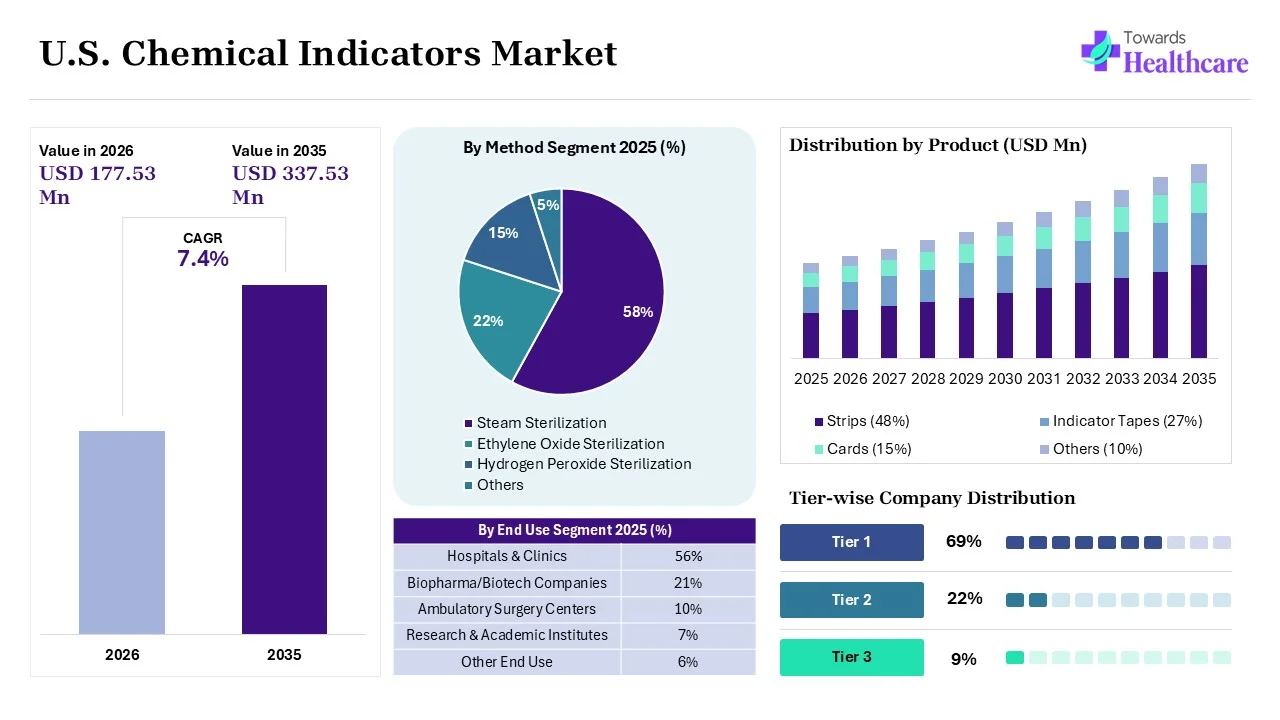
According to Towards Healthcare, the U.S. chemical indicators market is projected to experience significant growth, with estimates suggesting the market size will increase from USD 177.53 million in 2026 to approximately USD 337.53 million by 2035, representing a compound annual growth rate (CAGR) of 7.4% from 2026 to 2035. Key drivers are the emergence of strict sterilization regulations & an urgent need to lower healthcare-associated infections (HAIs). Additionally, growing pharmaceutical production & biotech applications necessitate highly validated sterilization protocols, increasing bulk consumption of indicator tapes & strips.
Accelerating Focus on Real-Time Validation & Integrated Systems
According to Towards Healthcare, the U.S. chemical indicators market will have a major opportunity in pairing indicators with barcode scanners & electronic tracking systems to automate cycle validation & confirm regulatory compliance at the point of purpose. AN eventual development includes the launch of the FDA-cleared challenge packs that unify modern chemical indicators with rapid biological monitors in single-use transparent designs.