



New Frontiers in Huntington’s Disease: Disrupting Cellular Highways
Published: 05 Jun 2026
Author: Rohan Patil



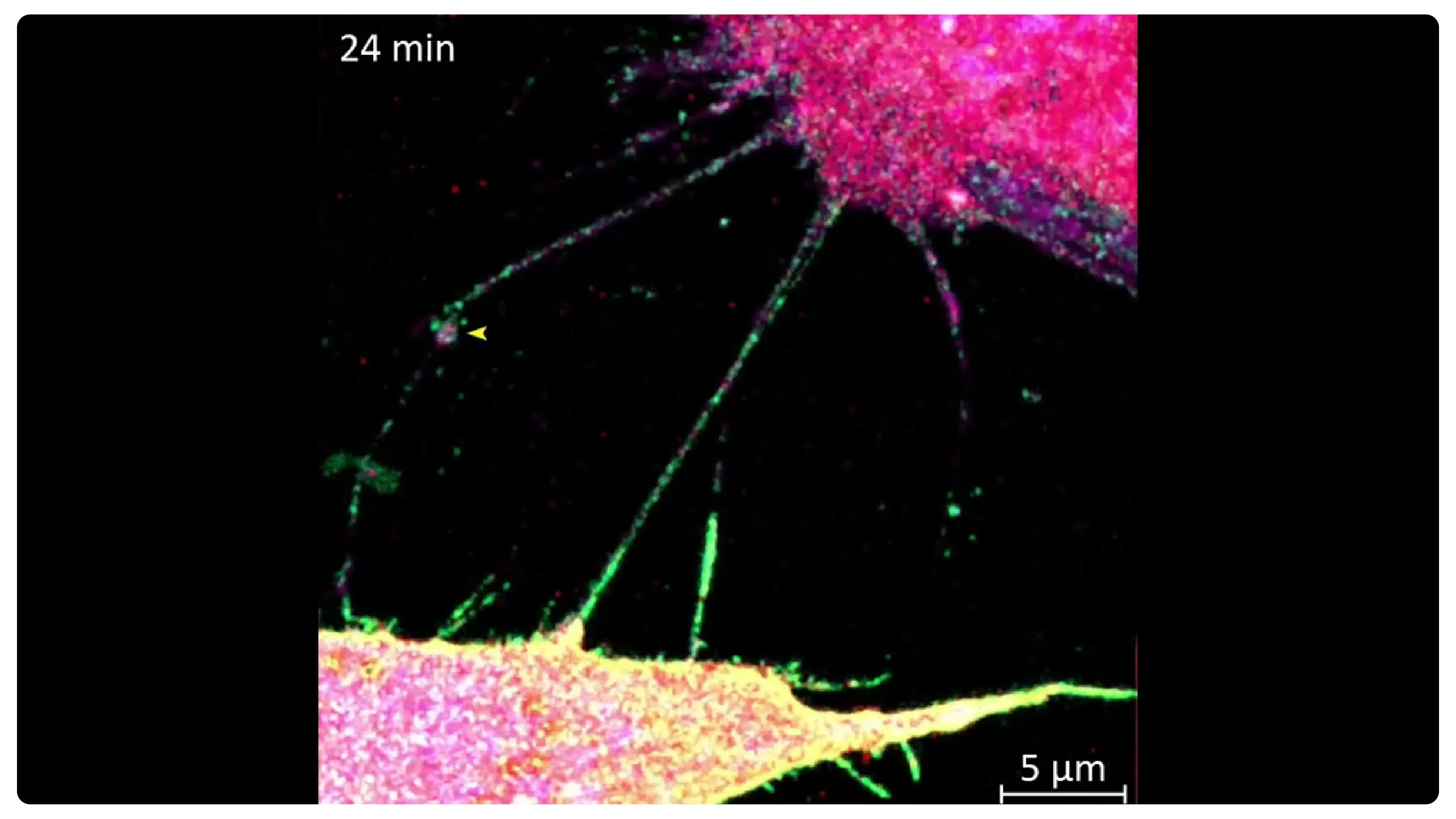
Huntington’s disease is a severe brain disorder caused by a toxic mutant huntingtin protein that damages and kills brain cells, leading to loss of movement, memory, and personality. Scientists have long known this protein spreads between cells, but the mechanism was unclear. Researchers from Florida Atlantic University and collaborators have now discovered a new pathway involving tiny tube-like structures called tunneling nanotubes, which act as direct bridges between brain cells. Their study, published in Science Advances, found that disrupting this pathway greatly reduced the spread of the harmful protein, offering an important breakthrough and a promising target for future treatments.
According to Precedence Research, the Huntington’s Disease Market was valued at USD 1.42 billion in 2025 and is projected to grow from USD 1.66 billion in 2026 to approximately USD 6.48 billion by 2035, expanding at a CAGR of 17.20% from 2026 to 2035, driven by rising research in neurodegenerative disorders.
Disrupting Cell-to-Cell Protein Spread in Huntington’s Disease
Researchers found that Rhes, a protein linked to Huntington’s disease, works with SLC4A7, a bicarbonate transporter that helps regulate cell acidity. Together, they promote the formation of tunneling nanotubes, which act as pathways for toxic huntingtin protein to spread between neurons. Using protein-mapping techniques, scientists showed that Rhes binds to SLC4A7 at the cell membrane, triggering nanotube growth. When SLC4A7 was blocked genetically or with drugs, nanotube formation stopped, and the spread of the toxic protein was greatly reduced.
In mouse models of Huntington’s disease, removing SLC4A7 greatly reduced the spread of toxic protein between neurons in the striatum, the brain region most affected by the disorder. This finding suggests that blocking this newly discovered pathway could slow disease progression by limiting damage before it spreads. The discovery may also apply beyond Huntington’s disease, since tunneling nanotubes are linked to other neurodegenerative disorders and cancer, where cells use them to share harmful signals and drug resistance. Because Rhes and SLC4A7 support basic cellular functions, this pathway may reveal a common disease mechanism and a promising new therapeutic target.
A recent report by Precedence Research highlights that the Huntington’s Disease Market is benefiting from the rising prevalence of Huntington’s Disease.