



Huntingtons Disease Market Size, Companies, Share, Patient Volume, Treatment Adoption Rates, Pricing Analysis, Regulatory Landscape, Competitive Positioning, and Demand Forecast
Huntingtons Disease Market (By Therapy Type: Symptomatic Treatments, Gene Therapies, RNA-targeted Therapies, Cell-based Therapies, Disease-modifying Therapies, Supportive Care Therapies; By Disease Stage: Early-stage Huntingtons Disease, Mid-stage Huntingtons Disease, Advanced-stage Huntingtons Disease; By Route of Administration: Oral, Intravenous (IV), Intrathecal, Subcutaneous; By End-User: Hospitals, Specialty Neurology Clinics, Homecare Settings, Rehabilitation Centers, Research and Academic Institutes; By Distribution Channel: Hospital Pharmacies, Retail Pharmacies, Specialty Pharmacies, Online Pharmacies) - Global Industry Analysis, Size, Trends, Leading Companies, Regional Outlook, and Forecast 2026 to 2035
Source: https://www.precedenceresearch.com/huntingtons-disease-market
 Get a Sample
 Table Of Content


Huntingtons Disease Market Size and Forecast 2026 to 2035
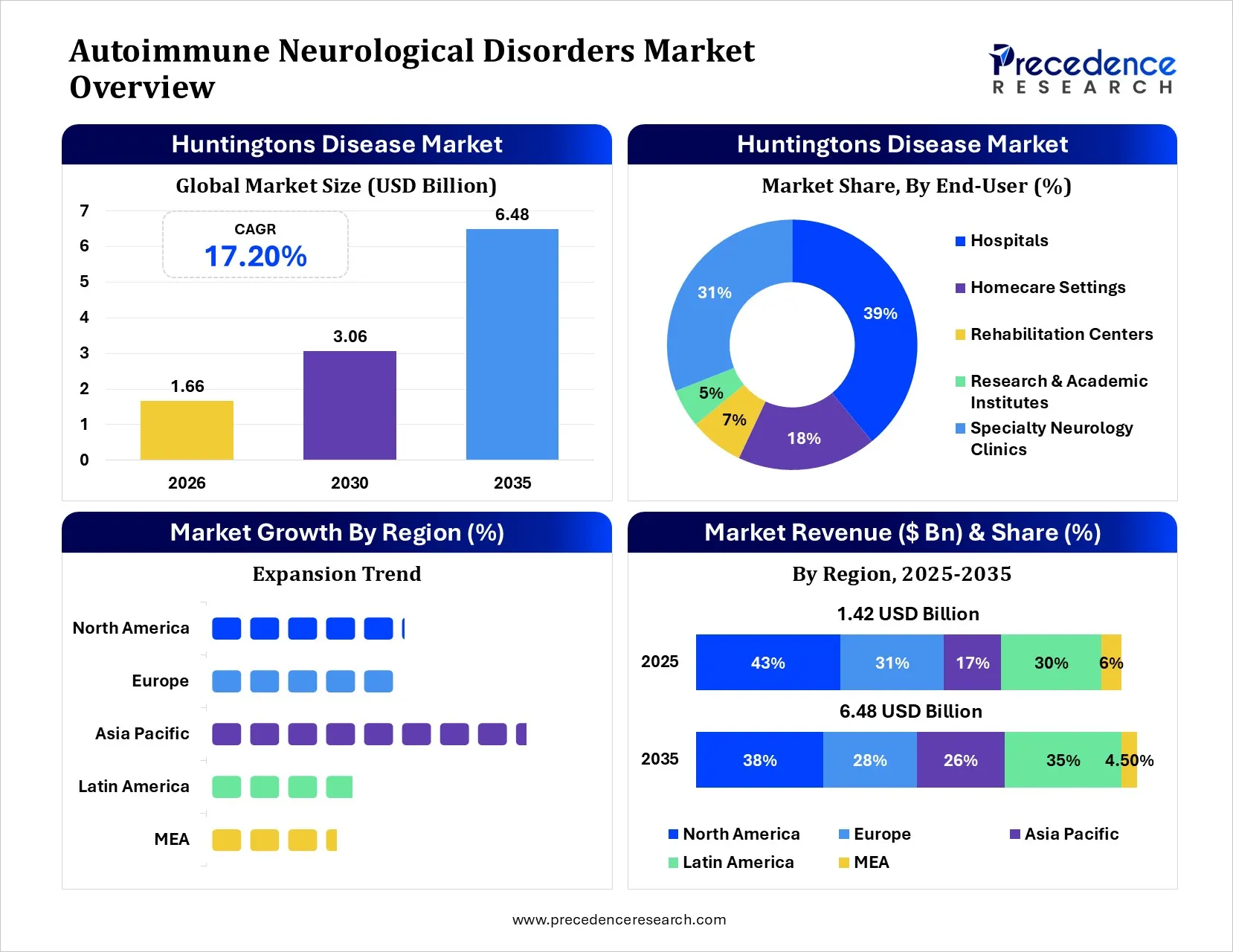
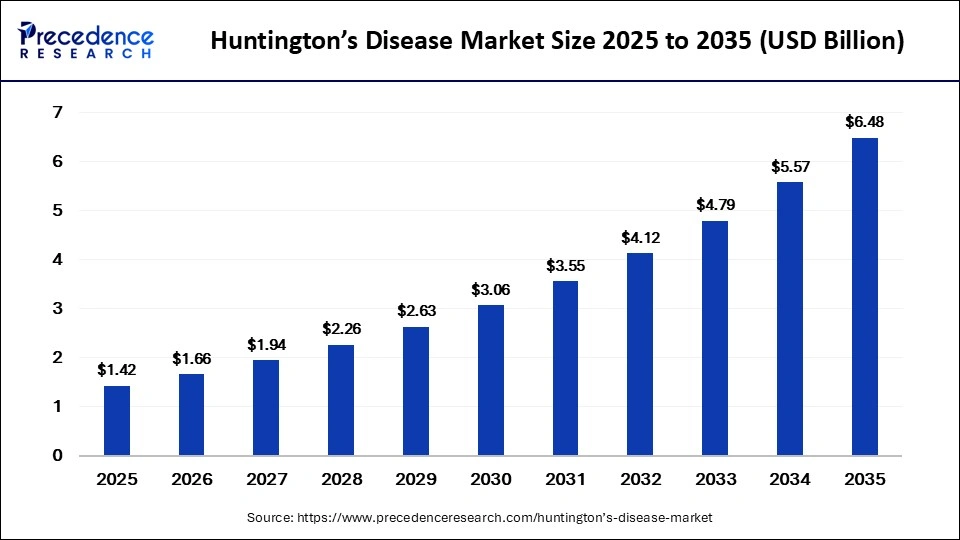
The global huntingtons disease market size was calculated at USD 1.42 billion in 2025 and is predicted to increase from USD 1.66 billion in 2026 to approximately USD 6.48 billion by 2035, expanding at a CAGR of 17.20% from 2026 to 2035. The increasing prevalence of Huntington's disease, along with advances in clinical research and drug development, is a key driver of market growth.
Key Takeaway
- North America led the Huntington's disease market with a share of 43% in 2025.
- Asia-Pacific is expected to be the fastest-growing region with a CAGR of 24.5% in the forecasted period.
- By therapy type, the symptomatic treatments segment held a dominant position in the market with a 48% share in 2025.
- By therapy type, the gene therapies segment is expected to grow with the highest CAGR of 28.5% in the predictive window.
- By disease stage, the mid-stage Huntington's disease segment led the global market with a share of 42% in 2025.
- By disease stage, the early-stage Huntington's disease segment is expected to be the fastest-growing with a CAGR of 21.5% in the foreseeable period.
- By route of administration, the oral segment accounted for the highest revenue share of 52% in 2025.
- By route of administration, the intrathecal segment is expected to be the fastest-growing segment with a CAGR of 27.5% in the foreseeable period.
- By end-user, the hospitals segment led the global market with a share of 39% in 2025.
- By end-user type, the home care settings segment is expected to grow at the highest CAGR of 19.5% in the fiscal period.
Huntington's Disease Market Overview
Huntington's disease is a hereditary condition characterized by the degeneration of specific nerve cells in the brain. This rare disorder progressively impacts both movement and cognitive functions. It can present in two forms: adult-onset, which is the more common type with symptoms typically emerging after the age of 30, and early-onset, or juvenile Huntington's disease, which is less common and affects children and teenagers, with symptoms appearing before the age of 20. Studies have indicated that the prevalence of Huntington's disease varies across different ethnicities and geographical regions, highlighting the influence of demographic factors on the number and characteristics of individuals affected by this condition.
Impact of Artificial Intelligence on the Huntington's Disease Market
Artificial intelligence (AI) is transforming the healthcare landscape in numerous ways. In the context of Huntington's disease research and care, AI enhances clinical trial recruitment by enabling more precise predictions of disease progression. Additionally, machine learning (ML) and deep learning (DL) demonstrate significant potential for automating the diagnosis of Huntington's disease through the comprehensive analysis of clinical, genetic, and neuroimaging data. Moreover, AI-assisted image analysis accelerates the pace and scalability of research initiatives, allowing researchers to conserve valuable time and concentrate on more intricate, high-level challenges. AI models also excel at differentiating between involuntary movements associated with Huntington's disease and voluntary movements, providing crucial support for diagnosis, monitoring, and treatment planning.
Huntington's Disease Market Trends
- Adoption of Advanced Genetic Testing: The market for Huntington's disease is experiencing a rise in the adoption of advanced genetic testing techniques, which enhance early detection and diagnostic accuracy. This progress enables timely interventions and supports improved patient management outcomes.
- Transition to a Personalized Care Model: Increasing investments in research and clinical trials are propelling the transition toward personalized medicine approaches. This integrated care model continues to enhance patient management, treatment adherence, and overall healthcare efficiency.
- Rising Significance of Patient Education Programs: Patient education and support programs are becoming increasingly important in the Huntington's disease market. These initiatives aim to improve the quality of life for patients and caregivers, while also developing effective coping strategies for managing psychosocial stress.
Market Report Coverage and Key Metrics
| Report Coverage | Details |
| Market Size in 2025 | USD 1.42 Billion |
| Market Size in 2026 | USD 1.66 Billion |
| Market Size by 2035 | USD 6.48 Billion |
| Market Growth Rate from 2026 to 2035 | CAGR of 17.20% |
| Dominating Region | North America |
| Fastest Growing Region | Asia Pacific |
| Base Year | 2025 |
| Forecast Period | 2026 to 2035 |
| Segments Covered | Therapy Type, Disease Stage, Route of Administration, End-User, Distribution Channel, and Region |
| Regions Covered | North America, Europe, Asia-Pacific, Latin America, and Middle East & Africa |
Market Dynamics
Drivers
Growing Awareness of Early Diagnosis
The rising incidence and prevalence of Huntington's disease over the past decade can be attributed to advancements in molecular genetic testing. Earlier diagnosis and improved life expectancy among patients with Huntington's disease, coupled with the increasing adoption of innovative therapies and heightened patient awareness, are key factors contributing to overall market growth.
Restraint
Regulatory and Cost Constraints
The high cost of treatment and regulatory challenges are hindering swift market expansion within the Huntington's disease sector. Additionally, the uneven distribution of healthcare resources across regions, coupled with the elevated expenses associated with advanced Huntington disease treatment regimens, restricts access for low and middle-income patients.
Opportunity
Therapeutic Innovation Creates Growth Opportunities
The advancement of therapeutic modifications is generating considerable growth opportunities in the market. Companies are exploring innovative approaches, such as gene therapy, antisense oligonucleotides, and oral therapeutics, while enhancing their sales and marketing strategies through competitive landscape assessments and performance analyses of key competitors.
Market Segmentation Analysis
Therapy Type Insights
The Symptomatic Treatments Segment Led the Market with 48% of Market Share in 2025
The symptomatic treatments segment generated approximately USD 0.68 billion in 2025 and is projected to reach nearly USD 2.20 billion by 2035, growing at a CAGR of 8.5% during the forecast period. The segment dominated the Huntington's disease market with a 48% share in 2025, due to the sustained demand for therapies aimed at managing psychiatric symptoms. This segment includes VMAT2 inhibitors, antipsychotics, antidepressants, and mood stabilizers, with notable utilization of VMAT2 inhibitors for managing chorea. It plays a significant role in long-term disease management. Additionally, surgical options such as pallidotomy, deep brain stimulation, and cell transplants have been employed for the symptomatic treatment of Huntington's disease (HD).
The RNA-targeted therapies segment accounted for approximately USD 0.26 billion in 2025 and is expected to reach around USD 1.68 billion by 2035, expanding at a CAGR of 25.8%. Holding 18% market share in 2025, driven by the increasing development of antisense oligonucleotide therapies. RNA-based therapies leverage endogenous cellular mechanisms to suppress gene expression and offer remarkable sequence selectivity for target genes. The rising emphasis on disease-modifying neurological treatments and the growing success of CNS-targeted RNA therapeutics further bolster this market segment.
Huntington's Disease Market Share, By Therapy Type, 2025-2035 (%)
| Therapy Type | 2025 | 2035 | CAGR (%) |
| Symptomatic Treatments | 48.00% | 34.00% | 8.5% |
| Gene Therapies | 14.00% | 24.00% | 28.5% |
| RNA-targeted Therapies | 18.00% | 26.00% | 25.8% |
| Cell-based Therapies | 6.00% | 7.00% | 17.5% |
| Disease-modifying Therapies | 8.00% | 6.00% | 10.5% |
| Supportive Care Therapies | 6.00% | 3.00% | 5.8% |
The gene therapies segment generated nearly USD 0.20 billion in 2025 and is projected to reach approximately USD 1.56 billion by 2035, registering the fastest CAGR of 28.5% during the forecast period. The segment represented 14% of the market in 2025. This growth is propelled by swift advancements in gene silencing and replacement technologies, along with increasing investments in precision genetic medicine. Huntington's disease, having a single genetic target, presents a unique advantage, making its potential cure more attainable compared to other movement disorders characterized by diverse genetic causes. Furthermore, the rise in clinical trials targeting the mutant huntingtin protein supports greater adoption of this segment.
The cell-based therapies segment generated around USD 0.09 billion in 2025 and is projected to reach approximately USD 0.45 billion by 2035, expanding at a CAGR of 17.5%. The cell-based therapies segment accounted for nearly 6% of the market share in 2025, driven by heightened research into regenerative neurology approaches. Current treatments primarily focus on alleviating symptoms rather than addressing the underlying disease mechanisms. The advancement of stem cell therapy programs and increased investments in advanced neurorestorative medicine are additional factors supporting this segment.
Disease Stage Insights
Huntington's Disease Market Share, By Disease Stage, 2025-2035 (%)
| Disease Stage | 2025 | 2035 | CAGR (%) |
| Early-stage Huntington's Disease | 36.00% | 42.00% | 21.5% |
| Mid-stage Huntington's Disease | 42.00% | 38.00% | 14.2% |
| Advanced-stage Huntington's Disease | 22.00% | 20.00% | 10.2% |
The Mid-Stage Huntington's Disease Segment Dominated the Market with 42% of Market Share in 2025
The mid-stage Huntington's disease segment generated approximately USD 0.60 billion in 2025 and is projected to reach nearly USD 2.46 billion by 2035, growing at a CAGR of 14.2%. The segment dominated the market with a 42% share in 2025, driven by a strong demand for therapies aimed at managing both symptomatic and psychiatric aspects of the condition. During this phase of Huntington's disease, individuals often lose the ability to work or drive and may struggle to manage their finances or perform household tasks independently. The rise of multidisciplinary neurological care programs, coupled with the increased use of VMAT2 inhibitors and supportive therapies, has reinforced the segment's leading position.
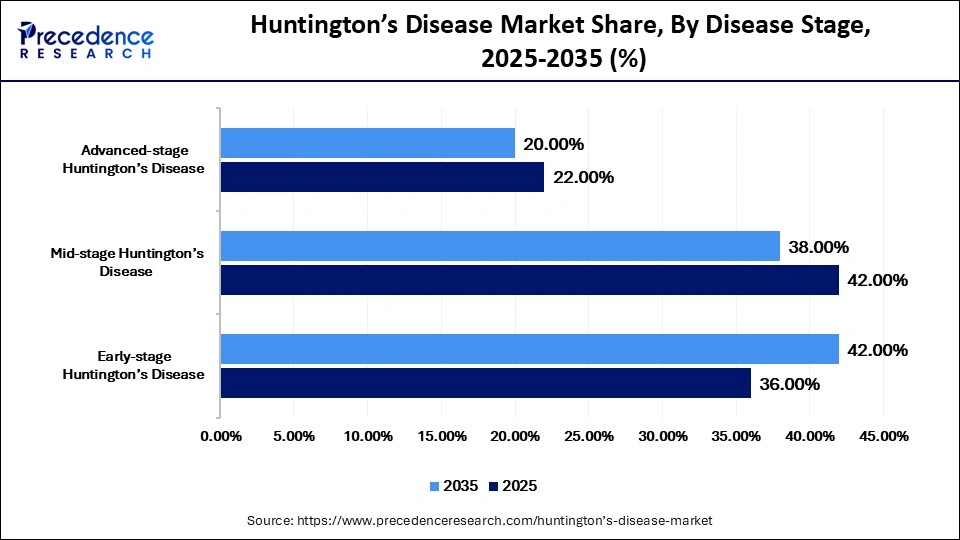
The early-stage Huntington's disease segment accounted for approximately USD 0.51 billion in 2025 and is expected to reach around USD 2.72 billion by 2035, registering the fastest CAGR of 21.5%. The early-stage Huntington's disease segment represented 36% of the market share in 2025. This growth is attributed to the rising adoption of early genetic testing and diagnosis. Individuals in the early stage of Huntington's disease generally maintain functionality, allowing them to work, drive, and live independently, despite experiencing some symptoms such as minor involuntary movements, subtle coordination loss, and cognitive difficulties. An increasing emphasis on early therapeutic intervention and the development of disease-modifying therapies is further propelling market expansion.
The advanced-stage Huntington's disease segment generated nearly USD 0.31 billion in 2025 and is projected to reach approximately USD 1.30 billion by 2035, expanding at a CAGR of 10.2%. The advanced-stage Huntington's disease segment accounted for 22% of the market share in 2025, driven by sustained demand for long-term supportive and palliative care. In this advanced stage, individuals typically require assistance with all daily living activities, and in the later stages, they are often nonverbal and bedridden. The growing availability of home care and rehabilitation services, along with an increasing focus on quality-of-life management, plays a crucial role in supporting the care of individuals with advanced-stage Huntington's disease.
Route of Administration Insights
Huntington's Disease Market Share, By Route of Administration, 2025-2035 (%)
| Route of Administration | 2025 | 2035 | CAGR (%) |
| Oral | 52.00% | 44.00% | 10.8% |
| Intravenous (IV) | 20.00% | 18.00% | 12.2% |
| Intrathecal | 18.00% | 28.00% | 27.5% |
| Subcutaneous | 10.00% | 10.00% | 14.5% |
The Oral Segment Held the Largest Market Share of 52% in 2025
The oral segment generated approximately USD 0.74 billion in 2025 and is expected to reach nearly USD 2.85 billion by 2035, growing at a CAGR of 10.8%. Holding the largest market share of 52% in 2025. This dominance can be attributed to the widespread use of therapies for symptomatic psychiatric conditions. Oral medications offer the reward of long shelf life and ease of administration, aligning with patient preferences for convenient long-term treatments. Additionally, the ongoing development of oral CNS therapeutics reinforces this segment's leadership.
The intravenous segment accounted for approximately USD 0.28 billion in 2025 and is projected to reach around USD 1.17 billion by 2035, expanding at a CAGR of 12.2% The intravenous (IV) segment represented nearly 20% of the market share in 2025, driven by the increasing adoption of biologics and advanced neurological therapies. IV medications provide immediate therapeutic effects, which are crucial in emergencies. The rising trend of hospital-based administration of investigational treatments and the growing acceptance of infusion therapies further contribute to market expansion.
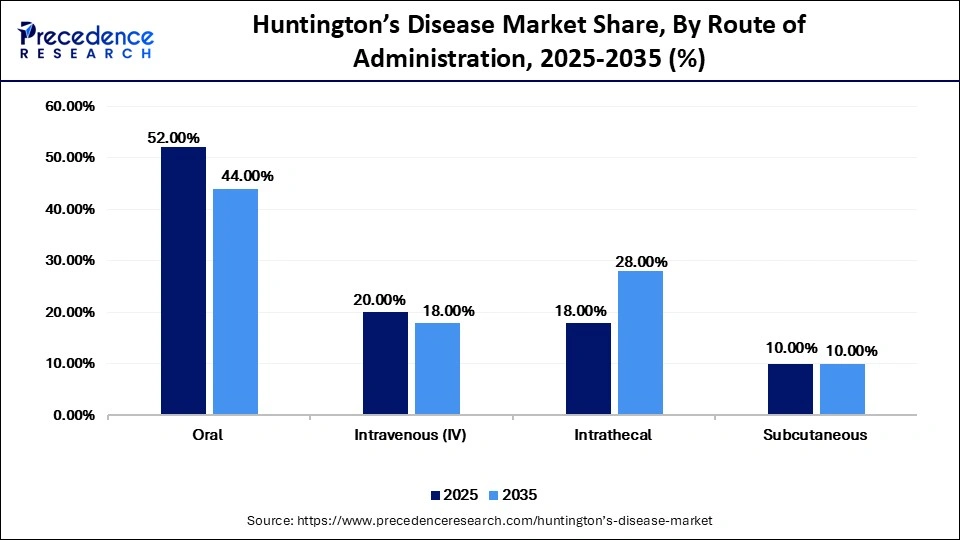
The intrathecal segment generated nearly USD 0.26 billion in 2025 and is expected to reach approximately USD 1.81 billion by 2035, registering a CAGR of 27.5%. The intrathecal segment accounted for nearly 18% of the Huntington's disease market share in 2025. This growth is fueled by the rapid advancement of CNS-targeted RNA and gene therapies. Intrathecal administration has demonstrated efficacy in managing various neurological disorders by delivering medications directly to the central nervous system. The increasing utilization of antisense oligonucleotide delivery systems and the rising adoption of precision neurology approaches are driving the segment's expansion.
The subcutaneous segment was valued at approximately USD 0.14 billion in 2025 and is projected to reach nearly USD 0.65 billion by 2035, growing at a CAGR of 14.5%. The subcutaneous segment captured about 10% of the market share in 2025. This growth is attributed to the development of patient-friendly biologic delivery systems. Subcutaneous injections tend to cause less discomfort and are simpler to administer, thereby enhancing patient compliance. The increasing adoption of therapies for chronic neurological diseases and a growing emphasis on self-administered treatment solutions are also supporting market growth.
End-User Insights
Huntington's Disease Market Share, By End-User, 2025-2035 (%)
| End-User | 2025 | 2035 | CAGR (%) |
| Hospitals | 39.00% | 34.00% | 11.2% |
| Specialty Neurology Clinics | 31.00% | 36.00% | 18.8% |
| Homecare Settings | 18.00% | 22.00% | 19.5% |
| Rehabilitation Centers | 7.00% | 5.00% | 7.2% |
| Research & Academic Institutes | 5.00% | 3.00% | 8.0% |
The Hospitals Segment Led the Market With a 39% Share in 2025
The hospitals segment generated approximately USD 0.55 billion in 2025 and is projected to reach nearly USD 2.20 billion by 2035, growing at a CAGR of 11.2%. The segment dominated the Huntington's disease market with a 39% share in 2025, fuelled by the extensive use of advanced neurological diagnostic and treatment services, an increase in the administration of investigational biologics and gene therapies, and the expansion of multidisciplinary management programs for Huntington's disease.
The specialty neurology clinics segment accounted for approximately USD 0.44 billion in 2025 and is expected to reach around USD 2.33 billion by 2035, expanding at a CAGR of 18.8%. The specialty neurology clinics segment represented approximately 31% of the market share in 2025, driven by the rising demand for personalized care in neurodegenerative diseases, greater adoption of precision neurology therapies, and enhanced long-term patient monitoring services. These clinics specialize in brain damage recovery programs and focus exclusively on the brain, spine, and nervous system.
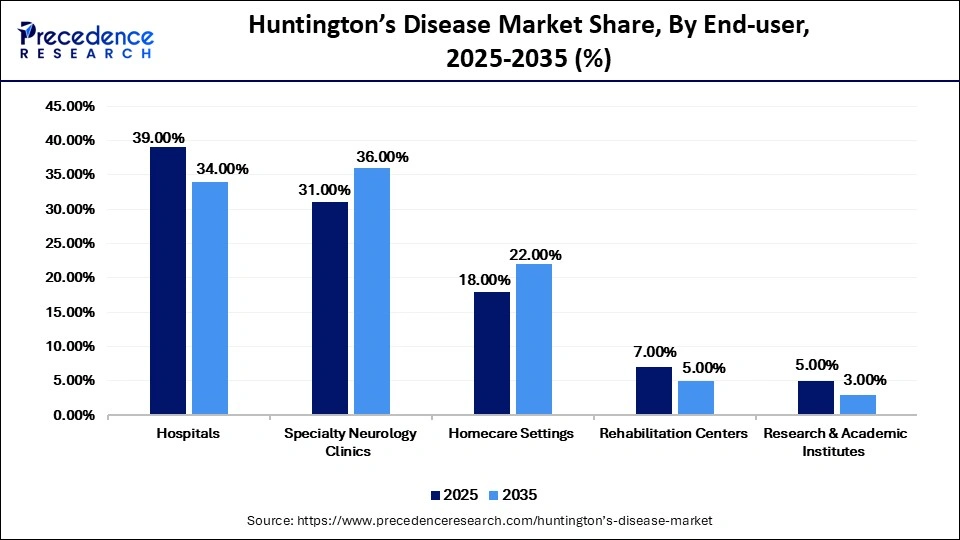
The homecare settings segment generated nearly USD 0.26 billion in 2025 and is projected to reach approximately USD 1.43 billion by 2035, registering the fastest CAGR of 19.5%. The homecare settings segment captured around 18% of the market share in 2025. This growth is attributed to the increasing need for chronic neurological disease management at home and the rising adoption of telehealth and remote patient monitoring. Research indicates that older adults tend to recover more quickly and with fewer complications at home compared to a hospital environment. The growing preference for home-based supportive care is also contributing to market expansion.
The rehabilitation centers segment was valued at approximately USD 0.10 billion in 2025 and is expected to reach nearly USD 0.32 billion by 2035, growing at a CAGR of 7.2%. The rehabilitation centers segment attained nearly 7% of the market share in 2025, driven by the increasing demand for physiotherapy and speech therapy support. Rehabilitation centres provide programs that include medication and therapy, with an emphasis on maintaining functional independence and a rising focus on cognitive and behavioural rehabilitation support.
Market Regional Analysis: North America, Europe, Asia-Pacific
North America Huntington's Disease Market Size and Growth 2026 to 2035
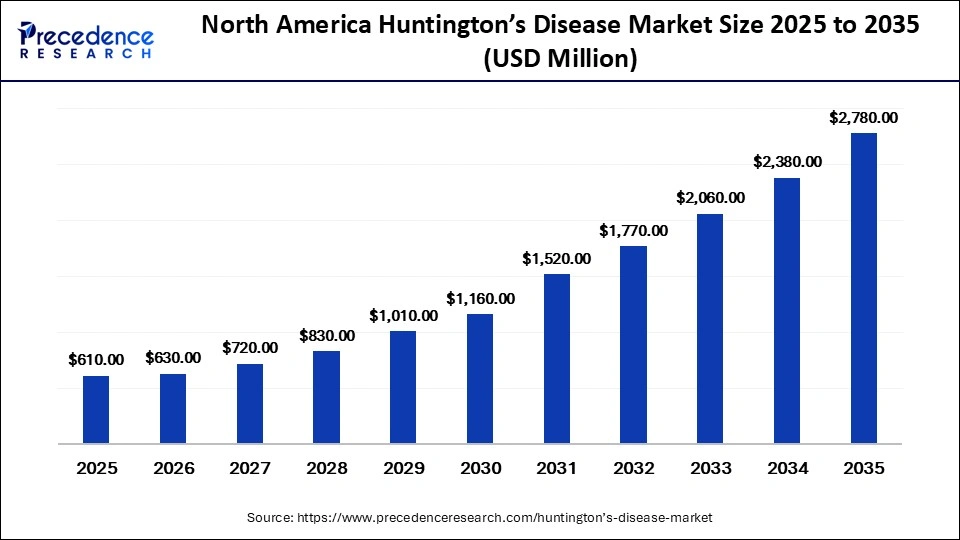
The North America Huntingtons disease market size was exhibited at USD 610 million in 2025 and is projected to be worth around USD 2,780 million by 2035, growing at a CAGR of 16.38% from 2026 to 2035.
What Makes North America the Dominant Region in the Huntington's Disease Market?
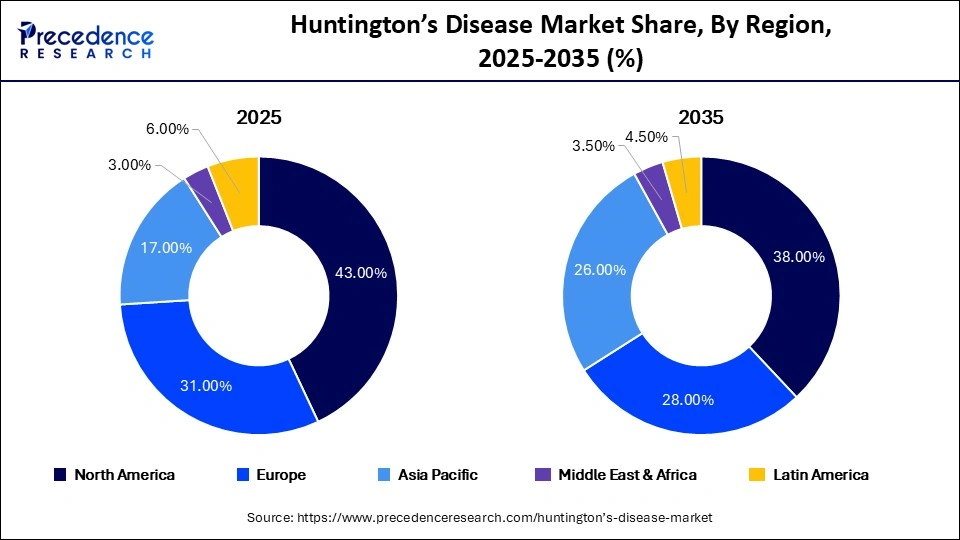
North America dominated the market, holding a major share of 43% in 2025. This dominance is mainly driven by a robust presence of advanced research facilities, increased focus on reducing the burden of neurodegenerative diseases, and the widespread adoption of both symptomatic and investigational therapies. Significant investments in gene and RNA-targeted therapy development and supportive orphan drug and reimbursement policies also contributed to regional market dominance.
U.S. Huntington's Disease Market Size and Growth 2026 to 2035
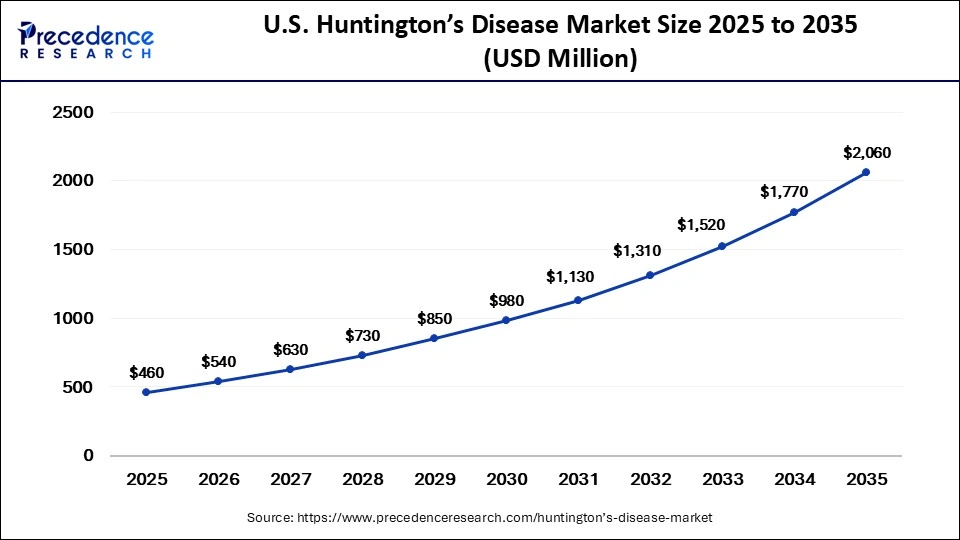
The U.S. Huntingtons disease market size was evaluated at USD 460 million in 2025 and is projected to reach around USD 2,060 million by 2035, growing at a CAGR of 16.17% from 2026 to 2035.
U.S. Market Trends
The U.S. is a leader within the North American market, bolstered by a strong pipeline of investigational treatments, including gene therapies and RNA-based approaches targeting Huntington's disease (HD). Treatment options in the U.S. often include FDA-approved medications aimed at managing chorea. The prevalence of Huntington's disease therapies is on the rise in the country, driven by increased awareness, broader access to genetic testing, and enhanced availability of specialized care.
Europe: The Second-Largest Market
Europe captured 31% of the market share in 2025 and is projected to grow at a CAGR of 14.8% during the forecast period. This is mainly due to an increasing emphasis on precision neurology and rare disease care, a robust clinical trial ecosystem for Huntington's disease therapeutics, and expanding adoption of multidisciplinary neurological care programs. Growing investments in neurogenetic research also drive the market in Europe.
Germany Market Trends
Germany is at the forefront of the European market, supported by advancements in diagnostics, therapeutics, and patient management services. Comprehensive health insurance programs and nationwide reimbursement policies further enhance patient access to approved therapies and hospital-based treatments.
How is Asia Pacific Growing in the Huntington's Disease Market?
Asia Pacific held a 17% share of the market in 2025 and is expected to grow at the fastest CAGR of 24.5% during the predicted timeframe. This expansion is attributed to the development of neurological healthcare infrastructure, heightened awareness of genetic neurodegenerative disorders, and increased investments in biotechnology and central nervous system (CNS) research. Moreover, growing access to advanced biologics and precision medicine and rising R&D investments drive regional market growth.
China Market Trends
China leads the market in Asia Pacific, influenced by the rising prevalence of the disease and an escalating demand for advanced drug therapies to address its symptoms, particularly disease-modifying therapies. The country is significantly investing in R&D activities, along with the growing aging population, which is also influencing the market.
What are the Key Trends in the Latin American Huntington's Disease Market?
Latin America held a 6% share of the market in 2025 and is expected to grow at a 10% CAGR in the coming years, due to the growing awareness of neurodegenerative diseases, increasing access to genetic testing, and increased investments in healthcare. The emphasis is on early diagnosis and the expansion of neurological care services to improve patient outcomes, with increasing attention from governments and healthcare organizations, also boost market growth. An increasing number of targeted therapies, symptom treatments, and the use of advanced diagnostic technologies are helping to drive market growth.
Brazil Market Trends
Brazil is emerging as a major contributor to the Huntington's disease market with increasing awareness of rare neurological diseases and the improvement of the healthcare system. There is increasing use of genetic testing and precision medicine approaches for early detection and management of disease in the country. Government support, rising access to neurological healthcare services, and a growing number of healthcare service programs for rare diseases also drive market growth in Brazil.
How is the Opportunistic Rise of the Middle East & Africa in the Huntington's Disease Market?
The Middle East & Africa held a 3% share of the market and is expected to grow at an 11.2% CAGR in the coming years, driven by improved health care provision and increased access to advanced diagnostic technologies. Governments and healthcare providers are aiming to enhance the quality of neurology care and increase the availability of rare disease management programs across the region. The growing use of genetic tests and targeted treatments is helping to develop the market.
Saudi Arabia Market Trends
Saudi Arabia is witnessing growth in the Huntington's disease market due to increasing healthcare modernization efforts and the expansion of neurological disease management programs across the country. Investments in advanced diagnostic technologies, precision medicine initiatives, and specialized neurology treatment centers are improving early diagnosis, disease monitoring, and patient care outcomes. Additionally, rising awareness of rare neurodegenerative disorders and the growing adoption of genetic testing are supporting market growth by enabling earlier detection and more personalized treatment approaches.
Market Competitive Landscape: Leading Companies and Strategies
The Huntington's disease market is characterized by a growing pipeline of innovative therapies, with emerging biotechnology and neuroscience companies focusing on both disease-modifying and symptomatic treatments. More than 20 therapies are currently under development, many of which are based on gene-silencing and other disease-modifying approaches aimed at slowing or altering disease progression. Companies such as Roche, PTC Therapeutics, and Alnylam Pharmaceuticals are among the key innovators driving advancements in next-generation Huntington's disease therapies.
Technological innovation is a major source of competitive differentiation, particularly in gene therapy, antisense oligonucleotide technologies, RNA interference (RNAi), biomarker research, and precision medicine platforms. In addition, key players are increasingly using AI-powered tools to accelerate drug discovery, optimize genomic analysis, enhance neurological imaging, and improve patient monitoring, helping companies streamline therapeutic development and advance personalized treatment strategies.
Huntington's Disease Market Companies
- Roche Holding AG
- Wave Life Sciences
- uniQure N.V.
- Novartis AG
- Prilenia Therapeutics
- Sage Therapeutics
- Teva Pharmaceutical Industries Ltd
- PTC Therapeutics
- Annexon Biosciences
- Voyager Therapeutics
- Neurocrine Biosciences
- Ionis Pharmaceuticals
- uniQure Biopharma B.V.
- Pfizer Inc.
- AstraZeneca PLC
Recent Developments Huntington's Disease Market (2025-2026)
- In May 2026, researchers at the University of Wisconsin–Madison identified revolutionary biomarkers for the early detection of Huntington's disease, discovering that two proteins decline in the human brain as the disease progresses, which could help improve future treatments.(Source: https://www.dailycardinal.com)
- In January 2026, Teva Pharmaceuticals launched a new campaign to raise awareness of Huntington's disease, featuring comedian Will Forte. The campaign aims to highlight the challenges faced by people living with Huntington's disease and their families, using Forte's involvement to connect with audiences in a relatable and meaningful way.(Source: https://www.geneonline.com)
Segments Covered in the Report
By Therapy Type
- Symptomatic Treatments
- VMAT2 Inhibitors
- Antipsychotics
- Antidepressants
- Mood Stabilizers
- Gene Therapies
- RNA-targeted Therapies
- Cell-based Therapies
- Disease-modifying Therapies
- Supportive Care Therapies
By Disease Stage
- Early-stage Huntington's Disease
- Mid-stage Huntington's Disease
- Advanced-stage Huntington's Disease
By Route of Administration
- Oral
- Intravenous (IV)
- Intrathecal
- Subcutaneous
By End-User
- Hospitals
- Specialty Neurology Clinics
- Homecare Settings
- Rehabilitation Centers
- Research and Academic Institutes
By Distribution Channel
- Hospital Pharmacies
- Retail Pharmacies
- Specialty Pharmacies
- Online Pharmacies
By Region
- North America
- Latin America
- Europe
- Asia-pacific
- Middle and East Africa
For inquiries regarding discounts, bulk purchases, or customization requests, please contact us at sales@precedenceresearch.com
Frequently Asked Questions
Tags





Ask For Sample
No cookie-cutter, only authentic analysis – take the 1st step to become a Precedence Research client
 Get a Sample




 sales@precedenceresearch.com
 Schedule a Meeting
