



India Launches First Hydrogen-Powered Train
Published: 16 Jul 2026
Author: Laxminarayan



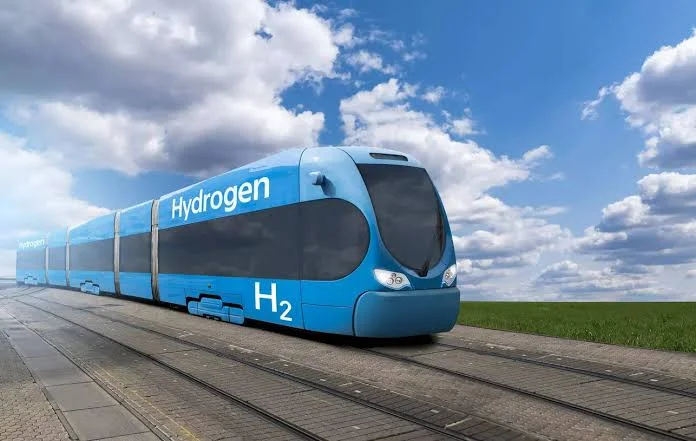
Indian Railways has officially announced that the country’s first hydrogen-powered train is set to be inaugurated by Prime Minister Narendra Modi on 17 July 2026. This inauguration will be a part of many other infrastructure development projects, as unveiled by the Haryana state minister Krishan Kumar Bedi. This initiative supports the Indian Railways' future goal of minimizing carbon footprint and eventually achieving net-zero emissions.
The train will have 10 coaches and will be driven by hydrogen fuel cells. The inaugural train will run from Jind to Sonipat, which falls under the north zone of Indian Railways. The train has a maximum speed of 75 km/h and is powered by a 1200 kW hydrogen fuel cell propulsion system. With 10 coaches, this train is currently the world’s longest hydrogen-powered train.
A hydrogen refuelling and storage facility has also been developed at Jind to ensure smooth operations of this train. This facility has been approved by the Petroleum and Explosives Safety Organization (PESO) to store and dispense hydrogen. This facility has the technical personnel and equipment, redundant machine parts, and hydrogen compression systems. The manufacturing, distribution, and storage infrastructure would also be equipped with ample safety systems such as hydrogen leak detectors and flame detectors.
A hydrogen fuel cell produces electricity by employing a chemical reaction involving hydrogen to produce energy. The only byproduct of this reaction is water, thus it dramatically brings down the emissions as compared to combustion engines. India will become part of a small group of countries that have implemented such a technology as it will join only Germany, Japan, China, and the U.S.
Impact on the Transport and Logistics Sector
According to Precedence Research, the inaugural run of a hydrogen-powered train in India is expected to transform the way trains are imagined. Trains have traditionally run on diesel and electricity, but hydrogen-based fuel will be a novel concept that will usher in a new era of powering automobiles. Electricity has one disadvantage: it requires elaborate power transmission infrastructure on its entire route, which is why even today, many remote and hilly areas still use diesel engines for some patches.
Unlike electricity, hydrogen-powered trains would not need such huge infrastructure capital investment, as it does not require cables, transformers, and regulators all the way on their route. This will help in its rapid adoption in hilly areas with no electricity infrastructure along its rail routes. There have been many cases of humans and animals being electrocuted due to very high voltage power lines, which electric-powered trains need, and hydrogen-powered trains can eliminate that risk. Especially in monsoon, there is a risk of water falling on the roof carrying electricity and can be lethal if it drips on any passenger, animal, or a person standing nearby.
Impact on the Transportation Services Market
The global transportation services market size is exhibited at USD 9.23 trillion in 2025 and is predicted to increase from USD 9.98 trillion in 2026 to approximately USD 19.96 trillion by 2035, growing at a CAGR of 8.02% from 2026 to 2035.
According to Precedence Research, the launch of this train is expected to change the way research and development teams think about the future of train engines. Many researchers have accepted that electric trains are the best possible minimal emission results that we can achieve, but hydrogen might surpass that, given that even today, a significant chunk of electricity is produced by coal power plants.
An economy like India, adopting a hydrogen-powered train, has significant potential to accelerate the research and development pipelines across the world to get contracts for various equipment and maintenance services. Many other smaller countries are also expected to follow a similar trend, further boosting the economic ecosystem of hydrogen-fuel cells for trains.
Impact on the Public Transportation Market
The global public transportation market size is valued at USD 259.33 billion in 2025 and is predicted to increase from USD 279.10 billion in 2026 to approximately USD 537.78 billion by 2035, expanding at a CAGR of 7.57% from 2026 to 2035.
According to Precedence Research, the announcement of this inaugural hydrogen-powered train is expected to bring about a significant reform in the way analysts and researchers think about future modes of public transportation. Many scientists focus on electricity as the mode for inter-city as well as intra-city trains. The advent of reliable and environmentally friendly hydrogen fuel cells is reshaping the trend by including both electricity and hydrogen as cleaner alternatives to combustion engines. Researchers might also think in the direction of hybrid engines, that is, electric motors as well as hydrogen fuel cells, with their size and tuning adjusted for total power needs.
Such a hybrid would seamlessly integrate with the current infrastructure in many nations where electric infrastructure would develop well along the rail route, which runs through plains and cities, but not in hilly and more remote areas. Such a train could run entirely on electricity when passing through good infrastructure areas and switch to hydrogen fuel cells when passing through hilly and remote areas.