



Japan Successfully Launches H3 Rocket Carrying Michibiki 7 Satellite, Strengthening Space Technology and Defence Capabilities
Published: 13 Aug 2026
Author: Laxminarayan



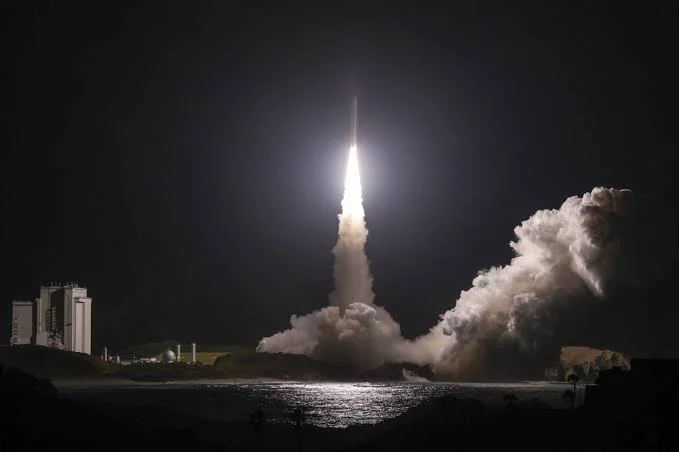
On 11 August 2026, the Michibiki 7 navigation satellite was successfully launched by Japan's H3 rocket from Tanegashima Space Center. About 29 minutes after takeoff the spacecraft was launched into its intended orbit. Michibiki 7 is a component of the Japan Quasi-Zenith Satellite System, a regional positioning system intended to supplement GPS and enhance timing and positioning services throughout Japan and portions of Asia and Oceania.
Japan's H3 launch programme, which aims to give the nation a cutting edge and dependable domestic launch system, has advanced successfully with this mission. The H3 eighth launch was the most recent flight. The rocket has completed several successful missions after past failures, including a six-satellite placement in June 2026.
As Japan strives for an extended QZSS constellation, Michibiki 7 will bolster the nation's navigation satellite network. The technology is intended to supplement GPS and offer more dependable positioning signals, especially in locations where topography or other constraints may interfere with traditional GPS transmissions.
The Situational Awareness Camera Hosted Instrument created by MIT Lincoln Laboratory for the U.S. Space Force was also carried on the mission. By adding a space domain awareness component to the mission and showcasing ongoing U.S.-Japan space cooperation, the device is meant to assist in monitoring activities involving satellites in geosynchronous orbit.
Impact on the Aerospace and Defence Industry
By enhancing its autonomous access to space and growing its satellite-based infrastructure, the successful H3 launch delivering the Michibiki 7 satellite might bolster Japan's aerospace and defence ecosystem. Japan can deploy satellites relevant to navigation, communications, earth observation science and security with more control over mission schedules and launch requirements thanks to a dependable domestic launch capability.
The mission also emphasises how important satellite location and navigation technology are becoming strategically. The QZSS network in Japan is intended to supplement GPS and offer more dependable location and timing services. In addition to supporting government and defence needs related to navigation, communication, coordination and asset tracking, these capabilities can assist civilian operations like logistics and transportation.
An additional significant aspect of the mission is the addition of the SCHI space situational awareness sensor. The technology's ability to view and track objects in geosynchronous orbit highlights the growing necessity for nations to comprehend and keep tabs on activities in an increasingly congested space environment. The need for optical technologies, space domain awareness platforms, satellite tracking systems and space surveillance sensors may increase as a result.
Additionally, the breakthrough may open up chances for Japan's aerospace and defence supplier chains. Continued investment in national space capabilities could be advantageous for businesses engaged in rocket propulsion avionics satellite electronics secure communications navigation systems sensors cybersecurity group infrastructure and space data analytics.
From a strategic standpoint, Japan may improve its resilience and space autonomy with the aid of the H3 programme. For significant national missions, having a launch vehicle built domestically lessens reliance on foreign launch services. Reliable access to orbit is becoming a crucial part of national defence planning as space becomes more interconnected with communications, navigation, security and vital infrastructure.
The mission's success might also improve Japan's defence and space cooperation with other nations. The mission's inclusion of a U.S. Space Force payload illustrates the growing interdependence of government and commercial space operations. The development of common skills in space monitoring, satellite operations, orbital safety and situational awareness can be aided by such collaboration.
All things considered, the H3 Michibiki 7 mission might benefit the aerospace and defence sector in the long run by enhancing Japan's launch capabilities, growing satellite infrastructure, bolstering space domain awareness and promoting investment in cutting-edge space technologies. Japan's ongoing development of satellite systems and launch vehicles could improve its standing in the quickly expanding Asia Pacific aerospace and defence environment as nations begin to view space as a strategic area.
Impact on Space Technology Market
The global space technology market size is estimated at USD 512.08 billion in 2025 and is predicted to increase from USD 551.20 billion in 2026 to approximately USD 1,081.74 billion by 2035, expanding at a CAGR of 7.77% from 2026 to 2035.
By enhancing its domestic capabilities in launch vehicles satellite systems navigation technologies ground control infrastructure and space exploration equipment Japan's successful H3 launch may help this industry. To support ongoing government investment in space infrastructure, the H3 gives Japan a domestic platform for the deployment of significant spacecraft.
Michibiki 7s successful launch also shows how crucial navigation technology is becoming to the space industry. The space technology market's top application sector, according to Precedence Research, is navigation and mapping, while satellite communications is predicted to expand quickly. As a result, the growth of Japan's QZSS network is in line with important industry trends concerning location-based services, timing, positioning and connection.
Businesses engaged in rocket propulsion avionics, satellite components, sensors, communications equipment, software testing systems and space data analytics may also benefit from the project. The need for supporting technologies across the satellite and launch value chain is anticipated to rise as governments expand their space projects.
For this development, the Asia Pacific region is especially crucial. Precedence research claims that nations including South Korea, China, India and Japan are investing more in space exploration, communications networks and satellite launches. Thus, the regions expanding their commercial and government space technology ecosystems may benefit from Japan's ongoing H3 missions and QZSS expansion.
Impact on Satellite Market
The global satellite market size was estimated at USD 362.28 billion in 2025 and is predicted to increase from USD 391.99 billion in 2026 to approximately USD 780.24 billion by 2035, expanding at a CAGR of 7.97% from 2026 to 2035.
The development of satellite-based navigation infrastructure is directly aided by the launch of Michibiki 7. Japan's QZSS is intended to enhance positioning and timing services by integrating with GPS. Transportation logistics, mapping, agriculture, infrastructure management, emergency response and autonomous technologies all depend more on these capabilities.
Growing reliance on space-based technology by the military and government is another factor driving the satellite business. Key satellite applications include military surveillance, scientific research, commercial communications, navigation, and space observation, according to a precedent study. As a result, Japan's most recent mission illustrates the broader development of satellite infrastructure for both strategic and civilian uses.
The addition of the SSCHI space situational awareness instrument further illustrates the increasing need for multifunctional satellites. Governments and organisations need technologies that can monitor satellites and other space objects as the number of spacecraft in orbit rises. Satellite sensor tracking systems, optical technologies, monitoring software and space data analytics may all benefit from this.
Additionally, the mission might promote ongoing investment in ground infrastructure and satellite production in Japan and throughout the Asia Pacific. Space-based services are becoming more effective and profitable due to advancements in satellite components, smaller spacecraft, propulsion, communications systems, and data processing capabilities. Therefore, demand across the whole satellite value chain may be supported by Japan's growing QZSS networks.
About Mitsubishi Heavy Industries
In collaboration with the Japan Aerospace Exploration Agency, Mitsubishi Heavy Industries, a significant Japanese industrial and aerospace firm, is developing and producing the H3 launch vehicle. With the goal of offering dependable and competitive access to space, Japan developed the H3 as their next-generation launch vehicle and replacement for the H-IIA.
The Michibiki 7 navigation satellite was successfully launched into its intended orbit during the most recent mission, which was the ninth flight of the H3 rocket. Although the rocket has had problems in the past, its most recent successful missions show that it is making progress toward building a better operational record.
MHI is positioned within Japan's growing aerospace manufacturing ecosystem thanks to its participation in the H3 programme. In addition to bolstering the domestic supply chain, ongoing launches can help advance knowledge in rocket systems, propulsion, avionics, launch operations, spacecraft integration and aerospace engineering.
As Japan needs regular launch capability for satellites related to navigation, communications, earth observation, science and security, the H3 programme may become more critical. A reliable launch vehicle lessens the nation's reliance on outside launch providers and offers it more control over the deployment of strategically significant spacecraft.
The most recent mission also shows how Japan's government and private space activities are becoming more interconnected. The U.S. Space Force SCHI instrument, which is intended to facilitate surveillance of objects in geosynchronous orbit, was carried during the mission with Michibiki 7. This demonstrates how international cooperation helps to strengthen the larger space ecosystem and develop space situational awareness.
In general, the long-term growth of the international satellite and space technology sectors could be advantageous to MHI and the H3 programme. Japan's ongoing development of domestic launch capabilities may open doors for MHI and its aerospace supplier chain in commercial, government and defence-related space applications as demand for launch services and space-based infrastructure rises.