



KAIST Develops Shape Memory Metal Technology for Light-Activated 3D Buttons
Published: 13 Aug 2026
Author: Gautam Mahajan



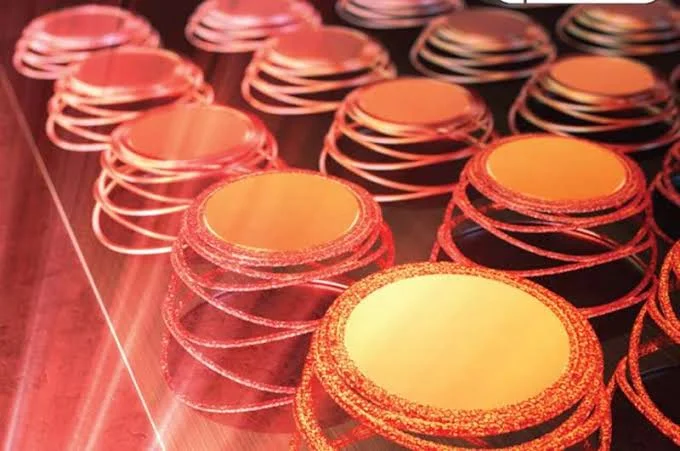
20 July 2026: When exposed to light, a flat metal surface can change into an elevated three-dimensional structure thanks to novel technology created by KAIST researchers. The materials can bend and rise without the use of traditional motors, cables, or mechanical actuators because of the research's usage of a nickel-titanium shape-memory alloy and a specially created structure. The method may open up new possibilities for creating interactive small-sized electronics.
Using a laser-based technique, the researchers produce exact patterns in the metal. The program structure transforms into a button-like form when the material is exposed to the proper light and is turned off, and the substance reverts to its initial form. This makes it possible to directly produce physical movement from a thin metal sheet in a reversible manner.
The metal's ability to react to near-infrared light without the need for an additional light-absorbing coating is one of the research's noteworthy features. The altered surface produced by the laser processing enhances light absorption and aids in initiating the shape memory response. This might make future gadgets with comparable technology simpler to construct and more durable.
Additionally, the researchers showed how different parts of the content may be made to react in different ways. This implies that several shapes or tactile messages could be generated in a controlled succession by a single flat surface. Future interfaces that require physical feedback from this or flexible devices may benefit from these features.
Impact on ICT Industry
According to Precedence Research, rapid digitization, rising connectivity, sophisticated computing automation, and the expanding use of smart technologies are all influencing the ICT market. Technology that can provide more capability while still being small, responsive, and energy efficient is becoming more and more sought after by businesses and consumers. This is promoting innovation in intelligent gadgets, communication systems, hardware, and human-machine interfaces.
By enabling new kinds of interactive hardware interfaces, the KAIST light-responsive metal technology could support this larger ICT environment. An alternative to traditional switches and mechanical control might be a flat surface that, when activated, can change into a physical button. Future linked gadgets that integrate digital functions with tactile input may benefit from this.
Additionally, the techniques may aid in the creation of intelligent and flexible gadgets. Shape-changing surfaces could offer haptic cues in addition to traditional visual and acoustic feedback as connected systems require more and more user-friendly ways to convey information. Smart devices, industrial machinery, connected cars, and other ICT-enabled systems may someday benefit from such interfaces.
The creation of integrated and small hardware is another possible possibility; reducing the requirement for separate mechanical components can give manufacturers more design options as ICT gadgets get smaller and more functional. Physical controls may be able to be integrated directly into the surfaces of devices thanks to light-responsive structures.
The study also shows the convergence of digital technology and sophisticated materials. A new type of intelligent hardware may be made possible by combining programmable materials with electronic systems and light control. This may motivate ICT forms and academic organizations to investigate responsive materials for upcoming linked products and interfaces.
All things considered the KAIST growth could foster innovation in the ICT sector by bringing fresh perspectives on human-machine communication smart surfaces small hardware and physical interaction. The approach shows promise for producing more interactive and adaptable ICT devices even if commercial applications will need additional research.
Impact on Robotics Technology Market
The global robotics technology market size is valued at USD 108.43 billion in 2025 and is predicted to increase from USD 124.37 billion in 2026 to approximately USD 416.26 billion by 2035, expanding at a CAGR of 14.40% from 2026 to 2035.
According to Precedence Research, as automation, artificial intelligence, and sophisticated robotic systems become increasingly commonplace across industries, the robotics technology market is growing. Additionally, there is a growing need for robotics that can interact with their environment more successfully and are lighter, more flexible, and smaller. These advancements are motivating scientists to investigate substitutes for conventional mechanical parts.
By offering a novel method of producing controlled movement utilizing light and shape-memory metal, the KAIST technology may contribute to this trend. When exposed to light, the materials may transform from a flat shape into an elevated structure, enabling movement without the need for complex mechanical systems or traditional motors.
In soft robotics and small robotic systems where weight and space are crucial factors, this could be helpful. Compared to conventional mechanical parts, a tiny shape-changing component might be able to accomplish certain tasks while occupying less space.
Additionally, the approach may open up possibilities for robotic tactile interfaces. Robotic systems may be able to use touch to convey instructions, warnings, or other information by creating controlled elevated structures. This could be used in conjunction with auditory signals and visual displays, especially in applications where tactile feedback is important.
The study might inspire robotics engineers to investigate smart materials as substitute actuation parts. More flexible robotic systems may result from combining shape-memory alloys with optical controllers, sensors, and smart software.
About KAIST
It's known for its work in engineering science, advanced materials, robotics, electronics, artificial intelligence, and other cutting-edge technologies. KAIST is a top research-focused institution in South Korea. Under the direction of Professor II-Kwon Oh, a group from the KAIST Department of Mechanical Engineering carried out the study for this discovery. Soft robotics, intelligent materials, mechanical metamaterials, and smart structures are among the fields in which the team concentrates.
The new technology was created by KAIST researchers utilizing a UV laser manufacturing process and a nickel titanium shape memory alloy. The method eliminates the need for a separate light-absorbing coating by integrating mechanical deformation and light-absorption properties into the same metal structures.
The study team used tactile navigation signals and three-dimensional patterns to illustrate the technique, demonstrating how light can be used to selectively activate and change certain areas of the material. This shows promise for use in wearable technology, soft robotics, interactive haptic interfaces, and shape-changing displays. The study was chosen for the journals inside the back cover and published in Advanced Science. KAIST's focus on creating technologies that could enable next-generation intelligent and adaptive systems is seen in its wider research endeavors in smart materials and soft robotics.
All things considered, KAIST's work in this field demonstrates the institution's contribution to the development of robots, light-controlled structures, smart materials, and next-generation human-machine interfaces, all of which have the potential to impact future technologies in a variety of industries.