



MedSource Labs Announces the Launch of Passivo, a Passive Safety Peripheral IV Catheter with an Automated Safety Clip
Published: 04 Aug 2026
Author: Towards Healthcare



MedSource Labs announced the launch of Passivo, a passive safety peripheral IV catheter, significant for its automated safety clip that defends both doctors and patients from needlestick injuries. Passivo received 510(k) clearance from the FDA and completes MedSource Labs’ portfolio of active and safety peripheral IV catheters. Recognized as the PurSafe in international markets, this catheter transmits a new name to mark its debut in the US sector.
An estimated 90% of patients admitted to U.S. hospitals receive an IV during treatment. Given the volume of IVs administered nationwide every year, offering affordable vascular access tools with reliable safety is central to MedSource Labs’ mission.
“Receiving 510(k) clearance from the FDA is a multi-year process to ensure reliability and clinician and patient safety,” said Rachel Sender, Sr. VP of Product Management. “We are proud to bring a new option to the vascular access device market in the U.S. healthcare industry.”
Features of the Passivo include:
- Sharp needles corresponding with gently tapered catheters that reduce force and trauma to the vein and skin
- A passive safety clip which robotically covers the needle tip upon withdrawal from the catheter
- A one-handed grip intended to let clinicians place IVs with a single hand, freeing the other hand to steady the patient, apply protected tape, and begin instant fluid administration
“For over a decade, we’ve offered active safety peripheral IV catheters, which utilize a safety mechanism the clinician activates manually,” said Todd Fagley, Founder/CEO of MedSource Labs. “Being able to provide an alternative with a passive safety mechanism that triggers automatically is a big win for our customers, who now have access to every major style of peripheral IV catheter available in the United States.”
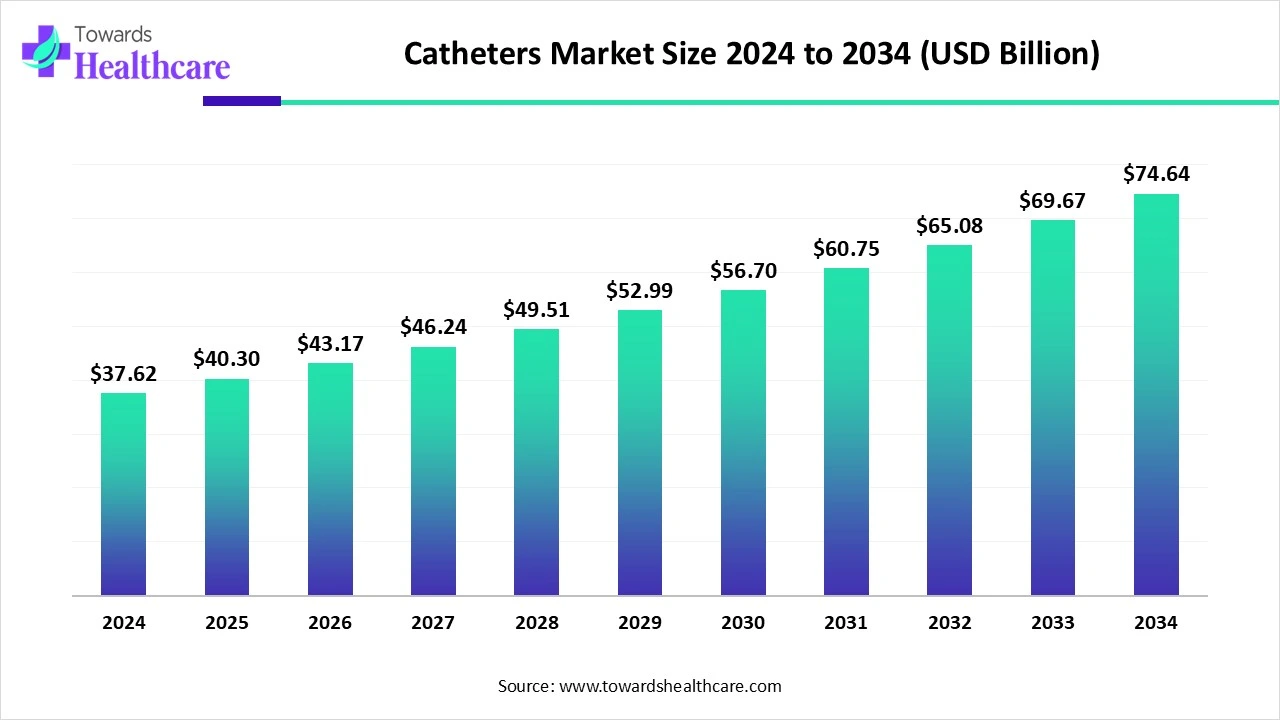
According to Towards Healthcare, the catheters market is projected to experience significant growth, with estimates suggesting the market size will increase from USD 43.17 billion in 2026 to approximately USD 80.17 billion by 2035. Estimated to grow at a CAGR of 7.12% starting from 2026 to 2035 Long-term catheters are mostly used for spinal cord injury, neurological and musculoskeletal disorders impairing walking or bladder control, and persons with urinary retention unfit for surgery. Catheters provide critical benefits by draining the bladder when natural urination is impossible, enabling precise fluid monitoring in significant care, and allowing targeted medication delivery. They also avoid severe challenges like kidney failure from urine build-up and protect skin integrity in patients with incontinence. Catheterisation is the capability to drain the bladder continuously when the patient cannot do so naturally. Without appropriate bladder draining, patients risk developing several serious complications. Which involves swelling in the bladder, urinary tract infections from stagnant urine, and permanent damage to the bladder or kidneys. Catheter tubes aid multiple purposes, significantly in managing and treating conditions where the body’s natural technology for fluid management, waste removal, or access to a particular region requires assistance.
About MedSource Labs
MedSource Labs is a leading healthcare tool provider specializing in high-quality Class II healthcare products with a focus on IV therapy and respiratory care. Since 2002, have been dedicated to improving patient results via novelties, exceptional service, strategic worldwide industrial relationships, and a commitment to compliance and quality. MedSource Labs has recently embarked on its new chapter, expanding its unique EMERGE technology that collaborates with organizations to transform their healthcare device ideas into market-ready products.
A recent report by Towards Healthcare highlights that the catheter market is growing, as the use of in-and-out catheters lowers hospital stays related to urinary retention and infections, which in turn lessen overall management expenses. They need minimal tools and training, further lessening operational costs. Appropriate catheter techniques are significant for patient safety and comfort when using in-and-out catheters. The applications of in and out catheters in medical care settings not only enhance patient care but also provide significant affordability for medical facilities. The cost-effectiveness of in and out catheter usage not only benefits healthcare providers financially but also contributes to enhanced patient satisfaction and quality of care, creating them an important tool in modern healthcare practice.