



USDA approves INNOVAX ND-IBD-ILT from Merck Animal Health
Published: 19 Aug 2026
Author: Towards Healthcare



Recombinant vaccine is first to help protect against four major poultry diseases in a single hatchery administration.
Merck Animal Health announced USDA approval of INNOVAX ND-IBD-ILT, a category-first recombinant vaccine intended to help poultry producers and veterinarians easily manage flock health with increased protection against four major diseases in a single hatchery vaccination.
Merck Animal Health, called MSD Animal Health outside of the U.S. and Canada, announced U.S. Department of Agriculture approval of INNOVAX ND-IBD-ILT, the first recombinant vaccine to protect against Newcastle disease, infectious bursal disease, infectious laryngotracheitis and Marek’s disease in a single hatchery vaccination.
INNOVAX ND-IBD-ILT is intended to support poultry veterinarians in streamlining vaccination programs and simplifying flock health management by founding wide immunity early against four major poultry diseases in a single hatchery vaccination.
The vaccine protects the production cycle, supporting consistent flock health and performance.
Poultry producers face growing pressure to optimize flock health while managing labor and operational demands. INNOVAX ND-IBD-ILT is intended to support simplified vaccination programs while helping provide early, broad disease protection and making flock management more efficient.
“Poultry producers and veterinarians need disease protection that is both comprehensive and practical,” said Charles Broussard, D.V.M., senior account manager for poultry sales, Merck Animal Health. “By helping protect against four major diseases in a single hatchery vaccination, INNOVAX ND-IBD-ILT reduces complexity and provides veterinarians with greater convenience throughout the production cycle.”
INNOVAX ND-IBD-ILT integrates dual glycoprotein inserts intended to offer strong and consistent infectious laryngotracheitis protection while simplifying vaccination strategies. By concentrating vaccination efforts at the hatchery, the vaccine can lower bird handling, optimize labor, and lessen operational challenges.
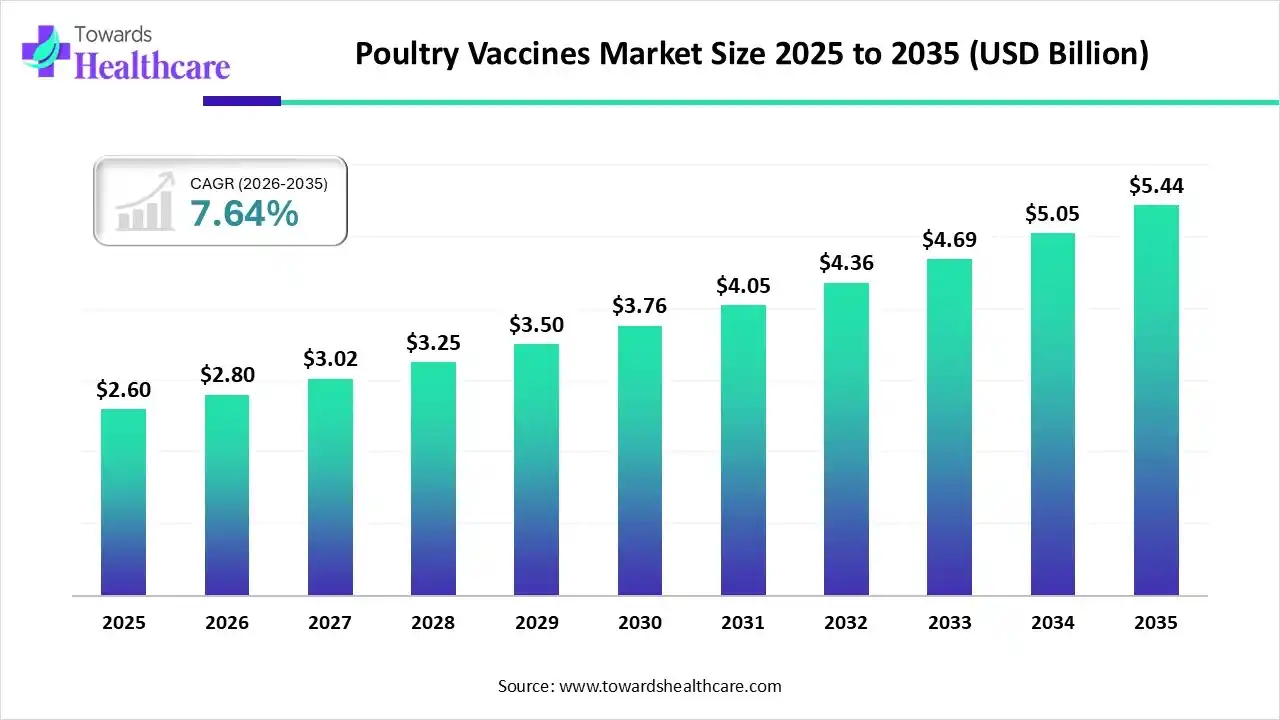
According to Towards Healthcare, the Poultry Vaccines Market is projected to grow significantly, with estimates indicating the market size will increase from USD 2.80 billion in 2026 to approximately USD 5.44 billion by 2035, expanding at a CAGR of 7.64% from 2026 to 2035. Vaccination is a technology of administering a vaccine to stimulate a bird’s immune system and produce immunity against infectious disorders. Vaccination induces active immunity; it results in the manufacturing of antibodies and memory cells in response to an antigen. This is long-lasting and often specific to diseases. Vaccines are sensitive to temperature, light, and time. They get contaminated on experience to sunlight or improper handling. Vaccination offers immunity against diseases such as Newcastle disease, infectious bursal disease, avian influenza, infectious bronchitis, and more. Lowers occurrence of infections, which lowers the requirement of antibiotics. Ensuring advance quality of life for the birds. It plays a significant role in establishing immunity and reduces the biosecurity pressure on the farm. Healthy inoculated birds have a better feed conversion ratio and consistent growth rates.
About Merck Animal Health
Merck Animal Health, a division of Merck & Co., Inc., Rahway, N.J., is a worldwide animal medical care business committed to the science of healthier animals. The organization develops breakthrough medicines, technology, and vaccines. Merck Animal Health is a research-based organization that develops, manufactures, and markets a wide range of veterinary therapeutics and solutions. This organization offers veterinarians, farmers, pet owners, and governments a broad range of veterinary pharmaceuticals, vaccines, and health management solutions and services. MSD Animal Health is intended to preserve and improve the health, well-being, and performance of animals. This organization fully intends to use its resources suitably to meet the expectations of customers, regulators, and governments. The organization conducts its business based on the highest standards of quality, professionalism, and integrity.
A recent report by Towards Healthcare highlights that the poultry vaccines market is growing, as Vaccines help reduce the spread of viruses among poultry, thus lowering transmission risks to humans. Using vaccines protects birds from common diseases and promotes healthy growth. Each year, roughly 73 billion chickens are raised globally, with about 80% of large farms utilizing vaccines. Vaccinations prevent disease outbreaks and support bird health. They are among the most effective methods to maintain a healthy flock, preventing disease spread and reducing sickness. Immunization results in fewer bird losses, improved growth rates, and increased egg production. By preventing common illnesses, vaccines help achieve these objectives and also lower costs associated with medication. Overall, vaccinated birds stay healthier, resulting in better farm productivity.