



Redefine Meat Receives a Listing for Its 3D-Printed Meat Alternatives at Nearly 400 Tesco Stores
Published: 09 Sep 2026
Author: Vidyesh Swar



In September 2026, Redefine Meat has secured a listing for its 3D-printed meat alternatives in nearly 400 Tesco stores, representing a significant expansion within less than a year of the company's entry into the UK supermarket sector.
Simon Owen, the UK Lead and Vice President for the EMEA region at Redefine Meat, stated, "We do not believe that the future of plant-based food needs to be singular. Our philosophy acknowledges the coexistence of veg-forward cuisine and alternative proteins, catering to diverse occasions and consumer preferences. Our objective is specifically to create plant-based alternatives that replicate the taste, texture, and satisfaction of traditional meat, without involving animal sources."
He further stated, "Our commitment lies in the continuous enhancement of our products while preserving the eating experience." The company emphasizes the presence of high concentrations of protein, fiber, and essential micronutrients in its preservative-free, non-GMO meat alternatives. "Ultimately, consumers should not have to sacrifice flavor for nutritional value."
The premium burgers provided by Redefine Meat contain 13.2 grams of protein and fat per 120-gram patty, accompanied by 6 grams of fiber, while the kofta mix contains 11 grams of protein, 14 grams of fat, and 6 grams of fiber per 100 grams. Both products are fortified with micronutrients such as iron, zinc, and vitamins B3, B6, and B12, and include ingredients such as methylcellulose and maltodextrin.
Impact on the 3D Food Printing Market
The global 3D food printing market size was USD 534.75 million in 2025, calculated at USD 717.85 million in 2026 and is expected to reach around USD 7,569.93 million by 2034, expanding at a CAGR of 34.24% from 2025 to 2034.
According to Precedence Research, 3D food printing is ushering in a new era of culinary creativity, with chefs and food designers experimenting with artistic and visually appealing food presentations. The market is expanding beyond high-end restaurants to include food retailers, home consumers, and institutional settings, presenting a range of opportunities for growth.
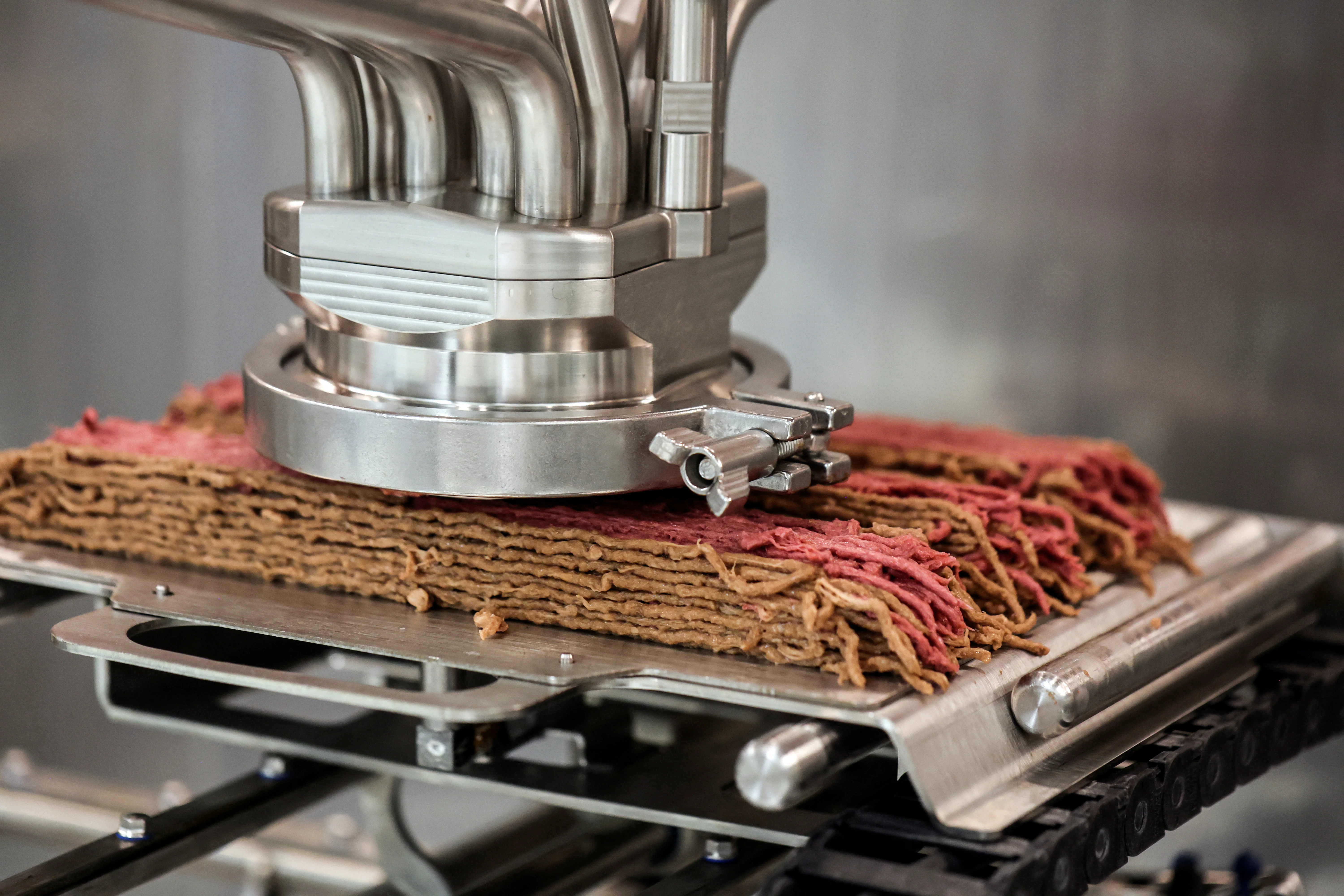
Redefine Meat is setting new standards in plant-based meat substitutes with its advanced 3D-printed food technology, which accurately replicates meat’s texture and flavor while emphasizing sustainability.
Impact on the Plant-Based Food Market
The global plant-based food market size was accounted for USD 50.70 billion in 2025, and is expected to reach around USD 111.11 billion by 2035, expanding at a CAGR of 8.16% from 2026 to 2035.
According to Precedence Research, due to its high levels of nutrients and environmentally friendly character, the plant-based meal industry is expected to rise steadily in the coming years. Recognizing the rising acceptability of plant-based meals and food, several firms are producing plant-based food items with clean-label and plant-based components.
This growth in the market is significantly influenced by an increase in veg-led foods that are rich in protein and fiber, as indicated by Tesco. Although the supermarket chain did not meet its sales targets for plant-based meat in the previous year, it has reported that the meat-free sector has returned to a growth trajectory, with sales of vegan mince rising by nearly 25% and whole-food proteins by 12%.
About Redefine Meat
Redefine Meat has been used in catering establishments since it was launched in 2021. It is also available through national retailer Ocado, which is exciting news for vegans and those who favour a plant-based diet. Redefine Meat is entirely plant-based, yet it offers an authentic meaty taste. The range is impressive, as you can choose from a variety of different styles and flavours. It’s ideal for creating those much-loved recipes, while being kind to the environment and animals.