



SpaceX Sets to Launch Two Falcon 9 Rockets Just 38.5 Minutes Apart
Published: 18 Aug 2026
Author: Gautam Mahajan



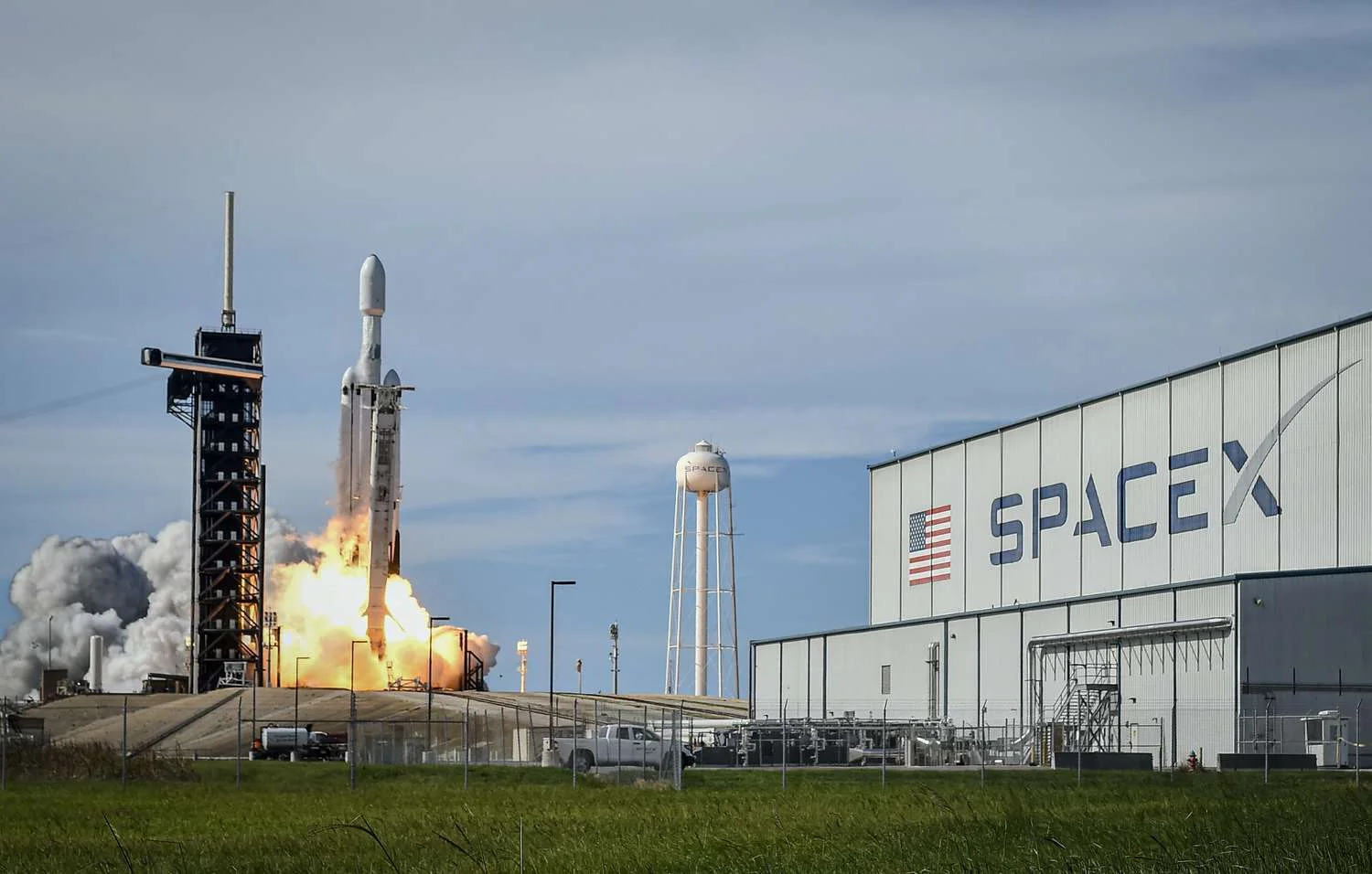
On August 15, 2026, SpaceX achieved a new record for the shortest time between two orbital flights by completing two Falcon 9 launches from different U.S. launch facilities in just 38.5 minutes. The first rocket carrying eight satellites for Globalstar’s low Earth orbit network was launched from the Cape Canaveral Space Force Station in Florida. Soon after, the classified USSF 366 mission for the U.S. Space Force was created by another Falcon 9 that took off from Vandenberg Space Force Base in California. SpaceX's ability to oversee several launch operations concurrently while maintaining a high degree of operational coordination is demonstrated by the missions' tight completion dates.
The accomplishment also highlights the benefits of SpaceX's reusable Falcon 9 design. The first-stage boosters of both rockets were recovered after they successfully finished their missions. While the rocket utilized for the U.S. Space Force mission landed on a drone ship in the Pacific Ocean, the booster supporting the Globalstar mission completed its fourteenth flight before returning to a landing zone in Florida. SpaceX can maximize the usage of current rocket hardware while conducting launches more often thanks to repeated booster recovery and reuse. As a result, the record shows the company's capacity to combine reusable technology with effective launch operations in addition to launch speed.
Impact on the Aerospace and Defense Industry
The development demonstrates the growing involvement of commercial space businesses in both defense-related and civilian activities. One of the two launches was carried out for the U.S. Space Force while the other backed the Globalstar commercial satellite network. The aerospace and defense ecosystem is developing due to the government investment in reusable launch vehicles, satellite systems, and the increasing use of space technology, according to Precedence Research. Commercial aerospace companies are seeing new prospects due to the growing surge of private companies for government space missions.
The accomplishment may spur further funding for technologies that improve the speed, dependability, and repeatability of space missions. For both commercial and governmental customers, reusable rockets, satellite platforms, launch infrastructure, and space-based communication systems are becoming increasingly crucial. The increasing significance of space-based capabilities for communication, navigation, defense, and surveillance is highlighted by Precedence Research. SpaceX's frequent launches show how commercial launch companies may meet these demands and possibly lessen reliance on single-use launch technologies.
Impact on the Space Launch Services Market
The global space launch services market size is accounted for at USD 21.19 billion in 2025 and predicted to increase from USD 24.03 billion in 2026 to approximately USD 70.56 billion by 2035, representing a CAGR of 11.56% from 2026 to 2035.
According to Precedence Research, the market for space launch services is expanding rapidly due to government missions, growing commercial space activity, satellite installations, and advancements in reusable rocket technology. One of the biggest businesses in the market is SpaceX.
SpaceX's most recent accomplishment demonstrates how reusable launch systems may accommodate more flights in shorter amounts of time. Providers may be able to utilize launch facilities and already flown rocket hardware more effectively with a quicker launch cycle. Launch companies may concentrate more on cutting preparation time, enhancing payload integration, and boosting rocket reusability as satellite operators and government agencies want more frequent access to space. The launch services sector may become more innovative and competitive due to these changes.
The accomplishment may also motivate launch suppliers to increase operational effectiveness throughout the launch process. As launch numbers increase, technologies for rocket recovery, payload preparation, and mission scheduling may become more crucial. Increased launch frequency may enable businesses to provide services to a wider range of clients, especially as demand for government spacecraft and commercial satellite constellations rises.
Impact on the Satellite Market
The global satellite market size was estimated at USD 362.28 billion in 2025 and is predicted to increase from USD 391.99 billion in 2026 to approximately USD 780.24 billion by 2035, expanding at a CAGR of 7.97% from 2026 to 2035.
Globalstar's low Earth orbit network was expanded and maintained with the help of the first Falcon 9 flight, which delivered satellites. The mission emphasizes how as satellite constellations grow in size, there is an increasing requirement for reliable launch services. Increasing demand for satellite communications, navigation, earth observation, IoT, and other space-based services is identified by Precedence Research as a key driver of the satellite market’s growth.
Satellite operators may find it simpler to deploy new spacecraft and replace current satellites as necessary if rocket launches occur more frequently. For businesses running huge low Earth orbit constellations where frequent replenishment is required, this is especially crucial. Thus, satellite producers, operators, and associated ground infrastructure providers may benefit from the ongoing growth of launch capacity. The most recent Globalstar mission serves as an example of how regular launch availability can support satellite networks' ongoing development.
Demand for auxiliary technologies like tracking systems, ground stations, satellite communication equipment, and launch integration services may rise due to the expanding satellite ecosystem. Throughout the course of their networks, operators will need dependable access to orbit as satellite applications grow across communications, navigation, earth monitoring, and linked devices. Reduced delays in the deployment of additional or replacement spacecraft can be achieved with a greater launch cadence.
About SpaceX
Elon Musk founded Space Exploration Technologies Corp., an American aerospace business. The corporation develops satellite spacecraft and rocket technology and offers launch services to government and commercial clients. Its Falcon 9 rocket is utilized for commercial launches, national security missions, scientific missions, and satellite placement. Additionally, SpaceX runs its low-earth-orbit satellite network, Starlink.
Reusable launch technology has been a major emphasis for SpaceX, especially the recovery and recurrent usage of Falcon 9 first-stage rockets. This strategy facilitates a higher launch cadence and enables the business to reuse key rocket components across several flights. The most recent missions showed how SpaceX can increase access to orbit by combining booster reuse, quick launch procedures, and various launch locations.
A new operating model for the commercial space industry has been established because of the company's concentrating on reusable rockets and frequent launches. SpaceX has established procedures for collecting, repairing, and redeploying rocket hardware. Instead of viewing each launch as a one-time event, its most recent missions show even more how this strategy might help government space programs as well as commercial satellite clients.