



Y-12 National Security Complex Unveils Uranium Processing System
Published: 22 Jul 2026
Author: Vidyesh Swar



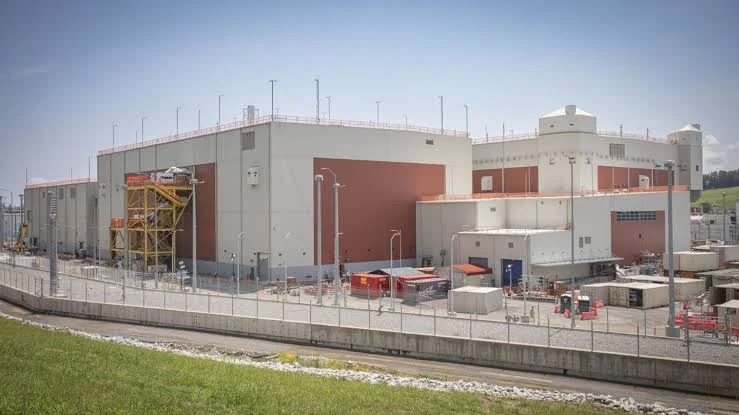
In July 2026, the Y-12 National Security Complex in Oak Ridge, Tennessee, U.S., achieved authorization for its Calciner Project. This project intends to decontaminate and shut down Building 9212, which was used for manufacturing during World War 2. This plant has been designed to make a solid and stable form of uranium from solutions that contain uranium passing through pipes and other vessels. This novel process will replace the conventional wet chemistry method.
The NNSA and Consolidated Nuclear Security LLC (CNS) handle operations at the Y-12 processing plant and received startup authorization, which helps it to continue its work to upgrade and reform the plant for efficient and safe processing of uranium. The goals that the Calciner Project wishes to achieve with this initiative are as follows:
- Reducing health hazards by minimizing the number of uranium storage facilities in the processing plant premises.
- The continuation of existing operations using modern techniques, and shifting to an entirely new process if possible.
- Minimizing the degradation of industrial machinery by optimizing processes and the usage of appropriate materials.
- Shifting critical uranium processing workflows to the high-quality uranium processing facility (UPF).
Electrorefining was the very first nuclear processing-approved plant at Y-12, and Calciner is the second plant to be approved for the same. The calciner project has demonstrated its intentions to modernize its processing operations and make them more efficient to provide better nuclear supplies for the national nuclear needs.
Impact on the Chemical Industry
According to Precedence Research, the authorization of the Calciner Project is expected to benefit the chemical industry as it provides innovative ways to produce stable and solid forms of uranium. This development comes at a time when nuclear energy is being increasingly used as an alternative to conventional fossil fuel energy for various purposes. Such processes also help to expand infrastructure, as processes with fewer hazards can be set up near human settlements as opposed to conventional hazardous processes whose plants had to be set up in isolated places.
Impact on the Nuclear Power Market
The global nuclear power market demand accounted for USD 442.94 giga-watt in 2025 and is anticipated to reach around USD 520.06 giga-watt by 2035, expanding at a CAGR of 1.62% between 2026 and 2035.
According to Precedence Research, the nuclear power market is expected to be positively impacted by the authorization of the Calciner Project, as uranium is a major source used in nuclear power plants across the globe. The efficient and safe uranium processing operations enable manufacturers to scale their operations safely without posing any health and environmental risks.
It helps to safely increase the supply of usable uranium for nuclear power plants, which helps the nation to adopt nuclear power to produce energy wherever possible. This new technique used in the Calciner Project is also expected to propel research and development activities around the world for developing such methods, as they provide significant benefit to the national economy.
Impact on the Nuclear Reactor Market
The global nuclear reactor market size was estimated at USD 28.02 billion in 2024 and is predicted to increase from USD 29.71 billion in 2025 to approximately USD 50.37 billion by 2034, expanding at a CAGR of 6.04% from 2025 to 2035.
According to Precedence Research, the approval of the Calciner Project will positively impact the nuclear reactor market due to the possibility of improving uranium supply to the reactors at the nuclear power plants. Nuclear reactors need a significant and constant supply of good-quality uranium, and increasingly so with the expanding infrastructure of nuclear energy in various sectors. This creates a massive demand for low-impurity uranium, which needs to be produced using safe methods to enable scaling and industrial machinery operation for extended hours, which helps to increase the output.
Expert Opinion
According to Brandon Williams, the National Nuclear Security Administration (NNSA) Administrator, the Calciner project intends to shift the nuclear processing operations from the 80-year-old World War 2 era building to UPF. He said that the approval of this project is an important milestone in enhancing the efficiency, safety, and sustainability of nuclear processing in the nation.
According to Todd Ailes, the CNS President and CEO of Consolidated Nuclear Security, said that the project will make the conversion of uranium solutions to solid uranium safer and more efficient. This will help to improve the national nuclear power plant uranium supply chain, thus boosting the adoption of nuclear power in various industries.
This initiative will also help to expand and enhance the national nuclear power infrastructure, in terms of both uranium production as well as nuclear reactors that harness the chemical properties of usable uranium. Such initiatives help a nation to become energy independent as the indigenous supply of reliable energy increases, which is an important step in the wake of recent geopolitical tension across the world.