



Non-Invasive Blood Glucose Monitoring System Market Size, Key Companies, Company Market Share, Patient Volume, Treatment Adoption Rates, Pricing Analysis, Regulatory Landscape, Competitive Positioning, and Demand Forecast
Non-Invasive Blood Glucose Monitoring System Market (By Technology: Spectroscopy, Electromagnetic, Microwave, Ultrasonic, Thermal, Others; By End User: Hospitals, Homecare, Clinics; By Modality: Non wearable, Wearable, Invasive, Non-invasive; By Distribution Channel: Retail sales, Institutional sales) - Global Industry Analysis, Size, Share, Growth, Trends, Regional Outlook, and Forecast 2026-2035
Source: https://www.precedenceresearch.com/non-invasive-blood-glucose-monitoring-system-market
 Get a Sample
 Table Of Content


What is the Non-Invasive Blood Glucose Monitoring System Market Size?
The global non-invasive blood glucose monitoring system market size is accounted at USD 40.54 billion in 2025 and predicted to increase from USD 49.70 billion in 2026 to approximately USD 300.45 billion by 2035, representing a CAGR of 22.18% from 2026 to 2035.
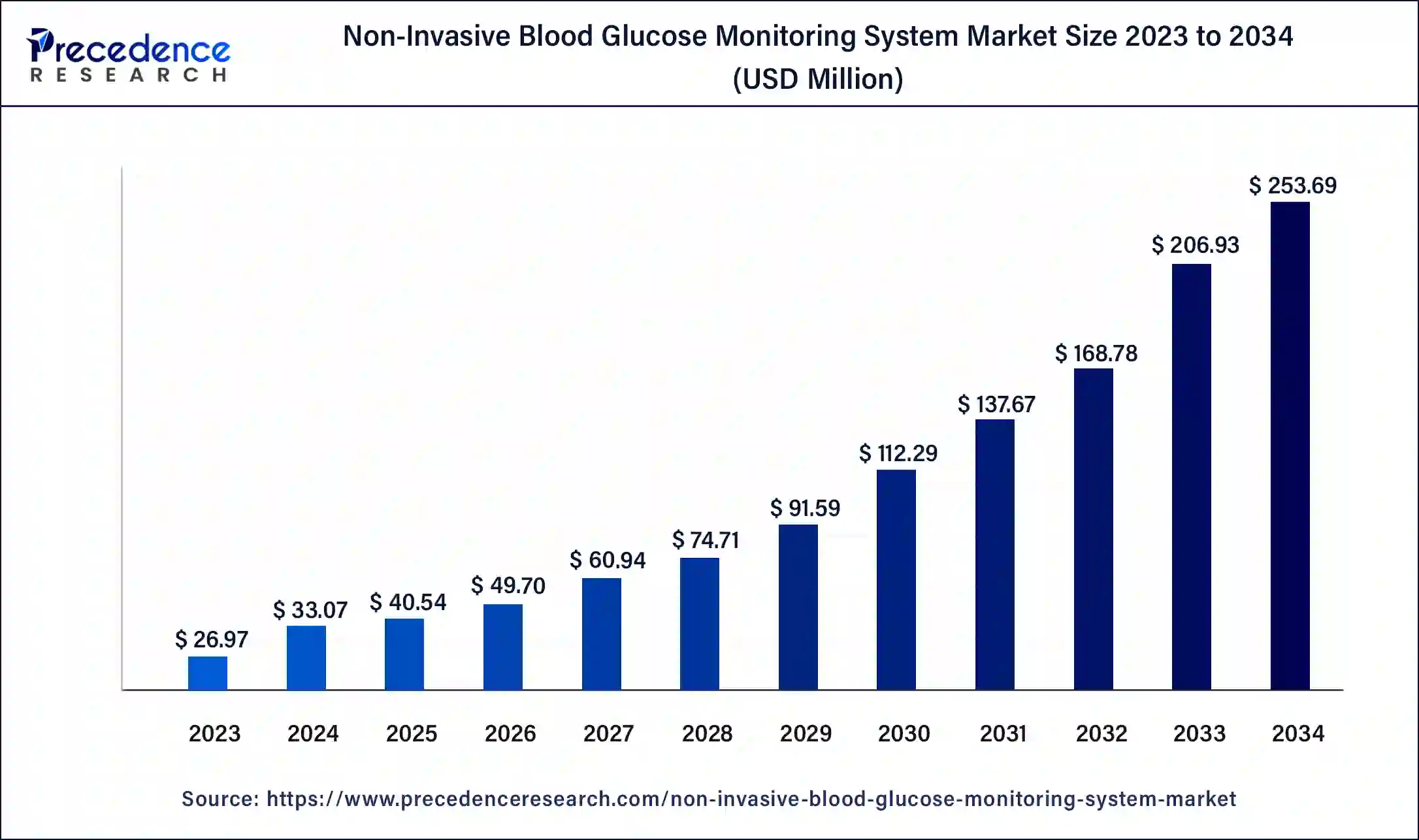
Non-Invasive Blood Glucose Monitoring System Market Key Takeaways
- Based on technology, the spectroscopy segment has captured the highest revenue share in 2025.
- Based on end users, the home care segment held the highest market share in 2025.
- Based on modality, the segment of non-wearable maintained a dominating status in the market.
- Based on modality the segment of the wearable is emerging at a faster rate and it's foreseen to become a larger market from 2026 to 2035.
- Based on distribution channels, the retail sales segment has emerged as a dominant market.
- Based on geography, The North America region accounted for the highest revenue share in 2025.
Market Overview
The rapidly increasing number of patients suffering from diabetes has increased the demand for efficient non-invasive blood glucose monitoring systems in the market. Huge investments are made by the key market players with a view to carrying out rapid research and development programs that will help them to introduce advanced machines and monitoring systems for diabetes. The outbreak of the pandemic had a considerable impact on the growth of the non-invasive blood glucose monitoring system as the COVID infection had a direct relation to the non-invasive blood glucose level of the individual. Many cases of diabetes emerged after the occurrence of the pandemic. The use of insulin was rapidly increased in the hospital sector with a view to controlling the sugar levels of the patients.
Non-Invasive Blood Glucose Monitoring System Market Growth Factors
The rapidly increasing number of complications in the body of the individual after the occurrence of diabetes has helped to boost the market for non-invasive blood glucose monitoring systems. Non-healing of wounds becomes a major complication that needs to be managed by evaluating the glucose levels in the body which has a direct impact on the healing process. Key market players are making constant efforts to make these systems affordable for patients with a view to increasing the demand and supply all over the world.
- Increasing awareness among people
- The rapidly growing diabetic population
- Increasing demand for advanced technology
Market Scope
| Report Coverage | Details |
| Market Size in 2025 | USD 40.54 Billion |
| Market Size in 2026 | USD 49.70 Billion |
| Market Size by 2035 | USD 300.45 Billion |
| Growth Rate from 2026 to 2035 | CAGR of 22.18% |
| Base Year | 2025 |
| Forecast Period | 2026 to 2035 |
| Segments Covered | By Technology, By End User, By Modality, and By Distribution Channel |
| Regions Covered | North America, Europe, Asia-Pacific, Latin America, and Middle East & Africa |
Market Dynamics
Drivers
- Constant monitoring - A continuous monitoring system helps to evaluate the condition of the patient constantly and can be reevaluated for selecting the suitable line of treatment and diet. An increase in the number of diabetes patients which is mostly due to a change in their lifestyles and other environmental factors Will drive the market growth in the coming years period obesity is another reason which leads to diabetes which will in turn increase the need for monitoring devices. The number of deaths that have occurred recently, especially in the United States will lead to the growth of the market during the forecast period.
- Easy application - The process of operating these techniques is extremely easy and comfortable which attracts potential consumers. The availability of devices that are easy to use will also help in the growth of the market. Constant research and development in this field will lead to the introduction of better and more efficient devices in the coming years period as many new products are being launched in the market the users of these products can easily access their products.
Key Market Challenges
- High cost of technology - The expensive devices which are used for the procedure prove to be a major challenge for the key market players. The lack of disposable income available to the people hampers the growth of the market considerably. The development cost of these devices is high and the reimbursement policy is offered in the market are not favorable due to which the market growth will be hampered in the coming years. The supply of these blood glucose monitoring systems is also affected to a great extent. When it comes to the nations like India and China the use of these devices has increased but the high cost of these devices will hamper the growth of the market in the coming years. An increase in the number of expenses made by the consumers for these devices will put a major strain on the consumers especially when it comes to developing nations. In underdeveloped nations, the high cost of these devices will reduce their penetration and prove to be a challenge to enter these markets.
Key Market Opportunities
- Increasing demand for advanced technology - Increasing awareness regarding the available facilities and advanced technologies for monitoring non-invasive blood glucose and controlling it has helped the market of non-invasive blood glucose monitoring systems to show tremendous growth. As many market players are engaged in providing innovative products and the availability of advanced technologies for these products will lead to the growth of the market and provide good opportunities in the coming years.
- One of the leading technologies which are being used in this industry is electromagnetism. The availability of these devices in the form of wearable and non-wearable types will also provide good opportunities for the growth of this market.
Non-Invasive Blood Glucose Monitoring System Market Segment Insights
Technology Insights
How is the market segmented based on technology?
On the basis of technology, the spectroscopy segment accounted highest revenue share in 2023. An increase in the number of cases of diabetes and the complications associated with this disease will lead to the growth of the market in the coming years. There are significant consequences of these diseases on the families as well as the individuals due to which the need for this technology is expected to grow in the coming years period as the non-invasive procedures are painless and quick the need for these devices is expected to grow well in the coming years period the availability of cost-effective solutions will also help in the growth of the market during the forecast period.
End User Insights
How is the market segmented based on end user?
On the basis of the end user, the home care segment held the highest market share in 2023. Increased use of mobile phones and connected devices will lead to the growth of this market.
Monitoring of the patients with the help of remote solutions and the availability of telehealth services will lead to the growth of this market during the forecast period. Increased use of the management devices which are available at the home will drive market growth. In order to treat diabetes consumers, have an increased preference for home care services. This inclination will drive market growth during the forecast period.
Modality Insights
How is the market segmented based on modality?
On the basis of modality, the segment of non-wearable maintained a dominating status in the market pertaining to its huge demand among the people. The existence of key market players in this sector who have great potential along with huge economic backup has helped this segment to perform better than its counterparts in the market. This becomes the primary reason for the great support behind the growth of the market during the forecast period.
On the other hand, the segment of the wearable is emerging at a faster rate and it's foreseen to become a larger market during the future times to come resulting from its rapid development. The huge number of innovations and products that are being launched into the market by the key market players and manufacturers has helped the market to strengthen its foothold for the future times to come. Increasing awareness among the people regarding the pros and cons of the system it's helping the market to show tremendous results.
Distribution Channel Insights
How is the market segmented based on distribution channels?
On the basis of distribution channels, the segment of retail sales has emerged as a dominant market due to the huge demand and supply chain which results from the existence of a huge number of people suffering from this disease. Usually, only in the initial stages of this disorder do people tend to visit a hospital sector and after that, they usually prefer to purchase the medicines according to the prescription given from the retail stores. This tendency of purchasing medicines over the counter from retail stores has proved to be a major factor that has boosted the economy for retail sales.
The regular demand and supply which is experienced in retail sales owing to the huge client base available in the market has supported the growth of this segment to a great extent and is foreseen to dominate the market during the future period as well.
The segment of institutional sales has presented a moderate pace in the market due to the lower rate of adoption of non-invasive blood glucose monitors in the hospital sector and clinics. After the outbreak of the pandemic, many healthcare sectors adopted these systems which included continuous glucose monitors on a larger scale, and hence it expects considerable growth in the years to come.
Non-Invasive Blood Glucose Monitoring System Market Regional Insights
U.S. Non-Invasive Blood Glucose Monitoring System Market Size and Growth 2026 to 2035
The U.S. non-invasive blood glucose monitoring system market size is estimated at USD 18.58 billion in 2026 and is predicted to be worth around USD 114.22 billion by 2035, at a CAGR of 22.40% from 2026 to 2035.
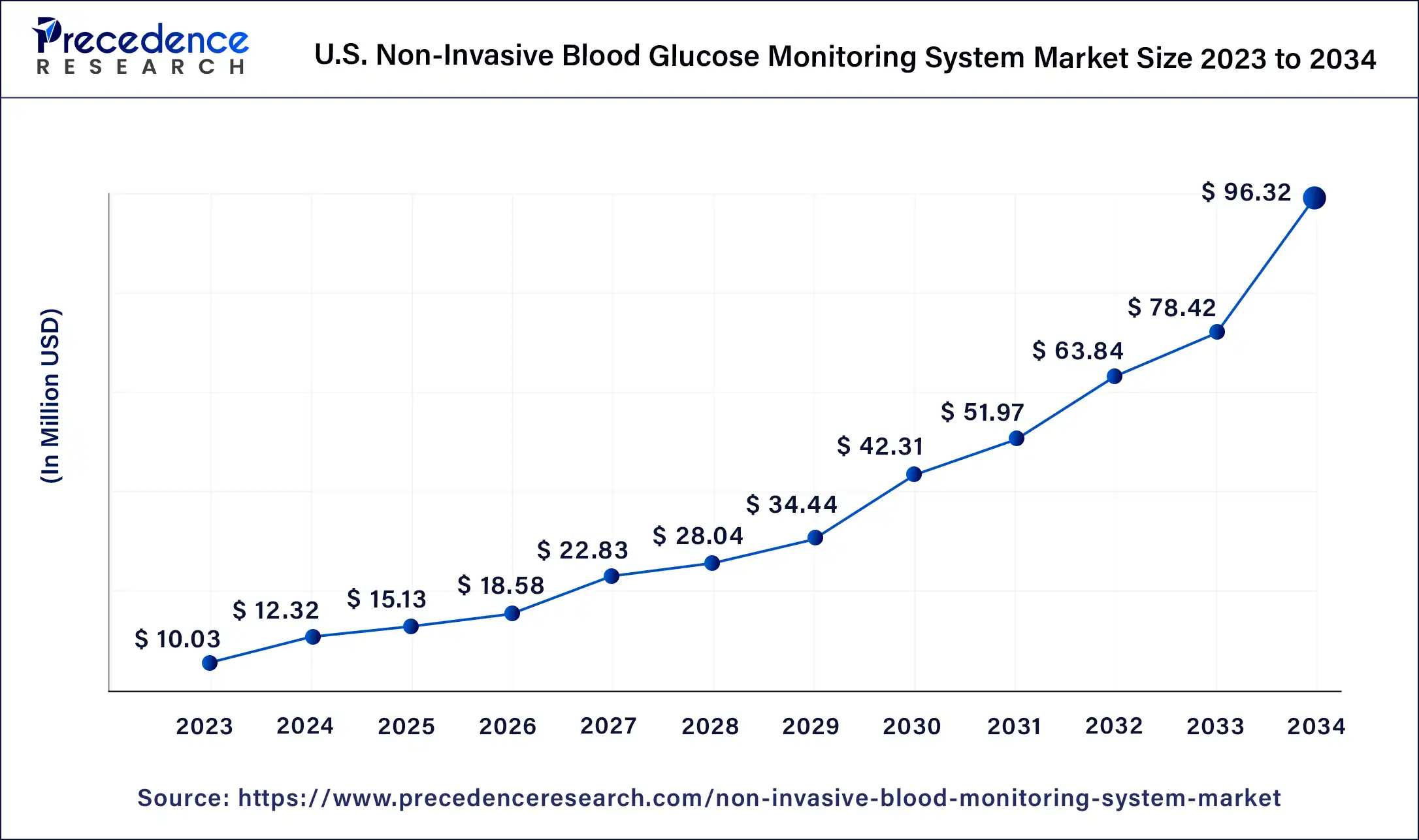
On the basis of geography, the huge number of people who are suffering from diabetes and non-invasive blood glucose disorders in the region of North America has proved to be a major factor that has made this region a dominant market and is foreseen to continue in a similar fashion during the future as well. As a result of the developed status of the country these sedentary lifestyle practices have increased to a great extent which results from the huge number of multinational companies would you demand long working hours. Hence the increasing amount of stress and lifestyle disorders have proved to be the causative factors for diabetes and other non-invasive blood glucose-related disorders. The demand for non-invasive blood glucose monitoring systems has seen a tremendous boost in this region which is supported by the high disposable income available to the people.
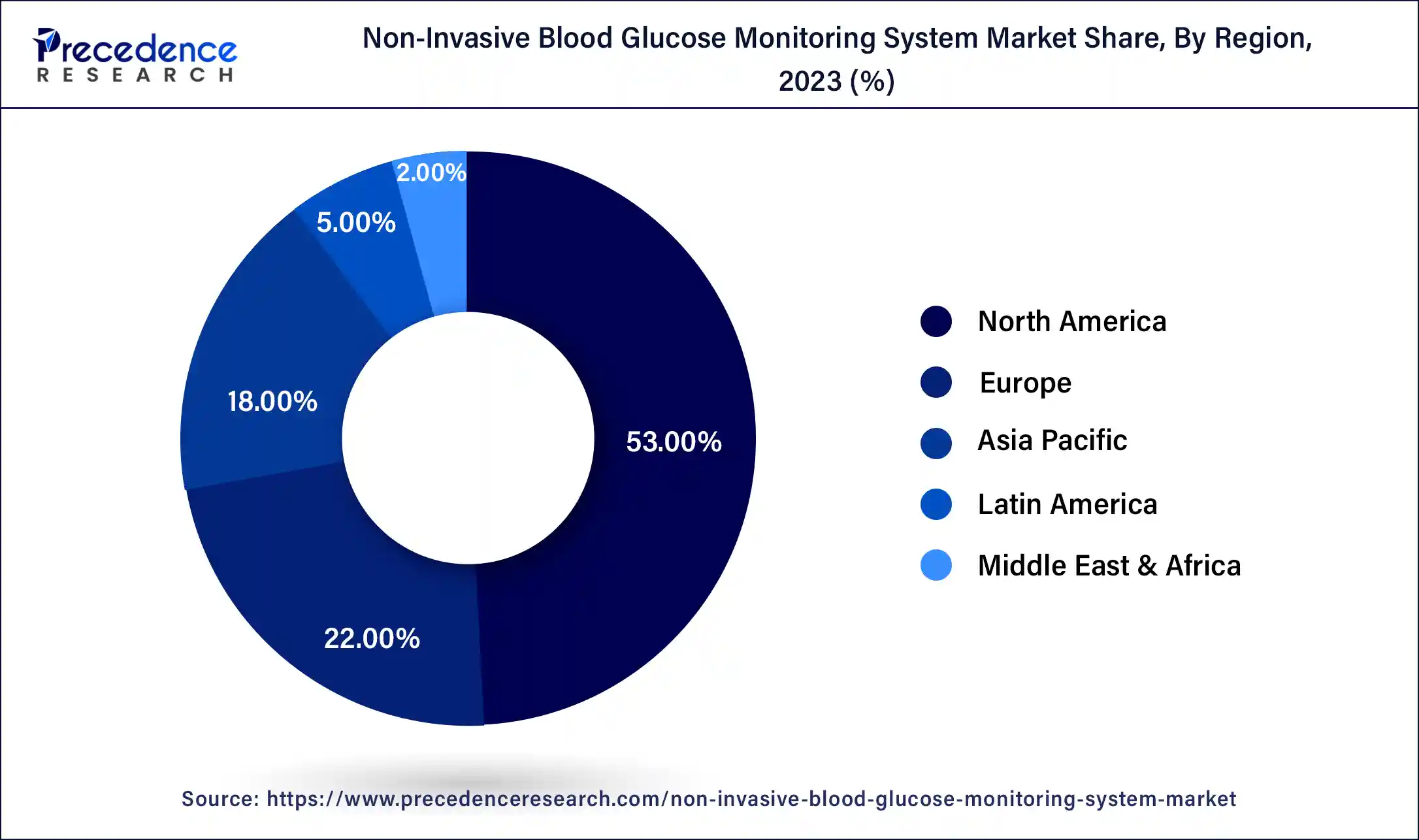
The next largest market which follows is the region of Europe which comprises a huge client base suffering from diabetes. The rapidly growing awareness regarding the management of diabetes among people has boosted the market size of non-invasive blood glucose monitoring systems. The region of Asia Pacific has emerged as the next sector which has shown considerable growth due to the increasing number of people suffering from diabetes and hence the demand and supply of non-invasive blood glucose monitoring systems have increased.
U.S. Non-Invasive Blood Glucose Monitoring System Market Analysis
In the U.S., the market is expanding due to the rising prevalence of diabetes, the growing demand for painless and continuous monitoring, and strong adoption of advanced medical devices. Growing investments in R&D, favorable healthcare policies, and awareness of diabetes management solutions further drive market growth. Moreover, there is a high adoption of monitoring devices in hospitals and home care settings, contributing to market expansion.
UK Non-Invasive Blood Glucose Monitoring System Market Analysis
The market in the UK is expanding as healthcare providers focus on improving patient compliance and reducing complications. Technological advancements, such as wearable sensors and continuous monitoring devices, and growing collaborations between medical device companies and research institutions are driving the development of innovative, patient-friendly glucose-monitoring solutions.
Asia Pacific: A Significant Region
Asia Pacific is considered a significant region in the market. The market in the region is growing due to a rapidly growing diabetic population, rising health awareness, and expanding access to advanced healthcare technologies. Strong government initiatives, improved healthcare infrastructure, and increased investment by medical device manufacturers in R&D and local production are driving the development and adoption of convenient, non-invasive glucose-monitoring solutions across the region.
India Non-Invasive Blood Glucose Monitoring System Market Analysis
India is a major player in the market within Asia Pacific due to the rising prevalence of diabetes, increasing awareness of blood sugar management, and demand for painless, easy-to-use devices. Supportive government healthcare programs, expanding hospital and home care infrastructure, and investments by key players in research and localized manufacturing are driving the market. Moreover, a growing aging population is likely to support market growth in the country.
Value Chain Analysis
- Research & Development (R&D) and Product Design
This stage involves conceptualizing and developing non-invasive glucose monitoring technologies, including sensor design, clinical validation, and software development, to ensure devices are accurate, safe, and user-friendly for patients.
Key Players: Abbott Laboratories, Dexcom, and Senseonics. - Clinical Trials
This stage focuses on validating advanced sensing technologies, such as optical methods (infrared, Raman spectroscopy) and electromagnetic approaches (microwaves, radio waves), often using wearable devices like smartwatches, rings, or patches to ensure accurate, comfortable, and user-friendly continuous glucose monitoring.
Key Players: Abbott Laboratories, Medtronic, Johnson & Johnson, Dexcom, Roche Diagnostics, and GlucoTrack. - Packaging and Serialization
Non-invasive glucose monitoring devices are packaged and serialized in compliance with medical device regulations (FDA UDI, EU MDR), ensuring product safety, integrity during shipping, and global traceability for effective post-market surveillance.Serialization enables global tracking, traceability, and effective post-market surveillance.
Key Players: Zebra Technologies, Honeywell, Tracelink, Optel Group, Antares Vision, and Becton, Dickinson and Company (BD). - Distribution to Hospitals, Pharmacies
Devices are distributed through multi-channel networks, including hospital pharmacies, retail outlets, online platforms, and direct sales, with partnerships between manufacturers, distributors, and healthcare providers to maximize accessibility, patient convenience, and integration with telehealth and digital platforms.
Key Players: Abbott Laboratories, Medtronic, Dexcom, Roche Diagnostics, Johnson & Johnson, and AgaMatrix.
Top Companies in the Market & Their Offerings
- Abbott Laboratories: Offers FreeStyle Libre CGM sensors providing continuous glucose monitoring with wearable sensors, app integration, and real-time glucose tracking for easier diabetes management.
- Medtronic plc: Provides Guardian CGM sensors combined with insulin pumps, delivering automated glucose monitoring and management solutions for insulin-dependent diabetes patients.
- Dexcom, Inc.: Manufactures G6 and G7 CGM devices offering high-accuracy, real-time glucose tracking, smartphone integration, and alerts to support diabetes management.
- Insulet Corporation: Produces Omnipod tubeless insulin delivery systems that integrate with CGM data, enabling automated insulin management and improved diabetes care.
Non-Invasive Blood Glucose Monitoring System Market Companies
- Abbott Laboratories
- Medtronic plc
- F. Hoffmann-La Roche Ltd.
- Ascensia Diabetes Care
- Dexcom, Inc.
- Sanofi Novo Nordisk
- Insulet Corporation
- Ypsomed Holdings
- Glysens Incorporated
Recent Developments
- In February 2021 – Ascensia diabetes care holding AG acquired the distribution channel of Eversense XL, which is located in Germany, Spain, Italy, Netherlands, and Switzerland with a view to meet the increasing demands in the market of Europe.
- In March 2021 – F. Hoffmann- la Roche Co Introduced Accuchek instant product which connects directly to with mySugr app. This app provides the data for non-invasive blood glucose parameters in real-time.
Non-Invasive Blood Glucose Monitoring System Market Segments Covered in the Report
By Technology
- Spectroscopy
- Electromagnetic
- Microwave
- Ultrasonic
- Thermal
- Others
By End User
- Hospitals
- Homecare
- Clinics
By Modality
- Non wearable
- Wearable
- Invasive
- Non-invasive
By Distribution Channel
- Retail sales
- Institutional sales
By Geography
- North America
- Europe
- Asia-Pacific
- Latin America
- Middle East & Africa (MEA)
For inquiries regarding discounts, bulk purchases, or customization requests, please contact us at sales@precedenceresearch.com
Frequently Asked Questions





Ask For Sample
No cookie-cutter, only authentic analysis – take the 1st step to become a Precedence Research client
 Get a Sample
.webp)



 sales@precedenceresearch.com
 Schedule a Meeting
