


Organic Food Market Size, Key Companies, Company Market Share, Production Volume, Consumption Trends, Pricing Analysis, Export & Import Dynamics, Competitive Positioning, and Demand Forecast
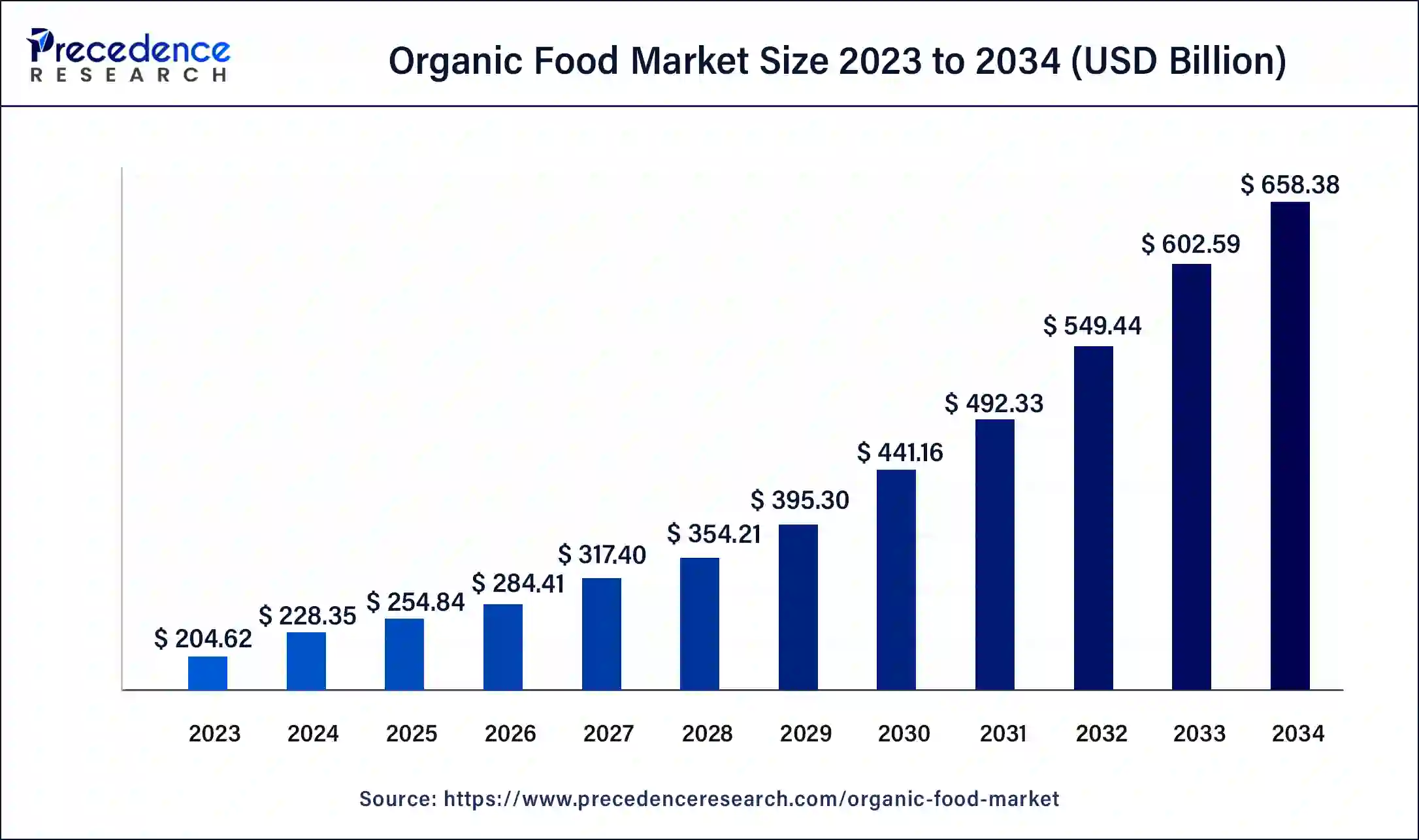
Food and beverage specialist Vidyesh Swar puts the organic food market at USD 284.41 billion in 2026, with the market expected to reach USD 712.41 billion by 2035 at a CAGR of 10.83%. Major organic food market companies such as Newman’s Own, Inc., Whole Foods Market IP. L.P., Frito-Lay are responding to changing consumer demand across segments including by type, by distribution channel and region.
Source: https://www.precedenceresearch.com/organic-food-market
 Get a Sample
 Table Of Content


What is the Organic Food Market Size?
The organic food market is expected to grow from USD 284.41 billion in 2026 to approximately USD 712.41 billion by 2035, at a CAGR of 10.83% from 2026 to 2035. Organic food is in high demand because it is grown using natural fertilizers, contains fewer pesticides, and reaches consumers in a fresher state, factors that are supporting strong growth in the organic food market over the coming decade.
Organic Food Market Key Takeaways
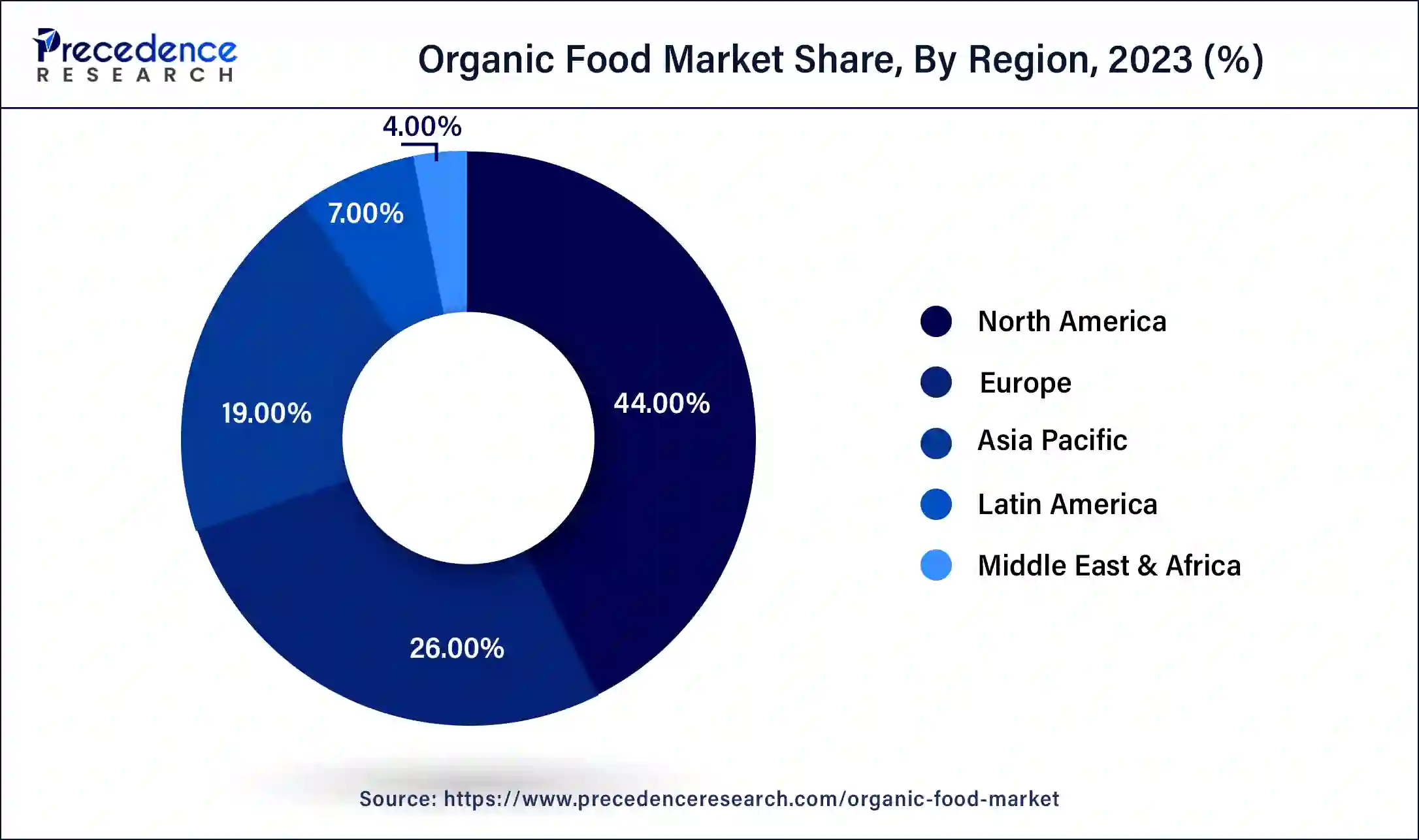
- North America led the global market with the highest market share of 44% in 2025.
- By Product, the fruits and vegetables segment held the largest share of the market in 2025.
- By Product, the organic beverages segment is expected to grow with the highest CAGR during the forecast period.
- By Distribution Channel, the off line segment held a significant share of the market in 2025.
- By Distribution Channel, the offline segment dominated the market in 2025.
What is Organic Food?
Driven by increasing consumer demand for cleaner, healthier, and more transparent food products, organic food continues to gain traction in the global marketplace. Consumers worldwide are becoming more aware of the risks associated with chemical farming, as well as growing concerns about food safety and shelf life. These factors fuel demand across various food categories, including fruits, vegetables, dairy products, cereals, and packaged products labeled organic.
Government support for organic agriculture, expanding retail distribution of organic products, and rising consumer trust in certified organic labels have all contributed to accelerating adoption in both developed and developing countries.
An agricultural product can only be classified as organic if no substances prohibited by law have been used on the soil in which the crops were grown. The soil itself must be certified organic, with no restricted substances, particularly chemical fertilizers and pesticides, used for about three years before harvest. Beyond crops, dairy products, meat, and processed foods also fall under the broader organic food category. Demand for organic food continues to rise globally, as these products are widely perceived as being free from chemicals associated with long-term health concerns. However, because organic production costs more, these products generally carry a price premium over conventional alternatives.
Meat classified as organic must also come from animals raised on organic feed or through farming methods that exclude the use of antibiotics or growth hormones. Because organic farming methods generally yield less produce than farming methods that rely on synthetic pesticides and fertilizers to boost productivity, organic products tend to carry a higher price tag. Organic produce also typically has a shorter shelf life than conventionally farmed alternatives.
Organic food can spoil more easily because it is produced without artificial preservatives that extend the shelf life of conventional products and because irradiation, another shelf-life-extending technique, is not used in organic production. Certain harmful bacteria found in animals, including strains present in the intestinal tract, can also pose risks to human health, particularly in meat. Conventionally produced meat is sometimes considered to carry a lower contamination risk than its organic counterpart. Finding retailers that stock organic food also remains difficult across the developing world. In addition, because organic farming is not feasible in every region, shortages persist in both developed and developing economies.
How Does AI Impact the Organic Food Market?
AI in organic farming holds significant potential to increase crop nutritional density while lowering production costs. AI technologies provide organic farmers with tools for determining optimal harvest times, detecting pests, and monitoring soil conditions. These systems can continuously track key soil metrics and provide farmers with timely feedback. AI models also support the prediction of soil-related factors, including moisture needs, nutrient levels, and erosion risks, while helping identify optimal harvest windows to enhance the nutritional value of organic crops. This represents a growing application of precision agriculture across the sector.
Organic Food Market Growth Factors
Demand for organic food is expected to continue growing across both developing and developed nations, as organic products are widely regarded as a healthier alternative to conventional products. Because organic produce is grown without chemical fertilizers, pesticides, or irradiation, it is perceived as less harmful to the body, fueling demand for these products. Animals raised through organic farming are similarly in growing demand because antibiotics and growth hormones are not used to boost yield. Together, these factors are expected to support strong growth across the organic food industry in the years ahead.
Because organic farming avoids chemicals and shelf-life-extending preservatives, organic food is widely perceived as causing less harm to the body and remaining largely free of substances associated with serious long-term health concerns. Rising environmental awareness is also driving momentum behind organic farming, given its comparatively lower impact on soil quality and the broader environment. Because land used for organic cultivation typically supports multiple crop rotations, this approach can help conserve soil by reducing nutrient depletion. Compared with conventionally farmed products, organic products also tend to have a higher mineral content.
Consuming organic products can help increase the body's intake of essential minerals, and many consumers cite better taste, often linked to higher natural sugar content, as a reason for the growing demand for organic food. Organic fruit is associated with higher nutritional value. Because organic food contains no hydrogenated fat, its consumption has been linked to lower cardiovascular risk, while organic products also tend to have higher antioxidant content than conventional alternatives. Some research has also raised concerns about the transfer of chemical residues from conventional food to unborn babies through the placenta during pregnancy. This area continues to inform consumer interest in organic food during pregnancy and early childhood.
Organic Food Market Trends
- Adaptation to a Green Revolution: Major and smaller grocery brands alike are adapting to the green revolution by expanding their organic product ranges and incorporating sustainability into their broader business models. Leading retailers have similarly expanded their organic offerings to meet rising consumer demand, with some brands maintaining a strong commitment to sustainable practices across their supply chains.
- A Shift Toward Sustainable Food Systems: Companies are investing significantly in improving transparency, adopting sustainable sourcing practices, and reducing carbon footprints to meet consumer preferences for environmentally friendly and ethically produced goods. This evolution is setting new standards for grocery retail and agriculture, with sustainable food systems increasingly prioritizing both people and the planet.
- Rising Awareness and Cultural Shift: Growing concern over food safety has accelerated the growth of China's organic food market, while several Eastern markets are returning to traditional agricultural practices alongside rising consumer awareness. In India, a health-focused behavioral shift is prompting consumers to avoid chemicals and preservatives in favor of organic food, further reinforcing demand for clean-label products across the region.
Organic Food Market Outlook
- Industry Growth Overview: The organic food sector is projected to continue growing steadily as consumer health awareness rises, premium foods gain popularity, and urban populations continue to expand in size and density.
- Sustainability Trends: Sustainability continues to play an essential role in the sector's growth, with an emphasis on regenerative agriculture, reducing carbon footprints, and ethical sourcing and production. Brands are also increasingly adopting recyclable packaging and farm-to-table transparency, among other sustainability measures, to appeal to environmentally conscious consumers.
- Global Expansion: Emerging markets across Asia Pacific, Latin America, and the Middle East are opening new pathways for organic food products to expand globally. As international trade agreements develop and organic farming increasingly targets export markets, global connections and supply chain networks for organic products are advancing rapidly.
- Start-Up Ecosystem: Innovative start-ups are reshaping the industry through direct-to-consumer (DTC) business models for organic food, organic meal kit services, and digitally traced farm-to-table offerings.
Report Scope of the Organic Food Market
| Report Coverage | Details |
| Market Size by 2035 | USD 712.41 Billion |
| Market Size in 2025 | USD 204.62 Billion |
| Market Size in 2026 | USD 284.41 Billion |
| Market Growth Rate from 2026 to 2035 | CAGR of 10.83% |
| Largest Market | North America |
| Base Year | 2025 |
| Forecast Period | 2026 to 2035 |
| Segments Covered | Product, Distribution Channel, and Region |
| Regions Covered | North America, Europe, Asia-Pacific, Latin America, and Middle East & Africa |
Segments Insights
Product Insights
The fruits and vegetables segment dominated the market in 2025 and is expected to retain a leading position in the years ahead. Demand for organic fruits and vegetables remains strongest in developed regions such as Europe and North America, where higher disposable incomes continue to support consumption. Developing economies are also expanding, with rising demand for organic fruits and vegetables in markets such as China and India. Consumption of organic fish and poultry is also growing and is expected to continue rising over the forecast period, supported by increasing health awareness and consumer understanding of the benefits of organic food. Because preservatives are not used to extend shelf life, demand for fresh vegetables and root produce is expected to continue growing in the years ahead.
The organic beverages segment is also expected to command a meaningful share of the market across developed nations. Rising consumption of tea and coffee in many countries is expected to support segment growth as more consumers shift away from carbonated beverages toward these alternatives. The growing popularity of vegan lifestyles in both developed and developing nations, alongside rising awareness of low-fat diets aimed at curbing obesity and related health conditions, is expected to further support growth across organic fruits, vegetables, and beverages in the years ahead.
Distribution Channel Insights
The offline distribution channel dominated the market in 2025. Offline stores offer a wide range of domestic and branded organic products across specialty stores, supermarkets, hypermarkets, and other general retail outlets. Sales of organic food remain strong through offline channels in developed nations, while hypermarkets and supermarkets in developing nations are increasingly adapting their retail landscapes to better support organic food sales, reinforcing offline retail as a key distribution channel for the segment.
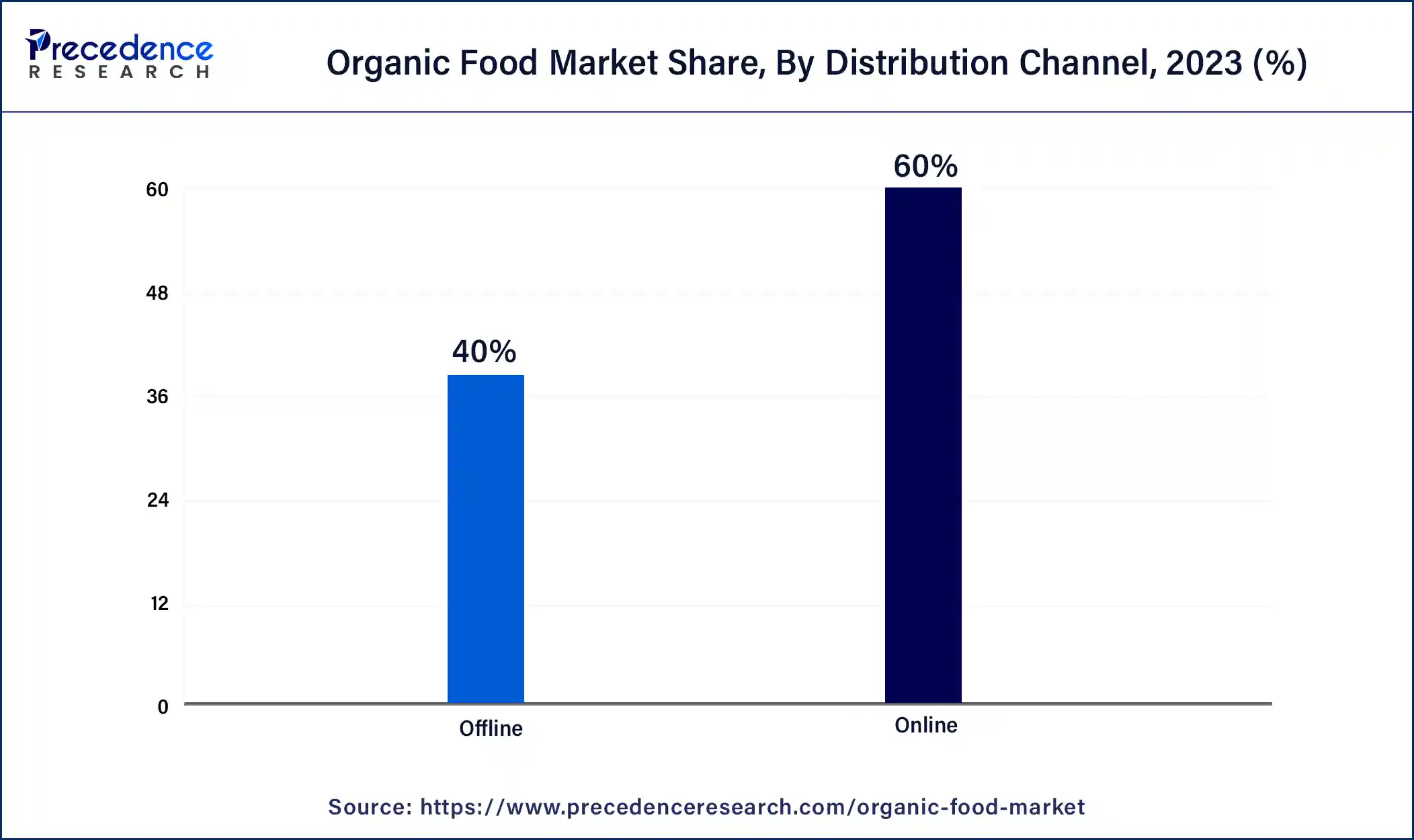
Alongside offline retail, the online distribution channel is also expected to see solid growth over the forecast period, driven by rising internet use and targeted digital marketing. Demand continues to grow as consumers increasingly place subscription-box orders that allow them to purchase organic produce in advance, alongside a broader trend toward purchasing organic food through online platforms. Growing internet access and smartphones availability are further supporting this channel's growth, as is the availability of express delivery, which helps get food products to consumers more quickly. Since the pandemic, demand for organic food and beverages through online channels has also increased as consumers seek to reduce person-to-person contact, prompting a shift in some countries from offline to online purchasing of organic products, driven largely by the added convenience of online channels.
Regional Insights
What is the U.S. Organic Food Market Size?
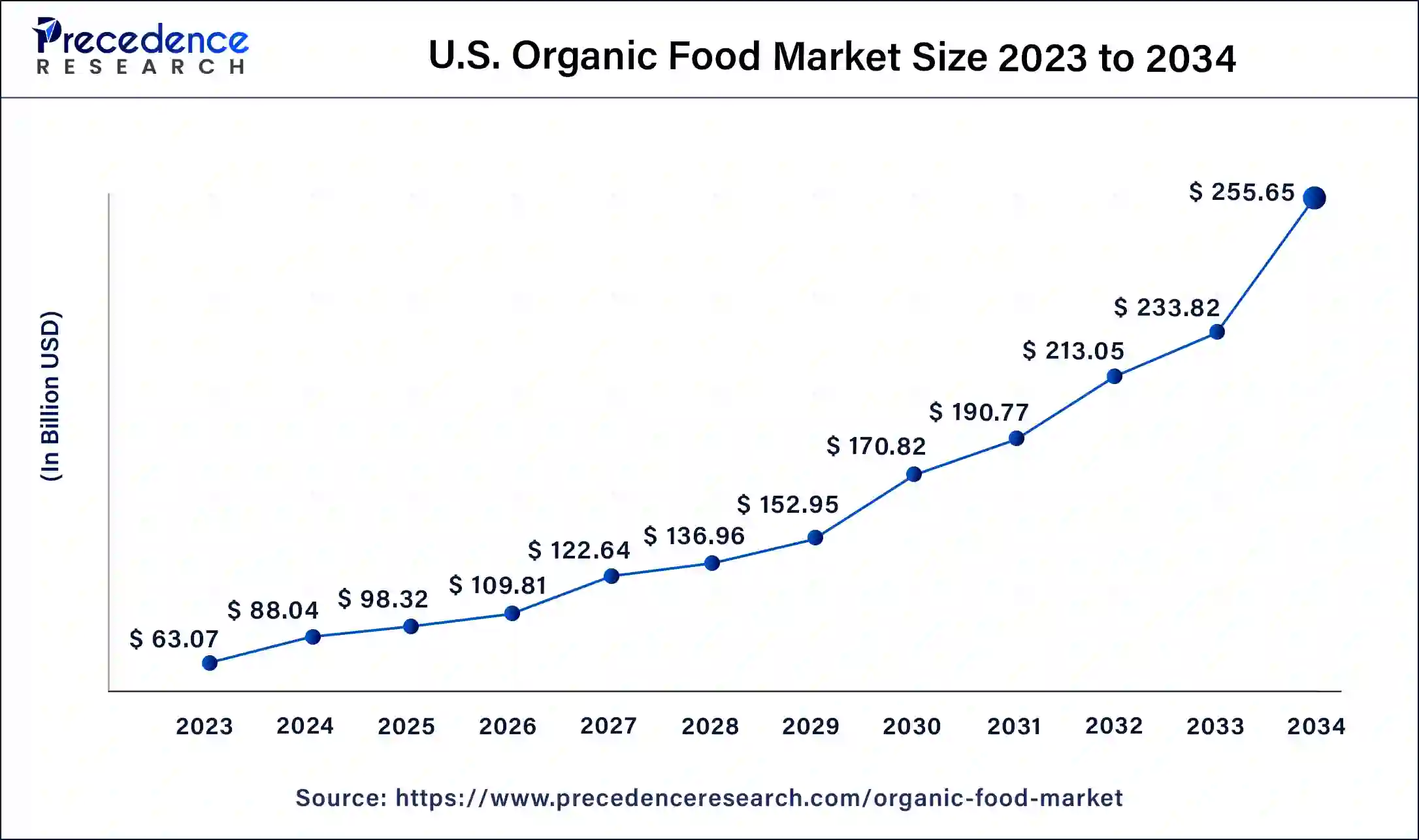
The U.S. organic food market size is exhibited at USD 98.32 billion in 2025 and is projected to be worth around USD 276.77 billion by 2035, growing at a CAGR of 10.90% from 2026 to 2035.
North America is expected to continue leading the market in the years ahead, supported by rising demand for organic produce in the United States. Growing demand for organic food in Australia is similarly prompting government policy support favorable to organic farming. As regulatory bodies across the developed world, particularly in North America and Europe, continue introducing supportive policies, the market in these regions is expected to experience healthy growth in the coming years. Rising purchasing power is also expected to support market growth in the region, alongside the growing popularity of vegan diets, which continues to drive higher consumption of organic food. Growing awareness of the potential health risks associated with chemical residues from preservatives, fertilizers, and pesticides used to boost crop yields has also fueled greater demand for organic farming more broadly.
Why North America Held the Largest Market Revenue in 2025?
North America led the organic food market by revenue in 2025. Growth across the region is attributed to rising demand for clean-label and organic food products, alongside growing awareness of health and well-being, with the U.S. and Canada standing out as the countries driving this growth.
The U.S. led the organic food market by revenue in 2025, supported by growing organic agriculture activity. Organic farming typically eliminates conventional fertilizers and pesticides, and as a result, organically grown grains and vegetables carry meaningfully lower pesticide levels. Food remains central to the U.S. organic sector, representing more than 90% of total organic product sales in the country. Supported by growth across categories including bakery products, fruit, dairy, and eggs, U.S. organic food sales rose to exceed USD 65 billion last year.
Asia Pacific is also expected to see an upward trend, supported by rising incomes and a growing appetite for organic food. In markets such as India, China, and Japan, consumers continue to spend a meaningful share of their income on food, while rising demand for frozen food is expected to further support organic food market growth across the region.
Asia Pacific Organic Food Market Trends
Asia Pacific is expected to grow the fastest over the forecast period, driven by increasing consumer preference for organic food and rising incomes. China and India stand out as the region's fastest-growing markets, with India expected to post the strongest growth over the forecast period.
YES Bank announced the release of the YES BANK-Ingenus-APEDA-AIOI Knowledge Report, "India Organic Sector: Vision 2025," at the National Conference on Sustainable Agriculture & Farmers' Welfare, offering strategic recommendations to support the integrated development of India's organic sector.
China Market Trends
China leads the organic food market across Asia Pacific, supported by rising health consciousness, growing middle-class spending, and ongoing concerns about food quality and safety. Domestic Chinese retailers continue expanding their organic produce offerings, while growing access to e-commerce is giving consumers greater access to organic products. Government programs supporting sustainable agriculture and organic certification further reinforce China's position as the largest organic food market in Asia.
Europe Goes Organic: Notable Growth Shapes the Organic Food Market
Europe stands among the most advanced and influential organic food markets in the world. Strong consumer awareness, stringent regulatory frameworks, and well-established organic certification systems continue to support market growth, with Germany, France, Italy, and the Nordic countries recording the highest per capita organic food consumption across the region.
Consumers access organic food through supermarkets, specialty organic grocery stores, and private-label brands. Europe's strong emphasis on sustainable agricultural practices, animal welfare, and environmentally friendly packaging further reinforces long-term demand for organic food across the region.
Germany Market Trends
Germany leads the European market, supported by strong consumer awareness of sustainable food consumption and a well-established supply of certified organic produce. Retailers across the country offer a significant range of organic products, supported by substantial national investment in environmentally friendly agriculture. Households continue purchasing organic produce, along with organic dairy and bakery products, to support healthier lifestyles.
Latin America's Organic Rise: Emerging Growth Transforms the Organic Food Market
The Latin American organic food market is growing significantly, supported by the region's strong agricultural potential and favorable climate conditions. Countries including Brazil, Argentina, and Mexico have been expanding organic farmland to support both domestic consumption and exports.
Rising international demand for organic coffee, cocoa, grains, and fruit has strengthened the region's supply base, while a growing middle class and rising health awareness continue to support local consumption. These factors are further solidifying Latin America's role as a key producer and exporter across the global organic food value chain.
Brazil Market Trends
Brazil stands as the region's most influential market, supported by strong domestic demand and the production of certified organic crops. The country continues to benefit from rising export demand for organic fruit, coffee, and processed organic foods. Growing awareness of sustainable agriculture and expanding domestic availability of organic retail outlets are further encouraging urban consumers to purchase organic food.
Will the Middle East and Africa Grow in the Organic Food Market?
The Middle East and Africa organic food market is experiencing significant growth, supported by rising awareness of health and nutrition, expanding premium retail infrastructure, and growing interest in sustainable agriculture. Urban consumers across the region are increasingly purchasing imported organic packaged food and beverage products.
South Africa Market Trends
South Africa leads the regional market, supported by rising investment in sustainable farming practices and growing consumer preference for naturally produced food. Water conservation and broader environmental concerns continue to drive the adoption of organic agricultural practices nationwide, while expanding retail availability of organic food packaged, fruits, and beverages further supports ongoing demand across the market.
Supply Chain Analysis
Raw Material Procurement
- In this stage, procurement teams are rapidly adopting QR-code trackable packaging and AI inventory diagnostics to provide transparent data.
- Key Players: Tradin Organic, SunOpta Inc., Global Organics, DO IT Organic, Cargill Incorporated, Archer Daniels Midland (ADM) Company, Ofi, General Mills Inc., and many more.
Retail Sales and Marketing
- This stage depends on a blended framework across distinct sales ecosystems, and brands offer compressed price premiums.
- Key Players: The Kroger Co., Whole Foods Market, Sprouts Farmers Market, The Organic World, United Natural Foods, Inc., Nature Bio Foods Ltd., Danone S.A., General Mills, ITC Limited, Amy's Kitchen, Inc., and Swiggy Instamart.
Waste Management and Recycling
- This stage includes smart source segregation, AI tracking, high-value upcycling, anaerobic digestion, advanced composting, and closed-loop agriculture.
- Key Players: Veolia Environment, Waste Management, Inc., Republic Services, SUEZ Group, Renewi, WasteX, Organic Recycling Systems, Biffa Plc, and Cleanaway Waste Management.
Top Companies in the Organic Food Market and Their Offerings
- Newman's Own, Inc.: Organic salad dressings, organic extra virgin olive oil, organic pasta sauces and salsas, organic dried fruits, pretzels and chocolates, organic teas, Newman's new organics coffee, organic dog and cat foods, etc.
- Whole Foods Market IP. L.P.: International snacks and fusion foods, texture-forward foods, plant-based aquatic ingredients, next-level compostable sips, and protein and hydration power-ups.
- Frito-Lay: Simply Doritos Organic, Simply Doritos, Simply Tostitos Organic, Simply Tostitos Sea Salt, Simply Cheetos Puffs & Crunchy, and Simply Ruffles.
- Dole Food Co., Inc.: Dole certified organic bananas, Dole certified organic pineapples, Dole organic avocados, Dole organic mangos, Dole organic berries, and Dole organic grapes and citrus.
- The Kroger Co., Inc.: Simple Truth Protein Instant Decaf Coffee, Simple Truth Organic Instant Mushroom Tea, Simple Truth Protein Chocolate Fudge Brownie Mix and Jalapeno Cheddar Protein Puffs, clean label reformulations, snack and beverage categories, organic dairy and plant-based alternatives, fresh produce and meats, pantry staples, and frozen and prepared foods.
Organic Food Market Companies
- Newman's Own, Inc.
- Whole Foods Market IP. L.P.
- Frito-Lay
- Dole Food Co., Inc.
- The Kroger Co., Inc.
- Clif Bar & Company
- Organic Valley.
- Dean Foods
Recent Developments
- January 23, 2026, LT Foods Ltd. launched the "DAAWAT I'm Organic" range in India, introducing certified Organic Basmati Rice and Organic Sona Masoori Rice built around a "True, Tested, Traceable" promise. Each pack carries a QR code that allows consumers to trace the product's journey from the geo-tagged cultivation site and land testing through to batch-wise certification, meeting rising demand for premium, traceable organic staples. (Source: LT Foods press release via BSE filing)
- May 13, 2026, Whole Foods Market announced that it will bring its smaller-format Daily Shop concept, which carries a curated range of organic and natural grocery staples, to three new U.S. markets (Boston, Chicago, and Philadelphia) over the following two years, continuing the brand's expansion into dense urban neighborhoods. (Source: Whole Foods Market Newsroom)
- In 2026, Simpli launched a line of 10 Regenerative Organic Certified (ROC) pantry products, including organic olive oils, beans, lentils, and farro, alongside other sustainably sourced staples. The launch reflects growing brand investment in regenerative, certification-backed organic sourcing. (Source: Renub Research)
- In 2026, Elmhurst 1925 introduced its Clean Protein™ Organic Plant-Based Beverage line nationwide, offering clean-label, high-protein organic dairy alternatives aimed at health-conscious consumers seeking functional, plant-based nutrition. (Source: Renub Research)
- In July 2025, a 70-year-old Indian-origin FMCG company, LT Foods announced the expansion of its organic business arm, Nature Bio Foods Limited, into the Business-to-Consumer (B2C) segment in Europe. The aim behind this launch was to increase the company's retail presence in the European organic food market.
- In July 2025, India's leading organic food brand, Organic Tattva announced the launch of it's latest campaign, Har Maa Ka Vishwas, featuring celebrated mother and actor Kareen Kapoor Khan.
Segments Covered in the Report
By Product
- Fruits and vegetables
- Dairy products
- Meat, fish and poultry
- Frozen foods
- Others
By Distribution Channel
- Online
- Offline
By Region
- North America
- Latin America
- Europe
- Asia-pacific
- Middle and East Africa
For inquiries regarding discounts, bulk purchases, or customization requests, please contact us at sales@precedenceresearch.com
Frequently Asked Questions
Tags





Ask For Sample
No cookie-cutter, only authentic analysis – take the 1st step to become a Precedence Research client
 Get a Sample




 sales@precedenceresearch.com
 Schedule a Meeting