



Coffee Market Size, Key Companies, Company Market Share, Production Volume, Consumption Trends, Pricing Analysis, Export & Import Dynamics, Competitive Positioning, and Demand Forecast
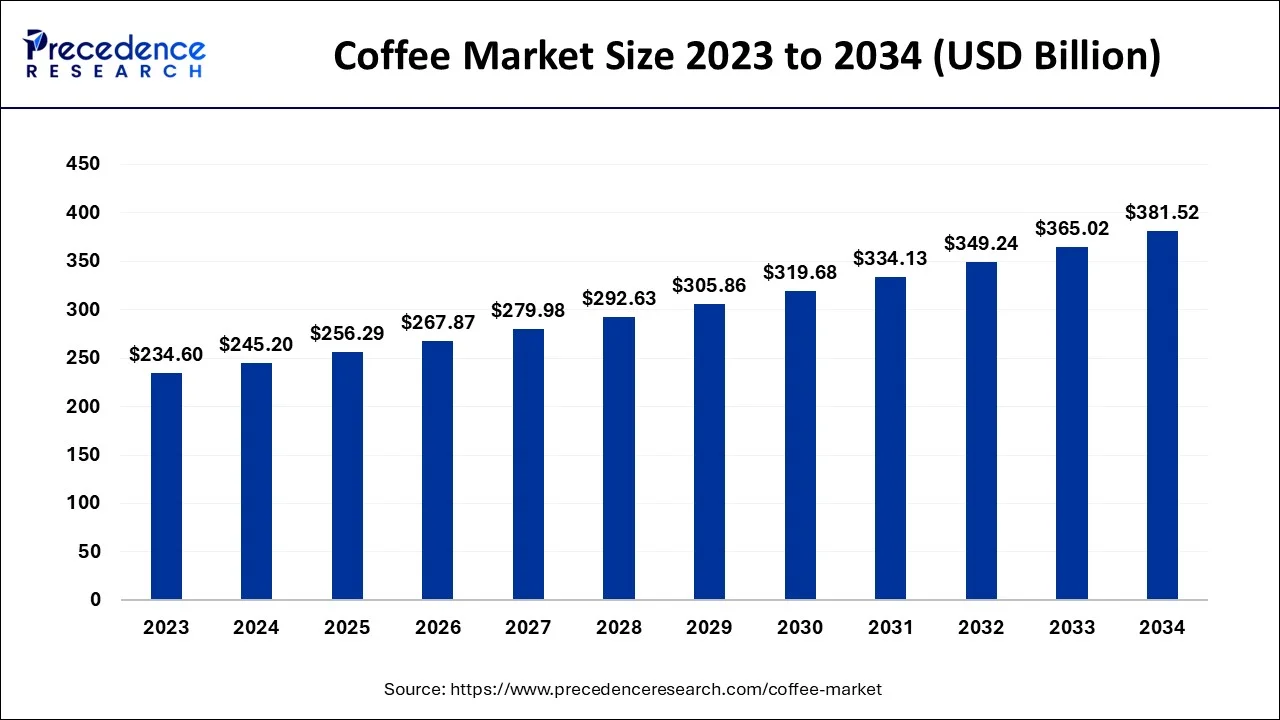
The global coffee market is experiencing steady growth, driven by the expanding coffee culture, rising consumer demand for premium and specialty beverages, and the rapid growth of coffee shop chains worldwide. The market was valued at USD 256.29 billion in 2025 and is projected to reach USD 397.54 billion by 2035, expanding at a CAGR of 4.49% from 2026 to 2035. Growth is further supported by increasing consumption of ready-to-drink coffee, the expansion of e-commerce and café networks, advancements in coffee brewing technologies, and growing consumer preference for sustainable, organic, and ethically sourced coffee products.
Source: https://www.precedenceresearch.com/coffee-market
 Get a Sample
 Table Of Content


Why Is the Global Coffee Market Growing Steadily?
The global coffee market size was estimated at USD 267.87 billion in 2026 and is anticipated to reach around USD 397.54 billion by 2035, growing at a CAGR of 4.49% from 2026 to 2035. The increasing adoption of coffee culture globally is leading to the coffee market. The expanding number of coffee shops is the major driver that has led to the adoption of the trend.
Coffee Market Key Takeaways
- In terms of revenue, the global coffee market was valued at USD 267.87 billion in 2026.
- It is projected to reach USD 397.54 billion by 2035.
- The market is expected to grow at a CAGR of 4.49% from 2026 to 2035.
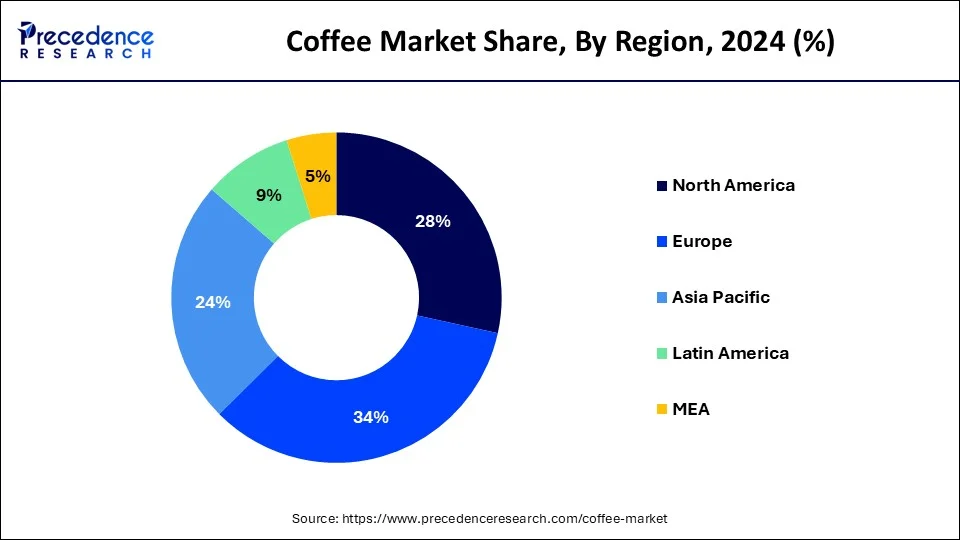
- Europe dominated the global coffee market with the largest market share of 34% in 2025.
- North America holds a significant share of 28% in 2025.
- Asia Pacific is projected to grow at the fastest CAGR of 6.2% during the forecast period of 2026 to 2035.
- By product, the roasted segment generated the major market share of 54% in 2025.
- By product, the ready to drink segment is anticipated to grow at the fastest CAGR during the forecast period of 2026 to 2035.
- By nature, the conventional segment contributed the biggest market share of 84% market in 2025.
- By nature, the organic segment is expected to register the fastest growth during the forecast period.
- By distribution channel, the B2B segment held the largest market share of 63% in 2025.
- By distribution channel, the B2C segment is expected to grow at the fastest CAGR during the forecast period.
Market Overview
Coffee refers to a beverage brewed from roasted seeds, also known as beans of the coffee plant. The beverage has gained significant popularity worldwide due to its health benefits, which include antioxidants that help in improving the functioning of the brain. The coffee market focuses on improving a wide range of activities, from the cultivation of beans to their consumption. The rising consumer preferences towards coffee are leading to the innovation of new types, flavors, and new methods, which helps in attracting more consumers.
- According to a report by Balance Coffee, the average annual coffee consumption per person in the UK is approximately 528 cups for 2023, based on 98 million cups of consumption each day.
How Can AI Help the Coffee Market Grow?
The growth of Artificial Intelligence (AI) has significantly helped towards the growth of the food and beverage industry. AI-based technologies have helped expand precision agriculture, which improves crop health and optimizes the whole agricultural process. AI also helps in predicting the health of the crops that maintain the coffee quality. The coffee market is witnessing significant growth due to the adoption of AI tools that help analyze datasets that include consumer preferences from all over the world.
- In November 2023, Simonelli Group, a coffee machine manufacturing company, adopted AI in their operations by introducing virtual intelligent scale (VIS), which ensures precise coffee quantity based on the preset recipes.
Market Trends
- Rise of Specialty Coffee: The coffee market is seeing a notable increase in the demand for specialty coffee. Consumers are becoming more curious, seeking unique flavors and asking for high-quality beans. This trend is encouraging local roasters and cafes to experiment with diverse brewing methods and sourcing practices.
- Sustainability and Ethical Sourcing: There is a growing emphasis on sustainability within the coffee market. Consumers all over the world are increasingly interested in ethically sourced products, prompting brands to adopt transparent supply chains. This transition not only appeals to environmentally conscious buyers but also enhances brand loyalty.
- Convenience and Ready-to-Drink Options: The demand for convenience is increasingly reshaping the coffee market. Ready-to-drink coffee products are gaining popularity, particularly among urban consumers who have bust lifestyles. This trend reflects a broader lifestyle change, where quick and accessible options are prioritized without sacrificing quality.
- Quick-Commerce and Digital Distribution Channels: Quick-commerce platforms are rapidly becoming preferred for coffee products among urban consumers, particularly younger demographics who are seeking instant gratification and convenience. Digital ordering capabilities, mobile payment integrations, and subscription models are also helping to transform purchase behaviors.
Coffee Market Growth Factors
- The rapid growth in special coffees with unique brewing methods is playing a crucial role towards the growth of the coffee market.
- The increasing shift towards on-the-go drinks is increasing the demand for beverages like coffee, standing out as the crucial growth factor.
- The rising demand for coffee has led to the growth of various coffee products, including canned, nitrogen-infused, and bottled coffees, which stands out as a crucial growth factor.
- The increasing innovations have led to the introduction of home coffee brewing and capsules, which help in demanding.
Market Report Coverage and Key Metrics
| Report Coverage | Details |
| Market Size by 2035 | USD 397.54 Billion |
| Market Size in 2025 | USD 256.29 Billion |
| Market Size in 2026 | USD 267.87 Billion |
| Market Growth Rate from 2026 to 2035 | CAGR of 4.49% |
| Largest Market | Europe |
| Base Year | 2025 |
| Forecast Period | 2026 to 2035 |
| Segments Covered | Product, Nature, Distribution Channel, and Regions |
| Regions Covered | North America, Europe, Asia-Pacific, Latin America and Middle East & Africa |
Market Dynamics
Drivers
Increasing coffee consumption among the youth
The changing lifestyle in urban areas is one of the major factors that has led to the increasing preference for coffee among millennials, and Generation Z. The urban lifestyle has led to the adoption of coffee in daily routines. The coffee market is mainly growing due to the increasing awareness regarding the health benefits of coffee that improves brain functioning. Additionally, the caffeine content in the coffee makes it preferable for use in hectic lifestyles. This has also created rapid demand for various coffee beverages in urban regions.
Expansion of café culture
The preference for outings has significantly increased in recent years, which helps enhance the social life of individuals. This has led to the expansion of coffee chains like Starbucks, Tim Hortons, Costa Coffee, and many others. These chains have a global presence, and they have played a significant role in contributing to the growth of the coffee market. The expansion of independent cafes has also gained significant popularity, and people have adopted the use of beverages like cold coffee and others. Additionally, the rise in tourism is also boosting the growth of the café culture, which is providing multiple business opportunities in the overall food and beverage industry.
- According to a report, Starbucks sells around 14.3 million coffees daily where they provide unique and different beverages to the consumers.
Restraint
Environmental concerns
The agriculture industry depends upon the weather and temperature, which is disturbed due to rising environmental concerns like climate change. Rapid changes in the weather disturb the whole agricultural process of coffee plants. Additionally, most of the coffee produced is from Ethiopia, Brazil, and Colombia, which could disturb the global supply chain of the coffee market. Additionally, the limited availability of water in some regions might affect the whole manufacturing process.
Opportunities
E-commerce growth
Rapid digitalization and rising internet penetration have led to the growth of e-commerce, where people prefer purchasing these food products online. These factors help the companies sell their coffee directly to the consumer, creating multiple opportunities in the coffee market. The rise of social media also helps in advertising the product, which could help increase its presence on social media. Additionally, the use of e-commerce eliminates geographical boundaries, which helps in selling coffee beverages online. The rising adoption of online food delivery applications is also expected to boost the demand for coffee brands.
Rising adoption of organic coffee
The increasing health trends have changed consumer preferences towards consuming healthy food options. This also relates to the use of organic ingredients that could help in attracting more consumers to the coffee market. This increases the opportunities in the agriculture sector, where governments aim to promote sustainable agriculture by prioritizing the use of organic ingredients that could help in preserving the environment. Many companies have started adopting clean label techniques.
Market Concentration & Characteristics
The coffee market is characterized by changing consumer preferences, steady growth, and a surge in specialty coffee. It is also impacted by factors such as supply chain disruptions, climate change, and growing demand for sustainable sourcing. Moreover, consumers are seeking different brewing techniques such as espresso, cold brew, and other techniques.
Market Segmentation Analysis
Product insights
Which Product Segment Dominated the Coffee Market?
The roasted segment marked its dominance in the market in 2025. Roasted coffee refers to coffee beans that are heated to bring out the flavor and aroma, which are mostly consumed at home and in cafes. The dominance of the segment is attributed to the superior quality of whole bean coffees, which drives the growth of the market. The rapid expansion of coffee culture in urban areas has significantly contributed to the huge demand. Roasted coffees can be used in different types, which allows the consumer demand to be fulfilled by using this product. Additionally, the rising preference for natural and organic coffee is leading to its demand globally.
The ready to drink segment is anticipated to grow at the fastest rate in the coffee market during the forecast period of 2024 to 2034. These coffees are often found in products like cans, bottles, or cartons, which are available for immediate consumption. The growth of the segment is attributed to the rising demand for on-the-go consumption influenced by changing lifestyles. Many companies are introducing ready-made coffees that contain healthy ingredients that help attract health-conscious consumers. The rising product innovations like cold beverages and plant-based coffee options are expected to increase the demand for ready-to-go coffee drinks in the upcoming years.
Nature Insights
Which Nature Segment Dominated the Market in 2025?
The conventional segment dominated the market this year in 2025. Conventional coffee is produced using farming methods that use fertilizers and pesticides. The dominance of this segment can further be attributed to its widespread use of conventional coffee over the past decades. These coffees are produced using methods that have lower production costs, making them cost-efficient for the business, especially in developing regions. The rising demand is leading to the mass production of these coffees, making them popular in the market.
The organic segment is expected to register the fastest growth in the coffee market during the forecast period. These coffees are produced by eliminating the use of synthetic chemicals and using organic farming practices. The growth of the segment is further attributed to the increasing health consciousness among coffee consumers. Companies all over the world are adopting the production of these coffees, which is expected to boost the growth of this segment in the coming years.
Distribution Channel Insights
Which Distribution Channel Led the Market in 2025?
The B2B segment led the global coffee market in 2025. The dominance of the segment can be attributed to the widespread businesses like cafes, wholesalers, hotels, and others. The commercial industry has grown significantly in recent years, which has led to a massive demand for coffee. As a result, these businesses buy coffee in bulk, which makes them popular and in demand. Additionally, the rising partnerships among businesses are also major factors driving this segment's growth and development.
The B2C segment is expected to grow at the fastest CAGR in the coffee market during the forecast period. The rising supermarkets and the growth of the e-commerce platform are driving the growth of this particular segment. The rising coffee consumption among individuals has also led to the rising demand for coffee, which thus leads to its bulk purchasing by the stores and supermarkets.
Market Regional Analysis: North America, Europe, Asia-Pacific
What is the Europe Coffee Market Size?
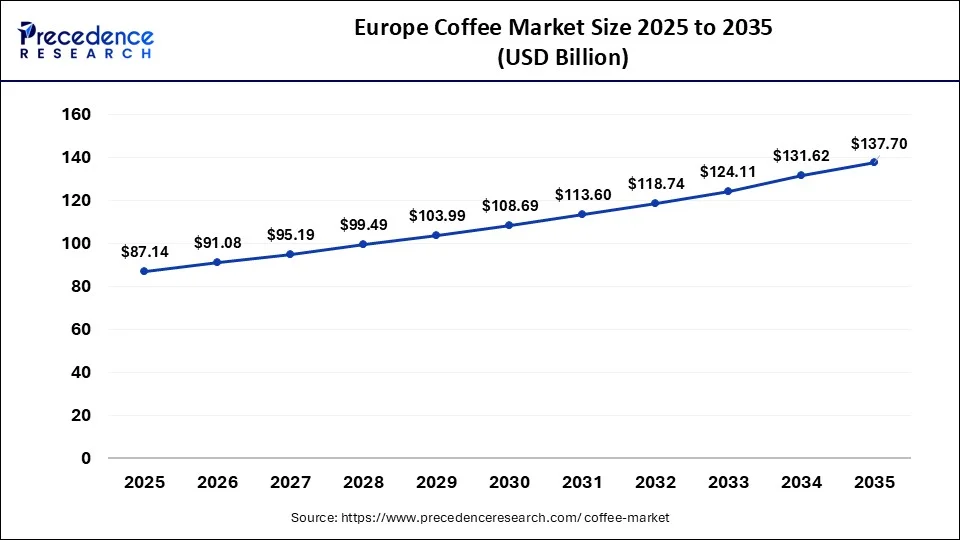
The Europe coffee market size was exhibited at USD 91.08 billion in 2026 and is predicted to be worth around USD 137.70 billion by 2035, expanding at a CAGR of 4.68% from 2026 to 2035.
What are the Advancements in the Coffee Market in Europe?
Europe dominated the global coffee market wth a share of 34% in 2025. A substantial majority of adults in Europe regularly consume coffee. With a preference for high-quality coffees, manufacturers are shifting production towards specialty and premium coffees. There is a growing trend of increased consumption at specialty coffee shops in Western Europe, which primarily offer high-quality coffees. The UK coffee market has witnessed significant growth. Regional exporters regularly provide high-quality coffees and are expected to find these prospects particularly interesting.
- In January 2025, Coffee Island, the largest food service chain in Greece, introduced its first outlet in India in Gurugram. Partnering with Vita Nova, they aim to expand to 20 locations by March 2026 and 250 locations by 2029. The brand provides customized coffee experiences, targeting a growing coffee culture in India, and plans further expansion in the UK, Canada, and France.
Germany Market Trends
Germany has one of the biggest coffee markets in Europe, with its coffee drinking culture and consumption per capita. The trend is for higher quality products in the coffee category, including speciality coffees, organic coffee, and coffee from sustainable sources. In addition, there is a growing trend among consumers to drink coffee in whole bean form and to use more sophisticated coffee equipment at home to have the "café at home" experience.
Sustainability and eco-friendly options are becoming increasingly important to consumers, driving manufacturers to innovate in this particular region. The premiumization of coffee machines is also quite evident, with consumers willing to invest more in high-quality brewing experiences. Technological advancements in brewing and changing consumer preferences are additional key drivers that are propelling market growth.
How is North America Growing Rapidly in the Coffee Market?
North America holds a significant share of the coffee market. The dominance of the region is attributed to the highest coffee-consuming countries, such as the United States and Canada. This rising demand has led to the increasing production of coffee-based beverages in the region. The changing lifestyle dynamics in the region have led to the rising preference for ready-to-go drinks that make coffee a preferable option due to its ingredients like caffeine. The United States is also one of the largest café market players, which makes coffee a dominant business in the region.
- In September 2024, Nestlé's Nespresso unveiled its first ready-to-drink coffee in the U.S. The limited-edition beverage allows the brand to tap into the growing popularity of RTD offerings and further extend its reach outside of the home and office. The beverage will be available in select Nespresso Boutiques, online, or in the mobile app.
U.S. Market Trends
The U.S. is one of the largest coffee consumers in the world, with a strong coffee culture. Modern-Day buyers are looking for speciality coffees, cold-brewed coffees, and high-quality blends from unique coffees and origins. As people's lives are very busy and convenience is required to buy coffee, the demand for coffee ready-to-drink products is also rapidly increasing.
The region's market landscape is driven by changing consumer preferences and technological advancements. As individuals increasingly seek convenience and quality in their daily coffee experiences, manufacturers are responding with innovative solutions. E-commerce platforms are also becoming essential for reaching a wider audience, particularly among younger demographics who favor digital shopping experiences.
What are the Key Trends in the Coffee Market in Asia-Pacific?
Asia Pacific is projected to grow at the fastest CAGR in the coffee market during the forecast period of 2024 to 2034. The growth of the region is attributed to the rapid urbanization in countries like India, China, and Japan. The individuals prefer coffee on a larger scale. The rise of e-commerce in developing countries is also expected to boost the growth of coffee in the upcoming years. The increasing tourism industry in Asian countries is also attracting companies who are investing heavily in coffee in the region.
China Market Trends
The Chinese market has experienced rapid growth, which can be attributed to the influence of Western culture, higher disposable income amongst younger consumers, and the process of urbanization. Coffee has historically been less popular than tea, but consumption is rapidly increasing in metropolitan cities with an increasing fervour for experiences in high-quality coffee and an increasing café culture. In urban and semi-urban areas, the response has been the conception of coffee shops by domestic and foreign coffee chains to meet the rising demand for coffee.
The country's market landscape is driven by a rising consumer preference for coffee culture and convenience. As urbanization continues to expand, more and more individuals are seeking efficient and high-quality coffee solutions for their homes and workplaces. This is further supported by the increasing availability of diverse coffee machine types, thus catering to various tastes and preferences.
How is Latin America Advancing in the Coffee Market?
Latin America is experiencing significant growth in the market during the forecast period, driven by evolving consumer preferences and an increasing inclination towards convenience. As urbanization continues to rise, more and more individuals are seeking quick and efficient coffee solutions that fit their fast-paced lifestyles. Furthermore, the market is witnessing a surge in environmentally conscious consumers, prompting manufacturers to explore sustainable packaging options and ethically sourced coffee beans. Countries like Brazil and Mexico are leading players in the region.
Brazil Market Trends
Brazil is the world's biggest producer and exporter of coffee, thus it's one of the most important markets in the global coffee industry. Coffee consumption is increasing in the country, and the consumption of premium and speciality coffee products is contributing to this growth. Consumption of gourmet coffee and single-origin coffees is growing among the Brazilian population, along with sustainable coffee farming practices.
Diverse flavor profiles and roasting durations are becoming a key trend in the region, appealing to a broader range of consumer tastes and preferences. Growing urbanization and rising disposable incomes are also major drivers propelling the market forward. As the market continues to evolve, it appears poised for growth, with opportunities for both established brands and new entrants.
How is the Middle East and Africa Region Growing in the Coffee Market?
The Middle East and Africa region is anticipated to have significant amount of growth in the upcoming years, driven by increasing urbanization efforts and a shift towards healthier lifestyles. The region is also witnessing a gradual rise in demand for functional beverages, and has a growing interest in health benefits associated with prebiotic coffee is expected to drive future growth. Countries like Saudi Arabia, the UAE and South Africa are leading players, supported by a vibrant coffee culture and increasing consumer awareness of health products.
Saudi Arabia Market Trends
Saudi Arabia's coffee consumption is increasing due to the increased population of young people, changing lifestyles, and the increased number of cafes. Coffee is consumed by locals, and demand for speciality coffee and better foreign coffees has increased rapidly. Consumers are increasingly opting for high-quality Arabica coffee and are opting to enjoy their coffee in an artisanal manner. The speciality shop will offer them custom coffee orders.
The region's market landscape is still in its developing stages, with local brands beginning to explore prebiotic coffee offerings. As more and more consumers seek healthier alternatives, the presence of international players is likely to increase, further stimulating market growth and innovation.
Market Competitive Landscape: Leading Companies and Strategies
The global coffee market exhibits a dynamic competitive landscape characterized by a blend of established players and emerging brands. Key growth drivers include an increasing consumer preference for premium coffee products, the rise of specialty coffee shops, and a growing emphasis on sustainability. Major companies such as Starbucks, Nestle, Blue Tokai, Strauss Coffee and Dunkin' are strategically positioned in order to leverage these trends.
In terms of business tactics, companies are increasingly localizing manufacturing and optimizing supply chains to enhance efficiency and responsiveness to market demands. The market structure appears to be moderately fragmented, with a mix of large multinational corporations and smaller, niche players. This fragmentation allows for diverse consumer choices but also intensifies competition among key players, who are competing for market share through various strategic initiatives.
Supply Chain Analysis
- Raw Material Procurement: The first step in coffee production is the picking of coffee cherries from the plantation, which is a primary activity in the majority of countries where coffee is grown, such as Brazil, Vietnam, Colombia, and Ethiopia. Yields of Arabica and Robusta coffee beans are produced using traditional and modern farming methods.
Key Players: Volcafe, Sucafina, Cofco International, Exportadora de Café Guaxupé - Processing and Preservation: The coffee cherries are either wet or dry processed to remove and retain the coffee beans. Roast and preservation technologies enable a global extension of the shelf life of store-bought, commercial, and industrial coffee as well as the preservation of its flavour, aroma, and freshness.
Key Players: Nestlé, Starbucks, Tata Consumer Products - Quality Testing and Certification: The size, moisture, flavour, and contamination of the beans are judged during the quality testing that is conducted by the coffee producers and processors. Quality assurance, market standards, ethics, and sustainability are possible with Fair Trade, Organic, and Rainforest Alliance certified products.
Key Players: Rainforest Alliance, Fairtrade International, Specialty Coffee Association, Organic Crop Improvement Association
Coffee Market Companies
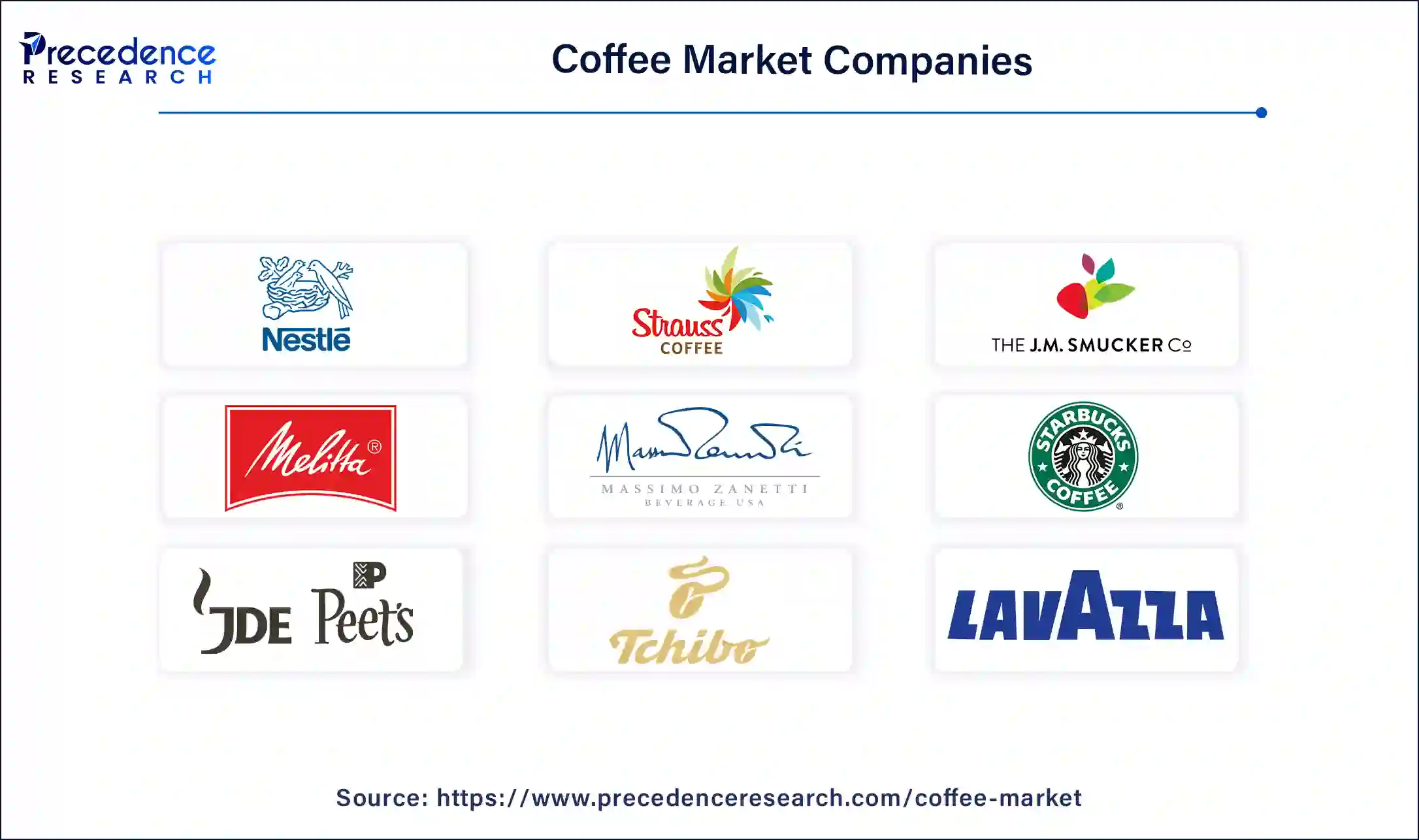
- Nestle
- Strauss Coffee BV
- The J.M. Smucker Company
- Melitta
- UCC Ueshima Coffee Co., Ltd.
- Massimo Zanetti Beverage USA
- Starbucks Coffee Company
- JDE Peet's
- Tchibo Coffee
- Luigi Lavazza Spa
Recent Developments in the Coffee Market (2025–2026)
- In April 2026, Starbucks formed a joint venture with Boyu Capital to accelerate growth in China through localized operations, digital expansion, and faster store scaling. The partnership combines Starbucks' global brand strength with Boyu's local market expertise to enhance competitiveness and support long-term expansion across China. The partnership supports Starbucks' ambition to expand its China footprint from approximately 8,000 stores to as many as 20,000 stores over time. (Source: https://about.starbucks.com)
- In April 2026, Nestlé and Starbucks launched Starbucks Coffee Craft concentrate to strengthen their position in the rapidly growing global cold coffee market and expand premium at-home coffee consumption occasions. The launch reflects both companies' strategy to capture younger consumers seeking convenience, personalization, and premium cold coffee formats, while further expanding the reach of the Global Coffee Alliance across retail and ready-to-drink coffee segments. The product will initially launch in Japan, South Korea, and the UK before expanding across Europe and Asia. (Source: https://www.nestle.com)
- In April 2025, Compound Foods officially introduced its proprietary platform for beanless coffee and cocoa ingredients. This initiative aims to tackle risks in global supply chains for these at-risk commodities. The startup was founded to address challenges in coffee and cocoa production, including supply shortages and climate change.
- In February 2025, Tata Consumer Products launched its premium instant coffee ‘Tata Coffee Grand Premium'.The new launch is backed by a captivating film, using ASMR (Autonomous Sensory Meridian Response) that showcases the sensory journey of Tata Coffee Grand Premium from bean to cup.
Segments Covered in the Report
By Product
- Roasted
- Roast and Ground
- Pods and Capsules
- Whole Beans
- Instant
- Ready to Drink
By Nature
- Conventional
- Organic
By Distribution Channel
- B2B
- Cafes
- Hotels and Restaurants
- Offices
- Bakeries and Coffee Shops
- Others
- B2C
- Grocery Stores/Supermarkets
- Hypermarkets
- Convenience Stores
- Online Retailers
- Online Direct-To-Consumer (DTC)
- Others
By Geography
- North America
- Asia Pacific
- Europe
- Latin America
- Middle East and Africa
For inquiries regarding discounts, bulk purchases, or customization requests, please contact us at sales@precedenceresearch.com
Frequently Asked Questions
Tags





Ask For Sample
No cookie-cutter, only authentic analysis – take the 1st step to become a Precedence Research client
 Get a Sample




 sales@precedenceresearch.com
 Schedule a Meeting
