



Pediatric Vitrectomy Market Size, Companies, Share, Patient Volume, Treatment Adoption Rates, Pricing Analysis, Regulatory Landscape, Competitive Positioning, and Demand Forecast
Pediatric Vitrectomy Market (By Product Type: Vitrectomy Machines, Vitrectomy Packs, Surgical Instruments, Others; By Application: Retinal Detachment, Diabetic Retinopathy, Macular Hole, Others; By End-User: Hospitals, Ophthalmic Clinics, Ambulatory Surgical Centers, Others) - Global Industry Analysis, Size, Trends, Leading Companies, Regional Outlook, and Forecast 2026 to 2035
Source: https://www.precedenceresearch.com/pediatric-vitrectomy-market
 Get a Sample
 Table Of Content


What is Pediatric Vitrectomy Market Size in 2026?
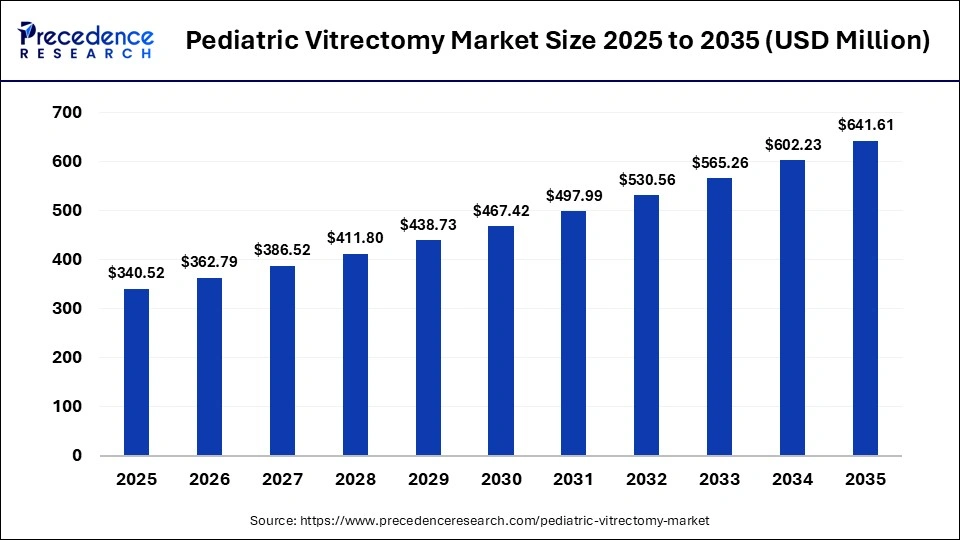
The global pediatric vitrectomy market size was calculated at USD 340.52 million in 2025 and is predicted to increase from USD 362.79 million in 2026 to approximately USD 641.61 million by 2035, expanding at a CAGR of 6.54% from 2026 to 2035. This market is growing due to the rising prevalence of retinopathy of prematurity in infants because of higher survival rates of premature births.
Key Takeaways
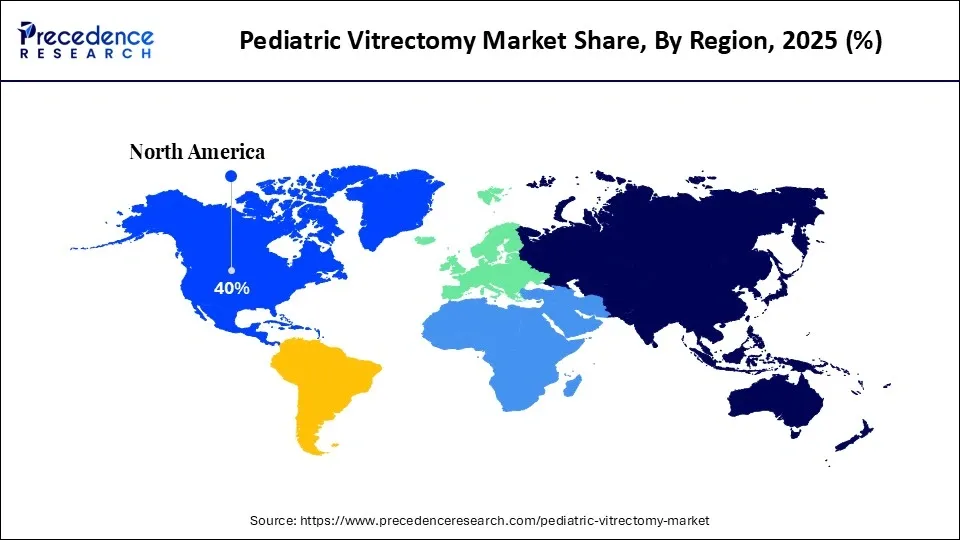
- North America dominated the global pediatric vitrectomy market with a share of approximately 40% in 2025.
- Asia-Pacific is expected to grow at the fastest CAGR of 8.5% between 2026 and 2035.
- By product type, the vitrectomy machines segment dominated the market in 2025.
- By product type, the vitrectomy packs segment is expected to expand at the fastest CAGR between 2026 and 2035.
- By application, the retinal detachment segment held the largest market share in 2025.
- By application, the diabetic retinopathy segment is expected to expand at the fastest CAGR between 2026 and 2035.
- By end-user, the hospitals segment contributed the biggest market share in 2025.
- By end-user, the ophthalmic clinics segment is expected to expand at the fastest CAGR between 2026 and 2035.
What Drives the Pediatric Vitrectomy Market?
The pediatric vitrectomy industry covers surgical procedures and devices designed to remove vitreous gel and treat vitreoretinal eye disorders in children, such as retinopathy of prematurity (ROP), retinal detachments, hemorrhages, and other congenital or acquired conditions.
The market is mainly driven by the growing prevalence of congenital and acquired retinal diseases in children, like ROP, coupled with advancements in, and even increased adoption of, minimally invasive, high-speed, and small-gauge surgical technologies. Improved intraoperative imaging and visualization techniques improve the precision of delicate, complex surgeries, impacting higher procedural volumes.
How is AI Influencing the Pediatric Vitrectomy Market?
Artificial Intelligence is transforming the market by improving surgical precision, aiding in early diagnosis of conditions such as ROP, and improving intraoperative procedures. AI allows smart vitrectomy platforms to adapt parameters, like cutter speed and intraocular pressure, in real-time, thereby improving procedural consistency. AI helps with predictive maintenanc e of equipment and even streamlines preoperative planning, lowering costs and enhancing workflows in high-volume centers.
What are the Key Trends Influencing the Pediatric Vitrectomy Market?
- Rise in ROP and Congenital Cases: Increased knowledge, screening, and treatment of ROP and a few congenital vitreoretinal diseases, like congenital cataracts, are significantly driving the need for specialized pediatric vitrectomy procedures.
- Advanced Imaging and Visualization: Enhanced intraoperative imaging, along with high-definition visualization systems are enhancing the accuracy of complex pediatric retinal procedures.
- Minimally Invasive Vitrectomy Techniques (MIVS): Increased acceptance of sutureless surgeries enhances patient recovery times, decreases ocular trauma, and enhances visual outcomes in children.
- Focus on Specialized Pediatric Care: Increased funding and dedicated, specialized pediatric ophthalmology centers, mainly in North America and Asia-Pacific, are enhancing access and treatment quality.
- Improved Machine Efficiency: Next-generation vitrectomy machines with improved fluidics, better illumination, and even higher cut rates (up to 10,000 cuts per minute) are improving surgical performance.
Future Market Outlook
- Expansion in Emerging Markets – The Asia-Pacific is undergoing the fastest growth due to a growing retinal disease burden, increased healthcare spending, and rapid acceptance of micro-incision vitrectomy systems. Emerging markets such as China, India, South Korea, and sections of Latin America represent significant upside, mainly with the introduction of cost-effective, high-speed, portable vitrectomy units, thus suitable for expanding localized healthcare infrastructure.
- Infrastructure Development – By equipping specialized hospitals with advanced, high-definition visualization systems and miniaturized, high-speed instruments necessary for delicate, small-eye surgeries. It allows better surgical outcomes, reduces complications, and increases access via telemedicine in underserved regions. Hospitals and specialized eye clinics are the main end-users, requiring infrastructure to manage complex pediatric cases, which includes general anesthesia and specialized, high-definition surgical equipment.
Market Scope
| Report Coverage | Details |
| Market Size in 2025 | USD 340.52 Million |
| Market Size in 2026 | USD 362.79 Million |
| Market Size by 2035 | USD 641.61 Million |
| Market Growth Rate from 2026 to 2035 | CAGR of 6.54% |
| Dominating Region | North America |
| Fastest Growing Region | Asia Pacific |
| Base Year | 2025 |
| Forecast Period | 2026 to 2035 |
| Segments Covered | Product Type, Application, End-User, and region |
| Regions Covered | North America, Europe, Asia-Pacific, Latin America, and Middle East & Africa |
Segmental Insights
Product Type Insights
Why Did the Vitrectomy Machines Segment in the Pediatric Vitrectomy Market?
The vitrectomy machines segment held the largest revenue share of the market in 2025 due to their important role in performing high-precision, minimally invasive retinal surgeries, mainly for treating ROP and a few congenital vitreoretinal diseases. Modern, user-friendly machines provide better intraoperative visualization, fluidic management, and controlled intraocular pressure, which are vital for pediatric, especially neonatal, patients.
The vitrectomy packs segment is expected to show the fastest growth over the forecast period. This is due to its comprehensive nature, convenience, and cost-effectiveness in clinical settings. These packs thus streamline the surgical process by including all necessary tools in one ready-to-use package, decreasing preparation time. The packs are increasingly tailored for pediatric cases, which include specialized, smaller-gauge instruments demanded for fragile, smaller eyes.
Application Insights
How the Retinal Detachment Segment Dominated the Pediatric Vitrectomy Market?
The retinal detachment segment dominated the market in 2025. Due to the complexity and severity, a remarkable percentage of patients need multiple surgeries within one year, thus driving up the volume of procedures. Pediatric retinal detachment is often linked with high-risk peripheral retinal pathologies, which include congenital anomalies, trauma, and myopia, mainly in males.
The diabetic retinopathy segment is expected to witness the fastest growth in the market over the forecast period, due to the growing prevalence of diabetes, leading to severe complications such as proliferative diabetic retinopathy along with vitreous hemorrhage, demanding surgical intervention to prevent blindness. Moreover, advanced procedures, including vitreous hemorrhage clearance as well as retinal detachment repair, offer better, more reliable results.
End-User Insights
Which End-User Segment Led the Pediatric Vitrectomy Market?
The hospitals segment led the market in 2025. This is because of the demand for highly specialized care and advanced infrastructure for complex surgeries, alongside the availability of trained pediatric ophthalmologists. Hospitals are generally better equipped to handle the unique difficulties of treating children, including the demand for general anesthesia, specialized pediatric anesthesia teams, and intensive care support if complications arise.
The ophthalmic clinics segment is expected to expand rapidly in the market in the coming years, due to specialized, high-volume care for conditions such as ROP and congenital cataracts, which need advanced, minimally invasive technology and even expert handling. These clinics provide better accessibility, specialized expertise, and faster turnaround times for processes compared to large hospitals.
Regional Analysis
North America Pediatric Vitrectomy Market Size and Growth 2026 to 2035
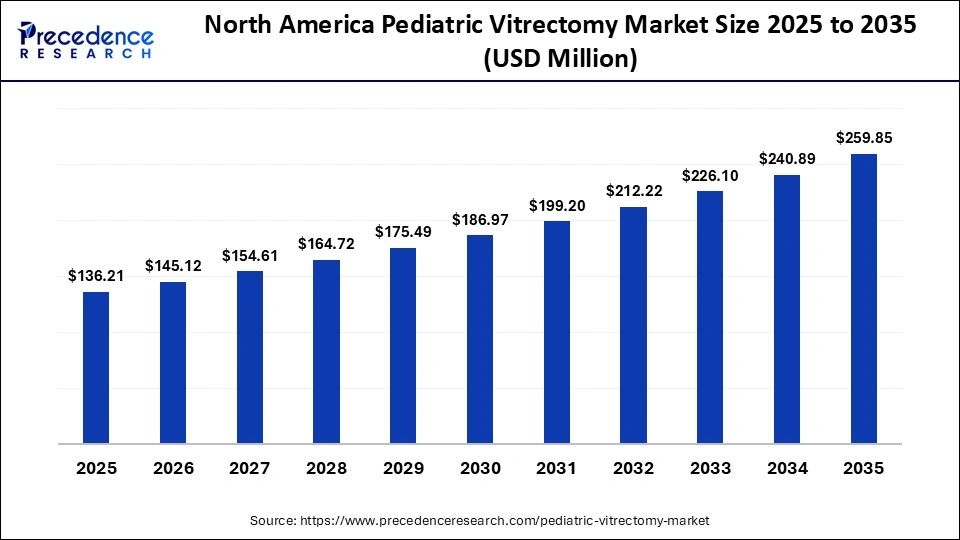
The North America pediatric vitrectomy market size is estimated at USD 136.21 million in 2025 and is projected to reach approximately USD 259.85 million by 2035, with a 6.67% CAGR from 2026 to 2035.
What Made North America the Dominant Region in the Pediatric Vitrectomy Market?
North America held a major market share in 2025. The region's dominance in the market is attributed to its boasting top-tier medical facilities, equipped with the latest, minimally invasive vitreoretinal surgical devices, which include microincision vitrectomy systems. Further, the availability of specialized pediatric ophthalmic centers along with highly skilled surgeons, working with increased funding for research and development, guarantees high-quality care.
U.S. Pediatric Vitrectomy Market Size and Growth 2026 to 2035
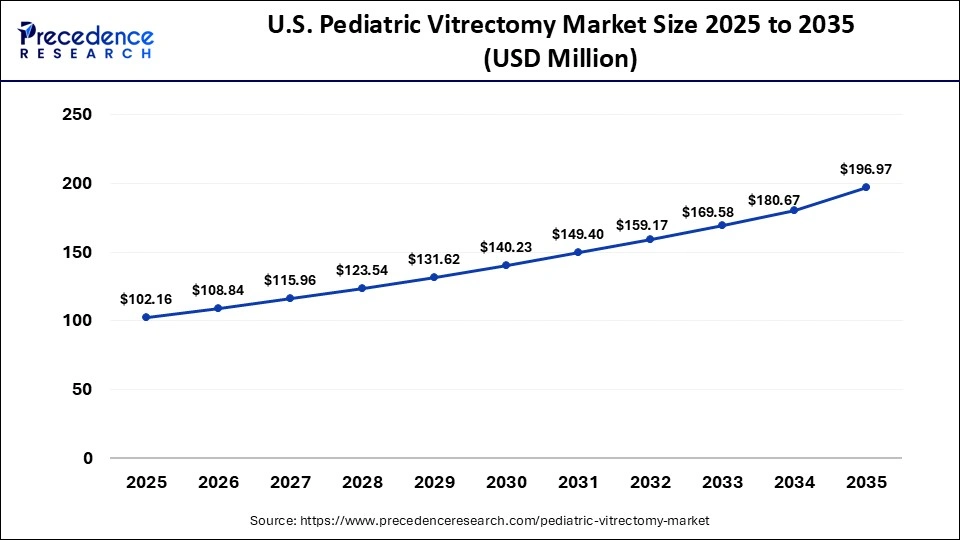
The U.S. pediatric vitrectomy market size is calculated at USD 102.16 million in 2025 and is expected to reach nearly USD 196.97 million in 2035, accelerating at a strong CAGR of 6.79% between 2026 to 2035.
U.S. Market Trends
The U.S. leads the market in North America due to the growing incidence of ROP in premature infants in the U.S., along with retinal detachment in children, which are the main drivers. There is a strong shift toward minimally invasive vitreoretinal surgery utilizing smaller-gauge, high-speed instrumentation, for example, Bausch + Lomb's 15,000 cuts-per-minute Bi-blade cutters for enhanced safety and faster recovery.
What makes Asia-Pacific the Fastest-Growing Region in the Pediatric Vitrectomy Market?
Asia-Pacific is expected to host the fastest-growing market in the coming years, due to technological advancements and an increasing need for minimally invasive procedures. The integration of innovative surgical devices, like ultra-fine vitrectomy instruments and advanced visualization systems, has improved procedural efficacy and safety, thus elevating the competitive landscape.
China Market Trends
China's market is heavily driven by the rapid acceptance of advanced vitrectomy systems, driven by government initiatives for pediatric ophthalmic healthcare and strategic investments in local manufacturing to reduce expenses and enhance supply chain resilience. The National Medical Products Administration (NMPA) regulates the use and approval of novel drugs related to pediatric vitrectomy in China.
What Makes Europe a Significant Region in the Pediatric Vitrectomy Market?
Europe is expected to grow at a significant CAGR throughout the forecast period, driven by rising pediatric eye health concerns, technological innovations, and expanding healthcare infrastructure. This market covers a range of surgical procedures targeted at treating retinal detachment and vitreous hemorrhage, along with a few ocular conditions in children. The need for minimally invasive techniques and even innovative surgical tools is fueling market growth across the region, supported by increasing awareness and improved diagnostic capabilities.
UK Market Trends
The UK market is driven by the rising prevalence of pediatric vitrectomy in the region, accounting for 3–4 in 10,000 infant incidences of cataracts, along with increased incidences of premature retinopathy. Major trends involve a shift toward minimally invasive vitrectomy surgery with smaller-gauge instruments, acceptance of 3D visualization, and specialized surgical systems from companies such as Alcon and Bausch.
Will Latin America Grow in the Pediatric Vitrectomy Market?
Latin America is expected to grow at a considerable CAGR in the upcoming period. It is driven by the introduction of miniaturized, high-precision vitrectomy systems has improved surgical outcomes, encouraging acceptance among ophthalmic surgeons. Progressive policies facilitate device approval along with reimbursement, decreasing barriers for market entry and expansion.
Brazil Market Trends
Brazil's market is driven by an increased prevalence of ROP together with retinal disorders in children, mainly due to enhanced neonatal survival rates, leading to an increase in pediatric vitrectomy procedures.
Which Factors Influence the Pediatric Vitrectomy Market in the Middle East and Africa?
The Middle East and Africa are considered to be a significantly growing area, as the enhanced survival rates of premature infants in the region have raised the cases of ROP, requiring specialized surgical intervention. There is an improved awareness among pediatricians and parents, coupled with better screening, which ensures earlier analysis of vision-threatening conditions. Moreover, expanding healthcare infrastructure along with specialized pediatric ophthalmology services over the region facilitates these complex surgeries.
UAE Market Trends
The UAE market is expanding due to growing ROP cases, along with advanced minimally invasive surgical techniques, and enhanced healthcare infrastructure. The UAE's investment in worldwide popular healthcare infrastructure, including specialized ophthalmology centers and AI-based diagnostic tools, supports the expansion of complex surgeries.
Value Chain Analysis – Pediatric Vitrectomy Market
- R&D
The latest research deals with the development of smaller-gauge surgical instruments with better accuracy and efficiency.
Key Players: Fortrea, Alcon, and Bausch + Lomb - Clinical Trials and Regulatory Approval
Novel probes, medical devices, and techniques are evaluated under clinical trials to assess their safety and efficacy profiles.
Key Players: Ege University, Medical University of Lublin, Chang Gung Memorial Hospital - Patient Support and Services
Patient support refers to providing post-surgical care and giving financial assistance through funding programs.
Pediatric Vitrectomy Market Companies
- Alcon Laboratories Inc.
- Bausch & Lomb Incorporated
- Carl Zeiss Meditec AG
- Lumenis Ltd.
- Synergetics USA, Inc.
- Optos Plc
- Ellex Medical Lasers Ltd.
- Hoya Corporation
- NIDEK Co., Ltd.
- Topcon Corporation
- IRIDEX Corporation
Recent Developments in the Pediatric Vitrectomy Market
- In October 2025, Topcon Healthcare, Inc. signed a definitive agreement to obtain Toku, Inc., a San Diego-origin AI health technology firm. Meanwhile, Toku's innovative platforms CLAiR, BioAge, and MyKidneyAI leverage standard color fundus photographs to deliver real-time assessments of cardiovascular risk, biological aging, and chronic kidney disease. (Source: https://topconhealthcare.com)
- In April 2025, Alcon launched the UNITY Vitreoretinal Cataract System (VCS) and UNITY Cataract System (CS). The new, versatile platforms provide two configurations: a combined console (VCS) along with a standalone cataract system (CS). This platform is engineered to deliver superior efficiency for vitreoretinal and even cataract surgery, while allowing exceptional outcomes for patients. (Source: https://investor.alcon.com)
- In January 2024, Nepal Eye Hospital successfully performed a lens-sparing vitrectomy (LSV), a first-of-its-kind surgery, in a newborn baby of 29 weeks. The hospital in Tripureshwar aims to adopt a policy to further expand the services, especially for pediatrics. (Source: https://myrepublica.nagariknetwork.com)
Segments Covered in the Report
By Product Type
- Vitrectomy Machines
- Vitrectomy Packs
- Surgical Instruments
- Others
By Application
- Retinal Detachment
- Diabetic Retinopathy
- Macular Hole
- Others
By End-User
- Hospitals
- Ophthalmic Clinics
- Ambulatory Surgical Centers
- Others
By Region
- North America
- Europe
- Asia-Pacific
- Latin America
- Middle East & Africa
For inquiries regarding discounts, bulk purchases, or customization requests, please contact us at sales@precedenceresearch.com
Frequently Asked Questions
Tags





Ask For Sample
No cookie-cutter, only authentic analysis – take the 1st step to become a Precedence Research client
 Get a Sample
.webp)



 sales@precedenceresearch.com
 Schedule a Meeting
