



Pharma 4.0 Market Size, Key Companies, Company Technology Portfolio, AI and Automation Adoption, Smart Manufacturing Trends, Drug Discovery Applications, Competitive Landscape, and Growth Forecast
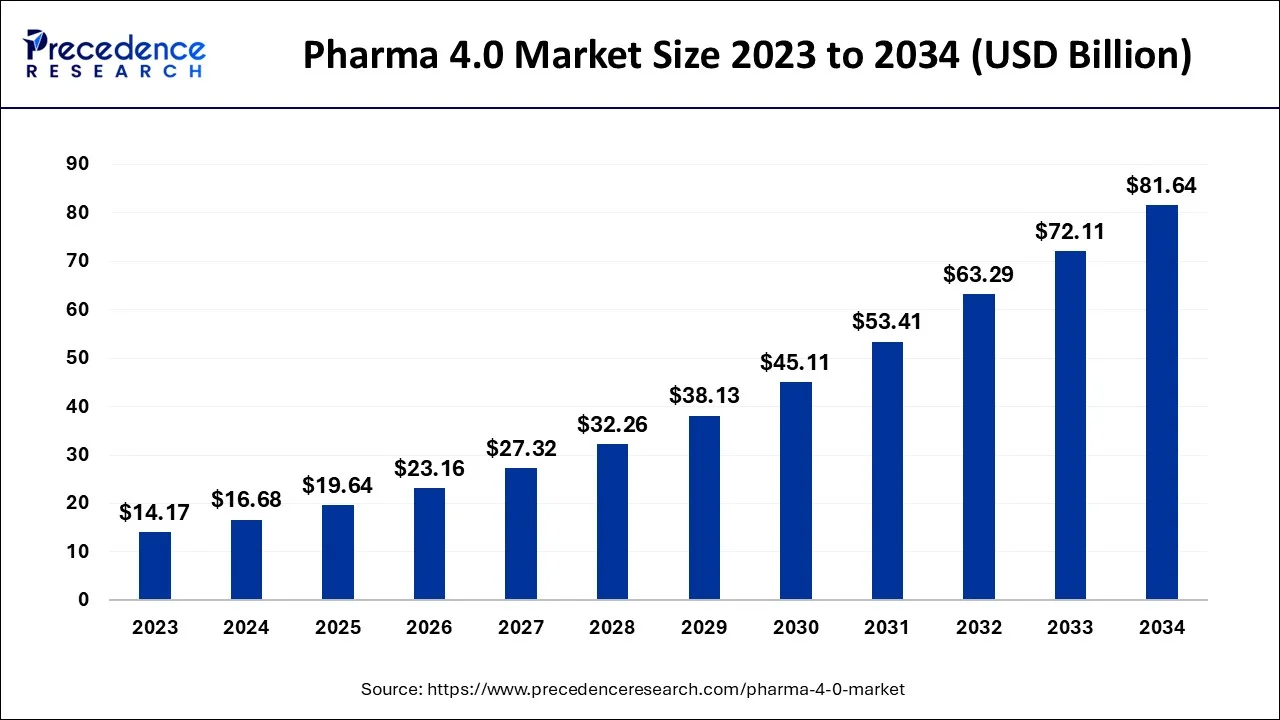
Deepa Pandey, a Healthcare Industry Expert, highlights that the pharma 4.0 market has reached USD 23.16 billion in 2026 and is on track to reach USD 81.20 billion by 2034, advancing at a CAGR of 19.20%. Key pharma 4.0 market companies shaping the market include Matthews Specialty Vehicles, Farber Specialty Vehicles, Medical Coaches, while major growth segments span by technology, by application, by end-user.
Source: https://www.precedenceresearch.com/pharma-4-0-market
 Get a Sample
 Table Of Content


Pharma 4.0 Market Size and Forecast 2026 to 2034
The global pharma 4.0 market size was estimated at USD 19.64 billion in 2025 and is predicted to increase from USD 23.16 billion in 2026 to approximately USD 81.20 billion by 2034, expanding at a CAGR of 19.20% from 2026 to 2034. Pharma 4.0 market growth driven by AI adoption, automation, smart manufacturing, real-time data analytics, digital twins, connected systems, and demand for personalized medicine.
Key Takeaways:
- In terms of revenue, the pharma 4.0 market is valued at 19.64 billion in 2025.
- It is projected to reach 81.20 billion by 2034.
- The market is expected to grow at a CAGR of 19.20% from 2025 to 2034.
- North America dominated the market with the highest market share of 35.29% in 2024.
- Asia Pacific is expected to witness significant growth in the market during the predicted timeframe.
- By technology, the artificial intelligence segment is anticipated to show considerable growth in the market over the forecast period.
- By application, the drug discovery and development segment is anticipated to show considerable growth in the market over the forecast period.
- By end-user, the biotechnology companies segment is anticipated to show considerable growth in the market over the forecast period.
How is AI Integration Transforming the Pharma 4.0 Market?
The implementation of AI is also creating a substantial difference in Pharma 4.0, as the technology adds automation and efficiencies to nearly all processes of drug preparation, drug search, and drug supply. In R&D, AI has also been applied based on accelerate drug discovery by processing massive datasets to identify the potential of compounds and predictive biological activity, which can save much time and cost. Automation in manufacturing involves AI, where human involvement in the production process is minimized, and there is higher precision and uniformity of the machinery output.
U.S. Pharma 4.0 Market Size and Growth 2025 to 2034
The U.S. pharma 4.0 market size was valued at USD 4.44 billion in 2024 and is anticipated to reach around USD 20.14 billion by 2034, poised to grow at a CAGR of 16.30% from 2025 to 2034.
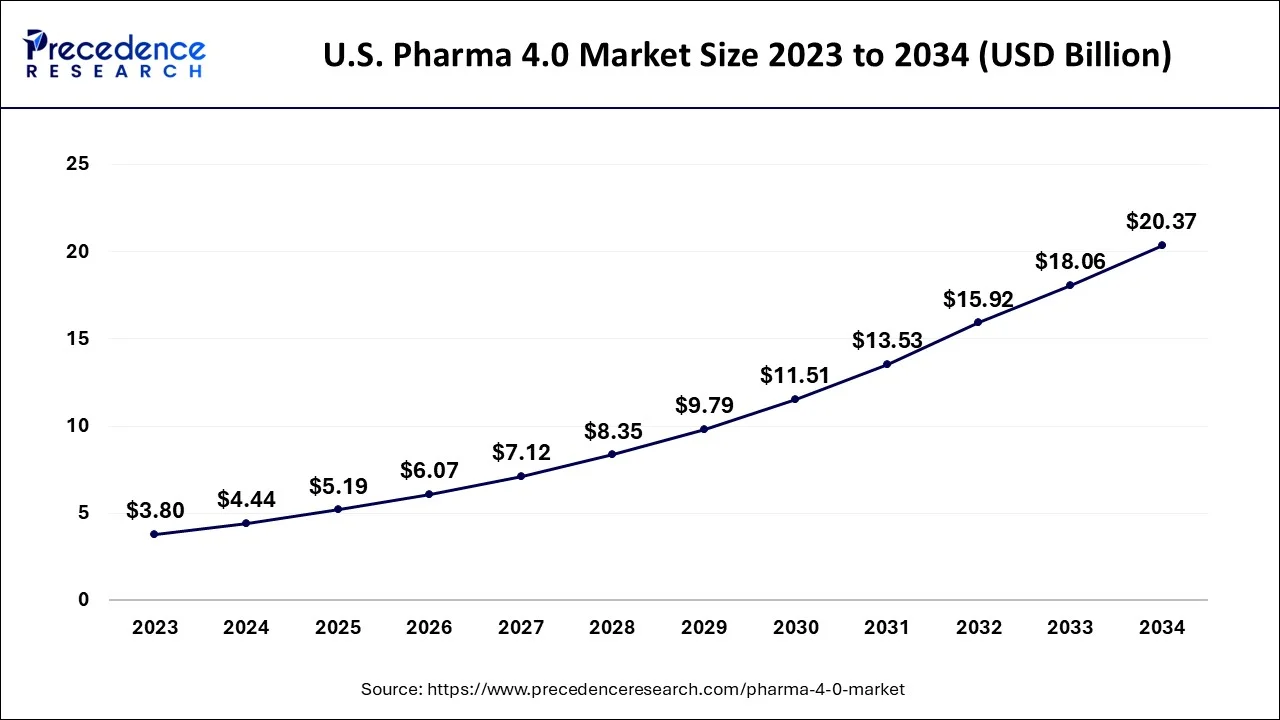
North America dominated the market with the largest market size in 2024, the region is anticipated to maintain its position throughout the forecast period. The region has actively participated in the adoption of advanced technological solutions in almost every field. The focus and substantial potential for technological innovation in the pharmaceutical sector across the region along with the availability of investors for the same highlight the factors for the market's expansion in North America. Enormous demand for drug discovery in the region promotes the accpetance of various technologies to improve the overall operative capabilities of the firms. This factor promises a bright future for the pharma 4.0 market in North America.
U.S. Pharma 4.0 Market Trend
The U.S. is steering the transformation of the world Pharma 4.0, which generates a wide application of artificial intelligence into the pharmaceutical value chain. High levels of digital infrastructure in the country make the implementation of AI tools in research, manufacturing, and the supply chain possible quickly. Pharmaceutical companies in the United States are also taking advantage of AI to accelerate drug discovery, improve clinical study design, and cut down the costs of operations. Moreover, a positive regulatory environment and the active role of the Food and Drug Administration (FDA) in developing the regulation of AI enable innovation processes, though, at the same time, being safeguarded with safety and adherence. AI-powered platforms are being invested in continually, excellent R&D resources, as well as cooperation between tech companies and pharmaceutical ones, position the U.S. as a frontrunner in Pharma 4.0.
- Moreover, the food and drug administration (FDA) of the United States has already stated the known importance of advanced technologies for the pharmaceutical as well as biotechnology industries, this element acts as a growth factor for the market by boosting the rate of adoption for such technologies.
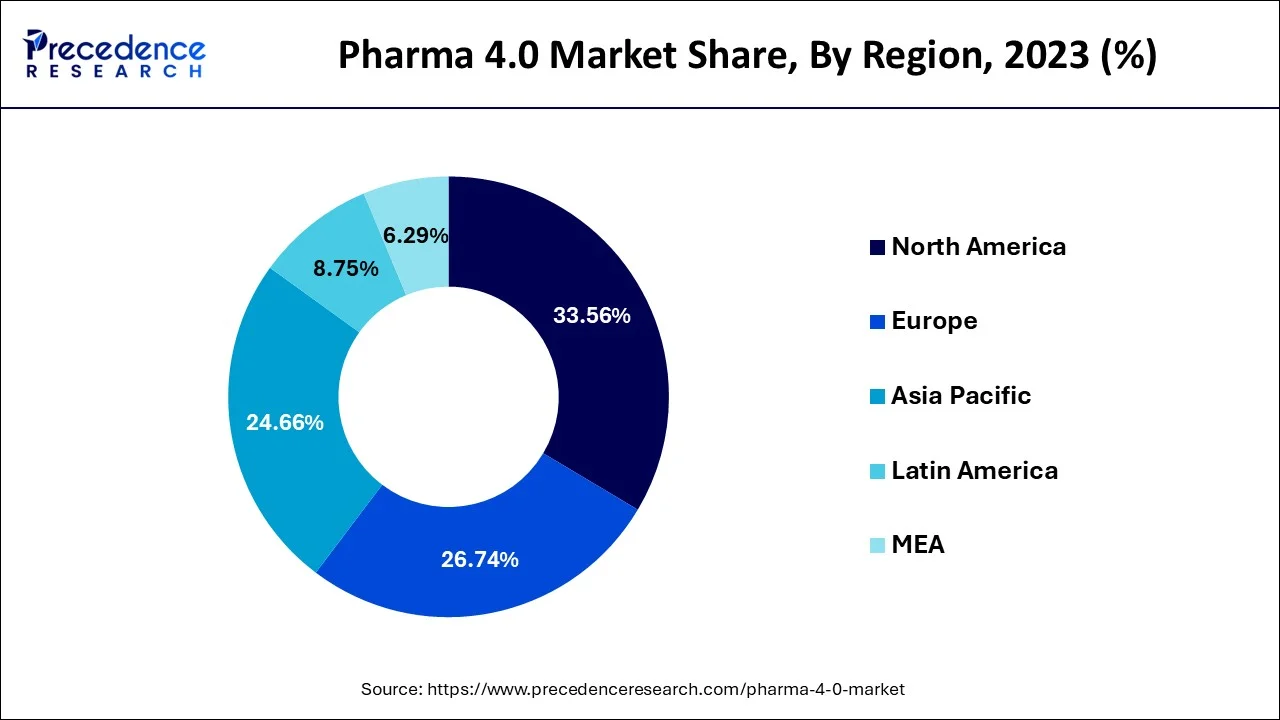
Asia Pacific is expected to witness significant growth in the market during the forecast period. The region is currently experiencing a rapid acceptance of advanced technologies while addressing potential issues with the traditional operation systems. This element highlights the growth of the market in Asia Pacific. The improving infrastructure of pharmaceutical industry and rising requirements for novel drug development promote the growth of the market in the region. Multiple pharmaceutical companies in potential countries, such as India, South Korea, Japan and China are focusing on automation of tasks for lowering the overall time consumed at the firms. This is another factor to fuel the growth of the market in Asia Pacific in the upcoming years.
China Pharma 4.0 Market Trend
With the great assistance of the government of China, and strategic reform policies to make the industry modernized in China. Within the healthcare reform of the country, the focus is being placed on considerable investments in the improvement of the availability of qualitative medicines and utilizing AI technologies to support the evolution of the development of pharmaceuticals. Increased efficiency and regulatory compliance through the use of smart manufacturing solutions are also driving. Academic labs are also partnering with pharmaceutical companies so that local startups and tech giants can create drug discovery tools powered by AI and intelligent manufacturing systems. China has a huge patient base and increasingly high interest in personalized medicine, so Pharma 4.0 technologies have real potential to expand and redefine the future of the healthcare industry in the country.
European Pharma 4.0 Market Trend
The European pharma 4.0 market is expected to account for a substantial market share in 2024. Investment in AI is increasing throughout Europe, and pharmaceutical organizations are also incorporating intelligent technology into predictive maintenance, process improvement, and reduced drug development. The use of blockchain is also rising at a very high pace, which has been driven by major consultancies and technology organisations across the world, including IBM, Deloitte, and Accenture, taking the lead in blockchain-based solutions in clinical trials, drug supply chains, and data management.
Germany is leading the movement of Pharma 4.0 in Europe. The pharmaceutical sector of the country is well supported by the government, and the country has been looking forward to modernizing drug-manufacturing practices through some proactive regulatory reforms. The implementation of the principles of Pharma 4.0 is also being boosted through conferences, workshops, and other forms of events backed by efforts of both government-run and privately owned institutions. With increased demand for personalized medicine and advanced therapies, Germany can become a hub of innovation due to which there is growth in the emerging pharmaceutical market in Europe.
Market Overview
Pharma 4.0 is also referred to as applied industry 4.0 or smart factories developed especially for the pharmaceutical industry. The major objective for applying Industry 4.0 in the pharmaceutical sector is to provide guidance for projecting regulatory practices to speed up the operations in the industry. Pharma 4.0 majorly works on the development of pharmaceutical organizations and applies the full potential to integrate digitization in order to provide faster innovation in therapeutics and enhance the production process.
Pharma 4.0 is the revolution in the pharmaceutical industry which carries multiple technological advancements, such as digitization, and automation to meet complex product cycles and portfolios in the pharmaceutical industry. With the emergence of digitization and automation, the pharma 4.0 market offers services to connect and develop latest insights fpr the pharmaceutical industry with precise adaptability and transparency. The pharma 4.0 technology also promises to enhance the capabilities of decision-making and provide real-time and in-line control over business, quality, operations, and regulatory compliance.
Pharma 4.0 Market Growth Factors
Pharma 4.0 technology is observed to get accelerated in the upcoming years with the emergence of processing interconnectivity, big data analytics, artificial intelligence, collaborative robotics, and distributed cloud-based service architectures. Due to the revolutionary technology of pharma 4.0, the future of pharmaceutical manufacturing is aimed to be more connected, efficient, and agile. Several pharmaceutical manufacturers are shifting towards the adoption of pharma 4.0 technology for better workflow and increased productivity.
The pharmaceutical industry across the globe is focusing on digital transformation by shifting traditional laboratories into smart laboratories and factories. By adopting 4.0 technology it is possible to avail faster decision-making process and real-time systems operations. As the digitization grows in the pharmaceutical industry, the market for pharma 4.0 is expected to grow.
The transformation to the pharma 4.0 technology will reduce the time between the market and consumers, it will also reduce the time as well as the cost of the operations. It is a new culture in manufacturing that aims for effortless integration of the system resulting in a higher quality of products and services for customer satisfaction. All these factors contribute to the growth of the Pharma 4.0 market.
Market Scope
| Report Coverage | Details |
| Market Size in 2025 | USD 19.64 Billion |
| Market Size in 2024 | USD 16.68 Billion |
| Market Size by 2034 | USD 81.20 Billion |
| Growth Rate from 2025 to 2034 | CAGR of 19.20% |
| Largest Market | North America |
| Base Year | 2024 |
| Forecast Period | 2025 to 2034 |
| Segments Covered | Technology, Application, End-User, and Region |
| Regions Covered | North America, Europe, Asia-Pacific, Latin America, and Middle East & Africa |
Market Dynamics
Driver
Digital transformation in the pharmaceutical industry
Businesses in the pharmaceutical and life sciences sector can benefit significantly from implementing pharma 4.0. Organizational adjustments are needed in order to adopt to the pharma 4.0 paradigm. Infrastructure and pharmaceutical production techniques must both be completely redesigned. It can help you achieve the highest standards of production quality. The pharmaceutical industry is still in the early stages of digitization. The effectiveness of pharmaceutical companies' facilities could be increased in a variety of ways with the aid of a digital transformation strategy.
Multiple pharmaceutical companies are focusing on digital transformation to collect data, analyze and have access to it for future reference. All these activities along with the requirement for standardized processes in the pharmaceutical industry can be fulfilled with the integration of 4.0 technology. The 4.0 technology is capable of offering real-time insights related to the data. Thus, digital transformation in the pharmaceutical industry is observed to act as a driver for the market.
Restraint
Higher cost of installation and maintenance
Along with multiple benefits of having pharma 4.0 technology, there are few obstacles that hamper the adoption of the technology in the pharmaceutical industry. The transformation to this new technology can be expensive for the pharmaceutical industry. As compared to the traditional system, the installation cost of 4.0 technology in much higher. Small or medium-scale pharmaceutical industries cannot handle the expenses, which limits the adoption of the technology. Along with this, the maintenance of such systems with advanced technology can be hefty. The regular maintenance of the system can create a requirement for skilled professionals. Thus, the installation cost and maintenance requirements for the 4.0 technology create a restraint for the market.
Opportunity
Integration of big data analytics
With the integration of big data analytics, pharmaceutical firms will be able to create manufacturing processes that are more reliable and flexible, with fewer interruptions, flaws, and greater levels of quality monitoring. Big data analytics and effective cross-company communication can enhance process monitoring performance and discover and decrease material waste, overproduction, and energy use. As a result of integration of big data analytics solutions, the pharmaceutical manufacturing facility is observed to be transformed into a reconfigurable industry with a advanced production line that can mass-customize individualized medications to meet various needs. Thus, the integration of big data analytics is observed to create a set of opportunities for the market.
Segments Insights
Technology Insights
The artificial intelligence segment is expected to grow at a significant CAGR over the forecast period, due to recent advancements in AI technologies, smart monitoring, predictive maintenance, and production automation are becoming widely used in production settings. The effectiveness of AI is also being applied by utilizing its power in predictive equipment failure and to streamline the mechanism of maintenance mechanism to reduce downtime and increase productivity. Solutions for generative AI, specifically, are on the rise due to their promise of novel formulations in drug development and research process smoothing. Moreover, the realization of AI within IoT devices and big data platforms exemplifies that pharmaceutical companies may receive real-time data analytics, contributing to more appropriate decision-making within production and logistics.
Global Pharma 4.0 Market Revenue, By Technology, 2022-2024 (USD Million)
| Technology | 2022 | 2023 | 2024 |
| Cloud Computing | 1,454.69 | 1,715.70 | 2,025.25 |
| Artificial Intelligence (AI) | 3,367.26 | 3,955.60 | 4,650.64 |
| Big Data Analytics | 1,829.26 | 2,163.93 | 2,561.98 |
| Internet of Things (IoT) | 5,398.80 | 6,334.37 | 7,438.17 |
Application Insights
The drug discovery and development segment is expected to grow substantially in the pharma 4.0 market. The drug discovery and development business is in a state of rapid reinvention with the adoption of Pharma 4.0 technologies. Big and small pharmaceutical firms are buying into the AI-powered platforms to streamline their R&D procedures. These technologies permit high-throughput screening, predictive modeling, and simulation, so that researchers can more economically and efficiently discover good drug candidates more effectively compared to classic approaches. Cloud computing and real-time analytics also allow collaboration between research groups and facilitate decision-making in the drug development process.
Global Pharma 4.0 Market Revenue, By Application, 2022-2024 (USD Million)
| Application | 2022 | 2023 | 2024 |
| Drug Discovery and Development | 3,401.05 | 4,015.29 | 4,744.45 |
| Clinical Trials | 2,052.60 | 2,416.06 | 2,846.28 |
| Manufacturing | 6,596.35 | 7,738.24 | 9,085.30 |
End-User Insights
The biotechnology companies segment is expected to grow at a significant CAGR over the forecast period, due to increased needs of complex biologics, personalized medicine, and cell and gene-related therapies. Biotechnology companies take a leading position in the implementation of Pharma 4.0 technologies. With the digitization of core operations, biotech companies can experience accelerated timelines and increased production yields and quality of products, with a maintained adherence to the rigorous regulatory standards.
Digital transformation is emerging as a strategic priority of many biotechnology companies as they understand the competitive edge of a change in the rapidly evolving environment. With the Pharma 4.0 technologies incorporated into their work, they will be able to bring high-quality biopharmaceuticals to market faster, work with the complexity of precision medicine, and maintain operational efficiency over extended periods.
Global Pharma 4.0 Market Revenue, By End-User, 2022-2024 (USD Million)
| End User | 2022 | 2023 | 2024 |
| Pharmaceutical Companies | 6,228.46 | 7,302.07 | 8,567.95 |
| Biotechnology Companies | 4,113.40 | 4,846.63 | 5,715.35 |
| CROs and CMOs | 1,708.14 | 2,020.89 | 2,392.74 |
Competitive Landscape
Market for Pharma 4.0 is regarded as quasi-consolidated, featuring in its orbit both traditional pharmaceutical companies and technology corporations and niche players who produce digital solutions. The competition is becoming more challenging along with manufacturers adopting principles of smart manufacturing, automation, artificial intelligence, Internet of Things and advanced analytics.
The main competitors are Siemens, ABB, Rockwell Automation, Schneider Electric, Emerson and Dassault Systèmes. Several of these companies have strong capabilities in industrial automation, sizeable software portfolios, extensive presence in the global market, and strategic alliances with the pharmaceutical industry. Emerging players create specialized solutions based on AI-based analytics, the use of digital twins, connected manufacturing and cloud-based platforms.
Innovation and capabilities of the ecosystem are escalated by acquisitions, technological integrations, partnerships and deployment of digital manufacturing solutions.
High costs of implementation, factors that govern compliance to certain regulations, cybersecurity issues, dubious competence and complex integrations become barriers to entry to the market. Future competition will favor those companies, who are able to offer Pharma 4.0 solutions with interoperability, artificial intelligence, security and scalability options.
Company Profiles
Matthews Specialty Vehicles
- HQ: Greensboro, North Carolina, U.S.
- Founded: 1992
- Ownership: Private
Company Overview:
- Matthews Specialty Vehicles (MSV) is a manufacturer of specialty vehicles that manufactures custom mobile healthcare and blood collection vehicles. Its healthcare offerings range from mobile primary care clinics, dental units, mammography vehicles, eye clinics, behavioral health units, test and vaccination vehicles, and many more custom medical units. MSV's many years of experience in the industry, many different vehicle models manufactured, and the ability to create custom units starting with the chassis allows MSV to be a one-stop shop for healthcare organizations and public entities looking for mobile medical units.
Key Strengths:
- Large Healthcare Product Portfolio: Manufacturing vehicles for multiple specialties such as primary care and dental.
- Established Experience: Over three decades in the specialty vehicle market has helped it build credibility in the marketplace.
Key Vulnerabilities:
- Production Complexity: Highly customized vehicles can require a more complex manufacturing process which can lead to increased lead-time.
- Niche Market Focus: The narrower field of customization limits production compared to standardized vehicle manufacturers.
Farber Specialty Vehicles
- HQ: Reynoldsburg, Ohio, U.S.
- Founded: 1920
- Ownership: Private, family-owned
Company Overview:
- Farber Specialty Vehicles is a family-owned firm that manufactures customized special vehicles for the healthcare, emergency response, education, governmental, and outreach industries. The company's healthcare line includes mobile medical, dental, and mammogram clinics, labs, and other specialty medical outreach vehicles. The firm covers the entire design and manufacturing process, providing services for manufacturers such as Freightliner, International, Ford, Prevost, and Sprinter. Farber's capacity expanded beyond vehicle manufacturing with the introduction of the Farber Fleet system, a vehicle diagnostics and monitoring technology, launched in 2025.
Key strengths:
- Long Experience: Over one hundred years of operating experience creates a strong foundation of knowledge in the field of manufacturing.
- Engineering skills: The presence of in-house electrical and mechanical engineering facilitates the adaption of vehicles according to customer specifications.
- Technological implementation: The Farber Fleet enables the company to diversify its range of services in remote vehicle monitoring.
Key vulnerabilities:
- Customization: Custom manufacturing typically leads to an increase in production timelines and costs.
- Private ownership: The lack of transparency in terms of finance compared to public competitors.
- Complex operations: Diverse services demand the use of diverse engineering capabilities.
ADI Mobile Health Inc.
- HQ: Tualatin, Oregon, U.S.
- Founded: 1980s / approximately 40 years of mobile-clinic experience
- Ownership: Private
Company Overview:
- ADI Mobile Health is a U.S. manufacturer of custom mobile healthcare and dental units. The company designs and builds units that enable healthcare providers to work outside fixed facilities. The scope of ADI's work includes creating customized layouts of clinics, medical, and dental applications for mobile healthcare units. The company focuses on cooperating closely with its customers, which allows positioning itself as a specialized mobile-health manufacturer rather than a generalized vehicle manufacturer. The company's experience and specialization in healthcare technologies provide a strong edge in the implementation of customized mobile healthcare solutions.
Key Strengths:
- Healthcare focus: Dedicated knowledge in mobile health and dentistry.
- Customization: Designs units according to customer specifications.
- Industry experience: About 40 years of experience in mobile health vehicle production.
Key Vulnerabilities:
- Limited scope: More healthcare concentration than providers of mobile specialty vehicles.
- Limited scale: Custom manufacturing makes fast scaling difficult.
- Competitive environment: Competes with other manufacturers that provide wider range of vehicles and services.
MinFound Medical Systems Co., Ltd.
- HQ: Hangzhou, Zhejiang, China
- Founded: 2011
- Ownership: Private
Company Overview:
- MinFound Medical Systems is a provider of medical imaging technology involved in implementing concepts in CT, PET/CT, MRI, digital radiography, ultrasound, molecular imaging, AI, and mobile imaging solutions. MinFound positions itself in the mobile diagnostic imaging technology market rather than in mobile clinic production unlike manufacturers providing mobile specificity in complete custom healthcare vehicle production. The company provides transportable CT solutions including CT trailers capable to combine imaging equipment and operating stations in places where traditional CT solutions are unavailable. The company develops important imaging components and has manufacturing, R&D, sales, and service capacities.
Key Strengths:
- Mobile Diagnostics: Created mobile diagnostic solutions increase access to advanced diagnostics.
- Vertical Technology Competencies: Develops significant imaging technologies such as CT detectors and relevant ASIC technologies.
Key Vulnerabilities:
- Different Competitive Position: More focused on mobile diagnostic technologies than on mobile clinic vehicle manufacturing.
- Technology Investment: Advanced technologies in imaging demand continuous R&D and great investment.
- Regulatory Complexity: Going international means following different regulations for medical devices.
Medical Coaches
- HQ: U.S.
- Founded: Not publicly established
- Ownership: Private
Company Overview:
- Medical Coaches is a U.S.-based manufacturer of mobile medical vehicles that engages in the design and production of unique mobile health units. It operates in the niche area of manufacturing custom mobile clinics and competes with Matthews Specialty Vehicles, Farber Specialty Vehicles, ADI Mobile Health, and other manufacturers. The company differentiates itself by providing customized clinics and not by offering vehicles in bulk which allows clients to order units that are suitable for their specific diagnostic and healthcare operations.
Key Strengths:
- Mobile Healthcare Specialization: The company specializes in building customized healthcare vehicles in its business segment.
- Custom Build Capability: The manufacturer can customize mobile units according to different scopes of operation.
- Well Established Market Position: The company is one of the major players in the mobile clinic manufacturing industry.
Key Vulnerabilities:
- Limited Information Availability: The company is privately owned, therefore there is little information available concerning its financial performance and operation specifics.
- Dependency on Customization: This type of manufacturing makes it difficult for the company to scale its production capacity.
- High Level of Competition: The company competes with the leading manufacturers in its industry such as Matthews, Farber, and ADI.
Pharma 4.0 Market Companies
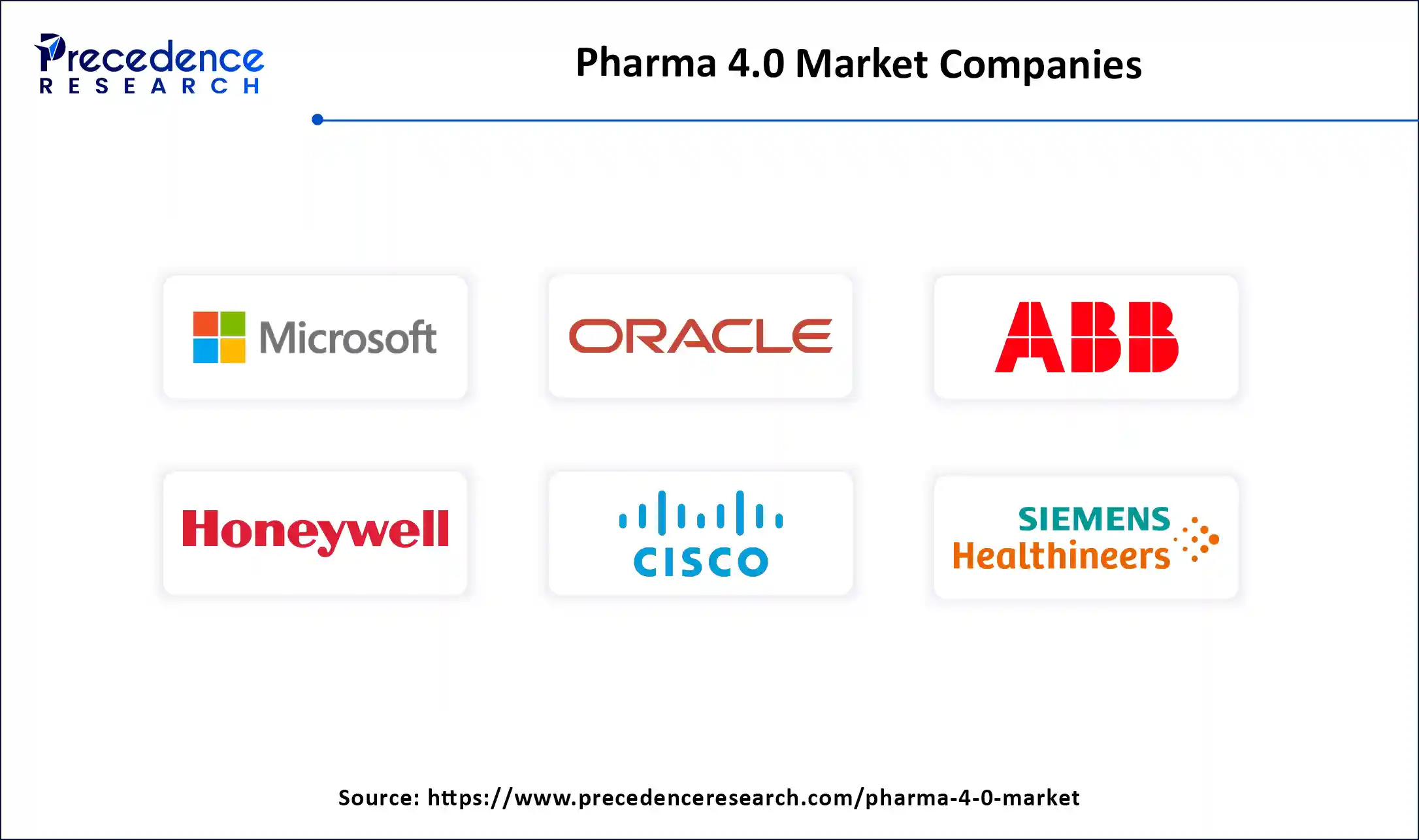
- Microsoft Corporation
- Oracle Corporation
- ABB
- Honeywell International Inc.
- Cisco Systems, Inc.
- Siemens Healthcare GmbH
- GE Healthcare
- IBM Corporation
- Amazon Web Services, Inc.
Recent Developments
- In March 2025, Caliber introduced 4 digital solutions to reinforce its portfolio and put the company at the lead in the process of the Pharma 4.0 revolution. The digital solutions will be the CalGenie, CaliberMetrix, CaliberPulse, and CalWare360 that will incorporate AI and next-gen technologies. (Source: https://www.prnewswire.com)
- In February 2025, Betacom, with Siemens Industries, launched the use of a closed and 5G network hub at MxD (Manufacturing x Digital), the National Center for Cybersecurity in Manufacturing in Chicago. Thanks to the platform, the manufacturing innovation will be accelerated, showing how secure connectivity of the enterprise will come. (Source : https://pharmaceuticalmanufacturer.media)
- In May 2024, Sanofi partnered with Formation Bio and OpenAI to use AI as a means to accelerate drug development. The companies are going to integrate their data, software, and tuned models in order to have purpose-built solutions throughout the lifetime development of the medicines to ensure that bringing new medicines to patients is a streamlined process. (Source: https://www.sanofi.com)
Segments Covered in the Report
By Technology
- Cloud Computing
- Artificial Intelligence (AI)
- Big Data Analytics
- Internet of Things (IoT)
By Application
- Drug Discovery and Development
- Clinical Trials
- Manufacturing
By End-User
- Pharmaceutical Companies
- Biotechnology Companies
- CROs and CMOs
By Geography
- North America
- Europe
- Asia-Pacific
- Latin America
- Middle East and Africa
For inquiries regarding discounts, bulk purchases, or customization requests, please contact us at sales@precedenceresearch.com
Frequently Asked Questions





Ask For Sample
No cookie-cutter, only authentic analysis – take the 1st step to become a Precedence Research client
 Get a Sample
.webp)



 sales@precedenceresearch.com
 Schedule a Meeting
