



Practice Management System Market Size, Share and Trends 2026 to 2035
Practice Management System Market (By Product Type: Standalone, Integrated; By Component: Software, Service; By Mode of Delivery: On-premise, Cloud-based; By End-User: Pharmacies, Diagnostic Laboratories, Hospitals, Other End Users) - Global Industry Analysis, Size, Trends, Leading Companies, Regional Outlook, and Forecast 2026 to 2035
Source: https://www.precedenceresearch.com/practice-management-system-market
 Get a Sample
 Table Of Content
What is the Practice Management System Market Size?
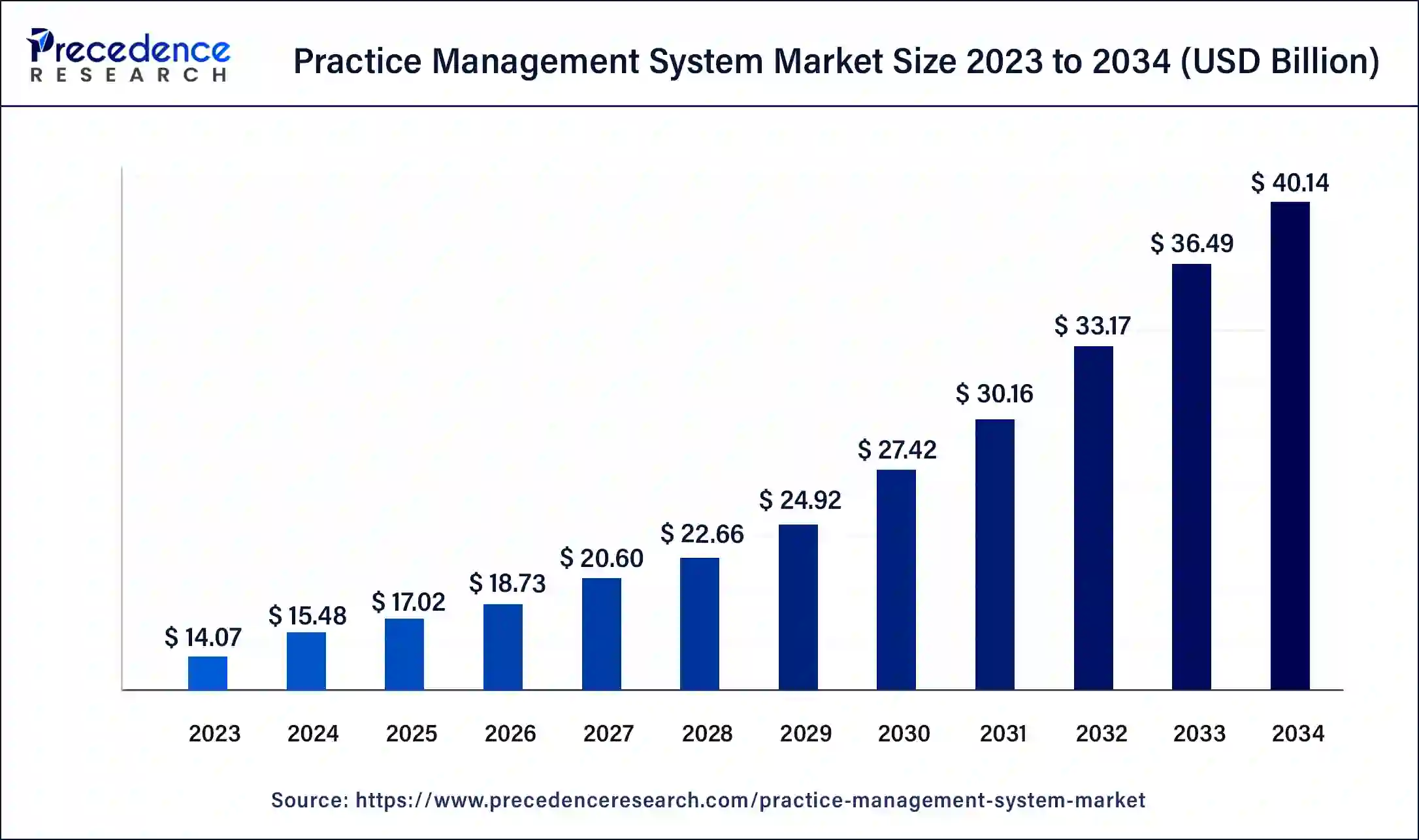
The global practice management system market size is accounted at USD 17.02 billion in 2025 and predicted to increase from USD 18.73 billion in 2026 to approximately USD 43.57 billion by 2035, representing a CAGR of 9.86% from 2026 to 2035.
Practice Management System Market Key Takeaways
- In terms of revenue, the market is valued at $17.02 billion in 2025.
- It is projected to reach $43.57 billion by 2035.
- The market is expected to grow at a CAGR of 9.86% from 2026 to 2035.
- North America accounted revenue share of 46.8% of the global market in 2025.
- By product, the integrated systems segment has generated a revenue share of 74.4% in 2025.
- By component, the software segment has captured a revenue share of over 66.8% in 2025.
- By delivery mode, the web-based delivery mode segment has contributed the largest share of over 47.9% in 2025.
- By end-use, the physician back-office segment has held a revenue share of over 56.3% of the global market in 2025.
Market Overview
Many medical and healthcare practices use practice management software (PMS), a category of computer programs. The primary objective of this software is to help with administrative task organization, appointment scheduling effectiveness, invoice generation ease, and many other things.
A highly favorable environment is developing for the market for practice management systems due to rising investments in healthcare facility upgrades, particularly in developed countries, and the expansion of the healthcare IT sector in developing regions.
The existence of virtual or cloud-based service systems, which allow businesses far away to deliver services at affordable prices, is projected to lead to an expansion in the PMS industry.
The development of IT and the rise in the number of federal initiatives that support the consolidation of health records onto a single platform are driving the growth of the PMS sector. However, the high cost and length of time needed for integration, the scarcity of IT specialists for maintaining the PMS, and worries about data privacy and security restrain market expansion.
Market Scope
| Report Coverage | Details |
| Market Size in 2025 | USD 17.02 Billion |
| Market Size in 2026 | USD 18.73 Billion |
| Market Size by 2035 | USD 43.57 Billion |
| Growth Rate from 2025 to 2034 | CAGR of 9.86% |
| Largest Market | North America |
| Base Year | 2025 |
| Forecast Period | 2026 to 2035 |
| Segments Covered | Product Type, Component, Mode of Delivery, End User, and Region |
| Regions Covered | North America, Europe, Asia-Pacific, Latin America and Middle East & Africa |
Market Dynamics
Drivers
Improved patient care standard
A good system will enhance the overall efficiency and organization of your company, freeing up your staff to focus on the quality of patient care. An automated practice management system can take over a lot of the redundant and repetitive tasks that your employees must complete daily, freeing them up to interact with patients more effectively. Patient management software can increase efficiency because many patient care procedures take an unnecessarily long time. For instance, doctors and patients used to communicate mostly by phone calls and emails, but excessive no-shows, call drops, and schedule changes might result in unnecessarily long wait times and missed appointments.
However, by automating communication, a patient management system's patient portal can significantly raise patient satisfaction. Patients can arrange appointments online through patient portals, as well as change or cancel existing ones. With the help of a patient portal, several care processes, including the gathering of forms and surveys, patient reporting, appointment scheduling, and patient education, can be automated. As a result, time is saved, efficiency is raised, and patient care quality is improved.
Restraints
Issues with privacy and data security
Data protection issues are becoming more difficult, despite the exciting transition from analog to digital medicine. If embraced by healthcare organizations, EMRs can offer numerous advantages to doctors, patients, and healthcare services. However, a few health institutions may implement EMRs at a relatively low rate due to worries about patient information security and privacy.
Many hospitals favor cloud-based MPMS over on-premises systems because of its accessibility and affordability. The use of cloud-based MPMS in medical practice is dangerous, though, as it might make patient data and insurance information public. The significant danger of information leakage makes data misuse or manipulation possible. Unauthorized insurance claims could raise legal and security challenges, as well as issues with regulatory and statutory compliance, auditing, and logging. Therefore, during the projected period, these factors can restrain market expansion for medical practice management software.
Opportunities
Popularity of e-prescriptions increases
An electronic prescription also referred to as an e-prescription or an e-RX, can be used to convert medical prescriptions into a digital form that can be stored in the MPMS systems. These electronic prescriptions can be created digitally, sent straight to the pharmacist, and stored as an electronic health record document on the patient's tablet, laptop, or mobile device. In comparison to paper prescriptions, e-RX is more practical.
E-prescribing systems are characterized by more concise drug descriptions, fewer patient visits, and the capacity to manage both regular prescriptions and those for banned medicines. Additionally, e-prescribing enhances patient security and reduces pharmaceutical mistakes. The benefits of e-prescribing for patient safety include a shorter travel time between the point of care and the point of service, fewer prescription errors, and higher standards of care. Market manufacturers also provide e-prescription functionality in MPMS solutions and mobile applications.
Product Type Insights
Based on products, the global market has been divided into integrated and standalone systems. The largest revenue share was accounted for integrated systems because of the associated benefits of their use. The standalone system sector is anticipated to grow at the fastest rate during the projected time frame. EHRs that are compatible with practice management software must be used with any other products that are sold separately. Whereas the administrative responsibilities and tasks associated with the provision of healthcare services are facilitated by a type of medical/healthcare software solution known as integrated practice management software (IPMS). Integrated solutions include patient involvement, billing systems, and electronic health records (EHR).
The healthcare sector is not complete without electronic health records. The digital revolution significantly aided the adoption of EHRs and their benefits by hospitals around the world. These solutions offer features like ePrescription, scheduling, appointment systems, and messaging and billing portals with built-in EHR capabilities.
Component Insights
The component segment features software and services from the top players. In 2025, the software segment's revenue share was the highest revenue holder. Software is simple to set up, operate, and retrieve data because of user-friendly interfaces and ongoing product updates. Providers, hospitals, and health systems employ them to improve patient satisfaction and care quality. Some value-based care compensation models, including the Inpatient Prospective Payment System (IPPS), take patient satisfaction into account.
According to the Agency for healthcare research and Quality (AHRQ), patient satisfaction is based on whether a patient's expectations for a medical contact were met. Small to medium-sized medical offices use software to streamline and automate procedures needed to manage the business. Regulatory bodies are concentrating on expanding the use of practice management software to enhance the delivery of healthcare services, particularly in industrialized countries.
However, Due to the rising need for cloud-based solutions, technical support, and data security, the services segment is predicted to expand at a faster CAGR than the software segment during the projected period. Various services, like consulting, training, integration, and outsourcing, are included in this market since they support the implementation, upkeep, and optimization of practice management software. The demand for consistent software upgrades, adherence to evolving regulations, and customization of solutions to meet the unique requirements of various end users are further factors driving the services sector.
Mode of Delivery Insights
The global market has been further segmented into on-premises and cloud-based, depending on the products. The software is installed and runs on the local servers or PCs of healthcare organizations in an on-premises practice management system. Security, accessibility, and ease of retrieval of patient data are all provided by on-premises practice management solutions. The ease of access to the information on-site is the main factor driving preference for on-premises solutions. High data security, customization, and system control are benefits of using an on-premise practice management system.
Cloud-based solutions facilitate access to easily accessible information, even from remote locations, and are anticipated to grow at the market's fastest CAGR due to their benefits, including improved reliability and quicker processing. Daily operations are increasingly being carried out using cloud-based solutions. The only thing you need is an internet connection to access the necessary data and apps with cloud-based solutions from anywhere in the world. This eliminates the need to be physically present when concluding most commercial deals and makes remote work and collaboration with distant resources relatively simple.
End User Insights
In 2025, the hospital industry contributed the largest market's total revenue share. Hospitals are one of the primary end users of practice management systems since they need to manage a lot of patient data, medical records, billing data, and administrative tasks. The rapid adoption of integrated solutions that incorporate practice management systems with electronic health records (EHRs), laboratory information systems (LIS), and radiology information systems (RIS) is expected to cause the hospital segment to expand quickly throughout the forecast period. While the diagnostic laboratories and pharmacy segments are expected to grow at a significant rate throughout the forecast period. Pharmacy services such as drug therapy management, e-prescribing, and specialty pharmacy services are becoming more and more necessary. In addition to managing their inventory and dispensing, pharmacies also handle their billing, claims, and customer support. Diagnostic laboratories can increase their productivity, accuracy, compliance, and profitability with the aid of practice management systems. They have a variety of responsibilities, including ordering tests, gathering samples, reporting results, billing, and quality control.
Regional Insights
U.S. Practice Management System Market Size and Growth 2026 to 2035
The U.S. practice management system market size is estimated at USD 5.51 billion in 2025 and is predicted to be worth around USD 14.46 billion by 2035, at a CAGR of 10.13% from 2026 to 2035.
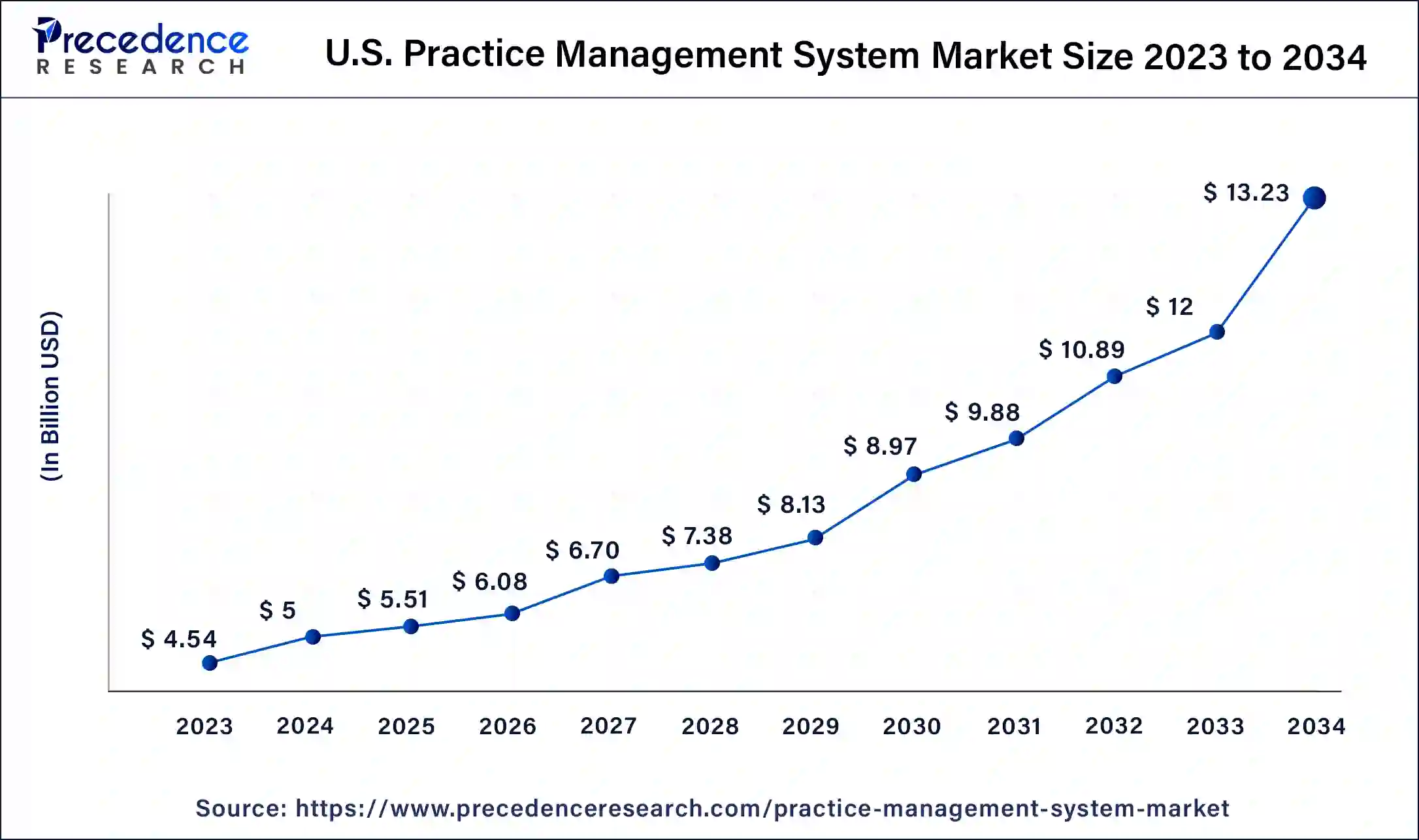
North America has dominated the market with the highest revenue share in 2025. Practice management systems are useful in the US for keeping track of patient records, billing, scheduling appointments, and insurance information, among other aspects of the healthcare industry. The majority of PMS systems are created in small- to medium-sized medical practices in the United States. Small and medium-sized practices typically use practice management software to handle routine tasks, such as accounting and administrative responsibilities. Some offices also utilize it to integrate with electronic medical records. A portion of the software was created specifically for or utilized by outside medical billing organizations. Hospital third-party medical billing companies employ some type of medical practice management software. Government funding will undoubtedly speed up healthcare providers' adoption of medical practice management and alter how players behave in general.
U.S. Practice Management System Market Trends
The U.S. market is experiencing strong growth as healthcare providers increasingly adopt digital solutions to streamline scheduling, billing, documentation, and overall administrative workflows. Integrated platforms that combine PMS with EHR interoperability, telehealth, and revenue cycle management are seeing the fastest adoption as practices seek operational efficiency and cost control.
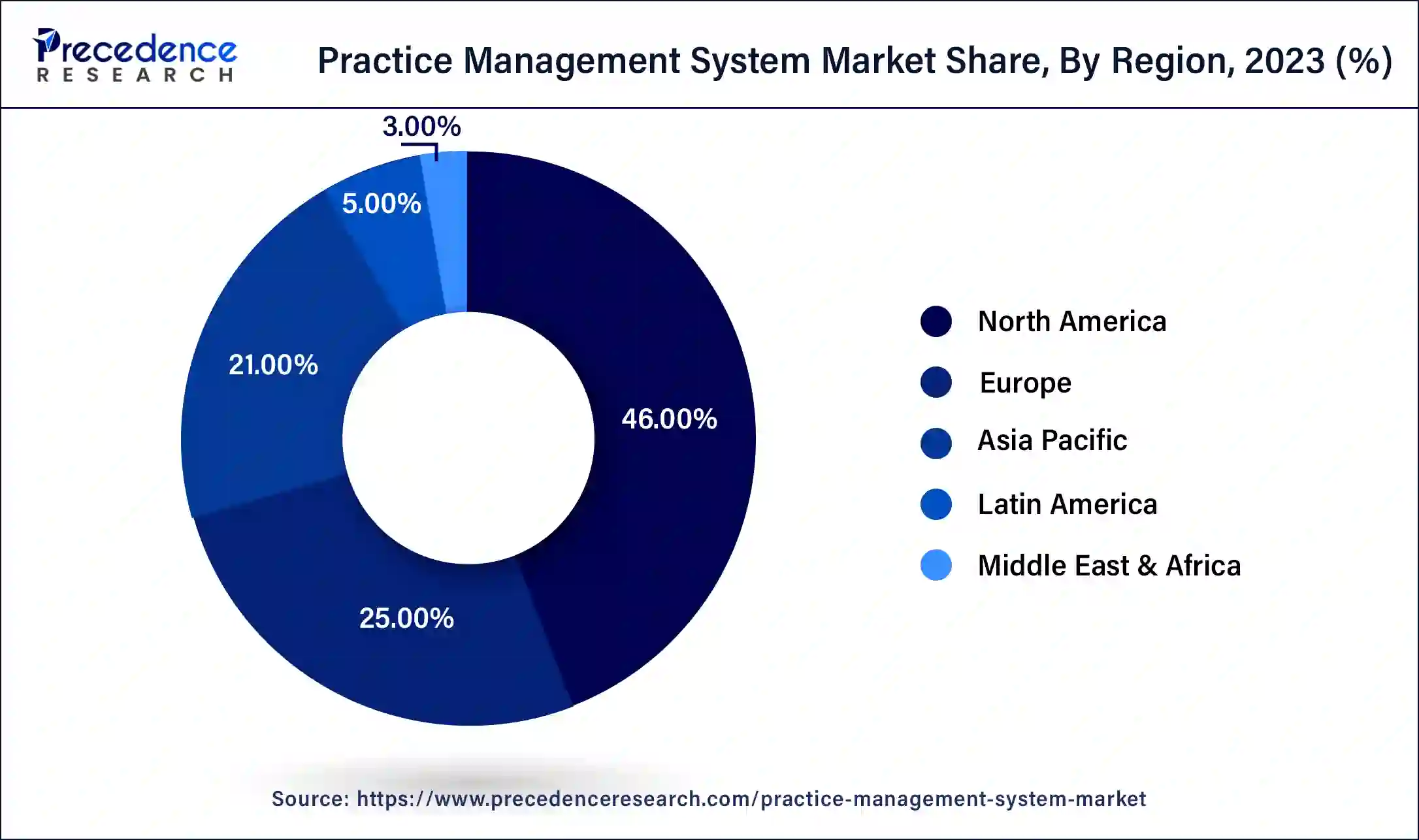
Asia-Pacific (APAC) is expected to grow at the highest CAGR, owing to supportive government reforms and organizations that support the development of patient engagement solutions, EHRs, and e-prescription platforms. Chronic disease prevalence is increasing, which aids market expansion in the Asia Pacific region. The World Health Organization estimates that chronic diseases are to blame for 71% of all fatalities in Asia. Aging populations, unhealthy lifestyles, and environmental factors are all contributing to an increase in the prevalence of chronic diseases. One of the most prevalent chronic diseases in Asia is chronic kidney disease (CKD), and there is wide regional variation in CKD prevalence (7.0%–34.3%). The number of patients who need continuing medical care as a result of these disorders expands, driving up the market for medical practice management software.
Europe is expected to grow significantly in the practice management system market during the forecast period. Due to the robust healthcare system in Europe, the use of practice management systems is increasing. At the same time, the growing adoption of advanced technologies is improving various features of these systems, promoting their safe and effective use by minimizing errors. Additionally, various cloud-based practice management systems are being launched. The presence of stringent rules and regulations also makes these systems safe to use, which in turn, promotes their adoption and use. Thus, all these factors are promoting the market growth.
What are the Advancements in the Practice Management System Industry in Latin America?
Latin America is expected to witness substantial growth in the upcoming years. This growth is driven by various factors such as the urgent need for digitized healthcare systems, the rise of telehealth, and supportive government support for digital health infrastructure. As hospitals, clinics, and diagnostic centers continue to integrate advanced solutions, the regional market is expected to expand. Countries such as Brazil, Mexico, and Argentina are leading players.
Brazil Practice Management System Market Trends: The country's landscape is evolving rapidly due to the increasing need for digitalization in hospital management and patient care. Government initiatives are also underway, helping to promote healthcare IT adoption and accelerating digital transformation.
How is the Middle East and Africa region growing in the Practice Management System Market?
The Middle East and Africa are expected to grow at a steady rate throughout the forecast period. This growth is due to several factors, like the increasing digitization of healthcare processes, the rising demand for healthcare management solutions, and the growing emphasis on patient-centric care. The market is also witnessing a shift towards integrated solutions, helping to streamline administrative tasks, enhance patient engagement, and improve overall operational efficiency.
Saudi Arabia Practice Management System Market Trends: The country is placing a growing emphasis on enhancing healthcare systems and advancing digitalization. This trend is expected to result in a heightened demand for healthcare services, thus leading to increased investments in healthcare infrastructure and technology.
Practice Management System Market Companies
- Henry Schein, Inc.
- Allscripts Healthcare, LLC
- AdvantEdge Healthcare Solutions
- Athenahealth
- Cerner Corporation (Oracle)
- Epic Systems Corporation
- GE Healthcare
- McKesson Corporation
- Accumedic Computer Systems, Inc.
- NXGN Management, LLC
- eClinicalWorks
- CoreCloud
- Kareo, Inc.
- Practice Fusion, Inc.
- AdvancedMD, Inc.
- DrChrono, Inc.
Recent Developments
- In June 2025, an innovative AI-powered Smart Scheduling feature was launched by Wilma™, which is a leading AI-powered ABA Practice Management Software. This tool focuses on delivering exceptional care by streamlining therapist workloads, eliminating the ABA scheduling complexities, improving compliance, and reducing staff burnout with its ABA practices.
(Source: https://finance.yahoo.com) - In June 2025, to improve the technology investments, a new practice management platform was launched by AIIC Group, which is a legal entity encapsulating law firms Taylor Rose, Kingsley Wood, and FDR Law. To enhance the efficiency as well as service levels throughout the legal practices, this completely cloud-based system, which is built on the Salesforce platform, will be useful, which is part of AIIC's strategic initiative.
(Source: https://www.solicitorsjournal.com) - In January 2025, the launch of Artificial Intelligence (AI) capabilities, which were merged in the cloud platform of PracticeSuite, Inc., which is a supplier of cloud-based medical software solutions for medical practices and other ambulatory care providers, was announced to be launched. To improve healthcare delivery through innovation, foresight, and research, the commitment of PracticeSuite will be highlighted by this initiative.
(Source: https://markets.businessinsider.com) - In September 2020, the majority of Benchmark Systems' shares will be acquired by CloudMD Software & Services Inc., a cutting-edge U.S.-based provider of cloud-based practice management and electronic health records with US$4.9 million in sales.
- August 2022, Midway Dental Supply, a full-service dental distributor that provides products to dental offices and dental labs across the Midwestern region of the United States, was acquired by Henry Schein, Inc. (Nasdaq: HSIC), the largest provider of healthcare solutions to office-based dental and medical practitioners in the world.
Segments Covered in the Report
By Product Type
- Standalone
- Integrated
- EHR/EMR
- e-Rx
- Patient engagement
- Others
By Component
- Software
- Service
By Mode of Delivery
- On-premise
- Cloud-based
By End-User
- Pharmacies
- Ambulatory Settings
- Others
- Diagnostic Laboratories
- Hospitals
- Other End Users
By Geography
- North America
- Europe
- Asia-Pacific
- Latin America
- Middle East and Africa
For inquiries regarding discounts, bulk purchases, or customization requests, please contact us at sales@precedenceresearch.com
Frequently Asked Questions





Ask For Sample
No cookie-cutter, only authentic analysis – take the 1st step to become a Precedence Research client
 Get a Sample




 sales@precedenceresearch.com
 Schedule a Meeting
