



Smart Pacifier Market Size, Key Companies, Company Product Portfolio, Hospital Procurement Trends, Manufacturing Capacity, Sales Performance, Regulatory Approvals, Company Market Share, and Forecast
Smart Pacifier Market (By Product Type: Single Piece Pacifier, Multiple Piece Pacifier; By Smart Pacifier: Small sized pacifier, Medium sized pacifier, Largesized pacifier; By Distribution Channel: Offline, Online; By Function: Electrolyte monitoring, Temperature monitoring) - Global Industry Analysis, Size, Trends, Leading Companies, Regional Outlook, and Forecast 2026 to 2035
Source: https://www.precedenceresearch.com/smart-pacifier-market
 Get a Sample
 Table Of Content


What is the Smart Pacifier Market Size?
The global smart pacifier market size is valued at USD 466.34 million in 2025 and is predicted to increase from USD 491.68 million in 2026 to approximately USD 792.16 million by 2035, expanding at a CAGR of 5.44% from 2026 to 2035.
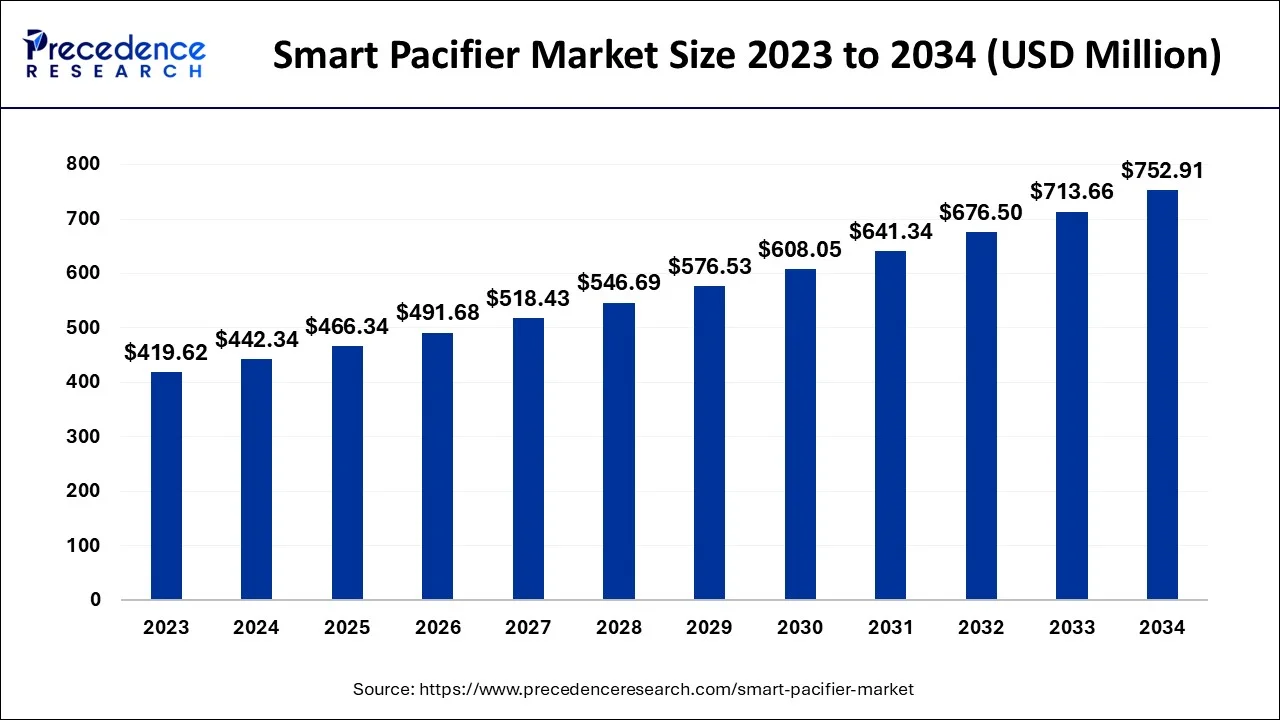
Microencapsulation Market Key Takeaways
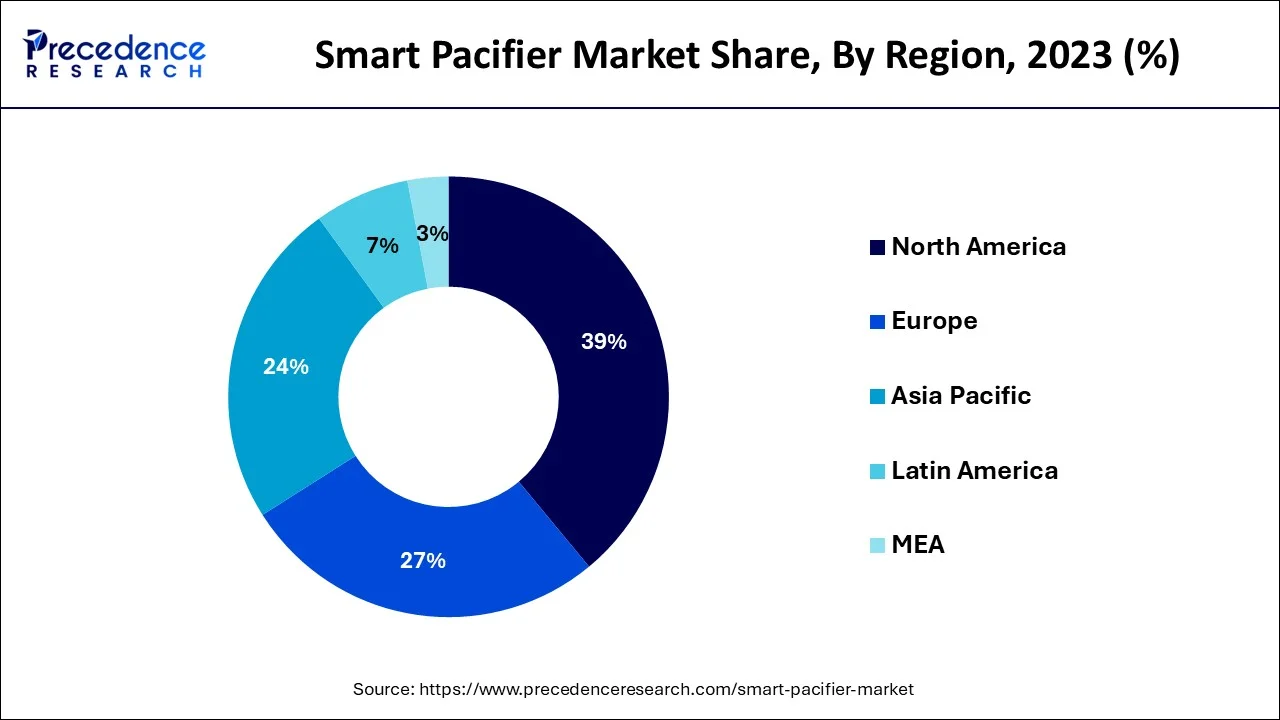
- North America dominated the global market with the largest market share of 39% in 2025.
- Asia Pacific is expected to show the fastest growth during the projected period.
- By product, the single piece baby pacifier segment led the global market in 2025.
- By pacifier, the size of the pacifiers segment dominated the market in 2025.
- By distribution channel, the brick and mortar stores segment contributed the highest market share in 2025.
Market Overview
The smart pacifier market is expected to witness remarkable growth in the near future. The smart pacifier is a wireless device which will be extremely beneficial in monitoring the dehydration in the newborn baby and also in monitoring the electrolyte levels. This wireless pacifier will be able to understand the electrolyte levels through the saliva of the newborn baby. This device is expected to be a boon for the caregivers as it will help in better understanding the needs of the baby. The smart pacifier will be able to monitor the potassium levels and the sodium levels without drawing the blood. Apart from sodium and dictation there are other electrolytes like calcium and magnesium which are extremely important for the human body.
Slight changes in them Candace wrapped the body functions to a great extent. By the use of a smart pacifier these electrolytes can be monitored in a non-invasive way. Other type of smart pacifiers were introduced in the market where the ones that provided bluetooth connectivity. These Bluetooth were helpful in monitoring the temperature of the baby. The use of bluetooth for this smart pacifier also enabled location tracking. The smart pacifiers are in their developmental stages when it comes to the neonatal care beard in the coming years it is expected that the advanced version of these smart pacifiers will be introduced in the market.
Excessive use of pacifiers may lead to infections of the middle ear. The other side effect of excessive use of pacifiers is that the pacifiers may affect the oral development in a negative way and it delays the teething process. Prolonged use of pacifiers may misalign tiled speed. The pacifier chosen needs to be larger in size in order to make sure that the child won't choke on the pacifier. A larger base of a pacifier helps in ensuring that the pacifier does not get stuck in the mouth of the infant.
Smart Pacifier Market Growth Factors
There are many reasons why there's an increase in the use of pacifiers. Pacifiers are extremely useful and comforting the baby. They also aid peaceful sleep in Infants. In the babies below the age of 1 year sudden infant death syndrome is the most common reason for death. The use of pacifier is expected to grow in the coming years as it helps in reducing the chances of sudden infant death syndrome. Increased use of pacifiers is due to its Ability of putting a baby to sleep faster. The bioelectronic pacifiers are non invasive as they help in monitoring the electrolytes in the newborn baby. It also helps in monitoring the cases of dehydration. Smart pacifiers are of great use in the neonatal intensive care units. In case of premature born babies the use of these pacifiers will be extremely useful in order to increase the chances of survival of the infant. There is a growing investment in order to develop better pacifiers that will be recyclable and also affordable.
Smart pacifiers are also useful as they help in monitoring the body temperature. There's a growing demand for the smart pacifiers that use the Bluetooth connectivity which helps in tracking the location and the temperature of the infant or the baby. Previously in order to check the electrolyte balance in the infant's doctors would draw blood in order to check the levels. The introduction of these smart pacifiers has reduced the use of these invasive ways. Increase in the disposable income and urbanization has led to the growth of the market. As there is a growth in the number of females working, the result growing demand for pacifiers. The market for the pacifiers has also evolved in the recent years by providing innovative pacifiers.
Market Scope
| Report Coverage | Details |
| Market Size in 2025 | USD 466.34 Million |
| Market Size in 2026 | USD 491.68 Million |
| Market Size by 2035 | USD 792.16 Million |
| Growth Rate from 2024 to 2034 | CAGR of 5.44% |
| Largest Market | North America |
| Fastest Growing Region | Asia Pacific |
| Base Year | 2025 |
| Forecast Data | 2026 to 2035 |
| Market Segmentation | Product, Smart Pacifier, Distribution Channel, Function, Region |
Segments Insights
Product Insights
On the basis of the product type the single piece baby pacifier are expected to have the largest market share in the coming years. The baby pacifiers that are available as a single piece are available at lower rates as compared to the multiple piece pacifiers. The use of multiple piece pacifiers also increases the risk of choking in infants. The different types of materials that go in the manufacturing of single piece pacifiers are rubber, silicone or plastic in most of the pacifiers manufactured. As the single piece pacifiers provide better safety as compared to the multiple piece pacifier there is expected to be a larger demand for those pacifiers.
Pacifier Insights
On the basis of the size of the pacifiers, the small sized baby pacifiers market is expected to grow well in the coming years period the small sized baby pacifiers have dominated the market in the recent years period this segment is expected to have the largest growth in terms of revenue. There's a maximum usage of pacifiers in between zero to three months or three to six months of age of an infant. The medium sized pacifier is expected to hold the second position in the global market.
Distribution Channel Insights
The offline distribution channel, the brick and mortar stores are expected to have a dominant position in the future. The different retail outlets and specialized stores see a maximum sales of baby pacifiers as parents are extremely cautious when buying these pacifiers. The availability of greater variety at the stores is also driving the growth of the market. Major manufacturing companies are also shifting their focus to offering baby pacifiers on the online platform on a larger scale. The online segment is also expected to have a good amount of growth in the coming years. There's a large number of sales through the specialty stores or the medical stores as many smart pacifiers are purchased in order to use in the neonatal intensive care unit.
Function Insights
Currently there are two types of smart pacifiers used in the market depending upon their functionalities. Smart pacifiers that help in monitoring the temperature and tracking the location of a baby is one type and the other smart pacifier is used in the neonatal intensive care units which help in monitoring the electrolyte levels of the baby. The smart pacifier that helps in monitoring the body temperature has grown well in the recent years and it is expected to dominate the market. The use of smart pacifiers that help in monitoring the electrolyte levels in the body has recently been developed and it is expected to grow well in the coming years. The smart pacifier that makes use of saliva in order to monitor the sodium potassium and calcium levels of the infant or a noninvasive technique which shall be in demand during the forecast period. There has been an increasing investment in order to upgrade the current model of these smart pacifiers in order to make them affordable.
Regional Insights
U.S. Smart Pacifier Market Size and Growth 2026 to 2035
The U.S. smart pacifier market size accounted for USD 127.31 million in 2025 and is expected to be worth around USD 224.51 million by 2035, growing at a CAGR of 5.84% between 2026 and 2035.
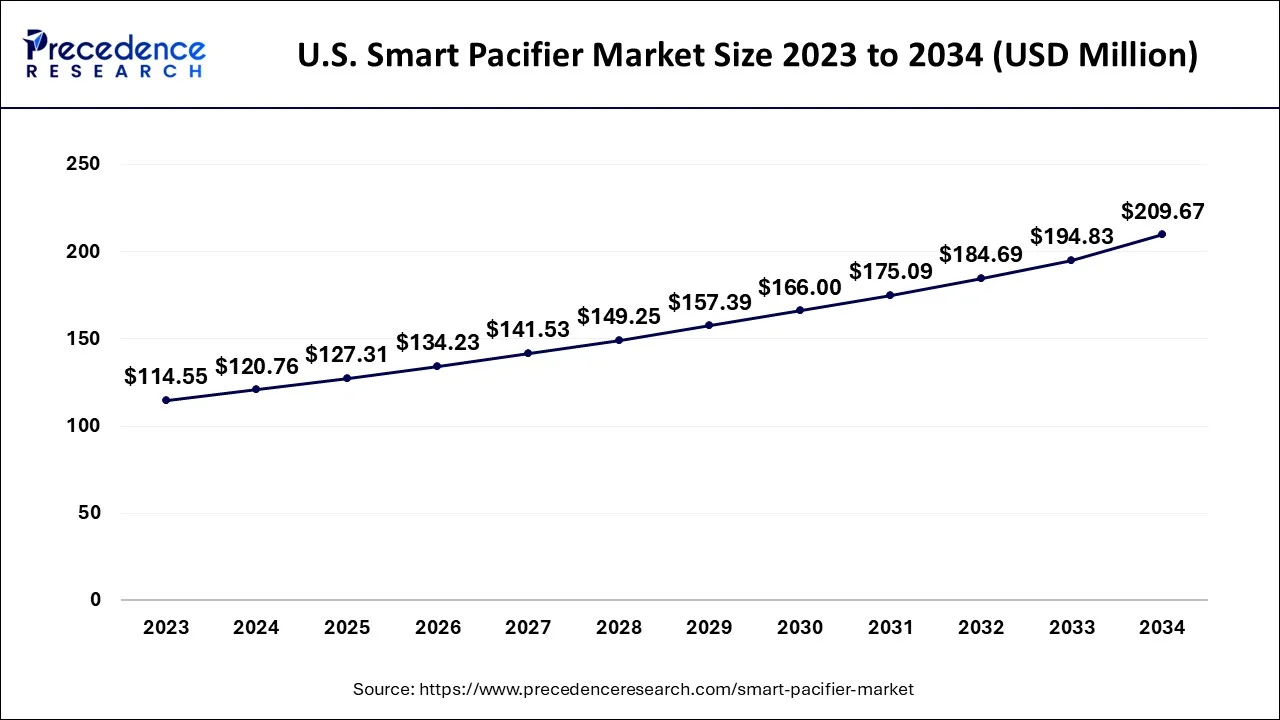
Smart pacifiers that help in tracking the electrolyte levels offer premature babies are being used in the North American region. The North American region is expected to have a dominant position when it comes to the usage of these smart pacifiers. This region is expected to have a larger market share in the coming years. In order to increase the use of smart pacifiers in the neonatal intensive care unit there has been an increase in the research to develop a more accessible product. Washington State University is currently working on providing the same. They shall be a growth in the demand for these pacifiers as they will provide a noninvasive way to monitor the health of the baby and they will be extremely useful in increasing the chances of its survival. Followed by the North American region the European region is also expected to have a good market share in the coming years.\
Why is Asia Pacific Considered the Fastest-Growing Region?
Asia Pacific is considered the fastest‑growing region in the smart pacifier market due to rapid urbanization and rising disposable incomes. The region's large and growing population of infants, an expanding middle class willing to spend on advanced childcare products, and widespread e‑commerce and smartphone penetration, which make smart devices more accessible, are further accelerating adoption. The increase in awareness of infant health is boosting the acceptance of connected baby-care products in the region. Other factors contributing to increased demand include rising smartphone ownership across the region, improvements in healthcare infrastructure, and increased spending on smart parenting solutions.
China
In China, the adoption of baby-care devices has grown rapidly, supported by a strong local manufacturing base and a rising focus among new parents on real-time tracking of infant health. High consumer awareness, quick product adoption, and increasing reliance on connected devices for monitoring infant temperature and comfort are driving the market's expansion.
What Makes Europe a Notably Growing Area in the Smart Pacifier Market?
As an emerging market, Europe has experienced a gradual increase in the adoption of smart nursery products, driven by growing parental awareness of digital health and interest in safe, sensor-based infant monitoring solutions. Supportive regulations around child safety also play a key role in fostering growth in this region.
Germany leads the market in Europe due to the rising demand for smart baby products and emphasis on high-quality, safety-certified solutions. Growing parental acceptance of digital health products, combined with the presence of companies specializing in precision-based infant monitoring, are key factors driving the country's market growth.
What Potentiates the Growth of the Smart Pacifier Market in the Middle East & Africa?
The growth of the smart pacifier market in the Middle East & Africa is driven by increasing awareness among parents about infant health monitoring and the benefits of connected baby-care devices. Rising disposable incomes, rapid urbanization, and expanding e-commerce channels make smart nursery products more accessible, while regional healthcare initiatives and the adoption of digital health technologies further support market penetration.
The UAE's leadership in technology adoption contributes significantly to the region's growth in the smart pacifier market, as many consumers are willing to spend on advanced products that monitor their babies' health. Tech-savvy parents value innovative solutions that simplify childcare and actively rely on digital information sources for guidance and decision-making.
Smart pacifier manufacturer
- Blue Maestro
Recent Developments
- In September 2025, the National Institutes of Health (NIH) awarded $1.2 million to Purdue Polytechnic Institute's Miad Faezipour to develop a groundbreaking smart pacifier for infant breathing monitoring.
(Source: polytechnic.purdue.edu)
Segments covered in the report
By Product Type
- Single Piece Pacifier
- Multiple Piece Pacifier
By Smart Pacifier
- Small sized pacifier
- Mediumsized pacifier
- Largesized pacifier
By Distribution Channel
- Offline
- Online
By Function
- Electrolyte monitoring
- Temperature monitoring
By Geography
- North America
- U.S.
- Canada
- Europe
- U.K.
- Germany
- France
- Asia-Pacific
- China
- India
- Japan
- South Korea
- Malaysia
- Philippines
- Latin America
- Brazil
- Rest of Latin America
- Middle East & Africa (MEA)
- GCC
- North Africa
- South Africa
- Rest of the Middle East & Africa
For inquiries regarding discounts, bulk purchases, or customization requests, please contact us at sales@precedenceresearch.com
Frequently Asked Questions





Ask For Sample
No cookie-cutter, only authentic analysis – take the 1st step to become a Precedence Research client
 Get a Sample
.webp)



 sales@precedenceresearch.com
 Schedule a Meeting
