



Surgical Robot Accessories Market Size, Key Companies, Company Production Capacity, Healthcare Infrastructure Growth, Product Utilization, Regulatory Compliance, Company Expansion Strategies, Company Investment Strategies, and Market Outlook
Surgical Robot Accessories Market (By Application: Orthopedics, Neurology, Urology, Gynecology, Others; By End-use: Inpatient, Outpatient) - Global Industry Analysis, Size, Trends, Leading Companies, Regional Outlook, and Forecast 2026 to 2035
Source: https://www.precedenceresearch.com/surgical-robot-accessories-market
 Get a Sample
 Table Of Content


What is the Surgical Robot Accessories Market Size?
The global surgical robot accessories market size is calculated at USD 6.33 billion in 2025 and is predicted to increase from USD 6.90 billion in 2026 to approximately USD 14.92 billion by 2035, expanding at a CAGR of 8.95% from 2026 to 2035. The robust growth in healthcare infrastructure to boost the expansion of the market in the coming years.
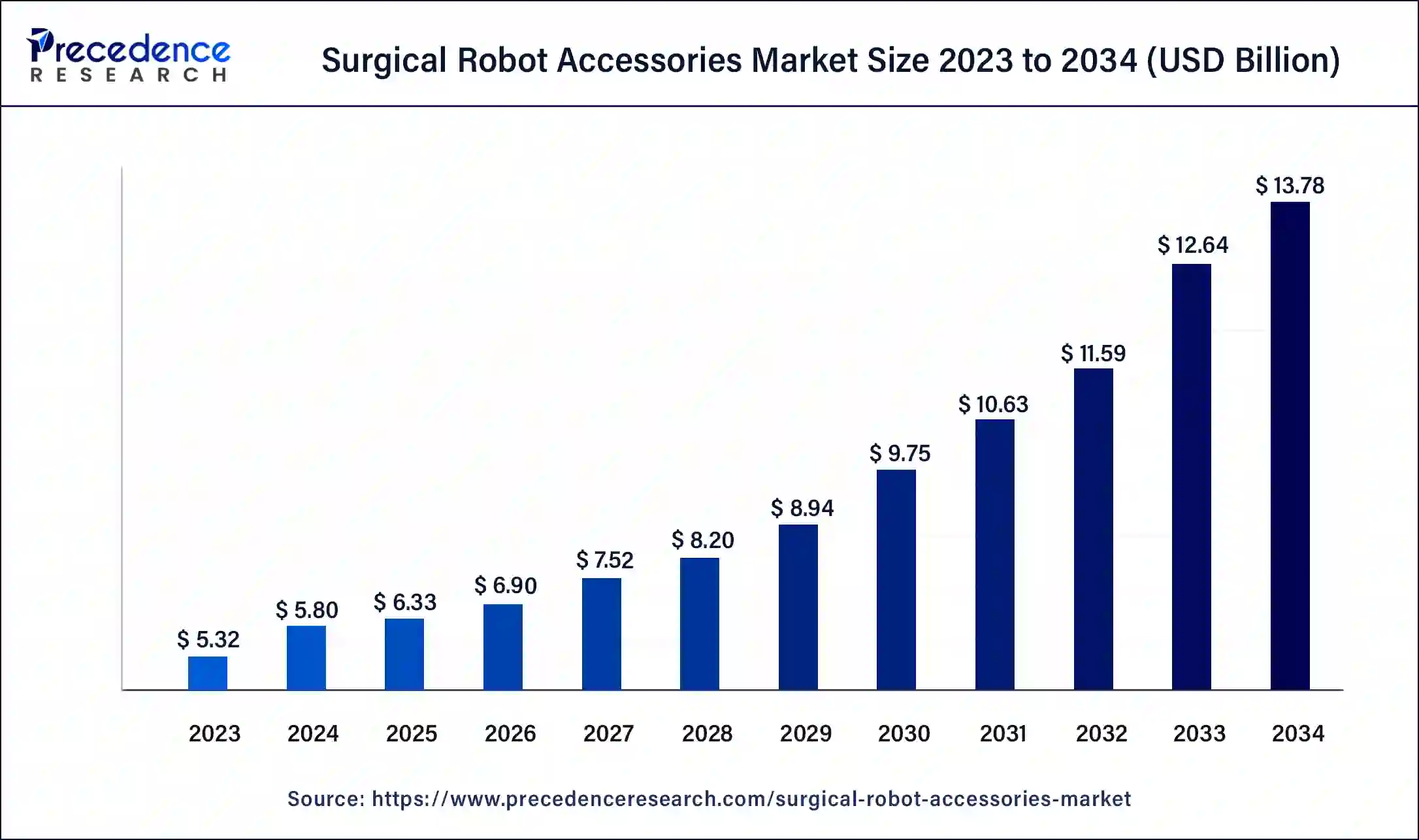
Surgical Robot Accessories Market Key Takeaways
- North America held the largest share of around 50% in 2025, the region is observed to sustain the position throughout the forecast period.
- Asia Pacific is anticipated to witness the fastest rate of growth during the forecast period.
- By end-use, the inpatient segment held the largest share of 53.45% in 2025.
- By end-use, the outpatient segment is expected to grow significantly during the forecast period.
- By application, the orthopedics segment accounted for the dominating share in 2025.
- By application, the neurology segment is observed to grow at a significant rate during the forecast period.
What are Surgical Robot Accessories?
With the use of robotic surgery, physicians perform several complex surgical procedures with greater flexibility, precision, and control. Various components constitute a surgical robot such as robotic arms, console, camera, surgical tools, computer software, and others. The excellent design and function of these components work together to enable surgical robots to play a pivotal role in various surgeries and improve the efficiency and precision of surgery. Robotic surgery is often performed through tiny incisions. This approach is widely known as minimally invasive surgery. The benefits of minimally invasive surgery include Less pain, reduced blood loss, quicker recovery, less noticeable scars, and risk of fewer complications.
Surgical Robot Accessories Market Outlook
- Industry Growth Overview: The surgical robot accessories market was expected to see rapid growth between 2025 and 2030 due to greater adoption of robotic surgery and demand for high-precision equipment. Hospitals were expected to bolster this growth by adopting advanced, value-added robotic instruments, with the majority of growth expected in Asia-Pacific and North America.
- Global Expansion: Key players were expected to go into Southeast Asia, Eastern Europe, and LATAM to stay close to rapidly expanding surgical centers and to take advantage of favorable regulations. Several firms established new production and training hubs in these regions to support the growing need for robotic-assisted surgeries.
- Major Investors: The entry of private equity and strategic investors was especially aggressive in the face of the market's high margins, strong IP barriers, and overall demand outlook in the long term. Firms such as KKR, Blackstone, and Carlyle poured capital into companies developing specialized robotic instruments and advanced sensor-enabled/addable accessories.
- Startup Ecosystem: The startup ecosystem diversified and stabilized with a flurry of innovation in AI-guided tools, haptic-feedback accessories, and smart disposable instruments. Those early-stage companies in the U.S., Israel, and India attracted significant VC funding potential by promising more precision, offsetting safety concerns, and offering more cost-effective accessory options.
What are the Growth Factors in the Surgical Robot Accessories Market?
- The increasing prevalence of various chronic diseases leads to the increasing adoption of continuous innovation in surgical technologies and is expected to contribute to the expansion of the surgical robot accessories market.
- The growing awareness regarding the benefits of robotic surgeries over conventional surgeries is anticipated to accelerate the growth of the market during the forecast period.
- The rapid advancements in the areas of artificial intelligence and augmented reality are anticipated to increase the acceptance of surgical robots which would contribute to the market growth during the forecast period.
- The rising population across the globe is expected to fuel the market's expansion during the forecast period as the aging population is more susceptible to chronic diseases that require surgical intervention.
- The rising availability of highly qualified surgeons is projected to offer lucrative opportunities to the market during the forecast period.
Market Scope
| Report Coverage | Details |
| Market Size by 2035 | USD 14.92 Billion |
| Market Size in 2025 | USD 6.33 Billion |
| Market Size in 2026 | USD 6.90 Billion |
| Market Growth Rate from 2026 to 2035 | CAGR of 8.95% |
| Largest Market | North America |
| Base Year | 2025 |
| Forecast Period | 2026 to 2035 |
| Segments Covered | Application, End-use, and Regions |
| Regions Covered | North America, Europe, Asia-Pacific, Latin America, and Middle East & Africa |
Market Dynamics
Drivers
Increase in the number of surgical procedures
The increasing number of surgical procedures is anticipated to boost the growth of the surgical robot accessories market during the forecast period. Surgical procedures have significantly increased due to the rise in chronic diseases that require surgeries. Surgeons are highly adopting robotic-assisted surgery systems to minimal post-operative complications, shorten hospital stays for patients, and reduce blood flow. Surgical robots have emerged as an advanced medical technology to assist surgeons in performing complex and delicate surgical procedures with high accuracy as compared to conventional methods. Surgical robot accessories play a pivotal role in surgical procedures to improve precision, flexibility, visualization, dexterity, and efficiency in minimally invasive surgeries (MIS).
These systems are widely used in a wide variety of surgical procedures, including orthopedic, general surgery, neurosurgery, cardiovascular, gynecology, laparoscopy, urology, oncology, pediatric surgery, and others. In recent years, the da Vinci surgical system has gained immense popularity and enables surgeons with an advanced set of instruments to use in performing robotic assisted minimally invasive surgery. The use of the da Vinci Xi is associated with less pain and quick recovery to improve the patient's quality of life. Therefore, the rising number of surgical procedures is propelling the growth of the surgical robot accessories market.
- In March 2025, Intuitive Surgical announced that it is buying businesses that distribute its da Vinci and Ion surgical robots to establish a direct presence in Italy, Spain, Portugal, Malta, and San Marino.Ab Medica, Abex, Excelencia Robotica, and their affiliates currently handle distribution in those countries. Intuitive is acquiring the parts of those companies that manage its surgical robots.
Restraint
High Cost
The high cost associated with surgical robot accessories is anticipated to hamper the market's growth. High cost is required for purchasing these advanced medical products. In addition, limited healthcare infrastructural facilities in middle and lower-income countries may restrict the expansion of the global surgical robot accessories market. In addition, such accessories are still newer to the industry that require a span to get adapted by healthcare providers. Thereby, the slow rate of adoption is also observed to create a hampering factor for the market.
Opportunity
Rising government initiatives and technological innovation
The rise of government initiatives along with technological innovation is projected to offer lucrative opportunities to the surgical robot accessories market during the forecast period. In recent years, the healthcare sector has achieved milestones. Government initiatives and funding are advancing and increasing the adoption of surgical robots in hospitals. Governments have recognized the potential of robotic surgery for revolutionizing the healthcare sector and are highly investing in R&D. Favorable policies of several Government policies are offering support to domestic manufacturers. Surgical robotics companies have sped up their go-to-market timelines through the approval pathway which accelerates regulatory approval for novel medical products.
Additionally, robust technological innovation is expected to drive the growth of the surgical robot accessories market. Several potential companies operating in the market are prioritizing the development of technologically advanced solutions including robotic microsurgery simulators. A robotic microsurgery simulator is designed to replicate the intricate procedures of microsurgery using robotic systems. Therefore, these factors are credited to the growth of the market.
- In January 2024, a robotic surgery unit is becoming functional in the government sector for the first time at the Regional Cancer Centre (RCC) here. Robotic surgery is launched at Malabar Cancer Centre (MCC) and the government aims to facilitate modern care for the common man.
- In April 2022, the rapid advancement in robotic technology opened the door for the expansion of robotic-assisted surgery globally. Saskatchewan is joining this modern advancement.
Segment Insight
Application Insights
The orthopedics segment accounted for the dominating share in the surgical robot accessories market. Surgical robots have significantly transformed many medical interventions, offered precision and improved minimally invasive operations in the orthopedics field. The segment growth is observed due to the rising demand for robotic-assisted surgeries in orthopedics. In addition, the growing adoption of minimally invasive techniques for orthopedic interventions coupled with rapid advancements in surgical robotics technology to improve overall patient care in orthopedic surgery. Orthopedic implants are a type of robotic surgery equipment designed to replace a bone or a joint in the body such as knee replacement, hip replacement, and others.
The neurology segment is observed to grow at the fastest during the forecast period owing to the increasing prevalence of neurological disorders. The neurosurgery field continues to advance with the advent of robotic surgery, marking a shift in the way complex and delicate procedures on the brain and spine. Robotic systems revolutionize neurology surgical careers by decreasing tremors, increasing accuracy, improving precision, and overall improving patient outcomes. The most often used robotic systems in neurosurgery include the Da Vinci Surgical System, ROSA Robot, and NeuRobot.
End Use Insights
The inpatient segment held the largest share of the surgical robot accessories market in 2025, the segment is expected to sustain the position throughout the forecast period owing to the increasing number of surgeries conducted, offering lucrative opportunities for effectively utilizing surgical robots in diverse surgical interventions Inpatient facilities including hospitals have sophisticated infrastructure and resources to utilize surgical robots. It allows doctors to perform several complex procedures through small incisions. Hospitals often have dedicated surgical teams trained to perform surgical procedures with robotic assistance. Such factors are bolstering the segment's growth.
The outpatient segment is expected to grow significantly during the forecast period. Outpatient facilities such as ambulatory surgical centers (ASCs) and specialized surgical centers are increasingly adopting surgical robots for minimally invasive surgeries. Patients often prefer outpatient settings for minor surgeries to avoid overnight stays as well as reduce expenses. Surgical robots are precise and less invasive procedures which increases the trend for the outpatient model. Thus, bolstering the growth of the segment.
Regional Insights
U.S. Surgical Robot Accessories Market Size and Growth 2026 to 2035
The U.S. surgical robot accessories market size is exhibited at USD 2.53 billion in 2025 and is projected to be worth around USD 6.12 billion by 2035, poised to grow at a CAGR of 9.24% from 2026 to 2035.
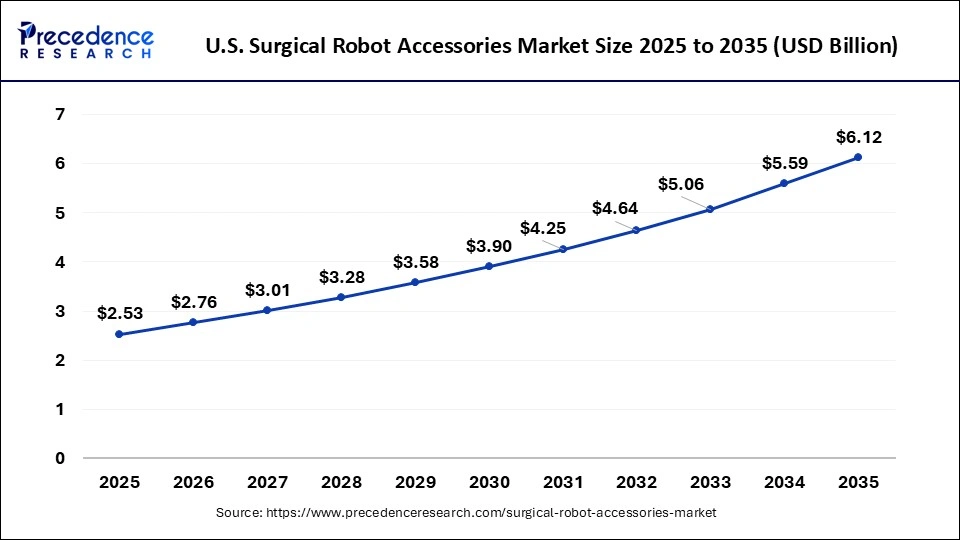
North America led the surgical robot accessories market in 2025 and the region is observed to continue the position during the forecast period. The region's sophisticated healthcare infrastructure and substantial investment in healthcare technology provide a solid foundation for robotic-assisted surgeries. Robotic surgery plays a pivotal role in the region's remarkable advancement of medical technology. The region has witnessed the increasing prevalence of chronic diseases, increasing the use of surgical robots to aid surgeons in performing complex procedures related to Urology, Colorectal, General Surgery, Gynecology, Oncology, and Gastrointestinal surgeries more precisely in less time.
According to a report published by the American Hospital Association in March 2025, an estimated 2.63 million surgical procedures were performed in the U.S. using the da Vinci Surgical System in 2024. This represents a 17% increase from 2023. More broadly, over 2,000 hospitals in the U.S. utilize robotic surgical systems, making the U.S. a significant market for this technology.
The United States is the major contributor to the market due to the rising adoption of cutting-edge technologies, the rising number of robot-assisted surgeries, the presence of well-established hospitals, the rising growth in medical tourism, and the surge in the number of patients with cardiovascular, orthopedic, gynecology, neurological, and others health conditions that call for surgeries. Moreover, rapid technological innovations, extensive R&D activities, supportive government policies, and a rise in healthcare expenditure are expected to support the integration of robotic systems into healthcare. Furthermore, the North American region also has a strong presence of prominent market players which drives the growth of the surgical robot accessories market in the region during the forecast period.
- According to the Centers for Disease Control and Prevention, Heart disease is one of the leading causes of death in the United States, with 1 person dying every 33 seconds from cardiovascular disease. Nearly 695,000 people in the United States died from heart disease in 2021, that's 1 in every 5 deaths. It is estimated that 805,000 people suffer from heart attacks in the United States every year.
- According to the Commonwealth Fund report published in January 2023, the United States spends roughly 18 percent of GDP on health care. The U.S. spends 3 to 4 times more on health care than South Korea, New Zealand, and Japan.
Asia Pacific is anticipated to grow at a notable growth rate in the surgical robot accessories market during the forecast period. Factors such as increasing adoption of surgical robots in hospitals and surgical centers, rising research & development activities, increasing surgical patient population, increasing deployment of advanced medical technologies, rising healthcare expenditure, cutting-edge technologies, increasing investment in healthcare infrastructure development, supportive government initiatives, and rising demand of da Vinci surgical system among surgeons is anticipated to boost the growth of the surgical robot accessories market in the Asia Pacific.
In June 2024, SS Innovations, the developer of India's first indigenous surgical robotic system, launched SSI Mantra 3, enabling affordable access to the next generation of surgical innovation. Alongside, it has achieved a historic feat in Indian medical science by completing India's maiden human trial in telesurgery.
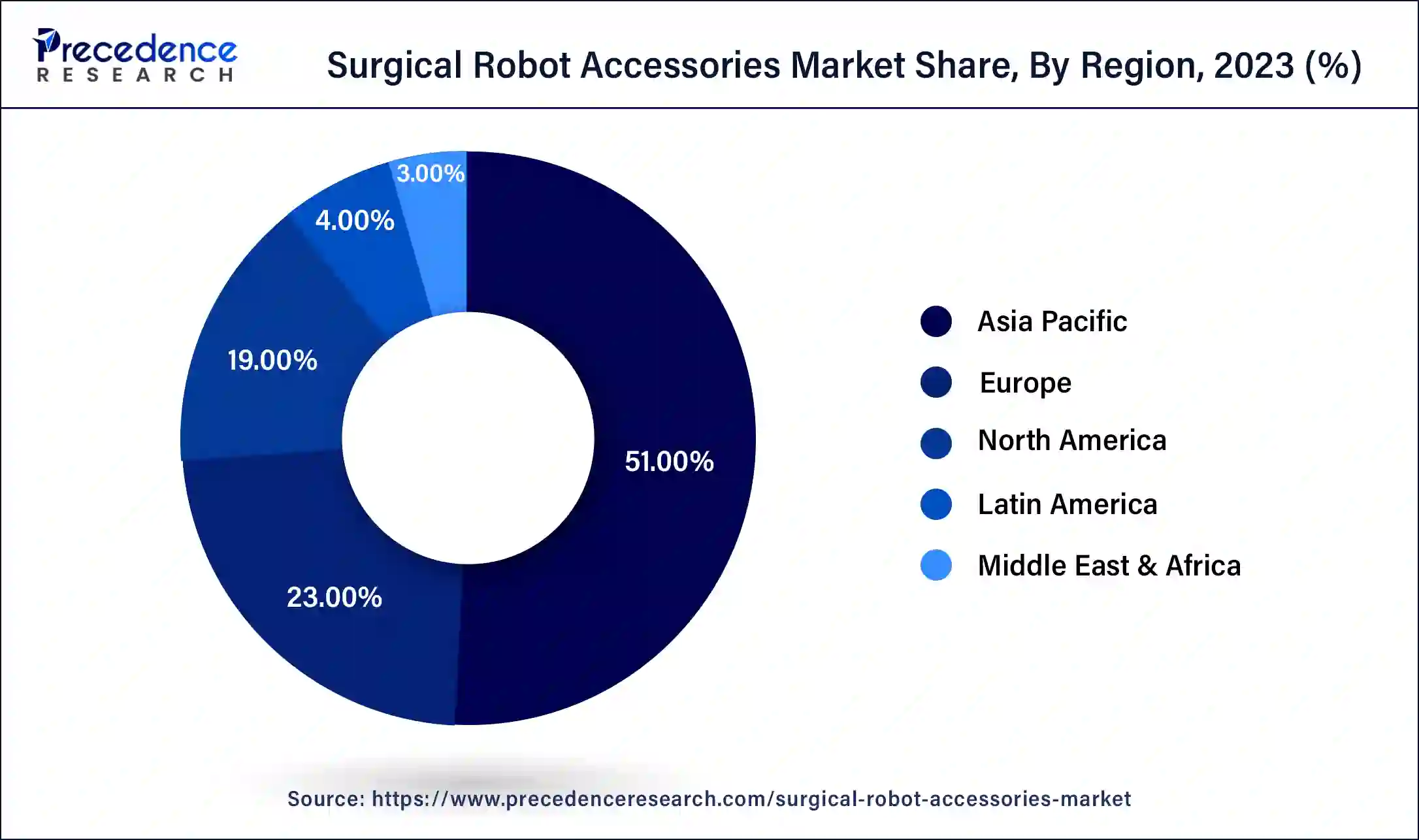
The rising dependence on surgical robots is a result of the increasing incidence of chronic diseases. Surgical Robots are designed to help surgeons in surgical procedures. More precise surgeries can be performed in less time through robot-assisted surgery. Additionally, the surgical robot accessories market in China, Japan, and India is experiencing growth in the rising number of chronic diseases that require surgical intervention, which further increases the need for surgical robots for minimally invasive surgeries and open surgical procedures to improve outcomes. Furthermore, collaborations or partnerships between healthcare institutions and technology providers are likely to accelerate the significant growth of the surgical robot accessories market in Asia Pacific. Therefore, these considerable factors increase the adoption of surgical robot accessories in the region during the forecast period.
- The ‘Made in China 2025' plan identifies high-performance medical equipment areas for development as well as encourages breakthroughs in local MedTech and increases the market share in surgical robotics.
Why did Europe experience steady growth in the surgical robot accessories market?
Europe experienced steady growth because the healthcare systems were strong, hospitals were advanced, and high safety regulations encouraged the use of high-quality surgical robot accessories. The region focused on enhancing minimally invasive surgery and supporting innovation through funding programs. Increasing aging demographics, coupled with increased chronic diseases, created more demand for robotic surgeries. Moreover, Europe offered possibilities in precision tools, reusable accessories, and partnerships with key medical university research programs.
Germany Surgical Robot Accessories Market Trends
Germany led the European region as it had very advanced hospitals and a strong focus on research in medical technology. The country was quick to adopt robotic surgery for complex procedures. Government support and partnerships with global technology firms have increased the market. Germany's emphasis on high-quality healthcare and continued innovation provided strong demand for surgical robot accessories, thus creating opportunities to develop new and durable products for surgeons throughout the country.
Why did Latin America Experience Steady Growth in the Surgical Robot Accessories Market?
Latin America experienced a steady growth rate as hospitals began implementing robotic surgery to enhance the quality of care. Countries began to invest in healthcare infrastructure modernization and private hospital additions. As awareness of minimally invasive surgery continued to increase, interest in associated advanced accessories grew as well. While financial budgets remained limited, alliances with international device companies generated new growth opportunities. The region contained advancements in training centers, affordable accessory options, and repair facilities.
Brazil Surgical Robot Accessories Market Trends
Brazil emerged as the leader throughout Latin America due to more modern hospitals and a strong interest in robotic surgery among private hospitals, which began investing in modern surgical robotics to attract patients. Brazil also focused on improving its surgeon training programs to build interest and need for advanced accessories. While hospital costs remained expensive, the demand for improved surgical outcomes continued to rise, which will support the continued advancement of the surgical robotics market throughout Brazil.
Why did the Middle East & Africa experience steady growth in the Surgical Robot Accessories Market?
The steady growth in the Middle East & Africa was due to countries investing in both new hospitals and advanced surgical procedures. Wealthier populations in the UAE and Saudi Arabia are leading the adoption of robotic systems. In addition to being part of the growing medical tourism, rising government funding also helped to establish the market in the region.
Africa progressed more slowly than other regions; however, with improved access, countries are establishing a healthcare system. The region came equipped with opportunities in training, new hospitals, and imported accessories for surgical robots.
Saudi Arabia Surgical Robot Accessories Market Trends
Saudi Arabia led the region due to significant government investment focused on the development of the modern healthcare system. New hospitals and medical cities began adopting robotic surgical systems for improved outcomes for patients. The country partnered with well-known medical device companies to increase the number of available accessories and robots.
Surgical Robot Accessories Market Companies
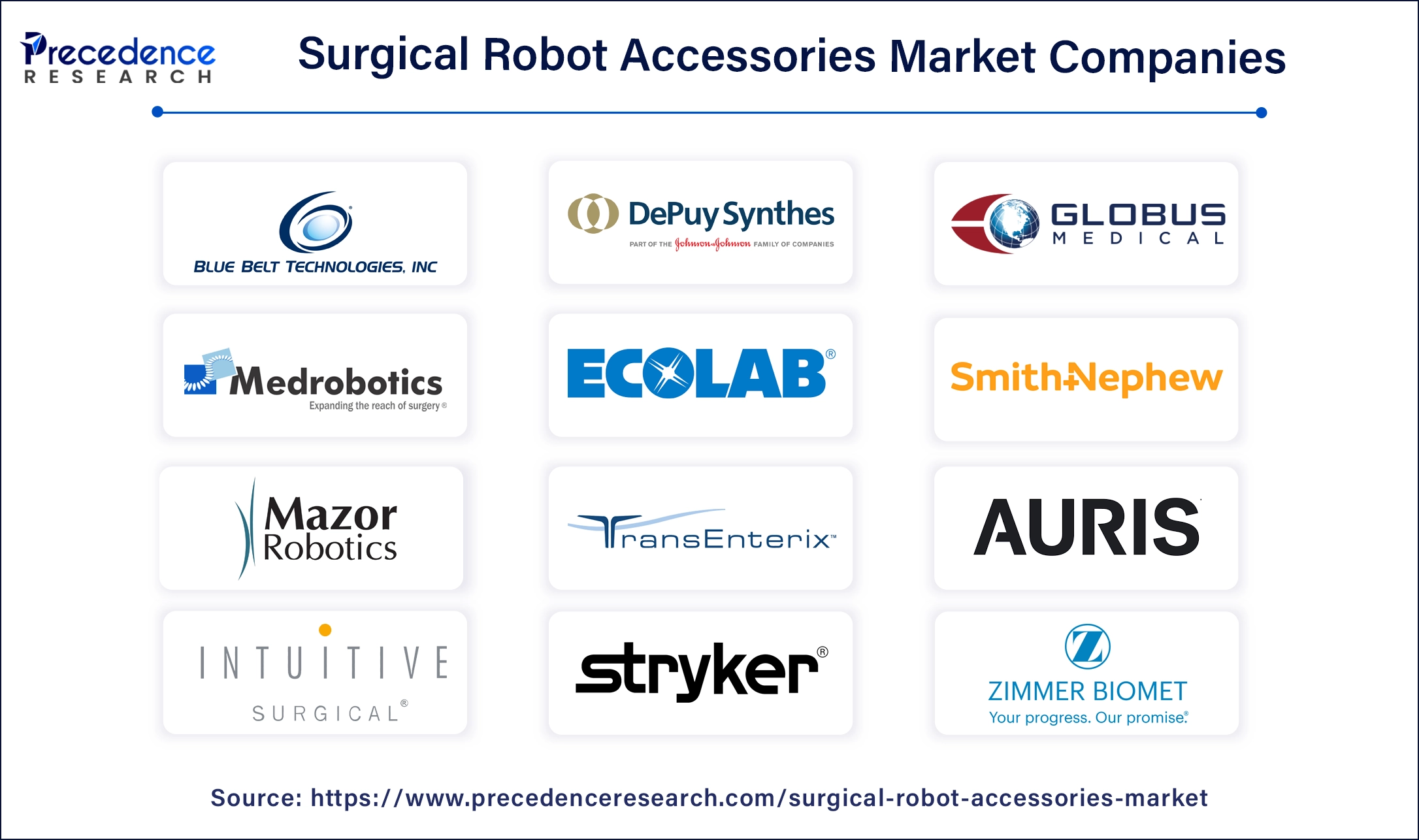
- Intuitive Surgical Inc
- Zimmer Biomet Robotics
- Mazor Robotics Ltd.
- Blue Belt Technologies, Inc.
- Auris Health Inc
- DePuy Synthes Inc
- Globus Medical Inc
- Medrobotics Corp
- Ecolab Ltd
- Welmed Inc
- Stryker Corporation
- Medrobotics
- Smith & Nephew
- TransEnterix
- Surgical, Inc
- Renishaw plc.
- Intuitive Surgical
- Medtronic
- THINK Surgical, Inc.
Recent Developments
- In October 2024, Johnson & Johnson launched Velys Spine, a surgical robot and standalone navigation platform. The 510(k)-cleared system, which J&J developed with essential Robotics, is designed to provide guidance on the placement of screws in freehand and robotic-assisted spine surgeries. The system will join other Velys offerings J&J has cited as a growth driver in its hip and knee businesses.
- In January 2024, India's first advanced 4th Gen - DaVinci robot machine for world-class robotic procedures was inaugurated by the Seer of Sri Saradapeetham, Swamy Swaroopananda. This innovative machine intends to revolutionize surgical procedures. With the help of this robot, surgeons could successfully perform surgery with the smallest incision.
- In February 2022, A Belgium surgeon performed a robotic prostatectomy using Medtronic's newly launched Hugo robotic-assisted surgery (RAS) system. The company won the CE mark for Hugo in October, forever altering surgical robotics, the market that Intuitive Surgical pioneered more than two decades ago.
- In August 2023, CK Birla Group partnered with ‘Intuitive India' to launch the latest da Vinci Surgical Robot. The installation of Intuitive's fourth-generation robotic-assisted technology is set to support surgeries. The innovative features of the da Vinci system, such as advanced instrumentation and vision, empower surgeons with superior control and visualization during surgical procedures.
Segments covered in the report
By Application
- Orthopedics
- Neurology
- Urology
- Gynecology
- Others
By End-use
- Inpatient
- Outpatient
By Region
- North America
- Asia Pacific
- Europe
- Latin America
- Middle East & Africa
For inquiries regarding discounts, bulk purchases, or customization requests, please contact us at sales@precedenceresearch.com
Frequently Asked Questions





Ask For Sample
No cookie-cutter, only authentic analysis – take the 1st step to become a Precedence Research client
 Get a Sample
.webp)



 sales@precedenceresearch.com
 Schedule a Meeting
