



Teledermatology Market Size, Key Companies, Company Market Share, Patient Volume, Treatment Adoption Rates, Pricing Analysis, Regulatory Landscape, Competitive Positioning, and Demand Forecast
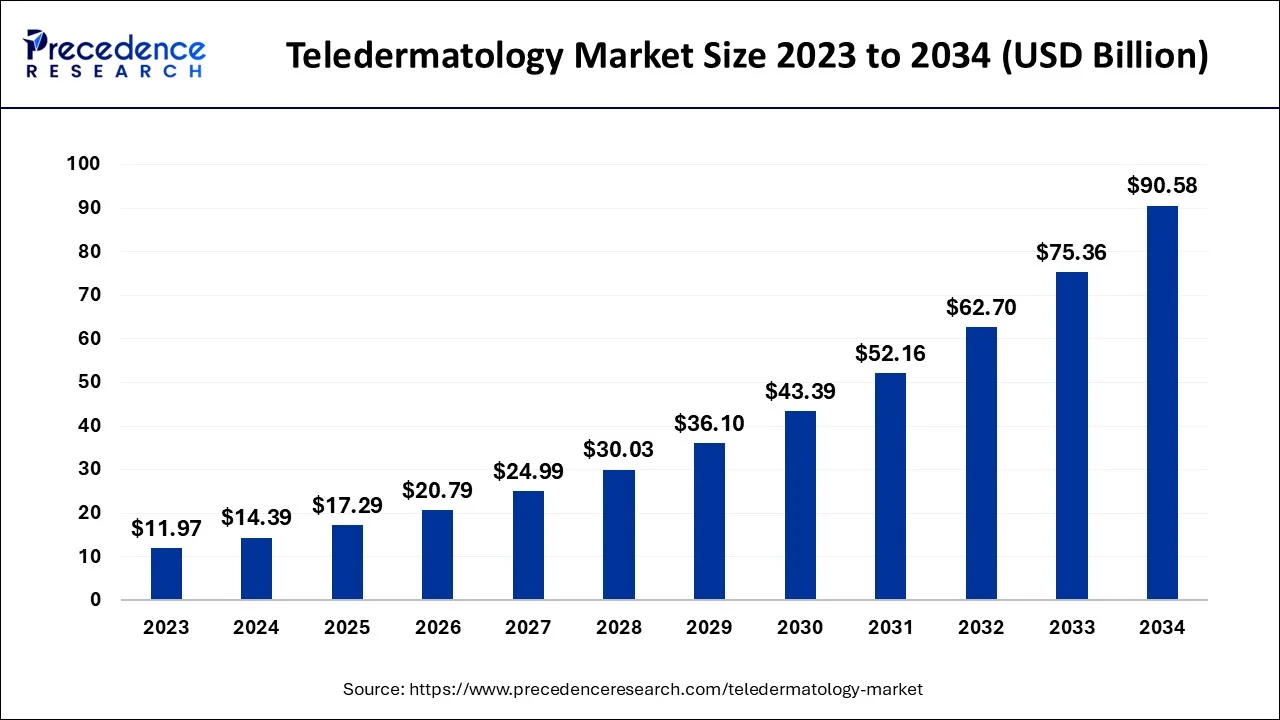
Deepa Pandey, a Healthcare Industry Expert, highlights that the teledermatology market has reached USD 20.79 billion in 2026 and is on track to reach USD 104.09 billion by 2035, advancing at a CAGR of 19.66%. Key teledermatology market companies shaping the market include Diagnosis, Honeywell Life Care Solutions, Philips Healthcare, while major growth segments span By Type, Modality, End User.
Source: https://www.precedenceresearch.com/teledermatology-market
 Get a Sample
 Table Of Content


What is the Teledermatology Market Size?
The global teledermatology market size was estimated at USD 17.29 billion in 2025 and is predicted to increase from USD 20.79 billion in 2026 to approximately USD 104.09 billion by 2035, expanding at a CAGR of 19.66% from 2026 to 2035.
The growing concern for acne and thrive for an evergreen status accelerate market expansion, along with the hype of dermatologist-tested products. This two-way profit to the derma industry sponsors virtual care and elevates the commercial base as well. The deployment of smart devices is a cooperative mechanism to the market mission and vision to deliver remote skin care.
Key Takeways
- North America dominated the teledermatology market in 2025.
- By type, the services segment dominated the market in 2025.
- By modality, the store-and-forward segment led the market in 2025.
Market Overview
Teledermatology is a form of telemedicine that helps skin specialists attend to patients remotely. The convenient and hassle-free diagnostic, check-up and medication for skin conditions keeps the doctors' study value intact with the new virtual technologies. The advantage of the save and send later option, by saving the skin irritation photo in the form of a folder on the website or other safe applications, gives ample time to the doctors to react to the skin condition and suggest the treatment for the same. The online alternative involving video call builds a transparent wall between the derma specialist and patient. This enables evidence-based communication that satisfies the patient population and helps them gain confidence in the treatment as well. The tele-system has saved time and money by avoiding clinical visits. The home care privilege is a boon to the devices and application industries. Automation and tech intervention are gaining traction in the market.
Teledermatology Market Growth Factors
The global teledermatology market gained a rapid momentum in 2025 owing to the outbreak of COVID-19 pandemic. The growing demand for the convenient healthcare services and products among the global consumers is boosting the growth of the global teledermatology market. The rising adoption of the telehealth platforms among the global consumers has positively impacted the growth of the tele-dermatology market. Moreover, the growing prevalence of skin diseases and skin related problems is significantly fueling the demand for the tele-dermatology across the globe. As per the Global Burden of Skin Disease project, the skin disease is the fourth largest cause of non-fatal disease around the globe. Further, it is estimated that around 30% to 70% of the global population is suffering from various skin diseases. Thus, the growing burden of various skin diseases coupled with the rising adoption of the digital health platforms are the major factors behind the growth of the global market.
The rising number of smartphone users and growing penetration of internet across the globe is another important factor that boosts the adoption of the tele-dermatology platforms. According to the International Telecommunication Union, around 4 billion people have access to the internet and majority of them uses smartphones for using the internet. Furthermore, the rising penetration of the social media has boosted the investments by the top market players in the digital marketing and social media marketing to build large customer base. The increasing adoption of the telehealth among the consumers has boosted the availability of the dermatologists and the consultants on the teledermatology platforms. The proliferation of the digital technologies and the integration of the latest technologies like AI and data analytics are fueling the demand for the teledermatology platforms across the globe. Moreover, the development of favorable regulatory framework by the government in various countries regarding the use of telehealth platforms is expected to significantly drive the growth of the tele-dermatology market during the forecast period.
Market Scope
| Report Coverage | Details |
| Market Size In 2025 | USD 17.29 Billion |
| Market Size In 2026 | USD 20.79 Billion |
| Market Size by 2035 | USD 104.09 Billion |
| Growth Rate from 2026 to 2035 | CAGR of 19.66% |
| Largest Market | North America |
| Fastest Growing Market | Asia Pacific |
| Base Year | 2025 |
| Forecast Period | 2026 to 2035 |
| Segments Covered | Type, Modality, End Use, and Region |
| Regions Covered | North America, Europe, Asia-Pacific, Latin America and Middle East & Africa |
Segments Insights
Type Insights
The services segment was the dominating segment in 2025 and is expected to be the fastest-growing segment during the forecast period. The teledermatology platforms reduce the wait time for various services of the dermatologists like consultations, monitoring, and education services. The lack of adequate number of dermatologists across the globe has fostered the adoption of the teledermatology, which significantly reduces wait time for the patients to receive the services. The conveniences associated with the virtual services have fostered the growth of the services segment in 2020. The growing awareness regarding the teledermatology platforms among the global consumers is expected to drive the growth of the segment during the forecast period.
Modality Insights
The store-and-forward segment has garnering a market share of around 70% in 2025. This is attributed to the increased importance of the store-and-forward for capturing skin images properly. The images of skin become necessary in order to acquire accurate diagnosis and treatment.
The video conferencing segment is expected to grow at a moderate rate during the forecast period. The rising prevalence of acne, hair loss, and other skin related problems, the video conferencing with the dermatologists is preferred, which fuels the growth of this segment.
End User Insights
The healthcare units segment dominated the market with largest revenue share in 2025. The increased adoption of the teledermatology platforms in the hospitals and clinics has fueled the growth of the segment. The increased government investments in the adoption of digital technologies in the hospitals have augmented the demand for the teledermatology platforms in the hospitals.
The homecare segment is estimated to be the most opportunistic segment during the forecast period. The rising disposable income, increased healthcare expenditure, and growing geriatric population are the major factors that are expected to drive the growth of the homecare segment in the forthcoming years.
Regional Insights
U.S. Teledermatology Market Size and Growth 2026 to 2035
The U.S. teledermatology market size was valued at USD 5.97 billion in 2025 and is predicted to be worth around USD 36.65 billion by 2035, expanding at a CAGR of 19.90% from 2026 to 2035.
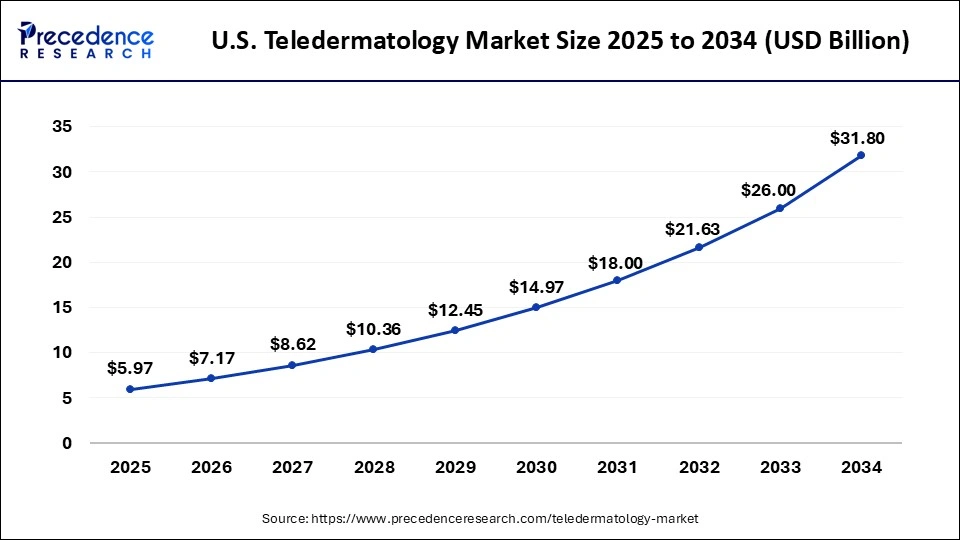
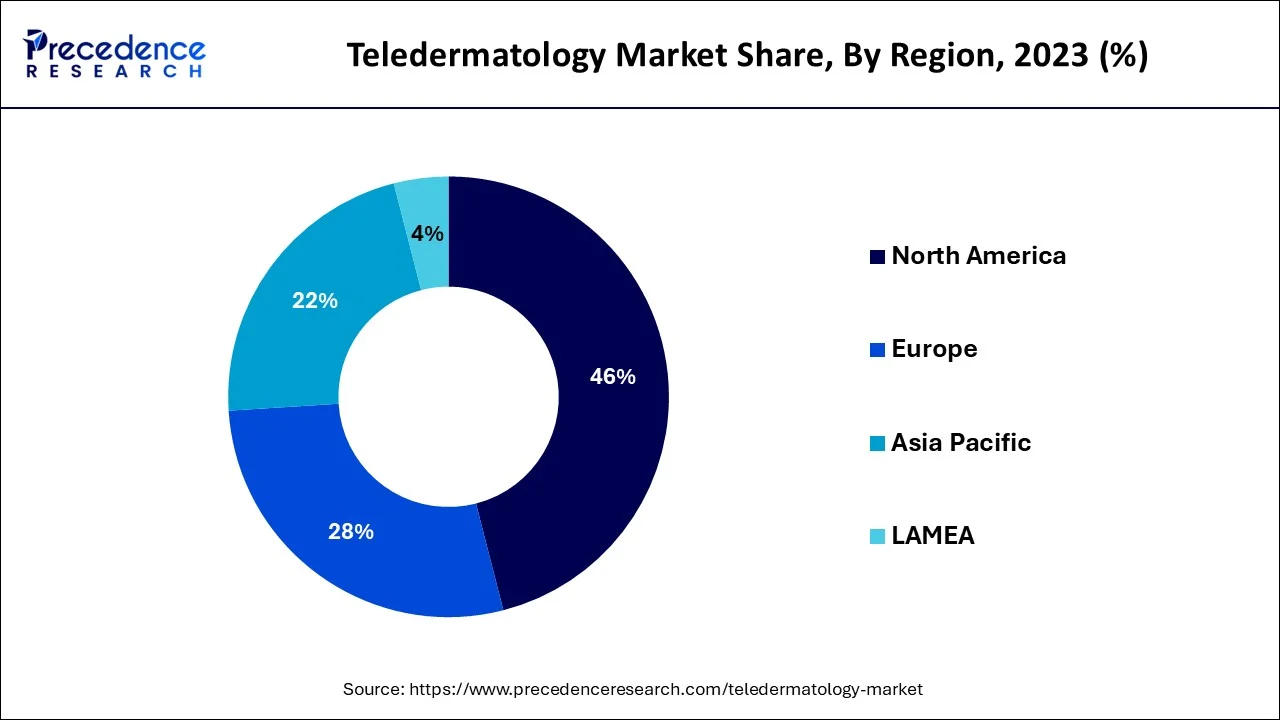
The North America dominated the market in 2025. The presence of several top market players such as MDLive and DermatologistsOnCall are fostering the demand for the tele-consultation services. The increased prevalence of various skin diseases in US has augmented the demand for the tele-dermatology. According to the American Academy of Dermatology Association, acne affects around 50 million people annually and it is the most common skin condition. Atopic dermatitis affects around 10% population in US and around 80 million people are affected with hair loss problems. Therefore, the increased prevalence of skin problems coupled with the increased healthcare expenditure and improved access to healthcare facilities has fostered the growth of the tele-dermatology market in North America.
In the teledermatology sector, North America emerges as the dominant player, bolstered by several advantageous factors. The region benefits from an advanced healthcare infrastructure, a remarkably high internet penetration rate, and favorable government policies that actively promote telemedicine solutions. A proliferation of established companies offering teledermatology platforms and a growing public awareness of the benefits associated with telehealth further enhance North America's position. Specifically in the United States, a well-developed healthcare system supports the burgeoning adoption of telemedicine, ensuring that a significant portion of the population, who have ready access to the internet and smartphones, can conveniently engage with teledermatology services.
Why Is Asia Pacific the Most Opportunistic Tele-Dermatology Market?
Asia Pacific is estimated to be the most opportunistic market during the forecast period. The rising government initiatives to enhance the healthcare sector and the rising adoption of telehealth and telemedicine are the major factors that drive the growth of the tele-dermatology market in Asia Pacific. Moreover, the rising penetration of internet and the favorable government policies regarding telehealth and reimbursements is expected to drive the growth of the market.
Conversely, Asia Pacific is experiencing the swiftest growth in the teledermatology market. Contributing factors include an escalating adoption rate of telehealth and telemedicine solutions, government initiatives aimed at bolstering healthcare access, and an increasing public awareness of teledermatology benefits. The region's demographic shifts, particularly the growing geriatric population in countries like China, Singapore, and Australia, augment this trend. Established regulatory frameworks and reimbursement ecosystems support the expansion of telehealth offerings, making these services more appealing to users.
China Market Trends
China's focus on speedy networking and digital health is a boon to the regional market. The existing modern devices trends and acceptance for the healthcare applications add value to smartphone use. The compatible tech tools and cosmetic care awareness are accelerating the derma business that indirectly contributes to the regional market as well.
Europe's Efforts in the Market
Europe market is considered to be a significantly growing area, due to its consistency in proactive digital healthcare plans. The tech and system boom is an encouragement to the virtual ideology. The countryside infrastructure and networking progress bring efficiency in virtual communication. The emerging policies and phone applications proficiency meet the patient population's needs for general skin care. The installation of smart connectivity and screen projection to detect the condition showcases the derma efforts for suitable infrastructure and tech presentation adhering to clinical settings.
Germany Market Trends
Germany is well known for its DiGA framework and attentiveness towards quick checkups. The digital platforms and connectivity advantages are serving at their best to the regional market development. Hybrid care and digital tools are at the heart of virtual patient care management.
Latin America's Reach in the Market
Latin America market is expected to grow at a notable CAGR in the foreseeable future. The reach of the regional market is measured by the limited specialist numbers that put pressure on the hybrid model or proper virtual care format according to the condition severity. This has enhanced the rural patient population wellness standards with the precision remote care advantage.
Brazil Market Trends
Brazil's robust telehealth regulations shape and optimizes the system models' performance to meet the patients' remote monitoring needs. Skin irritation is a major concern, visibly triggering the youth population and sensitive infant group as well. The clinically proven solution is a hype to the regional market commercial strategies along with the promotion plan of the online services 3rendered by the dermatologists' community.
Teledermatology Market Companies
- Diagnosis
- Honeywell Life Care Solutions
- Philips Healthcare
- AMD Global Telemedicine Inc.
- GE Healthcare
- Aerotel Medical Systems
- Click Diagnostics
- Dermlink
- Allscripts Healthcare Solutions Inc.
- McKesson Corporation
Recent Developments
- In April 2023, MedX Health and PharmaChoice announced an exciting collaboration aimed at introducing the MedX Teledermatology Screening Platform across Canada, enhancing access to dermatological care.
- In May 2023, Nia Health, based in Berlin, secured € 3.5 million in seed funding to launch its teledermatology services on a global scale, reinforcing the trend of expanding telehealth services worldwide.
- In May 2023, the NHS Black Country established a partnership, which introduced a new teledermatology service designed to streamline access to dermatological consultations for patients in the region.
- In April 2020, Sakhiya Skin Clinic introduced skin care treatment through tele-dermatology platforms which is free of cost. This will boost the adoption of tele-dermatology among the consumers in India.
- In June 2021, Hims& Hers acquired Apostrophe, a dermatology start-up. This acquisition will improve Hims& Hers to offer personalized dermatology services to the consumers.
- In March 2020, the Ministry of Health and Family Welfare and NITI Aayog introduced an official guideline for the use of telemedicine, in India. This will foster the adoption and growth of the tele-dermatology platforms in India.
- The various developmental strategies like acquisition and new product launches with latest and innovative features fosters market growth and offers lucrative growth opportunities to the market players.
Segments Covered in the Report
By Type
- Products
- Services
- Teleconsultation
- Telemonitoring
- Tele-education
- Others
By Modality
- Store-and –Forward
- Video Conferencing
By End User
- Healthcare units
- Homecare
By Region
- North America
- Europe
- Asia Pacific
- Middle East & Africa
- Latin America
For inquiries regarding discounts, bulk purchases, or customization requests, please contact us at sales@precedenceresearch.com
Frequently Asked Questions
Tags





Ask For Sample
No cookie-cutter, only authentic analysis – take the 1st step to become a Precedence Research client
 Get a Sample
.webp)



 sales@precedenceresearch.com
 Schedule a Meeting
