



Vascular Patches Market, Global Market Size, Segmentation, Regional Analysis, Product Type, Clinical Evidence Supporting Patch Use, Material Intelligence
The vascular patches market was valued at USD 547.00 million in 2025, expanding at a CAGR of 6.75% by 2035. This market growth is driven by the need for patches that combine suture handling, flexibility, dimensional stability, hemostasis, biocompatibility, and resistance to degeneration. Our healthcare research analyst, Deepa Pandey, researched material types, clinical applications, regional growth drivers, and competitive landscapes. Her research is useful for medical product manufacturers, healthcare providers, biotechnology firms, and investors for competitive benchmarking and strategic decision-making.
Source: https://www.precedenceresearch.com/vascular-patches-market
 Get a Sample
 Table Of Content


Vascular Patches Market Size, Share, Trends and Forecast Analysis
The vascular patches market is forecasted to expand from USD 583.92 million in 2026 to USD 1,051.15 million by 2035, growing at a CAGR of 6.75% from 2026 to 2035. Meanwhile, the growing utilization in ambulatory surgical centers (ASCs) is driven by outpatient procedures becoming more cost-effective. Deepa Pandey has more than 5 years of experience focusing on the healthcare and medicine sector. Manufacturers are increasingly investing in advanced platforms, which include nanotechnology, antimicrobial agent incorporation to prevent post-surgery infections, and even tissue-engineered or 3D-printed patient-specific patches; the market is estimated at USD xx million in 2025, expanding at a CAGR of 8.02% by 2035. The market is driven by outpatient procedures and treatments, and ASC volumes are growing rapidly as healthcare professionals seek to lower costs and work with value-based reimbursement models.
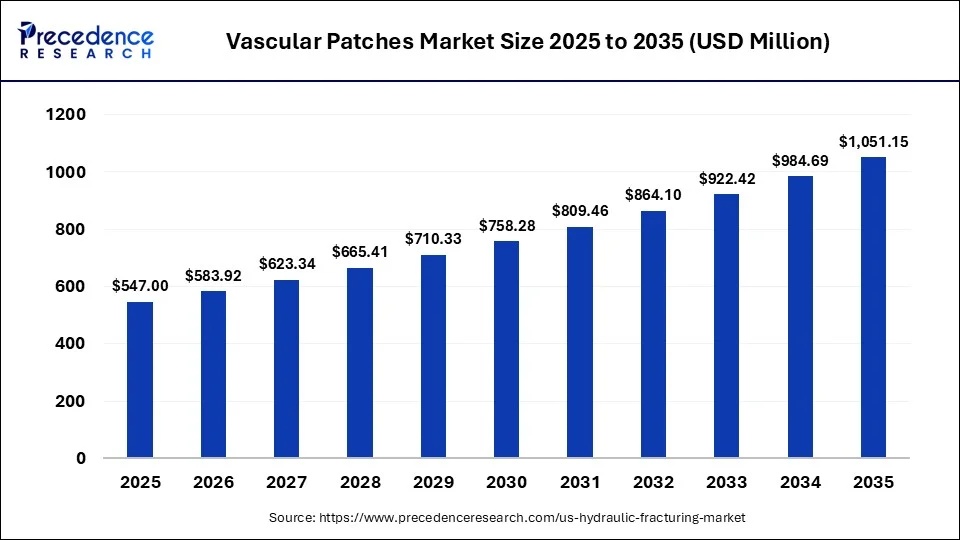
Key Takeaways
- By material, the ePTFE segment led the market with a share of 31.85% in 2025.
- By product type, the synthetic vascular patches segment led the market with a 57.25% share in 2025.
- By application, the carotid endarterectomy segment captured a major revenue share of 34.65% in 2025.
- By shape, the rectangular segment captured the largest market share of 48.35% in 2025.
- By end-user, the hospitals segment led the market with a share of 63.45% in 2025.
- The global PAD population is approximately 200 million, with a large underlying disease pool.
- China has a large cardiovascular-risk population with high long-term procedural opportunity in the vascular patches market.
- In 2025, LeMaitre reported net sales of $249.6M, with gross profit of $178.5M and R&D expense of $14.1M.
- The fastest-growing procedure in the vascular patches market is vessel reconstruction, at 9.15%.
How Large Will the Vascular Patches Market Become by 2035?
The vascular patches market is supported by carotid endarterectomy, open vascular surgery, aneurysm repair, peripheral vascular reconstruction, and vascular-access procedures. Demand is increasingly influenced by the demand for patches that combine suture handling, hemostasis, dimensional stability, flexibility, biocompatibility, and resistance to degeneration. Eventually, the clinical rationale for patch closure is mainly strong in carotid surgery. ESVS guidelines thus recommend routine patch closure rather than routine primary closure following conventional carotid endarterectomy, which is based on evidence showing reductions in late ipsilateral stroke and restenosis.
Analyst View - Market Size
The vascular patches market's 8.02% CAGR is supported less by explosive procedure expansion and more by the combination of procedure volumes, rising use of patch angioplasty, material innovation, and migration toward premium biological or biosynthetic products. A major structural opportunity is the increasing clinical impact on procedure-specific patch selection. Surgeons evaluate not only material expense but also ease of suturing, infection considerations, handling characteristics, hemostasis, and long-term durability.
Peripheral artery disease offers a large underlying addressable population. The American Heart Association reports that PAD affects nearly 200 million people worldwide. The major commercial risk is that vascular patches remain a relatively specialized device category. Procedure volumes, hospital formularies, surgeon preference, and reimbursement can therefore materially affect adoption. Producers also face competition from alternative closure techniques and, in some applications, endovascular approaches that can decrease the number of open procedures.
Market Segmentation
Which Material Holds the Largest Market Share?
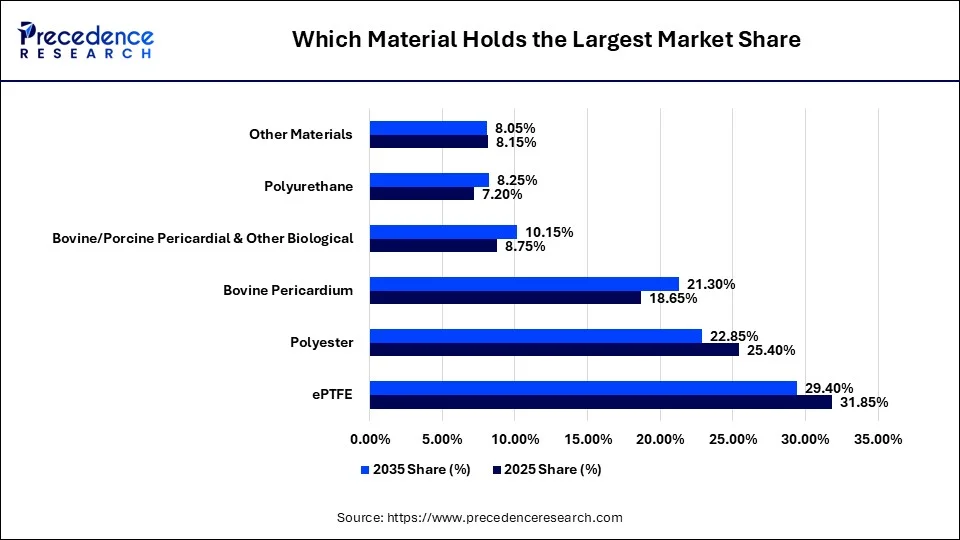
ePTFE remains the largest material segment at 31.85% in 2025 due to its high durability, superior biocompatibility, and unique porous structure that supports controlled tissue integration, while biological materials collectively gain share during the forecast period with a 9.65% CAGR; they provide superior biocompatibility, lower rejection risks, and even better healing outcomes than synthetic options. Modern techniques such as decellularization make these natural materials safer and more durable for complex surgeries, closely followed by bovine pericardium at 9.55% due to its excellent handling characteristics, superior biocompatibility, and lower complication rates compared to synthetic materials. Commercial products demonstrate the diversity of the material landscape. For example, LeMaitre's XenoSure is a processed bovine pericardial patch mainly indicated for endarterectomy and vascular reconstruction.
Analyst View - Material
The material competition is increasingly based on the balance between clinical familiarity and biological performance. Moreover, synthetic materials benefit from manufacturing consistency, availability, and also long-standing surgeon experience. Biological patches provide tissue-like handling and are increasingly positioned around ease of suturing and procedural performance. The major opportunity is generally premium biological patches rather than wholesale replacement of synthetic materials. The risk is that biological materials can involve more complex sourcing, processing, sterilization, and also quality-control requirements.
Which Product Type Accounts for the Largest Demand?
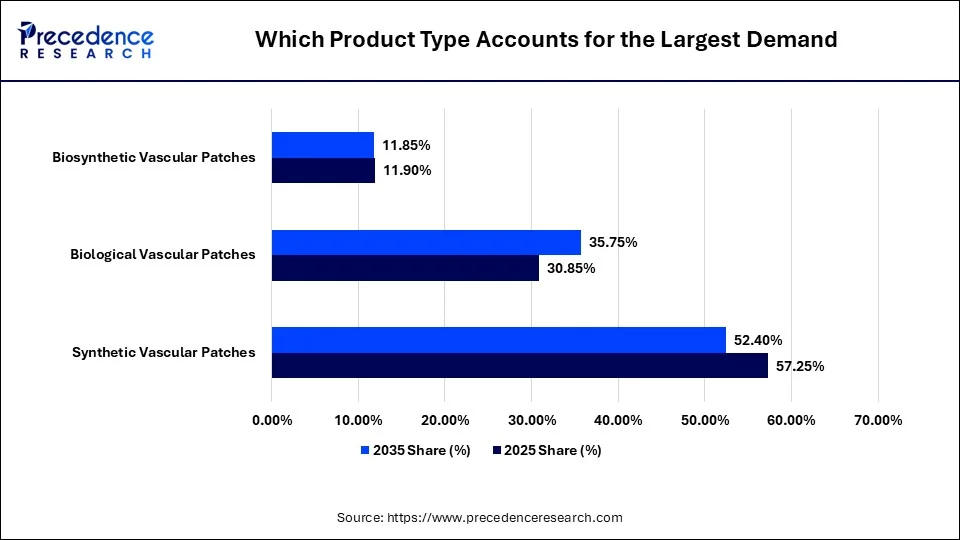
The synthetic vascular patches dominated, with a market share of 57.25% in 2025 because the rapid rise of procedures performed in ambulatory surgical centers (ASCs) drives the need for predictable, easy-to-handle synthetic patches that ensure reliable hemostasis. The biological vascular patches are the fastest-growing segment, with a market share of 30.85% in 2025 and a CAGR of 9.65% because biological patches integrate naturally with the body, thus reducing the risk of immune rejection and severe inflammation.
Analyst View - Product Type
Synthetic patches dominate at 57.25%, but biological patches are the fastest-growing major product category at 9.65% CAGR. Thus, the supplied figures indicate a 4.90-percentage-point increase in biological patch share by 2035; this is consistent with ongoing interest in biological materials providing favorable handling characteristics. LeMaitre mainly describes XenoSure as a bovine pericardium patch programmed to be strong, uniform, and easy to handle and suture. The commercial opportunity is that manufacturers can differentiate biological patches through handling, dimensional consistency, hemostasis, storage convenience, and procedure-specific sizing.
Which Application Is Growing Fastest?
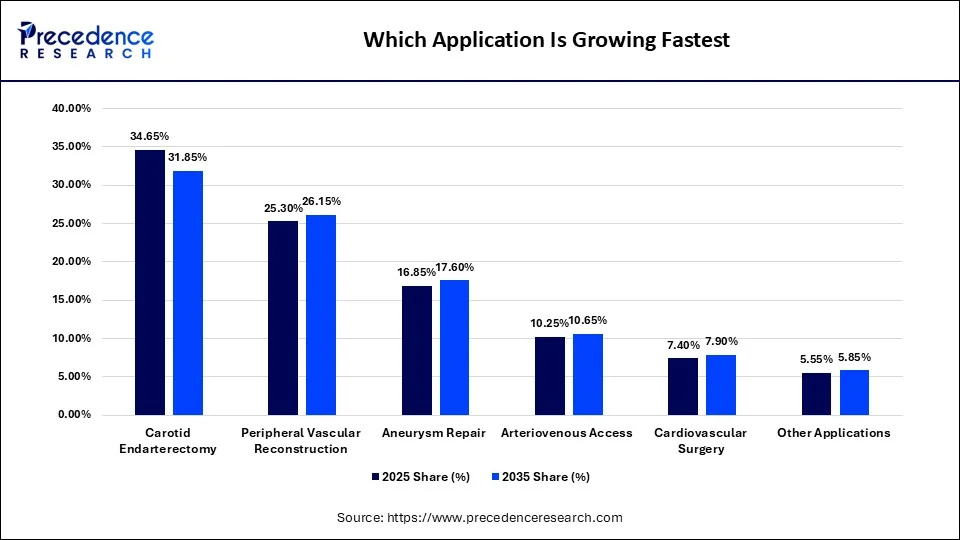
The carotid endarterectomy segment is dominating with a market share of 34.65% because patch angioplasty significantly lowers the risk of artery re-narrowing and also perioperative stroke compared to primary closure of the vessel. Further, newer biological and synthetic options bypass the need to harvest a patient's own vein, thus shortening procedure times and expanding options for surgeons.
The cardiovascular surgery segment is the fastest-growing, with a CAGR of 8.70% due to the rising rates of heart disease and an aging global population that require frequent, complex arterial and cardiac reconstructions. Eventually, the growth in outpatient surgical settings expands procedure capacity and drives the need for cost-effective, high-performance patch materials.
Analyst View - Application
Carotid surgery remains strategically important as routine patch closure is guideline-supported. Further, ESVS reports that routine patching versus primary closure was linked with lower late ipsilateral stroke (1.6% vs. 4.8%) as well as lower late restenosis (4.3% vs. 13.8%). However, the market's incremental opportunity is increasingly changing toward peripheral reconstruction and even complex vascular procedures, where disease prevalence and treatment complexity create a need for specialized materials.
Which Shape Accounts for the Largest Vascular Patches Market Share?
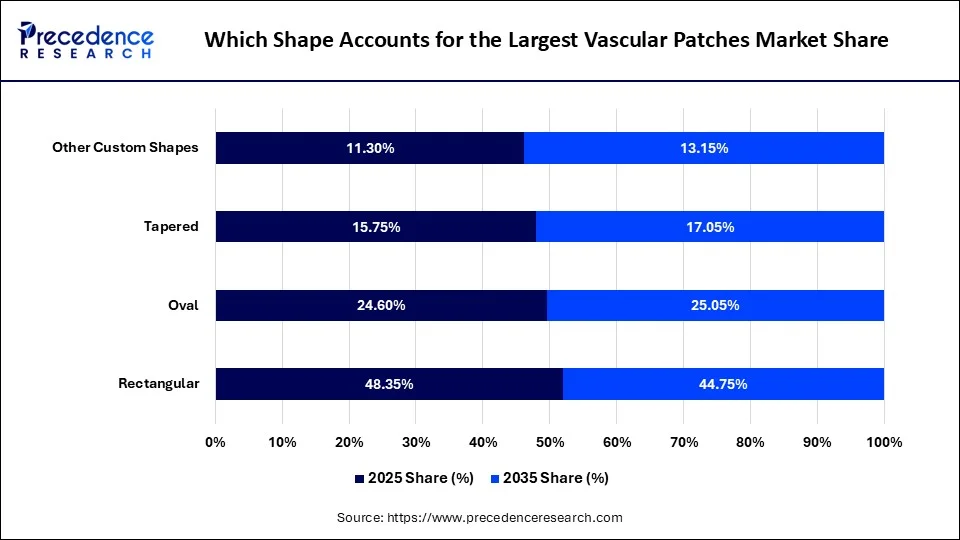
The rectangular segment dominated the market with a market share of 48.35% because its uniform geometric shape offers high versatility, allowing surgeons to easily trim, cut, and customize it for diverse arteriotomy lengths and even complex cardiovascular reconstructions. Standardized rectangular configurations are heavily used in specialized procedures such as the Y-incision rectangular patch technique for aortic root and annular enlargement, which can optimize valve hemodynamics.
Analyst View - Shape
Rectangular patches remain dominant as they can be adapted to a broad range of arterial closure and reconstruction procedures. However, custom shapes now have the highest supplied CAGR at 9.60%, indicating increasing need for anatomical conformity and procedure-specific designs. This is mainly relevant for manufacturers seeking premium pricing: customization can change competition away from commodity material pricing toward surgical workflow and even procedural performance. LeMaitre's XenoSure portfolio illustrates this approach, with multiple patch dimensions ranging from small, narrow patches to large-format configurations.
Which End User Accounts for the Largest Demand?
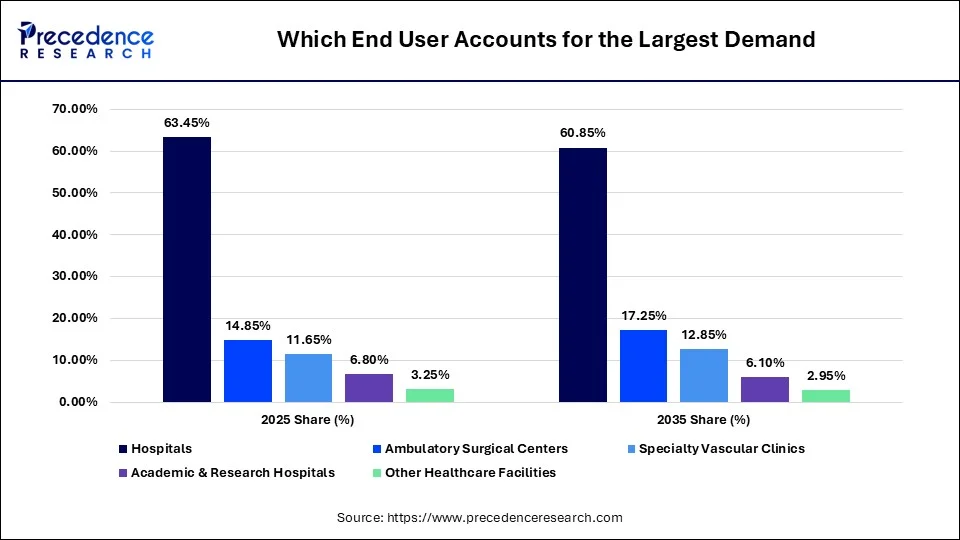
The hospitals segment is dominant in 2025, with a market share of 63.45%; they can perform high-risk, intricate operations, like carotid endarterectomy, vascular bypasses, and abdominal aortic aneurysm repairs that routinely require patch angioplasty. The ambulatory surgical centers are the fastest-growing, with a market share of 14.85% and a CAGR of 9.75% as patients experience shorter wait times, faster recovery, and personalized care in a more accessible setting. Further, insurance providers and government programs encourage site-neutral payments and then expand the list of approved outpatient cardiovascular procedures.
Analyst View - End User
Hospitals remain the largest end-user segment at 63.45%, thus reflecting the concentration of complex vascular surgery in hospital operating rooms. Ambulatory Surgical Centers are the fastest-growing segment at 9.75% CAGR, gaining 2.40 percentage points of share by 2035. The commercial implication is that producers should not rely exclusively on large tertiary hospitals. Selected vascular procedures may increasingly shift toward lower-acuity facilities where smaller pack sizes, simplified handling, standardized patch configurations, and efficient procedure times become important purchasing criteria.
Which Procedure Accounts for the Largest Demand?
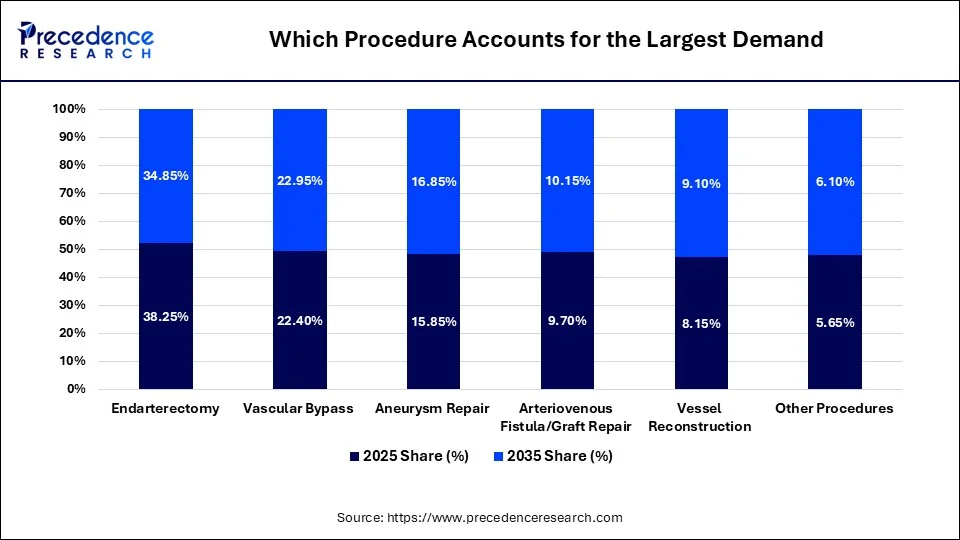
The endarterectomy dominated, with a market share of 38.25% in 2025, because patch angioplasty significantly decreases post-surgical stroke and vessel re-narrowing compared to closing the artery directly, and then patching the arteriotomy after plaque removal prevents restenosis and also lowers short-term major complications.
The vessel reconstruction segment is the fastest growing, with a CAGR of 9.15%, due to the increased rates of diabetes, obesity, as well as hypertension accelerating vascular complications and damage. Procedures such as carotid endarterectomies and peripheral vascular reconstructions increasingly depend on patches for accurate closures and reduced restenosis risk.
Analyst View - Procedure
The procedure mix is important as the value proposition differs by surgery. In endarterectomy, surgeons may prioritize easy suturing, low bleeding, along with reliable closure. Complex reconstruction can place greater impact on conformability, mechanical strength, and anatomical fit. Historical U.S. data state that the scale of carotid intervention: one national analysis identified 912,438 weighted carotid revascularizations between 2007 and 2014, with 87.2% of procedures among individuals older than 70 years performed as carotid endarterectomy. The market should thus be viewed as a procedure-driven device market, where changes in surgical technique and even procedure volume directly influence patch demand.
Which Region Will Gain the Most Vascular Patches Market Share?
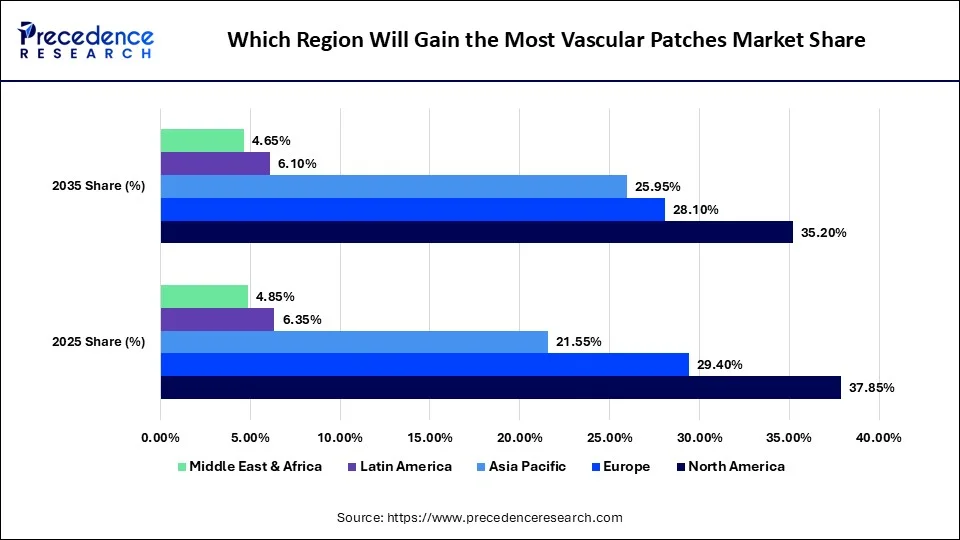
North America dominated the vascular patches market with a market share of 37.85% in 2025 due to an expanding elderly demographic that is significantly more prone to vascular along with heart complications that require surgical intervention. Continuous research yields biocompatible biologic and synthetic patches which lower complication rates and enhance patient recovery.
Asia Pacific is the fastest-growing region, with a market share of 21.55% and a CAGR of 10.15%. Urbanization and westernized lifestyles have increased the prevalence of conditions such as atherosclerosis, hypertension, and diabetes. A larger middle class with wider health insurance coverage is increasing the need for advanced medical treatments. Government-led investments and, thus, expanding hospital networks are enhancing surgical capacity and patient access.
Analyst View - Region
Asia Pacific's supplied share rises from 21.55% to 25.95%, thus representing the largest regional share gain in the forecast. The opportunity is funded by the region's large population and expanding cardiovascular and vascular-care infrastructure. China and India are mainly important as PAD and cardiovascular disease coexist with substantial unmet treatment needs. LeMaitre's 2025 filing states the commercial importance of Asia Pacific: the firm maintains regional headquarters in Singapore and sales offices in Tokyo, Shanghai, Australia, South Korea, and Thailand. Nearly 95% of LeMaitre's 2025 net sales were generated in territories with direct sales representatives, thus demonstrating the significance of local commercial infrastructure in specialty vascular devices.
What are the Regional or Country-Level Demand Indicators Individually?
The global PAD burden of nearly 200 million people is documented by the AHA because of rising case numbers demand more surgical repairs and procedures, such as peripheral endarterectomy and bypass surgeries, which rely on vascular patches to securely close and reconstruct blood vessels after plaque removal. Carotid procedure data come from U.S. national hospitalization or revascularization research, which states that improved diagnostic screening and modern stroke-prevention protocols have led to a higher volume of surgical interventions.
Analyst View - Country Opportunity
The U.S. remains the most commercially mature market due to established vascular-surgery infrastructure, high device utilization, reimbursement systems, and specialist density. Europe benefits from guideline-funded patching in conventional CEA. The ESVS recommendation gives routine patch closure a Class I, Level A recommendation, and although the choice of patch material remains at surgeon discretion.
Asia Pacific represents the stronger incremental-growth opportunity. Producers with local regulatory approvals, surgeon education programs, distributor networks, and localized pricing can capture need as vascular intervention capacity expands. The main strategic issue in emerging markets will be premiumization versus affordability. Synthetic patches can offer a lower-cost pathway, while biological patches may target tertiary hospitals and even high-value procedures.
Which Disease and Procedure Demand Drivers?
Peripheral Artery Disease
PAD affects nearly 200 million people worldwide, thus making it one of the major underlying need pools for peripheral vascular intervention. PAD also creates need across several procedure types, including bypass, vessel reconstruction, endarterectomy, and vascular-access procedures.
Analyst View - PAD
PAD does not translate one-for-one into vascular-patch procedures, as a substantial portion of patients are managed medically or via endovascular interventions. Nevertheless, the disease burden thus establishes a large pool of patients who may ultimately need revascularization. The strongest commercial opportunity is therefore concentrated in individuals undergoing open surgical reconstruction, where patch materials directly participate in the procedure.
Clinical Evidence Supporting Patch Use
ESVS guidelines state that routine patching is linked to statistically significant reductions in late ipsilateral stroke, any stroke, and even restenosis, and thus recommend routine patch closure for conventional carotid endarterectomy. Routine patch closure lowers the immediate post-surgical rates of acute arterial occlusion and also combined stroke or death. Further, widening the vessel lumen reduces turbulent blood flow and thrombotic risks over time, and patching mitigates the long-term effects of structural scarring and neointimal hyperplasia, thus keeping the artery open.
Analyst View - Clinical Evidence
Clinical evidence offers one of the strongest demand-support mechanisms for the market. Importantly, the guideline does not establish a single universally preferred patch material; instead, the choice of material is left to the operating surgeon. This creates an important commercial opening for producers to differentiate through lower bleeding, easier suturing, reduced operative time, handling, resistance to tearing, dimensional stability, infection performance, long-term durability.
Company Intelligence
LeMaitre
LeMaitre Vascular is one of the most directly relevant specialty vascular-device firms, with products including XenoSure biologic patches, AlboGraft vascular grafts, and even other devices used in open vascular surgery. LeMaitre recorded $249.6 million in 2025 net sales, compared with $219.9 million in 2024 and $193.5 million in 2023. R&D expense was $14.1 million in 2025. The company estimates that the global market for peripheral vascular devices exceeds $9 billion and that more than 22,000 vascular surgeons practice worldwide. It also estimated that more than 95% of its 2025 sales came from devices used in open surgical procedures.
Patch Portfolio
XenoSure is a bovine pericardial patch generally used for endarterectomy and vascular reconstruction. The product is provided in multiple sizes, including dimensions ranging from 0.6 × 8 cm to 10 × 16 cm. LeMaitre obtained XenoSure in 2012, adding biological patches to its portfolio. Its acquisition history shows a wider strategy of building a diversified vascular-device portfolio via acquisitions and internal development.
2025 Performance
LeMaitre reported:
| Metric | 2025 |
| Net sales | $249.6M |
| Gross profit | $178.5M |
| R&D expense | $14.1M |
| Sales & marketing expense | $54.5M |
| Gross margin | ~71.5% |
| Sales growth vs. 2024 | 13.50% |
Q4 2025 sales were $64.5 million, up 16%, with graft sales rising 27%. EMEA sales grew 29%, APAC 20%, and Americas 10%. LeMaitre's total revenue is company-wide revenue and thus should not be interpreted as vascular-patch market revenue.
Analyst View – LeMaitre
LeMaitre demonstrates the attractiveness of a focused niche-medtech strategy which is specialized vascular products, geographic sales expansion, direct surgeon relationships, and complementary acquisitions. Its strong 2025 growth, which includes 27% growth in grafts and 20% APAC sales growth in Q4, indicates that specialty vascular-device need remains commercially attractive. The company's direct-sales model is mainly relevant because vascular patches are influenced heavily by surgeon preference and even procedure-specific product familiarity.
Other Competitive Companies
Artivion
Artivion functions in cardiovascular and vascular surgery and has a portfolio of biologic and tissue-based products. Its 2025 annual filing confirms its position as a cardiovascular medical-device firm with operations spanning surgical cardiovascular applications. Artivion is relevant to the competitive landscape as biological or tissue-based cardiovascular products overlap with the broader need for biologically derived surgical materials.
Getinge
Getinge reported SEK 35 billion in 2025 net sales, with products sold in more than 135 countries and nearly 12,000 employees worldwide. Its broader cardiovascular and operating-room portfolio offers geographic and hospital-channel reach, although its reported company revenue should not be treated as vascular-patch revenue.
Analyst View - Competitive Landscape
Competition is increasingly divided between:
- specialist vascular-device manufacturers with direct surgeon relationships;
- biological-tissue specialists;
- large cardiovascular or medtech firms with broad hospital access;
- synthetic-material manufacturers;
- emerging biomaterial firms developing biosynthetic and tissue-engineered solutions.
The strongest competitive differentiation is shifting toward clinical handling, hemostasis, ease of suturing, biological response, product availability, durability, and surgeon familiarity. Specialist firms can compete effectively despite smaller corporate scale because vascular patches are a relatively focused, relationship-based category. M&A is also strategically relevant. LeMaitre records 25 complementary acquisitions since its founding, utilizing acquisitions as a major method of expanding its vascular portfolio.
Product/Material Intelligence
| Attribute | Synthetic Patches | Biological Patches | Biosynthetic Patches |
| Material consistency | High | High but tissue-dependent | Designed for consistency |
| Surgeon familiarity | High | Increasing | Developing |
| Handling | Established | Often tissue-like | Product dependent |
| Biocompatibility | Generally strong | Major selling point | Major development objective |
| Manufacturing complexity | Relatively established | Tissue sourcing/processing | Higher technology requirements |
| Customization potential | High | High | Potentially very high |
| Cost sensitivity | Strong advantage | Premium positioning possible | Technology-dependent |
| Long-term opportunity | Stable | Strong | Emerging |
The material consistency is high in synthetic patches and, for biological patches, high but tissue-dependent. Biosynthetic patches are mostly designed for consistency to ensure predictable medical results, uniform drug delivery, and reliable structural integration with host tissues.
Analyst View - Technology
The next competitive phase is likely to involve material engineering rather than simple material substitution.
Potential development areas include:
- anti-thrombogenic surfaces;
- improved suture retention;
- reduced bleeding;
- infection-resistant materials;
- thinner but stronger patches;
- improved flexibility;
- controlled tissue integration;
- longer shelf life;
- ready-to-use formats;
- procedure-specific geometry.
The market's supplied growth rates for biological and polyurethane materials suggest that surgeons and producers are increasingly looking beyond conventional synthetic polyester or ePTFE designs.
Buyer Intelligence
Major Buyer Groups
| Buyer | Primary Procurement Priorities |
| Hospital procurement departments | Price, quality, availability, standardization |
| Vascular surgeons | Handling, suturing, hemostasis, durability |
| Cardiovascular surgeons | Material performance, reliability, clinical evidence |
| Hospital value-analysis committees | Clinical benefit vs. acquisition cost |
| Ambulatory surgical centers | Procedure efficiency, pack size, ease of use |
| Specialty vascular clinics | Procedure-specific performance |
| Group purchasing organizations | Pricing, supply reliability, contracting |
| Distributors | Product availability, regulatory status, margins |
| Academic hospitals | Evidence, training and innovation |
| Government hospitals | Cost-effectiveness, tender compliance, supply continuity |
Key Buying Criteria
| Criterion | Commercial Importance |
| Ease of suturing | Very High |
| Hemostasis | Very High |
| Biocompatibility | Very High |
| Tear resistance | High |
| Long-term durability | Very High |
| Surgeon familiarity | High |
| Infection performance | High |
| Product consistency | High |
| Size/shape availability | High |
| Regulatory approval | Mandatory |
| Unit price | High |
| Availability | Very High |
| Clinical evidence | High |
| Storage requirements | Moderate–High |
| Packaging/sterility | High |
When buying vascular patches, prioritizing ease of suturing, hemostasis, and biocompatibility is vital because these features directly determine surgical success, patient survival, as well as long-term graft patency. Vascular patches are utilized to repair, widen, or reconstruct blood vessels, such as the carotid artery or aorta. Because these patches function within a high-pressure, continuous-flow circulatory system, any material deficiency can contribute to catastrophic failure.
Analyst View - Buyer Intelligence
Vascular patches are a clinician-influenced specialty device, and purchasing decisions are not determined by procurement price alone. Surgeons can strongly influence product selection via preference for specific materials, dimensions, and handling characteristics. Hospitals then estimate these preferences against cost, reimbursement, and supply reliability. The commercial winning proposition is not simply "lower cost." Producers should demonstrate clinical performance, ease of use, predictable supply, and economic value.
For biological patches, procurement teams are likely to demand stronger evidence that the premium cost is justified by handling, clinical performance, or downstream outcomes.
Distribution & Supply Chain Intelligence
Vascular patches generally move through producer direct sales or distributor or GPO, hospital or surgical center to vascular surgeon. LeMaitre's 2025 filing offers a useful example of the channel model, in which nearly 95% of its net sales were generated in territories where it employs direct sales representatives, funded by 160 sales representatives and also export managers across North America, Europe and Asia Pacific.
Analyst View - Distribution
Direct specialist sales remain commercially valuable as surgeon education and product familiarity influence adoption. For emerging markets, distributors remain important because they offer regulatory support, tender participation, local inventory, hospital relationships, surgeon education, and after-sales support. The most scalable international model is therefore likely to combine direct sales in the key vascular markets with specialized distributors in smaller markets.
Key Growth Drivers
Rising Peripheral Vascular Disease Burden
PAD affects nearly 200 million people globally, thus creating a substantial population requiring vascular disease management and, for some individuals, surgical revascularization.
Guideline Support for Carotid Patch Closure
Routine patch closure following conventional carotid endarterectomy is recommended by ESVS with Class I, Level A evidence.
Growth in Biological Materials
Biological patches are supplied at 9.65% CAGR, above synthetic products at 7.05%.
Increasing Procedure Complexity
Complex reconstruction increases the need for products that provide reliable handling, strength, and anatomical conformity.
Asia Pacific Expansion
Asia Pacific is projected in the supplied dataset to grow at 10.15% CAGR, materially faster than North America and Europe.
Shift Toward Procedure-Specific Designs
Custom shapes are projected to grow at 9.60% CAGR, indicating increasing need for anatomical and procedure-specific configurations.
Market Restraints & Risks
| Risk | Potential Impact |
| Shift toward endovascular procedures | Reduces some open-surgery volumes |
| High biological-patch cost | Limits adoption in price-sensitive markets |
| Surgeon preference | Can slow new-product conversion |
| Hospital procurement pressure | Limits premium pricing |
| Regulatory requirements | Increases development timelines |
| Biological tissue sourcing | Adds manufacturing complexity |
| Infection concerns | Can influence material selection |
| Limited procedure volumes | Restricts category scale |
| Reimbursement variation | Creates regional adoption differences |
| GPO purchasing pressure | Compresses device pricing |
| Clinical evidence requirements | Raises commercialization costs |
| Supply-chain disruption | Can affect hospital availability |
Analyst View - Risks
The largest structural risk is the continued growth of endovascular treatment, which can decrease the number of patients undergoing open vascular reconstruction in selected indications. This does not remove the patch opportunity, however. Open surgery remains important for complex disease, anatomical limitations, failed endovascular interventions, and selected carotid procedures. The second major risk is commoditization of conventional synthetic patches. Moreover, premium growth will therefore increasingly depend on biological performance, specialized designs, and clinical evidence.
Emerging Opportunities
Biological and Tissue-Derived Patches
The supplied data states that biological patches are increasing from 30.85% to 35.75% of product-type demand.
Procedure-Specific Geometry
Custom-shaped patches expand at 9.60% CAGR, creating an opportunity for producers to develop application-specific designs.
Ambulatory Surgery
ASC demand grows at 9.75% CAGR, creating a need for standardized, easy-to-use products.
Asia Pacific
At 10.15% CAGR, Asia Pacific offers the strongest regional expansion opportunity.
Advanced Synthetic Materials
Polyurethane grows at 9.35% CAGR, suggesting a need for flexible synthetic alternatives.
Vascular Reconstruction
Vessel reconstruction grows at 9.15% CAGR, thus making complex reconstruction a high-value application.
Main Segment Snapshot
- By material, ePTFE dominates with a market share of 31.85%, and bovine or porcine pericardial & other biological materials are the fastest-growing.
- By product type, the largest segment is synthetic vascular patches, with a market share of 57.25%, and biological vascular patches are the fastest-growing.
- By application, carotid endarterectomy, with a market share of 34.65%, and cardiovascular surgery are the fastest-growing.
- By shape, the rectangular has a market share of 48.35%.
- By end user, hospitals have a market share of 63.45%, and ambulatory surgical centers are the fastest-growing.
- By procedure, the endarterectomy, with a market share of 38.25%, and vessel Reconstruction is the fastest-growing.
- By region, North America, with a market share of 37.85%, and Asia Pacific is the fastest-growing.
Strategic Market Intelligence Summary
| Intelligence Area | Key Finding |
| 2025 market | USD 409M |
| Forecast CAGR | 8.02% |
| Derived 2035 market | USD 884.64M |
| Largest material | ePTFE – 31.85% |
| Fastest material | Bovine/Porcine & Other Biological – 9.65% CAGR |
| Largest product type | Synthetic – 57.25% |
| Fastest product type | Biological – 9.65% CAGR |
| Largest application | Carotid Endarterectomy – 34.65% |
| Fastest listed application | Cardiovascular Surgery – 8.70% |
| Largest shape | Rectangular – 48.35% |
| Fastest shape | Custom Shapes – 9.60% |
| Largest end user | Hospitals – 63.45% |
| Fastest end user | ASCs – 9.75% |
| Largest procedure | Endarterectomy – 38.25% |
| Fastest procedure | Vessel Reconstruction – 9.15% |
| Largest region | North America – 37.85% |
| Fastest region | Asia Pacific – 10.15% |
| Major clinical driver | Routine patch closure in conventional CEA |
| Major technology shift | Biological and advanced biomaterials |
| Major geographic opportunity | Asia Pacific |
| Major competitive factor | Surgeon preference + clinical handling |
| Major market risk | Shift from open to endovascular procedures |
Expert Insights
The vascular patches market is the worldwide industry for medical devices used to repair, reconstruct, or close blood vessels and heart tissue during cardiovascular as well as peripheral vascular surgeries. Vascular patches are basically medical materials sewn onto blood vessels or the heart to enlarge a narrowed artery, prevent bleeding after removing plaque, or repair congenital defects. I believe that it is anticipated to help the world by offering critical medical materials used to repair and reconstruct damaged blood vessels during life-saving cardiovascular and peripheral surgeries. It is projected that more cases of atherosclerosis, peripheral artery disease, and carotid artery disease drive up cardiovascular surgeries.
Our Experts
The primary market research process was carried out by Deepa Pandey, Senior Research Associate, who also designed the methodology and did market segmentation, regional trend analysis, competitive analysis, recycling technologies, and forecasts, laying the foundation for the analytical part of the report.
Aman, Head of Research, has gathered and checked regulatory policies, information on recycling capacity, company financial information, production information, commodity price information, and numerous other quantitative information sources, which are obtained independently, thereby increasing the quality of evidence supporting calculations of the market values.
Aditi, VP Research, has validated and refined the research material, verified facts, corrected inconsistencies, and completed the research document, making it accurate and to the point.
Complete Segmentation
By Material
- ePTFE
- Polyester
- Bovine Pericardium
- Bovine/Porcine Pericardial & Other Biological
- Polyurethane
- Other Materials
By Product Type
- Synthetic Vascular Patches
- Biological Vascular Patches
- Biosynthetic Vascular Patches
By Application
- Carotid Endarterectomy
- Peripheral Vascular Reconstruction
- Aneurysm Repair
- Arteriovenous Access
- Cardiovascular Surgery
- Other Applications
By Shape
- Rectangular
- Oval
- Tapered
- Other Custom Shapes
By End User
- Hospitals
- Ambulatory Surgical Centers
- Specialty Vascular Clinics
- Academic & Research Hospitals
- Other Healthcare Facilities
By Procedure
- Endarterectomy
- Vascular Bypass
- Aneurysm Repair
- Arteriovenous Fistula/Graft Repair
- Vessel Reconstruction
- Other Procedures
By Region
- North America
- U.S.
- Canada
- Europe
- Germany
- UK
- France
- Italy
- Spain
- Rest of Europe
- Asia Pacific
- China
- Japan
- India
- South Korea
- Australia
- Rest of Asia Pacific
- Latin America
- Brazil
- Mexico
- Rest of Latin America
- Middle East & Africa
- GCC Countries
- South Africa
- Rest of Middle East & Africa
For inquiries regarding discounts, bulk purchases, or customization requests, please contact us at sales@precedenceresearch.com
Frequently Asked Questions
Tags





Ask For Sample
No cookie-cutter, only authentic analysis – take the 1st step to become a Precedence Research client
 Get a Sample
.webp)



 sales@precedenceresearch.com
 Schedule a Meeting
