



Astaxanthin Market Size, Key Companies, Company Market Share, Production Capacity, Raw Material Pricing, Export & Import Analysis, Manufacturing Cost, Competitive Positioning, and Demand Forecast
Astaxanthin Market Size (By Source: Natural, Synthetic; By Product: Dried algae meal or biomass, Oil, Softgel, Liquid, Others; By Application: Nutraceuticals, Cosmetics, Aquaculture and animal feed, Food, Others) - Global Industry Analysis, Size, Trends, Leading Companies, Regional Outlook, and Forecast 2026 to 2035
Source: https://www.precedenceresearch.com/astaxanthin-market
 Get a Sample
 Table Of Content


What is the Astaxanthin Market Size?
The global astaxanthin market size is calculated at USD 1.96 billion in 2025 and is predicted to increase from USD 2.26 billion in 2026 to approximately USD 7.68 billion by 2035, expanding at a CAGR of 14.63% from 2026 to 2035.
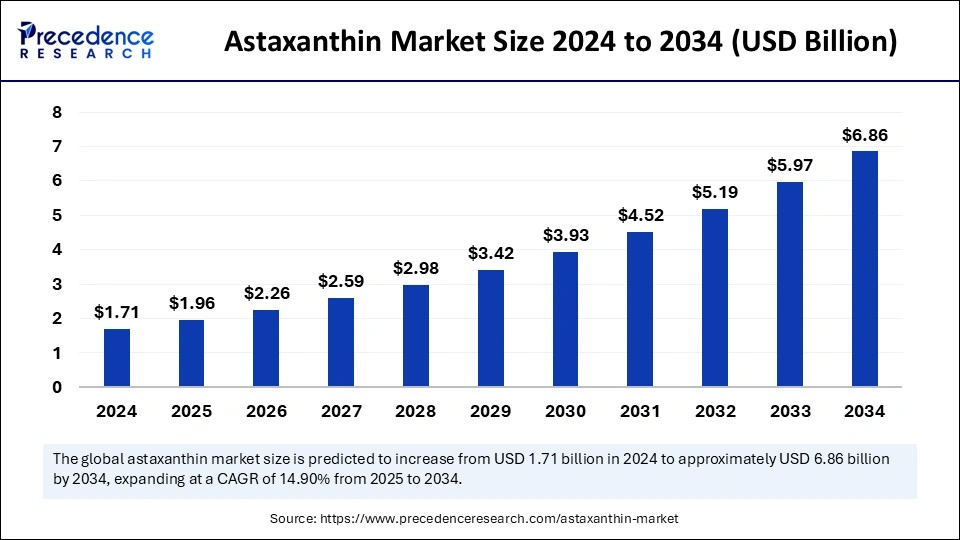
Astaxanthin Market Key Takeaways
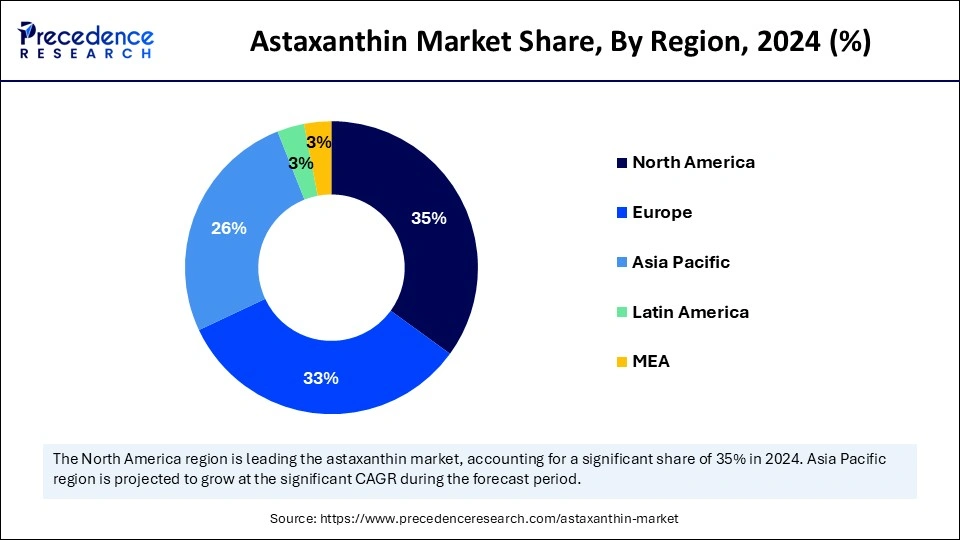
- North America led the astaxanthin market with the largest market share of 35% in 2025.
- Asia Pacific is expected to grow at a solid CAGR of 16% during the forecasted years.
- By source, the natural segment contributed the highest market share of 59% in 2025.
- By source, the synthetic segment is expected to show considerable growth in the market over the forecast period.
- By product, the dried algae meal or biomass segment held the major market share of 26% in 2025.
- By product, the softgel segment is anticipated to witness significant growth in the market over the studied period.
- By application, the aquaculture and animal feed segment accounted for the biggest market share of 47% in 2025.
- By application, the nutraceutical segment is expected to show considerable growth in the market over the forecast period.
Market Overview
Astaxanthin represents a strong xanthophyll carotenoid compound that occurs naturally in microorganisms, marine animals, and some algae species. Its anti-inflammatory properties and antioxidant capabilities make astaxanthin an attractive choice in modern health and wellness markets. Astaxanthin serves as a crucial component in aquaculture systems as it improves the color appearance of salmon, trout, and shrimp, thus adding value to the farmed aquatic products. The dietary supplement form of Astaxanthin serves various industries through cosmetic use, food production, beverage ingredients, and animal feeding applications.
The growing consumer awareness about astaxanthin's health advantages, including antioxidant power and anti-inflammatory properties, keeps it among the key drivers of market growth. Astaxanthin experiences increased popularity as a natural ingredient which appears in dietary supplements and cosmetic formulations. The expanding market for astaxanthin is owing to the rising consumer interest in sustainable ingredients and natural products, thus producing broader industry growth.
The Astaxanthin market is rapidly expanding as consumers increasingly seek potent antioxidant and anti-inflammatory options. The growth is fueled by demand for nutraceuticals, expanding cosmeceutical uses, and increased application in aquaculture and animal nutrition. As wellness trends favor natural bioactives, astaxanthin stays ahead as a premium, science-backed ingredient. Its high purity, biological strength, and multifunctionality make it one of the most popular ingredients in the global bio-nutrition industry.
Artificial Intelligence Integration in the Astaxanthin Market
The Astaxanthin market operations are experiencing production optimization through Artificial Intelligence and automated systems that increase operational efficiency. Artificial Intelligence enables better management of cultivation, extraction, and quality control, thereby improving astaxanthin production quantities and consistency levels. Real-time environmental monitoring through automated systems checks light, temperature, and nutrient levels as they ensure microalgae grow optimally. The implementation of technology advances, astaxanthin production scalability to allow manufacturers the development of new formulations and industrial product applications for health supplements, cosmetics, and food applications.
Astaxanthin Market Growth Factors
- Rising Health Awareness: As a naturally occurring carotenoid, astaxanthin demonstrates benefit in dual functions of skincare protection while also controlling inflammation and protecting from oxidative harm, thus driving its use in health-focused food products.
- Demand for Natural Ingredients: The market experiences growth because consumer demand for natural ingredients continues to rise. Consumers prefer astaxanthin from natural sources instead of synthetic chemicals since natural ingredients fulfill their criteria of health safety and sustainable product characteristics.
- Cosmetic Industry Expansion: The beauty industry actively pursues astaxanthin because its effective protection mechanisms are achieved through anti-inflammatory and antioxidant properties in skincare products. The cosmetics industry incorporates astaxanthin into their product line to provide dual protection against UV damage and enhance skin health utilizing natural solutions for anti-aging and skin repair benefits to customers who need effective skincare.
- Aquaculture Industry Demand: Aquaculture production uses astaxanthin as a pigment enhancer for raised trout salmon fish and shrimp. The aquaculture market benefits from astaxanthin by enhancing seafood's looks while educating customers about its organic coloration advantages for seafood products.
Market Outlook
- Industry Growth Overview: The Astaxanthin market is growing rapidly, driven by rising demand for natural antioxidants in nutraceuticals, cosmetics, and functional foods. Its expanding use in aquaculture and animal nutrition further boosts market potential, supported by increasing consumer preference for clean-label, health-focused products.
- Sustainability Trend: The sustainability trend is reshaping the market by accelerating the shift toward natural, algae-derived production methods that reduce environmental impact and offer cleaner, eco-friendly alternatives to synthetic variants. Eco-conscious brands are turning to astaxanthin because of its low environmental impact and high-value yield. Eco-friendly closed-loop algae farms, renewable energy-powered cultivation, and zero-waste extraction methods are becoming common.
- Major Investment Theme: Venture capital and biotech funds are pouring into algae biotechnology, encapsulation technologies, and premium nutraceutical brands. Clean-label beauty and wellness consumers further drive investor confidence.
Market Scope
| Report Coverage | Details |
| Market Size by 2035 | USD 7.68 Billion |
| Market Size in 2025 | USD 1.96 Billion |
| Market Size in 2026 | USD 2.26 Billion |
| Market Growth Rate from 2026 to 2035 | CAGR of 14.63% |
| Dominated Region | North America |
| Fastest Growing Market | Asia Pacific |
| Base Year | 2025 |
| Forecast Period | 2026 to 2035 |
| Segments Covered | Source, Application, Product, and Regions. |
| Regions Covered | North America, Europe, Asia-Pacific, Latin America and Middle East & Africa |
Market Dynamics
Drivers
Growing Demand for Natural Alternatives in Cosmetics and Nutraceuticals
People prefer natural alternatives in order to avoid potentially harmful effects that synthetic additives and chemicals present in food and topical products. The medical field of dermatology values nutraceuticals, because studies establish astaxanthin, reduces oxidative pressure, supports skin elasticity, and directs aging indicators.
Premium skincare products contain astaxanthin because of its important features as an anti-aging component and UV-protectant. The food and beverage industry maintains dual application of astaxanthin for natural coloring purposes while seeking its health value benefits in addition. The pigmentation of farmed seafood improves through astaxanthin use in aquaculture production because it enhances marketability and visual appeal.
- In September 2024, Suyu introduced Astaxanthin-infused skincare products to its product line. The new product range of Suyu will comprise astaxanthin advanced repair day serum, antioxidant night face elixir, illuminating night serum, and other products.
Restraint
Risks associated with adulteration and clean label requirements
The astaxanthin market encounters substantial limitations from the risk of product adulteration and the need to fulfill clean label standards. The consumption of adulterated astaxanthin generates severe health risks across humans and animals and the environment because animals receive astaxanthin exclusively through their diet. The manufacturing process of natural astaxanthin from microalgae proves expensive and labor-intensive, thus making the product less accessible. Astaxanthin cannot qualify as a clean-label ingredient due to its frequent integration with multiple other substances, which prevents its adoption in food-grade manufacturing.
Opportunity
Advancements in Biotechnology for Sustainable Astaxanthin Production
The sustainable production of astaxanthin relies on Haematococcus pluvialis microalgae, which functions as the main natural astaxanthin supplier. Modern cultivation methods such as photobioreactors, controlled outdoor pond systems, enhance production scale and operational expenses of astaxanthin manufacturing. The advanced astaxanthin production methods decrease ecological damage but adhere to consumer demand for sustainable green products. Advanced biotechnology advances combined with improved algae cultivation strategies show great promise for increasing the natural astaxanthin market through sustainability-based quality initiatives.
Segment Insights
Source Insights
The natural segment contributed for the largest share of the astaxanthin market in 2025. Natural astaxanthin attracts consumers because they seek organic, clean-label and sustainable product choices. The bacterial species Haematococcus pluvialis primarily produces natural astaxanthin, whereas this antioxidant gains popularity since it exhibits superior properties. Natural supplements gain popularity because they provide health benefits and immune support with anti-aging advantages.
The adoption of environmentally friendly and sustainable resources such as astaxanthin from microalgae directly correlates with consumer concern about sustainability since synthetic production techniques typically lead to a larger environmental impact. The demand for clean-label products that minimize processing aligns perfectly with natural astaxanthin attributes, thus making it increasingly popular in supplements and food items.
The synthetic segment is expected to grow considerably in the astaxanthin market. The production methods of synthetic astaxanthin by chemical synthesis or biotechnology lead to important advantages, which include producing at low cost while maintaining scalability and ease of manufacturing. Market expansion of synthetic astaxanthin has increased due to growing consumer recognition of its antioxidant power, its cardiovascular support capabilities, its anti-inflammatory effects, and its benefits for skin health.
Product Insights
The dried algae meal or biomass segment accounted for the largest share in the astaxanthin market in 2025. The dominating position of dry algae biomass as astaxanthin source results from factors such as its role in formulations and low processing needs as well as its bulk production capabilities and applications in animal feed. Dried algae biomass stands as the most commonly selected form by manufacturers because it presents economical advantages and adjustable use capabilities. Direct administration of astaxanthin powder leads to usage opportunities for pharmaceutical formulation manufacturing and capabilities to create tablets and capsules.
- In March 2024, Kuehnle AgroSystems (KAS) announced the microalgal innovation and production leader obtained $3 million from S2G Ventures during its Series A2 funding event. The investment will speed up KAS's commercialization process of its breakthrough astaxanthin production method, which originates from microalgae and serves aquatic farming operations and human health arrangements.
The softgel segment is anticipated to witness significant growth in the astaxanthin market over the studied period. Usage of softgels remains the consumer preference due to their ease of consumption, which appeals most strongly to the older adult population. Softgel formulations have gained increasing popularity because they provide users convenient features, thus preferring them above other supplement alternatives.
The increasing number of elderly people requires easier supplement consumption methods, softgels have gained increased popularity compared to tablets and liquids. Softgels work as the perfect nutraceutical choice through their ability to deliver uniform and dependable delivery systems. Softgels provide exact dosage of astaxanthin because their design enables proper delivery amounts to consumers.
Application Insights
The aquaculture & animal feed segment accounted for the largest astaxanthin market share. The compound maintains vital value for enhancing health and pigmentation of seafood production in aquaculture systems and livestock farms. Astaxanthin serves as a key ingredient in aquaculture because it intensifies fish coloration in salmon and trout and other species, thus raising their commercial value when presented in the market. The growing market demand for premium fish and animal products with natural ingredients will stimulate greater use of astaxanthin in animal nutritional formula.
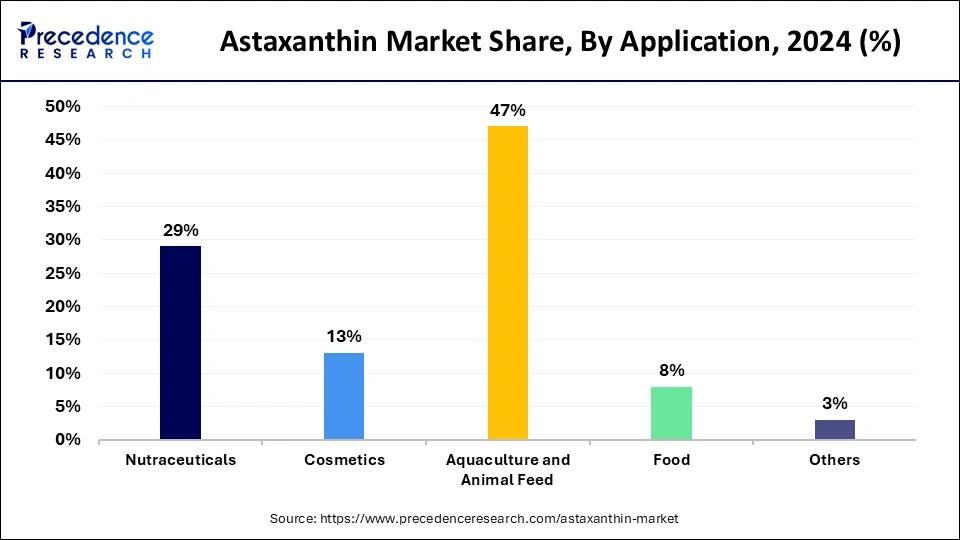
The nutraceutical segment is anticipated to witness significant growth in the astaxanthin market over the studied period. The market demand for astaxanthin as a natural antioxidant in nutraceuticals increases because consumers show more interest in health and rising awareness of its health advantages. The established health benefits of astaxanthin, which include skin improvements, anti-inflammatory response and enhanced wellness appeal, make it suitable for multiple nutraceutical product lines. The food and beverage industry implements astaxanthin in functional foods to broaden its uses throughout this market sector. Many consumers choose preventive healthcare through nutraceuticals, thus creating rising market demand for astaxanthin.
- In April 2024, US-based Divi's Nutraceuticals will launch AstaBead featuring highly concentrated beadlets of sustainable natural astaxanthin developed in collaboration with Algalif at Vitafoods 2024, Switzerland.
Recent DevelopmentsIn March 2024, Nutrex-Hawaii Inc. as a Cyanotech Corporation subsidiary released its top-selling dietary supplement BioAstin Hawaiian Astaxanthin in a sugar-free gummy form with 12mg of natural Hawaiian astaxanthin in each daily dosage. - In April 2023, Algalif announced that the construction of its 12,500 m² sustainable natural astaxanthin production facility in Iceland. The USD 30 million expansion at Astalif began operations in summer 2021 and has established completion goals through the end of 2023.
Regional Insights
What is the U.S. Astaxanthin Market Size?
The U.S. astaxanthin market size was exhibited at USD 590 million in 2026 and is projected to be worth around USD 2,070 million by 2035, growing at a CAGR of 15.04% from 2026 to 2035.
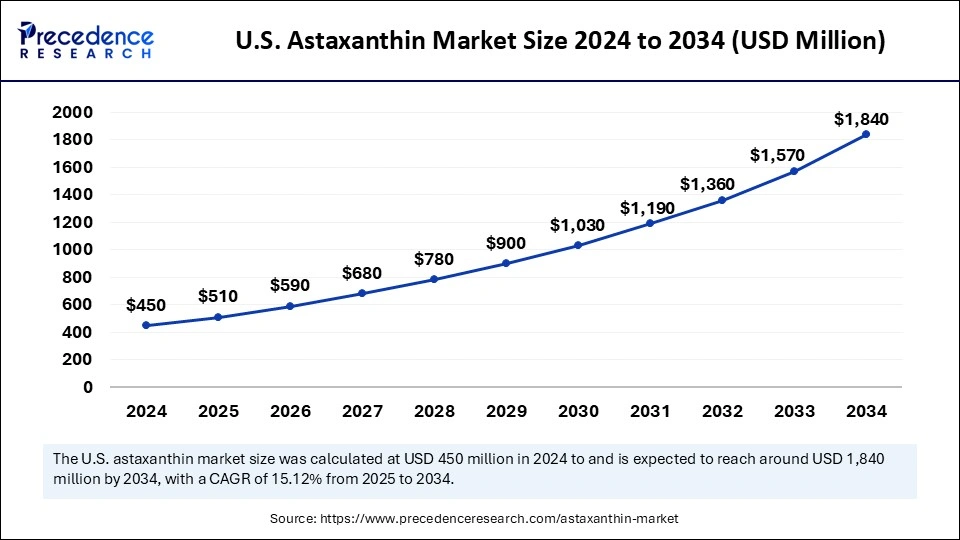
North America held the dominating share of the astaxanthin market in 2025 because of the leading industry players and increase in health awareness among regional consumers. The antioxidant properties of Astaxanthin draw manufacturers to use it for supplements and functional foods because they protect skin while reducing inflammation and improving general well-being. The region maintains an established and quickly developing dietary supplement market structure.
The market is expanding because of increasing commercial use of astaxanthin in aquaculture feed. The market in the U.S. and Canada expands rapidly because of rising seafood and animal product consumption, since such products depend on astaxanthin for coloring and health advantages.
What are the Advancements in the Astaxanthin Market in Europe?
Europe is observed to grow at a considerable growth rate in the upcoming period. The growing health-conscious behavior of European consumers leads to increasing demands for natural astaxanthin antioxidants in nutritional supplements as well as functional food products. The market receives further momentum because the EU regulation on ingredients urges manufacturers to use this natural alternative compound instead of additives. Natural and clean-label products are gaining noticeable popularity throughout the regional market landscapes.
The European Algae Biomass Association (EABA) leads algae sector development through its research and development promotions. Through their work, the EABA developed platforms for policymaker collaboration with scientists and industry representatives to advance natural astaxanthin production technologies significantly.
- In February 2024, AstaReal from Sweden announced the Astaxin Original product rebranding, followed by the European launch of their vegan version. AstaReal showed the rebranded Astaxin Original product to nutraceutical businesses at Fi Europe in Frankfurt before the end of 2023.
Germany Astaxanthin Market Trends
There is a growing trend towards the use of natural ingredients in various products in the country, particularly in the health and wellness sector. Consumers are increasingly favoring astaxanthin due to its natural origins and perceived health benefits, accelerating growth and market adoption.
Asia Pacific Astaxanthin Market Trends
Asia Pacific is expected to witness the fastest rate of growth during the predicted timeframe. A region-wide population focused on personal wellness shows growing concern for healthy aging, thus providing extensive business possibilities for astaxanthin producers. The market will benefit from urban development and rising incomes together with rising consumer knowledge about natural products that appear in nutritional supplements and functional food applications.
Astaxanthin producers can access major growth potential in the Chinese market because this country has populations who actively pursue health and wellness. Natural antioxidant demand for astaxanthin continues to rise since consumers care about their health and look for ingredients to maintain their skin and immune system functions and general well-being.
- In January 2024, Sainhall Nutrihealth established its SainHealth brand for consumer astaxanthin supplements in the Singapore market.
Trends in China
China is witnessing a substantial growth rate for the astaxanthin market due to increasing awareness about natural antioxidants and their possible benefits among the Chinese population. Due to increasing chronic illness, Chinese people are opting for preventive measures for health and medicines with natural ingredients rather than artificial ones. Middle-class people in China are also ready to spend on health products, in particular, eye and skin protection of high quality.
Moreover, E-commerce platforms are also growing prominently, which also distribute astaxanthin goods to different locations with ease. Highly established organizations like the China Association of Fragrance Flavor and Cosmetics Industries are also advertising the benefits and use of natural antioxidants such as astaxanthin in the formulation of cosmetics.
Trends in India
The astaxanthin market in India is expanding significantly due to the pharmaceutical sector in India. As per data revealed by the IBEF-India brand equity foundation, the pharmaceutical market in India is expected to witness an exponential growth rate up to 2026. Also, the increasing strength of medical tourism in India has given a notable boost to the Indian Astaxanthin market share, highlighting its growth potential during the foreseeable period.
How is the Middle East and Africa Region Growing in the Astaxanthin Market?
There is a high adoption of Astaxanthin, driven by expanding dietary supplement retail channels and lifestyle-driven wellness trends. The growing beauty and skincare sector also creates new opportunities. Increasing investments in aquaculture and poultry nutrition are fueling market growth. Furthermore, retail and online supplement ecosystems support sustained, robust growth.
The UAE experiences increasing demand for premium supplements, while Saudi Arabia's growing fish farming industry is boosting bulk ingredient imports. Clear regulatory guidelines for dietary supplements support faster commercialization. Cosmetic companies are also adding astaxanthin to high-end skincare lines, creating new market opportunities.
Saudi Arabia Astaxanthin Market Trends
The country's growth and development are fueled by expanding research validation, increasing consumer awareness of oxidative stress management, and broader adoption of astaxanthin supplements in functional foods, beverages, and nutraceuticals. Technological advancements have also boosted production capacity and quality consistency.
What are the Key Trends in the Astaxanthin Market in Latin America?
Latin America offers strong opportunities for the astaxanthin market due to rising consumer interest in natural antioxidants and growing demand for nutraceuticals that support wellness and preventive health. The region's expanding aquaculture sector, particularly in countries such as Chile and Ecuador, is driving additional demand for astaxanthin as a feed additive to improve pigmentation and health in fish and shrimp. Furthermore, increasing use of natural ingredients in cosmetics and functional foods opens new avenues for product innovation and market expansion across the region.
Brazil Astaxanthin Market Trends
Key market drivers in the region include growing awareness of health benefits and rising demand for sustainable sourcing, which are shaping the industry's future. The rising inclination towards plant-based and organic products also appears to be influencing purchasing decisions, as consumers are seeking alternatives that align with their health-conscious lifestyles.
Value Chain Analysis
- Raw Material Suppliers
This stage includes suppliers of natural microalgae (such as Haematococcus pluvialis), yeast, krill, and chemical precursors used to produce both natural and synthetic astaxanthin, which serve as foundational inputs for downstream processing.
Key Players: Cyanotech Corporation, Algalif, AstaReal, DSM, and Neptune Wellness Solutions. - Cultivation & Extraction
Producers cultivate microalgae through photobioreactors or open ponds and use advanced extraction methods, such as supercritical COâ‚‚ extraction, to isolate high-purity astaxanthin for use in supplements, feed, and cosmetics.
Key Players: AstaReal, Algalif, BGG (Beijing Gingko Group), Algatech, and Fuji Chemical Industries. - Formulation & Processing
This stage involves converting extracted astaxanthin into various commercial formats, such as oleoresins, encapsulated powders, beadlets, oils, and water-dispersible forms, tailored for nutritional, feed, cosmetic, and pharmaceutical applications.
Key Players: DSM, Divi's Nutraceuticals, Valensa International, Lycored, and Archer Daniels Midland (ADM). - Product Manufacturing (End-Use Industries)
Manufacturers incorporate astaxanthin into finished products, including dietary supplements, functional foods, aquafeed formulations, skincare products, and pharmaceuticals, to create consumer-ready solutions.
Key Players: Nutrex Hawaii, NOW Foods, BioAstin, Herbalife, BASF, and major aquafeed companies like Skretting and BioMar.
Astaxanthin Market Companies
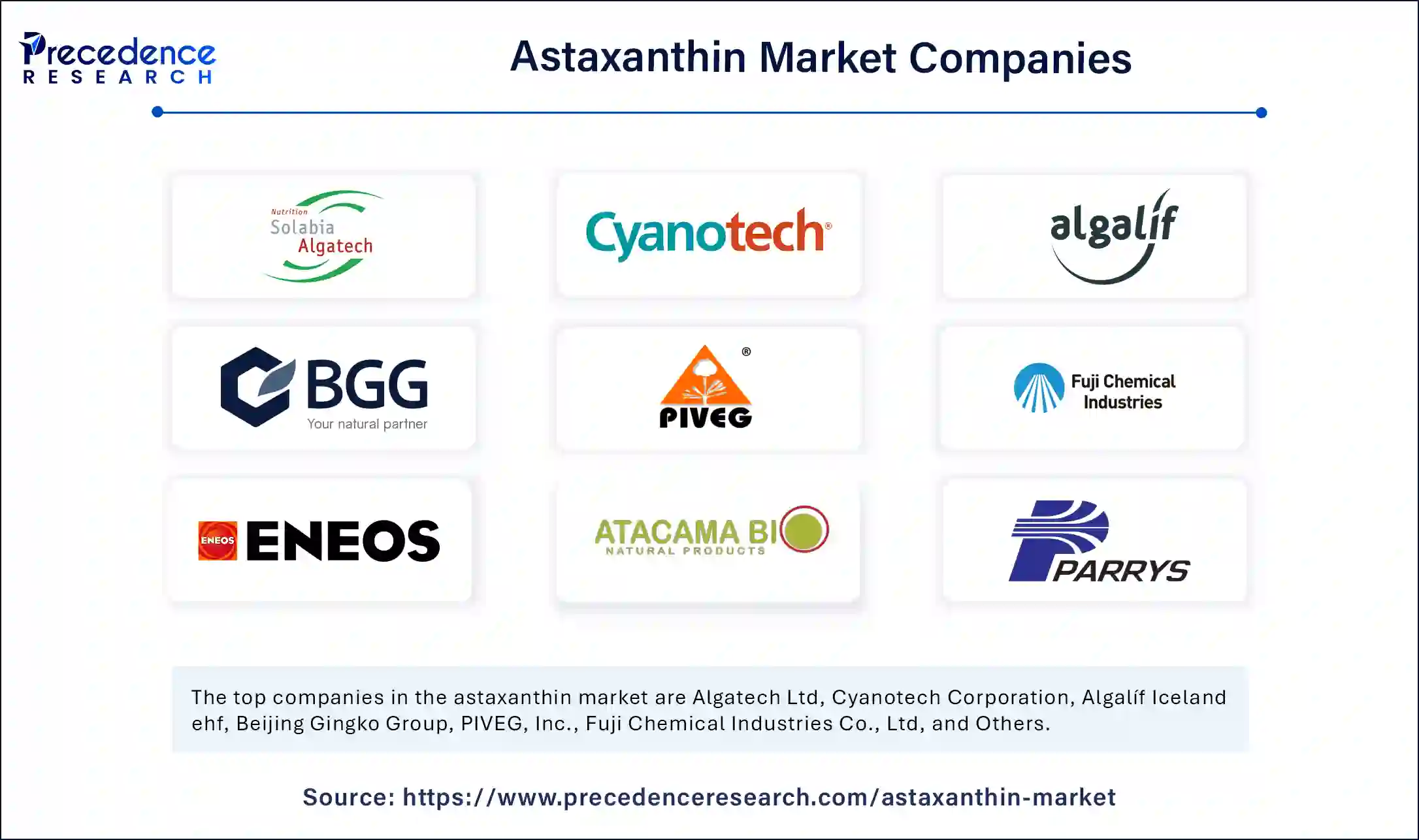
- Algatech Ltd
- Cyanotech Corporation
- Algalif Iceland ehf
- Beijing Gingko Group (BGG)
- PIVEG, Inc.
- Fuji Chemical Industries Co., Ltd
- ENEOS Corporation
- Atacama Bio Natural Products S.A.
- E.I.D. - Parry (India) Limited
- ALGAMO
Recent Developments
- In May 2025, Kemin Industries, Inc. entered into a strategic partnership with a leading company, Bactana. As part of this integration, Kemin Nutrisurance will leverage its global resources and scientific expertise to advance research and accelerate the development of innovative solutions in this evolving field. The acquisition represents another step forward in its mission to enhance health and nutrition through pioneering science and technology.
(Source: https://www.prnewswire.com ) - In October 2025, Cyanotech Corporation unveiled a new sustainability initiative aimed at reducing its carbon footprint and enhancing its production efficiency. This initiative reflects a broader industry trend towards sustainability, as consumers increasingly favor brands that demonstrate environmental responsibility. By prioritizing sustainable practices, Cyanotech Corporation (US) positions itself as a leader in the market, appealing to eco-conscious consumers and stakeholders.
(Source: https://www.cyanotech.com/ ) - In March 2024, BioAstin, a vegan and sugar-free best-selling astaxanthin supplement, was launched by leading marketer Nutrex Hawaii, showcasing its presence in the global market.
- In February 2024, in Europe, a Sweden-based astaxanthin producer, AstaReal, made an announcement about the rebranding of its original products and further unveiled its plans to introduce a vegan version of astaxanthin in Europe. The company has revealed its first rebranded product in Frankfurt in late 2023.
- In 2023, an expansion of the photobioreactor microalgae farm will be completed by BGG, which has doubled its capability for the AstaZine-natural astaxanthin line. According to the data, BGG witnessed its natural astaxanthin production capability increase from 1.5 metric tons to 5 metric tons
Market Segment
By Source
- Natural
- Yeast
- Krill/shrimp
- Microalgae
- Others
- Synthetic
By Product
- Dried algae meal or biomass
- Oil
- Softgel
- Liquid
- Others
By Application
- Nutraceuticals
- Cosmetics
- Aquaculture and animal feed
- Food
- Functional foods and beverages
- Other traditional food manufacturing applications
- Others
By Geography
- North America
- Europe
- Asia Pacific
- Latin America
- Middle East and Africa
For inquiries regarding discounts, bulk purchases, or customization requests, please contact us at sales@precedenceresearch.com
Frequently Asked Questions
Tags





Ask For Sample
No cookie-cutter, only authentic analysis – take the 1st step to become a Precedence Research client
 Get a Sample




 sales@precedenceresearch.com
 Schedule a Meeting
