



Automotive Voice Recognition System Market Size, Key Companies, Company Production Capacity, OEM Production, Aftermarket Demand, Export Dependency, Cost Structure, Adoption Rates, and Competitive Landscape
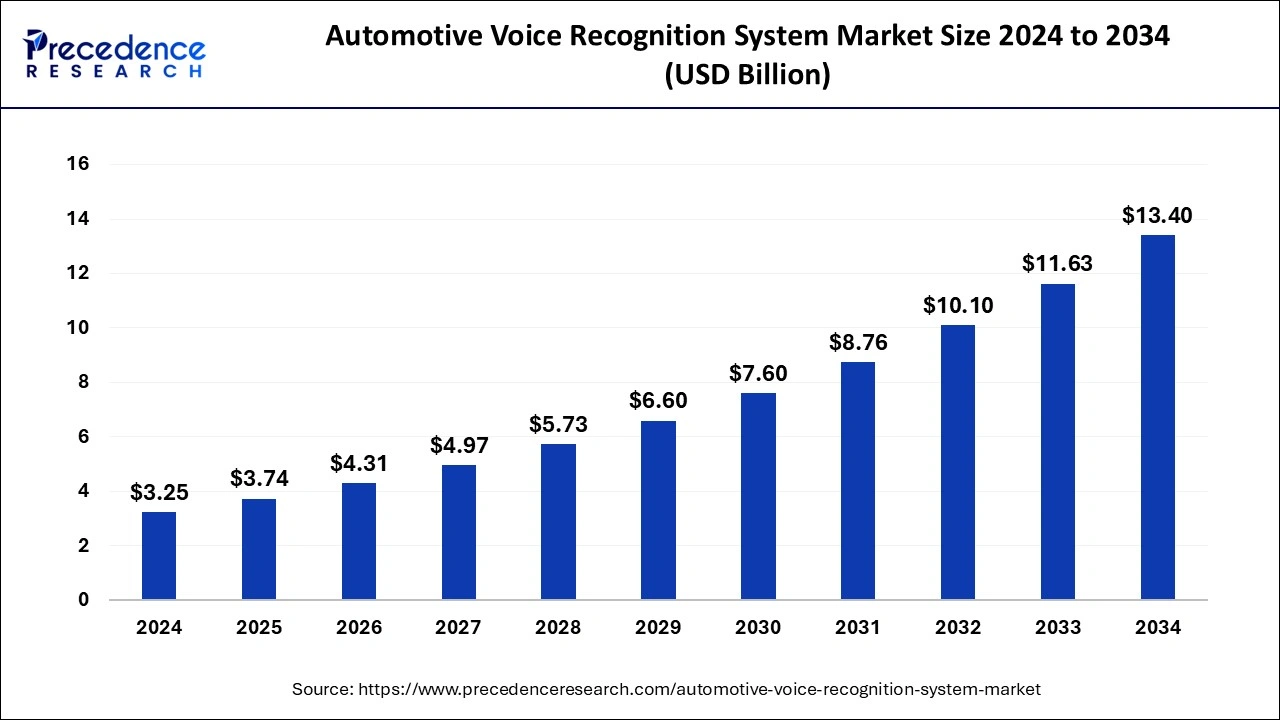
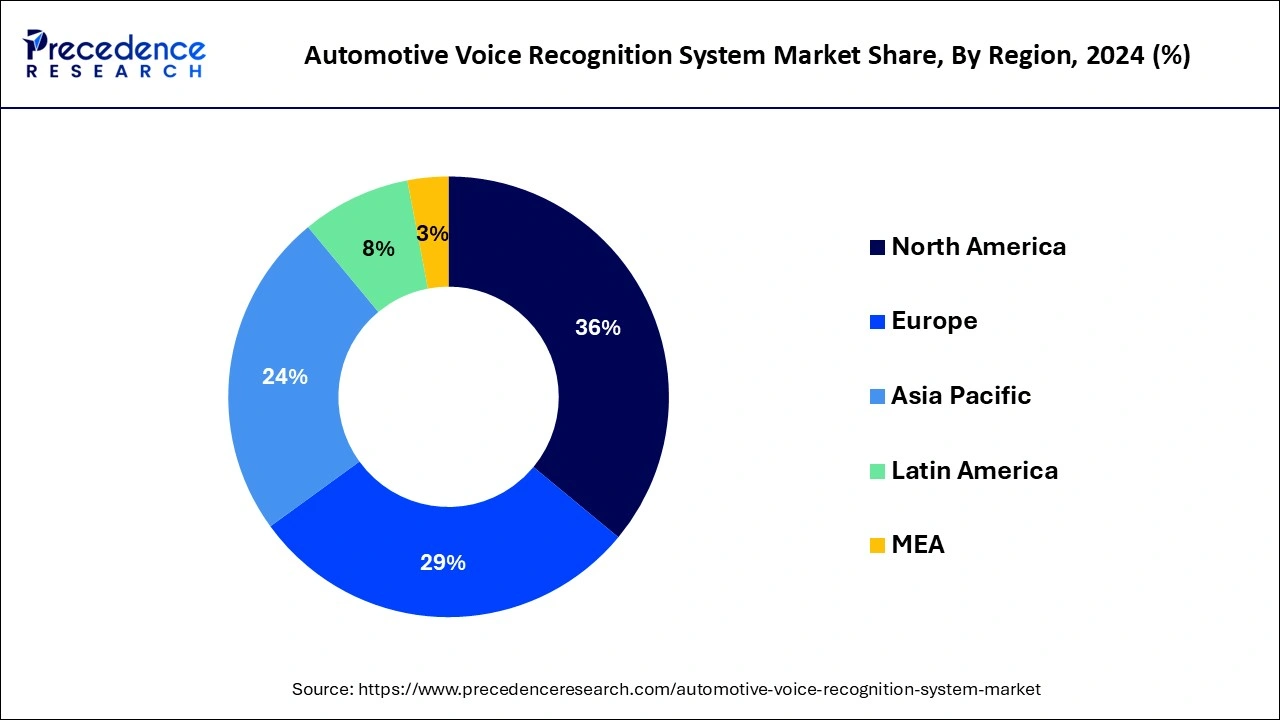
The global automotive voice recognition system market is projected to grow from USD 4.31 billion in 2026 to USD 15.01 billion by 2035, registering a CAGR of 14.91%. Growth is driven by rising adoption of connected vehicles, AI-powered voice assistants, increasing demand for hands-free safety and infotainment, cloud-based recognition, and growing adoption of electric and autonomous vehicles. North America dominated the market in 2025 with a 36% share, supported by high demand for advanced vehicle technologies and connected infotainment, while Asia Pacific is expected to witness strong growth due to rising disposable incomes, expanding 5G infrastructure, connected and electric vehicle adoption, and growing demand for multilingual voice assistants.
Source: https://www.precedenceresearch.com/automotive-voice-recognition-system-market
 Get a Sample
 Table Of Content


What is the Automotive Voice Recognition System Market Size?
The global automotive voice recognition system market size is accounted at USD 3.74 billion in 2025 and predicted to increase from USD 4.31 billion in 2026 to approximately USD 15.01 billion by 2035, representing a CAGR of 14.91% from 2026 to 2035. The increasing use of digital technologies in the automotive industry is a key factor driving the growth of the market. Furthermore, growing demand for improved safety and technological advancements contribute to market growth.
Key Takeaways
- North America dominated the global automotive voice recognition system market with the largest share of 36% in 2025.
- Asia Pacific is expected to expand at a solid CAGR during the forecast period.
- By technology, the embedded segment accounted for the highest market share in 2025.
- By technology, the cloud-based segment is projected to grow at a CAGR over the forecast period.
- By application, the AI segment contributed the biggest market share in 2025.
- By vehicle type, the ICE segment dominated the market in 2025.
Market Overview
The automotive voice recognition system market comprises the industry sector for hardware and software technologies that allow drivers and passengers to control in-car features by leveraging spoken commands to lower driver distraction and improve safety. Enable hands-free operation of secondary vehicle tasks to comply with safety regulations and minimize driver distraction. The market is mainly driven by commercial vehicle adoption, increasing consumer demand for connected-car ecosystems, strict safety regulations targeting driver distraction, as well as integration of AI.
Impact of AI on the Automotive Voice Recognition System Market
The market is witnessing a drastic change due to the use of artificial intelligence technologies. AI can improve the functioning of the voice recognition system. AI-powered voice recognition systems enhance interaction between drivers and their vehicles. In addition, AI has the ability to learn and adapt to different languages and accents, leading to improved accuracy in voice recognition.
Automotive Voice Recognition System Market Growth Factors
The growth of the global automotive voice recognition system market is driven by the rising adoption of the digital technologies in the automotive sector and increasing adoption of vehicles across the globe. The technological advancements and rapid growth in the popularity of voice recognition systems across the globe has fostered the adoption of voice recognition systems in the automotive sector. The rising demand for the vehicles across the globe is propelling the production and sales of vehicles, which in turn is driving the growth of the global automotive voice recognition system market. The rising consumer expenditure on premium services, infotainment, and technological advancements for safety and comfort is expected to augment the demand for the automotive voice recognition systems. Moreover, the emergence of cloud-based voice recognition systems owing to the rising penetration of internet and increased demand for the internet connectivity is driving the sale of the automotive voice recognition systems across the globe.
The improved acoustics used in the manufacturing of vehicles has reduced the noise levels inside the vehicle cabin and this improves the functioning of the voice recognition system. Moreover, the rising popularity of the electric vehicles among the population is a major factor that can be held responsible for the rapid growth of the automotive voice recognition system market. Moreover, the growing popularity of the autonomous driving vehicles is also considered to a major driving force of the market. The market players operating in the voice recognition systems market are investing heavily in biometrics and artificial intelligence technologies, which may provide growth opportunities in the automotive recognition system market in the forthcoming years. Furthermore, the increasing adoption of virtual voice assistants such as Siri, Alexa, Maluuba, and Cotana are boosting the usage of the voice recognition systems in the vehicles owing to the convenience it offers to the users.
Market Outlook
- Industry Growth Overview: The increasing connectivity need fosters adoption. Voice Systems are becoming an instrument of safety and infotainment and are beginning to change in-car user experiences in modern vehicles all around the world.
- Global Expansion: Powerful investments in AI voice technologies improve linked automobile environments and consumer experience within vehicles, driving growth in Europe.
- Major investors: SoundHound AI, Cerence, Microsoft, Harman International, Apple, Alphabet, Toyota, Volkswagen are innovating and making strategic investments in voice technologies.
Major Trends in the Automotive Voice Recognition System Market
- Drive Smart with Hands-Free Control: Reducing cognitive load prioritizes minimizing secondary task distraction, with regulatory compliance aligning human-machine interface designs with stringent transportation safety guidelines regarding driver attention. Hands-free operations also prioritize acoustic controls to keep driver hands on the wheel and eyes on the road.
- The Shift to Fluid Conversational Interfaces: Shifting from basic command-and-control triggers to fluid conversational interfaces, moving past rigid commands. Contextual intent recognition, also implementing advanced NLP algorithms modeled on human-to-human verbal interaction, further enhancing semantic interpretation in unpredictable acoustic environments.
- Resilient Hybrid Architecture for Connected Cars: Local processing optimization by leveraging on-device edge computing for zero-latency, privacy-critical safety commands. Cloud scalability also leads to external servers when continuous connectivity is present, ensuring core vehicle functions work via voice even when cellular network coverage drops.
- Multilingual and Vernacular Expansion: Integrating robust datasets for low-resource and diverse regional languages improves automatic speech recognition (ASR) accuracy across varied regional accents and vernaculars to explore related automation insights.
Market Scope
| Report Highlights | Details |
| Market Size by 2035 | USD 15.01 Billion |
| Market Size in 2025 | USD 3.74 Billion |
| Market Size in 2026 | USD 4.31 Billion |
| Growth Rate From 2026 to 2035 | CAGR of 14.91% |
| Largest Market | North America |
| Base Year | 2025 |
| Forecast Period | 2026 to 2035 |
| Segments Covered | Technology, Application, Vehicle, and Region |
| Regions Covered | North America, Europe, Asia-Pacific, Latin America, and Middle East & Africa |
Market Dynamics
Driver
The Rise of Voice-Driven Cars
The primary driver for the market is the continuous push by global regulatory authorities and safety organizations to lower manual-visual driver distraction. Voice-recognition interfaces reduce the physical and manual load of handling in-vehicle infotainment, navigation, and telematics systems effectively. As safety standards tighten regarding physical dashboard device interaction while driving, automakers increasingly depend on robust voice interfaces to meet safety recommendations.
Restraint
The Hidden Price of Smart Cabins
Despite its market potential, high integration prices along with data security and acoustic privacy vulnerabilities heavily limit wider deployment, particularly across budget and mid-tier vehicle segments. Interpreting complex commands in noisy vehicular environments remains a hurdle. Furthermore, transmitting continuous cabin audio and user speech profiles to external cloud networks triggers critical data-privacy concerns and exposes to potential cybersecurity threats.
Opportunity
Hybrid Cloud-Edge Models in Modern Automotive Design
The integration of advanced conversational AI and edge-computing architectures presents substantial expansion prospects for the automotive sector. In connected-vehicle infrastructure, optimizing localized and natural language processing inside the vehicle cabin enables users to interact safely without diverting visual focus to touchscreens. The shift toward software-defined vehicles enables manufacturers to leverage hybrid cloud-edge models and provide customized in-car e-commerce capabilities.
Segments Insights
Technology Insights
Why has the embedded segment achieved high revenue in the market?
The embedded segment accounted highest revenue share in 2025. This can be attributed to the ease of installation associated with the embedded technology for the manufacturers. The early adoption of the embedded voice recognition by the car manufacturers and increased number of installations in the vehicles to offer hands-free access to the customers has significantly boosted the growth of this segment in the past.
On the other hand, the cloud-based segment is estimated to be the most opportunistic segment during the forecast period. This can be attributed to the rising demand for the internet connectivity. The rising number of connected devices across the globe is further expected to fuel the segment growth. Moreover, the rising number of autonomous driving vehicles is fulling the growth of the cloud-based voice recognition systems. The cloud-based technology offers various advantages like live access to maps, music, and various other features that is expected to increase its demand among the users during the forecast period.
Application Insights
Which segment accounted for the largest revenue share in 2025?
The AI segment accounted largest revenue share in 2025. AI is also considered to be the fastest-growing segment during the forecast period. The car manufacturers were one of the early adopters of the AI based voice recognition systems. This can be attributed to the increased demand and adoption of the virtual voice assistants like Siri and Alexa. The ability to recognize voices and respond to it in real-time is a major feature that fosters the growth of this segment. Moreover, the rising number of autonomous driving vehicles is boosting the adoption of the AI enable voice recognition systems in vehicles across the globe.
Vehicle Type Insights
Why did manufacturers initially adopt voice recognition systems in ICE vehicles before electric vehicles?
The ICE segment dominated the global automotive voice recognition system market in 2024, in terms of revenue. This can be simply attributed to the increased production, sales, and adoption of the ICE vehicles across the globe. The rising disposable income, increased urbanization, and growing need for the private commute has propelled the growth of the ICE segment. Moreover, the manufacturers initially adopted the voice recognition systems in ICE vehicles much before the electric vehicles came to limelight.
On the other hand, the BEV segment is expected to be the fastest-growing segment during the forecast period. This is attributed to the increasing adoption of the electric vehicles owing the rising global warming issues and increased government and corporate initiatives to reduce the carbon footprint across the globe. Moreover, the technological advancements being introduced in the electric vehicles is gaining traction among the global population, which is expected to drive the adoption of EVs in the forthcoming years.
Regional Insights
What Made North America the Dominant Region in the Automotive Voice Recognition System Market?
North America dominated the global automotive voice recognition system market with the largest share of 36% in 2025, in terms of revenue and is estimated to sustain its dominance during the forecast period. The increased disposable income, increased demand for luxury products, increased demand for the personal vehicles owing to the low availability of public transport, and increased demand for the latest technologies in the region are the major factors that fueled the demand for the automotive voice recognition system. Moreover, North America is a huge automotive market and the rising popularity of the electric vehicles owing to the increased awareness regarding the global warming among the population is expected to boost the adoption of the advanced EVs installed with latest automotive voice recognition systems.
U.S. Automotive Voice Recognition System Market Size and Growth 2026 to 2035
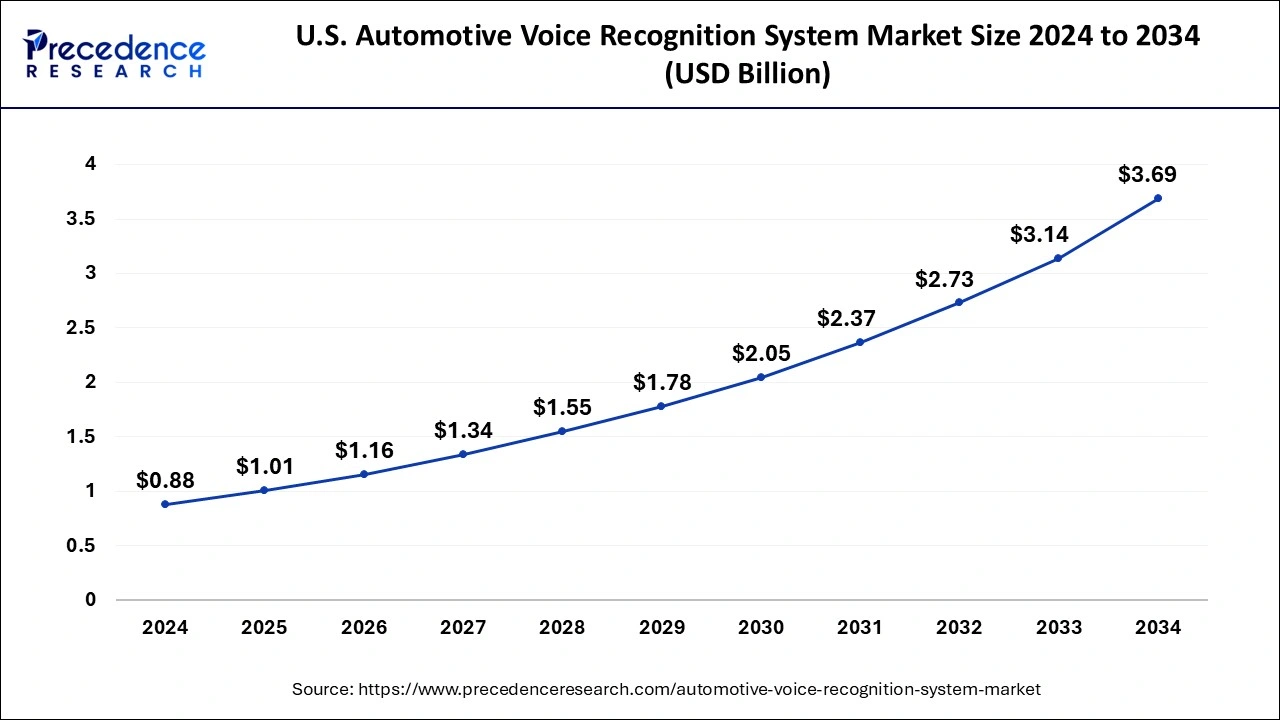
The U.S. automotive voice recognition system market size is exhibited at USD 1.01 billion in 2025 and is predicted to be worth around USD 4.15 billion by 2035, rising at a CAGR of 15.18% from 2026 to 2035.
U.S. Automotive Voice Recognition System Market Trends
The market in the U.S. is growing thanks to the rapid rollout of connected vehicle infotainment platforms, where natural language and conversational interfaces are replacing simple voice commands. Additionally, edge AI processing and stricter safety regulations around distracted driving are pushing automobile manufacturers to integrate more robust voice systems that support hands free control and voice commerce.
How is the Opportunistic Rise of Asia Pacific in the Automotive Voice Recognition System Market?
On the other hand, Asia Pacific is estimated to be the most opportunistic market during the forecast period. This can be attributed to the factors such as rising disposable income, presence of huge population, rapidly growing urban population, rising middle-class, and developing infrastructure in the region.
Moreover, the region benefits from a strong push toward smart mobility, government policies supporting connected and electric vehicles, expanding 5G infrastructure, and rising consumer expectations for multilingual, natural language voice assistants in cars.
India Automotive Voice Recognition System Market Trends
The market in India is expanding due to a growing emphasis on multilingual and regional language support, given the myriad of languages spoken across the country and the need for voice systems to cater to code-switching in local languages. At the same time, increased uptake of connected vehicles and EVs, paired with voice‑enabled infotainment and smart‑assistant features, is driving deeper integration of voice systems as a core user interface rather than a luxury add‑on.
How is the Opportunistic Rise of Europe in the Automotive Voice Recognition System Market?
Europe is experiencing significant growth in the market due to improved road safety, regulatory support, and demand for seamless connectivity and enhanced user experience. The European Commission launched new initiatives with industries to promote Europe's automotive leadership. The European Union, including France, strongly supports regulations for road safety and digital transformation. Consumers favor convenience and personalized experiences through advanced technology and connectivity features. Major tech companies and automotive manufacturers continually invest in R&D to improve their in-car voice assistants.
What Potentiates the Growth of the Market in Latin America?
The growth of the automotive voice recognition system market in Latin America is being driven by the rising demand for in-car connectivity and the integration of advanced technologies and AI. Brazil is a major player in the market. Brazil's MOVER Program has established strict environmental standards and offers incentives that attract over USD 26 billion in automaker investments. American companies have great opportunities to partner with Brazilian automakers for R&D projects supported by Brazil's MOVER Program through 2028. Moreover, increasing demand for vehicle connectivity and a gradual shift toward more feature-rich infotainment systems, particularly in countries such as Brazil and Mexico, are driving regional market growth.
What Boosts the Growth of the MEA Automotive Voice Recognition System Market?
The market in the MEA is growing steadily thanks to improved safety, regulatory support, and smart city initiatives. Private automotive companies and tech firms like SoundHound AI, Microsoft, Hyundai, and BMW lead the development and integration of automotive voice recognition systems. Saudi Arabia is leading the market. Recent developments in Saudi Arabia include autonomous vehicle trials, AI-powered security vehicles, speech recognition research, and a broader AI strategy. The national AI strategy, backed by significant investments, aims to integrate AI across various sectors, including logistics and transportation.
- In February 2024, Saudi Arabia launched its first AI-powered electric security vehicle at the World Defense Show 2024.
Competitive Landscape
The automotive voice recognition system market is highly consolidated as leading players like Nuance Communications, Cerence, Robert Bosch GmbH, and Amazon Alexa expand vehicle integration, emphasizing AI-driven natural language processing and edge computing. Increasing consumer demand for hands-free safety features drives market adoption.
Looking ahead, emerging players and startups like Mihup, Kardome, Sensory, and Mobvoi have future opportunities lying in multilingual regional dialects and emotion detection, meanwhile high integration costs and complex hardware compatibility limit market penetration.
Automotive Voice Recognition System Market Companies
- Apple: CarPlay is compatible with Siri. Allows navigation, messaging, calling, and music with an uninterrupted iPhone connection in vehicles.
- Microsoft: Azure Cognitive Services provides speech services. Enables multilingual interaction, conversational AI, and safe voice assistant experiences in automotive applications worldwide.
- Voice Box: It offers voice conversation systems. Facilitates natural language interpretation and situational conversation to provide an intuitive in-vehicle control and a better user experience.
- Alphabet (Google): Delivers an AI speech service based on Android Automotive OS. Fuses Assistant and Maps to be able to interact with your phone-free inside the vehicle.
Other Major Key Players
- Sensory
- Nuance
- Harman
Key Companies & Market Share Insights
The market is moderately fragmented with the presence of several local companies. These market players are striving to gain higher market share by adopting strategies, such as investments, partnerships, and acquisitions & mergers. Companies are also spending on the development of improved products. Moreover, they are also focusing on maintaining competitive pricing.
The various developmental strategies like collaborations, partnerships, mergers, and government policies fosters market growth and offers lucrative growth opportunities to the market players.
Recent Developments
- In March 2026, Rivian is testing a new AI assistant for vehicles to control functions and interact with calendars and navigation, expected to replace Alexa in Connect+. The feature may soon be available to customers in test cars.
- In January 2026, BMW Group can integrate the Amazon Alexa+ AI assistant into its vehicles, marking a milestone in vehicle communication. The BMW iX3, showcased at CES 2026, is likely to be the first model equipped with this enhanced BMW Intelligent Personal Assistant, launching in Germany and the U.S. in late 2026
- In August 2025, Tesla is enhancing its electric vehicles in China with a new AI voice assistant, created with DeepSeek and ByteDance's Doubao LLM. Drivers can control navigation, entertainment, and cabin features using natural voice commands. Utilizing ByteDance's Volcano Engine, the system aims to provide an intuitive experience, supporting Tesla's strategy to compete with local EV brands like BYD and Nio.
- In May 2023, MG Motor India collaborated with Jio Platforms to improve the in-car technology for passengers. The cooperation will work toward enhancing the voice recognition features for MG vehicles.
- In March 2023, Google AI introduced the latest update for its Universal Speech Model (USM) for supporting 1,000 language initiatives. This machine learning model was designed to recognize and understand spoken language across different languages and accents.
Automotive Voice Recognition System Market Segments Covered in the Report
By Technology
- Embedded
- Cloud-Based
- Hybrid
By Application
- AI
- Non-AI
By Vehicle Type
- ICE
- BEV
By Region
- North America
- Europe
- Asia Pacific
- Rest of the World
For inquiries regarding discounts, bulk purchases, or customization requests, please contact us at sales@precedenceresearch.com
Frequently Asked Questions





Ask For Sample
No cookie-cutter, only authentic analysis – take the 1st step to become a Precedence Research client
 Get a Sample




 sales@precedenceresearch.com
 Schedule a Meeting
