



Barge Transportation Market Size, Key Companies, Company Market Share, Vehicle Production Volume, Sales Performance, Export & Import Analysis, Technology Adoption, Competitive Positioning, and Demand Trends
The global Barge Transportation Market was valued at USD 146.62 billion in 2026 and is projected to reach USD 203.60 billion by 2035, growing at a CAGR of 3.72% from 2026 to 2035. Market growth is driven by increasing demand for cost-effective and sustainable freight transportation, expanding inland waterway infrastructure, rising global trade, and growing adoption of digital technologies, AI, and automation to improve fleet efficiency, route optimization, and operational performance.
Source: https://www.precedenceresearch.com/barge-transportation-market
 Get a Sample
 Table Of Content


What is the Barge Transportation Market Size?
The global barge transportation market size is calculated at USD 141.34 billion in 2025 and is predicted to increase from USD 146.62 billion in 2026 to approximately USD 203.60 billion by 2035, expanding at a CAGR of 3.72% from 2026 to 2035. Growing demand for sustainable and cost-effective transport along with waterway and sea transportation, is driving the market.
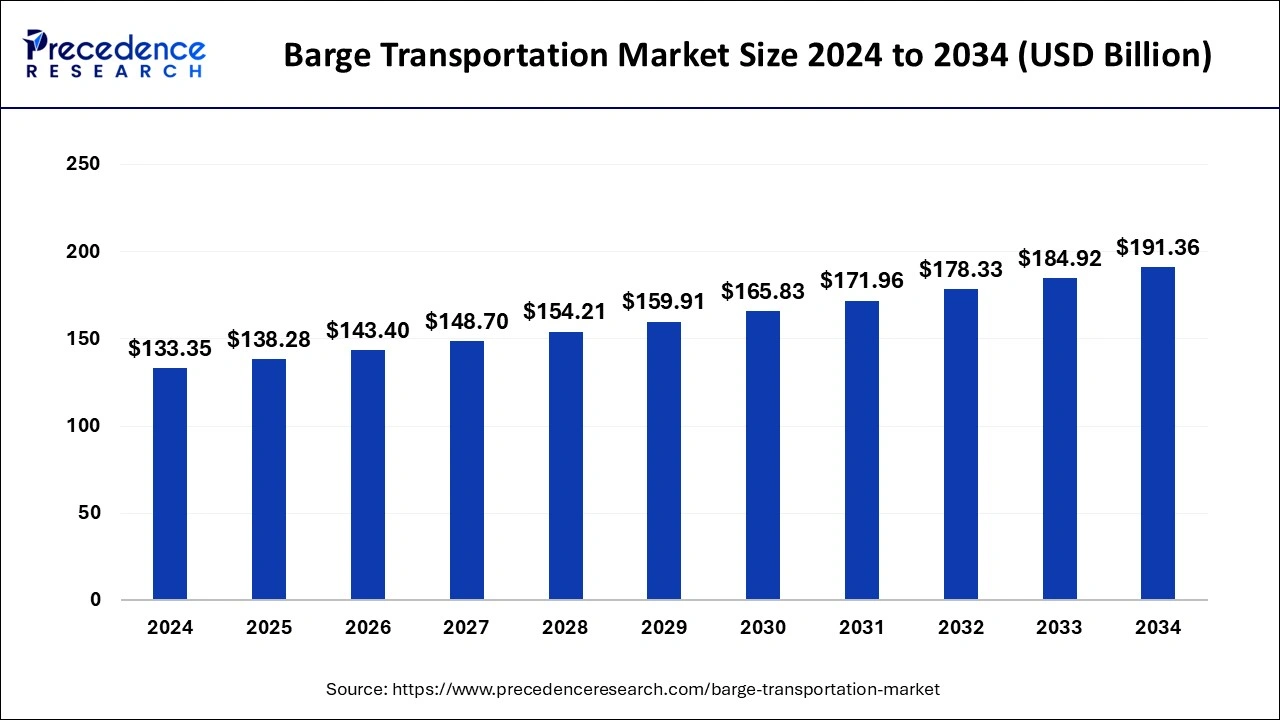
Barge Transportation Market Key Takeaways
- Europe led the global market with the highest market share of 35% in 2025.
- By Barge Fleet, the tank segment contributed more than 25% of revenue share in 2025.
- By Product, the dry cargo product segment has held the largest market share in 2025.
What is Barge Transportation?
A barge is a long, flat-bottomed boat designed to carry freight along rivers and in ports. Typically, barges are unpowered and require tugboats for movement, although some self-propelled barges do exist. Ranging in size, the most common length is 300 feet, capable of transporting up to 8,000 metric tons of cargo. Studies have shown that barge traffic saves around USD 12 billion in transportation costs, with a single barge requiring only a gallon of fuel to move one ton of cargo 647 miles.
How does artificial intelligence (AI) impact the barge transportation market?
AI is rapidly transforming every aspect of the shipping industry. With the advent of Artificial Intelligence technologies, smart transportation has gained immense traction. AI technologies allow transportation companies to boost productivity and expedite operations. AI technologies play a crucial role in barge transportation, determining the most efficient routes by considering factors like weather conditions and traffic. They also monitor vessel performance and fuel consumption, predict maintenance, and manage cargo. This results in optimized route planning and time and fuel savings. By leveraging AI-driven navigation systems, barge transportation companies can manage their fleet effectively. AI enables real-time tracking of barges, streamlining deliveries, protecting assets, and enhancing transparency for shippers. Overall, AI technologies can improve safety, reduce operational costs, and enhance the efficiency of barge transportation.
Market Trends
- Technological advancements like digital integration, automation, and autonomous vessels fuel the growth of the market.
Sustainability initiatives like zero-emission barges and fuel efficiency, which align with the environmental goals which increase the demand for sustainable products. - Infrastructural development, like port enhancement to upgrade port and inland waterway projects by the government for development and modernization, drives the growth of the market.
- Market diversification like expansion of cargo types beyond traditional bulk commodities and containerization to enhance flexibility and efficiency in cargo handling fuel the growth.
Barge Transportation Market Growth Factors
- The growing import and export activities between countries is a major factor boosting the growth of the market.
- The high goods-carrying capacity and cost-effectiveness of the barge transportation system make it a favorable means of transportation for various industries compared to other modes of transportation, which drives the growth of the market.
- The rising industrialization, especially in Asian countries, and the global expansion strategy adopted by the major players based in the U.S. and Europe to capture the untapped market offer great opportunities for the barge transportation market to grow in the coming years.
- The attractive return on investment is likely to attract various service providers, which influence the market.
- The rising adoption of digital technologies, such as data analytics, IoT devices, and automation systems, to streamline barge transportation operations further contributes to the expansion of the market.
- Stringent regulations imposed by the governments to reduce carbon emissions from the transportation sector fuel the growth of the market. Barge transportation produces lower greenhouse gas emissions, making it a preferable choice as compared to other transportation systems.
- The increasing government investments to improve inland water infrastructures significantly fuel the market's growth.
- The rising demand for intermodal transportation in several industries, particularly crude oil & petrochemical and agricultural, is anticipated to propel the overall growth of the market during the forecast period.
- The rising expenditure on research and development activities and continuous advancements in technology lead to the development of advanced barges, accelerating the growth of the market.
Market Outlook
- Global Expansion: As global trade continues to expand, inland barge networks are becoming essential for maintaining smooth and scalable logistics operations. Brazil, Europe, and China all provide compelling insights into this industry. In Brazil, rain has recently revived grain-barge navigation along key routes in the Amazon basin after severe droughts had reduced capacity and halted shipments.
- Startup Ecosystem: Startups are revolutionizing the industry by introducing technology-driven, data-centric, and sustainability-focused solutions that are making road and rail transport smarter, faster, and more efficient. There are 16 inland water freight startups in the US and Canada, including Hines Furlong Line, Ceresbarge, Blessey, Express Marine, and Coopemarinetimberlands.
- Sustainability Trends: With a continued focus on reducing carbon footprints and minimizing environmental impact, more barges are adopting low-emission fuels, such as liquefied natural gas and biofuels. Additionally, as part of a broader move towards green transportation practices in logistics, carbon reporting is becoming standard, driven by regulatory requirements and the growing expectations from consumers and stakeholders for companies to disclose their environmental impact.
Market Scope
| Report Highlights | Details |
| Market Size by 2035 | USD 203.60 Billion |
| Market Size in 2025 | USD 141.34 Billion |
| Market Size in 2026 | USD 146.62 Billion |
| Growth Rate from 2026 to 2035 | CAGR of 3.72% |
| Largest Market | Europe |
| Base Year | 2025 |
| Forecast Period | 2026 to 2035 |
| Segments Covered | Barge Fleet, Product, Application, and Region |
| Regions Covered | North America, Europe, Asia-Pacific, Latin America, and Middle East & Africa |
Market Dynamics
Drivers
Rising demand for cost-effective transportation
The increasing demand for cost-effective modes of transportation is boosting the growth of the barge transportation market. Due to the cost-effective nature of the barge transportation system, it is increasingly being used across several industries. Barges are suitable for heavy and large shipments. Thus, they are most commonly used to transport bulk goods, such as crude oil and petrochemicals, chemicals, coal, and agricultural products. In addition, the rising industrialization drives the market. As industries expand, import and export activities increase, requiring cost-efficient transportation.
Restraint
Rising advancement in other modes of transport
The increasing advancement in other modes of transport, such as railways, roadways, and airways, is anticipated to hamper the growth of the barge transportation market. In addition, high operating costs associated with barge transportation limit the growth of the market during the forecast period.
Opportunity
Increasing inclination toward environmentally friendly transportation systems
The rapid shift toward environmentally friendly modes of transportation is projected to create lucrative growth opportunities for the barge transportation market. Barges use less fuel and have increased cargo volume capabilities, which results in lower carbon emissions. Electric-powered barges are increasingly becoming popular as a zero-emissions inland transport solution to achieve Net Zero Carbon and support the decarbonization of maritime activities. Several governments around the world are promoting water transport. The rising government funding for the development of port and inland waterways infrastructure. Moreover, the rising development of electric barges is expected to propel the market's growth in the coming years.
- In December 2024, the CMA CGM announced a plan to build a 100% electric-powered barge to operate in the inland waterways of Vietnam. The zero-emission vessel will begin operations in 2026 and be equipped with batteries. A charging station will be developed for this barge, powered by a solar farm at Cai Mep's Gemalink Terminal, which is 25% owned by CMA CGM.
Segmental Insights
Barge Fleet Insights
Why Did the Tank Segment Dominate the Barge Transportation Market in 2025?
The tank segment dominated the market in 2025, driven by growing transportation of chemicals, petroleum products, and other liquids. Tank barges are designed to transport liquid cargo safely and efficiently. These vessels are favored due to cost-effectiveness, fuel efficiency, and the ability to transport large volumes across regions with extensive river and canal networks. The prominent growth of the segment is mainly attributed to the growing import and export of petrochemicals and chemicals across the world.
The covered segment is expected to grow at the fastest rate during the forecast period, driven by its ability to transport a wide range of goods, including equipment, machinery, packaged goods, and materials that require protection from weather conditions. They are also useful for certain bulk commodities that need protection against moisture or other environmental conditions.
Product insights
Which Product Segment Held the Largest Share of the Barge Transportation Market in 2025?
The liquid cargo segment held the largest share of the market in 2025. This due to the growing transportation of large volumes of liquids such as crude oil, chemicals, liquefied gases, petroleum products, and food-grade liquids. Liquid cargo is an important part of industries that depend on the efficient movement of fluids to sustain global supply chains. Many industrial sectors that rely on liquid bulk cargo include chemical manufacturing, energy, food and beverage, and pharmaceuticals
The gaseous cargo segment is anticipated to grow at the fastest CAGR during the forecast period, driven by growing demand for liquefied natural gas, Liquefied petroleum gas, and other gases. Liquefied petroleum gas carries gases like propane and butane, commonly utilized for heating, cooking, and industrial processes.
Application insights
Which Application Segment Dominated the Barge Transportation Market in 2025?
The coal and crude petroleum segment dominated the market in 2025 because barges carry higher quantities of crude oil cost-effectively. Barges emit fewer greenhouse gases per ton-mile than trucks and trains, making them a more sustainable choice for transporting coke and coal. Huge quantities of crude oil and refined petroleum products are transported by ship between production sites, refineries and points of consumption which drives the demand for barge transportation.
The chemicals segment is expected to grow at the fastest rate during the forecast period, due to growing demand for petrochemicals, agrochemicals, and industrial manufacturing. Chemical barge transportation uses highly specialized vessels created specifically for safe chemical handling. As chemical production continues to rise and supply chains become increasingly complex, demand for barge transportation is increasing during the forecast period.
Regional Insights
Europe Barge Transportation Market Size and Growth 2026 to 2035
The Europe barge transportation market size was exhibited at USD 49.47 billion in 2025 and is expected to be worth around USD 72.57 billion by 2035, growing at a CAGR of 3.91% from 2026 to 2035.
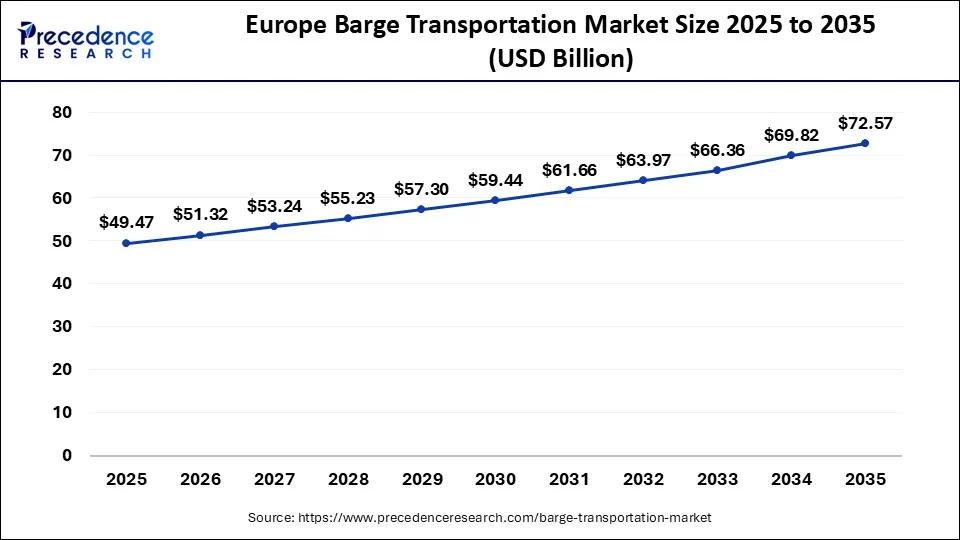
Europe Barge Transportation Market Trends
The Europe barge transportation market is projected to grow at the fastest rate during the forecast period. Increased investment in port development has positively impacted the European barge transportation market over the years. This development has intensified oil and bulk trade, as well as container transport and tugboat operations. The presence of major ports in the region, including Howden, Corpach, Sharpness, Caldaire, Selby, and Weston Point, is a significant factor in this market growth.
Germany Barge Transportation Market Trends
The German barge transportation sector is primarily driven by strong demand for cost-efficient bulk cargo transportation across its inland waterways. The recent closure of key refineries in Germany has led to a sudden surge in demand for barges along the Rhine River, transforming the transportation of petroleum products in the region.
Which Region Dominated the Barge Transportation Market in 2025?
Asia Pacific held the largest share of the market in 2025, driven by some of the most extensive and navigable river networks in the world. Countries such as China, India, Indonesia, and Vietnam have extensive inland waterways that are highly suitable for barge transportation. The Yangtze River in China and the Ganges in India are prime examples of major rivers that facilitate large-scale barge transport, supporting the movement of bulk goods over long distances. Barge transportation is recognized for its cost-effectiveness, particularly for transporting bulk commodities. In the Asia-Pacific region, where infrastructure development is still ongoing in some areas, barge transport offers a more affordable and fuel-efficient alternative to road and rail transport.
China Barge Transportation Market Trends
China's barge transportation is among the largest in the world, witnessing rapid growth due to expanding inland waterways, upgrades to port infrastructure, and regional trade initiatives like the Belt and Road. The country's focus on green shipping and automation is accelerating the modernization of vessels and improving fleet efficiency. Infrastructure investments, including new ports and waterway connectivity projects, support this sustained growth. Currently, Yangtze River Shipping is enhancing its navigation capacity through initiatives such as the construction of the Three Gorges New Water Transport Channel, continuously striving for greener and more intelligent operations.
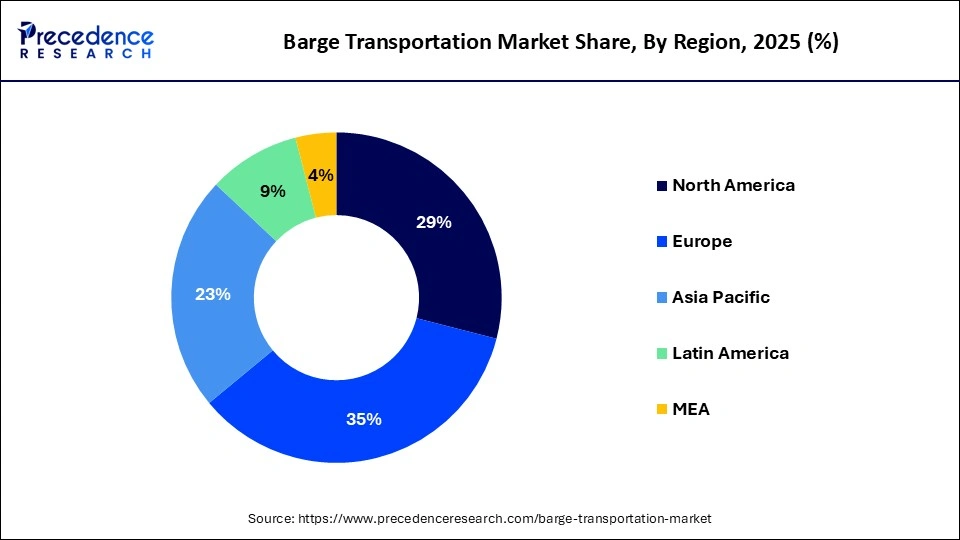
North America Barge Transportation Market Trends
North America barge transportation industry is fueled by the extensive inland waterway network across the U.S. and Canada, a strong demand for bulk commodity transportation, and a high reliance on cost-efficient river-based logistics. The industry is also witnessing significant technological advancements in barge development, making barges more efficient, eco-friendly, and cost-effective. Improved communication and navigation technologies play a crucial role in enhancing safety and efficiency in barge operations.
Middle East and Africa Barge Transportation Market Trends
The Middle East and Africa barge transportation sector is driven by increasing intra-regional trade, port expansions, and demand for cost-effective bulk logistics. The region is particularly focused on rising energy demand for exports. Countries are developing inland waterways to support trade and reduce logistics costs, with the Nile River serving as a critical route for barge transport in parts of Africa. Barges are increasingly utilized for the bulk transport of oil, gas, and construction materials, with rising investments in port facilities and waterway projects addressing the existing infrastructure gaps.
UAE Barge Transportation Market Trends
UAE exhibits consistent demand for waterway transportation due to its extensive trade activities, which drive the demand for barge transportation. Key industries driving this demand include oil and gas, construction, and logistics, all requiring bulk transportation of goods. The Emirate boasts advanced maritime infrastructure, featuring key facilities like Jebel Ali Port, the largest man-made harbor in the world, and Dubai Maritime City, a specialized maritime cluster. This infrastructure, combined with Dubai's pro-business environment, creates an attractive landscape for barge chartering enterprises.
Latin America Barge Transportation Market Trends
The market for barge transportation in Latin America is driven by its agricultural exports and energy resource trade. The addition of 14 new jumbo barges to LDC's Logico Paraguay fluvial freight fleet marks a vital step in strengthening regional export logistics. Industries offering cargo transport on inland waterways in Latin America have positioned themselves for growth to cater to growing demand and economic growth.
Brazil Barge Transportation Market Trends
The barge transportation market in Brazil will experience significant growth. Barge transport in Brazil is already an attractive market, moving around 10Mt of oil and derivatives annually. Transpetro expects growth in this demand, considering the scenario of growing oil production in the country and the growth of the biofuels market. Brazil has invested in growing its transportation networks to accommodate the rising agricultural production. In particular, efforts have been made to shift grain transportation from predominantly road-based to a more balanced system incorporating rail and barge transport.
Competitive Landscape
The competitive landscape of the barge transportation market is characterized by innovation and a push towards sustainability. Key market players are emphasizing expanding their fleets, using eco-friendly technologies, and achieving greater operational efficiency. Other barge transportation players are digitizing logistics to optimize delivery, raising safety standards, and making the most of emerging markets through infrastructure investments.
Barge Transportation Market Companies
- SEACOR Holdings
- American Commercial Barge Line (ACBL)
- Ingram Marine Group
- Campbell Transportation Company
- Kirby Corporation
- APL Logistics
- Crowley Maritime Corporation
Industry Leader Announcement
- In October 2024, Tobias Martin Bartz, CEO of the Rhenus Group, a leading transportation company in Europe, announced a plan to ramp up operations in India. The company is set to invest about USD 100 million into the country's inland waterways in 2025. The German company, operating in India in a joint venture with Mumbai-based Western Arya Group, is expected to operate 10 barges on Indian waters to ship cargo.
Recent Developments
- In February 2025, The Indian Navy launched its eighth Missile Cum Ammunition (MCA) Barge, LSAM 11 (Yard 79), at Mira Bhayandar, Maharashtra. Built by M/s SECON Engineering Projects Pvt Ltd, the barge enhances naval logistics by supporting ammunition and supply transport. This addition to the Indian Navy's fleet is set to strengthen its logistical support and operational capabilities.
- In May 2025, the first 3,000-tonne deadweight hopper barge, designed by Robert Allan Ltd., was launched at Juruá Shipyard in Manaus, Brazi, according to Robert Allan's release. The vessel is part of a 400-unit fleet commissioned by LHG Mining to support the transport of high-grade iron ore from Corumbá, Brazil, to export terminals in Uruguay. The barges will operate along the Paraná–Paraguay Waterway, a corridor that links Brazil, Bolivia, Paraguay, Argentina, and Uruguay to the Atlantic Ocean.
- In February 2025, CMA-CGM Group, a French shipping and logistics company, plans to deploy electric barges, initially on inland waterways in Vietnam. The project is designed to integrate and maximize the efficiency of multimodal transport that entails maritime, inland waterway, road, and rail networks.
- In January 2025, German retailer Lidl's in-house shipping and logistics arm, Tailwind Shipping, joined a consortium of European shipping firms to launch a twice-weekly barge service from the Dutch port of Moerdijk to the inland German hub of Duisburg.
- In January 2025, the Inland Waterways Development Council (IWDC), the apex body for policy deliberation on the inland waterways network in India, announced investments of more than Rs 50,000 crore over the next 5 years. The announcements to boost infrastructure along national waterways (NWs) were made at the second meeting of IWDC, organized by the Inland Waterways Authority of India (IWAI), at Kaziranga. They include a series of new initiatives across 21 Inland Waterways, worth more than Rs 1,400 crore.
- In June 2023, Cargill partnered with KOTUG International to deploy Kotug's zero emission E-Pusher and E-Barges to Cargill's cocoa factory in Zaandam, the Netherlands. These fully electrified pusher and barges eliminate both emissions and noise pollution.
Segments Covered in the Report
This research report includes complete assessment of the market with the help of extensive qualitative and quantitative insights, and projections regarding the market. This report offers breakdown of market into prospective and niche sectors. Further, this research study calculates market revenue and its growth trend at global, regional, and country from 2020 to 2032. This report includes market segmentation and its revenue estimation by classifying on the basis of barge fleet, product, application, and region:
By Barge Fleet
- Covered
- Open
- Tank
By Product
- Liquid Cargo
- Dry Cargo
- Gaseous Cargo
By Application
- Agricultural Products
- Coal & Crude Petroleum
- Metal Ores
- Coke & Refined Petroleum Products
- Food Products
- Secondary Raw Materials & Wastes
- Beverages & Tobacco
- Rubber & Plastic
- Chemicals
- Nuclear Fuel
By Region
- North America
- Latin America
- Europe
- Asia-pacific
- Middle and East Africa
For inquiries regarding discounts, bulk purchases, or customization requests, please contact us at sales@precedenceresearch.com
Frequently Asked Questions
Tags





Ask For Sample
No cookie-cutter, only authentic analysis – take the 1st step to become a Precedence Research client
 Get a Sample




 sales@precedenceresearch.com
 Schedule a Meeting
