


Cancer Tumor Profiling Market Trends, Leading Companies, Company Revenue / Sales Performance, Procedure Volume, Healthcare Spending, Technology Adoption, Reimbursement Analysis, Competitive Landscape, and Growth Outlook
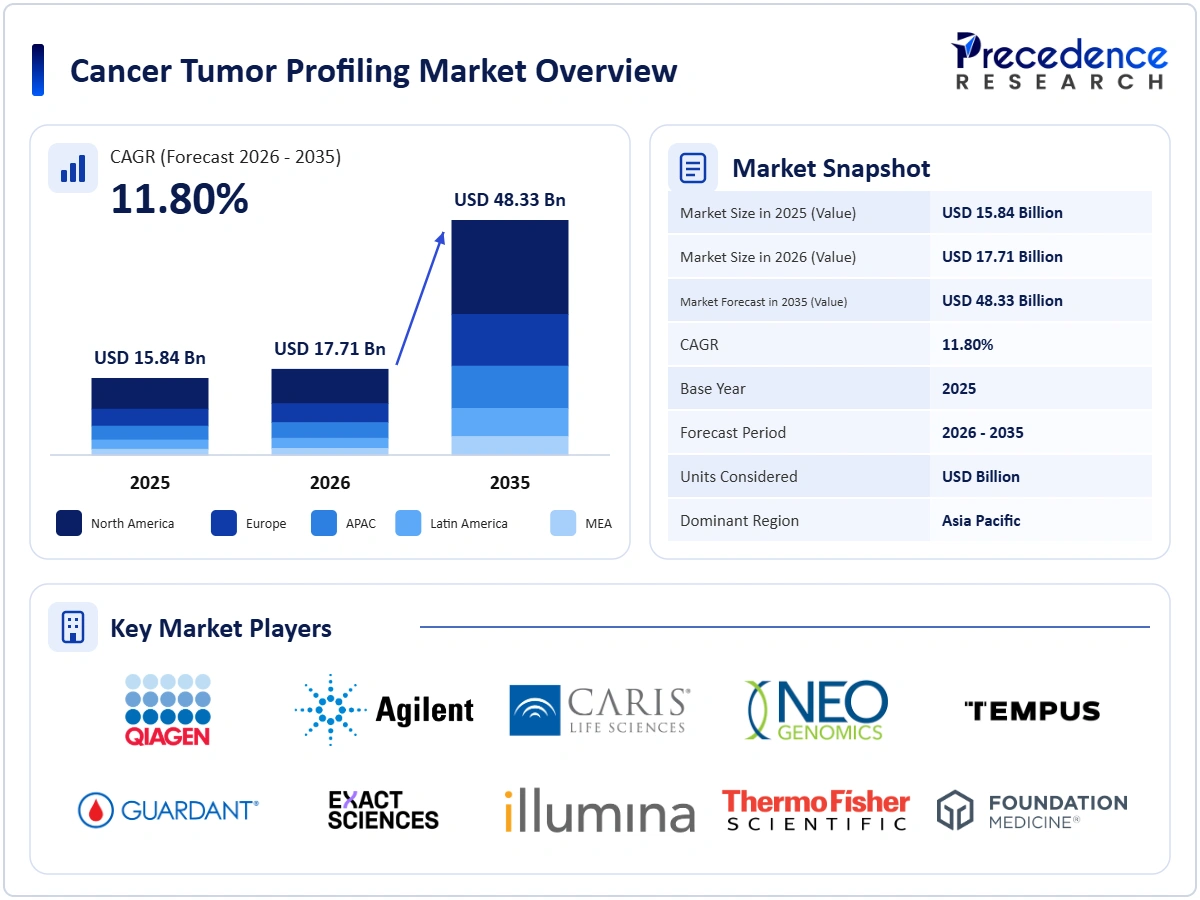
Payal Rabde, a Healthcare Industry Expert, highlights that the cancer tumor profiling market has reached USD 17.71 billion in 2026 and is on track to reach USD 48.33 billion by 2035, advancing at a CAGR of 11.80%. Key cancer tumor profiling market companies shaping the market include Thermo Fisher Scientific, Illumina, Exact Sciences, while major growth segments span technology, cancer type, process type, application and region.
Source: https://www.precedenceresearch.com/cancer-tumor-profiling-market
 Get a Sample
 Table Of Content


Cancer Tumor Profiling Market Size, Share, Trends, and Growth Forecast 2035
The cancer tumor profiling market is forecasted to expand from USD 17.71 billion in 2026 to USD 48.33 billion by 2035, growing at a CAGR of 11.80% from 2026 to 2035.
Key Takeaways
Market Size & Growth Outlook
- Market size in 2025: USD 15.84 billion
- Estimated market size in 2026: USD 17.71 billion
- Projected market size by 2035: USD 48.33 billion
- CAGR (2026-2035): 11.80%
Regional Market Spotlight
- North America led the market with a 44.80% (USD 7.10 billion) share in 2025.
- Europe accounted for 25.60% (USD 4.06 billion) of the market in 2025.
- Asia Pacific accounted for 22.60% (USD 3.58 billion) of the market in 2025 and is projected to be the fastest-growing region, at a CAGR of 13.12% from 2025 to 2035.
Segmental Spotlight
- By technology, NGS accounted for 42.60% (USD 6.75 billion) in 2025.
- By cancer type, Lung Cancer accounted for 26.40% (USD 4.18 billion) in 2025.
- By process type, Genomics accounted for 64.80% (USD 10.26 billion) in 2025.
- By application, Personalized Medicine accounted for 44.60% (USD 7.06 billion) in 2025.
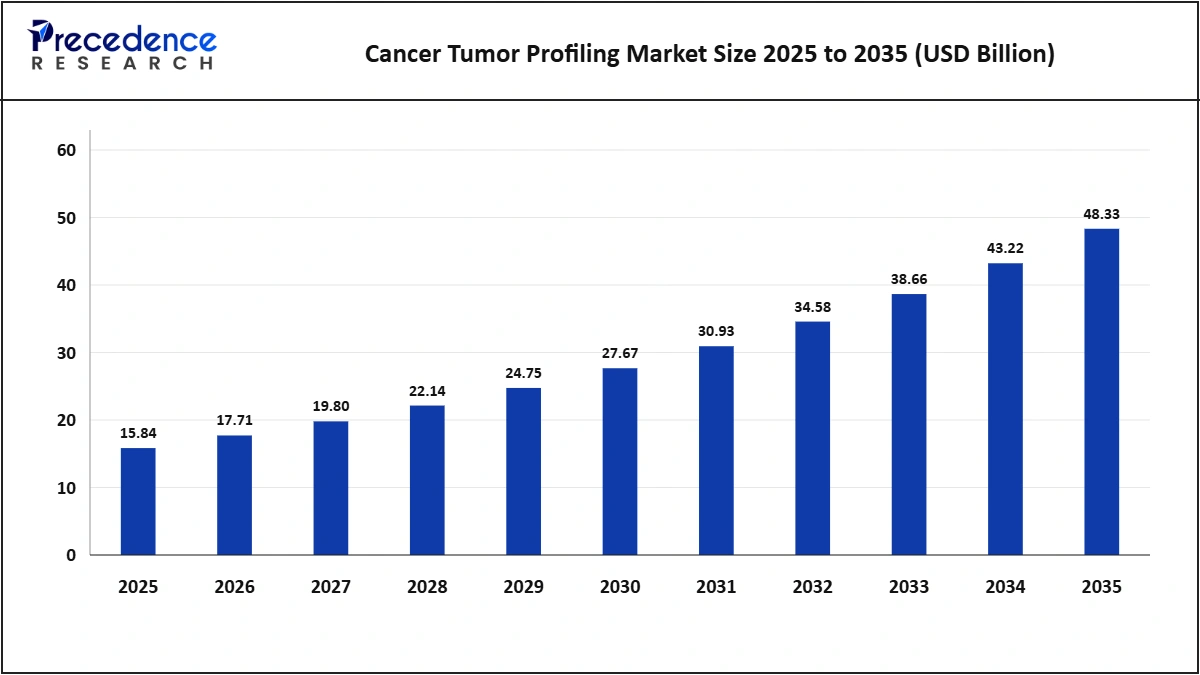
Cancer Tumor Profiling Market Size and Forecast, 2025-2035 (USD Billion)
Sources: Expert interviews, secondary sources, Precedence Research database, and Precedence Research analysts.
The global cancer tumor profiling market size is expected to increase from USD 15.84 billion in 2025 to USD 48.33 billion by 2035 as oncologists request comprehensive profiling of more patients at diagnosis and during disease progression in order to match them to targeted therapies and clinical trials. Larger gene panels, RNA sequencing, and liquid biopsy drive the value per patient up, pushing the market size to USD 27.67 billion by 2030 and maintaining the CAGR at 11.80% between 2026 and 2035.
- Analyst View: The projection was based on the number of cancer patients profiled by the technology and by the type of cancer, multiplied by the average test cost and supplemented with the revenues generated from the sale of the profiling kits, equipment and software to the laboratories. The profiling rates have been determined considering the guidelines, the need for companion diagnostics, and coverage of comprehensive genomic profiling in advanced solid tumors and blood cancers. The result was compared to the revenues in the oncology profiling segment of the top laboratories and vendors as well as other estimates available in the literature, putting our base year slightly higher than the respective numbers.
Market Trends
- Comprehensive panels of 500 or more genes are becoming standard.
- Laboratory profiling tests are moving to FDA-approved status.
- Hospitals are bringing NGS profiling in-house.
- Liquid biopsy profiling is used when tissue is insufficient.
- RNA sequencing is added to detect fusions and expression.
- AI tools combine genomic and pathology data for treatment matching.
Drivers, Restraints and Opportunities
Driver
There is an ever-increasing number of treatment options such as targeted therapies and immunotherapy that are connected to certain tumor markers and require profiling to be applied. There are recommendations to use comprehensive genomic profiling in cases of many types of advanced cancer. Coverage by Medicare and private insurance for tests used for profiling helps in obtaining profiling. Liquid biopsy makes it possible to obtain profiling data on rare occasions.
Restraint
Profiling is costly, and payments differ according to geography and payer. Samples are frequently inadequate for large profiling panels. Delays due to turnaround time may affect treatment decisions. Results that are complex necessitate bioinformatics and expert analysis. There are many patients who don't get profiling in community and developing market settings.
Opportunity
Distributed testing kits and automation enable profiling in community hospitals. Minimal residual disease and treatment monitoring tests provide an opportunity to make profiling available throughout the entire treatment process. Genomic information obtained in real-world settings provides opportunities for generating revenue from drug development collaborations. AI-enabled interpretation reduces costs and optimizes treatment matching. Expansion into Asia and Europe provides significant volume growth.
Market Segmentation 2025 Share and Value
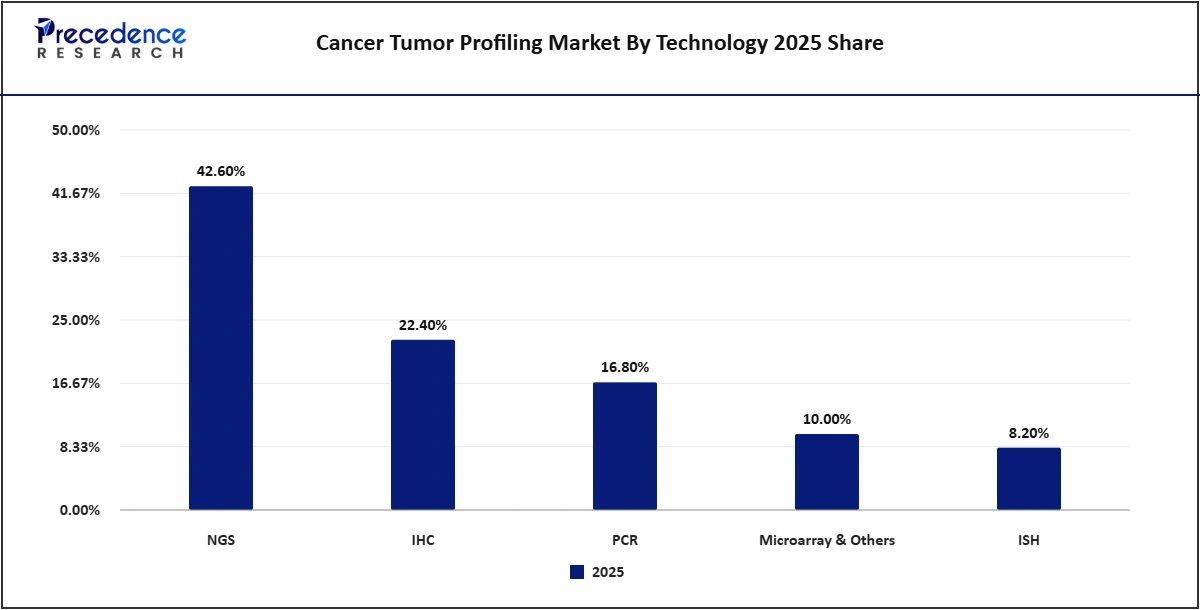
Cancer Tumor Profiling Market by Technology 2025 Share & Size
Sources: Expert interviews, secondary sources, Precedence Research database, and Precedence Research analysts.
NGS has a 42.60% (USD 6.75 billion) share in 2025 and is the fastest-growing technology, as comprehensive profiling panels of 500 or more genes can identify mutations, fusions, copy number alterations, MSI, and TMB status in a single test. The US FDA approval of laboratory- and kit-based panels, as well as Medicare coverage, will ensure that profiling becomes part of routine practice. IHC has a 22.40% (USD 3.55 billion) share and involves profiling of protein markers like PD-L1, HER2, and MMR proteins, while PCR has a 16.80% (USD 2.66 billion) share and involves rapid single-gene or hotspot testing. Other technologies such as microarrays have a 10.00% (USD 1.58 billion) share, while FISH has an 8.20% (USD 1.30 billion) share.
Cancer Tumor Profiling Market by Cancer Type 2025 Share & Size
| Segments | 2025 Share | 2025 Market Value |
| Lung Cancer | 26.40% | USD 4.18 billion |
| Breast Cancer | 21.80% | USD 3.45 billion |
| Others | 21.60% | USD 3.42 billion |
| Colorectal Cancer | 14.60% | USD 2.31 billion |
| Prostate Cancer | 9.40% | USD 1.49 billion |
| Melanoma | 6.20% | USD 0.98 billion |
Note: 2025 is the base year.
Sources: Expert interviews, secondary sources, Precedence Research database, and Precedence Research analysts.
In 2025, lung cancer was responsible for 26.40% (USD 4.18 billion) since most of the advanced non-small cell lung cancer patients have to undergo profiling for EGFR, ALK, ROS1, KRAS, MET, RET and more before receiving therapy. Breast cancer constitutes 21.80% (USD 3.45 billion) owing to the use of gene expression and mutation profiling to determine patient treatment and recurrence risk, and other cancers like pancreatic, ovarian, bladder, and blood cancers constitute 21.60% (USD 3.42 billion). Colorectal cancer comprises 14.60% (USD 2.31 billion), prostate cancer 9.40% (USD 1.49 billion), and melanoma 6.20% (USD 0.98 billion).
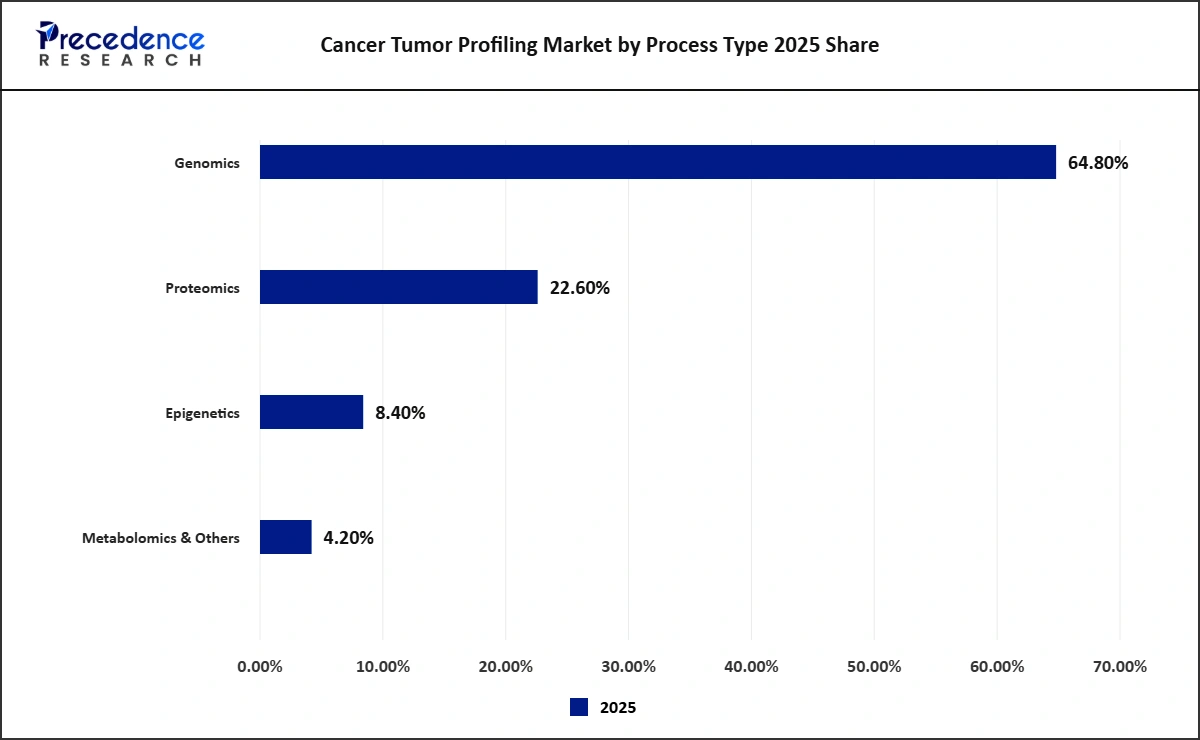
Cancer Tumor Profiling Market by Process Type 2025 Share & Size
Sources: Expert interviews, secondary sources, Precedence Research database, and Precedence Research analysts.
Genomics held 64.80% (USD 10.26 billion) market share in 2025 due to the relevance of DNA and RNA sequencing in modern tumor profiling. Proteomics held 22.60% (USD 3.58 billion) and includes protein expression via IHC and mass spectrometry, while epigenetics held 8.40% (USD 1.33 billion) and is increasing due to classification based on methylation. Metabolomics and others held 4.20% (USD 0.67 billion).
Cancer Tumor Profiling Market By Application 2025 Share & Size
| Segments | 2025 Share | 2025 Market Value |
| Personalized Medicine | 44.60% | USD 7.06 billion |
| Diagnostics | 26.80% | USD 4.25 billion |
| Biomarker Discovery & Research | 18.20% | USD 2.88 billion |
| Prognostics | 10.40% | USD 1.65 billion |
Note: 2025 is the base year.
Sources: Expert interviews, secondary sources, Precedence Research database, and Precedence Research analysts.
Personalized medicine held 44.60% (USD 7.06 billion) of the market in 2025 since profiling was primarily used to match patients with treatments, such as immunotherapy and participation in clinical trials. Diagnostics was valued at 26.80% (USD 4.25 billion) due to profiling being employed for classification of tumours; biomarker discovery and research contributed 18.20% (USD 2.88 billion) to the market value due to drug development; and prognostics contributed 10.40% (USD 1.65 billion).
- Analyst View: Values of segments were allocated based on the number of profiled patients mapped by type of cancer, technology, process, and applications, taking into account average prices per test. NGS and genomics dominated the market due to high prices and the popularity of comprehensive panels as the initial tests. NGS, epigenetics, and personalized medicine applications will become more popular as panel coverage expands.
Regional Analysis
Cancer Tumor Profiling Market by Region 2025 Share & Size
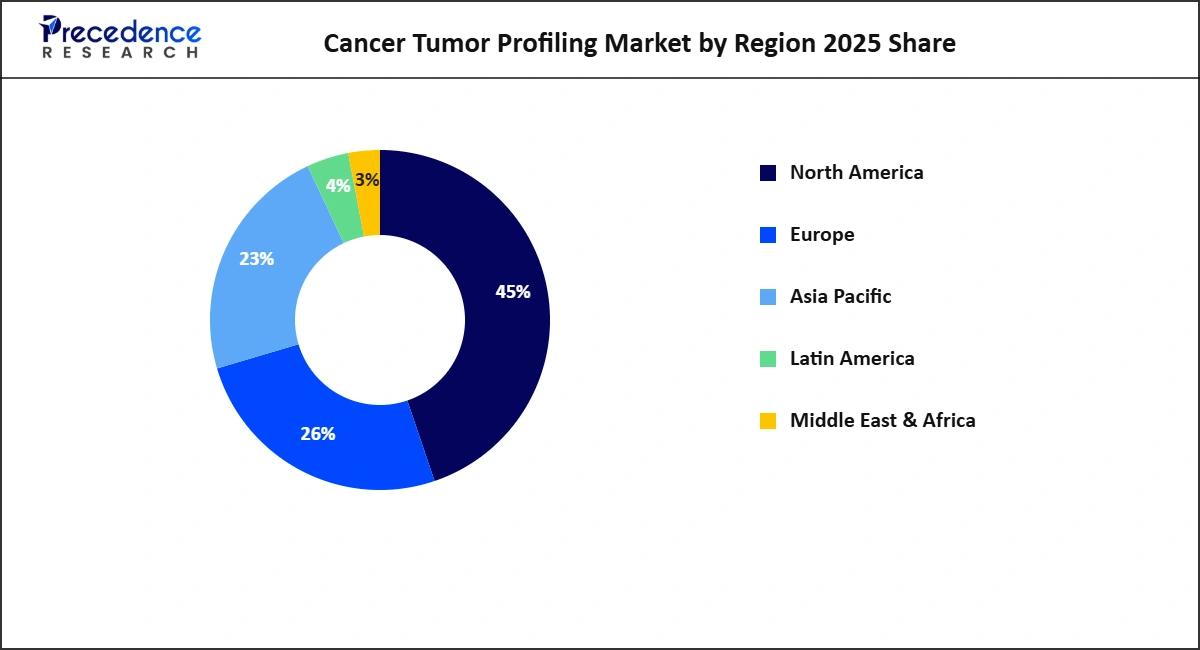
Sources: Expert interviews, secondary sources, Precedence Research database, and Precedence Research analysts.
North America valued at 44.80% (USD 7.10 billion) in 2025, owing to Medicare and commercial insurance coverage for comprehensive genomic profiling, ADLT pricing for approved tests, and high density of specialist oncology laboratories. The US laboratories are migrating their profiling assays into FDA-approved tests. Europe holds 25.60% (USD 4.06 billion) market share due to the presence of molecular tumour boards and increasing NGS reimbursement in Germany, France, the UK, and Italy, along with EU IVD regulation, which imposes stringent regulations for laboratory tests. Asia Pacific captured 22.60% (USD 3.58 billion) of market share due to comprehensive profiling coverage in Japan, a rising number of genomic laboratories in China and South Korea, and an increased incidence rate of lung and gastric cancers. Latin America and MEA held 4.00% (USD 0.63 billion) and 3.00% (USD 0.48 billion) shares, respectively, being niche markets where comprehensive profiling is provided by private laboratories and send-out tests.
North America accounted for 44.80% (USD 7.10 billion) in 2025. Medicare coverage for comprehensive profiling supports high testing rates. Specialist laboratories run most complex panels. FDA approval of laboratory tests is strengthening reimbursement.
Europe accounted for 25.60% (USD 4.06 billion) in 2025. Molecular tumour boards guide profiling. NGS reimbursement is growing in Germany and France. Hospital laboratories increasingly run panels in-house.
Asia Pacific accounted for 22.60% (USD 3.58 billion) in 2025 and is the fastest-growing region. Japan covers comprehensive genomic profiling under national insurance. China and South Korea are expanding genomic testing capacity. High lung and gastric cancer rates drive demand.
Latin America accounted for 4.00% (USD 0.63 billion) in 2025. Private laboratories in Brazil and Mexico offer profiling. Send-out testing to US laboratories remains common.
The Middle East and Africa accounted for 3.00% (USD 0.48 billion) in 2025. Gulf cancer centres are adopting genomic profiling. Access remains limited across much of Africa.
- Analyst View: Regional shares were derived from profiled patients, capacity, and costs of testing in each region. North America is leading due to higher profiling rates and good reimbursement. We believe that Asia-Pacific has the greatest growth premium due to the good insurance coverage in Japan and growing laboratories in China and South Korea.
Top 10 Companies in the Cancer Tumor Profiling Market
| Rank | Company Name | Market-Specific Revenue (USD Billion) | 2025 Share | Key Products / Business | Headquarters |
| 1 | Roche (Foundation Medicine) | 2.60 | 16.41% | FoundationOne CDx and Liquid CDx profiling, VENTANA IHC | Switzerland |
| 2 | Thermo Fisher Scientific | 1.20 | 7.58% | Oncomine NGS panels and Ion Torrent systems | United States |
| 3 | Illumina | 1.10 | 6.94% | TruSight Oncology Comprehensive and sequencing systems | United States |
| 4 | Exact Sciences | 0.90 | 5.68% | Oncotype DX and OncoExTra profiling | United States |
| 5 | Guardant Health | 0.86 | 5.43% | Guardant360 liquid and tissue profiling | United States |
| 6 | Tempus AI | 0.70 | 4.42% | xT CDx and AI-enabled genomic profiling | United States |
| 7 | NeoGenomics | 0.66 | 4.17% | Oncology profiling laboratory services | United States |
| 8 | Caris Life Sciences | 0.62 | 3.91% | Whole exome and transcriptome tumour profiling | United States |
| 9 | Agilent Technologies | 0.52 | 3.28% | IHC companion diagnostics and NGS target enrichment | United States |
| 10 | QIAGEN | 0.40 | 2.53% | PCR and NGS profiling assays | Netherlands |
Note: Company revenues and shares are 2025 estimates.
Sources: Company press releases, expert interviews, secondary sources, Precedence Research database and Precedence Research analysts.
Roche (Foundation Medicine) was at the top of the market with an expected 16.41% share (USD 2.60 billion), followed by Thermo Fisher Scientific at 7.58% (USD 1.20 billion) and Illumina at 6.94% (USD 1.10 billion). Roche is in the lead thanks to the tissue and liquid comprehensive genomic profiling tests provided by Foundation Medicine and VENTANA immunohistochemistry, with numerous companion diagnostics claims. Thermo Fisher Scientific and Illumina provide the sequencing platforms and targeted panels used by hospitals and reference labs to perform profiling internally, like the FDA-approved TruSight Oncology Comprehensive test. In vitro diagnostic and laboratory service companies like Exact Sciences, Guardant Health, Tempus AI, NeoGenomics and Caris compete on panel coverage, RNA and liquid biopsy profiling, and speed and services related to AI and data analytics.
Top 10 firms captured 60.35% (USD 9.56 billion) of total revenue in 2025, whereas the remaining 39.65% (USD 6.28 billion) is shared among hospital molecular laboratories, regional profiling laboratories, bioinformatics firms, and assay vendors. The market for cancer tumor profiling is fairly concentrated among a few large laboratories and platform providers. Competition revolves around FDA clearances and companion diagnostics, panel size, reimbursement, turnaround time, and data analysis. In-house profiling of hospital laboratories benefits kit providers and platform providers, whereas central laboratories distinguish themselves based on panel sizes, real-world evidence, and partnerships with pharmaceutical firms.
Recent Developments
- May 2026: Guardant Health received FDA approval for Guardant360 Liquid CDx, an updated liquid biopsy profiling test analysing more than 740 genes.
- May 2026: Tempus AI received FDA approval for a tumour-only indication of its 648-gene xT CDx, allowing it to move its entire DNA solid tumour portfolio to FDA-approved assays.
- May 2025: Illumina said its FDA-approved TSO Comprehensive test, which evaluates DNA and RNA across more than 500 genes, was covered by Medicare and most commercial plans and approved in Japan, and added the Pillar oncoReveal CDx to its portfolio.
Market Segments
By Technology
- NGS
- IHC
- PCR
- Microarray & Others
- ISH
By Cancer Type
- Lung Cancer
- Breast Cancer
- Others
- Colorectal Cancer
- Prostate Cancer
- Melanoma
By Process Type
- Genomics
- Proteomics
- Epigenetics
- Metabolomics & Others
By Application
- Personalized Medicine
- Diagnostics
- Biomarker Discovery & Research
- Prognostics
By Region
- North America (U.S., Canada, Mexico)
- Europe (Germany, U.K., France, Italy, Spain, Rest of Europe)
- Asia Pacific (China, Japan, India, South Korea, Taiwan, Rest of Asia Pacific)
- Latin America (Brazil, Argentina, Rest of Latin America)
- Middle East & Africa (GCC, South Africa, Rest of MEA)
Research Methodology
The cancer tumor profiling market was characterized by NGS, IHC, PCR, ISH, microarray, and other tumour profiling tests, kits, instruments, and services employed for treatment selection, diagnostics, prognosis and research on a global scale. The 2025 base year estimate was constructed bottom-up through the profiled number of patients by technology, cancer type, average test cost, and test kit, instrument, and software sales, and validated top-down against the revenue of oncology profiling services by leading laboratories and test providers. The estimates of segments, regions and companies were allocated from technologies, cancer types, process types, applications and regional testing. The key estimates were validated by cross-checking against information disclosed by the companies, regulatory and industry data, and independent third-party estimates. All the segment, regional and company estimates were reconciled to the same 2025 base year, while the 2026-2035 forecast, based on the constant CAGR from the 2025 base, was recomputed.
Analyst View: Overall Market
The cancer tumor profiling market is set to increase due to the increased usage of comprehensive genomic profiling as the first step in the management of advanced cancers. The forecast has been made in relation to patient profiles, technology mix, and cost of tests, and thus the major drivers include approval and changes in reimbursement guidelines for targeted therapies. The biggest opportunity includes wide panels, liquid biopsies, and decentralized testing.
Sources and References
- Tempus. "Tempus receives FDA approval for tumor-only xT CDx". 2026-05-29. xT CDx tumour-only approval. https://www.tempus.com/news/pr/tempus-receives-fda-approval-for-tumor-only-xt-cdx-enabling-migration-of-its-entire-dna-solid-tumor-portfolio/
- Illumina. "Illumina expands clinical oncology portfolio". 2025-05-28. TSO Comprehensive coverage and Pillar oncoReveal CDx. https://www.illumina.com/company/news-center/press-releases/2025/c2c4f149-6192-49bc-85a2-8b823b63aff3.html
- Patient Worthy. "Guardant Health secures FDA clearance for expanded liquid biopsy test". 2026-05-24. Guardant360 Liquid CDx approval. https://patientworthy.com/2026/05/24/guardant-health-secures-fda-clearance-for-expanded-liquid-biopsy-test/
For inquiries regarding discounts, bulk purchases, or customization requests, please contact us at sales@precedenceresearch.com
Frequently Asked Questions





Ask For Sample
No cookie-cutter, only authentic analysis – take the 1st step to become a Precedence Research client
 Get a Sample




 sales@precedenceresearch.com
 Schedule a Meeting