



Compounding Pharmacy Market Size, Key Companies, Company Market Share, Patient Volume, Treatment Adoption Rates, Pricing Analysis, Regulatory Landscape, Competitive Positioning, and Demand Forecast
Deepa Pandey, a Healthcare Industry Expert, highlights that the compounding pharmacy market has reached USD 19.19 billion in 2026 and is on track to reach USD 33.63 billion by 2035, advancing at a CAGR of 6.44%. Key compounding pharmacy market companies shaping the market include Fresenius Kabi, Fagron NV, B. Braun Medical Inc., Rx3 Compounding Pharmacy while major growth segments span By Therapeutic Area, By Route of Administration, By Age, By Compounding Type, By Sterility, By Distribution Channel, By Region
Source: https://www.precedenceresearch.com/compounding-pharmacy-market
 Get a Sample
 Table Of Content


Compounding Pharmacy Market Size?
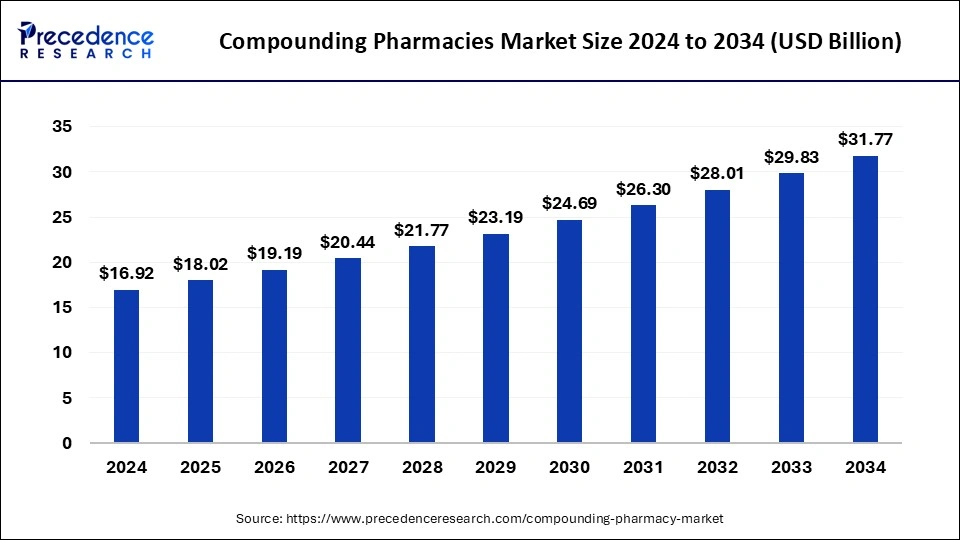
The global compounding pharmacy market size accounted for USD 18.02 billion in 2025 and is predicted to increase from USD 19.19 billion in 2026 to approximately USD 33.63 billion by 2035, expanding at a CAGR of 6.44% from 2026 to 2035. The market is driven by increasing demand for personalized medications, hormone replacement therapies, specialty drug formulations, and patient- specific treatment solutions across healthcare settings.
Market Highlights
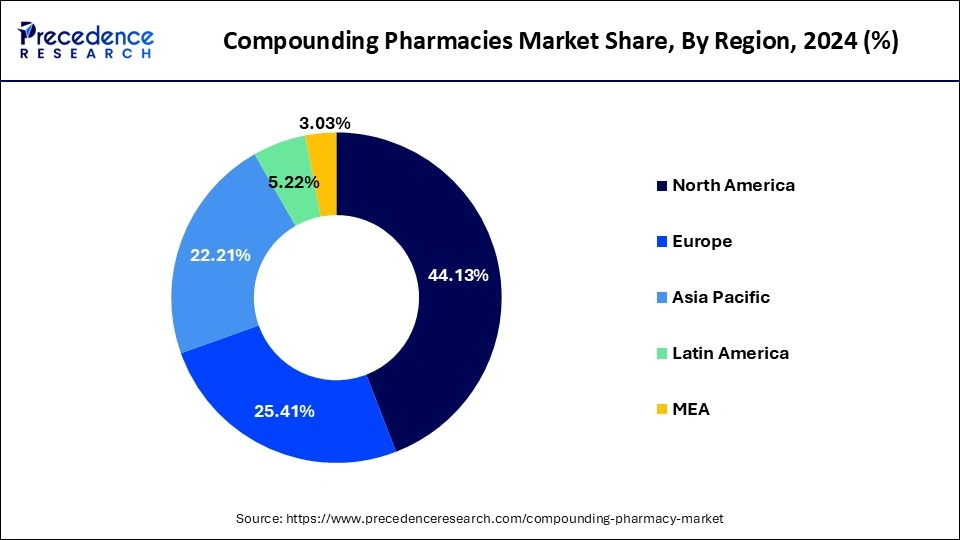
- North America accounted for 44.13% of revenue share in 2025.
- By compounding types, the PIA segment contributed the highest revenue share of 38% in 2025.
- By sterility, the sterile segment has captured the highest share of 58.8% in 2025.
- By age, the adult segment has generated the highest share of 44.5% in 2025.
- By therapeutic area, the pain management segment has dominated the market with a revenue share of 33.6% in 2025.
- By compounding types, the PIA segment dominated the market with the highest market share of 38% in 2025.
How do Compounding Pharmacies Work?
Compounding pharmacies work closely with healthcare providers to understand individual patients needs and then prepare medication accordingly. This level of customization allows for precise dosing, removal of allergens or irritants, and the incorporation of various medications into a single dose form if needed. The ability to customize medications makes compounding pharmacies particularly useful in pediatric, geriatric and veterinary medicine as well as for patients with unique health requirements. The compounding pharmacy market is driven by various factors, including the growing geriatric population, increasing prevalence of chronic disease, growing collaboration among key players and continuous product launches.
Market Overview
A compounding pharmacy, also known as a pharmaceutical compounding facility, is a specialized kind of pharmacy that creates customized medications based on specific prescriptions. Unlike traditional pharmacies that dispense mass-produced drugs manufactured by pharmaceutical companies, compounding pharmacies create personalized medications by mixing, altering or combining pharmaceutical-grade ingredients to meet the unique needs of a patient.
Compounding medicines is a centuries-old procedure, but it has seen a resurgence in modern healthcare to cater to patients with specific requirements. Compounded medications are often prescribed when commercially available medications do not suit the patient due to allergies, dosage preferences, or specific health conditions. They can come in various forms such as creams, ointments, capsules, torches, suspensions and suppositories.
- According to the Ministry of Science & Technology, Government of India, globally, chronic or non-communicable diseases are on the increase and are responsible for 73% of all deaths. Non-communicable disease is accountable for 44% of lost disability-adjusted life years and 53% of all fatalities in India.
- According to the International Diabetes Federation, India has the most diabetics in the world, with an estimated 77 million having the disease currently and an estimated 134 million by 2045.
- As per National Cancer Institute, there are projected to be 609,820 cancer related deaths in the US in 2023. The leading cause of mortality is lung and bronchus cancer, which is predicted to claim 127,070 lives this year. When compared to colorectal cancer, which is the second most prevalent kind of cancer deaths, that is almost three times as many deaths. The third deadliest cancer, pancreatic cancer claims 50,550 lives each year.
Compounding Pharmacy Market Growth Factors
- Rising demand for personalized and patient-Specific medications.
- Increasing prevalence of chronic diseases requiring customized treatment regimens.
- Growing use of hormone replacement therapy and specialty pharmaceutical formulations.
- Higher demand for pediatric medications tailored to individual patient needs.
- Ongoing shortages of commercially manufactured drugs are encouraging compounded alternatives.
- Advancements in sterile compounding technologies and quality-control processes.
- Increasing awareness among healthcare professionals regarding customized therapeutic solutions.
- Growing adoption of patient-centric healthcare and precision medicine approaches.
- Expansion of compounding services across hospitals, clinics, and specialty pharmacies.
- Supportive regulatory initiatives focused on improving product quality and patient safety.
- Rising investments in pharmaceutical infrastructure and advanced compounding facilities.
- Greater emphasis on treatment adherence through customized medication formulations.
- Expanding healthcare access in emerging markets supports long-term industry growth.
How is AI Revolutionizing the Compounding Pharmacy Market?
AI is revolutionizing the compounding pharmacy market by enhancing precision, efficiency, and regulatory compliance across customized medication preparation. Advanced AI-powered systems can analyze patient-specific data, including medical history, allergies, genetic profiles, and treatment responses, to help pharmacists develop highly personalized formulations with improved therapeutic outcomes. Machine learning algorithms also support dosage optimization, ingredient compatibility assessment, and quality control, reducing the risk of compounding errors and improving patient safety.
Strategic Growth Opportunities
- High-Growth Commercial Opportunities: There are a number of commercial opportunities available to pharmaceutical companies exploiting products for high-growth or niche markets, such as personalized medicines, specialty therapies, pediatrics, and sterile drug preparations. Further opportunities are created as a result of drug shortages and the increasing demand for patient-specific treatments.
- Emerging Technology Opportunities: New technology, such as automation, robotics, electronic prescribing, systems for digital formulation, and environmental monitoring, can benefit quality and operational efficiency. Traceability, error reduction, and scalable operations can be boosted with technology-enabled compounding.
- Geographic Expansion Opportunities: Investments in healthcare and adoption of personalised medicine are shaping Southeast Asia to be a leading expansion market. India, China, Japan & SE Asia are good markets for business expansion due to compounding.
Technology & Innovation
- Automation and Robotic technologies: Compounding, robot dispensing, and workflow technologies automate the process for accuracy and efficiency, and ensure production capability. These technologies reduce human error and help to extend capabilities at Pharmacies.
- Technology Innovations: Technology innovations including soft robotics, 3D printing, and new drug delivery methods all present opportunities to formulate custom-made formulations. These innovations can aid in fulfilling complicated specifications and treatment alternatives
Market Scope
| Report Coverage | Details |
| Market Size in 2025 | USD 18.02 Billion |
| Market Size in 2026 | USD 19.19 Billion |
| Market Size by 2035 | USD 33.63 Billion |
| Growth Rate from 2026 to 2035 | CAGR of 6.44% |
| Largest Market | North America |
| Base Year | 2025 |
| Forecast Period | 2026 to 2035 |
| Segments Covered | Therapeutic Area, Route of Administration, Application, Compounding Type, Sterility, Distribution Channel, and Region |
| Regions Covered | North America, Europe, Asia-Pacific, Latin America, and Middle East & Africa |
Market Dynamics
Drivers
Chronis disease and the ageing population
The prevalence of chronic diseases, such as diabetes, cardiovascular conditions, and arthritis, has been rising globally, particularly as the population ages. Compounding pharmacies play a crucial role in managing chronic conditions by creating personalized medications that address the specific needs of patients with these conditions.
For instance, as per the data given by UICC, the global population is ageing quickly. Currently, more than 703 million individuals worldwide are over 65, making up 9.1% of the worlds population. According to projections, by 2050, this percentage will reach 15.9% (1.5 billion people). Similarly, according to data from World Health Organization, more than 50% of cancer patients are 65 years of age or older. This is most likely caused by the buildup of ageing-related risk factors for certain cancers and diminished cellular repair systems. Thus, the aforementioned facts support the market growth during the forecast period.
Restraint
Regulatory compliance
Compounding pharmacies are subject to stringent regulations and quality standards to ensure patient safety and the efficacy of compounded medications. Meeting these regulatory requirements can be complex and costly for compounding pharmacies, particularly smaller establishments, leading to compliance challenges. Thus, regulatory compliance is expected to hamper market growth over the forecast period.
Opportunity
Growing collaboration
The increasing collaboration among the market participants is expected to offer a lucrative opportunity for market growth over the forecast period. For instance, in February 2023, Front Range Laboratories (FRL), a full-service testing facility that has been a dependable partner of compounding pharmacies for more than 25 years, was acquired by Wedgewood Pharmacy from Loveland, Colorado. To meet the testing requirements of pharmacies across the nation, FRL offers analytical, microbiological, and other testing services in addition to product stability and other services. Michael Travis and Jennifer Travis, who created FRL, will continue to work for the company and be associated with Wedgewood Pharmacy. The FRL brand, which is well-known for providing top-notch services in the compounding pharmacy industry, will be retained by wedgewood pharmacy.
Segments Insights
Therapeutic Area Insights
Why Did the Pain Management Segment Dominate the Compounding Pharmacy Market?
The pain management segment dominated the compounding pharmacy market in 2025 due to the rising prevalence of chronic pain conditions such as arthritis, neuropathy, fibromyalgia, and musculoskeletal disorders. Compounded medications enable pharmacists to customize formulations, dosage strengths, and delivery methods, including topical creams, gels, transdermal formulations, and oral preparations, to meet individual patient needs. The growing demand for personalized pain therapies with improved efficacy and reduced side effects has strengthened the segments market leadership.
The hormone replacement segment is expected to grow at the fastest rate during the forecast period. This is mainly due to the increasing demand for personalized treatment of menopause, andropause, thyroid disorders, and other hormonal imbalances. Compounding pharmacies provide customized hormone formulations, dosage strengths, and administration methods tailored to individual patient requirements. Growing awareness of bioidentical hormone replacement therapies and the increasing preference for individualized treatment approaches are expected to support segment expansion.
The dermal disorders segment is projected to grow at a notable pace. Specific compounding capabilities for use in many skin indications. A rising number of dermatological diseases is leading to increased demand for the segment. Various personal products like creams, gels, and ointments offer flexibility in treatment options. With increasing knowledge about personalized treatments, adoption continues to be supported.
The nutritional supplements segment is expected to witness steady growth during the forecast period. Compounding can be used to make a product with any strength or dosage form based upon the needs of the individual. Specific dietary and therapeutic requirements can be fulfilled by using customized supplements. They increasingly adopt them as a result of becoming aware of healthcare.
By Age Insights
Why Did the Adults Segment Dominate the Compounding Pharmacy Market?
The adults segment dominated the compounding pharmacy market in 2025, owing to the high prevalence of chronic diseases, cardiovascular disorders, pain conditions, hormonal deficiencies, dermatological disorders, and other age-related health issues. Adult patients frequently require customized medication strengths, alternative dosage forms, and allergen-free formulations that are not readily available through commercially manufactured drugs. The growing adoption of personalized medicine further contributed to the segments dominance.
The pediatric segment is anticipated to grow at the fastest CAGR during the forecast period due to the increasing need for child-specific medications that are often unavailable in standard commercial formulations. Compounding pharmacies can prepare customized doses, flavored medications, liquid formulations, and hypoallergenic alternatives that improve treatment adherence among children. Rising focus on pediatric healthcare and personalized therapeutic solutions is expected to accelerate segment growth.
The geriatric segment is expected to grow steadily during the forecast period. Older patients have particular healthcare requirements that call for bespoke medication. Dosage modifications and different dosage forms can be provided when using the compounding process. Personalised formulations will have a positive impact on adherence. As cases of chronic diseases continue to rise, seniors continue to demand.
The veterinary segment is projected to grow at a healthy pace due to an increase in demand for custom-made veterinary products. By compounding, veterinarians can make their own dosages as per the animals needs. Personalizing the administration of medicines, including customizing their form and flavour. Pets health spending is another factor that is driving demand in the market.
By Compounding Insights
The Pharmaceutical Ingredient Alteration (PIA) Segment Held a Major Market Share in 2025
The pharmaceutical ingredient alteration (PIA) segment dominated the compounding pharmacy market in 2025 because it allows pharmacists to modify formulations by removing allergens, dyes, preservatives, or other inactive ingredients that may cause adverse reactions. This approach is particularly beneficial for patients with allergies, sensitivities, or unique therapeutic requirements. The increasing demand for personalized medications tailored to individual patient needs has significantly supported the growth of this segment.
The pharmaceutical dosage alteration (PDA) segment is expected to grow at a significant rate during the forecast period due to the increasing need for customized dosage strengths among pediatric, geriatric, and chronically ill patients. By adjusting medication strengths according to specific patient requirements, compounding pharmacies can improve therapeutic effectiveness while minimizing side effects. The growing trend toward individualized treatment plans is expected to drive demand for dosage alteration services.
The currently unavailable pharmaceutical manufacturing segment is expected to grow steadily, with the rising demand for personalized products. Drug shortages can drive up demand for alternative drugs, which could be compounded formulations. Healthcare providers can find solutions that are tailored to meet their patients needs. The segment also benefits from the increasing needs for customized treatments.
By Sterility Insights
Why Did the Sterile Segment Dominated the Compounding Pharmacy Market?
The Sterile segment dominated the market in 2025 due to strong demand for customized injectables, ophthalmic preparations, parenteral nutrition solutions, oncology treatments, and critical-care medications that require strict sterility standards. Hospitals, specialty clinics, and healthcare providers rely on sterile compounded products to ensure patient safety, precise dosing, and treatment effectiveness. Increasing regulatory requirements and growing demand for advanced specialty therapies have further reinforced the segments leading position.
The non-sterile segment is projected to experience the fastest growth during the forecast period owing to rising demand for customized oral medications, topical formulations, dermatological treatments, pain management therapies, and hormone replacement products. Non-sterile compounding offers greater flexibility in preparing personalized medications that improve patient adherence and therapeutic outcomes. Growing consumer interest in individualized healthcare solutions and easier access to customized treatments are expected to fuel segment growth.
Route of Administration Insights
The topical segment is projected to grow at a notable pace as the demand for localized treatments has risen. The topical products provide the convenience and targeted effect of medication. There are many applications of them, such as dermatological and pain management. Specialized creams, gels, and ointments are used for individual treatment requirements.
The parenteral segment is expected to witness steady growth during the forecast period because of the quickest drug delivery mechanism. Parenterals can provide rapid onset of action and a uniform dose. These may be considered especially if a dose or doses of medicine is/are not able to be consumed by mouth. The surge in demand for sterile compounded medications is contributing to an incremental growth in the segment.
Based on the route of administration, the global compounding pharmacy market is segmented into oral, topical, parenteral and others. The oral segment is expected to hold the largest revenue share over the forecast period. Compounded oral medications can be mould to make them more palatable, especially for patients who have difficulty swallowing pills or find the taste of certain medications unpleasant. Adding flavours can improve patient compliance, especially for children and individuals with sensory sensitivities. In addition, this can create oral medications that combine multiple active ingredients into a single dosage form.
Distribution Channel Insights
Based on the distribution channel, the global compounding pharmacy market is segmented into compounding pharmacy, hospital pharmacy and others. The hospital pharmacy segment is expected to dominate the market over the forecast period. Hospital pharmacies often encounter patients with complex medical conditions or specific treatment requirements. Compounding pharmacies can provide customized medications, adjust dosages, and prepare formulations to address the individual needs of each patient.
Moreover, hospital pharmacies frequently treat pediatric patients who may require medications in forms that are not available commercially or need flavoring to improve compliance. Compounding pharmacies can prepare pediatric-specific formulations to ensure appropriate dosing and administration. Thereby, driving the segment development during the forecast period.
Regional Insights
Why Does North America Dominate the Compounding Pharmacy Market?
North America dominated the compounding pharmacy market with the largest share in 2025. This is mainly due to its advanced healthcare infrastructure, strong adoption of personalized medicine, and increasing demand for customized therapies across areas such as pain management, hormone replacement therapy, dermatology, and chronic disease treatment. The region benefits from a well-established network of compounding pharmacies, favorable healthcare
reimbursement structures, high awareness among healthcare professionals and patients, and growing acceptance of patient-specific medication solutions. Additionally, the presence of specialized pharmacy providers and advanced compounding technologies further strengthens North Americas leadership position in the market.
What is the U.S. Compounding Pharmacy Market Size?
The U.S. compounding pharmacy market is expanding due to rising demand for personalized medications, specialty drugs, hormone therapies, and customized pain management solutions. The increasing prevalence of chronic diseases, aging population, and recurring drug shortages are encouraging greater reliance on compounded medications to address unmet treatment requirements. Furthermore, advancements in pharmacy automation, increasing healthcare expenditure, and supportive regulatory frameworks are accelerating the adoption of compounding services across hospitals, specialty clinics, and independent pharmacies.
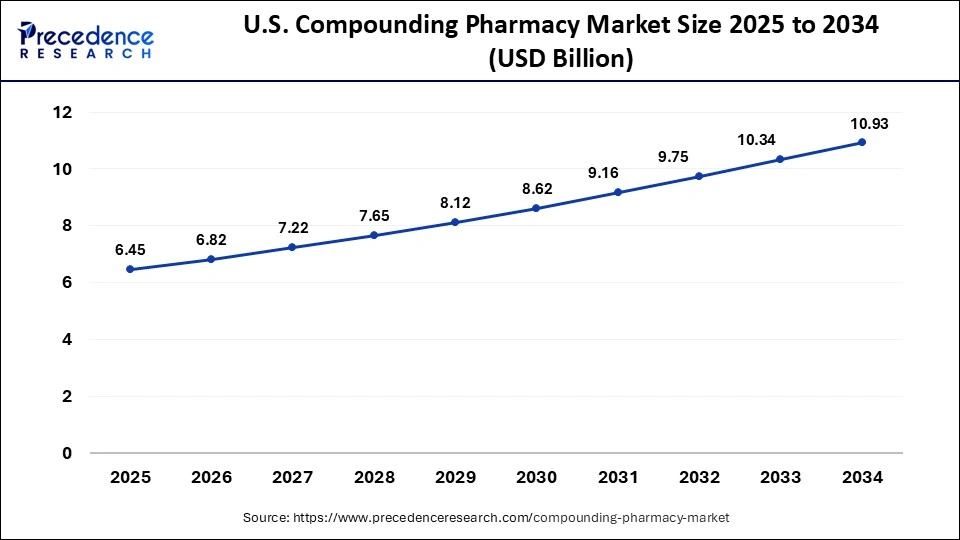
The U.S. compounding pharmacy market size was estimated at USD 6.45 billion in 2025 and is predicted to be worth around USD 11.52 billion by 2035, at a CAGR of 5.97% from 2026 to 2035.
What Makes Asia Pacific the Fastest-Growing Region in the Market?
Asia Pacific is expected to grow at the fastest rate in the market during the forecast period, driven by expanding healthcare infrastructure, rising healthcare expenditure, and increasing awareness of personalized medication solutions. The regions growing population, rising prevalence of chronic diseases, aging demographics, and improving access to specialized healthcare services are creating strong demand for customized therapies. Additionally, advancements in pharmacy services, increasing adoption of advanced healthcare technologies, and improving patient access to individualized treatments are supporting regional market expansion.
China Compounding Pharmacy Market Trends
Chinas compounding pharmacy market is growing due to increasing healthcare spending, a rising elderly population, and growing demand for personalized treatment approaches. The higher burden of chronic diseases, improvements in healthcare facilities, and increasing awareness regarding customized therapies are encouraging the adoption of compounded medications. Furthermore, the countrys focus on healthcare modernization and improved access to specialty treatments is creating new opportunities for compounding pharmacies to expand their services.
What Are the Driving Factors of The Compounding Pharmacy Market in Europe?
Europe is expected to grow at a significant CAGR during the forecast period, as standards are harmonizing and quality is improving. Demand is being driven by an ageing population and a rise in chronic conditions (including cancer) requiring allergen-free and personalized medicines - particularly in markets such as Germany and the UK.
Germany Market Trends
Germany is trying to harmonize with Europe for quality. Old age demands personalized drugs for the elderly, particularly for chronic diseases. Usage of gels/creams is strong. Customized oral and liquid medicines are also increasing for improved efficacy.
What Are the Driving Factors of The Compounding Pharmacy Market in Latin America?
Latin America is expected to grow at a significant CAGR during the forecast period. In Latin America, there is slow growth due to private health spending and generic/customized medicines. Pain and supplements are the most evolved in Brazil and Mexico. But growth is sometimes hampered by economic factors and a lack of medical services, as pharmacies are embracing evidence-based medicine for better acceptance and effectiveness.
Brazil Market Trends
Brazil is seeing a rise in the number of retail compounding pharmacies supplying medicines for children and the elderly. There is a growing demand for skin and anti-ageing products. Retail pharmacists are concerned about compliance with flavoured medicines and other formulations, such as liquids and creams, to improve compliance and effectiveness.
How is the Middle East and Africa Performing in the Compounding Pharmacy Market?
The Middle East and Africa are expected to grow at a notable CAGR during the forecast period. There is an opportunity for growth in the Middle East and Africa region because of infrastructure and medical tourism. There is a demand for compounding drugs and hospital sterile compounding. Also, there is a demand for compounding of veterinary drugs and to overcome the drug shortage issues in some states by compounding personalised drugs.
UAE Market Trends
The UAE has a growing interest in specialized hospital pharmacy, including sterile compounding. There is an increasing need for hormone replacement and pain management products. International standards are being followed. Health care reforms and niche therapies are the driving factors for the development of compounding pharmacy.
Competitive Landscape
The compounding pharmacy market is moderately fragmented, with competition driven by large pharmaceutical compounding companies, specialty pharmacies, and independent compounding providers. Market participants compete based on customized drug formulation capabilities, quality assurance standards, sterile compounding expertise, regulatory compliance, and the ability to deliver patient-specific therapies.
Key players such as Fagron, Fresenius Kabi, B. Braun, and Walgreens are enhancing their market positions through strategic acquisitions, facility expansions, technological upgrades, and investments in sterile compounding infrastructure. Companies are increasingly focusing on automation, quality control systems, and regulatory-compliant manufacturing processes to improve efficiency and meet the rising demand for customized medications. The competitive environment is expected to intensify as players continue to expand specialty pharmacy networks and adopt advanced compounding technologies.
Company Profiles - Compounding Pharmacy Market
Fresenius Kabi
Headquarters: Bad Homburg, Germany
Founded: 1999
Fresenius Kabi provides all types of injectable medicines, clinical nutrition, infusion therapies, medical devices, and therapeutic goods to healthcare providers. It provides hospitals and healthcare professionals in critical care, anesthesia, oncology, surgical, and other specialized therapeutic areas. The company is dedicated to increasing access to necessary medicines and developing greater treatment efficiency and better healthcare for patients.
- Key Vulnerabilities: Lack of specialization, inadequate local production capabilities, limited manufacturing experience, fewer healthcare relationships, fewer product specializations, weak distribution base, and even weaker pharmaceutical expertise.
Fagron NV
Headquarters: Rotterdam, Netherlands
Founded: 1990
Fagron provides healthcare professionals around the world with pharmaceutical ingredients, compounding solutions, special equipment, as well as custom-made medication services and technical assistance. The company focuses on specialized pharmaceutical compounding services and solutions for health care facilities like pharmacies, hospitals, clinics, and other health care services.
- Key Strengths: Highly developed compounding technical knowledge and experience, ability for international expansion, existing product range, pharmaceutical research and development, particular manufacturing capabilities, the wealth of knowledge of formulations, and existing healthcare partnerships.
- Key Vulnerabilities: Changes in regulations, pharmaceutical products supply chain disruptions, intensifying competition, manufacturing costs, raw material availability, changing healthcare needs, and compliance issues.
B. Braun Medical Inc.
Headquarters: Bethlehem, Pennsylvania, U.S.
Founded: 1839
B. Braun provides infusion therapy, injection pharmaceuticals, medical devices/surgical products, and pharmaceutical solutions for hospitals and medical institutions to provide healthcare technologies. It is used in multiple areas such as delivering drug images, patient care, clinical practice, anesthesia, surgery, and drug treatment in several healthcare units. The Companys investments in healthcare technologies and pharmaceutical solutions are ongoing to further bolster its market leadership position.
- Key Strengths: They have a high volume of exposure in healthcare, they have access to a broad global network, existing manufacturing skills, partner hospital networks, a diversified suite of products, many technological capabilities, and a known brand and selling distribution system.
- Key Vulnerabilities: High regulatory demand, complexity of operations, manufacturing price, competitive products, supply chain risk, and evolving healthcare technology requirements are considered key vulnerabilities.
Wedgewood Pharmacy
Headquarters: Swedesboro, New Jersey, U.S.
Founded: 1985
Specializing in companion animal and veterinary compounded medications and custom-made medications, Wedgewood Pharmacy focuses on compounded dosing. Designed to deliver tailored dosage, flavors, strengths, and medication solutions, it has been developed for the benefit of an advantaged company whose prescription and administration needs are met.
- Key Strengths: The main strengths are the portfolio of compounded medicines and specialty medicines, the focus on the vet, the specialist services provided, the ability to dose these medicines individually, a large therapeutic coverage, and the high level of relationships with vets.
- Key Vulnerabilities: Regulatory requirements, niche production costs, quality control requirements, competitive pressures, veterinary market changes, formulation complexity, and changing doctor prescribing practice.
McGuff Compounding Pharmacy Services
Headquarters: Santa Ana, California, U.S.
Founded: 1995
McGuff Compounding Pharmacy Services offers healthcare professionals and patients customized compounded medications and sterile preparations as well as pharmaceutical services. The company emphasizes individual patient needs, developing a customized pharmaceutical solution, and delivers professional pharmaceutical services.
- Key Strengths: Medication compounding experience, relationships with healthcare providers, specialized meds, technical pharmaceutical knowledge, personalized medication, sterile compounding experience, and customized pharmacy services.
- Key Vulnerabilities: Government regulation requirements, quality-control costs, specific manufacturing requirements, supply-chain issues, price pressure, process and complexity, and existing compounding pharmacy providers.
Compounding Pharmacy Market Companies
- Fresenius Kabi
- Fagron NV
- B. Braun Medical Inc.
- Rx3 Compounding Pharmacy
- Clinigen Group PLC
- Doughertys Pharmacy, Inc.
- Lorraines Pharmacy
- Wedgewood Pharmacy
- Institutional Pharmacy Solutions
- Mcguff compounding pharmacy services
M&A Landscape
- In September 2025, Fagron agreed to purchase University Compounding Pharmacy, a U.S. 503A compounder specializing in health and wellness. The buyout was planned to help bolster Fagrons North American foothold and boost personalized medicine options. (Source: https://investors.fagron.com)
- In January 2025, Fagron made acquisitions with CareFirst Specialty Pharmacy in North America and Injeplast in Brazil. The total value of the sales reached around EUR 30 million, bolstering Fagrons personalized medicine and regional expertise. (Source: https://investors.fagron.com)
Recent Developments
- In September 2025, Fagron will purchase University Compounding Pharmacy, a U.S. 503A compounder focused on health and wellness. The buyout was planned to help bolster Fagrons North American foothold and boost personalized medicine options. (Source: https://www.prnewswire.com)
- In January 2025, Fagron acquired CareFirst Specialty Pharmacy of North America and Injeplast of Brazil. Total sales of EUR 30 million added to Fagrons customised medicine and regional expertise. (Source: https://www.wedgewood.com)
- In February 2023, Harrow announced the release of its boric acid- and preservative-free next-generation compounded atropine formulations. Additionally, the fresh formulations may be kept at room temperature for up to 180 days and have a physiological pH of 5.5. The patent-pending formulations are currently offered by ImprimisRx, a fully-owned compounding and mail-order pharmacy subsidiary of Harrow.
- In July 2023, the seventeenth and eighteenth enhancements to the Revelation Pharma platform were been announced by Osceola Capital, giving the company a considerable boost in size and capabilities. Both the Hoover, Alabama-based Eagle Pharmacy and the Beachwood, Ohio-based Lee Silsby Compounding Pharmacy were bought by Revelation. An outsourcing compounding pharmacy, Eagle is a 503B offers services to healthcare facilities and prescribers in the United States.
Segments Covered in the Report
By Therapeutic Area
- Pain Management
- Hormone Replacement
- Dermal Disorders
- Nutritional Supplements
- Others
By Route of Administration
- Oral
- Topical
- Parenteral
- Others
By Age
- Pediatric
- Geriatric
- Adult
- Veterinary
By Compounding Type
- Pharmaceutical Dosage Alteration (PDA)
- Pharmaceutical Ingredient Alteration (PIA)
- Currently Unavailable Pharmaceutical Manufacturing (CUPM)
- Others
By Sterility
- Sterile
- Non-sterile
By Distribution Channel
- Compounding Pharmacy
- Hospital Pharmacy
- Others
By Region
- North America
- Europe
- Asia-Pacific
- Latin America
- Middle East and Africa
For inquiries regarding discounts, bulk purchases, or customization requests, please contact us at sales@precedenceresearch.com
Frequently Asked Questions
Tags





Ask For Sample
No cookie-cutter, only authentic analysis – take the 1st step to become a Precedence Research client
 Get a Sample
.webp)



 sales@precedenceresearch.com
 Schedule a Meeting
