



Middle East Watches Market Size is USD 2.37 Billion in 2026
Middle East Watches Market (By Type: Analog, Digital; By Price Range: Economy, Mid-range, Premium, Luxury, Ultra Luxury; By End Use: Men, Women; By Distribution Channel: Online, Offline) Industry Size, Share, Growth, Trends 2026 to 2035.


The Middle East watches market size was estimated at USD 2.28 billion in 2025 and is expanding at A CAGR of 4% from 2026 to 2035. The watch market is mainly influenced by high disposable incomes, a strong cultural love for luxury as a sign of status, and a large number of tourists visiting places like Dubai and Doha.
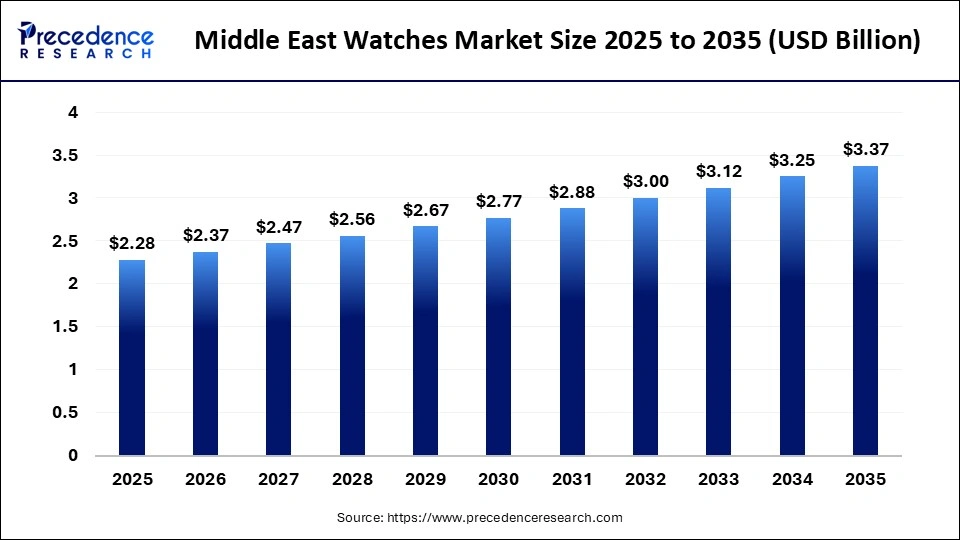
Middle East Watches Market Statical Scope
| Reports Attributes | Statistics |
| Market Size in 2025 | USD 2.28 Billion |
| Market Size in 2026 | USD 2.37 Billion |
| Market Size by 2035 | USD 3.37 Billion |
| CAGR 2026 to 2035 | 4% |
| Base Year | 2025 |
| Forecast Period | 2026 to 2035 |
The Middle East watch market is important because of high disposable income, strong luxury demand, and a deep culture of gifting, making it a top destination for premium Swiss watches. Growth is also driven by the increasing demand for ultra-luxury, high-end, and Rolex watches, as well as affordable quartz models, along with a thriving online e-commerce market .
Dubai acts as a key global center, providing a safe, tax-friendly market with many visitors, while more investment in high-end watches leads to significant growth in the region. A large number of wealthy individuals, especially in the UAE and Saudi Arabia, see luxury watches as both a status symbol and a good investment.
Recognized as a top global watch center, Dubai ensures safety for retailers and collectors, drawing in international buyers. Watches are closely tied to cultural traditions like weddings, holidays, and corporate events, increasing the demand for luxury items. High tourist numbers and premium, duty-free shopping experiences such as the Dubai Mall and Dubai Duty Free lead to frequent sales, particularly in the UAE and Qatar.
The region is experiencing growth in specialized retail, better after-sales service, and a rising interest in both classic mechanical watches and high-end smartwatches.
Middle East Watches Market, By Type, 2025 (%)
| Segments | Shares (%) |
| Analog | 35% |
| Mechanical | 15% |
| Quartz | 30% |
| Digital | 20% |
- Analog - The analog segment, with a share of 35%, is crucial in the market, symbolizing status, luxury, and heritage, particularly in cultural gifting. High-income consumers and wealthy expatriates drive demand for luxury mechanical watches from brands like Rolex and Omega.
- Mechanical - The mechanical segment, with a share of 15%, is vital in the Middle East watch market, representing more than just timekeeping; it embodies social status, luxury investment, and fine craftsmanship, thriving on a culture of watch collecting and premium gifting.
- Quartz - The quartz watch segment, with a share of 30%, is significant due to the demand for stylish, durable, and precise timepieces that blend affordability with luxury branding, particularly among urban consumers in the UAE and Saudi Arabia who view them as fashionable status symbols.
- Digital - The digital segment, with a share of 20%, is significant in the watch market, driven by demand for smart features and health tracking among the tech-savvy youth. With rising health awareness and e-commerce growth, digital watches, especially smartwatches, offer practical and stylish alternatives to traditional timepieces.
Middle East Watches Market, By Price Range, 2025 (%)
| Segments | Shares (%) |
| Economy | 20% |
| Mid-range | 30% |
| Premium | 25% |
| Luxury | 15% |
| Ultra Luxury | 10% |
- Economy - The economy segment, with a share of 20%, is crucial in the Middle East watch market, appealing to a diverse, young population and many expatriates, with growing interest in stylish everyday watches and smartwatches. It often leads to brand loyalty before consumers transition to luxury watches.
- Mid-range - The mid-range watch segment, with a share of 30%, thrives in the Middle East, driven by a rapidly expanding middle class, demand for versatile gifts, and a younger, tech-savvy demographic seeking stylish yet affordable options. It bridges the gap between affordable and luxury markets by offering quality and brand recognition.
- Premium - The premium watch segment, with a share of 25%, is significant, supported by high disposable incomes, a culture that values status, and substantial tourism, particularly in the UAE. It represents a key investment avenue, with affluent consumers driving demand for exclusive Swiss brands and limited editions.
- Luxury - The luxury watch segment, with a share of 15%, is vital in the Middle East market, characterized by high disposable incomes, a strong luxury consumption culture, and tax-free shopping that attracts tourists.
- Ultra Luxury - The ultra-luxury watch segment, with a share of 10%, is essential in the Middle East, catering to a large number of ultra-high-net-worth individuals (UHNWIs) and a cultural emphasis on status. The region is a global luxury hub, bolstered by rising wealth, tax-free retail, and a growing appetite for exclusive, customized, and intricate mechanical watches.
Middle East Watches Market, By End-use 2025 (%)
| Segments | Shares (%) |
| Men | 65% |
| Women | 35% |
- Men - The men's segment, with a share of 65%, is crucial, driven by high disposable income, a cultural tradition of watches as status symbols, and interest in luxury collecting. Men's watches are seen as long-term luxury investments.
- Women - The women's segment, with a share of 35%, significantly impacts the market, shaped by socio-economic changes, increasing financial independence, and a focus on luxury fashion. Young, style-conscious women are driving demand for modern, trendy, and limited-edition designs.
Middle East Watches Market, By Distribution Channel, 2025 (%)
| Segments | Shares (%) |
| Online | 30% |
| Offline | 70% |
- Online - The online segment, with a share of 30%, is gaining importance due to changing consumer habits, high internet usage, and a preference for convenience. It is vital for reaching younger, tech-savvy consumers and facilitating cross-border sales while ensuring authenticity in a high-value market.
- Offline - The offline segment, with a share of 70%, remains vital in the Middle East watch market, leading in sales through luxury boutiques, authorized dealers, and duty-free shops. This channel is preferred due to the cultural, social, and economic significance of timepieces in the region.
Top Companies in the Middle East Watches Market
- Rolex
- Omega
- Patek Philippe
- Audemars Piguet
- Longines
- Tissot
- Seiko
- Casio
- Citizen
- Tag Heuer
Segments Covered in the Report
By Type
- Analog
- Digital
By Price Range
- Economy
- Mid-range
- Premium
- Luxury
- Ultra Luxury
By End Use
- Men
- Women
By Distribution Channel
- Online
- Offline
| Price Range | 2025 | 2026 | 2027 | 2028 | 2029 | 2030 | 2031 | 2032 | 2033 | 2034 | 2035 |
|---|---|---|---|---|---|---|---|---|---|---|---|
| Economy | 0.62 | 0.63 | 0.64 | 0.65 | 0.66 | 0.67 | 0.68 | 0.69 | 0.70 | 0.70 | 0.71 |
| Mid-range | 0.75 | 0.78 | 0.81 | 0.83 | 0.86 | 0.89 | 0.92 | 0.95 | 0.98 | 1.02 | 1.05 |
| Premium | 0.48 | 0.50 | 0.53 | 0.56 | 0.58 | 0.61 | 0.64 | 0.67 | 0.71 | 0.74 | 0.78 |
| Luxury | 0.32 | 0.34 | 0.36 | 0.38 | 0.41 | 0.43 | 0.46 | 0.49 | 0.51 | 0.54 | 0.58 |
| Ultra Luxury | 0.11 | 0.13 | 0.14 | 0.15 | 0.17 | 0.18 | 0.20 | 0.21 | 0.23 | 0.25 | 0.27 |
| End Use | 2025 | 2026 | 2027 | 2028 | 2029 | 2030 | 2031 | 2032 | 2033 | 2034 | 2035 |
|---|---|---|---|---|---|---|---|---|---|---|---|
| Men | 1.71 | 1.76 | 1.82 | 1.88 | 1.94 | 2.00 | 2.06 | 2.13 | 2.20 | 2.27 | 2.34 |
| Women | 0.57 | 0.61 | 0.65 | 0.69 | 0.73 | 0.78 | 0.83 | 0.88 | 0.93 | 0.99 | 1.05 |
Research Methodology
Related Databooks
April 2026
April 2026
April 2026
April 2026


 sales@precedenceresearch.com
 +1 804-441-9344
 Download Databook
 Schedule a Meeting